Refine search
Actions for selected content:
212201 results in Engineering
Part I - Convex sets in Rn: From First Acquaintance to Linear Programming Duality
-
- Book:
- Essential Mathematics for Convex Optimization
- Published online:
- 22 October 2025
- Print publication:
- 26 June 2025, pp 1-80
-
- Chapter
- Export citation
Part III - Convex Functions
-
- Book:
- Essential Mathematics for Convex Optimization
- Published online:
- 22 October 2025
- Print publication:
- 26 June 2025, pp 151-232
-
- Chapter
- Export citation
12 - Subgradients
- from Part III - Convex Functions
-
- Book:
- Essential Mathematics for Convex Optimization
- Published online:
- 22 October 2025
- Print publication:
- 26 June 2025, pp 184-202
-
- Chapter
- Export citation
4 - General Theorem of the Alternative and Linear Programming Duality
- from Part I - Convex sets in Rn: From First Acquaintance to Linear Programming Duality
-
- Book:
- Essential Mathematics for Convex Optimization
- Published online:
- 22 October 2025
- Print publication:
- 26 June 2025, pp 45-59
-
- Chapter
- Export citation
Part II - Separation Theorem, Extreme Points, Recessive Directions, and Geometry of Polyhedral Sets
-
- Book:
- Essential Mathematics for Convex Optimization
- Published online:
- 22 October 2025
- Print publication:
- 26 June 2025, pp 81-150
-
- Chapter
- Export citation
Enhancing dual-band monopole antenna performance with a flexible compact design and a unique AMC cell
-
- Journal:
- International Journal of Microwave and Wireless Technologies / Volume 17 / Issue 3 / April 2025
- Published online by Cambridge University Press:
- 26 June 2025, pp. 492-503
-
- Article
-
- You have access
- Open access
- HTML
- Export citation
-
This paper presents an effective approach to a compact antenna system incorporating a single artificial magnetic conductor (AMC), designed to operate in the GSM and WiFi frequency bands. The proposed system features a dual-band AMC single element measuring 60 × 60 mm2 with $\pm90^{\circ}$ bandwidths of 100 and 170 MHz. A comprehensive parametric study was conducted to optimize performance and determine the AMC phase while maintaining the compact size of the antenna system. Significant improvements in gain were observed, from −1.61 to 1.88 dBi at 0.9 GHz and from 3.33 to 5.66 dBi at 2.45 GHz. Additionally, the complete system achieves a compact electrical size of 0.18λ0 × 0.18λ0 × 0.048λ0, with an increased front-to-back ratio of 12.3 and 19.9 dB at both frequencies. Finally, measurements of the fabricated prototype show good agreement with the simulation results.

13 - ★ Legendre Transform
- from Part III - Convex Functions
-
- Book:
- Essential Mathematics for Convex Optimization
- Published online:
- 22 October 2025
- Print publication:
- 26 June 2025, pp 203-211
-
- Chapter
- Export citation

Modern Signal Processing
-
- Published online:
- 25 June 2025
- Print publication:
- 05 April 2004
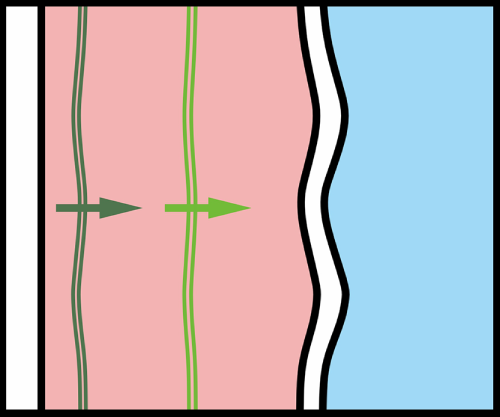
Modulation of the instability growth at sequential heavy–light interfaces in a shocked dual layer
-
- Journal:
- Journal of Fluid Mechanics / Volume 1014 / 10 July 2025
- Published online by Cambridge University Press:
- 25 June 2025, A4
-
- Article
- Export citation
Probabilistic digital twins for geotechnical design and construction
- Part of
-
- Journal:
- Data-Centric Engineering / Volume 6 / 2025
- Published online by Cambridge University Press:
- 25 June 2025, e30
-
- Article
-
- You have access
- Open access
- HTML
- Export citation
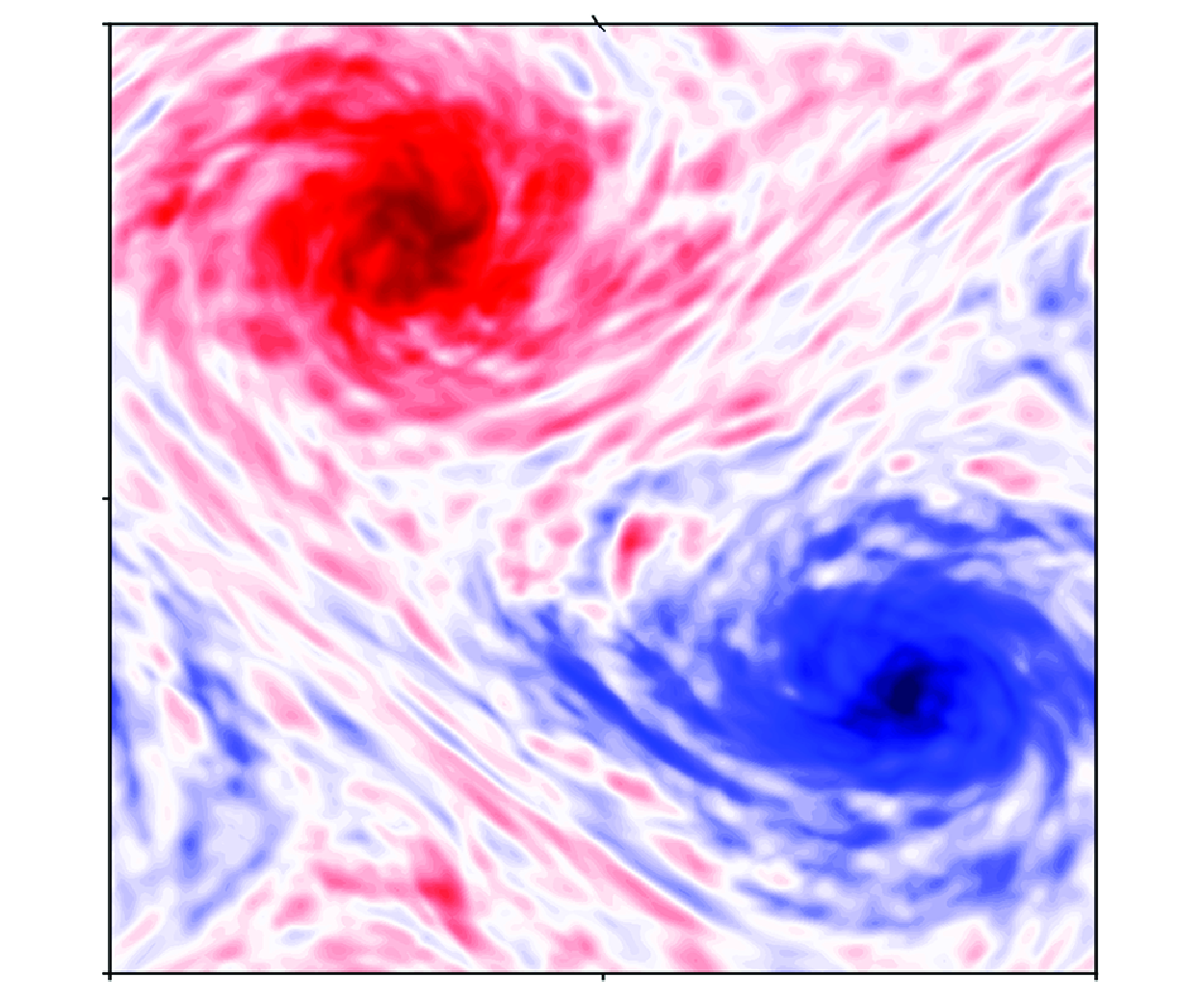
A new spin on rotating convection
-
- Journal:
- Journal of Fluid Mechanics / Volume 1014 / 10 July 2025
- Published online by Cambridge University Press:
- 25 June 2025, F1
-
- Article
-
- You have access
- Open access
- HTML
- Export citation
Development, verification, and certification of a digital twin for a voyage data recorder
- Part of
-
- Journal:
- Data-Centric Engineering / Volume 6 / 2025
- Published online by Cambridge University Press:
- 25 June 2025, e14
-
- Article
-
- You have access
- Open access
- HTML
- Export citation
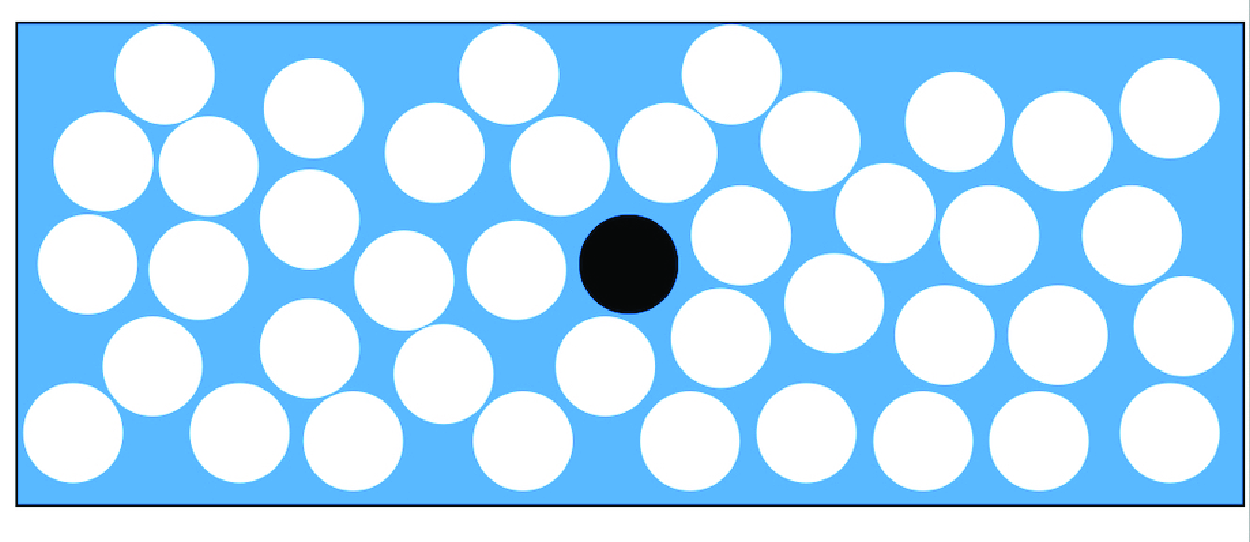
A viscous continuum theory of sea ice motion based on stochastic floe dynamics
-
- Journal:
- Journal of Fluid Mechanics / Volume 1014 / 10 July 2025
- Published online by Cambridge University Press:
- 25 June 2025, A6
-
- Article
-
- You have access
- Open access
- HTML
- Export citation
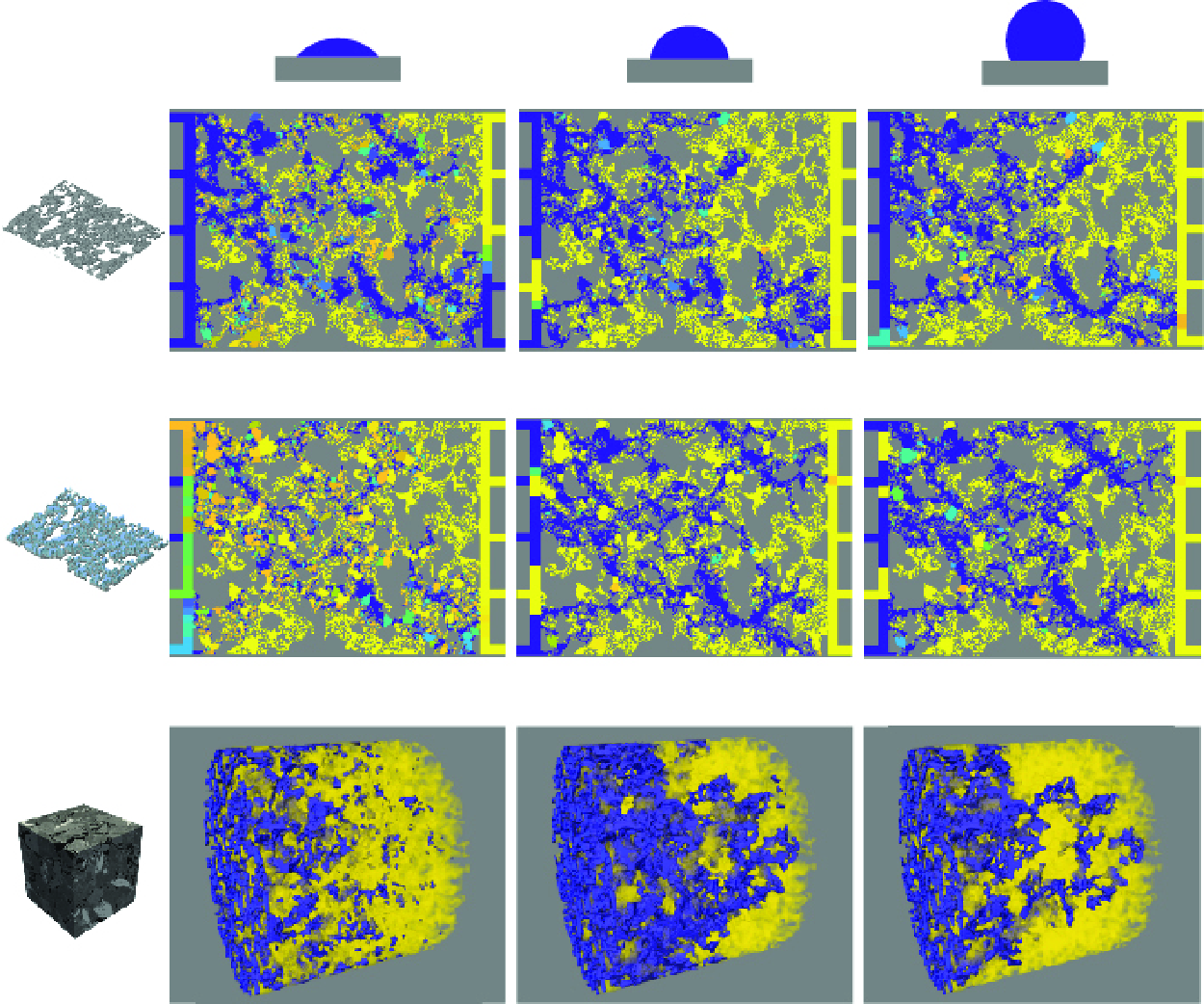
3-D-geometry-triggered transition from monotonic to non-monotonic effects of wettability on multiphase displacements in homogeneous porous media
-
- Journal:
- Journal of Fluid Mechanics / Volume 1014 / 10 July 2025
- Published online by Cambridge University Press:
- 25 June 2025, R2
-
- Article
- Export citation
-
Previous studies claimed that the non-monotonic effects of wettability came mainly from the heterogeneity of geometries or flow conditions on multiphase displacements in porous media. For macroscopic homogeneous porous media, without permeability contrast or obvious preferential flow pathways, most pore-scale evidence showed a monotonic trend of the wettability effect. However, this work reports transitions from monotonic to non-monotonic wettability effects when the dimension of the model system rises from two-dimensional (2-D) to three-dimensional (3-D), validated by both the network modelling and the microfluidic experiments. The mechanisms linking the pore-scale events to macroscopic displacement patterns have been analysed through direct simulations. For 2-D porous media, the monotonic effect of wettability comes from the consistent transition pattern for the full range of capillary numbers $Ca$, where the capillary fingering mode transitions to the compact displacement mode as the contact angle $\theta$ decreases. Yet, it is indicated that the 3-D porous geometries, even though homogeneous without permeability contrast or obvious preferential flow pathways, introduce a different $Ca$–
$Ca$– $\theta$ phase diagram with new pore-scale events, such as the coupling of capillary fingering with snap-off during strong drainage, and frequent snap-off events during strong imbibition. These events depend strongly on geometric confinements and capillary numbers, leading to the non-monotonicity of wettability effects. Our findings provide new insights into the multiphase displacement dependent on wettability in various natural porous media and offer design principles for engineering artificial porous media to achieve desired immiscible displacement behaviours.


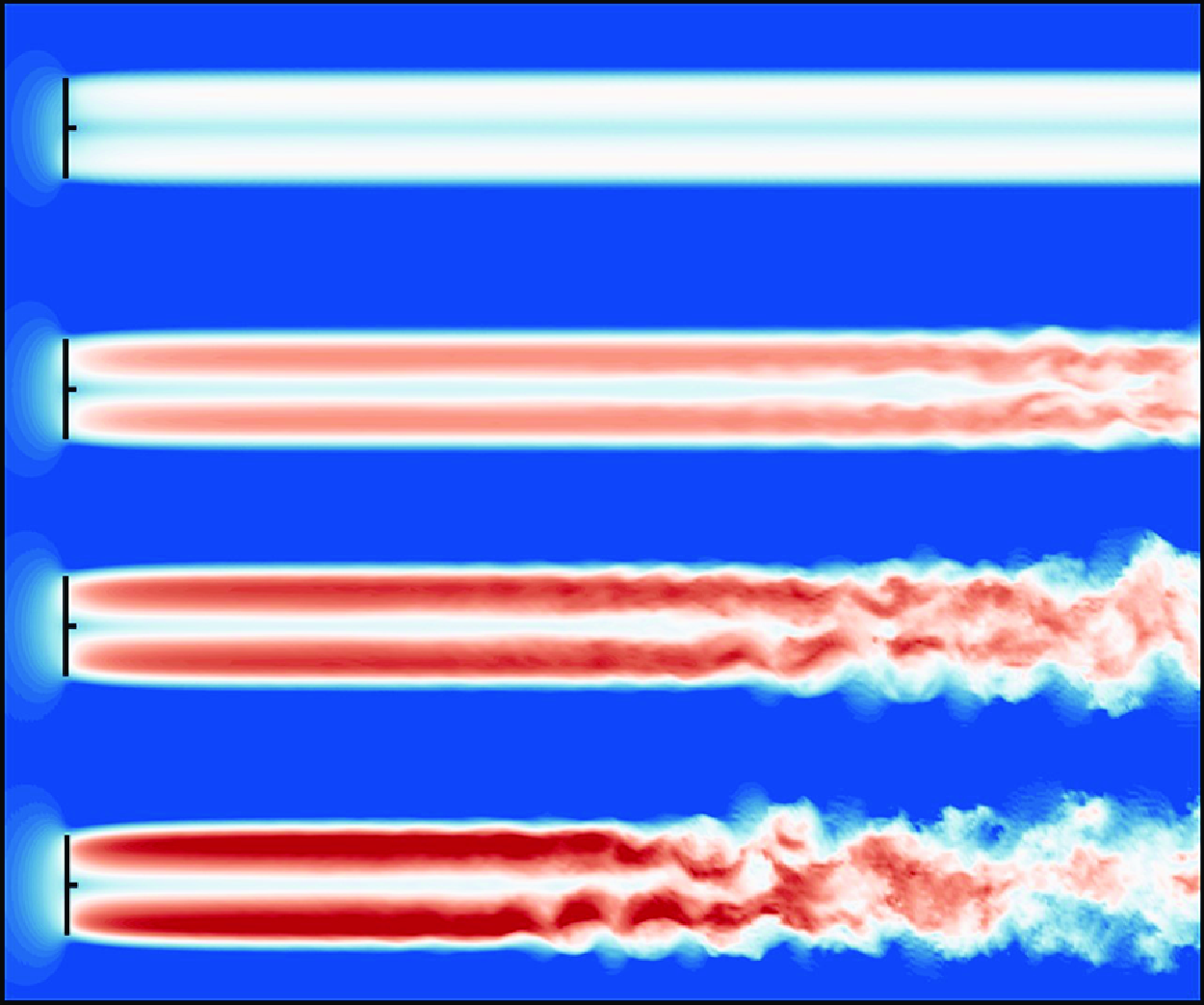
Effects of tip speed ratio on wind turbine wake meandering
-
- Journal:
- Journal of Fluid Mechanics / Volume 1014 / 10 July 2025
- Published online by Cambridge University Press:
- 25 June 2025, A3
-
- Article
- Export citation
A deep learning approach to wall-shear stress quantification: from numerical training to zero-shot experimental application
-
- Journal:
- Journal of Fluid Mechanics / Volume 1014 / 10 July 2025
- Published online by Cambridge University Press:
- 25 June 2025, A1
-
- Article
- Export citation
-
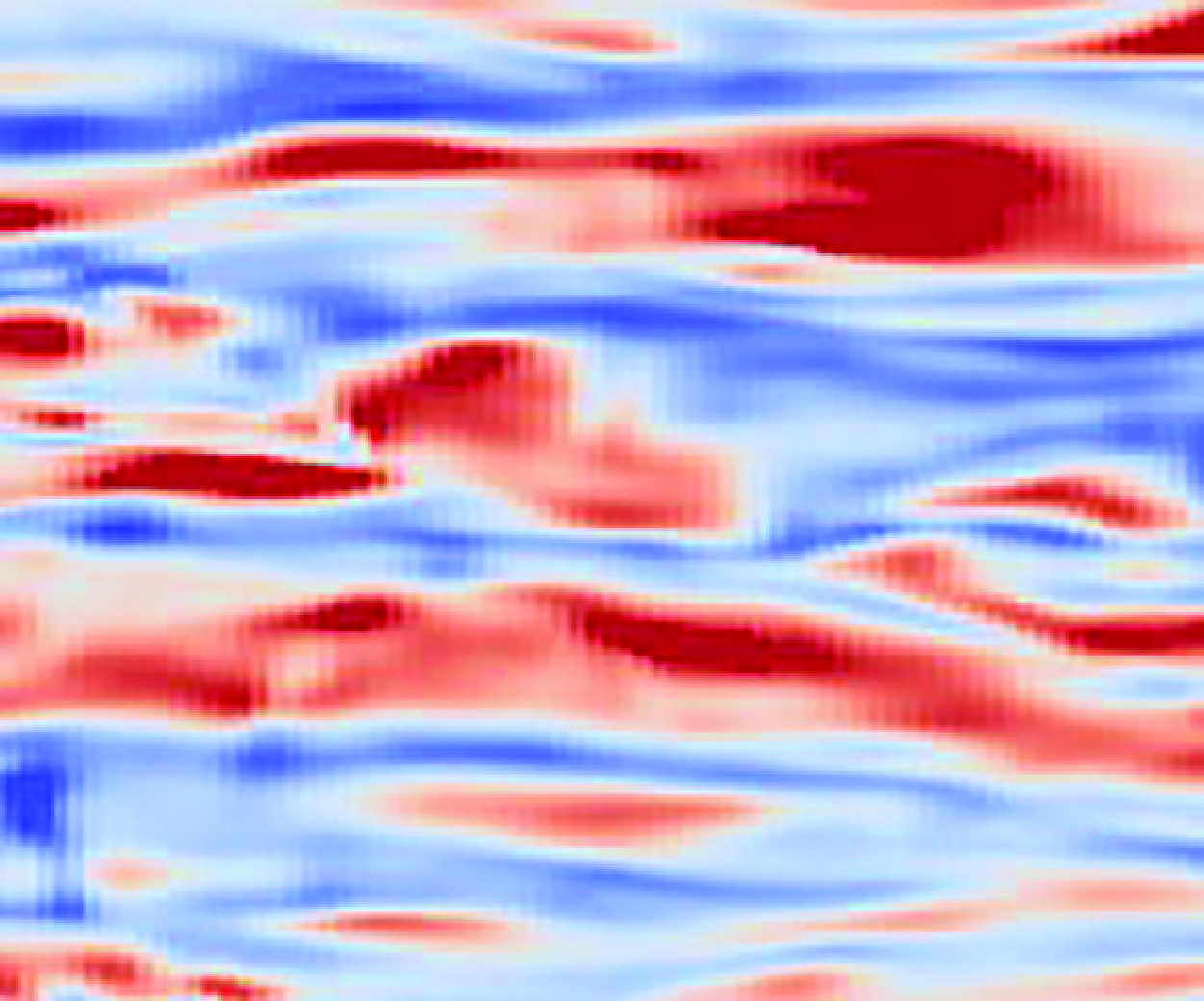
The accurate quantification of wall-shear stress dynamics is of substantial importance for various applications in fundamental and applied research, spanning areas from human health to aircraft design and optimization. Despite significant progress in experimental measurement techniques and postprocessing algorithms, temporally resolved wall-shear stress fields with adequate spatial resolution and within a suitable spatial domain remain an elusive goal. Furthermore, there is a systematic lack of universal models that can accurately replicate the instantaneous wall-shear stress dynamics in numerical simulations of multiscale systems where direct numerical simulations (DNSs) are prohibitively expensive. To address these gaps, we introduce a deep learning architecture that ingests wall-parallel streamwise velocity fields at $y^+ \approx 3.9 \sqrt {Re_\tau }$ of turbulent wall-bounded flows and outputs the corresponding two-dimensional streamwise wall-shear stress fields with identical spatial resolution and domain size. From a physical perspective, our framework acts as a surrogate model encapsulating the various mechanisms through which highly energetic outer-layer flow structures influence the governing wall-shear stress dynamics. The network is trained in a supervised fashion on a unified dataset comprising DNSs of statistically one-dimensional turbulent channel and spatially developing turbulent boundary layer flows at friction Reynolds numbers ranging from $390$ to $1500$. We demonstrate a zero-shot applicability to experimental velocity fields obtained from particle image velocimetry measurements and verify the physical accuracy of the wall-shear stress estimates with synchronized wall-shear stress measurements using the micro-pillar shear-stress sensor for Reynolds numbers up to $2000$. In summary, the presented framework lays the groundwork for extracting inaccessible experimental wall-shear stress information from readily available velocity measurements and thus, facilitates advancements in a variety of experimental applications.


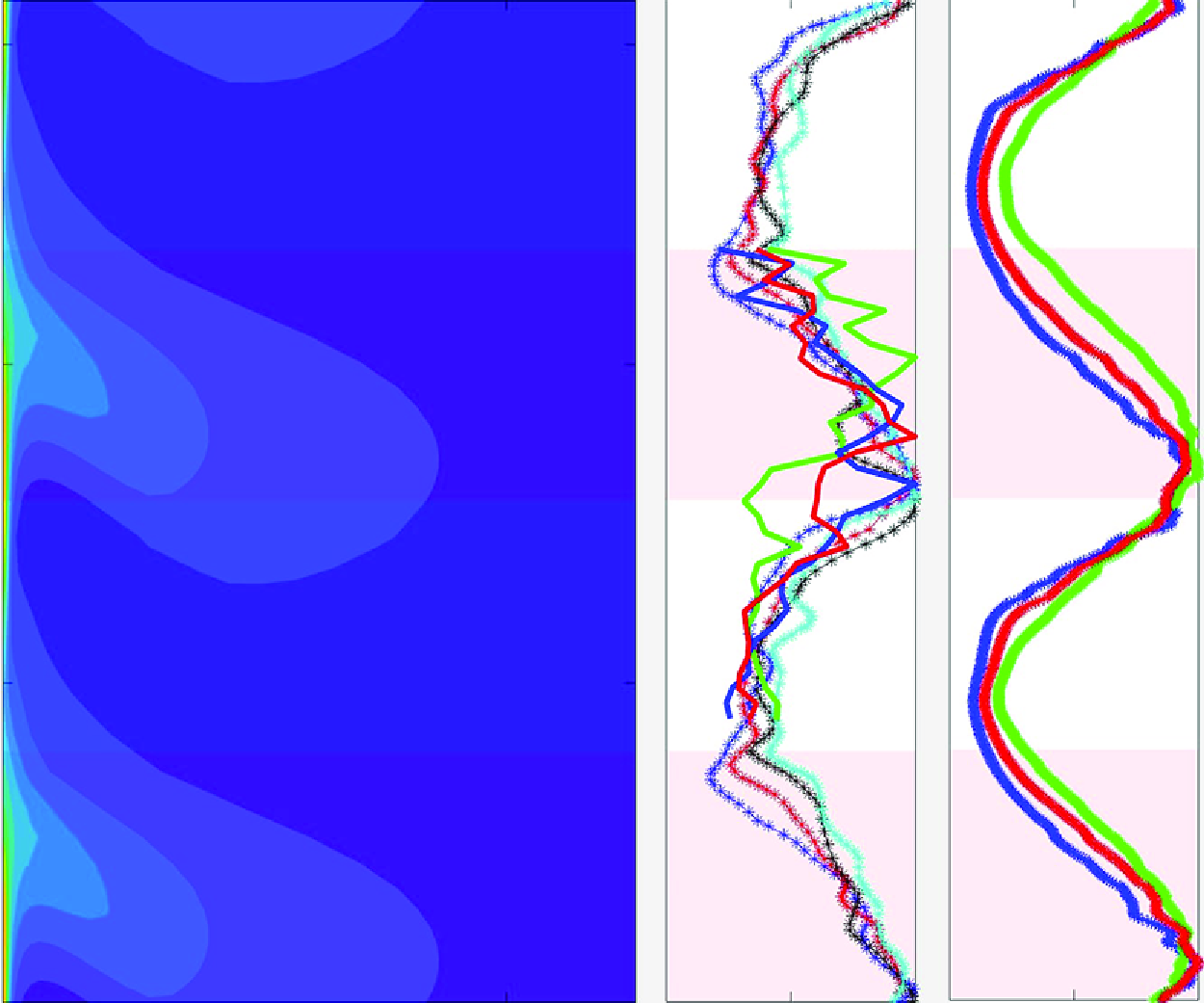
On the intracyclic instability in Stokes layers
-
- Journal:
- Journal of Fluid Mechanics / Volume 1013 / 25 June 2025
- Published online by Cambridge University Press:
- 24 June 2025, A50
-
- Article
-
- You have access
- Open access
- HTML
- Export citation
Scaling of wall-pressure–velocity correlations in high-Reynolds-number turbulent pipe flow
-
- Journal:
- Journal of Fluid Mechanics / Volume 1013 / 25 June 2025
- Published online by Cambridge University Press:
- 24 June 2025, A48
-
- Article
-
- You have access
- Open access
- HTML
- Export citation
-
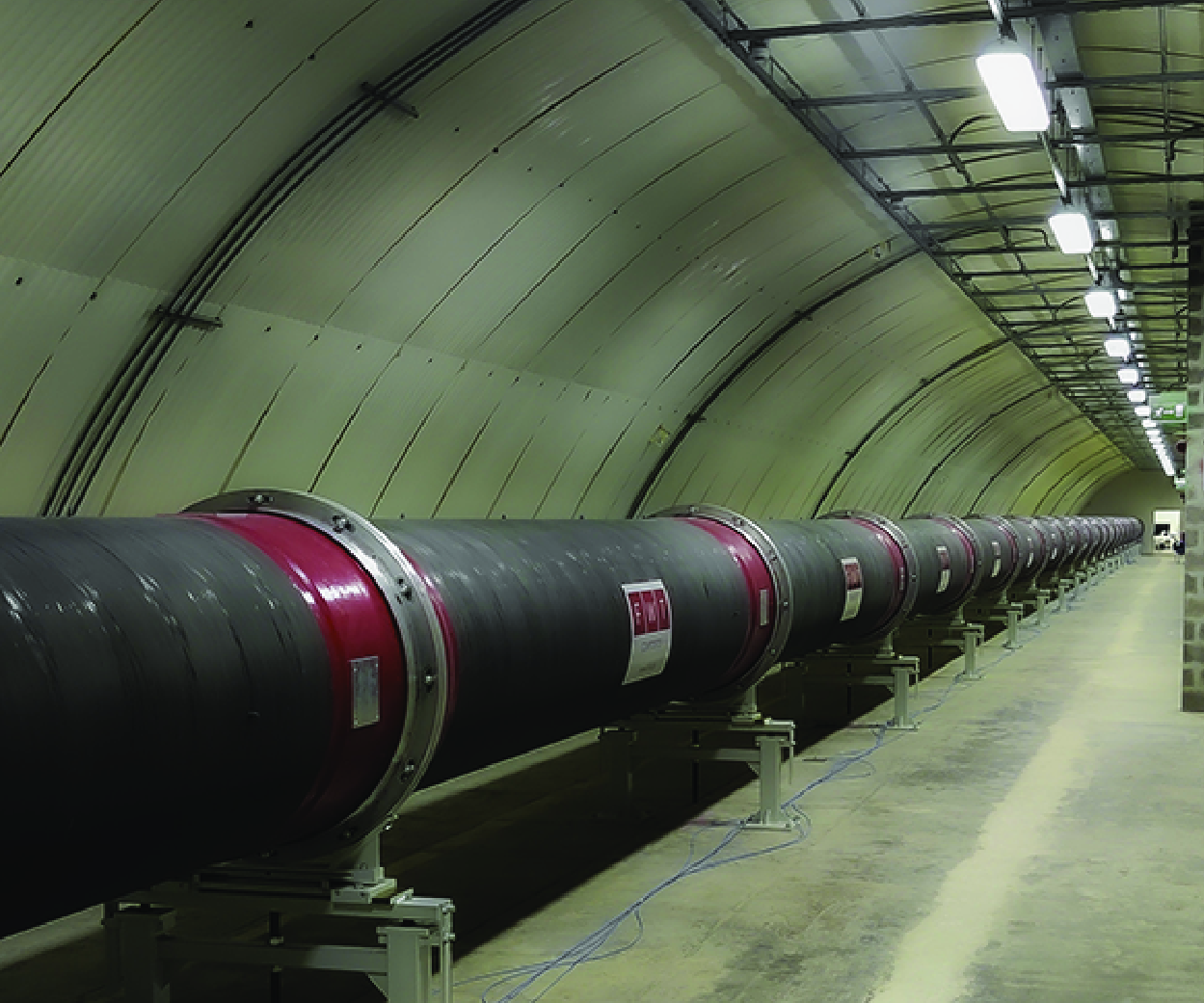
An experimental study was conducted in the CICLoPE long-pipe facility to investigate the correlation between wall-pressure and turbulent velocity fluctuations in the logarithmic region, at high friction Reynolds numbers ( $4794 \lesssim Re_\tau \lesssim 47\,015$). Hereby, we explore the scalability of employing wall-pressure to effectively estimate off-the-wall velocity states (e.g. to be of use in real-time control of wall-turbulence). Coherence spectra for wall-pressure and streamwise (or wall-normal) velocity fluctuations collapse when plotted against $\lambda _x/y$ and thus reveals a Reynolds-number-independent scaling with distance-from-the-wall. When the squared wall-pressure fluctuations are considered instead of the linear wall-pressure term, the coherence spectra for the wall-pressure-squared and velocity are higher in amplitude at wavelengths corresponding to large-scale streamwise velocity fluctuations (e.g. at $\lambda _x/y = 60$, the coherence value increases from roughly 0.1 up to 0.3). This higher coherence typifies a modulation effect, because low-frequency content is introduced when squaring the wall-pressure time series. Finally, quadratic stochastic estimation is employed to estimate turbulent velocity fluctuations from the wall-pressure time series only. For each $Re_\tau$ investigated, the estimated time series and a true temporal measurement of velocity inside the turbulent pipe flow yield a normalised correlation coefficient of $\rho \approx 0.6$ for all cases. This suggests that wall-pressure sensing can be employed for meaningful estimation of off-the-wall velocity fluctuations and thus for real-time control of energetic turbulent velocity fluctuations at high- $Re_\tau$ applications.


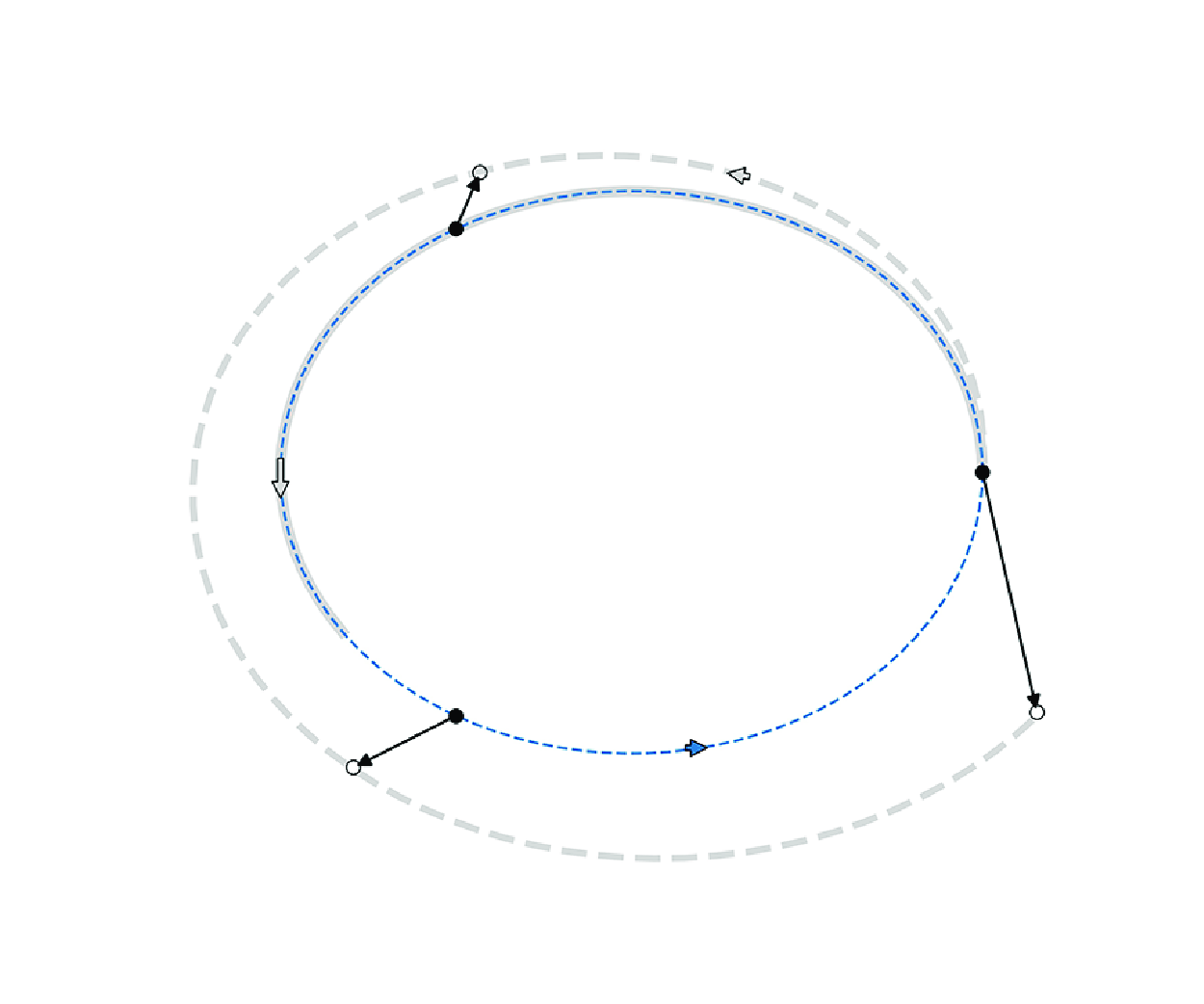
Search for unstable relative periodic orbits in channel flow using symmetry-reduced dynamic mode decomposition
-
- Journal:
- Journal of Fluid Mechanics / Volume 1013 / 25 June 2025
- Published online by Cambridge University Press:
- 24 June 2025, A45
-
- Article
-
- You have access
- Open access
- HTML
- Export citation
-
In the dynamical systems approach to turbulence, unstable periodic orbits (UPOs) provide valuable insights into system dynamics. Such UPOs are usually found by shooting-based Newton searches, where constructing sufficiently accurate initial guesses is difficult. A common technique for constructing initial guesses involves detecting recurrence events by comparing past and future flow states using their $L_2$-distance. An alternative method uses dynamic mode decomposition (DMD) to generate initial guesses based on dominant frequencies identified from a short time series, which are signatures of a nearby UPO. However, DMD struggles with continuous symmetries. To address this drawback, we combine symmetry-reduced DMD (SRDMD) introduced by Marensi et al. (2023, J. Fluid Mech., vol. 954, A10), with sparsity promotion. This combination provides optimal low-dimensional representations of the given time series as a time-periodic function, allowing any time instant along this function to serve as an initial guess for a Newton solver. We also discuss how multi-shooting methods operate on the reconstructed trajectories, and we extend the method to generate initial guesses for travelling waves. We demonstrate SRDMD as a method complementary to recurrent flow analysis by applying it to data obtained by direct numerical simulations of three-dimensional plane Poiseuille flow at the friction Reynolds number $\textit{Re}_\tau \approx51$ ( $\textit{Re}=802$), explicitly taking a continuous shift symmetry in the streamwise direction into account. The resulting unstable relative periodic orbits cover relevant regions of the state space, highlighting their potential for describing the flow.


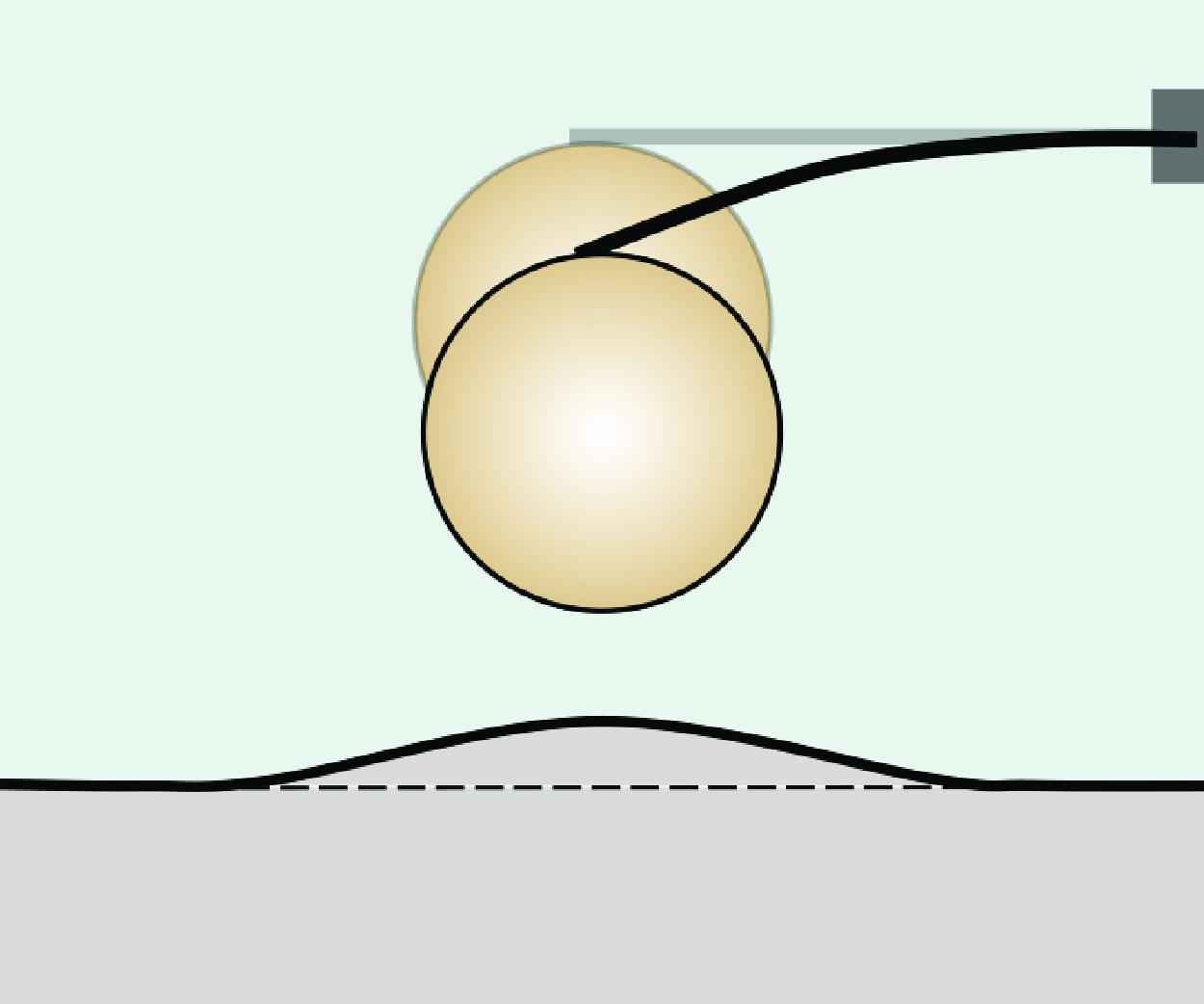
Jump of an atomic force microscopy probe towards an elastic substrate in a liquid environment
-
- Journal:
- Journal of Fluid Mechanics / Volume 1013 / 25 June 2025
- Published online by Cambridge University Press:
- 24 June 2025, A49
-
- Article
- Export citation
