Contents
JFM Papers

Particle dispersion in supersonic particle-laden jets
-
- Published online by Cambridge University Press:
- 12 January 2026, A1
-
- Article
-
- You have access
- Open access
- HTML
- Export citation
-
Particle-laden supersonic jets are often encountered in advanced engineering applications where a comprehensive control of particle dispersion is crucial. Although particle dispersion has been extensively studied in the past, the local mechanisms that cause the radial particle transport, such that particles leave the jet core, remain unclear in supersonic jets. To this end, we conduct a direct numerical simulation of a confined low Reynolds number, perfectly expanded supersonic jet carrying four different-sized particles. Here, particles and gas are simulated with Lagrangian and Eulerian approaches, and the fluid–particle energy and momentum exchange is modelled with two-way coupling. The initial Stokes number of these particles ranges between $1.5$ and $6.0$. We found that each particle size has a specific axial location, $x_r$, where they start travelling radially. This location is defined by a local Stokes number of approximately ${\textit{St}}^* \approx 0.6$; the delay in particles’ response to the local eddies in a supersonic flow causes their ${\textit{St}}^*$ to drop below unity. The local turbulent structures formed by the jet promote the radial transport of the particles that have similar characteristic time scales. Despite two-way momentum coupling, particles and gas influence each other via different mechanisms. For the considered range of ${\textit{St}}$, particles dominantly influence the fluctuating velocity component of the gas, while gas mainly affects the mean velocity component of the particles. Moreover, the particles’ reaction to the compressibility effects is a direct function of particle inertia, where the probability of finding larger particles in a high-density gradient and dilatation region is higher.


Convection–evaporation of water in a large aspect ratio layer
-
- Published online by Cambridge University Press:
- 12 January 2026, A2
-
- Article
- Export citation
-
We present an experimental study of convection–evaporation of a pool of water evaporating into a quiescent atmosphere. The temperature difference between the bottom of the pool and the surrounding air, as well as the water layer’s aspect ratio $\varGamma$, are systematically varied. Compared with classical Rayleigh–Bénard convection (RBC), this configuration involves a free-surface mechanical upper boundary and a mixed thermal upper boundary in contact with a poorly conducting air layer: evaporation extracts latent heat from the liquid and injects lighter vapour into the air, while radiation adds further cooling. As a result, neither temperature nor heat flux is fixed at the water–air interface, but they are instead strongly coupled. To characterise the respective contributions of convection, evaporation and radiation, we perform three sets of experiments: convection–evaporation, evaporation without bottom heating and convection without evaporation. High-resolution infrared imaging reveals multiple scales of convection at the surface: small hot plumes, cold sheet-like plumes and a large-scale circulation. The latter is constrained by the tank geometry for $\varGamma \lesssim 12$, but several turbulent superstructures develop for larger $\varGamma$. This is reminiscent of RBC but with different temperature statistics, due to the mixed boundary condition. Scaling laws are derived for interfacial transfers and mean surface temperature. Evaporation dominates heat extraction, accounting for 60 %–70 % of the flux, while radiation contributes 15 %–20 %. The release of vapour further enhances coupling between the liquid and air layers. When evaporation is blocked, radiation becomes dominant (70 %–80 %).These results have important implications for industrial and natural systems.


Bounds on the spreading radius in droplet impact: the two-dimensional case
-
- Published online by Cambridge University Press:
- 13 January 2026, A3
-
- Article
-
- You have access
- Open access
- HTML
- Export citation
-
We consider the problem of a cylindrical (quasi-two-dimensional) droplet impacting on a hard surface. Cylindrical droplet impact can be engineered in the laboratory, and a theoretical model of the system can also be used to shed light on various complex experiments involving the impact of liquid sheets. We formulate a rim-lamella model for the droplet-impact problem. Using Gronwall’s inequality applied to the model, we establish theoretical bounds for the maximum spreading radius $\mathcal{R}_{\textit{max}}$ in droplet impact, specifically $k_1 {\textit{Re}}^{1/3}-k_2(1-\cos \vartheta _a)^{1/2}({\textit{Re}}/{\textit{We}})^{1/2}\leq \mathcal{R}_{\textit{max}}/R_0\leq k_1{\textit{Re}}^{1/3}$, valid for ${\textit{Re}}$ and ${\textit{We}}$ sufficiently large. Here, ${\textit{Re}}$ and ${\textit{We}}$ are the Reynolds and Weber number based on the droplet’s pre-impact velocity and radius $R_0$, $\vartheta _a$ is the advancing contact angle (assumed constant in our simplified analysis) and $k_1$ and $k_2$ are constants. We perform several campaigns of simulations using the volume of fluid method to model the droplet impact, and we find that the simulation results fall within the theoretical bounds.


High-level Green–Naghdi model for internal solitary waves generated by time-varying boundaries
-
- Published online by Cambridge University Press:
- 13 January 2026, A4
-
- Article
- Export citation

Data-driven detached-eddy simulations based on explicit algebraic stress expressions for turbulent flows
-
- Published online by Cambridge University Press:
- 12 January 2026, A5
-
- Article
- Export citation
-
This work proposes a data-driven explicit algebraic stress-based detached-eddy simulation (DES) method. Despite the widespread use of data-driven methods in model development for both Reynolds-averaged Navier–Stokes (RANS) and large-eddy simulations (LES), their applications to DES remain limited. The challenge mainly lies in the absence of modelled stress data, the requirement for proper length scales in RANS and LES branches, and the maintenance of a reasonable switching behaviour. The data-driven DES method is constructed based on the algebraic stress equation. The control of RANS/LES switching is achieved through the eddy viscosity in the linear part of the modelled stress, under the $\ell ^2-\omega$ DES framework. Three model coefficients associated with the pressure–strain terms and the LES length scale are represented by a neural network as functions of scalar invariants of velocity gradient. The neural network is trained using velocity data with the ensemble Kalman method, thereby circumventing the requirement for modelled stress data. Moreover, the baseline coefficient values are incorporated as additional reference data to ensure reasonable switching behaviour. The proposed approach is evaluated on two challenging turbulent flows, i.e. the secondary flow in a square duct and the separated flow over a bump. The trained model achieves significant improvements in predicting mean flow statistics compared with the baseline model. This is attributed to improved predictions of the modelled stress. The trained model also exhibits reasonable switching behaviour, enlarging the LES region to resolve more turbulent structures. Furthermore, the model shows satisfactory generalization capabilities for both cases in similar flow configurations.


Linear stability analysis of magnetoconvection in finite-sized systems: competition between spatial confinement and magnetic field
-
- Published online by Cambridge University Press:
- 12 January 2026, A6
-
- Article
- Export citation
-
We present a linear stability analysis of two-dimensional magnetoconvection considering the effects of spatial confinement (characterised by the aspect ratio $\varGamma$) and magnetic field (characterised by the Hartmann number $\textit{Ha}_{i=x,y,z}$ with subscript representing its direction). It is found that when the magnetic field is perpendicular to the convection domain ( $y$-direction), it does not affect the onset of convection due to zero Lorentz force. With a magnetic field in the $z$ (vertical) or $x$ (horizontal) directions, the onset of convection is delayed, resulting in a larger critical Rayleigh number $Ra_c$ for the onset of convection. We outline phase diagrams showing the dominating factors determining $Ra_c$. When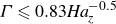 $\varGamma \leqslant 0.83\textit{Ha}_z^{-0.5}$ for vertical and $\varGamma \leqslant 0.66\textit{Ha}_x^{-1.01}$ for horizontal magnetic field, $Ra_c$ is mainly determined by the geometrical confinement with $Ra_c=502\varGamma ^{-4.0}$. When $\varGamma \geqslant 2^{1/6}\pi ^{1/3}\textit{Ha}_z^{-1/3}$ for vertical and $\varGamma \geqslant 5$ for the horizontal magnetic field, $Ra_c$ is mainly determined by the magnetic field with $Ra_c=\pi ^2\textit{Ha}^2$. In the intermediate regime, both the magnetic field and spatial confinement determine $Ra_c$, and a horizontal magnetic field is found to suppress convection more than a vertical magnetic field. In addition, under a horizontal magnetic field, there exists a subregime characterised by $Ra_c = 9.9\,\varGamma ^{-2.0} \textit{Ha}_x^2$, which is explained by a theoretical model. The magnetic field also modifies the length scale $\ell$. For a vertical magnetic field, $\ell$ decreases with increasing $\textit{Ha}_z$, following $\ell =2^{1/6}\pi ^{1/3}\textit{Ha}^{-1/3}$. For a horizontal magnetic field, when $\varGamma \lt 0.62\textit{Ha}_x^{0.47}$, the flow is a single-roll structure with $\ell$ being the width of the domain. The study thus shed new light on the interplay between magnetic field and spatial confinement.


Wall-temperature effects on second-mode kinematics and mechanics
-
- Published online by Cambridge University Press:
- 13 January 2026, A7
-
- Article
-
- You have access
- Open access
- HTML
- Export citation
-
The effects of wall temperature on hypersonic boundary layer transition are investigated by analysing the kinematics (acoustic ray trajectories) and mechanics (fluctuation energy production and transport) of second-mode instabilities. The disturbance energy formulation is taken from Roy & Scalo (J. Fluid Mech. 2025, vol. 1007, A49). Flow conditions are taken from a Mach 6 boundary layer over a $3^\circ$ cone, with varying degrees of wall-to-adiabatic temperature ratios, $\varTheta =T_w/T_{\textit{ad}}=0.25{-}1.75$. Boundary layer-resolved axisymmetric direct numerical simulations with companion Laguerre polynomials-based linear stability theory provide the supporting numerical datasets. It was found that second-mode instabilities comprise two decks, separated by the pressure node location $(y=y_\pi )$. The upper deck ( $y\gt y_\pi$) is characterised by temperature ( $T^{\prime}$) and density ( $\rho'$) fluctuations working with in-phase wall-normal velocity fluctuations ( $v'$) to sustain the total disturbance energy production term, $-(\rho _0 v'T'\partial T_0/\partial y+\rho ' u_0 v' \partial u_0/\partial y$), which peaks at the generalised inflection point $y=y_i$. The downward-oriented energy flux peaks below the critical layer, $y\lt y_c$, and sustains acoustic energy accumulation in the lower deck. Effective energy transfer requires the streamwise and wall-normal fluxes to maintain a $90^\circ$ phase difference. This is satisfied especially for colder walls, whereas heated walls yield out-of-phase $v'$–
$v'$– $T'$ and in-phase pressure ( $p'$) – streamwise velocity ( $u'$) fluctuations, reducing the disturbance energy production and discouraging the coupling between the two decks. Ray tracing reveals the trajectory of purely acoustic wave paths emanating from the wall, as trapping occurs below the generalised inflection line $(y_i)$, governed by the mean flow velocity gradients $(\partial u_0/\partial y)$.


Propulsive characteristics of twin-starting jets with simultaneous initiations
-
- Published online by Cambridge University Press:
- 14 January 2026, A8
-
- Article
- Export citation
-
The effects arising from interactions between two identical starting jets on their propulsive characteristics have been investigated numerically for different dimensionless distances $S/D$ (the distance between two jet axes normalised by nozzle diameter, from 1.1 to 4) and stroke ratios $L/D$ (the length-to-diameter ratio of jet column, from 2 to 5). The two jets are arranged in parallel and initiated simultaneously with identical conditions. Their leading vortical structures evolve from an axisymmetric to a plane-symmetric configuration, with deceleration in regions where the two jet wakes approach each other. The generation of axial thrust is affected, primarily dominated by variations in the pressure thrust component. This results from the combination of the mutually induced pressure (MIP) and the coupling effects of vortex rings (CEVR for $S/D\gt1.5$ and CEVR-R for $S/D\lt1.5$). The MIP governs the fluctuations introduced into thrust development, while CEVR (CEVR-R) is responsible for the reduction in average thrust. These effects become more pronounced as $S/D$ decreases, but remain almost unaffected by $L/D$. Adjusting the acceleration and deceleration rates of the velocity program shows limited effects on either the thrust fluctuations or the average thrust reduction. Furthermore, the interaction induces two lateral force components with equal magnitude but opposite directions on the outer walls of the two nozzles, with their magnitude exceeding $15\,\%$ of the axial thrust. The introduction of an additional vertical wall within the nozzle exit plane effectively eliminates the lateral force. However, it consequently enhances both the average thrust reduction and the thrust fluctuations induced by the interaction.


Granular flow in a quasi-two-dimensional wedge-shaped hopper: experiments and simulations
-
- Published online by Cambridge University Press:
- 14 January 2026, A14
-
- Article
-
- You have access
- Open access
- HTML
- Export citation
-
We carry out an experimental study of granular flow in a quasi-two-dimensional wedge-shaped hopper, with glass front and back walls, using videography, along with image analysis and particle tracking. Results are presented for different orifice sizes and roughnesses of the sidewalls for nearly spherical glass and steel particles of different sizes. The data for the radial velocity in the hopper (wedge angle $2\theta _w$) are well described by $v_r(r,\theta )=v_{r0}(r)[1-F(r)(\theta /\theta _w)^2],$ in cylindrical coordinates $(r,\theta )$, with the origin at the apex of the wedge. The centreline velocity is given by $v_{r0}=(a_0/r+a_1)$, and the effective wall friction by $F=(b_0+b_1r)$, where $a_0$ and $a_1$ increase with orifice width, while $b_0$ increases with roughness. For the smooth wall system, we obtain $F\in (0,1)$, however, for the rough walls $F\gt 1$ for most cases, with the velocity at the wall being zero, and a few layers of slow-moving particles adjacent to the wall. The mass flow rate scaled by the particle density and the radial velocity profile are independent of the particle density, for a threefold increase in the density, implying insignificant inertial effects. Discrete element method simulations are carried out using glass particles for a system of the same size as the experimental hopper, with the simulation parameters calibrated to closely match the experimental results. The simulation results indicate that the variation in the direction normal to the plane of the flow is small and the radial velocity profiles without the front and back walls are similar to the experimental profiles.


Stress tensor of dilute active colloidal suspensions
-
- Published online by Cambridge University Press:
- 14 January 2026, A9
-
- Article
- Export citation

Cavitation inception mechanisms during the interaction between a pair of counter-rotating vortices
-
- Published online by Cambridge University Press:
- 14 January 2026, A15
-
- Article
-
- You have access
- Open access
- HTML
- Export citation
-
Cavitation inception in the wake of propulsor systems often arises from the interaction between multiple vortices. We use large-eddy simulation (LES) to study cavitation during the canonical interaction of a pair of unequal strength counter-rotating vortices generated in the wake of a hydrofoil pair at a chord-based Reynolds number ( $ \textit{Re}$) of $1.7 \times 10^6$. The simulations reproduce the experimental observations by Knister et al. (In 33rd Symposium on Naval Hydrodynamics, Osaka, Japan, 2020) of spatially and temporally intermittent inception events occurring in the weaker vortex. Sinusoidal instabilities representing the Crow instability develop on the weaker vortex beyond one chord length downstream of the hydrofoils, causing it to bend and wrap around the stronger vortex. The inviscid stretching causes a significant reduction of the weaker core pressure and inception occurs as it approaches close to the stronger core. These intermittent inception events correspond to $3{-}4$ fold pressure reduction from the unperturbed value, with the instantaneous pressures reaching $40\,\%{-}60\,\%$ lower than the mean minimum pressure. However, the loss of circulation ( ${\gt} 20\,\%$) in both cores during the later stages of interaction reduces the possibility of further inception events. Statistical analysis reveals that inception occurs once per Crow cycle and is most likely to occur near the central regions of the Crow wavelength. Conditional averages show that the axial stretching is non-uniform along the weaker vortex axis, with the stretching intensities in the central regions being four times larger than the wavelength-averaged value. Probability distribution analysis shows that only a small portion of the weaker core experiences inception pressures and these regions have relatively lower axial stretching intensities compared with the bulk of the core.


Collective effects of neighbouring melting ice objects
-
- Published online by Cambridge University Press:
- 12 January 2026, A10
-
- Article
-
- You have access
- Open access
- HTML
- Export citation
-
We present a study on the melting dynamics of neighbouring ice bodies by means of idealised simulations, focusing on collective effects, with the goal of obtaining fundamental insight into how collective interactions influence the melting of ice. Two neighbouring (vertically or horizontally aligned), square-shaped and equally sized ice objects (size of the order of centimetres) are immersed in quiescent fresh water at a temperature of ${20}\,^\circ \textrm {C}$. By performing two-dimensional direct numerical simulations, and using the phase-field method to model the phase change, the collective melting of these objects is studied. When the objects are horizontally aligned, no significant influence of the neighbouring object on the melting time is observed. On the other hand, when vertically aligned, although the melting of the upper object is mostly unaffected, the melting time and the morphology of the lower ice body strongly depends on the initial inter-object distance. We report that the melting of the bottom object can be enhanced by more than 10 %, or delayed more than 20 %, displaying a non-monotonic dependence on the initial object size. We show that this behaviour results from a non-trivial competition between layering of cold fluid, which lowers the heat transfer, and convective flows, which favour mixing and heat transfer. For this melting in mixed convection, we were able to collapse our data onto a single curve.


Atwood-number dependence of the instability evolution at a shock-accelerated heavy fluid layer
-
- Published online by Cambridge University Press:
- 14 January 2026, A13
-
- Article
- Export citation
-
Numerical simulations and theoretical analysis are conducted to investigate the Atwood-number dependence of perturbation evolution in a shocked heavy fluid layer. For layers without reverberating waves, a higher Atwood number of one interface significantly enhances its coupling effect on the perturbation growth at the opposite interface. A theoretical model incorporating the startup, linear and nonlinear stages is developed to predict the interface mixing width. Dimensionless formulae are derived, identifying eight distinct modulation regimes of multi-interface instability. When reverberating waves are present, the individual effects of the upstream ( $A_1$) and downstream ( $A_2$) Atwood numbers are examined. The model is further modified to account for additional reverberating waves required at higher $A_2$ values for accurate amplitude prediction. Both theory and simulations demonstrate that perturbation growth at one interface can be actively controlled by adjusting the Atwood number of the opposite interface. These findings provide insights for mitigating instabilities in applications such as inertial confinement fusion through appropriate material selection.


On the quasi-ionic emission regime of electrified ionic liquids from capillary sources, and its transition into the purely ionic regime
-
- Published online by Cambridge University Press:
- 14 January 2026, A11
-
- Article
-
- You have access
- Open access
- HTML
- Export citation
-
Negatively electrified liquid cone jets supported on capillary tubes with 30–36 $ \,\unicode{x03BC} \text{m}$ tip diameters are investigated in vacuo with four ionic liquids (ILs) selected for their high electrical conductivity and low viscosity. All four use the same cation 1-ethyl-3-methylimidazolium $^+$ ( $ \text{EMI}^+$), paired with the four anions $\textrm{SCN}^-$, $\text{N}(\text{CN})_2^-$, $\text{C}(\text{CN})_3^-$ and $ \text{BF}_4^-$. Purely ionic (PI) emissions are not unambiguously achieved with any of the four, but are closely approached by all under a broad range of conditions. In this unusual quasi-ionic (QI) regime, drops contribute minimally to the current ( $\sim$ 0.5 %–3 %) but substantially to the mass flow. A sharp QI $\rightarrow$PI transition below a critical liquid flow rate has been demonstrated for capillary emitters by Caballero-Perez et al. (2025) J. Propul. Power, for 1-butyl-3-methylimidazolium-C(CN) $_3$ (BMI-C(CN) $_3$) by using 15 $\unicode{x03BC}$m capillary tips able to stabilise unusually small liquid flow rates. None of their other 3 ILs achieves the QI regime, indicating the singularity of BMI-C(CN) $_3$ and our four ILs. We focus on the peculiarities of the QI regime, the likely mechanism for the QI $\rightarrow$PI transition and argue that ILs reaching the QI regime will probably also attain the PI regime when sprayed from sufficiently small capillary tips. Paradoxically, while high conductivity and low viscosity appear to favour the QI mode, for a liquid operating in this regime, inverting these properties by lowering the emitter temperature appears to better approach the PI regime.


Incipient motion of a single particle on a regular substrate in an oscillatory flow
-
- Published online by Cambridge University Press:
- 14 January 2026, A12
-
- Article
-
- You have access
- Open access
- HTML
- Export citation

Stability analysis and solitary waves on Plateau border flows
-
- Published online by Cambridge University Press:
- 14 January 2026, A17
-
- Article
-
- You have access
- Open access
- HTML
- Export citation

Diffusio-osmotic corner flows
-
- Published online by Cambridge University Press:
- 14 January 2026, A16
-
- Article
-
- You have access
- Open access
- HTML
- Export citation

Analytical solution for the laminar wake behind a finite heat/mass sink
-
- Published online by Cambridge University Press:
- 14 January 2026, A20
-
- Article
- Export citation

Numerical analysis of flow and stress redistribution at an open-to-closed channel transition caused by floating debris carpets
-
- Published online by Cambridge University Press:
- 14 January 2026, A18
-
- Article
-
- You have access
- Open access
- HTML
- Export citation
-
This research investigates the hydrodynamics of a physical boundary transition from free slip to no slip, which usually occurs in ice-jams, large wood and debris accumulation in free-surface flows. Using direct numerical simulation coupled with a volume penalisation method, a series of numerical simulations is performed for an open-channel flow covered with a layer of floating spherical particles, replicating the laboratory set-up of Yan Toe et al. (2025 J. Hydraul. Eng., vol. 151, 04025010). Flow transition from the open channel to the closed channel induces a new boundary-layer development at the top surface, accompanied by a flow separation and an increased bottom shear stress that enhances particle mobility at the bottom. Analysis of a fully developed flow in an asymmetric roughness channel (rough surface at the top boundary and smooth surface at the bottom boundary) also shows that the vertical position of maximum velocity is higher than the position of zero Reynolds shear stress, which supports the experimental observation of Hanjalić & Launder (J. Fluid Mech., vol. 51, 1972, pp. 301–335), demonstrating the shortcoming of traditional turbulence closure models such as the $k{-}\varepsilon$ model. Finally, the stagnation force acting on a particle at the leading edge of the accumulation layer is compared with the analytical prediction of Yan Toe et al. Understanding the flow transition improves the prediction of the stability threshold of the accumulation layer and design criteria for debris-collection devices.


Experimental deep reinforcement learning control of a turbulent boundary layer with plasma actuators for skin-friction drag reduction
-
- Published online by Cambridge University Press:
- 15 January 2026, A19
-
- Article
- Export citation
-
Experimental deep reinforcement learning (DRL) control of a turbulent boundary layer is conducted for the first time at $Re_\tau$ = 1196, with the aim of friction-drag reduction. Two hot films, an impinging plasma jet actuator array and two wall hot wires act as the state detector, flow disturber and reward evaluator, respectively. The control law parametrised by a radial basis function network is executed in real time on a field programmable gate array and optimised using a classical value-based algorithm (deep Q-network). Results show that DRL control requires only 30 s to train a closed-loop control law with satisfactory drag-reduction performance. Compared with open-loop control where only fine-tuned periodical forcing can reduce the friction drag, the experimental efficiency is improved significantly. Proper setting of the hyper-parameters is crucial in DRL. Particularly, the reward time delay and control frequency need to match the convection time scale and the characteristic frequency of the turbulent boundary layer. The optimal DRL control setting achieves 6.7 % relative drag reduction, almost three times that of the best open-loop control (2.3 %). Physically, plasma actuation induces alternating low-speed and high-speed zones that confine the sidewise motion of turbulent streaks. The final control law optimised by DRL can be simplified as a threshold control, firing the plasma actuator after perceiving a streak burst event and a long-lasting high-speed zone. Control benefits are attributed to the increase in the occurrence probability of high-reward states and the elevation of mean reward at different clusters.
