Due to planned maintenance, between 12:00 am - 2:30 am GMT, you may experience difficulty in adding to basket and purchasing. We apologise for any inconvenience.
To save content items to your account,
please confirm that you agree to abide by our usage policies.
If this is the first time you use this feature, you will be asked to authorise Cambridge Core to connect with your account.
Find out more about saving content to .
To save content items to your Kindle, first ensure no-reply@cambridge.org
is added to your Approved Personal Document E-mail List under your Personal Document Settings
on the Manage Your Content and Devices page of your Amazon account. Then enter the ‘name’ part
of your Kindle email address below.
Find out more about saving to your Kindle.
Note you can select to save to either the @free.kindle.com or @kindle.com variations.
‘@free.kindle.com’ emails are free but can only be saved to your device when it is connected to wi-fi.
‘@kindle.com’ emails can be delivered even when you are not connected to wi-fi, but note that service fees apply.
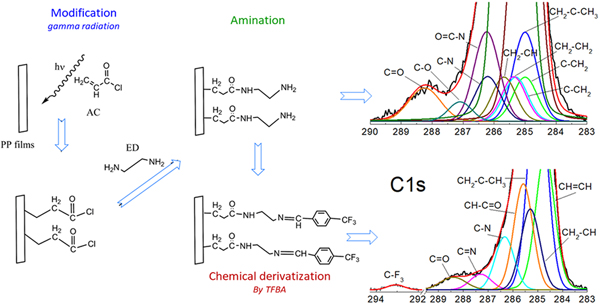
Development of biomaterials with primary amine surfaces is very important for the study of some cells of the immune systemuch as macrophages. Currently, the modification can be carried out by physical or chemical methods with several disadvantages due to the presence of additives or subproducts in the system. To overcome this problem, modified polypropylene (PP) films were synthesized by gamma radiation. In this work, radiation grafting of acryloyl chloride onto PP has been employed to form an acyl chloride. Then, the radiation-grafted films were reacted with ethylenediamine in several solvents to obtain the different concentration of the primary amine. The surface amine concentration was determined by derivatization with 4-trifluoromethyl benzaldehyde and characterized by x-ray photoelectron spectroscopy (N/C ratios), Fourier transform infrared spectroscopy with attenuated total reflection, contact angle, scanning electron microscopy, atomic force microscopy, and elementary analysis. The stability of the amines was measured up to 90 days, without the occurrence of aging as was found by plasma modification.
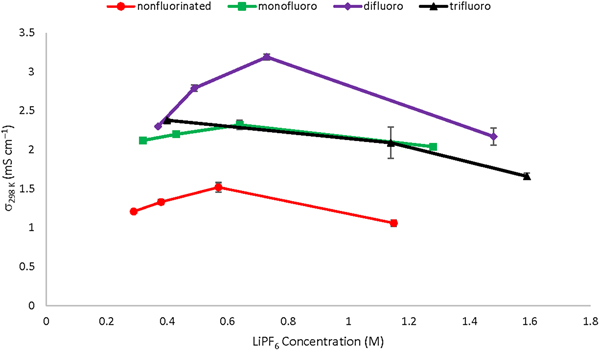
Increasing fluorination of organosilyl nitrile solvents improves ionic conductivities of lithium salt electrolytes, resulting from higher values of salt dissociation. Ionic conductivities at 298 K range from 1.5 to 3.2 mS/cm for LiPF6 salt concentrations at 0.6 or 0.7 M. The authors also report on solvent blend electrolytes where the fluoroorganosilyl (FOS) nitrile solvent is mixed with ethylene carbonate and diethyl carbonate. Ionic conductivities of the FOS solvent/carbonate blend electrolytes increase achieving ionic conductivities at 298 K of 5.5–6.3 mS/cm and salt dissociation values ranging from 0.42 to 0.45. Salt dissociation generally decreases with increasing temperature.
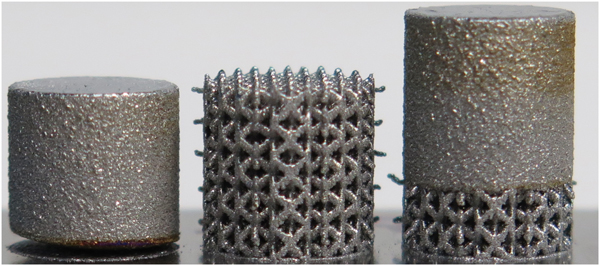
The authors report on pulsed laser powder bed fusion fabrication of nitinol (NiTi) shape memory materials. The authors first performed single-track laser parameter sweeps to assess melt pool stability and determine energy parameters and hatch spacing for larger builds. The authors then assessed the melt pool chemistry as a function of laser energy density and build plate composition. Brittle intermetallics were found to form at the part/build plate interface for both N200 and Ti-6-4 substrates. The intermetallic formation was reduced by building on a 50Ni–50Ti substrate, but delamination still occurred due to thermal stresses upon cooling. The authors were able to overcome delamination on all substrates and fabricate macroscopic parts by building a lattice support structure, which is both compliant and controls heat transfer into the build plate. This approach will enable scalable fabrication of complex NiTi parts.
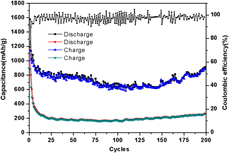
Iron sulfides have attracted much interests for their potential as anode materials in energy storage devices in view of their low costs, and environmentally benign and high theoretical capacities. Among them, Fe1−xS is relatively rarely investigated. In this work, Fe1−xS@rGO has been synthesized using a facile in situ hydrothermal method. After wrapped by rGO, the morphology of Fe1−xS particles changes from hexagonal flakes to irregular particles with much smaller sizes. As the anode material for lithium ion batteries, Fe1−xS@rGO exhibits excellent lithium storage ability. It can deliver an initial discharge capacity of 1575.5 mA h/g in the potential window of 0.005–3 V, and a reversible capacity of 907.8 mA h/g can be maintained after 200 cycles at 100 mA/g. Its improved electrochemical performance can be attributed to the effect of enhanced contact area and shortened Li+ ion transport distance because of rGO’s contribution.
Structure and optical properties have been successfully determined for a series of niobium- and tantalum-containing layered alkaline-earth silicate compounds, Ba3(Nb6−xTax)Si4O26 (x = 0.6, 1.8, 3.0, 4.2, 5.4). The structure of this solid solution was found to be hexagonal P-62m (No. 189), with Z = 1. With x increases from 0.6 to 5.4, the lattice parameter a increases from 8.98804(8) to 9.00565(9) Å and c decreases from 7.83721(10) to 7.75212(12) Å. As a result, the volume decreases from 548.304(11) to 544.479(14) Å3. The (Nb/Ta)O6 distorted octahedra form continuous chains along the c-axis. These (Nb/Ta)O6 chains are in turn linked with the Si2O7 groups to form distorted pentagonal channels in which Ba ions were found. These Ba2+ ions have full occupancy and a 13-fold coordination environment with neighboring oxygen sites. Another salient feature of the structure is the linear Si–O–Si chains. When x in Ba3(Nb6−xTax)Si4O26 increases, the bond valence sum (BVS) values of the Ba sites increase slightly (2.09–2.20), indicating the size of the cage becoming progressively smaller (over-bonding). While SiO cages are also slightly smaller than ideal (BVS range from 4.16 to 4.19), the (Nb/Ta)O6 octahedral cages are slightly larger than ideal (BVS range from 4.87 to 4.90), giving rise to an under-bonding situation. The bandgaps of the solid solution members were measured between 3.39 and 3.59 eV, and the x = 3.0 member was modeled by density functional theory techniques to be 3.07 eV. The bandgaps of these materials indicate that they are potential candidates for ultraviolet photocatalyst.
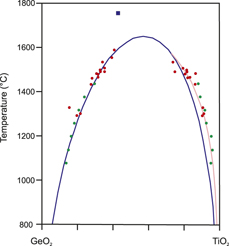
The system GeO2–TiO2 was studied experimentally at high pressure and temperature to measure the miscibility of the two components and to test its applicability as a temperature sensor in high-pressure experiments. Significant solubility between the two end-members was found, with two coexisting solid solutions at high pressure exhibiting mutual solubility that increases with temperature along a solvus. The two solid solution compositions at the solvus can be distinguished readily by X-ray diffraction. At higher temperatures, a complete solid solution exists between the two end-members. The complete solution occurs above a critical line in P–T space (a critical point at each pressure). The critical point is located near 1630 °C and mole fraction ${X_{{\rm{Ti}}{{\rm{O}}_{\rm{2}}}}} = 0.57$ at 6.6 GPa and changes by 60 ± 5° per GPa in the region from 4 to 7 GPa. A model for the shape of the solvus is developed using X-ray diffraction data points from a series of quench experiments and an in situ experiment, and the model is used to estimate the thermal gradients in a Kawai-type multianvil assembly.
The crystal structure of bisoprolol fumarate Form I has been solved and refined using synchrotron X-ray powder diffraction data and optimized using density functional techniques. Bisoprolol fumarate Form I crystallizes in space group P-1 (#2) with a = 8.165 70(5) Å, b = 8.516 39(12) Å, c = 16.751 79(18) Å, α = 89.142(1)°, β = 78.155(1)°, γ = 81.763(1)°, V = 1128.265(10) Å3, and Z = 2. The neutral side chain of the bisoprolol cation is probably disordered. The cation and anion are linked by N–H⋯O and O–H⋯O hydrogen bonds. The cations are also linked by N–H⋯O hydrogen bonds. The result is alternating layers of hydrophilic and hydrophobic layers parallel to the ab-plane. The density of the structure is relatively low at 1.130 g cm−3, but there are no obvious voids in the structure. The powder pattern is included in the Powder Diffraction File™ as entry 00-066-1625.
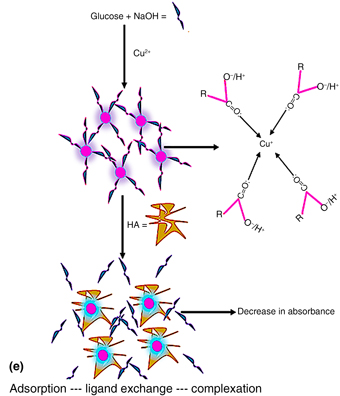
A glucose-reduced, room temperature-synthesized colloidal Cu2O solution (CCS) was used for the first time to detect humic acid (HA), a carcinogen-promoting substance in aqueous solution. The CCS sensor was characterized using standard spectroscopy and microscopy techniques. The sensor evolved as a carboxylic acid-capped peach-pink solution after synthesis. The result of the interaction of the sensor with HA in phosphate buffer solution (pH 7) showed a detection limit of 1.5891 × 10⁻² mg/L over a concentration range of 0.00–0.41 mg/L. This finding suggests that the sensor may be useful for monitoring low levels of HA in aqueous environments.
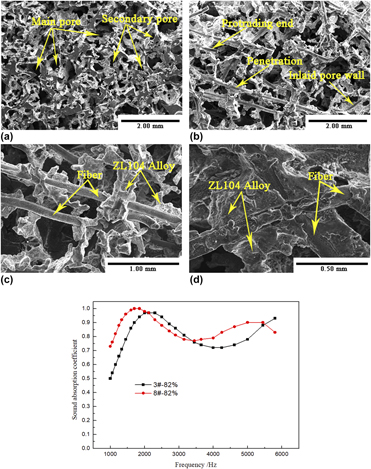
ZL104 alloy foam and ZL104 alloy/aluminum fiber composite foams with a porosity of 71–90% were prepared by an infiltration casting method. The pore structure and the sound absorption properties of these two kinds of foams were studied. The results show that fibers partially embedded in the porous pore walls and partially extending out of the pore in the composite foams. The sound absorption coefficient of the foams has a sound absorption peak and a sound absorption trough with increasing frequency. The fiber composite foam possesses better sound absorption properties compared with the alloy foam. As porosity, fiber diameter, and fiber content increases, the average sound absorption coefficient of the composite foam first increases and then decreases. The average sound absorption coefficient (0.88) of the composite foam with a fiber content of 5 vol%, a fiber diameter of 0.1 mm, and a porosity of 82% increased 10% compared with that of the alloy foam. The surface roughness and specific surface area of the foam increase after fiber compounding, and the sound wave drives the fibers to vibrate to enlarge the consumption of sound energy.
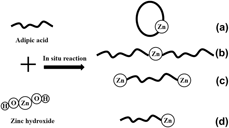
In this work, two types of zinc adipate β-nucleating agents, Adi-Zn(OH)2 (1:1) and Adi-ZnO (1:1), for polypropylene (PP) were prepared and their performances were evaluated and compared with commercial β-nucleating agent (named CNA). Results showed that Adi-Zn(OH)2 (1:1) was more effective in promoting PP to form β-crystals and improving the impact strength of PP in the range of nucleating agent addition (0–0.4 wt%). Based on these findings, the ratio of adipic acid to zinc hydroxide and the nonisothermal crystallization kinetics of the optimum ratio of adipic acid to zinc hydroxide were systematically studied; results showed that at 0.2 wt%, Adi-Zn(OH)2 (1:2), the nucleated PP displayed the highest impact strength, which was 2.6 times that of pure PP and 42% higher than that of CNA. Besides, Adi-Zn(OH)2 (1:2) could also afford to induce the formation of a high content of β-crystals and shorten the crystallization half time (t1/2) and accelerate the crystallization of PP.
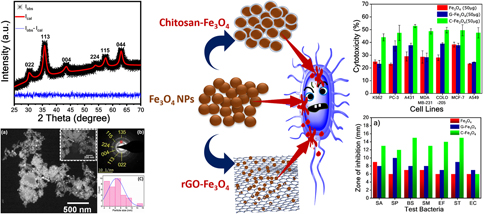
Superparamagnetic iron oxide nanoparticles are well known for biomedical applications. The particle size, morphology, surface area, and functionalization are the key parameters that affect their bioactivity properties. Inline to this, the superparamagnetic Fe3O4 nanoparticles were prepared via chemical coprecipitation method with an average particle size of 6 ± 3 nm. The particles were surface-functionalized with chitosan and in-house prepared reduced graphene oxide (rGO) to obtain chitosan-coated Fe3O4 nanoparticles (C-Fe3O4) and rGO-Fe3O4 nanocomposites (G-Fe3O4), respectively. Upon functionalization, the physicochemical properties of the materials were characterized thoroughly using X-ray diffraction, transmission electron microscopy, vibrating sample magnetometer, Raman Spectroscopy, and thermal gravimetric analysis. Furthermore, they have subjected to cytotoxicity assay, agar two-fold broth dilution test, and disc diffusion assay experiments for the determination of cytotoxicity and antibacterial activities. The effect of surface functionalization on their bioactivity was investigated thoroughly. The surface functionalization with chitosan and rGO has enhanced the bioactivity of the Fe3O4 nanoparticles.
The crystal structure of atropine sulfate monohydrate has been solved and refined using synchrotron X-ray powder diffraction data and optimized using density functional techniques. Atropine sulfate monohydrate crystallizes in space group P21/n (#14) with a = 19.2948(5), b = 6.9749(2), c = 26.9036(5) Å, β = 94.215(2)°, V = 3610.86(9) Å3, and Z = 4. Each of the two independent protonated nitrogen atoms participates in a strong hydrogen bond to the sulfate anion. Each of the two independent hydroxyl groups acts as a donor in a hydrogen bond to the sulfate anion, but only one of the water molecule hydrogen atoms acts as a hydrogen bond donor to the sulfate anion. The hydrogen bonds are all discrete but link the cations, anion, and water molecule along [101]. Although atropine and hyoscyamine (atropine is racemic hyoscyamine) crystal structures share some features, such as hydrogen bonding and phenyl–phenyl packing, the powder patterns show that the structures are very different. The powder pattern for atropine sulfate monohydrate has been submitted to ICDD for inclusion in the Powder Diffraction File™.
We report the dielectric properties of ACu3Ti4O12 (A = Eu2/3, Tb2/3, and Na1/2Eu1/2) (ACTO) in the frequency range of 40 Hz–2.5 MHz and in the temperature range of 293–473 K. The experimental results show that substituting for Ca improves the loss tangent of CaCu3Ti4O12 (CCTO). Although the dielectric constants largely decrease, they remain at a high level of 103. To identify the observed dielectric performances of ACTO, scanning electron microscopy and complex impedance measurements were conducted. The conducting mechanism for the grain of ACTO was found to be ion jumping rather than electron hopping (for the grain of CCTO). The results show that the decreased dielectric constant may be related to the decreased grain size, the different carrier in the grain, the different grain boundary properties, or a combination of these factors. All these factors are associated with the deficiency of oxygen vacancies in the samples of ACTO. The decreased loss tangent may be due to the increase in the grain boundary resistance.
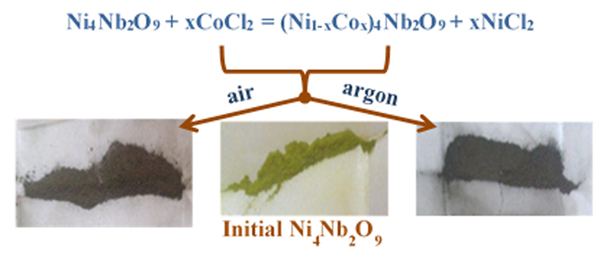
Thermal stable chloride melts were used as the reaction medium for modifying the chemical composition of complex oxides ensuring a marked improvement of their working properties. This paper discusses the original results of the direct effect of molten KCl–CoCl2 mixtures on the fine Ni4Nb2O9 powders under argon- and oxygen-containing gaseous atmospheres at 500 °C. The initial Ni4Nb2O9 powder and the reaction products were studied in detail using the differential scanning calorimetry, thermogravimetry, x-ray diffractometry, Raman and IR spectroscopies, scanning electron microscopy, energy-dispersive x-ray spectroscopy, chemical analysis, and conductometry which demonstrated clearly the formation of the thermal stable single-phase Ni–Co niobates.
This mini review summarizes recent advances in experimental thermodynamics of metal–organic frameworks (MOFs). Taking advantage of the development in mechanochemistry, near-room temperature solution calorimetry, and low-temperature heat capacity measurements, the energetic landscape, entropy trends, and Gibbs free energy evolutions of MOFs with true polymorphism [Zn(MeIm)2, Zn(EtIm)2, and Zn(CF3Im)2] as framework topology varies were thoroughly explored by integrated calorimetric and computational methodologies. In addition, the formation enthalpies of MOFs with ultrahigh porosity (MOF-177 and UMCM-1) and the simplest structure (metal formates) have been determined. The studies summarized below highlight the complex interplays among interrelated compositional, chemical, and topological (structural) factors in the determination of the thermodynamic parameters of MOFs.
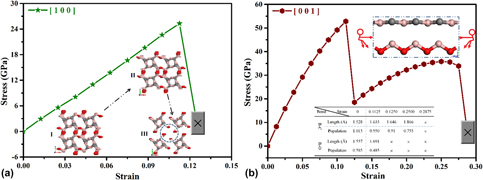
A novel tetragonal B2CO structure (tP16-B2CO), formed by strong covalent sp2–sp3 B–C and B–O bonds, was predicted with aid of an unbiased structure searching method. With the energy lower than those of previously proposed candidates, except oI16-B2CO, tP16-B2CO was identified as the thermodynamic metastable phase for B2CO compound. The elastic matrix and phonon dispersion spectra declare that tP16-B2CO is mechanically and dynamically stable. The electronic band structure calculation at ambient pressure and a series of high pressure has manifested the indirect semiconducting and band gap increases first and then decreases with pressure increases. The calculation of mechanical properties such as hardness and stress–strain relations of tP16 structure revealed its common hard nature with high hardness of 23.19 GPa and anisotropy with the max stress along [001] is far higher than that along [100].
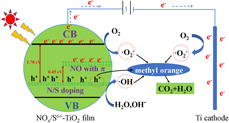
Anatase phase NOx/S6+–TiO2 (x= 0, 1) film with high solar-driven activity has been successfully prepared via electro-assisted oxidation processes. The morphological and structural properties of the film were characterized by scanning electron microscopy, transmission electron microscopy, X-ray photoelectron spectroscopy, and X-ray diffraction, while the optical property was detected by UV-vis-NIR absorption spectroscopy. The results showed that the NOx/S6+–TiO2 film was composed of “flower-like” microvoids structure and displayed broad and strong optical absorption at around 544 and 1500 nm. Transient photocurrent response, photoluminescence spectroscopy, and electrochemical impedance spectroscopy indicated that the generation and separation of photogenerated charges were significantly enhanced under simulated solar irradiation. The NOx/S6+–TiO2 film exhibited excellent photoelectrocatalytic activity for the degradation of methyl orange (MO), and the decoloration rate and TOC removal respectively reached 98.97 and 59.44% at 20 min under solar irradiation. The film still had good stability after reusing ten times. Furthermore, a possible mechanism of photoelectrocatalysis was suggested in MO degradation by using NOx/S6+–TiO2 film.
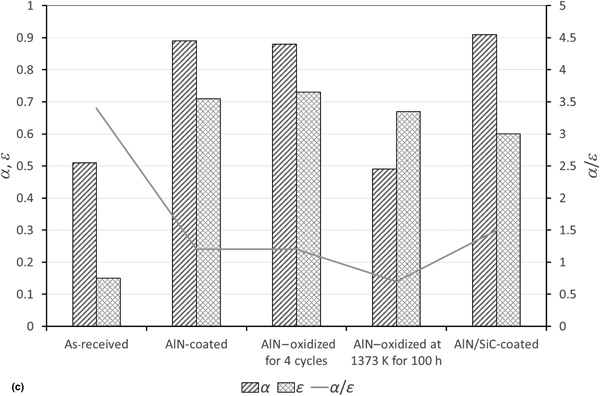
The extending market of concentrated solar power plants requires high-temperature materials for solar surface receivers that would ideally heat an air coolant beyond 1300 K. This work presents investigation on high-temperature alloys with ceramic coatings (AlN or SiC/AlN stacking) to combine the properties of the substrate (creep resistance, machinability) and coating (slow oxidation kinetics, high solar absorptivity). The first results showed that high-temperature oxidation resistance and optical properties of metallic alloys were improved by the different coatings. However, the fast thermal shocks led to high stress levels not compatible due to the differences in thermal expansion coefficients.
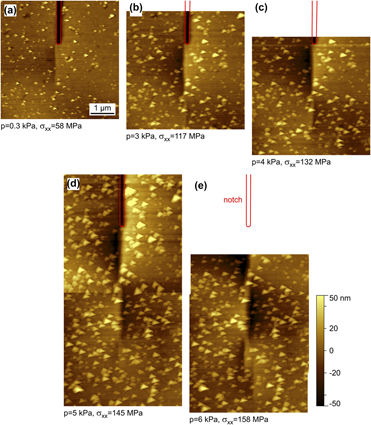
The microstructure contribution to the very low fracture toughness of freestanding metallic thin films was investigated by bulge fracture tests on 200-nm-thick {100} single-crystalline and polycrystalline silver films. The single-crystalline films exhibited a significantly lower fracture toughness value (KIC= 0.88 MPa m1/2) than their polycrystalline counterparts (KIC= 1.45 MPa m1/2), which was rationalized by the observation of an unusual crack initiation behavior—characterized by twinning in front of the notch tip—during in situ testing in the atomic force microscope. Twinning was also observed as a dominant deformation mechanism in atomistic simulations. This twinning tendency is explained by comparing the resolved shear stresses acting on the leading partial dislocation and the full dislocation, which allows to develop a size- and orientation-dependent twinning criterion. The fracture toughness of polycrystalline samples was found to be higher because of the energy dissipation associated with full dislocation plasticity and because of crack meandering along grain boundaries.