To save content items to your account,
please confirm that you agree to abide by our usage policies.
If this is the first time you use this feature, you will be asked to authorise Cambridge Core to connect with your account.
Find out more about saving content to .
To save content items to your Kindle, first ensure no-reply@cambridge.org
is added to your Approved Personal Document E-mail List under your Personal Document Settings
on the Manage Your Content and Devices page of your Amazon account. Then enter the ‘name’ part
of your Kindle email address below.
Find out more about saving to your Kindle.
Note you can select to save to either the @free.kindle.com or @kindle.com variations.
‘@free.kindle.com’ emails are free but can only be saved to your device when it is connected to wi-fi.
‘@kindle.com’ emails can be delivered even when you are not connected to wi-fi, but note that service fees apply.
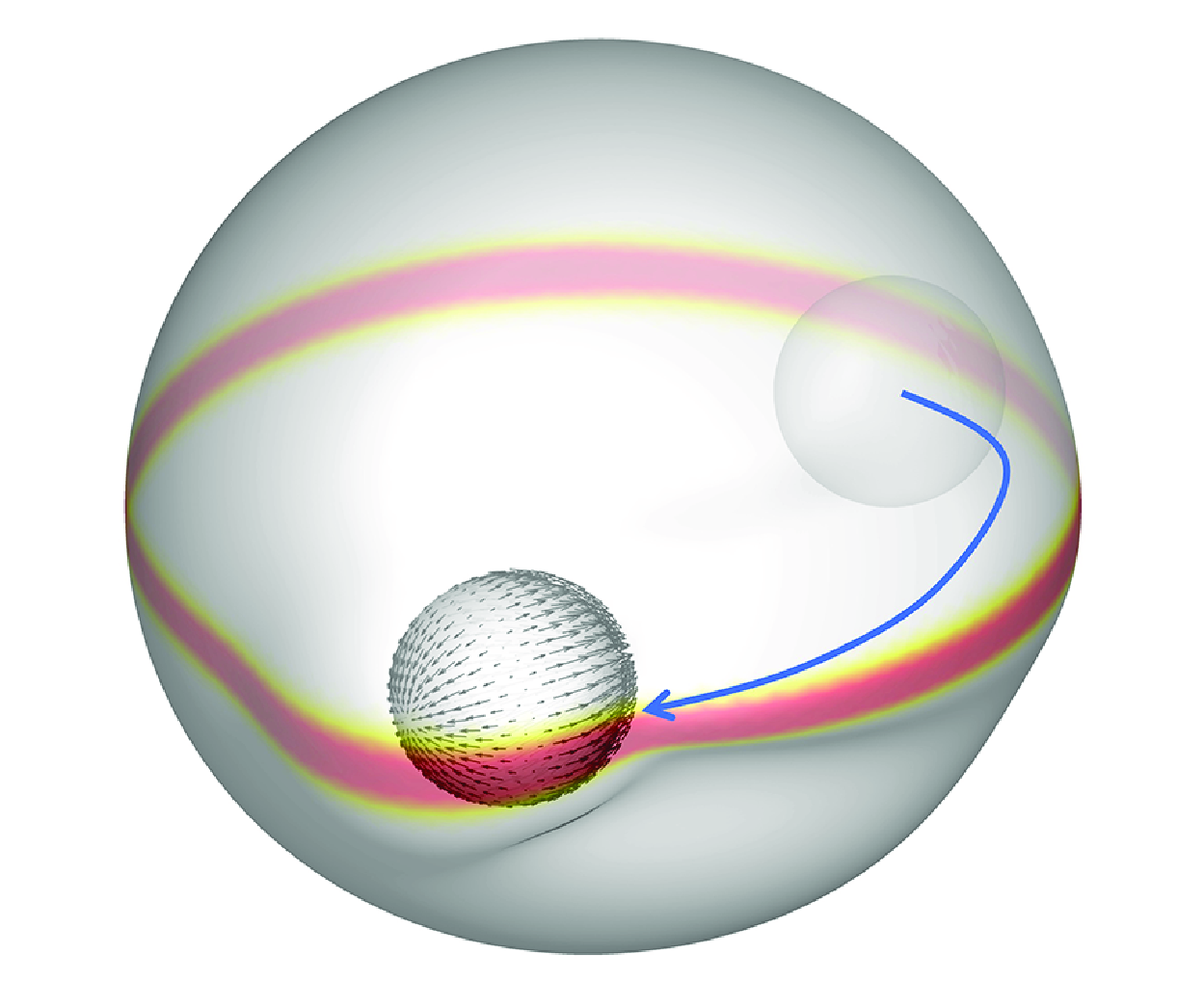
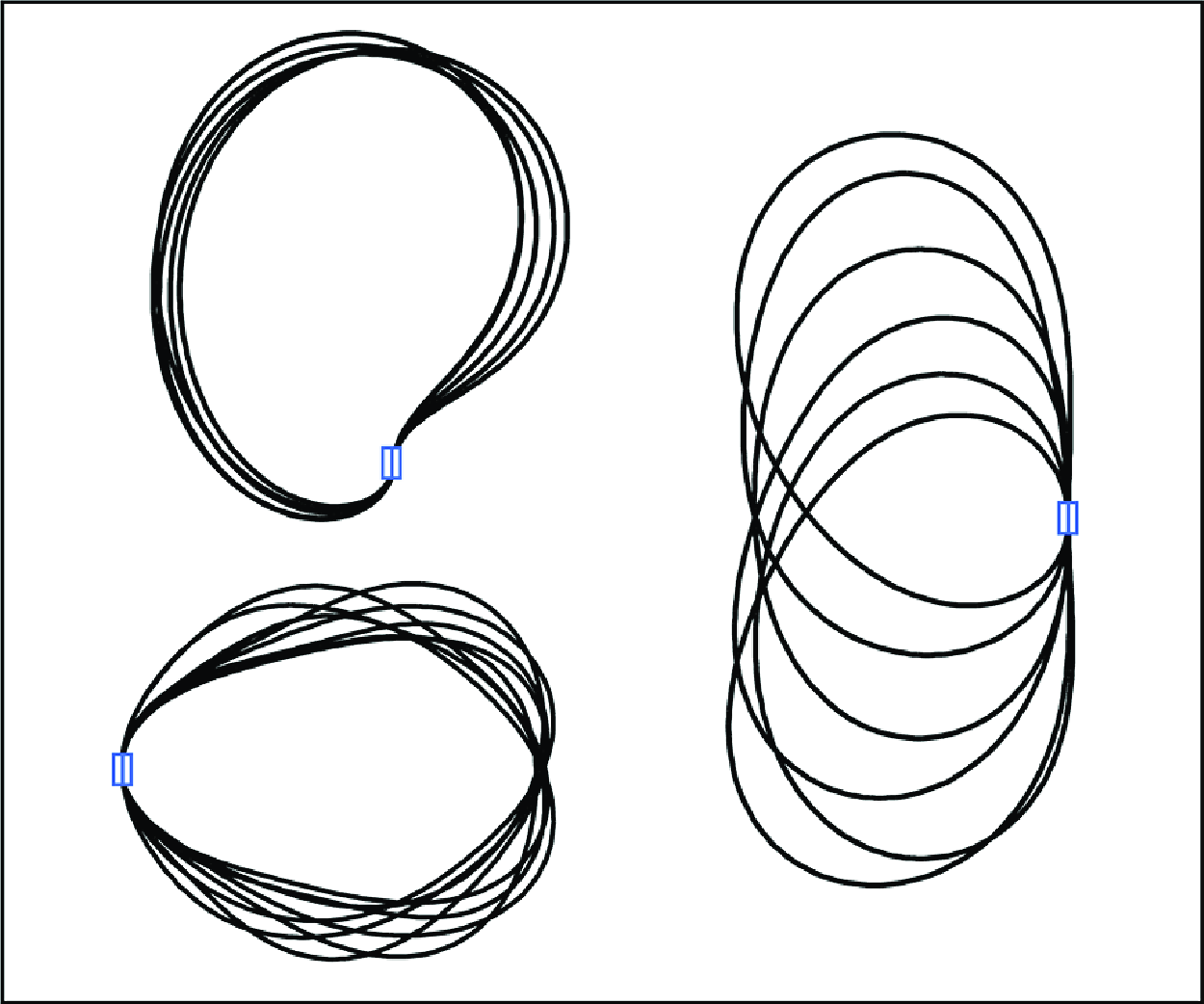
Capsules are widely used in bioengineering, chemical engineering and industry. The development of drug delivery systems using deformable capsules is progressing, yet the regulation of drug release within a capsule remains a challenge. Meanwhile, a microswimmer enclosed in a capsule can generate a large lubrication force on the capsule membrane, which could result in deformation and mechanical damage to the membrane. In this study, we numerically investigate how a capsule can be damaged by an enclosed microswimmer. The capsule membrane is modelled as a two-dimensional neo-Hookean material, with its deformability parametrised by capillary number. An isotropic brittle damage model is applied to express membrane rupture, with the Lighthill–Blake squirmer serving as the microswimmer model. In a sufficiently small capillary number regime, pusher-type squirmers exhibit stable swimming along the capsule membrane, while neutral-type and puller-type squirmers exhibit swimming towards the membrane and remain stationary. As capillary number increases, the damage to the membrane increases and rupture occurs in all swimming modes. For pusher-type squirmers, the critical capillary number leading to rupture is dependent on the initial incidence angle, whereas neutral-type and puller-type squirmers are independent of the initial value. Furthermore, we present methods for controlling membrane damage by magnetically orienting the microswimmer. The findings reveal that a static magnetic field can orient the microswimmer, leading to membrane damage and rupture even for a capsule that cannot be damaged by free swimming, while controlling the swimming path with a rotating magnetic field enables soft membranes to maintain deformation without rupture.
Limb salvage surgery (LSS) with megaprosthesis is a common treatment for distal femur tumors, but its impact on gait remains poorly understood. Traditional gait analysis methods are costly and require specialized equipment. This study aims to compare spatiotemporal gait parameters between patients with distal femur megaprosthesis and healthy controls using an inertial measurement unit (IMU). We conducted a case–control study with 79 participants: 31 patients with distal femur megaprosthesis and 48 healthy controls. Gait data were collected using an IMU placed at L5-S1, capturing metrics such as gait quality index (GQI), pelvic kinematics, propulsion index, and gait speed. Statistical analysis included Student’s t-test, Mann–Whitney U test, and one-way ANOVA to compare gait parameters across groups. Patients with megaprosthesis exhibited significantly lower gait speed, propulsion index and anteroposterior acceleration symmetry index compared to controls (p < .05). GQI was reduced in the healthy legs of the cases (92.3%) compared to control legs (96.6%). Adaptations included prolonged stance phases in healthy legs and decreased single support phases in prosthetic legs. Despite these changes, gait patterns remained within functional ranges. IMU-based gait analysis reveals significant but functional alterations in gait mechanics among patients with distal femoral megaprosthesis. These findings underscore the need for tailored rehabilitation strategies to address compensatory mechanisms, optimize mobility, and enhance long-term outcomes. The use of IMU technology offers a cost-effective and portable alternative for clinical gait assessments.
The flow-induced oscillations of a clamped flexible ring in a uniform flow were explored using the penalty immersed boundary method. Both inverted and conventional ring configurations were examined, with systematic analysis focused on the effects of bending rigidity and eccentricity. Four distinct oscillation modes were identified across parameter variations: flapping (F), deflected oscillation (DO), transverse oscillation (TO) and equilibrium (E) modes. Each mode exhibited a 2S wake pattern. The inverted ring sustained the DO mode under low bending rigidity with a deflected shape, transitioning to the TO mode at higher bending rigidity. In the TO mode, a lock-in phenomenon emerged, enabling the inverted ring to achieve a high power coefficient due to a simultaneous rise in both oscillation amplitude and frequency. By contrast, the conventional ring exhibited the F mode at low bending rigidity and transitioned to the E mode as rigidity increased, although its power coefficient remained lower because of reduced critical bending rigidity. For the inverted ring, low eccentricity enhanced oscillation intensity but limited the operational range of the TO mode. In contrast, for the conventional ring, reducing eccentricity led to an increase in oscillation amplitude. Among the investigated configurations, the inverted-clamped ring achieved the highest energy-harvesting efficiency, surpassing those of the conventional clamped ring and a buckled filament.
The work investigates the response dynamics of non-premixed jet flames to blast waves that are incident along the jet axis. In the present study, blast waves, generated using the wire-explosion technique, are forced to sweep across a non-premixed jet flame that is stabilised over a nozzle rim positioned at a distance of 264 mm from the source of the blast waves. The work spans a wide range of fuel-jet Reynolds numbers ($Re$; ranging from 267 to 800) and incident blast-wave Mach numbers ($M_{s,r}$; ranging from 1.025 to 1.075). The interaction imposes a characteristic flow field over the jet flame marked by a sharp discontinuity followed by a decaying profile and a delayed second spike. The second spike in the flow field profile corresponds to the induced flow that follows the blast front. While the response of the flame to the blast front was minimal, it was found to detach from the nozzle rim and lift off following the interaction with the induced flow. Subsequently, the lifted flame was found to reattach back at the nozzle or extinguish, contingent on the operating $Re$ and $M_{s,r}$. Alongside flame lift-off, flame-tip flickering was aggravated under the influence of the induced flow. A simplified theoretical model extending the vorticity transport equation was developed to estimate the change in flickering time scales and length scales owing to the interaction with the induced flow. The observed experimental trends were further compared against theoretical predictions from the model.
We propose a B-integral management strategy for manipulating the nonlinear effects by employing a discrete single-crystal fiber (SCF) configuration, enabling direct amplification of 2-μm femtosecond pulses at high repetition rates without additional pulse picking, stretching and compression. The system delivers an average power of more than 56 W at 75.45 MHz with extremely high extraction efficiency (>55%) and near-diffraction-limited beam quality (M2 < 1.2). The dynamic evolution of the optical spectra and temporal properties in the power amplifier reveals that detrimental nonlinear effects are largely suppressed due to the low accumulated nonlinear phase shift in the discrete SCF layout. This straightforward, compact and relatively simple approach is expected to open a new route to the amplification of 2-μm ultrashort pulses at MHz and kHz repetition rates to achieve high average/peak powers, thereby offering exciting prospects for applications in modern nonlinear photonics.
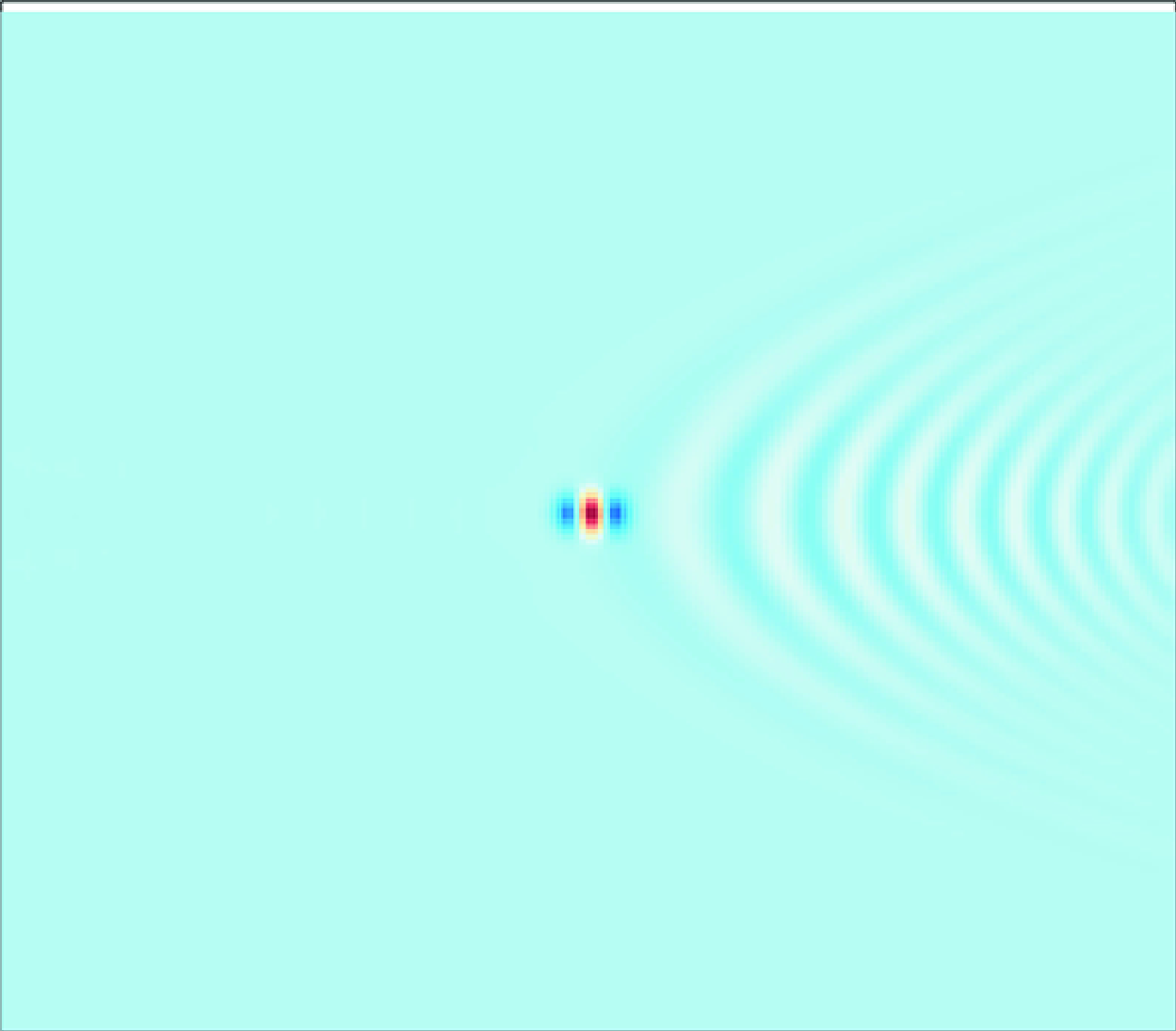
The nonlinear disturbance caused by either a localised pressure distribution moving at constant speed on the free surface of a liquid of finite depth or a flow over a topographic obstacle, is investigated using (i) the weakly nonlinear forced Kadomtsev–Petviashvili equation which is valid for depth-based Froude numbers near unity and (ii) the fully nonlinear free-surface Euler system. The presence of a steady v-shaped Kelvin wave pattern downstream of the forcing is established for this model equation, and the wedge angle is characterised as a function of the depth-based Froude number. Inspired by this analysis, it is shown that the wake can be eliminated via a careful choice of the forcing distribution and that, significantly, the corresponding nonlinear wave-free solution is stable so that it could potentially be seen in a physical experiment. The stability is demonstrated via the numerical solution of an initial value problem for both the model equation and the fully nonlinear Euler system in which the steady wave-free state is attained in the long-time limit.
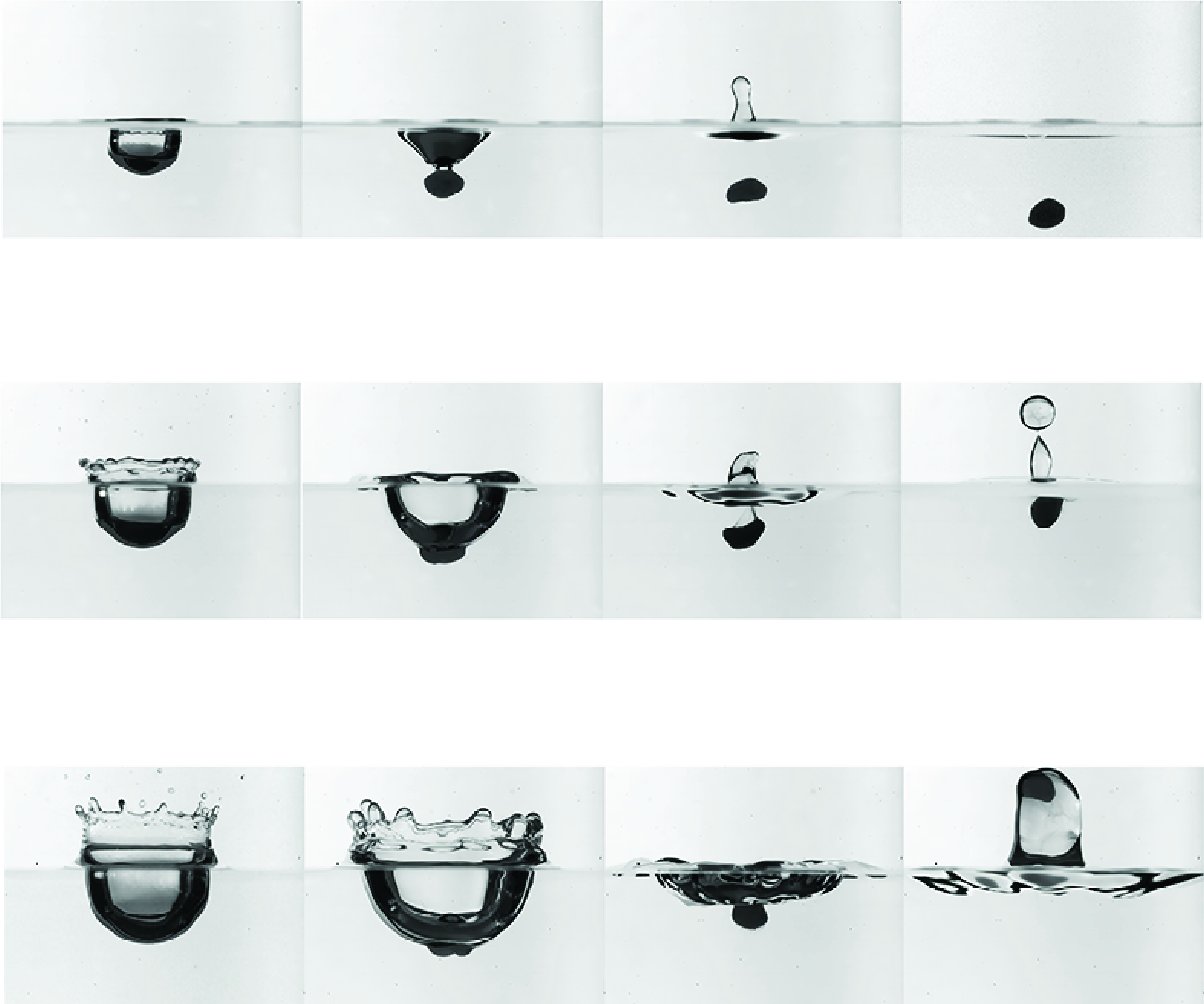
The interaction between elastic structures and fluid interfaces, known as ‘hydroelastic’ problems, presents unique challenges to classical frameworks established for rigid spheres and liquid droplets. In this work, we experimentally demonstrate an intriguing phenomenon where ultrasoft hydrogel spheres rebound from a water surface at high impact speeds, even when their density exceeds that of water. We further propose a theoretical force-balance model, incorporating energy redistribution and potential flow theory, to predict the critical impact speed for the transition from sinking to rebounding, as well as the temporal evolution of both spreading diameter and cavity expansion. Our findings extend the classical Weber- and Bond-number-dominated paradigms for rigid spheres and liquid droplets, demonstrating that hydrogel dynamics is controlled by a modified elastocapillary Mach number, with rebound achievable even for hydrophilic spheres. These findings improve the understanding of soft-impact hydrodynamics and offer design principles for applications in biomimetic robotics and energy-absorbing materials.
We investigate the dynamics of a pair of rigid rotating helices in a viscous fluid, as a model for bacterial flagellar bundle and a prototype of microfluidic pumps. Combining experiments with hydrodynamic modelling, we examine how spacing and phase difference between the two helices affect their torque, flow field and fluid transport capacity at low Reynolds numbers. Hydrodynamic coupling reduces the torque when the helices rotate in phase at constant angular speed, but increases the torque when they rotate out of phase. We identify a critical phase difference, at which the hydrodynamic coupling vanishes despite the close spacing between the helices. A simple model, based on the flow characteristics and positioning of a single helix, is constructed, which quantitatively predicts the torque of the helical pair in both unbounded and confined systems. Finally, we show the influence of spacing and phase difference on the axial flux and the pump efficiency of the helices. Our findings shed light on the function of bacterial flagella and provide design principles for efficient low-Reynolds-number pumps.
This study explored mental workload recognition methods for carrier-based aircraft pilots utilising multiple sensor physiological signal fusion and portable devices. A simulation carrier-based aircraft flight experiment was designed, and subjective mental workload scores and electroencephalogram (EEG) and photoplethysmogram (PPG) signals from six pilot cadets were collected using NASA Task Load Index (NASA-TLX) and portable devices. The subjective scores of the pilots in three flight phases were used to label the data into three mental workload levels. Features from the physiological signals were extracted, and the interrelations between mental workload and physiological indicators were evaluated. Machine learning and deep learning algorithms were used to classify the pilots’ mental workload. The performances of the single-modal method and multimodal fusion methods were investigated. The results showed that the multimodal fusion methods outperformed the single-modal methods, achieving higher accuracy, precision, recall and F1 score. Among all the classifiers, the random forest classifier with feature-level fusion obtained the best results, with an accuracy of 97.69%, precision of 98.08%, recall of 96.98% and F1 score of 97.44%. The findings of this study demonstrate the effectiveness and feasibility of the proposed method, offering insights into mental workload management and the enhancement of flight safety for carrier-based aircraft pilots.
Revised and expanded to reflect cutting-edge innovation in aerodynamics, and packed with new features to support learning, the seventh edition of this classic textbook introduces the fundamentals of aerodynamics using clear explanations and real-world examples. Structured around clear learning objectives, this is the ideal textbook for undergraduate students in aerospace engineering, and for graduate students and professional engineers seeking a readable and accessible reference. Over 10 new Aerodynamics Computation boxes that bring students up to speed on modern computational approaches for performing aerodynamic analysis, including various Matlab® programs, OpenVSP, XFOIL, CBAero, Kestrel, and other analysis tools. New end-of-chapter team projects show students how to work together to solve larger, more important aerodynamic problems, in many cases using the computational approaches listed above. New and expanded coverage of propellers, UAVs, transonic wings, wingtip devices, drones, hypersonic aircraft, and aircraft design. New pedagogical features including Look Ahead navigation, expanded use of SI units in new homework problems, and many new Aerodynamics Concepts boxes featuring advanced experimental aircraft concepts. Additional references in each chapter that bring current advancements in aerodynamics into each part of the book.
The basic geometric parameters that define airfoil and wing shapes are presented prior to the basic aerodynamic forces and moments, as well as the nondimensional coefficients, that are used for airfoils and wings. A general description of the impact of airfoil geometry on the resulting aerodynamics, including the effects of camber and thickness, is presented. This includes how flow around a wing is different from flow around an airfoil, as well as methods to estimate the impact of wing geometry on lift and drag. Finally, the chapter concludes with the contributing factors to airplane drag and the methods to estimate zero-lift drag. coefficient of an airplane
Analysis capabilities are developed that include the impact of compressibility on the derivation of equations that govern subsonic compressible and transonic flows, including the relations to transform incompressible experimental data or geometry to subsonic compressible Mach numbers. Transonic flow is defined, including explanations for the flow characteristics that distinguish this flow regime from other flow regimes. Estimation techniques are developed for the critical and drag-divergence Mach numbers. The impact of transonic flow on aircraft design is discussed, including the impact of wing sweep on airplane aerodynamics and the role of supercritical airfoils. Finally, the transonic area rule is discussed, including the impact on transonic and supersonic aircraft.
Understand the physical concepts that apply to supersonic wing aerodynamics, such as knowing the difference between a subsonic and supersonic leading edge and how that impacts the airfoils used for the wing. Information is also presented that expands on why subsonic and supersonic drag-due-to-lift components are caused by different physical phenomenon. Supersonic 2D and 3D flow theories can then be used to analyze the forces and moments acting on a supersonic wing, including conical flow theory for calculating wing-tip effects. The reader should then be able to explain how supersonic airplanes make a compromise between subsonic and supersonic aerodynamic performance, and how that impacts airfoil and wing design parameters. Fuselage shapes then use slender body theory for analysis, and details about how boattails are used for reducing base drag.
Aerodynamic design decisions are rarely made without considering multidisciplinary design factors, which leads to compromises between aerodynamics and other disciplines. Readers will learn how to increase lift on an airplane, and how to modify an airplane in order to achieve aerodynamic improvements. Drag reduction will then be discussed, including ways to reduce drag and the impact of drag reduction on aircraft design. The chapter ends with a study of aircraft from the past and how aerodynamic considerations were included in their design.
Chapter 4 helps the reader develop a basic understanding of boundary layers and their impact on aerodynamic flows, and be able to obtain solutions for basic laminar flows and use the results to estimate properties, such as boundary layer thickness, shear stress, and skin friction. Descriptions are included for the characteristics of turbulent boundary layers, and how they compare to laminar boundary layers. Readers will be presented with information on how drag is impacted by laminar and turbulent boundary layers, including friction and separation. Analysis approaches will be presented to estimate turbulent boundary layer properties, such as boundary layer thickness, shear stress, and skin friction, including how to complete a control volume analysis of a boundary layer flow. Information is also presented for how to calculate the heat transfer and heat-transfer rate for a constant-property flow.
Basic concepts are developed for supersonic airfoils, including why supersonic airfoils have low lift-to-drag ratios compared to subsonic airfoils. Supersonic airfoil flows are discussed, leading to a basic understanding of the flow around supersonic airfoils and the shock/expansion wave patterns that develop. Three supersonic airfoil theories are then developed, including linear theory, second-order theory, and shock-expansion theory.