Refine search
Actions for selected content:
212269 results in Engineering
14 - Tools for Defining the Aerodynamic Environment
-
- Book:
- Aerodynamics for Engineers
- Published online:
- 12 June 2025
- Print publication:
- 12 June 2025, pp 872-902
-
- Chapter
- Export citation
8 - Dynamics of a Compressible Flow Field
-
- Book:
- Aerodynamics for Engineers
- Published online:
- 12 June 2025
- Print publication:
- 12 June 2025, pp 504-578
-
- Chapter
- Export citation
1 - Why Study Aerodynamics?
-
- Book:
- Aerodynamics for Engineers
- Published online:
- 12 June 2025
- Print publication:
- 12 June 2025, pp 1-39
-
- Chapter
- Export citation
Appendix A - The Equations of Motion Written in Conservation Form
-
- Book:
- Aerodynamics for Engineers
- Published online:
- 12 June 2025
- Print publication:
- 12 June 2025, pp 903-908
-
- Chapter
- Export citation
Contents
-
- Book:
- Aerodynamics for Engineers
- Published online:
- 12 June 2025
- Print publication:
- 12 June 2025, pp v-x
-
- Chapter
- Export citation

A study on the expansion wave diffraction over bodies
-
- Journal:
- Journal of Fluid Mechanics / Volume 1012 / 10 June 2025
- Published online by Cambridge University Press:
- 12 June 2025, A24
-
- Article
- Export citation
Appendices
-
- Book:
- Aerodynamics for Engineers
- Published online:
- 12 June 2025
- Print publication:
- 12 June 2025, pp 903-916
-
- Chapter
- Export citation
2 - Fundamentals of Fluid Mechanics
-
- Book:
- Aerodynamics for Engineers
- Published online:
- 12 June 2025
- Print publication:
- 12 June 2025, pp 40-100
-
- Chapter
- Export citation
6 - Incompressible Flows Around Airfoils of Infinite Span
-
- Book:
- Aerodynamics for Engineers
- Published online:
- 12 June 2025
- Print publication:
- 12 June 2025, pp 331-384
-
- Chapter
- Export citation
12 - Hypersonic Flows
-
- Book:
- Aerodynamics for Engineers
- Published online:
- 12 June 2025
- Print publication:
- 12 June 2025, pp 736-804
-
- Chapter
- Export citation
7 - Incompressible Flow About Wings of Finite Span
-
- Book:
- Aerodynamics for Engineers
- Published online:
- 12 June 2025
- Print publication:
- 12 June 2025, pp 385-503
-
- Chapter
- Export citation
Reviews
-
- Book:
- Aerodynamics for Engineers
- Published online:
- 12 June 2025
- Print publication:
- 12 June 2025, pp ii-ii
-
- Chapter
- Export citation
3 - Dynamics of an Incompressible, Inviscid Flow Field
-
- Book:
- Aerodynamics for Engineers
- Published online:
- 12 June 2025
- Print publication:
- 12 June 2025, pp 101-184
-
- Chapter
- Export citation
Answers to Selected Problems
-
- Book:
- Aerodynamics for Engineers
- Published online:
- 12 June 2025
- Print publication:
- 12 June 2025, pp 917-922
-
- Chapter
- Export citation
Conversion Factors
-
- Book:
- Aerodynamics for Engineers
- Published online:
- 12 June 2025
- Print publication:
- 12 June 2025, pp 940-944
-
- Chapter
- Export citation
Credits
-
- Book:
- Aerodynamics for Engineers
- Published online:
- 12 June 2025
- Print publication:
- 12 June 2025, pp 923-931
-
- Chapter
- Export citation
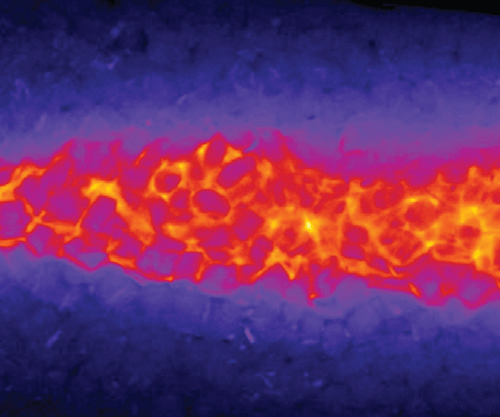
Effective reaction kinetics of steady mixing fronts in porous media
-
- Journal:
- Journal of Fluid Mechanics / Volume 1013 / 25 June 2025
- Published online by Cambridge University Press:
- 11 June 2025, A4
-
- Article
-
- You have access
- Open access
- HTML
- Export citation

Tailoring formations of self-organising hydrofoil schools towards high-efficiency
-
- Journal:
- Journal of Fluid Mechanics / Volume 1012 / 10 June 2025
- Published online by Cambridge University Press:
- 11 June 2025, A26
-
- Article
-
- You have access
- Open access
- HTML
- Export citation
-
We present new unconstrained simulations and constrained experiments of a pair of pitching hydrofoils in a leader–follower in-line arrangement. Free-swimming simulations with matched pitching amplitudes show self-organisation into stable formations at a constant gap distance without any control. Over a wide range of phase synchronisation, amplitude and Lighthill number typical of biology, we discover that the stable gap distance scales with the actual wake wavelength of an isolated foil rather than the nominal wake wavelength. A scaling law for the actual wake wavelength is derived and shown to collapse data across a wide Reynolds number range of $200 \leqslant Re \leqslant 59\,000$. Additionally, vortex analysis uncovers that the leader’s wake wavelength-to-chord ratio, $\lambda /c$, is the key dimensionless variable to maximise the follower’s/collective efficiency. When $\lambda /c \approx 2$ it ensures that the follower’s leading edge suction force and the net force from a nearby vortex pair act in the direction with the foil’s motion thereby reducing the follower’s power. Moreover, in both simulations and experiments mismatched foil amplitudes are discovered to increase the efficiency of hydrofoil schools by 70 % while maintaining a stable formation without closed-loop control. This occurs by (i) increasing the stable gap distance between foils to push them into a high-efficiency zone and (ii) raising the level of efficiency in these zones. This study bridges the gap between constrained and unconstrained studies of in-line schooling by showing that constrained-foil measurements can map out the potential efficiency benefits of schooling. These findings can aid in the design of high-efficiency biorobot schools.


Crystal structure of anisomycin, C14H19NO4
-
- Journal:
- Powder Diffraction / Volume 40 / Issue 4 / December 2025
- Published online by Cambridge University Press:
- 11 June 2025, pp. 391-396
-
- Article
-
- You have access
- Open access
- HTML
- Export citation
Powder pattern and hydrogen bonding in the crystal structure of phenelzine sulfate, C8H14N2(SO4)
-
- Journal:
- Powder Diffraction / Volume 40 / Issue 3 / September 2025
- Published online by Cambridge University Press:
- 11 June 2025, pp. 236-240
-
- Article
-
- You have access
- Open access
- HTML
- Export citation
