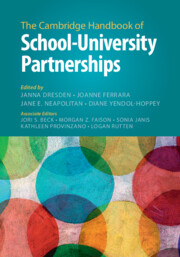
Genuinely broad in scope, each handbook in this series provides a complete state-of-the-field overview of a major sub-discipline within language study, law, education and psychological science research.
To save content items to your account,
please confirm that you agree to abide by our usage policies.
If this is the first time you use this feature, you will be asked to authorise Cambridge Core to connect with your account.
Find out more about saving content to .
To save content items to your Kindle, first ensure no-reply@cambridge.org
is added to your Approved Personal Document E-mail List under your Personal Document Settings
on the Manage Your Content and Devices page of your Amazon account. Then enter the ‘name’ part
of your Kindle email address below.
Find out more about saving to your Kindle.
Note you can select to save to either the @free.kindle.com or @kindle.com variations.
‘@free.kindle.com’ emails are free but can only be saved to your device when it is connected to wi-fi.
‘@kindle.com’ emails can be delivered even when you are not connected to wi-fi, but note that service fees apply.
This chapter explores the potential and limitations of AI in the legal field, with a focus on its application in legal research through tools like Lexis+ AI. It critically evaluates Lexis+ AI’s capability in case retrieval, a crucial function for legal professionals who rely on accurate and comprehensive legal sources to inform their work. The study provides an empirical analysis of Lexis+ AI’s performance on cryptocurrency-related legal queries, revealing that while the tool can generate accurate responses, it often falls short in terms of relevance and completeness. This chapter concludes by discussing the implications for legal professionals and legal tech companies, emphasizing the need for ongoing refinement of AI technologies, the importance of keeping legal professionals involved in decision-making processes, and the necessity of further collaboration between the legal and tech sectors.
The Cambridge Handbook of School-University Partnerships offers a panoramic view of research on school-university partnerships (SUPs), laying the groundwork for further development in the field. Through different theoretical and methodological perspectives, it amplifies the voices of scholars and practitioners across various institutions. This inclusive approach provides a comprehensive resource for researchers, scholars, students, practitioners, and policymakers, that honors diversity while fostering unity and expansion within the field of SUPs. Covering topics from historical foundations to international perspectives, the handbook delves into areas such as teaching, equity, leadership, community engagement, innovation, funding, and policy. By embracing the collaborative essence of SUPs, it promotes mutual benefit and encourages continued exploration in these dynamic settings.
Psychology, with its dedication to understanding human behavior and its complexities, is a key part in comprehending the underpinnings of violent extremism. This comprehensive resource encompasses all major psychological frameworks related to violent extremism, making it essential reading for scholars, practitioners, policymakers, and students determined to enact positive change in this critical area. This handbook provides a state-of-the-art overview of the psychological drivers of violent extremism, offering multi-level analyses that span individual, group, and contextual factors. Each chapter includes practical sections outlining implications for practitioners and policymakers, ensuring the theoretical insights are directly applicable to real-world scenarios. To clarify such complex concepts, the book is enriched with models and diagrams. By integrating diverse theoretical perspectives and empirical research, this guide provides invaluable insights and actionable strategies to effectively understand and combat violent extremism.
In recent years, the use of AI has skyrocketed. The introduction of widely available generative AI, such as ChatGPT, has reinvigorated concerns for harm caused to users. Yet so far government bodies and scholarly literature have failed to determine a governance structure to minimize the risks associated with AI and big data. Despite the recent consensus among tech companies and governments that AI needs to be regulated, there has been no agreement regarding what a framework of functional AI governance should look like. This volume assesses the role of law in governing AI applications in society. While exploring the intersection of law and technology, it argues that getting the mix of AI governance structures correct-both inside and outside of the law-while balancing the importance of innovation with risks to human dignity and democratic values, is one of the most important legal-social determination of our times.
This chapter discusses the default mode network (DMN), a set of anatomically distinct and functionally correlated brain regions robustly active during the resting state. Once considered the “task negative” network, the DMN is now appreciated as integral to a variety of higher-level, goal-directed skills that are bidirectionally linked to language. Such abilities are dependent on optimal interaction of the DMN with other brain networks. We first review the DMN’s association with cognition and language in the healthy brain, as well as how these change with aging, stroke, and neurodegeneration. Next, we survey existing research describing changes in DMN activation and functional connectivity in post-stroke and primary progressive aphasia as they relate to language impairment. While this connection remains poorly elaborated, we propose that current evidence supports a potential therapeutic role for the DMN, such as through offering targets for noninvasive brain stimulation that support domain-general skills and are also better structurally preserved in post-stroke and primary progressive aphasias compared to the language regions primarily impacted by these disorders. Greater understanding of the DMN’s role in language disruption, decline, maintenance, and recovery could ultimately help to improve outcomes for individuals with aphasia due to stroke or neurodegeneration.
Antimicrobial resistance is a multidisciplinary issue that has been high in the global agenda since the 2015 WHO Global Action Plan (GAP) and the 2016 UNGA Declaration. The Quadripartite Coalition has set up a consolidated global governance structure to coordinate AMR responses, including a Global Leaders Group, an Independent Panel of Experts and a stakeholders’ platform. At the national level, countries have set up more or less formal mechanisms to coordinate AMR management, develop and implement National Action Plans.
This chapter will draw on these pilot experiences to identify options for broader One Health governance and regulation. The chapter will examine global and regional governance and regulation of AMR – focusing on the EU as a case study – to explore possible applications to other priority areas such as zoonotic diseases.
In the wake of the COVID-19 pandemic, member states of the World Health Organisation (WHO) agreed to ‘draft and negotiate a WHO convention, agreement or other international instrument on pandemic prevention, preparedness and response’ (Pandemic Treaty).
Proposals for a Pathogen Access and Benefit-Sharing (PABS) System were included from the earliest drafts of the Pandemic Treaty. Access and Benefit-Sharing (ABS) is a transactional mechanism with its origins in international environmental law, where access to genetic resources for use in research and development is provided in exchange for a share of the benefits associated with their use. The purpose is to generate benefits that can be channelled into environmental conservation and sustainable use activities in countries where the genetic resources originate.
The PABS System could be a mechanism for incorporating One Health considerations into the Pandemic Treaty, but this will depend on its design and implementation. This chapter analyses the proposed PABS System in the Pandemic Treaty negotiating texts to determine whether it constitutes a genuine attempt to apply a One Health approach to pathogen ABS.
The relationship between One Health and human rights is both symbiotic and antagonistic. The objectives of One Health align with human rights to the extent that they advance specific rights, particularly the rights to life and health. One Health also promotes human dignity, the foundation of human rights, by improving environmental conditions and addressing threats to health that impact people’s lives. Yet the inherent anthropocentrism of human rights sits uneasily with One Health’s commitment to human, animal, and environmental health. The growing field of environmental human rights may offer some way forward for resolving this tension and advancing the legal framework for One Health, while also highlighting some of the potential pitfalls along the way. Early environmental human rights positioned the environment as a precondition for the enjoyment of human rights. More recently the right to a healthy environment has been recognised more widely, expanding the potential for human rights objectives to include protection of environmental health, and perhaps also animal health. This chapter will explore the lessons that human rights law might offer and the potential for the right to a healthy environment to temper the anthropocentrism of human rights in a way that better promotes the triple objectives of One Health.
Lateralization and localization of language in the brain is a critical component of surgical planning for patients with epilepsy or brain tumors who require neurosurgical intervention. Accurate language mapping allows the surgeon to conduct the most aggressive surgery possible, enhancing the chance for cure, while avoiding regions critical for language function; striking this balance is critical for maximizing the patient’s quality of life. A range of invasive and non-invasive language mapping techniques are available. This chapter provides a comparative analysis of these techniques and offers a detailed discussion on a newer, non-invasive method called transcranial magnetic stimulation (TMS). Using a superficial coil placed on the scalp, TMS generates a magnetic field that creates a temporary “virtual lesion” in the brain, thereby delineating eloquent cortex. TMS is a safe and well-tolerated procedure for both pediatric and adult populations which closely mimics the “gold-standard” invasive mapping techniques. TMS is becoming an integral component of neurosurgical planning and also shows promise as a research tool for studying typical language development and function in healthy populations.
Variability in ultimate learning outcomes is a conspicuous trait of second language (L2) acquisition. After enumerating well-studied conditioning factors in L2 attainment, the present chapter identifies five for particular attention: working memory, attitudes, music background, genetic makeup, and age of acquisition. Along with detailing the factors’ individual roles in L2 attainment, we demonstrate inter-relationships between them. For example, the aptitude factor of working memory ability is subject to genetic variation and may decline over age of L2 learning. We examine variable outcomes from two distinct perspectives: magnitude (i.e., how the identified factors contribute to higher or lower levels of L2 attainment) and dispersion (i.e., how the factors contribute to greater or lesser variability of L2 attainment). Notably, later ages of L2 learning are associated with both lower L2 attainment levels and greater L2 attainment variability. In this vein, we consider the possibility that magnitudes and variability of L2 outcomes over age of learning may be isomorphic with working memory levels and dispersion over the lifespan. In addition, we underscore the transitory nature of individual-level L2 outcomes, which are subject to destabilization following shifts of dominance between the L1 (first language) and the L2.
This chapter explores the intersections and distinctions between One Health, EcoHealth, and Planetary Health: three leading interdisciplinary approaches to global health. While aligned in their holistic focus on human, animal, and environmental health, these paradigms differ in scope, priorities, and their influence on legal frameworks. Recent efforts to merge these approaches offer practical benefits but raise critical questions about their individual contributions and legal implications.
The chapter examines three key areas: (1) the similarities and differences in how these approaches advocate for legal inclusion and reform, (2) how each approach frames its initiatives in relation to the others, and (3) the impact of these paradigms on existing national and international laws.
By analysing these paradigms’ contributions, the chapter highlights how One Health can learn from EcoHealth and Planetary Health to better integrate into legal systems. This comparative study underscores opportunities for these approaches to complement each other, advancing innovative, sustainable, and equitable frameworks for addressing global health challenges.