Refine listing
Actions for selected content:
422 results in 46Lxx
Ideal structure of uniform Roe algebras: beyond Property A
- Part of
-
- Journal:
- Proceedings of the Royal Society of Edinburgh. Section A: Mathematics , First View
- Published online by Cambridge University Press:
- 14 November 2025, pp. 1-39
-
- Article
-
- You have access
- Open access
- HTML
- Export citation
-
In this paper, we investigate the ideal structure of uniform Roe algebras for general metric spaces beyond the scope of Yu’s Property A. Inspired by the ideal of ghost operators coming from expander graphs and in contrast to the notion of geometric ideal, we introduce a notion of ghostly ideal in a uniform Roe algebra, whose elements are locally invisible in certain directions at infinity. We show that the geometric ideal and the ghostly ideal are, respectively, the smallest and the largest element in the lattice of ideals with a common invariant open subset of the unit space of the coarse groupoid by Skandalis–Tu–Yu, and hence the study of ideal structure can be reduced to classifying ideals between the geometric and the ghostly ones. We also provide a criterion to ensure that the geometric and the ghostly ideals have the same $K$-theory, which helps to recover counterexamples to the coarse Baum–Connes conjectures. Moreover, we introduce a notion of partial Property A for a metric space to characterize the situation in which the geometric ideal coincides with the ghostly ideal. As an application, we provide a concrete description for the maximal ideals in a uniform Roe algebra in terms of the minimal points in the Stone–Čech boundary of the space.

Inclusions of operator algebras from tensor categories: beyond irreducibility
- Part of
-
- Journal:
- Glasgow Mathematical Journal , First View
- Published online by Cambridge University Press:
- 03 November 2025, pp. 1-35
-
- Article
-
- You have access
- Open access
- HTML
- Export citation
EMBEDDABILITY OF HIGHER-RANK GRAPHS IN GROUPOIDS AND THE STRUCTURE OF THEIR $\mathbf {C^*}$-ALGEBRAS
- Part of
-
- Journal:
- Journal of the Australian Mathematical Society , First View
- Published online by Cambridge University Press:
- 31 October 2025, pp. 1-33
-
- Article
-
- You have access
- Open access
- HTML
- Export citation
-
We show that the $C^*$-algebra of a row-finite source-free k-graph is Rieffel–Morita equivalent to a crossed product of an approximately finite-dimensional (AF) algebra by the fundamental group of the k-graph. When the k-graph embeds in its fundamental groupoid, this AF algebra is a Fell algebra; and simple-connectedness of a certain sub-1-graph characterises when this Fell algebra is Rieffel–Morita equivalent to a commutative $C^*$-algebra. We provide a substantial suite of results for determining if a given k-graph embeds in its fundamental groupoid, and provide a large class of examples, arising via work of Cartwright et al. [‘Groups acting simply transitively on the vertices of a building of type $\tilde{\rm A}_2$ I’, Geom. Dedicata 47 (1993), 143–166], Cartwright et al. ‘Groups acting simply transitively on the vertices of a building of type $\tilde{\rm A}_2$ II’, Geom. Dedicata 47 (1993), 167–226] and Robertson and Steger [‘Affine buildings, tiling systems and higher rank Cuntz–Krieger algebras’, J. reine angew. Math. 513 (1999), 115–144] from the theory of $\tilde {A_2}$-groups, which do embed.


MORPHISMS OF CUNTZ–PIMSNER ALGEBRAS FROM COMPLETELY POSITIVE MAPS
- Part of
-
- Journal:
- Journal of the Australian Mathematical Society , First View
- Published online by Cambridge University Press:
- 31 October 2025, pp. 1-40
-
- Article
- Export citation
-
We introduce positive correspondences as right $C^*$-modules with left actions given by completely positive maps. Positive correspondences form a semi-category that contains the $C^*$-correspondence (Enchilada) category as a ‘retract’. Kasparov’s KSGNS construction provides a semi-functor from this semi-category onto the $C^*$-correspondence category. The need for left actions by completely positive maps appears naturally when we consider morphisms between Cuntz–Pimsner algebras, and we describe classes of examples arising from projections on $C^*$-correspondences and Fock spaces, as well as examples from conjugation by bi-Hilbertian bimodules of finite index.


COACTIONS OF COMPACT GROUPS ON Mn
- Part of
-
- Journal:
- Journal of the Australian Mathematical Society , First View
- Published online by Cambridge University Press:
- 31 October 2025, pp. 1-18
-
- Article
- Export citation
-
We prove that every coaction of a compact group on a finite-dimensional $C^*$-algebra is associated with a Fell bundle. Every coaction of a compact group on a matrix algebra is implemented by a unitary operator. A coaction of a compact group on $M_n$ is inner if and only if its fixed-point algebra has an abelian $C^*$-subalgebra of dimension n. Investigating the existence of effective ergodic coactions on $M_n$ reveals that $\operatorname {SO}(3)$ has them, while $\operatorname {SU}(2)$ does not. We give explicit examples of the two smallest finite nonabelian groups having effective ergodic coactions on $M_n$.


DEFORMATION OF FELL BUNDLES
- Part of
-
- Journal:
- Journal of the Australian Mathematical Society , First View
- Published online by Cambridge University Press:
- 31 October 2025, pp. 1-35
-
- Article
- Export citation
-
In this paper we study deformations of $C^*$-algebras that are given as cross-sectional $C^*$-algebras of Fell bundles $\mathcal A$ over locally compact groups G. Our deformation comes from a direct deformation of the Fell bundles $\mathcal A$ via certain parameters, such as automorphisms of the Fell bundle, group cocycles, or central group extensions of G by the circle group $\mathbb T$, and then taking cross-sectional algebras of the deformed Fell bundles. We then show that this direct deformation method is equivalent to the deformation via the dual coactions by similar parameters as studied previously in [4, 7].


A central limit theorem for partial transposes of multipartite Wishart matrices
- Part of
-
- Journal:
- Proceedings of the Royal Society of Edinburgh. Section A: Mathematics , First View
- Published online by Cambridge University Press:
- 08 September 2025, pp. 1-38
-
- Article
-
- You have access
- HTML
- Export citation
PROPERTY (T) AND STRONG 1-BOUNDEDNESS FOR VON NEUMANN ALGEBRAS
- Part of
-
- Journal:
- Journal of the Institute of Mathematics of Jussieu , First View
- Published online by Cambridge University Press:
- 01 September 2025, pp. 1-34
-
- Article
- Export citation
Simplicity of crossed products by FC-hypercentral groups
- Part of
-
- Journal:
- Compositio Mathematica / Volume 161 / Issue 9 / September 2025
- Published online by Cambridge University Press:
- 28 October 2025, pp. 2272-2319
- Print publication:
- September 2025
-
- Article
-
- You have access
- Open access
- HTML
- Export citation
-
In this paper, we give a complete, two-way characterization, of when a noncommutative crossed product $A \rtimes_\lambda G$ is simple, in the case of G being an FC-hypercentral group. This is a large class of amenable groups that contains all virtually nilpotent groups, and in the finitely generated setting, coincides with the set of groups which have polynomial growth. We further completely characterize the ideal intersection property under the assumption that the group is FC, meaning that every element has a finite conjugacy class. Finally, for minimal actions of arbitrary discrete groups on unital C*-algebras, we are able to characterize when the crossed product $A \rtimes_\lambda G$ is prime.


ON TOEPLITZ ALGEBRAS OF PRODUCT SYSTEMS
- Part of
-
- Journal:
- Journal of the Australian Mathematical Society , First View
- Published online by Cambridge University Press:
- 26 August 2025, pp. 1-28
-
- Article
-
- You have access
- Open access
- HTML
- Export citation
-
In the setting of product systems over group-embeddable monoids, we consider nuclearity of the associated Toeplitz C*-algebra in relation to nuclearity of the coefficient algebra. Our work goes beyond the known cases of single correspondences and compactly aligned product systems over right least common multiple (LCM) monoids. Specifically, given a product system over a submonoid of a group, we show, under technical assumptions, that the fixed-point algebra of the gauge action is nuclear if and only if the coefficient algebra is nuclear; when the group is amenable, we conclude that this happens if and only if the Toeplitz algebra itself is nuclear. Our main results imply that nuclearity of the Toeplitz algebra is equivalent to nuclearity of the coefficient algebra for every full product system of Hilbert bimodules over abelian monoids, over $ax+b$-monoids of integral domains and over Baumslag–Solitar monoids $BS^+(m,n)$ that admit an amenable embedding, which we provide for m and n relatively prime.


Operator realizations of non-commutative analytic functions
- Part of
-
- Journal:
- Forum of Mathematics, Sigma / Volume 13 / 2025
- Published online by Cambridge University Press:
- 22 August 2025, e137
-
- Article
-
- You have access
- Open access
- HTML
- Export citation
-
A realization is a triple, $(A,b,c)$, consisting of a $d-$tuple, $A= (A_1, \cdots , A_d )$, $d\in \mathbb {N}$, of bounded linear operators on a separable, complex Hilbert space, $\mathcal {H}$, and vectors $b,c \in \mathcal {H}$. Any such realization defines an analytic non-commutative (NC) function in an open neighbourhood of the origin, $0:= (0, \cdots , 0)$, of the NC universe of $d-$tuples of square matrices of any fixed size. For example, a univariate realization, i.e., where A is a single bounded linear operator, defines a holomorphic function of a single complex variable, z, in an open neighbourhood of the origin via the realization formula $b^{*} (I-zA)^{-1} c$.
It is well known that an NC function has a finite-dimensional realization if and only if it is a non-commutative rational function that is defined at $0$. Such finite realizations contain valuable information about the NC rational functions they generate. By extending to infinite-dimensional realizations, we construct, study and characterize more general classes of analytic NC functions. In particular, we show that an NC function is (uniformly) entire if and only if it has a jointly compact and quasinilpotent realization. Restricting our results to one variable shows that a formal Taylor series extends globally to an entire or meromorphic function in the complex plane, $\mathbb {C}$, if and only if it has a realization whose component operator is compact and quasinilpotent, or compact, respectively. This motivates our definition of the field of global (uniformly) meromorphic NC functions as the field of fractions generated by NC rational expressions in the ring of NC functions with jointly compact realizations. This definition recovers the field of meromorphic functions in $\mathbb {C}$ when restricted to one variable.


Quasi-invariant lifts of completely positive maps for groupoid actions
- Part of
-
- Journal:
- Mathematical Proceedings of the Cambridge Philosophical Society , First View
- Published online by Cambridge University Press:
- 19 August 2025, pp. 1-29
-
- Article
- Export citation
-
Let G be a locally compact, Hausdorff, second countable groupoid and A be a separable, $C_0(G^{(0)})$-nuclear, G- $C^*$-algebra. We prove the existence of quasi-invariant, completely positive and contractive lifts for equivariant, completely positive and contractive maps from A into a separable, quotient $C^*$-algebra. Along the way, we construct the Busby invariant for G-actions.


Semigroups of self-similar actions and higher rank Baumslag–Solitar semigroups
- Part of
-
- Journal:
- Proceedings of the Royal Society of Edinburgh. Section A: Mathematics , First View
- Published online by Cambridge University Press:
- 18 August 2025, pp. 1-30
-
- Article
-
- You have access
- Open access
- HTML
- Export citation
-
In this paper, we initiate the study of higher rank Baumslag–Solitar (BS) semigroups and their related C*-algebras. We focus on two rather interesting classes—one is related to products of odometers and the other is related to Furstenberg’s $\times p, \times q$ conjecture. For the former class, whose C*-algebras are studied in [32], we here characterize the factoriality of the associated von Neumann algebras and further determine their types; for the latter, we obtain their canonical Cartan subalgebras. In the rank 1 case, we study a more general setting that encompasses (single-vertex) generalized BS semigroups. One of our main tools in this paper is from self-similar higher rank graphs and their C*-algebras.

Local topological order and boundary algebras
- Part of
-
- Journal:
- Forum of Mathematics, Sigma / Volume 13 / 2025
- Published online by Cambridge University Press:
- 15 August 2025, e135
-
- Article
-
- You have access
- Open access
- HTML
- Export citation
-
We introduce a set of axioms for locally topologically ordered quantum spin systems in terms of nets of local ground state projections, and we show they are satisfied by Kitaev’s Toric Code and Levin-Wen type models. For a locally topologically ordered spin system on $\mathbb {Z}^{k}$, we define a local net of boundary algebras on $\mathbb {Z}^{k-1}$, which provides a mathematically precise algebraic description of the holographic dual of the bulk topological order. We construct a canonical quantum channel so that states on the boundary quasi-local algebra parameterize bulk-boundary states without reference to a boundary Hamiltonian. As a corollary, we obtain a new proof of a recent result of Ogata [Oga24] that the bulk cone von Neumann algebra in the Toric Code is of type $\mathrm {II}$, and we show that Levin-Wen models can have cone algebras of type $\mathrm {III}$. Finally, we argue that the braided tensor category of DHR bimodules for the net of boundary algebras characterizes the bulk topological order in (2+1)D, and can also be used to characterize the topological order of boundary states.


X-ROKHLIN PROPERTY FOR ACTIONS OF COUNTABLE DISCRETE GROUPS
- Part of
-
- Journal:
- Bulletin of the Australian Mathematical Society , First View
- Published online by Cambridge University Press:
- 04 July 2025, pp. 1-11
-
- Article
- Export citation
-
We extend the definition of the X-Rokhlin property to countable discrete groups and prove some permanence properties. If the action of a countable discrete group on X is free and minimal and the action of this group on the separable simple $C^*$-algebra has the X-Rokhlin property, then the reduced crossed product is simple.

QUANTUM EXPANDERS AND QUANTIFIER REDUCTION FOR TRACIAL VON NEUMANN ALGEBRAS
- Part of
-
- Journal:
- The Journal of Symbolic Logic , First View
- Published online by Cambridge University Press:
- 04 July 2025, pp. 1-37
-
- Article
-
- You have access
- Open access
- HTML
- Export citation
-
We provide a complete characterization of theories of tracial von Neumann algebras that admit quantifier elimination. We also show that the theory of a separable tracial von Neumann algebra $\mathcal {M}$ is never model complete if its direct integral decomposition contains $\mathrm {II}_1$ factors $\mathcal {N}$ such that $M_2(\mathcal {N})$ embeds into an ultrapower of $\mathcal {N}$. The proof in the case of $\mathrm {II}_1$ factors uses an explicit construction based on random matrices and quantum expanders.


Elementary equivalence and disintegration of tracial von Neumann algebras
- Part of
-
- Journal:
- Forum of Mathematics, Sigma / Volume 13 / 2025
- Published online by Cambridge University Press:
- 02 July 2025, e105
-
- Article
-
- You have access
- Open access
- HTML
- Export citation
SIMPLE TRACIALLY $\mathcal {Z}$-ABSORBING C*-ALGEBRAS
- Part of
-
- Journal:
- Journal of the Institute of Mathematics of Jussieu / Volume 24 / Issue 6 / November 2025
- Published online by Cambridge University Press:
- 04 June 2025, pp. 2135-2179
- Print publication:
- November 2025
-
- Article
- Export citation
-
We define a notion of tracial $\mathcal {Z}$-absorption for simple not necessarily unital C*-algebras, study it systematically and prove its permanence properties. This extends the notion defined by Hirshberg and Orovitz for unital C*-algebras. The Razak-Jacelon algebra, simple nonelementary C*-algebras with tracial rank zero, and simple purely infinite C*-algebras are tracially $\mathcal {Z}$-absorbing. We obtain the first purely infinite examples of tracially $\mathcal {Z}$-absorbing C*-algebras which are not $\mathcal {Z}$-absorbing. We use techniques from reduced free products of von Neumann algebras to construct these examples. A stably finite example was given by Z. Niu and Q. Wang in 2021. We study the Cuntz semigroup of a simple tracially $\mathcal {Z}$-absorbing C*-algebra and prove that it is almost unperforated and the algebra is weakly almost divisible.


CORONA RIGIDITY
- Part of
-
- Journal:
- Bulletin of Symbolic Logic / Volume 31 / Issue 2 / June 2025
- Published online by Cambridge University Press:
- 30 June 2025, pp. 195-287
- Print publication:
- June 2025
-
- Article
- Export citation
-
We give a unified overview of the study of the effects of additional set theoretic axioms on quotient structures. Our focus is on rigidity, measured in terms of existence (or rather non-existence) of suitably non-trivial automorphisms of the quotients in question. A textbook example for the study of this topic is the Boolean algebra $\mathcal {P}({\mathbb N})/\operatorname {\mathrm {Fin}}$, whose behavior is the template around which this survey revolves: Forcing axioms imply that all of its automorphisms are trivial, in the sense that they are induced by almost permutations of ${\mathbb N}$, while under the Continuum Hypothesis this rigidity fails and $\mathcal {P}({\mathbb N})/\operatorname {\mathrm {Fin}}$ admits uncountably many non-trivial automorphisms. We consider far-reaching generalisations of this phenomenon and present a wide variety of situations where analogous patterns persist, focusing mainly (but not exclusively) on the categories of Boolean algebras, Čech–Stone remainders, and $\mathrm {C}^{*}$-algebras. We survey the state of the art and the future prospects of this field, discussing the major open problems and outlining the main ideas of the proofs whenever possible.


Cartesian closed varieties II: links to algebra and self-similarity
- Part of
-
- Journal:
- Proceedings of the Royal Society of Edinburgh. Section A: Mathematics , First View
- Published online by Cambridge University Press:
- 14 May 2025, pp. 1-45
-
- Article
- Export citation
-
This article is the second in a series investigating cartesian closed varieties. In first of these, we showed that every non-degenerate finitary cartesian variety is a variety of sets equipped with an action by a Boolean algebra B and a monoid M which interact to form what we call a matched pair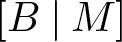 ${\left[\smash{{B} \mathbin{\mid}{M} }\right]}$. In this article, we show that such pairs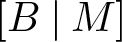 ${\left[\smash{{B} \mathbin{\mid}{M} }\right]}$ are equivalent to Boolean restriction monoids and also to ample source-étale topological categories; these are generalizations of the Boolean inverse monoids and ample étale topological groupoids used to encode self-similar structures such as Cuntz and Cuntz–Krieger $C^\ast$-algebras, Leavitt path algebras, and the $C^\ast$-algebras associated with self-similar group actions. We explain and illustrate these links and begin the programme of understanding how topological and algebraic properties of such groupoids can be understood from the logical perspective of the associated varieties.


