To save content items to your account,
please confirm that you agree to abide by our usage policies.
If this is the first time you use this feature, you will be asked to authorise Cambridge Core to connect with your account.
Find out more about saving content to .
To save content items to your Kindle, first ensure no-reply@cambridge.org
is added to your Approved Personal Document E-mail List under your Personal Document Settings
on the Manage Your Content and Devices page of your Amazon account. Then enter the ‘name’ part
of your Kindle email address below.
Find out more about saving to your Kindle.
Note you can select to save to either the @free.kindle.com or @kindle.com variations.
‘@free.kindle.com’ emails are free but can only be saved to your device when it is connected to wi-fi.
‘@kindle.com’ emails can be delivered even when you are not connected to wi-fi, but note that service fees apply.
Restriction of dietary carbohydrates, fat and/or protein is often used to reduce body weight and/or treat (metabolic) diseases. Since diet is a key modulator of the human gut microbiome, which plays an important role in health and disease, this review aims to provide an overview of current knowledge of the effects of macronutrient-restricted diets on gut microbial composition and metabolites. A structured search strategy was performed in several databases. After screening for inclusion and exclusion criteria, thirty-six articles could be included. Data are included in the results only when supported by at least three independent studies to enhance the reliability of our conclusions. Low-carbohydrate (<30 energy%) diets tended to induce a decrease in the relative abundance of several health-promoting bacteria, including Bifidobacterium, as well as a reduction in short-chain fatty acid (SCFA) levels in faeces. In contrast, low-fat diets (<30 energy%) increased alpha diversity, faecal SCFA levels and abundance of some beneficial bacteria, including Faecalibacterium prausnitzii. There were insufficient data to draw conclusions concerning the effects of low-protein (<10 energy%) diets on gut microbiota. Although the data of included studies unveil possible benefits of low-fat and potential drawbacks of low-carbohydrate diets for human gut microbiota, the diversity in study designs made it difficult to draw firm conclusions. Using a more uniform methodology in design, sample processing and sharing raw sequence data could foster our understanding of the effects of macronutrient restriction on gut microbiota composition and metabolic dynamics relevant to health. This systematic review was registered at https://www.crd.york.ac.uk/prospero as CRD42020156929.
To test whether traffic light labels and an increased range of healthy beverages, individually and in combination, can increase healthy beverage choices from vending machines.
Design:
Two studies (n 558, 420) tested whether the provision of traffic light labels (green, amber and red) and an increased range of healthy beverages (from 20 % to 50 % green options), individually and in combination, could increase healthy beverage choices from a digital vending machine display. The studies used a between-subjects experimental design, and a hypothetical beverage choice, a limitation when considering real-world applicability.
Setting:
Both studies utilised an online Qualtrics survey that featured a digital vending machine display.
Participants:
Both studies (n 558, 420) consisted of university students from Flinders University and individuals from a survey recruitment service.
Results:
Featuring traffic lights did not significantly influence beverage choices (P = 0·074), while increasing the healthy range (P = 0·003, OR = 3·27), and the combination of both, did significantly increase healthier beverage choices (P < 0·001, OR = 4·83).
Conclusions:
The results suggest that the traffic light system and increased healthy range are not maximally effective when used on their own, and benefit greatly when combined, to increase healthy beverage choices. It was suggested that the provision of traffic light labels supplied the necessary nutritional information, and the increased healthy range offered greater opportunity to act in accordance with that information. In so doing, the present findings offer a promising pathway for reducing unhealthy beverage consumption.
Iron is essential for many physiological functions of the body, and it is required for normal growth and development. Iron deficiency (ID) is the most common form of micronutrient malnutrition and is particularly prevalent in infants and young children in developing countries. Iron supplementation is considered the most effective strategy to combat the risk of ID and ID anaemia (IDA) in infants, although iron supplements cause a range of deleterious gut-related problems in malnourished children. The purpose of this review is to assess the available evidence on the effect of iron supplementation on the gut microbiota during childhood ID and to further assess whether prebiotics offer any benefits for iron supplementation. Prebiotics are well known to improve gut-microbial health in children, and recent reports indicate that prebiotics can mitigate the adverse gut-related effects of iron supplementation in children with ID and IDA. Thus, provision of prebiotics alongside iron supplements has the potential for an enhanced strategy for combatting ID and IDA among children in the developing world. However, further understanding is required before the benefit of such combined treatments of ID in nutritionally deprived children across populations can be fully confirmed. Such enhanced understanding is of high relevance in resource-poor countries where ID, poor sanitation and hygiene, alongside inadequate access to good drinking water and poor health systems, are serious public health concerns.
Food system challenges exacerbate inequalities in access to fresh healthy food and threaten food security. Lack of food security, referred to as food insecurity, is associated with poorer physical and mental health outcomes and has been identified as a key challenge to address by calls for food system transformation. Increasing food production through urban agriculture, the production of fruit and vegetables in urban areas, has been identified as a potentially effective contributor to food system transformation, but the effect of this on household or UK-level food security is unclear. This paper reviews international evidence of urban agriculture’s impact on food security.
Design:
Narrative review.
Setting:
This paper reviews international evidence of urban agriculture’s impact on food security.
Participants:
Previously published international research.
Results:
Whilst findings are mixed, available evidence suggests that urban agriculture makes a modest, yet positive, contribution to food security by facilitating the availability of and access to fresh fruit and vegetables to food insecure households.
Conclusions:
Capitalising on the potential for urban agriculture to benefit food security requires government investment and support at both the national and local levels; therefore, increasing access to land for food growing, reducing costs of related resources and collaboration with existing community groups to enhance sharing of skills and expertise are identified as avenues for exploration that may help to achieve this. This review also highlights opportunities for future research in this field that may strengthen the quality of the evidence supporting urban agriculture’s impact on food security.
To explore the differences in social norms around parents’ food provision in different provision contexts and by demographics.
Design:
Qualitative study using story completion methodology via an online survey in September 2021. Adults 18+ with or without children were randomised to one of three story stems focusing on food provision in different contexts; food provision at home (non-visitor), with visitors present and with the involvement of sport. Stories were coded and themed using thematic analysis. A content analysis was performed to determine count and frequency of codes in stories by participant demographics and story assumptions.
Setting:
Australia.
Participants:
Adults (n 196).
Results:
Nine themes were identified from the data resulting in four social norms around providing healthy foods and justifying non-adherence to healthy eating guidelines, evolution of family life and mealtime values, the presence of others influencing how we engage with food provision and unhealthy foods used as incentives/rewards in sport. Following content analysis, no differences of themes or norms by participant demographics or story assumptions were found.
Conclusions:
We identified pervasive social norms around family food provision and further identified how contextual factors resulted in variations or distinct norms. This highlights the impact context may have on the social norms parents face when providing food to their children and the opportunities and risks of leveraging these social norms to influence food choice in these contexts. Public health interventions and practitioners should understand the influence of context and social environments when promoting behaviour change and providing individualised advice. Future research could explore parents’ experiences of these norms and to what extent they impact food choice.
(Protein–energy) malnutrition in individuals living with obesity presents complex diagnostic challenges due to the distinctive physiological characteristics of obesity. This narrative review critically examines the identification of malnutrition within the population with obesity, distinguishing malnutrition in obesity from related conditions such as sarcopenic obesity. While noting some shared features, the review highlights key differences between these conditions. The review also highlights the limitations of current malnutrition screening tools, which are not designed for individuals living with obesity. These tools primarily rely on anthropometric measurements, neglecting (among others) nutrient intake assessment, which hinders accurate malnutrition detection. Additionally, this review discusses limitations in existing diagnostic criteria, including the Global Leadership Initiative on Malnutrition (GLIM) criteria, when applied to individuals living with obesity. Challenges include the identification of appropriate cut-off values for phenotypic criteria (unintentional weight loss, low body mass index and muscle mass) and aetiological criteria such as reduced food intake and inflammation for the population with obesity. Overall, this review emphasises the need for modified screening tools and diagnostic criteria to recognise and assess malnutrition in obesity, leading to improved clinical outcomes and overall wellbeing.
To investigate food insecurity and related coping strategies, and their associations with the risk of anxiety and depression, among South African households with children.
Design:
Nationally representative cross-sectional study. Tools for assessing food insecurity, coping strategies, risk of anxiety and depression were assessed from the Community Childhood Hunger Identification Project, Coping Strategies Index, Generalised Anxiety Disorder-7 and Patient Health Questionnaire-9, respectively. We used ordered logistic regression to test associations of food insecurity and coping strategies with the risk of anxiety and depression. Moderating effects of each coping strategy were tested in the associations of food insecurity with anxiety and depression.
Setting:
South Africa, post COVID-19 restrictions, May–June 2022.
Participants:
1,774 adults, weighted to 20,955,234 households.
Results:
Food insecurity prevalence was 23·7 % among households with children. All coping strategies were used to some extent, but relying on less preferred and less expensive foods was the most used strategy (85·5 % of food-insecure households). Moving to a higher level of food insecurity was associated with >1·6 greater odds of being in a higher risk of anxiety and depression. Sending a household member to beg for food was the strongest associated factor (OR = 1·7, P < 0·001). All coping strategies partly moderated (lessened) the associations of food insecurity with a higher risk of anxiety and depression.
Conclusions:
Food insecurity among households with children was high following the COVID-19 pandemic. Collaborative efforts between government, private sector and civil society to eradicate food insecurity should prioritise poorer households with children, as these populations are the most vulnerable.
To assess the selection of foods and beverages in children’s sports arenas in Norway.
Design:
A cross-sectional study design with a digital questionnaire was used. Descriptive statistics were used to present the results. Moreover, Pearson’s χ2 tests examined the factors that could aid in distinguishing clubs with healthy or unhealthy consumables.
Setting:
Children’s sports clubs in Norway.
Participants:
Representatives from 301 children’s sports clubs in Norway answered the questionnaire between September and November 2021.
Results:
In total, 89·4% of the participating sports clubs (n 301) offered soda drinks with sugar. Most of the sports clubs (88 %) reported to offer batter-based cakes such as pancakes and waffles and 63·8 % offered cakes. Furthermore, 47·5% sold hot dishes with processed meat, such as hamburgers and hot dogs. More than 80% of the sports clubs offered sweets and snacks, while 44·5% did not offer fruits, vegetables and/or berries. Notably, the important factors that distinguished sports clubs with healthier food selections from those with unhealthier selections were the presence of guidelines for the food offered and purchase agreements with food suppliers.
Conclusions:
Educational, governmental guidelines for the promotion of healthy eating and establishing agreements with suppliers of healthier foods could help to overcome barriers to unhealthy food selection.
To better understand how the public defines ‘healthy’ foods and to determine whether the public considers sustainability, implicitly and explicitly, in the context of healthy eating.
Design:
We conducted a content analysis of public comments submitted to the US FDA in 2016 and 2017 in response to an invitation for feedback on use of the term ‘healthy’ on food labels. The analysis explored the ways in which commenters’ definitions of ‘healthy’ aligned with the 2015–2020 Dietary Guidelines for Americans and whether their definitions considered sustainability.
Setting:
The US Government’s Regulations.gov website.
Participants:
All 1125 unique comments from individuals and organisations.
Results:
Commenters’ definitions of ‘healthy’ generally mirrored the recommendations that the Dietary Guidelines for Americans put forth to promote a ‘healthy eating pattern’. Commenters emphasised the healthfulness of fruit, vegetables, whole grains, fish and other minimally processed foods and the need to limit added sugars, sodium, saturated and trans fats and other ingredients sometimes added during processing. One-third of comments (n 374) incorporated at least one dimension of sustainability, mainly the environmental dimension. Commenters who mentioned environmental considerations primarily expressed concerns about synthetic chemicals and genetic modification. Less than 20 % of comments discussed social or economic dimensions of sustainability, and less than 3 % of comments (n 30) used the word ‘sustainability’ explicitly.
Conclusions:
This novel analysis provides new information about the public’s perceptions of ‘healthy’ foods relative to nutrition and sustainability considerations. The findings can be used to advance policy discussions regarding nutrition labelling and guidance.
This study aims to determine whether ultra-processed foods (UPFs) are being discussed in news media in Australia and whether this terminology, as described in the NOVA system, is being applied accurately.
Design:
Interpretive content analysis of online and print media articles that mentioned UPFs from 2009 to 2023 in Australia.
Setting:
Australia.
Participants:
Online and print media articles.
Results:
A total of two hundred ninety-eight Australian media articles were captured. A substantial increase in the number of UPF articles was observed between 2017–2019 and 2021–2023. The UPF concept was inaccurately explained or defined in 32 % of the articles and was frequently used interchangeably with other descriptors, such as ‘highly or heavily processed food’, ‘junk food’, ‘unhealthy food’, ‘packaged food’ and ‘discretionary food’. Most of the articles had a health focus; however, sustainability interest increased, particularly in the past 18 months.
Conclusions:
UPFs are increasingly being discussed in news media in Australia; however, the concept is still incorrectly presented in over a third of articles. This highlights the importance of improving the literacy about UPFs to ensure that messages are communicated in a way that is salient, accessible and accurate.
It is unknown how well menu labelling schemes that enforce the display of kilojoule (kJ) labelling at point-of-sale have been implemented on online food delivery (OFD) services in Australia. This study aimed to examine the prevalence of kJ labelling on the online menus of large food outlets with more than twenty locations in the state or fifty locations nationally. A secondary aim was to evaluate the nutritional quality of menu items on OFD from mid-sized outlets that have fewer locations than what is specified in the current scheme.
Design:
Cross-sectional analysis. Prevalence of kJ labelling by large food outlets on OFD from August to September 2022 was examined. Proportion of discretionary (‘junk food’) items on menus from mid-sized outlets was assessed.
Setting:
Forty-three unique large food outlets on company (e.g. MyMacca’s) and third party OFD (Uber Eats, Menulog, Deliveroo) within Sydney, Australia. Ninety-two mid-sized food outlets were analysed.
Participants:
N/A.
Results:
On company OFD apps, 35 % (7/23) had complete kJ labelling for each menu item. In comparison, only 4·8 % (2/42), 5·3 % (2/38) and 3·6 % (1/28) of large outlets on Uber Eats, Menulog and Deliveroo had complete kJ labelling at all locations, respectively. Over three-quarters, 76·3 % (345/452) of menu items from mid-sized outlets were classified as discretionary.
Conclusions:
Kilojoule labelling was absent or incomplete on a high proportion of online menus. Mid-sized outlets have abundant discretionary choices and yet escape criteria for mandatory menu labelling laws. Our findings show the need to further monitor the implementation of nutrition policies on OFD.
Globally, we are currently facing a rapid demographic shift leading to an increase in the proportion of older adults within the population. This raises concerns about the potential increase in age-related diseases and their impact on our ability to provide adequate health and end-of-life care. To apply appropriate interventions, understanding the changes that happen with ageing becomes essential. Ageing is often accompanied by a decrease in appetite and physical activity, which may lead to malnutrition, resulting in decreased muscle mass, physical capabilities and independence. To preserve muscle mass, older adults are advised to increase protein intake and physical activity. However, protein’s high satiating effect may cause reduced energy intake. Physical activity is also advised to maintain or enhance older adult’s appetite. This review paper aims to discuss appetite-related changes that occur with ageing and their consequences. In particular, it will focus on investigating the relationship between protein intake and physical activity and their impact on appetite and energy intake in the ageing population. Recent studies suggest that physical activity might contribute to maintaining or enhancing appetite in older adults. Nevertheless, establishing a definitive consensus on the satiating effect of protein in ageing remains a work in progress, despite some promising results in the existing literature.
To synthesise current evidence on knowledge, perceptions and practices towards type 2 diabetes risk in sub-Saharan Africa
Design:
Mixed-methods scoping review, which included 101 studies (seventy-three quantitative, twenty qualitative and eight mixed methods) from seven electronic databases.
Setting:
Sub-Saharan Africa, 2000–2023.
Participants:
Men and women without diabetes with mean ages ranging from 20 to 63 years.
Results:
The majority of participants in most studies knew the three main diabetes modifiable risk factors – excess weight, unhealthy diet and physical inactivity. However, most people with excess weight in almost all studies underestimated their weight. Further, the self-described ideal body weight was between midpoint of normal weight and the upper limits of overweight in most quantitative studies and was described as not too skinny but not too fat in qualitative studies. In the majority of studies, participants reported low engagement in weight control, high regular sugar intake, and low regular fruit and vegetable intake but moderate to high engagement in physical activity. Barriers to reducing diabetes risk were social (e.g. societal perceptions promoting weight gain) and environmental (e.g. limited affordability of healthy foods, high accessibility of Western diets and lack of physical activity facilities).
Conclusion:
There is a need for multicomponent type 2 diabetes prevention interventions that increase knowledge of identifying diabetes risk (e.g. what constitutes excess weight) and create social and physical environments that support healthy lifestyles (e.g. societal perceptions that promote healthy living, increased availability and affordability of healthy foods and physical activity facilities).
Food insecurity (FI) is the lack of daily access for everyone to quality food in sufficient quantity. In many populations, it presents as a chronic and persistent condition. This study analysed the association between the length of time living with FI and socio-demographic conditions in households in a semi-arid municipality in the Brazilian Northeast between 2011 and 2019.
Design:
This is a population-based cohort study among families in the municipality in Northeast Brazil (2011, 2014 and 2019). FI was estimated through the Escala Brasileira de Insegurança Alimentar (EBIA, Brazilian Household Food Insecurity Measurement Scale), and the longitudinal category of time of living with FI was adopted to classify them according to the time they remained in FI during the cohort. The association with the socio-demographic profiles of the population was verified through multinomial logistic regression.
Setting:
Households in semi-arid, Northeast of Brazil.
Participants:
Household respondents interviewed in 2011, 2014 and 2019 (n 274).
Results:
Sixty-seven percentage (67 %) of families lived in FI in this period. Rural residence, low monthly per capita income and low schooling of the household reference person increased the chances of these families living longer in FI. These overlapping conditions increased the odds of FI in the household.
Conclusions:
Coping with FI requires intersectoral intervention that improves the socio-demographic conditions of the population.
We aimed to examine the association between dietary Se intake and CVD risk in Chinese adults.
Design:
This prospective cohort study included adults above 20 years old in the China Health and Nutrition Survey (CHNS), and they were followed up from 1997 to 2015 (n 16 030). Dietary data were retrieved from CHNS, and a 3-d, 24-h recall of food intake was used to assess the cumulative average intake of dietary Se, which was divided into quartiles. The Cox proportional hazards model was adopted to analyse the association between dietary Se intake and incident CVD risk.
A total of 663 respondents developed CVD after being followed up for a mean of 9·9 years (median 9 years). The incidence of CVD was 4·3, 3·7, 4·6 and 4·0 per 1000 person-years across the quartiles of cumulative Se intake. After adjusting all potential factors, no significant associations were found between cumulative Se intake and CVD risk. No interactions were found between Se intake and income, urbanisation, sex, region, weight, hypertension and CVD risk.
Conclusion:
We found no association between dietary Se and CVD.
We aimed to analyse the association between processed food consumption and the risk of non-communicable diseases (NCDs) in South Africa. In this empirical study, we analysed nationally representative secondary data obtained from the South African Demographic and Health Survey (SADHS) VII. The survey included 13,288 occupied households, of which 11,083 were interviewed. In the interviewed households, 12,717 eligible adults aged 15 and older were identified and 10,336 were successfully interviewed. The study included four processed food groups (i.e. fried foods, takeaway foods/fast foods, salty snacks/packed chips, and processed meats) and eight NCDs (i.e. hypertension, cardiac arrest, cancer, stroke, hypercholesterolaemia, diabetes, chronic bronchitis, and asthma). As per the logistic regression results following adjustment, none of the disease states showed association with all four processed food groups. However, at least three processed food groups showed a significant positive association with hypertension, cardiac arrest, and diabetes. Two processed food groups showed significant positive association with stroke, and chronic bronchitis; one with hypercholesterolaemia and asthma; and cancer was not associated with any food groups. Processed meat and salted snacks/packed chips were each associated with five chronic conditions. In summary, we found that the consumption of any of the processed food groups increased the risk of NCDs in the South African population. Enabling policy and regulatory efforts in the production and distribution of processed foods, combined with improved awareness among the population need to be prioritised for immediate action. Facilitating the populations to choose traditional healthy diets would be a sustainable strategy for the prevention of NCDs.
To assess the association between the risk of malnutrition, as estimated by the Patient-Generated Subjective Global Assessment (PG-SGA) numerical scores, and adverse outcomes in oncology patients.
Design:
Systematic review and meta-analysis.
Settings:
A comprehensive search was conducted in PubMed, Web of Science, Embase, CKNI, VIP, Sinomed and Wanfang databases. Studies that examined the association between the risk of malnutrition, as estimated by the PG-SGA numerical scores, and overall survival (OS) or postoperative complications in oncology patients were included. Patients were classified as low risk (PG-SGA ≤ 3), medium risk (PG-SGA 4–8) and high risk of malnutrition (PG-SGA > 8).
Subject:
Nineteen studies reporting on twenty articles (n 9286 patients).
Results:
The prevalence of medium and high risk of malnutrition ranged from 16·0 % to 71·6 %. A meta-analysis showed that cancer patients with medium and high risk of malnutrition had a poorer OS (adjusted hazard ratios (HR) 1·98; 95 % CI 1·77, 2·21) compared with those with a low risk of malnutrition. Stratified analysis revealed that the pooled HR was 1·55 (95 % CI 1·17, 2·06) for medium risk of malnutrition and 2·65 (95 % CI 1·90, 3·70) for high risk of malnutrition. Additionally, the pooled adjusted OR for postoperative complications was 4·65 (95 % CI 1·61, 13·44) for patients at medium and high risk of malnutrition.
Conclusions:
The presence of medium and high risk of malnutrition, as estimated by the PG-SGA numerical scores, is significantly linked to poorer OS and an increased risk of postoperative complications in oncology patients.
The recommended level of five fruits and vegetables per day is reached by a minority of French children. No-added sugars fruit puree (NASFP) can be consumed as a complement of fresh fruit to meet the recommendation for fruits and vegetables. The objective was to simulate the nutritional impact of an increase in consumption of NASFP among French children, together with a reduction in sweetened foods.
Design:
The study was conducted on French children aged 1–17 years. The simulation consisted in introducing NASFP on four different eating occasions (breakfast, lunch, snack and dinner) to reach one serving and removing the same serving of sweetened foods. Intakes in nutrients to favour, nutrients to limit and prevalence of adequacy to nutritional requirements were compared between observed and simulated diets in the whole sample and in five different age groups.
Setting:
France.
Participants:
Children from 1 to 17 years of age in the last available French representative dietary survey (INCA3).
Results:
Simulated diets were more nutrient-dense thanks to increases in nutrients to favour from NASFP (especially fibres, iodine, Se, and vitamin A and C) associated with reductions in energy and nutrients to limit (especially free sugars) coming from sweetened foods. Prevalence of adequacy increased from 2 to 14·5 points for fibres and from 4·5 to 12 points for free sugars according to age group and eating occasion.
Conclusion:
Promoting NASFP in replacement of sweetened products is a promising strategy to improve the nutritional quality of French children’s diet through a better adherence to national guidelines.
To evaluate the effectiveness of the multicomponent intervention trial ‘Are You Too Sweet?’ in reducing discretionary foods and drinks intake among young schoolchildren.
Design:
The study was a 3·5-month two-arm cluster-randomised controlled trial among primary schoolchildren and their families. School health nurses provided guidance to families regarding discretionary foods and drinks for the children. Moreover, families were given a variety of knowledge- and capability-building materials to utilise at home. Dietary intake was assessed using a web-based 7-d dietary record. Linear mixed regression models were used to estimate intervention effects as changes in child intake of discretionary foods and drinks and sugar between groups.
Setting:
Six schools from a Danish municipality were randomised to the intervention group (n 4) or the control group (n 2).
Participants:
A total of 153 children aged 5–7 years.
Results:
No significant reduction in the children’s intake of total discretionary foods and drinks or discretionary foods alone was observed between the intervention and control group, while a decreased intake of discretionary drinks of 40·9 % (P = 0·045) was observed compared with control. Secondary subgroup analysis showed that children of parents with shorter educational level significantly reduced their intake of added sugar by 2·9 E% (P = 0·002).
Conclusion:
The results of this study indicate that multicomponent interventions involving school health nurses may have some effects in reducing, especially, discretionary drinks.
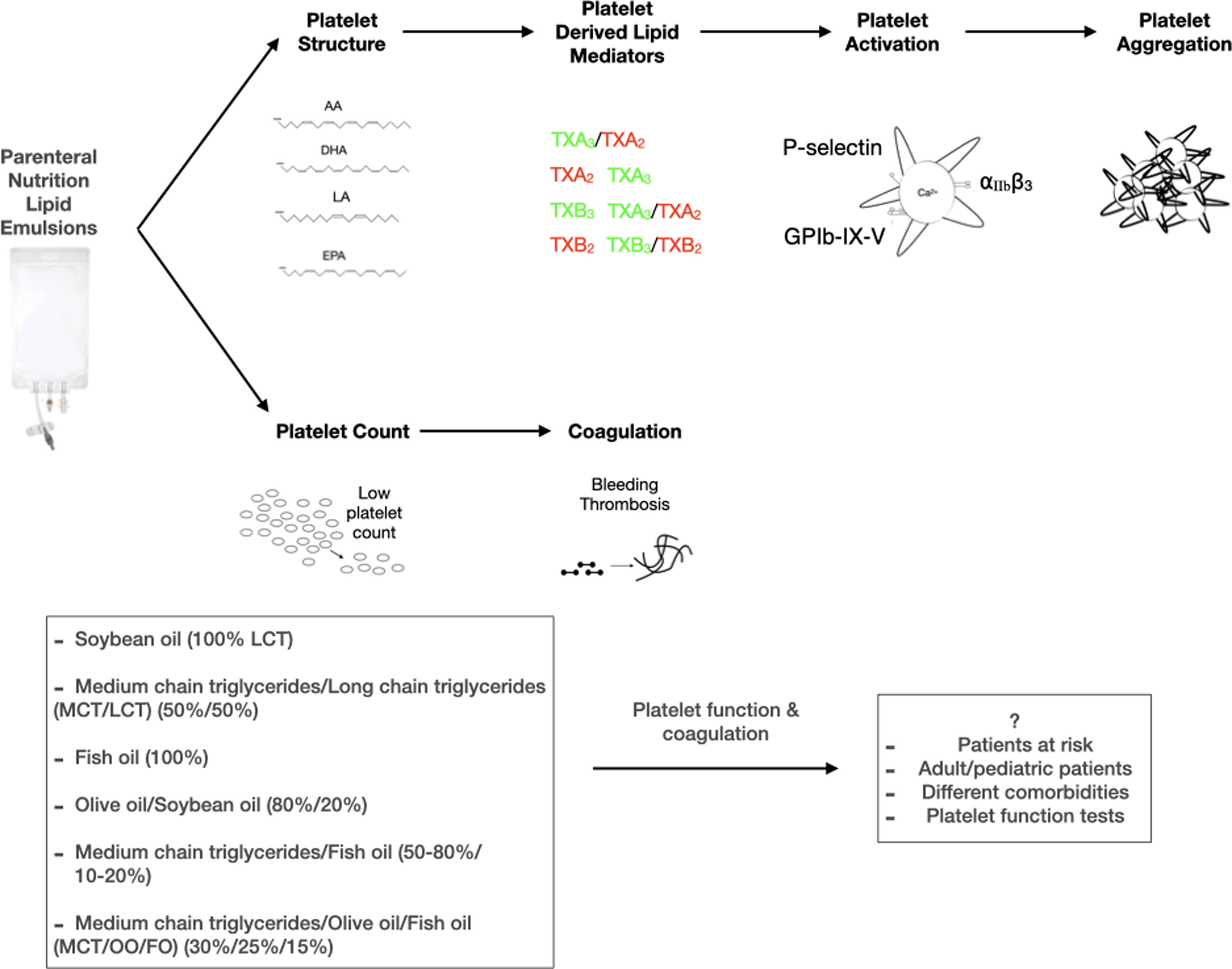
Lipid emulsions are essential components of parenteral nutrition solutions that provide energy and essential fatty acids. The complexity of the formulations of lipid emulsions may lead to adverse outcomes such as platelet reactivity and changes in platelet aggregation and related coagulation. Platelets are responsible for haemostasis; they activate and demonstrate morphological changes upon extracellular factors to maintain blood fluidity and vascular integrity. Although parenteral nutrition lipid emulsions are generally found safe with regard to modulation of platelet activity, studies are still accumulating. Thus, this review aims to investigate platelet-related changes by parenteral nutrition lipid emulsions in human studies. Studies have pointed out patients at risk of bleeding and increased platelet aggregation responses due to the administration of lipid emulsions. Lipid emulsions may further benefit patients at high risk of thrombosis due to anti-thrombotic effects and should be cautiously used in patients with thrombocytopenia. The reported platelet-related changes might be associated with the fatty acid change in the plasma membranes of platelets following changes in platelet synthesis and plasma levels of eicosanoids. In conclusion, studies investigating platelets and parenteral nutrition should be supported to minimize the adverse effects and to benefit from the potential protective effects of parenteral nutrition lipid emulsions.