To save content items to your account,
please confirm that you agree to abide by our usage policies.
If this is the first time you use this feature, you will be asked to authorise Cambridge Core to connect with your account.
Find out more about saving content to .
To save content items to your Kindle, first ensure no-reply@cambridge.org
is added to your Approved Personal Document E-mail List under your Personal Document Settings
on the Manage Your Content and Devices page of your Amazon account. Then enter the ‘name’ part
of your Kindle email address below.
Find out more about saving to your Kindle.
Note you can select to save to either the @free.kindle.com or @kindle.com variations.
‘@free.kindle.com’ emails are free but can only be saved to your device when it is connected to wi-fi.
‘@kindle.com’ emails can be delivered even when you are not connected to wi-fi, but note that service fees apply.
Intracellular levels of glutathione, the major mammalian antioxidant, are reported to decline with age in several species. To understand whether ageing affects circulating glutathione levels in cats, blood was sampled from two age groups, < 3 years and > 9 years. Further, to determine whether dietary supplementation with glutathione precursor glycine (GLY) affects glutathione concentrations in senior cats (> 8 years), a series of free GLY inclusion level dry diets were fed. Subsequently, a 16-week GLY feeding study was conducted in senior cats (> 7 years), measuring glutathione, and markers of oxidative stress. Whole blood and erythrocyte total, oxidised and reduced glutathione levels were significantly decreased in senior cats, compared with their younger counterparts (P ≤ 0·02). The inclusion level study identified 1·5 % free GLY for the subsequent dry diet feeding study. Significant increases in erythrocyte total and reduced glutathione were observed between senior cats fed supplemented and control diets at 4 weeks (P ≤ 0·03; maximum difference of 1·23 µM). Oxidative stress markers were also significantly different between groups at 8 (P = 0·004; difference of 0·68 nG/ml in 8-hydroxy-2'-deoxyguanosine) and 12 weeks (P ≤ 0·049; maximum difference of 0·62 nG/mG Cr in F2-isoprostane PGF2α). Senior cats have lower circulating glutathione levels compared with younger cats. Feeding senior cats a complete and balanced dry diet supplemented with 1·5 % free GLY for 12 weeks elevated initial erythrocyte glutathione and altered markers of oxidative stress. Dietary supplementation with free GLY provides a potential opportunity to restore age-associated reduction in glutathione in cats.
This study aimed to evaluate the association between dietary carotenoid intake and periodontitis in diabetic patients. Data on diabetic patients were collected from the National Health and Nutrition Examination Survey (NHANES) 2009–2014 for this cross-sectional study. Dietary intake of carotenoids was assessed through the first 24-hour dietary recall interview. Full-mouth periodontal examinations were conducted by trained dental examiners. Subgroup analysis was conducted in terms of age, gender, the number of missing teeth, cardiovascular disease, smoking, and anti-diabetic drugs. Totally 1914 diabetic patients were included, with 1281 (66.93%) in the periodontitis group. After adjusting for age, gender, race, education, smoking, dental implants, hepatitis, and the number of missing teeth, α-carotene intake ≥55.82 mcg was associated with lower odds of periodontitis than α-carotene intake <55.82 mcg [OR = 0.70, 95% CI: 0.53–0.91, P = 0.010]; lutein and zeaxanthin intake ≥795.95 mcg was associated with decreased odds of periodontitis than lutein and zeaxanthin intake <795.95 mcg (OR = 0.75, 95%CI: 0.57–0.98, P = 0.039). The association between carotenoid intake and periodontitis varied across different subpopulations. In diabetes, dietary intake of α-carotene and lutein and zeaxanthin was inversely associated with the odds of periodontitis, which may facilitate clinical periodontitis management.
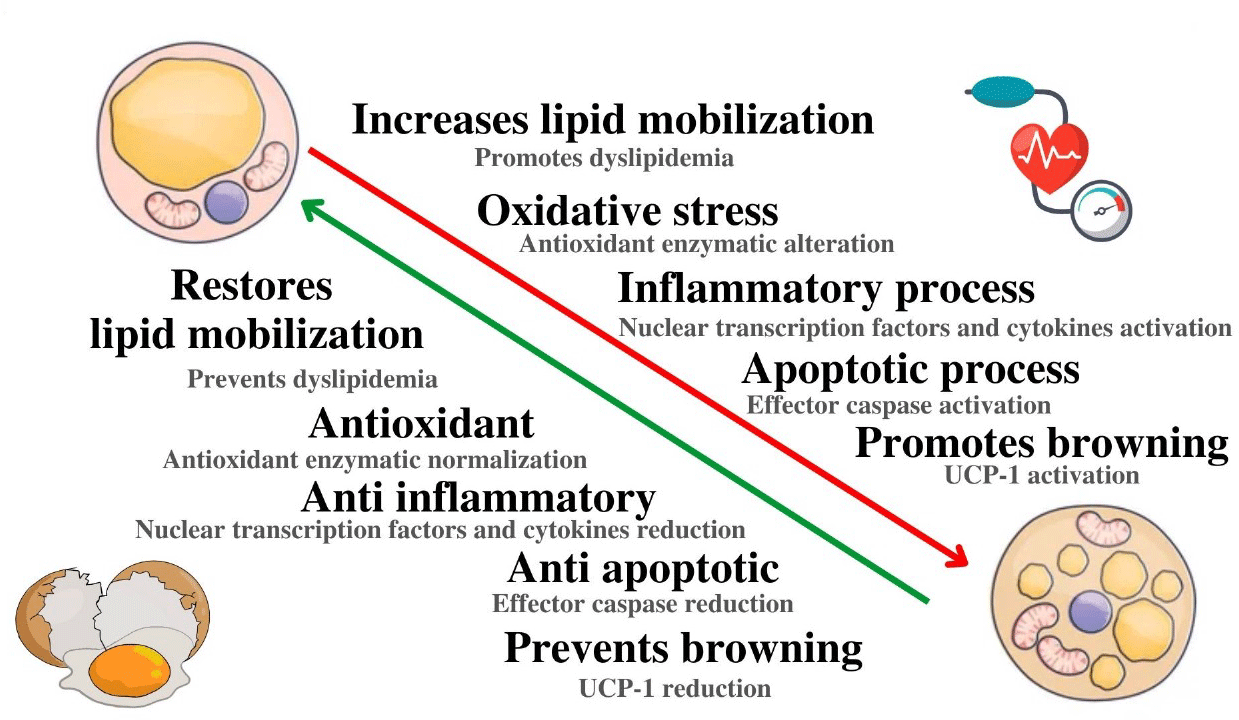
The purpose of this study was to investigate the effect of an egg white hydrolysate (EWH) to protect white adipose tissue damage from cardiometabolic changes induced by severe hypertension. Male Wistar rats were uninephrectomised and divided: SHAM (weekly subcutaneous vehicle (mineral oil + propylene glycol, 1:1)), SHAM + EWH (subcutaneous vehicle plus EWH via gavage, 1 g/kg per day), DOCA (deoxycorticosterone acetate diluted in vehicle subcutaneously weekly in subsequent doses of 20 mg/kg -1st week, 12 mg/kg - 2–3th week, and 6 mg/kg -4–8th week, respectively, plus 1 % NaCl and 0·2 % KCl in drinking water), and DOCA + EWH. Body weight gain, food and water intake, glucose and lipid metabolism were evaluated. Oxidative stress was assessed by biochemical assay and immunofluorescence for NOX-1, nuclear factor kappa B (NFκB), and caspase-3 in retroperitoneal white adipose tissue (rtWAT). Proinflammatory cytokines (IL-6 and 1β), CD163+ macrophage infiltration, and immunohistochemistry for TNFα and uncoupling protein-1 were evaluated, as well as histological analysis on rtWAT. Glutathione peroxidase and reductase were also determined in plasma. EWH showed hypocholesterolemic, antioxidant, anti-inflammatory, and anti-apoptotic properties in the arterial hypertension DOCA-salt model. The results demonstrated the presence of functional changes in adipose tissue function by a decrease in macrophage infiltration and in the fluorescence intensity of NFκB, NOX-1, and caspase-3. A reduction of proinflammatory cytokines and restoration of antioxidant enzymatic activity and mitochondrial oxidative damage by reducing uncoupling protein-1 fluorescence intensity were also observed. EWH could be used as a potential alternative therapeutic strategy in the treatment of cardiometabolic complications associated with malignant secondary arterial hypertension.
n-3 fatty acid consumption during pregnancy is recommended for optimal pregnancy outcomes and offspring health. We examined characteristics associated with self-reported fish or n-3 supplement intake.
Design:
Pooled pregnancy cohort studies.
Setting:
Cohorts participating in the Environmental influences on Child Health Outcomes (ECHO) consortium with births from 1999 to 2020.
Participants:
A total of 10 800 pregnant women in twenty-three cohorts with food frequency data on fish consumption; 12 646 from thirty-five cohorts with information on supplement use.
Results:
Overall, 24·6 % reported consuming fish never or less than once per month, 40·1 % less than once a week, 22·1 % 1–2 times per week and 13·2 % more than twice per week. The relative risk (RR) of ever (v. never) consuming fish was higher in participants who were older (1·14, 95 % CI 1·10, 1·18 for 35–40 v. <29 years), were other than non-Hispanic White (1·13, 95 % CI 1·08, 1·18 for non-Hispanic Black; 1·05, 95 % CI 1·01, 1·10 for non-Hispanic Asian; 1·06, 95 % CI 1·02, 1·10 for Hispanic) or used tobacco (1·04, 95 % CI 1·01, 1·08). The RR was lower in those with overweight v. healthy weight (0·97, 95 % CI 0·95, 1·0). Only 16·2 % reported n-3 supplement use, which was more common among individuals with a higher age and education, a lower BMI, and fish consumption (RR 1·5, 95 % CI 1·23, 1·82 for twice-weekly v. never).
Conclusions:
One-quarter of participants in this large nationwide dataset rarely or never consumed fish during pregnancy, and n-3 supplement use was uncommon, even among those who did not consume fish.
To explore relationships between disability, food insecurity (FI) and age and examine how socio-economic factors impact risk of FI among disabled people in working and older age.
Design:
Logistic regression models used to analyse the contribution of socio-economic factors to gaps in risk of FI for disabled people. In models stratified into working and older age groups, differences in risk of FI for disabled and non-disabled people were examined by employment, education and assets.
Setting:
England, Wales and Northern Ireland, 2016 and 2018
Participants:
A representative sample of 6187 adults aged 16+, of whom 28 % were disabled, from the Food & You survey.
Results:
The gap in FI risk by disability status decreased as age increased. For ages 25–34 for disabled v. non-disabled people, risk of FI was 31 % (95 % CI 21–41 %) v. 10 % (8–12 %); at ages 45 to 54, it was 18 % (11–23 %) v. 7 % (5–8 %), and at ages 75+, there was no gap in risk. Accounting for socio-economic variables halved the gap in risk among working ages. However, among working-age adults, FI among disabled people in full-time work was 15 % (11–20 %) compared with only 7 % (6–9 %) among non-disabled people in full-time work. Among older people, disabled people without savings were at higher risk of FI (5 % (3–7 %)) than non-disabled people without savings (2 % (1–3 %)) but having savings closed risk gap.
Conclusions:
Socio-economic resources partially explain disparities in FI risk when disabled. Disparities remained for people in full-time work and among people without savings in older age.
It is widely believed that exposure to sweetened foods and beverages stimulates the liking and desire for sweetness. Here we provide an updated review of the empirical evidence from human research examining whether exposure to sweet foods or beverages influences subsequent general liking for sweetness (‘sweet tooth’), based on the conclusions of existing systematic reviews and more recent research identified from a structured search of literature. Prior reviews have concluded that the evidence for a relationship between sweet taste exposure and measures of sweet taste liking is equivocal, and more recent primary research generally does not support the view that exposure drives increased liking for sweetness, in adults or children. In intervention trials using a range of designs, acute exposure to sweetness usually has the opposite effect (reducing subsequent liking and desire for sweet taste), while sustained exposures have no significant effects or inconsistent effects. Recent longitudinal observational studies in infants and children also report no significant associations between exposures to sweet foods and beverages with measures of sweet taste preferences. Overall, while it is widely assumed that exposure to sweetness stimulates a greater liking and desire for sweetness, this is not borne out by the balance of empirical evidence. While new research may provide a more robust evidence base, there are also a number of methodological, biological and behavioural considerations that may underpin the apparent absence of a positive relationship between sweetness exposure and liking.
To determine the reach, adoption, implementation and effectiveness of an intervention to increase children’s vegetable intake in long day care (LDC).
Design:
A 12-week pragmatic cluster randomised controlled trial, informed by the multiphase optimisation strategy (MOST), targeting the mealtime environment and curriculum. Children’s vegetable intake and variety was measured at follow-up using a modified Short Food Survey for early childhood education and care and analysed using a two-part mixed model for non-vegetable and vegetable consumers. Outcome measures were based on the RE-AIM framework.
Setting:
Australian LDC centres.
Participants:
Thirty-nine centres, 120 educators and 719 children at follow-up.
Results:
There was no difference between intervention and waitlist control groups in the likelihood of consuming any vegetables when compared with non-vegetable consumers for intake (OR = 0·70, (95 % CI 0·34–1·43), P = 0·32) or variety (OR = 0·73 (95 % CI 0·40–1·32), P = 0·29). Among vegetable consumers (n 652), there was no difference between groups in vegetable variety (exp(b): 1·07 (95 % CI:0·88–1·32, P = 0·49) or vegetable intake (exp(b): 1·06 (95 % CI: 0·78, 1·43)), P = 0·71) with an average of 1·51 (95 % CI 1·20–1·82) and 1·40 (95 % CI 1·08–1·72) serves of vegetables per day in the intervention and control group, respectively. Intervention educators reported higher skills for promoting vegetables at mealtimes, and knowledge and skills for teaching the curriculum, than control (all P < 0·001). Intervention fidelity was moderate (n 16/20 and n 15/16 centres used the Mealtime environment and Curriculum, respectively) with good acceptability among educators. The intervention reached 307/8556 centres nationally and was adopted by 22 % eligible centres.
Conclusions:
The pragmatic self-delivered online intervention positively impacted educator’s knowledge and skills and was considered acceptable and feasible. Intervention adaptations, using the MOST cyclic approach, could improve intervention impact on children’ vegetable intake.
Energy-restricted (ER) diets promote weight loss and improve body composition and glycaemic control. Nut consumption also improves these parameters. However, less is known about the combined benefit of these two strategies. This scoping review implemented a systematic search of Medline, Embase and Scopus to identify randomised controlled trials evaluating the effect of ER diets with or without nuts on body mass, body composition and glycaemic control in adults. After reviewing titles and abstracts, twenty-nine full-text articles were screened, resulting in seven studies reported in eight papers that met the inclusion criteria. Energy restriction was achieved by prescribing a set energy target or reducing intake by 1000–4200 kJ from daily energy requirements. Interventions ranged from 4 to 52 weeks in duration and contained 42–84 g/d of almonds, peanuts, pistachios or walnuts. While all studies reported that energy restriction resulted in significant weight loss, the addition of nuts to ER diets demonstrated significantly greater weight loss in only approximately half of the included studies (4/7 studies). There was limited evidence to support additional benefits from nuts for body composition measures or glycaemic control. Although improvements in weight loss and glycaemia were not consistent when nuts were included in ER diets, no study revealed an adverse effect of nut consumption on health outcomes. Future studies could explore the effect of consuming different types and amounts of nuts, combined with various levels of energy restriction on weight, body composition and glycaemic control.
Autism spectrum disorder (ASD) is a complex group of neurodevelopmental disorders characterised by impaired social communication and restricted interests/repetitive behaviours. In this regard, sensory processing difficulties and delayed oral motor skills often predispose individuals with ASD to food selectivity (FS). It is usually associated with repetitive eating patterns that can lead to multiple malnutrition conditions. The objective of this narrative review is to present an overview about the existing nutritional interventions aiming at promoting a healthy eating pattern and addressing food selectivity among individuals with ASD. Regarding the interventions targeting nutrition education, the majority of the analysed studies failed to demonstrate their effectiveness. On the other hand, many educational interventions involving taste or cooking sessions, as well as behavioural interventions for FS, demonstrated effective results. Moreover, multidisciplinary in tailoring such programmes, including psychology speech therapy and nutritional skills, is acknowledged as a key approach.
To examine how the associations between meal consumption and BMI over 8 years differ by weight status in a sample of adolescents.
Design:
Longitudinal, population-based study. Breakfast, lunch and dinner consumption and BMI were self-reported. Linear regressions were used to examine how the associations between meal consumption and BMI differed by weight status.
Setting:
Adolescents in the Minneapolis/St. Paul metropolitan area.
Participants:
Adolescents (n 1,471) were surveyed as part of the EAT 2010–2018 in 2009–2010 (Mage = 14·3 years) and 2017–2018 (Mage = 22·0 years).
Results:
The prevalence of regular breakfast, lunch and dinner consumption (≥ 5 times/week) ranged from 45 to 65 %, 75 to 89 % and 76 to 94 %, respectively, depending on weight status category. Among adolescents with a sex- and age-specific BMI < 15th percentile, regular consumptions of breakfast, lunch and dinner during adolescence were positively associated with BMI in emerging adulthood compared with irregular consumption of breakfast, lunch and dinner (<5 times/week) after adjustment for socio-demographic characteristics (β = 5·43, β = 5·39 and β = 6·46, respectively; all P-values <0·01). Among adolescents in the BMI 15–85th and 85–95th percentiles, regular consumptions of breakfast, lunch and dinner were positively associated with BMI but to a lesser extent (P-values <0·01). For participants with a BMI ≥ 95th percentile, regular consumptions of breakfast, lunch and dinner were positively associated with BMI, but the associations were not statistically significant (P-values > 0·05).
Conclusions:
The relationship between meal consumption during adolescence and BMI in emerging adulthood differs by adolescent weight status. Future studies should investigate underlying factors related to meal consumption routines and BMI.
Dicarbonyl compounds are highly reactive precursors of advanced glycation end products (AGE), produced endogenously, present in certain foods and formed during food processing. AGE contribute to the development of adverse metabolic outcomes, but health effects of dietary dicarbonyls are largely unexplored. We investigated associations between three dietary dicarbonyl compounds, methylglyoxal (MGO), glyoxal (GO) and 3-deoxyglucosone (3-DG), and body weight changes in European adults. Dicarbonyl intakes were estimated using food composition database from 263 095 European Prospective Investigation into Cancer and Nutrition–Physical Activity, Nutrition, Alcohol, Cessation of Smoking, Eating Out of Home in Relation to Anthropometry participants with two body weight assessments (median follow-up time = 5·4 years). Associations between dicarbonyls and 5-year body-weight changes were estimated using mixed linear regression models. Stratified analyses by sex, age and baseline BMI were performed. Risk of becoming overweight/obese was assessed using multivariable-adjusted logistic regression. MGO intake was associated with 5-year body-weight gain of 0·089 kg (per 1-sd increase, 95 % CI 0·072, 0·107). 3-DG was inversely associated with body-weight change (–0·076 kg, −0·094, −0·058). No significant association was observed for GO (0·018 kg, −0·002, 0·037). In stratified analyses, GO was associated with body-weight gain among women and older participants (above median of 52·4 years). MGO was associated with higher body-weight gain among older participants. 3-DG was inversely associated with body-weight gain among younger and normal-weight participants. MGO was associated with a higher risk of becoming overweight/obese, while inverse associations were observed for 3-DG. No associations were observed for GO with overweight/obesity. Dietary dicarbonyls are inconsistently associated with body weight change among European adults. Further research is needed to clarify the role of these food components in overweight and obesity, their underlying mechanisms and potential public health implications.
The objective of this study was to explore the relationship between various forms of child nutritional disorders and early childhood development in Bangladesh.
Design:
We analysed data from the nationally representative cross-sectional 2019 Multiple Indicator Cluster Survey. Early childhood development was evaluated using the Early Childhood Development Index (ECDI), which comprised 10 yes-or-no questions across four domains: literacy-numeracy, physical well-being, socio-emotional development, and learning abilities. Nutritional disorders (e.g. stunting, wasting, and underweight) were measured based on the World Health Organization’s height and weight guidelines. To investigate the relationships between child development and nutritional disorders, we used multilevel logistic regression models.
Setting:
Bangladesh.
Participants:
Data of 9,455 children aged 3 and 4 years.
Results:
Approximately 38 % of the children analysed experienced a nutritional disorder, with stunting being the most prevalent at 28·15 %. Overall, 25·27 % did not meet expected developmental progress measured by the ECDI. Stunted children were more likely to be off track developmentally, while those without any nutritional disorder were more likely to be on track. Socio-demographic factors, including age, sex, attendance in early childhood education programme, maternal education, maternal functional difficulties, region, and income, were identified as determinants of ECDI.
Conclusions:
Childhood nutrition and socio-demographic factors significantly affect multiple developmental domains and overall ECDI among children aged 3–4 years. Prioritising policies and programmes that improve nutrition and address these determinants are crucial for fostering optimal development in children.
To measure vitamin D status and estimate factors associated with serum 25-hydroxyvitamin D (25(OH)D) in Nunavimmiut (Inuit living in Nunavik) adults in 2017.
Design:
Data were from Qanuilirpitaa? 2017 Nunavik Inuit Health Survey, a cross-sectional study conducted in August–October 2017. Participants underwent a questionnaire, including an FFQ, and blood samples were analysed for total serum 25(OH)D.
Setting:
Nunavik, northern Québec, Canada.
Participants:
A stratified proportional model was used to select respondents, including 1,155 who identified as Inuit and had complete data.
Results:
Geometric mean serum vitamin D levels were 65·2 nmol/l (95 % CI 62·9–67·6 nmol/l) among women and 65·4 nmol/l (95 % CI 62·3–68·7 nmol/l) among men. The weighted prevalence of serum 25(OH)D < 75 nmol/l, <50 nmol/l <30 nmol/l was 61·2 %, 30·3 % and 7·0 %, respectively. Individuals who were older, female, lived in smaller and/or more southerly communities and/or consumed more country (traditional) foods were at a reduced risk of low vitamin D status. Higher consumption of wild fish was specifically associated with increased serum 25(OH)D concentration.
Conclusion:
It is important that national, regional and local policies and programs are in place to secure harvest, sharing and consumption of nutritious and culturally important country foods like Arctic char and other wild fish species, particularly considering ongoing climate change in the Arctic which impacts the availability, access and quality of fish as food.
Despite commitment by many countries to promote food system transformation, Australia has yet to adopt a national food policy. This study aimed to evaluate Australian Federal Government’s (AFG) food policies and policy actions potential to promote healthy and sustainable food systems.
Design:
This study is a desk-based policy mapping followed by a theoretically guided evaluation of policy actions. This involved three steps: (1) identification of government departments and agencies that could influence Australia’s food system; (2) identification of food policies and policy actions within these departments and (3) use of a conceptual framework to evaluate policy actions’ potential of changing the food system as adjust (first-order change), reform (second-order change) or transform (third-order change).
Setting:
Australia.
Participants:
None.
Results:
Twenty-four food policies and sixty-two policy actions were identified across eight AFG departments and the Food Regulation System and evaluated based on the order of change they represented. Most policies were led by individual departments, reflecting the absence of a joined-up approach to food policy in Australia. Most policy actions (n 25/ 56·5 %) were evaluated as having adjust potential, whereas no transformative policy action was identified.
Conclusions:
These findings suggest that Australia is likely to proceed incrementally towards achieving food system change through adjustments and reforms but lacking transformative impact. To promote transformative change, all three orders of change must be strategically implemented in a coherent and coordinated matter. A comprehensive national food policy and a national coordinating body are needed to ensure a cohesive approach to policy.
Vegetables are known to be beneficial to human health, but the association between vegetable consumption and gastric cancer remains uncertain. To synthesise knowledge about the relationship between vegetable group consumption and gastric cancer risk, update present meta-analyses and estimate associations between vegetable consumption and gastric cancer risk based solely on prospective studies, we perform a PRISMA-compliant three-level meta-analysis. Systematic search identified thirteen prospective studies with fifty-two effect sizes that met all inclusion criteria and no exclusion criteria for our meta-analysis. Pooled risk ratios (RRs) showed a positive association between high vegetable consumption and low gastric cancer risk (pooled RR 0·93, 95% confidence interval 0·90–0·97, P = 0·06). In moderator analyses for indicators of gender, region and quantity of vegetable intake, there was no significant difference between subgroups. However, the effect became significant in populations with lower than the minimum risk exposure level (TMREL) of vegetable consumption (P < 0·05). Higher vegetable intake is associated with a decreased risk of gastric cancer. This effect may be limited to specific populations, such as ones with lower vegetable consumption. Evidence from our study has important public health implications for dietary recommendations.
We aimed to investigate the intricate interplay between genetic predisposition and lifestyle factors on stroke. We conducted a comprehensive genome-wide association study to identify the genetic variants linked to stroke in the participants who experienced a stroke event (cases; n 672) and those with no stroke history (non-stroke; n 58 029) in a large hospital-based cohort. Using generalised multifactor dimensionality reduction, we identified genetic variants with interactive effects and constructed polygenic risk scores (PRS) by summing up the risk alleles from the genetic variants. Food intake was measured with a validated semi-quantitative FFQ. No significant differences in stroke incidence were seen in demographic variables between the two groups. Among the metabolic indicators, only serum TAG levels were higher in males with stroke than those without stroke. The daily nutrient intake, dietary inflammation index, glycaemic index, dietary patterns, alcohol consumption, exercise and smoking did not display associations with the OR for stroke. The stroke-linked genetic variants were related to the IL-18 pathway. After accounting for covariates, the PRS derived from the 5-, 6- and 7-SNP models were positively associated with stroke chance with 2·5-, 2·9- and 2·8-fold. Furthermore, interactions between genetic predisposition and dietary components, including energy, carbohydrates, n-3 fatty acids and branched-chain amino acids (BCAA), that affected OR for stroke were observed. A high intake of energy, carbohydrates and BCAA and a low intake of n-3 fatty acids were positively associated with the chances of stroke occurrence. In conclusion, understanding the interaction between genetic variants and lifestyle factors can assist in developing stroke prevention and management strategies.
Elevated plasma concentrations of several one-carbon metabolites are associated with increased CVD risk. Both diet-induced regulation and dietary content of one-carbon metabolites can influence circulating concentrations of these markers. We cross-sectionally analysed 1928 patients with suspected stable angina pectoris (geometric mean age 61), representing elevated CVD risk, to assess associations between dietary macronutrient composition (FFQ) and plasma one-carbon metabolites and related B-vitamin status markers (GC–MS/MS, LC–MS/MS or microbiological assay). Diet-metabolite associations were modelled on the continuous scale, adjusted for age, sex, BMI, smoking, alcohol and total energy intake. Average (geometric mean (95 % prediction interval)) intake was forty-nine (38, 63) energy percent (E%) from carbohydrate, thirty-one (22, 45) E% from fat and seventeen (12, 22) E% from protein. The strongest associations were seen for higher protein intake, i.e. with higher plasma pyridoxal 5’-phosphate (PLP) (% change (95 % CI) 3·1 (2·1, 4·1)), cobalamin (2·9 (2·1, 3·7)), riboflavin (2·4 (1·1, 3·7)) and folate (2·1 (1·2, 3·1)) and lower total homocysteine (tHcy) (–1·4 (–1·9, −0·9)) and methylmalonic acid (MMA) (–1·4 (–2·0, −0·8)). Substitution analyses replacing MUFA or PUFA with SFA demonstrated higher plasma concentrations of riboflavin (5·0 (0·9, 9·3) and 3·3 (1·1, 5·6)), tHcy (2·3 (0·7, 3·8) and 1·3 (0·5, 2·2)) and MMA (2·0 (0·2, 3·9) and 1·7 (0·7, 2·7)) and lower PLP (–2·5 (–5·3, 0·3) and −2·7 (–4·2, −1·2)). In conclusion, a higher protein intake and replacing saturated with MUFA and PUFA were associated with a more favourable metabolic phenotype regarding metabolites associated with CVD risk.