To save content items to your account,
please confirm that you agree to abide by our usage policies.
If this is the first time you use this feature, you will be asked to authorise Cambridge Core to connect with your account.
Find out more about saving content to .
To save content items to your Kindle, first ensure no-reply@cambridge.org
is added to your Approved Personal Document E-mail List under your Personal Document Settings
on the Manage Your Content and Devices page of your Amazon account. Then enter the ‘name’ part
of your Kindle email address below.
Find out more about saving to your Kindle.
Note you can select to save to either the @free.kindle.com or @kindle.com variations.
‘@free.kindle.com’ emails are free but can only be saved to your device when it is connected to wi-fi.
‘@kindle.com’ emails can be delivered even when you are not connected to wi-fi, but note that service fees apply.
Dietary environmental impact in a Norwegian adult population was estimated for six environmental impact categories. Moreover, environmental benefits of scenario diets complying with the Norwegian Food-Based Dietary Guidelines (FBDG) and the EAT-Lancet reference diet were assessed.
Design:
The current diet of Norwegian adults was estimated according to 24-h dietary recall data from a national dietary surveillance survey (Norkost 3). Scenario diets were modelled to represent the Norwegian FBDG and the EAT-Lancet healthy reference diet. Dietary environmental impact in terms of global warming potential, freshwater and marine eutrophication, terrestrial acidification, water use and transformation and use of land was estimated for the current and scenario diets using environmental impact data representative of the Norwegian market. Significant associations between impact and gender/educational attainment were assessed at P < 0·05.
Setting:
Norway.
Participants:
Adults (n=1787) aged 18–70 years who participated in the Norkost 3 survey (2010–2011).
Results:
Environmental impact varied significantly by gender and educational attainment. The food groups contributing most to environmental impact of Norwegian diets were meat, dairy, beverages, grains and composite dishes. Compared with the current Norwegian diet, the FBDG scenario reduced impacts from 2 % (freshwater eutrophication) to 32 % (water use), while the EAT-Lancet scenario reduced impacts from 7 % (marine eutrophication) to 61 % (land use). The EAT-Lancet scenario resulted in 3–48 % larger reductions in impact than the FBDG scenario.
Conclusions:
The Norwegian FBDG, while not as environmentally friendly as the EAT-Lancet reference diet, can still be an important tool in lessening environmental burden of Norwegian diets.
Dietary diversification is a sustainable and appealing strategy for pregnant women to ensure a balanced dietary intake. In Ethiopia, despite the implementation of various nutritional initiatives, inadequate dietary diversity remains a significant factor contributing to adverse birth outcomes. Thus, this study aimed to assess the dietary diversity and associated characteristics among pregnant women attending antenatal care in Eastern Ethiopia. Institution-based cross-sectional study was conducted from April 28 to May 28, 2021. A total of 420 pregnant women were selected using a systematic random sampling technique. We used the adjusted odds ratio (AOR) and a 95% confidence interval to estimate the strength of the association. We used a p-value of 0.05 to declare statistical significance. Only 35.0% (95% CI: 30.5, 39.5) of the 420 pregnant women involved in this study received appropriate dietary diversity. Having an educational level of college and above (AOR 3.01, 95% CI: 1.19–7.5), being an urban dweller (AOR = 3.57, 95% CI: 1.68–7.52), eating three meals and above (AOR = 7.62, 95% CI: 2.88–9.03), and having ≤4 family sizes (AOR = 9.33, 95% CI: 4.06–10.4) were significantly associated with an adequate dietary diversity score among pregnant women. This study found that pregnant women had inadequate overall consumption of a diversified diet. Increasing meal frequency, enhancing women’s education, raising awareness of dietary diversity among rural inhabitants, and offering counselling on family planning utilisation during ANC services are all beneficial in promoting dietary diversity among pregnant women.
To investigate the relationship between the dietary approaches to stop hypertension (DASH)-style dietary patterns in childhood and cardiometabolic risk (CMR) in adolescence/early adulthood.
Design:
Data were obtained from the Avon Longitudinal Study of Parents and Children (ALSPAC) prospective cohort. Diet diary data collected at 7, 10 and 13 years were used to calculate DASH-style diet scores (DDS). Multivariable linear regression models were used to investigate the associations between the DDS at 7, 10 and 13 years and CMR scores, calculated at 17 and 24 years.
Setting:
The ALSPAC cohort included children born in south-west England in 1991–1992.
Participants:
Children with complete dietary, covariate and cardiometabolic data at 17 (n 1,526) and 24 years (n 1,524).
Results:
A higher DDS at 7 and 10 years was negatively associated with CMR scores at 17 years (β = –0·64 (95 % CI –1·27, –0·006), Ptrend=0·027 for fifth v. first DDS quintile at 7 years; β = –0·73 (95 % CI –1·35, –0·12) and Ptrend=0·037 for fifth v. first DDS quintile at 10 years) and at 24 years (β = –0·92 (95 % CI –1·49, –0·34) Ptrend = 0·001 for fifth v. first DDS quintile at 7 years; β = –0·60 (95 % CI –1·20, –0·05) Ptrend = 0·092 for fifth v. first DDS quintile at 10 years). No associations were found between the DDS at 13 years and CMR score at 17 and 24 years.
Conclusion:
Greater adherence with a DASH-style diet during childhood was associated with better cardiometabolic health in adolescence/adulthood in the ALSPAC cohort. The components of the DASH diet could be recommended to improve children’s cardiometabolic health.
The importance of Se in human health has received much attention due to its antioxidant properties when it is consumed at an appropriate level. However, the existing evidence is limited to obtain an effective conclusion for colorectal cancer (CRC). Notably, an adequate intake of Se was reported for Koreans. Furthermore, cytokine secretion and immune function may be affected by dietary Se. Our study aimed to explore whether Se potentially reduces CRC risk and whether the IL10 rs1800871 polymorphism has an effect on this association. We designed a case–control study with 1420 cases and 2840 controls. A semi-quantitative FFQ was used to obtain information on Se intake. We determined IL10 rs1800871 through genetic analysis. Different models were developed to explore Se intake related to CRC risk by calculating OR and 95 % CI using unconditional logistic regression. A reduced risk of CRC was found as Se intake increased, with an OR (95 % CI) of 0·44 (0·35, 0·55) (Pfor trend < 0·001). However, this association seems to be allele-specific and only present among risk variant allele carriers (GA/GG) with a significant interaction between dietary Se and IL10 rs1800871 (Pfor interaction = 0·043). We emphasised that a reduction in CRC risk is associated with appropriate Se intake. However, the IL10 rs1800871 polymorphism has an impact on this reduction, with a greater effect on variant allele carriers. These findings suggest the importance of considering an individual’s genetic characteristics when developing nutritional strategies for CRC prevention.
Individuals often use self-directed strategies to manage intake of tempting foods, but what these strategies are and whether they are effective is not well understood. This study assessed the frequency of use and subjective effectiveness of self-directed strategies in relation to BMI and snack intake.
Design:
A cross-sectional and prospective study with three time points (T1: baseline, T2: 3 months and T3: 3 years). At T1, demographics, frequency of use and subjective effectiveness of forty-one identified strategies were assessed. At T2 and T3, current weight was reported, and at T2 frequency of snack intake was also recorded.
Setting:
Online study in the UK.
Participants:
Data from 368 participants (Mage = 34·41 years; MBMI = 25·06 kg/m2) were used for analysis at T1, n = 170 (46·20 % of the total sample) at T2 and n = 51 (13·59 %) at T3.
Results:
Two strategy factors were identified via principal axis factoring: (1) diet, exercise, reduction of temptations, and cognitive strategies, and (2) planning, preparation and eating style. For strategy 1, frequency of use, but not subjective effectiveness, was positively related to BMI at T1. Subjective effectiveness predicted an increase in BMI from T1 and T2 to T3. No relationship to snack intake was found. For strategy 2, frequency of use was negatively related to BMI at T1. Neither frequency of use nor subjective effectiveness were related to changes in BMI over time, but subjective effectiveness was negatively correlated with unhealthy snack intake.
Conclusion:
Self-directed strategies to reduce the intake of tempting foods are not consistently related to BMI or snack intake.
Multisectoral nutrition governance (MNG) is a vital enabling determinant of improved nutrition outcomes. Despite this, it remains to be a complex phenomenon that lacks adequate understanding, especially in developing countries like Kenya. This narrative review aims to discuss the evolution of MNG, the current state of MNG, barriers and challenges, and based on these identify entry points for improvement within the complex governance structure in Kenya.
Design:
The Peer Review of Electronic Search Strategies (PRESS) and Preferred Reporting Items for Systematic Reviews and Meta-Analyses (PRISMA) guidelines were used to ensure rigorous and transparent identification of literature and interpretation.
Setting:
Kenya and developing countries with similar contexts.
Participants:
The review included forty-five documents (peer-reviewed articles and grey literature) that reported on MNG in developing countries.
Results:
We acknowledge that MNG is a complex and evolving determinant of better nutrition outcomes. The paper highlights challenges Kenya and other developing countries face such as inadequate leadership, inadequate coordination, insufficient capacity, inadequate monitoring and evaluation systems, and limited financial resources, among others. For Kenya in particular, there is inadequate understanding of what MNG is and how it can be effectively operationalised and tracked.
Conclusions:
To enhance understanding of MNG in Kenya, a country-specific assessment of MNG processes and impact outcomes using standard tools and defined metrics is vital. Such assessment will generate evidence of progress, successes, and challenges that will compel the government and stakeholders to invest more in multisectoral nutrition approaches to achieve its nutrition goals.
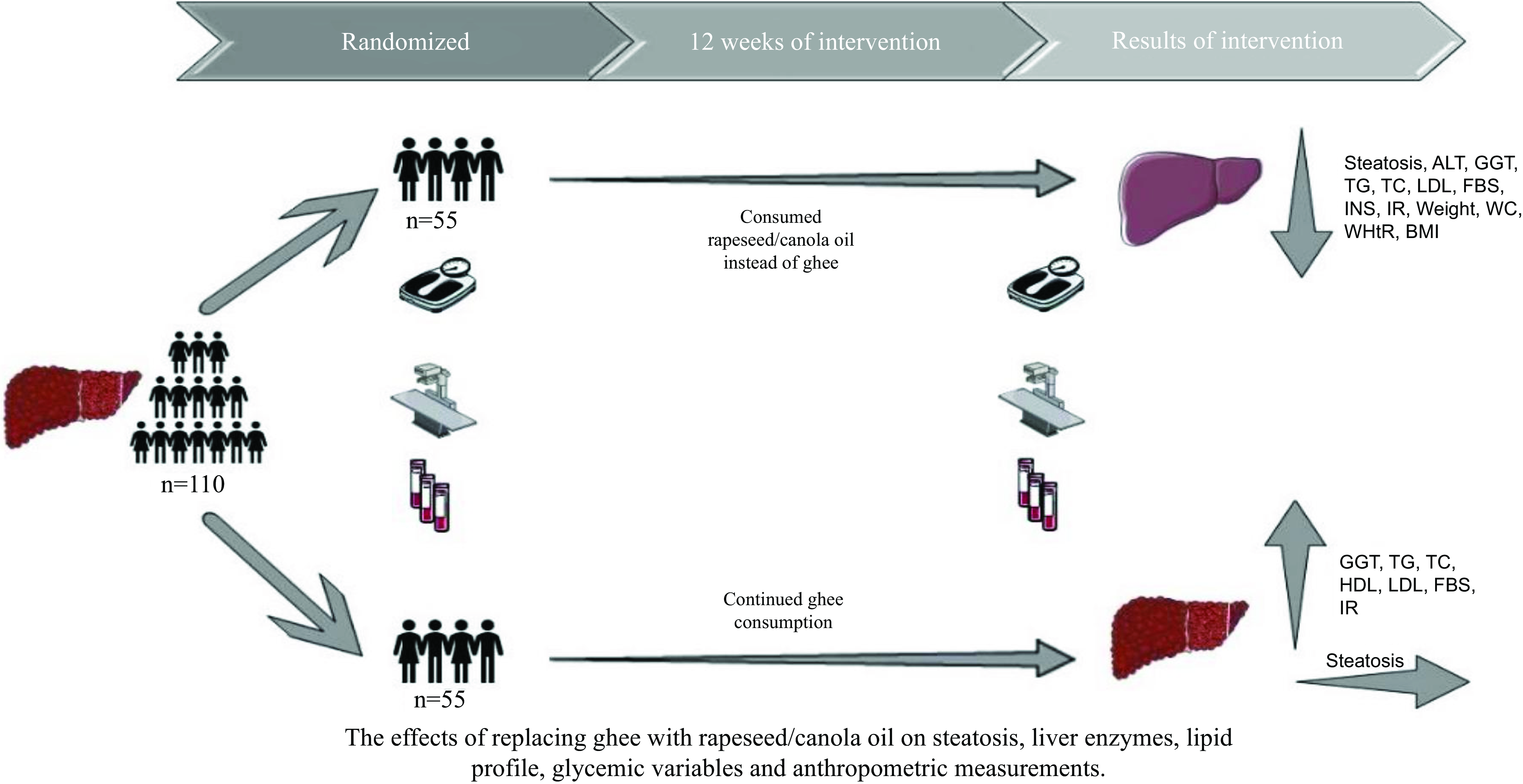
Non-alcoholic fatty liver disease (NAFLD), which is a prevalent hepatic condition worldwide, is expected to develop into the leading reason for end-stage fatty liver in the forthcoming decades. Incorporating rapeseed oil into a balanced diet may be beneficial in improving NAFLD. The goal of this trial was to evaluate the impact of substituting ghee with rapeseed oil on primary outcomes such as fatty liver and liver enzymes, as well as on secondary outcomes including glycaemic variables, lipid profile and anthropometric measurements in individuals with NAFLD. Over 12 weeks, 110 patients (seventy men and forty women; BMI (mean) 28·2 (sd 1·6 kg/m2); mean age 42 (sd 9·6) years), who daily consumed ghee, were assigned to the intervention or control group through random allocation. The intervention group was advised to substitute ghee with rapeseed oil in the same amount. The control group continued the consumption of ghee and was instructed to adhere to a healthy diet. Results showed a significant reduction in the steatosis in the intervention group in comparison with the control group (P < 0·001). However, a significant change in the levels of alanine aminotransferase (–14·4 μg/l), γ-glutamyl transferase (–1·8 μg/l), TAG (–39·7 mg/dl), total cholesterol (–17·2 mg/dl), LDL (–7·5 mg/dl), fasting blood glucose (–7·5 mg/dl), insulin (–3·05 mU/l), Homeostatic Model Assessment for Insulin Resistance (–0·9), Quantitative Insulin-Sensitivity Check Index (+0·01), weight (–4·3 kg), BMI (–0·04 kg/m2), waist (–5·6 cm) and waist:height ratio (–0·04) was seen in the intervention group. The consumption of rapeseed oil instead of ghee caused improvements in liver steatosis and enzymes, glycaemic variables and anthropometric measurements among individuals with NAFLD.
The objective of this study was to describe changes in sustainable dietary behaviours (those that support environmental, economic, and physical health) among a sample of US adults during the COVID-19 pandemic and to examine differences in changes by individuals’ race/ethnicity and socioeconomic status. Therefore, a cross-sectional online survey study was conducted in April 2021 (N = 1,488, mean age = 42.7 (SD = 12.6)) receiving outpatient care from Michigan Medicine, the University of Michigan health system. Enrolment quotas were established to ensure a diverse sample—one-third of participants identified as African American/Black, one-third Hispanic/Latino, one-third White, and one-third low-income. Participants reported engaging in more behaviours that are supportive of a sustainable diet one year into the COVID-19 pandemic compared to before. This is particularly true regarding ecologically and economically sustaining behaviours such as taking fewer trips to the grocery store, increased use of home grocery delivery, increased cooking at home, and greater consumption of healthy foods. Not all behaviour changes promoted sustainable food systems; namely, the use of farmer’s markets and Community Supported Agriculture (CSAs) declined. White and high-income participants were more likely than African American/Black, Hispanic/Latino, and low-income individuals to engage in ecologically and economically sustainable dietary behaviours during the pandemic. Meanwhile, African American/Black participants reported large increases in physical health sustainable dietary behaviours. To support the continuation of greater engagement with sustainable diets, policies that increase access to public transportation, limit the frequency with which consumers have groceries delivered, increase work-from-home options, and improve access for low-income populations should be prioritised.
Lack of nutrition knowledge and poor dietary practices have profound adverse implications on nutritional status particularly among displaced children. Evidence of the effectiveness of nutrition education interventions in improving the nutritional status of internally displaced schoolchildren in Cameroon is scarce. The study objective was to assess the effects of nutrition education on the nutritional status of internally displaced schoolchildren in the West and Littoral Regions of Cameroon. A pre-test-post-test randomised experimental study design was used with an experimental and control group of 160 children from ten primary schools and their caregivers. Anthropometric, biochemical, and clinical signs of malnutrition, dietary, and health status of the children were evaluated, and the caregiver’s nutrition knowledge was assessed in both groups at baseline and end-line with the aid of standard anthropometric and biochemical equipment and recorded in pretested questionnaires. Nutrition education was carried out only with the caregivers of children in the test group. In the test group, significant beneficial outcomes were noticed only for Bitot’s spot (p = 0.047), pallor (0.025), frequency of consumption of fruits (p = 0.002) and vegetables (p = 0.036), caregiver’s nutrition knowledge (p = 0.000), all health-seeking practices of the children (p < 0.05) except immunisation (p = 0.957). No significant change was seen in any of the parameters studied among the participants in the control group. Nutrition education alone was not effective in improving the nutritional status of the children and should be implemented together with other food-based nutrition interventions to improve the nutritional status of internally displaced schoolchildren in the West and Littoral Regions of Cameroon.
The aim of this analysis was to investigate whether habitual intake of total dairy (TD) or different dairy types (liquid, solid, fermented, non-fermented, low-fat, high-fat, low-sugar and high-sugar dairy) during adolescence is associated with biomarkers of low-grade inflammation as well as risk factors of type 2 diabetes in young adulthood.
Design:
Multivariable linear regression analyses were used to investigate prospective associations between estimated TD intake as well as intake of different types of dairy and a pro-inflammatory score, based on high-sensitivity C-reactive protein, IL-6, IL-18, leptin and adiponectin, and insulin resistance assessed as Homeostasis Model Assessment Insulin Resistance in an open-cohort study.
Setting:
Dortmund, Germany.
Participants:
Data from participants (n 375) of the DOrtmund Nutritional and Anthropometric Longitudinally Designed (DONALD) study were included, for whom at least two 3-d weighed dietary records during adolescence (median age: 11 years) and one blood sample in young adulthood (>18 years) were available.
Results:
There was no statistically significant association between TD intake or intake of any dairy type and the pro-inflammatory score (all P > 0·05). TD intake as well as each dairy type intake and insulin resistance also showed no association (all P > 0·05).
Conclusions:
The habitual intake of dairy or individual types of dairy during adolescence does not seem to have a major impact on low-grade systemic inflammation and insulin resistance in the long term. There was no indication regarding a restriction of dairy intake for healthy children and adolescents in terms of diabetes risk reduction.
Different forms of public and private regulation have been used to improve the healthiness of food retail environments. The aim of this scoping review was to systematically examine the types of private regulatory measures used to create healthy food retail environments, the reporting of the processes of implementation, monitoring, review and enforcement and the barriers to and enablers of these.
Design:
Scoping review using the Johanna Briggs Institute guidelines. Ovid MEDLINE, PsycINFO, Embase, CINAHL Plus, Business Source Complete and Scopus databases were searched in October 2020 and again in September 2023 using terms for ‘food retail’, ‘regulation’ and ‘nutrition’. Regulatory measure type was described by domain and mechanism. Deductive thematic analysis was used to identify reported barriers and enablers to effective regulatory governance processes using a public health law framework.
Setting:
Food retail.
Participants:
Food retail settings using private regulatory measures to create healthier food retail environments.
Results:
In total, 17 694 articles were screened and thirty-five included for review from six countries, with all articles published since 2011. Articles reporting on twenty-six unique private regulatory measures cited a mix of voluntary (n 16), mandatory (n 6) measures, both (n 2) or did not disclose (n 2). Articles frequently reported on implementation (34/35), with less reporting on the other regulatory governance processes of monitoring (15/35), review (6/35) and enforcement (2/35).
Conclusions:
We recommend more attention be paid to reporting on the monitoring, review and enforcement processes used in private regulation to promote further progress in improving the healthiness of food retail environments.
To assess trends in the dietary quality of Mexican adolescents from 2006 to 2018, both overall and by sociodemographic indicators, using adaptations of the EAT-Lancet Planetary Health (PH) recommendations, optimal intake estimated by the Global Burden of Disease (GBD) and 2015 Mexican Dietary Guidelines (MDG) in nationally representative samples.
Design:
Using dietary data from a semi-quantitative FFQ, dietary quality indexes were constructed as adaptations of three dietary intake recommendations. Trends in adherence to recommendations were evaluated with multivariate quantile regression models with survey year as the main independent variable and adjusted for age, sex, energy intake, dwelling area, geographical region, household assets condition, and student/non-student status. P values and CI were Bonferroni-corrected.
Setting:
Mexico.
Participants:
Non-pregnant or lactating adolescents aged 12–19 years (n 16 520).
Results:
Adherence to the PH index was about 40 %, GBD was nearly 35 % and MDG was about 37 %. The lowest adherences were for added sugars, sugar-sweetened beverages, nuts and seeds, red meats, processed meats, and legumes (<28 %). No 2006–2018 trends in total adherence were found in any index. Nevertheless, negative adherence trends were identified for poultry (β = –2·4), and saturated fats (β = –0·93), and positive for unsaturated oils (β = 1·23), in the PH. In MDG, relevant trends were found for plain water (β = 1·63) and foods rich in fats (β = –1·24).
Conclusions:
Mexican adolescents have demonstrated poor dietary quality by these three approaches. Therefore, this population has a high-risk profile for diet-associated chronic diseases. Further research and appropriate public policies are needed.
The research objectives were to evaluate factors that influence Canadian secondary school students’ milk and milk alternatives (MMA) consumption and to explore associations through age and gender lenses.
Design:
A qualitative design was used, consisting of semi-structured interviews and photo-elicitation methods. Analysis was guided by the Theory of Planned Behaviour (TPB). Deductive and inductive thematic analyses were used to generate themes, charting data based on attributes such as gender and age.
Setting:
Interviews were held virtually or via telephone.
Participants:
Participants were twenty-eight high school students from Ontario, Canada, diverse in terms of gender and age.
Results:
Both desirable and undesirable beliefs about the health outcomes of consuming MMA were commonly discussed. These included health benefits such as strong bones, muscular strength, and growth, and health consequences like unwanted skin conditions, weight gain, and diseases. While boys and girls associated MMA consumption with muscular strength, boys predominantly considered this favourable, while girls discussed outcomes like unwanted skin conditions and weight gain more often. Adolescents’ perspectives on taste/perceived enjoyment, environmentally friendly choices and animal welfare also influenced their MMA preferences. Parental influences were most cited among social factors, which appeared to be stronger during early adolescence. Factors involving cost, time and accessibility affected adolescents’ beliefs about how difficult it was to consume MMA.
Conclusions:
Recommendations for shifting attitudes towards MMA are provided to address unfavourable beliefs towards these products. Interventions to increase MMA consumption among adolescents should include parents and address cost barriers.
Georgia lies to the northeast of Türkiye, having a western border on the Black Sea. With a population of some 3·73 million, Georgia has a tradition of gastronomic excellence dating back millennia. However, changing lifestyles and external influences have, as elsewhere, led to problems of suboptimal nutrition, and lifestyle-related diseases and disorders prevail. There is considerable scope for improving the focus on public health (PH) and nutrition in Georgia. With this in mind, the Georgian Nutrition Society teamed up with The Nutrition Society of the UK and Ireland and the Sabri Ülker Foundation, a PH charity based in Istanbul, Türkiye, to host a conference and workshops in Tbilisi, Georgia. The primary purpose was to review the current status of PH and nutrition in Georgia with reference to the situation elsewhere, to share examples of best practice and to identify opportunities for improvement. A particular highlight was the presentation of a programme of nutrition education for family physicians recently implemented in Türkiye. This summary of the proceedings is intended as a blueprint for action in Georgia and also to inspire others to consider how PH might be improved via a focus on balanced nutrition.
Child care environments offer an ideal setting for feeding interventions. CELEBRATE Feeding is an approach implemented in child care environments in two Maritime Provinces in Canada to support responsive feeding (RF) to foster children’s self-efficacy, self-regulation, and healthy relationships with food. This study aimed to describe RF in child care using established and enhanced scoring frameworks.
The Environment and Policy Assessment and Observation (EPAO) was modified to reflect RF environments and practices, resulting in our modified EPAO and a CELEBRATE scale. Observations were conducted in 18 child care rooms. Behaviours and environments were scored on both scales, creating 21 RF scores, with a score of ‘3’ indicating the most responsiveness. Descriptive analyses of the scores were conducted. The overall room averages were Mean (M) = 41.00, Standard Deviation (SD) = 7.07 (EPAO), and M = 37.92 SD = 6.50 (CELEBRATE). Most responsive scores among rooms within our EPAO and CELEBRATE scales, respectively, were ‘educators not using food to calm or encourage behaviour’ (M = 2.94, SD = 0.24; M = 2.98, SD = 0.06) and ‘not requiring children to sit at the table until finished’ (M = 2.89, SD = 0.47; M = 2.97, SD = 0.12). The least responsive scores within the EPAO were ‘educator prompts for children to drink water’ (M = 0.78, SD = 0.94) and ‘children self-serving’ (M = 0.83, SD = 0.38). The least responsive in the CELEBRATE scale were ‘enthusiastic role modelling during mealtime’ (M = 0.70, SD = 0.68) and ‘praise of mealtime behaviour unrelated to food intake’ (M = 0.74, SD = 0.55). The CELEBRATE scale captured unique observation information about RF to allow documenting change over time with detailed measurement to inform and support nutrition interventions within child care environments.