To save content items to your account,
please confirm that you agree to abide by our usage policies.
If this is the first time you use this feature, you will be asked to authorise Cambridge Core to connect with your account.
Find out more about saving content to .
To save content items to your Kindle, first ensure no-reply@cambridge.org
is added to your Approved Personal Document E-mail List under your Personal Document Settings
on the Manage Your Content and Devices page of your Amazon account. Then enter the ‘name’ part
of your Kindle email address below.
Find out more about saving to your Kindle.
Note you can select to save to either the @free.kindle.com or @kindle.com variations.
‘@free.kindle.com’ emails are free but can only be saved to your device when it is connected to wi-fi.
‘@kindle.com’ emails can be delivered even when you are not connected to wi-fi, but note that service fees apply.
MicroRNAs (miRNAs) have emerged as important regulators of lipid metabolism. Recent studies have suggested synbiotics may modulate miRNA expression and lipid metabolism. This study aimed to investigate the effects of synbiotic supplementation on circulating miR-27a, miR-33a and lipid parameters in patients with dyslipidaemia. Fifty-six eligible participants were randomly allocated to receive either synbiotic or placebo sachets twice a day for 12 weeks. Each synbiotic sachet contained 3 × 10¹⁰ colony forming unit six species of probiotic microorganisms and 5 g of inulin and fructooligosaccharide as prebiotics. Serum miR-27a and miR-33a expression levels, serum lipids and apolipoproteins, the fecal concentration of short-chain fatty acids (SCFA) and Firmicutes and Bacteroidetes phyla were assessed before and after the study. Real-time PCR was used to determine the relative expression levels of miRNAs. The results showed synbiotic supplementation significantly downregulated the expression levels of miR-27a and miR-33a compared with the placebo group (P = 0·008 and P = 0·001, respectively). Furthermore, the intervention group exhibited significant improvements in serum HDL-cholesterol, small dense LDL (sdLDL-cholesterol), apoA-I and apoB-100 (P = 0·008, P = 0·006, P = 0·003, P = 0·001, respectively). The results showed a significant negative correlation between miR-33a expression levels with HDL-cholesterol, butyrate, propionate and a significant positive correlation with total cholesterol, LDL-cholesterol and sdLDL-cholesterol in the intervention group. Fecal bacteria and SCFA were significantly increased in the intervention group. This study provides evidence that synbiotic supplementation can modulate miR-27a and miR-33a expression and improve lipid metabolism in patients with dyslipidaemia.
Prisoners experience a higher burden of poor health, aggressive behaviours and worsening mental health than the general population. This systematic review aimed to identify research that used nutrition-based interventions in prisons, focusing on outcomes of mental health and behaviours. The systematic review was registered with Prospective Register of Systematic Reviews on 26 January 2022: CRD42022293370. Inclusion criteria comprised of current prisoners with no limit on time, location, age, sex or ethnicity. Only quantitative research in the English language was included. PubMed/Medline, Web of Science, EMBASE, PsycINFO and CINAHL were searched, retrieving 933 results, with 11 included for qualitative synthesis. Studies were checked for quality using the revised tool to assess risk of bias in randomised trials or risk of bias in non-randomised studies of interventions tool. Of the included studies, seven used nutritional supplements, three included diet changes, and one used education. Of the seven supplement-based studies, six included rule violations as an outcome, and only three demonstrated significant improvements. One study included mental health as an outcome; however, results did not reach significance. Of the three diet change studies, two investigated cognitive function as an outcome, with both reaching significance. Anxiety was included in one diet change study, which found a significant improvement through consuming oily fish. One study using diet education did not find a significant improvement in overall mental resilience. Overall, results are mixed, with the included studies presenting several limitations and heterogeneity. Future research should aim to consider increased homogeneity in research design, allowing for a higher quality of evidence to assess the role nutrition can play in improving the health of prisoners.
Reducing children’s exposure to unhealthy food marketing is crucial to combat childhood obesity. We aimed to estimate the reduction of children’s exposure to food marketing under different policy scenarios and assess exposure differences by socio-economic status.
Design:
Data on children’s exposure to unhealthy food marketing were compiled from a previous cross-sectional study in which children (n 168) wore wearable cameras and Global Positioning System (GPS) units for 4 consecutive days. For each exposure, we identified the setting, the marketing medium and food/beverage product category. We analysed the percentage reduction in food marketing exposure for ten policy scenarios and by socio-economic deprivation: (1) no product packaging, (2) no merchandise marketing, (3) no sugary drink marketing, (4) no confectionary marketing in schools, (5) no sugary drink marketing in schools, (6) no marketing in public spaces, (7) no marketing within 400 m of schools, (8) no marketing within 400 m of recreation venues, (9) no marketing within 400 m of bus stops and (10) no marketing within 400 m of major roads.
Setting:
Wellington region of New Zealand.
Participants:
168 children aged 11–14 years.
Results:
Exposure to food marketing varied by setting, marketing medium and product category. Among the ten policy scenarios, the largest reductions were for plain packaging (60·3 %), no sugary drink marketing (28·8 %) and no marketing in public spaces (22·2 %). There were no differences by socio-economic deprivation.
Conclusions:
The results suggest that plain packaging would result in the greatest decrease in children’s exposure to food marketing. However, given that children are regularly exposed to unhealthy food marketing in multiple settings through a range of marketing mediums, comprehensive bans are needed to protect children’s health.
Diet quality has been associated with mental health, and recently, there has been growing interest in the association between the sustainability of diets and human health. The objective of this cross-sectional study was to explore the relationship between a newly developed dietary index for health and sustainability and psychological disorders among Iranian women. Participants in this cross-sectional study included 479 women living in Tehran with no history of chronic disease. A validated 168-item FFQ was used to assess dietary intake. The World Index for Sustainability and Health was calculated, consisting of four sub-scores: less healthy, healthy, low environmental impact and high environmental impact. Participants’ psychological status was assessed using the Depression Anxiety Stress Scale-21. Logistic regression models were used to examine the association between the World Index for Sustainability and Health and psychological disorders. Participant ages ranged from 20 to 50 years, with a mean age of 31·86 (sd 7·68) years. After adjusting for potential confounders (age, energy, BMI, marital status, education, family history of chronic disease, body satisfaction, socio-economic status, physical activity, smoking), women in the highest tertile of the healthy sub-score had significantly lower odds of experiencing depression (OR 0·40; 95 % CI 0·24, 0·67), anxiety (OR 0·45; 95 % CI 0·23, 0·87) and psychological distress (OR 0·46; 95 % CI 0·28, 0·77) compared with the reference group. Similarly, the less healthy sub-score was significantly associated with depression (OR 0·51; 95 % CI 0·32, 0·89), anxiety (OR 0·44; 95 % CI 0·25, 0·78) and psychological distress (OR 0·57; 95 % CI 0·36, 0·90). An inverse association was observed between the low environmental impact sub-score and depression (OR 0·32; 95 % CI 0·19, 0·54), anxiety (OR 0·38; 95 % CI 0·18, 0·76) and psychological distress (OR 0·30; 95 % CI 0·17, 0·51). However, no further significant associations were found with the high environmental impact sub-score, except with depression (OR 0·57; 95 % CI 0·33, 0·96). The healthy and low environmental impact sub-scores of the World Index for Sustainability and Health were found to be inversely associated with depression, anxiety and psychological distress. However, due to the cross-sectional study design, causality cannot be inferred. Further prospective studies are required to validate and expand upon these findings and explore potential mechanisms and alternative explanations, such as reverse causation. While this study suggests that choosing a diet that is both healthy for individuals and sustainable for the environment may be associated with a lower risk of mental health issues among women, more research is needed.
Inflammation is implicated in chronic diseases including cancer and CVD, which are major causes of mortality. Diet can influence inflammation status. We therefore examined whether the inflammatory potential of a person’s diet is associated with mortality.
Design:
The inflammatory potential of the usual diet was assessed by calculating Dietary Inflammatory Index (DII) scores from repeated FFQ data (collected in 1992, 1994 and 1996), placing each participant’s diet on a continuum from anti- to pro-inflammatory. DII scores were analysed as a continuous variable and as categories by creating quartile groups. Death registry data were used to ascertain all-cause mortality and separately mortality from CVD, cancers and other causes between 1992 and 2022. Cox proportional hazard regression analysis was used to calculate adjusted hazard ratios (HR) with 95 % CI, comparing higher and lowest quartile groups, or HR change per one DII unit increase.
Setting:
Nambour, Australia.
Participants:
A community-based sample of 1440 adults aged 25–75 years.
Results:
During follow-up, 488 participants died, including 188 from CVD, 151 from cancer and 170 from other causes. Participants in the most pro-inflammatory diet group were at increased risk of all-cause mortality (HRQ4 v. Q1 = 1·55; 95 % CI 1·19, 2·03; P < 0·001) and other-cause mortality (HRQ4 v. Q1 = 1·69; 95 % CI 1·12, 2·54; P 0·01). A one-unit increase in DII score was associated with a 36 % increased risk of CVD among those younger than 55 years of age (HR for a one-unit increase in DII score 1·36, 95 % CI 1·04, 1·78). The risk of cancer mortality was also increased for those with a more pro-inflammatory diet in age ≤ 55 years (HR for a one-unit increase in DII score 1·20, 95 % CI 1·02, 1·40) and age 56–65 years (HR for a one-unit increase in DII score 1·11, 95 % CI 1·00, 1·23).
Conclusions:
A pro-inflammatory diet increases the risk of all-cause mortality. Our results support the promotion of anti-inflammatory diets to help promote longevity.
To characterise the food environment of Dutch small and medium-sized enterprises (SMEs), encompassing physical, sociocultural, economic and policy features and to explore variations within SMEs according to company characteristics (number of employees, location of work and presence of worksite cafeteria).
Design:
Online cross-sectional survey study of a representative Dutch SME sample by a panel agency.
Setting:
Dutch SMEs.
Participants:
Three hundred and fifteen employees of Dutch SMEs responsible for food and drink in their company.
Results:
Most SMEs did not have a worksite cafeteria, no provision of fruits or vegetables, and did not offer discounts on food or drinks. The food environment of these SMEs varied significantly based on company characteristics. For example, SMEs with a worksite cafeteria were significantly more likely to have fruits (OR = 8·76, 95 % CI (4·50, 17·06)), vegetables (OR = 10·29, 95 % CI (5·49, 19·31)) and company food policies (OR = 5·04, 95 % CI (2·08, 12·20)) than SMEs without. Additionally, SMEs with ≥ 50 employees were more likely to have fruits (OR = 2·39, 95 % CI (1·42, 4·03)), vegetables (OR = 1·89, 95 % CI (1·04, 3·46)) and company food policies (OR = 2·82, 95 % CI (1·09, 7·29) than SMEs with < 50 employees. Moreover, having a worksite cafeteria (B = 0·23, 95 % CI (0·08, 0·38)) and employees working mostly on-site (B = 0·14, 95 % CI (0·01, 0·28)) were associated with stronger social norms of healthy and sustainable eating at work compared to SMEs without a worksite cafeteria and working mostly off-site.
Conclusions:
In SMEs, an overall comprehensive picture of the food environment points to its limited active encouragement of healthy food choices, particularly so in small SMEs without a worksite cafeteria. Company characteristics strongly influence SME food environments and should be considered when developing interventions improving SME workplace food environments.
To assess the comprehensiveness (scope of nutrition guidance) and strength (clarity of written language) of centre-based nutrition policies (CBNP) within early childhood education (ECE) centres. To also consider the applicability of an existing CBNP assessment tool and policy alignment with best practice food provision and feeding practices.
Design:
Cross-sectional online study to assess written ECE CBNP using the Wellness Child Care Assessment Tool.
Setting:
Licenced ECE centres in the state of Victoria, Australia.
Participants:
ECE centres (operating at least 8 h per d, 48 weeks per annum), stratified by location (rural and metropolitan), centre management type (profit and not-for-profit) and socio-economic area (low, middle, high).
Results:
Included individual CBNP (n 118), predominantly from metropolitan centres (56 %) and low-medium socio-economic areas (78 %). Policies had low overall Wellness Child Care Assessment Tool scores, particularly strength scores which were low across all four domains (i.e. nutrition education, nutrition standards, health promotion and communication/evaluation). The nutrition standards domain had the lowest strength score. The communication/evaluation domain had the lowest comprehensiveness score. Content analysis indicated low scores may relate to the Wellness Child Care Assessment Tool applicability for the Australian context due to differences in best practice guidance.
Conclusion:
Despite the presence of written nutrition policies in ECE centres, many showed weak language and lacked comprehensiveness and strength. This may relate to poor implementation of best practice food provision or feeding practices. Low scores, however, may partly stem from using an assessment tool that is not country-specific. The redevelopment of country-specific tools to assess ECE CBNP may be warranted.
Inflammation is involved in the pathogenesis of stroke and depression. We aimed to investigate the association between the dietary inflammatory index (DII) and depression in American adults with stroke. Adults with stroke were enrolled in the National Health and Nutrition Examination Survey between 2005 and 2018 in the USA. The DII was obtained from a 24-h dietary recall interview for each individual. Multivariate regression and restricted cubic spline analyses were conducted to evaluate the association between DII and depression in adults with stroke. The mean age of the 1239 participants was 63·85 years (50·20 % women), and the prevalence of depression was 18·26 %. DII showed a linear and positive association with severe depression in adults with stroke (OR 1·359; 95 % CI 1·021, 1·810; P for non-linearity = 0·493). Compared with those in the lowest tertile of the DII, adults with stroke in the third tertile of the DII had a 3·222-fold higher risk of severe depression (OR 3·222; 95 % CI 1·150, 9·026). In the stratified analyses, the association between DII score and severe depression was more significant in older adults (P for interaction = 0·010) but NS with respect to sex (P for interaction = 0·184) or smoking status (P for interaction = 0·396). No significant association was found between DII and moderate-to-moderately severe depression in adults with stroke. In conclusion, an increase in DII score was associated with a higher likelihood of severe depression in older adults with stroke.
Several meta-analyses have suggested the beneficial effect of vitamin D on patients infected with severe acute respiratory syndrome coronavirus-2. This umbrella meta-analysis aims to evaluate influence of vitamin D supplementation on clinical outcomes and the mortality rate of COVID-19 patients.
Design:
Present study was designed as an umbrella meta-analysis. The following international databases were systematically searched till March 2023: Web of Science, PubMed, Scopus, and Embase.
Settings:
Random-effects model was employed to perform meta-analysis. Using AMSTAR critical evaluation tools, the methodological quality of the included meta-analyses was evaluated.
Participants:
Adult patients suffering from COVID-19 were studied.
Results:
Overall, 13 meta-analyses summarising data from 4 randomised controlled trial and 9 observational studies were identified in this umbrella review. Our findings revealed that vitamin D supplementation and status significantly reduced mortality of COVID-19 [Interventional studies: (ES = 0·42; 95 % CI: 0·10, 0·75, P < 0·001; I2 = 20·4 %, P = 0·285) and observational studies (ES = 1·99; 95 % CI: 1·37, 2·62, P < 0·001; I2 = 00·0 %, P = 0·944). Also, vitamin D deficiency increased the risk of infection and disease severity among patients.
Conclusion:
Overall, vitamin D status is a critical factor influencing the mortality rate, disease severity, admission to intensive care unit and being detached from mechanical ventilation. It is vital to monitor the vitamin D status in all patients with critical conditions including COVID patients.
Prebiotic fibre represents a promising and efficacious treatment to manage pre-diabetes, acting via complementary pathways involving the gut microbiome and viscosity-related properties. In this study, we evaluated the effect of using a diverse prebiotic fibre supplement on glycaemic, lipid and inflammatory biomarkers in patients with pre-diabetes. Sixty-six patients diagnosed with pre-diabetes (yet not receiving glucose-lowering medications) were randomised into treatment (thirty-three) and placebo (thirty-three) interventions. Participants in the treatment arm consumed 20 g/d of a diverse prebiotic fibre supplement, and participants in the placebo arm consumed 2 g/d of cellulose for 24 weeks. A total of fifty-one and forty-eight participants completed the week 16 and week 24 visits, respectively. The intervention was well tolerated, with a high average adherence rate across groups. Our results extend upon previous work, showing a significant change in glycated haemoglobin (HbA1c) in the treatment group but only in participants with lower baseline HbA1c levels (< 6 % HbA1c) (P = 0·05; treatment –0·17 ± 0·27 v. placebo 0·07 ± 0·29, mean ± sd). Within the whole cohort, we showed significant improvements in insulin sensitivity (P = 0·03; treatment 1·62 ± 5·79 v. placebo –0·77 ± 2·11) and C-reactive protein (PFWE = 0·03; treatment –2·02 ± 6·42 v. placebo 0·94 ± 2·28) in the treatment group compared with the placebo. Together, our results support the use of a diverse prebiotic fibre supplement for physiologically relevant biomarkers in pre-diabetes.
The objective of this study is to evaluate the association between the consumption of ultra-processed foods (UPF) and the mental health of pregnant women from the South of Brazil. This is a cross-sectional study carried out in Criciúma, Brazil, through face-to-face interviews, from April to December 2022. Pregnant women aged 18 or older who underwent prenatal care in the forty-eight basic health care units of the municipality and who were in their third trimester of pregnancy were included. High consumption of UPF was considered as six or more items or subgroups of UPF consumed on the day before the interview, using the Nova-UPF screener. The mental health variables were depressive symptoms, stress, sadness and anxiety. Crude and adjusted analyses were conducted using the Fisher’s exact test and the Poisson regression with robust variance. In total, 428 pregnant women were studied; most of them were aged between 20 and 25 years and were white. Pregnant women who presented high consumption of UPF were 1·42-fold (95 % CI 1·06, 1·92) more likely to experience anxiety and presented a prevalence 56 % (95 % CI 1·18, 2·07) higher of stress when compared with those who did not present high consumption of UPF. The prevalence of depressive symptoms and feelings of sadness was 1·31-fold (95 % CI 1·08, 1·60) and 3·41-fold (95 % CI 1·77, 6·58) higher among those with high consumption of UPF, respectively. The results suggest that diet quality is associated with the mental health of pregnant women. Promoting joint actions focused on food and nutritional education, and mental health, for pregnant women, is necessary.
Switching regular salt (sodium chloride) to salt enriched with potassium chloride (25 % potassium chloride, 75 % sodium chloride) has been shown to reduce blood pressure and the risk of cardiovascular diseases. We sought to define the potential for the current production of sodium chloride and potassium chloride to support a global switch to the use of potassium-enriched salt.
Design:
We summarised data from geological surveys, government reports and trade organisations describing the global production and supply of sodium chloride and potash (the primary source of potassium chloride) and compared this to potential requirements for potassium-enriched salt.
Setting:
Global.
Participants:
Not applicable.
Results:
Approximately 280 million tonnes of sodium chloride were produced in 2020 with China and the USA the main producers. Global production of potash from which potassium chloride is extracted was about forty-four million tonnes with Canada, Belarus, Russia and China providing 77 % of the world’s supply. There were forty-eight countries in which potassium-enriched salt is currently marketed with seventy-nine different brands identified. Allowing for loss of salt between manufacture and consumption, a full global switch from regular salt to potassium-enriched salt would require about 9·7 million tonnes of sodium chloride to be replaced with 9·7 million tonnes of potassium chloride annually.
Conclusions:
Significant upscaling of the production of potassium chloride and the capacity of companies able to manufacture potassium-enriched salt, as well as a robust business case for the switch to potassium chloride, would be required.
To assess the nutritional status, growth parameters and lifestyle behaviours of children between 0·5 and 12 years in nationally representative samples in Malaysia, Indonesia, Thailand and Vietnam.
Design:
A cross-sectional study was conducted in the four countries, between May 2019 and April 2021. Data collected can be categorised into four categories: (1) Growth – anthropometry, body composition, development disorder, (2) nutrient intake and dietary habits – 24-h dietary recall, child food habits, breast-feeding and complementary feeding, (3) socio-economic status – food insecurity and child health status/environmental and (4) lifestyle behaviours – physical activity patterns, fitness, sunlight exposure, sleep patterns, body image and behavioural problems. Blood samples were also collected for biochemical and metabolomic analyses. With the pandemic emerging during the study, a COVID-19 questionnaire was developed and implemented.
Setting:
Both rural and urban areas in Malaysia, Indonesia, Thailand and Vietnam.
Participants:
Children who were well, with no physical disability or serious infections/injuries and between the age of 0·5 and 12 years old, were recruited.
Results:
The South East Asian Nutrition Surveys II recruited 13 933 children. Depending on the country, data collection from children was conducted in schools and commune health centres, or temples, or sub-district administrative organisations.
Conclusions:
The results will provide up-to-date insights into nutritional status and lifestyle behaviours of children in the four countries. Subsequently, these data will facilitate exploration of potential gaps in dietary intake among Southeast Asian children and enable local authorities to plan future nutrition and lifestyle intervention strategies.
Most evidence supporting screening for undernutrition is for children aged 6–59 months. However, the highest risk of mortality and highest incidence of wasting occurs in the first 6 months of life. We evaluated relationships between neonatal anthropometric indicators, including birth weight, weight-for-age Z-score (WAZ), weight-for-length Z-score (WLZ), length-for-age Z-score (LAZ) and mid-upper arm circumference (MUAC) and mortality and growth at 6 months of age among infants in Burkina Faso.
Design:
Data arose from a randomised controlled trial evaluating neonatal azithromycin administration for the prevention of child mortality. We evaluated relationships between baseline anthropometric measures and mortality, wasting (WLZ < –2), stunting (LAZ < –2) and underweight (WAZ < –2) at 6 months of age were estimated using logistic regression models adjusted for the child’s age and sex.
Setting:
Five regions of Burkina Faso.
Participants:
Infants aged 8–27 d followed until 6 months of age.
Results:
Of 21 832 infants enrolled in the trial, 7·9 % were low birth weight (<2500 g), 13·3 % were wasted, 7·7 % were stunted and 7·4 % were underweight at enrolment. All anthropometric deficits were associated with mortality by 6 months of age, with WAZ the strongest predictor (WAZ < –2 to ≥ –3 at enrolment v. WAZ ≥ –2: adjusted OR, 3·91, 95 % CI, 2·21, 6·56). Low WAZ was also associated with wasting, stunting, and underweight at 6 months.
Conclusions:
Interventions for identifying infants at highest risk of mortality and growth failure should consider WAZ as part of their screening protocol.
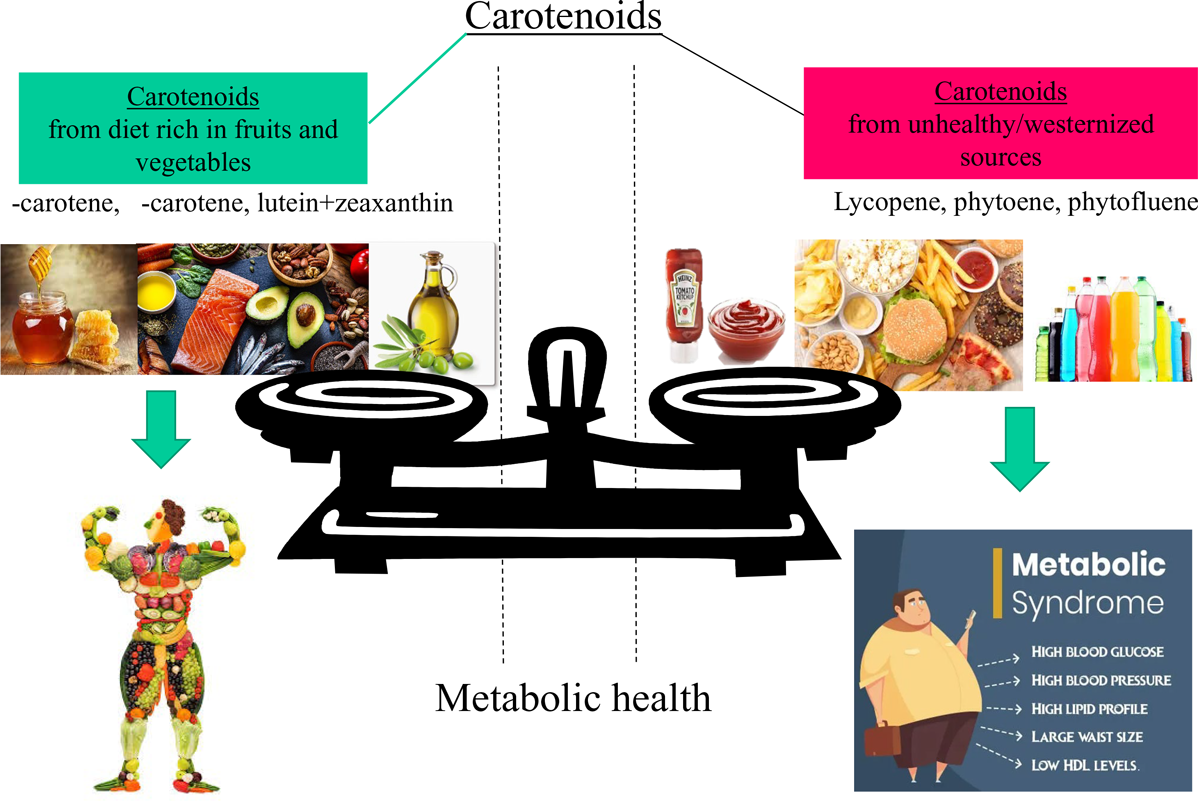
Carotenoids are generally associated with health-beneficial effects; however, their intake patterns related to the metabolic syndrome (MetS) and its components remain controversial. This cross-sectional study investigated associations between dietary intakes of individual carotenoids, fruits and vegetables, and the MetS and its components. Dietary intakes of 1346 participants of the Observation des Risques et de la Santé Cardio-Vasculaire au Luxembourg (ORISCAV-LUX-2) study were investigated by a 174-item FFQ, and carotenoid intake was determined by linking findings using mainly the USDA food databases. Components of MetS and complementary variables, including anthropometric (BMI, waist circumferences and waist:hip ratio) and biological parameters (TAG, HDL-cholesterol, fasting blood glucose and blood pressure), were measured. Logistic (for MetS) and linear multivariable regression models (including assessing MetS as scores) adjusted for various confounders were created. α-and β-Carotene, as well as lutein + zeaxanthin, were inversely associated with MetS (also when it was measured on a continuous scale), reducing the odds for MetS by up to 48 %. However, lycopene, phytoene and phytofluene were rather positively associated with MetS scores and its components, though these adverse effects disappeared, at least for lycopene, when controlling for intakes of tomato-based convenience foods, in line with indicating a rather unhealthy/westernised diet. All these associations remained significant when including fruits and vegetables as confounders, suggesting that carotenoids were related to MetS independently from effects within fruits and vegetables. Thus, a high intake of carotenoids was bidirectionally associated with MetS, its severity, risk and its components, depending on the type of carotenoid. Future investigations are warranted to explore the inverse role that tomato-based carotenoids appear to suggest in relation to the MetS.
The objective of this study was to describe the evolution of household purchase of added sugars and their main food sources in Brazil. Nationally representative data from the Household Budget Surveys from 2002–2003, 2008–2009 and 2017–2018 were used. Energy and added sugar quantities were estimated by means of per capita food quantities. The items considered as food sources were: (1) table sugar: refined sugar and other energetic sweeteners and (2) processed and ultra-processed foods with added sugar: soft drinks; other drinks; sweets, candies and chocolates; cookies; cakes and pies and other foods. The parameters estimated were: mean share of added sugar in total energy and, for food sources, the share of added sugar in total sugar intake and the impact of variations in sources of added sugar between 2008 and 2017. There was a regular share of energy from added sugar to total energy intake between 2002 and 2008 but a reduced share in 2017. Between 2008 and 2017, there was a decrease in the share of refined sugar and other sweeteners and soft drinks to total sugar intake and an increased share of all other items. High-income households had a lower share of refined sugar and other energetic sweeteners, but a higher share of soft drinks, sweets, candies and chocolates. The decrease in added sugar in 2017 was mainly due to the lower share of soft drinks. In conclusion, Brazilians’ total intake of added sugar was decreased, mostly owing to reduced consumption of sugar from soft drinks.