To save content items to your account,
please confirm that you agree to abide by our usage policies.
If this is the first time you use this feature, you will be asked to authorise Cambridge Core to connect with your account.
Find out more about saving content to .
To save content items to your Kindle, first ensure no-reply@cambridge.org
is added to your Approved Personal Document E-mail List under your Personal Document Settings
on the Manage Your Content and Devices page of your Amazon account. Then enter the ‘name’ part
of your Kindle email address below.
Find out more about saving to your Kindle.
Note you can select to save to either the @free.kindle.com or @kindle.com variations.
‘@free.kindle.com’ emails are free but can only be saved to your device when it is connected to wi-fi.
‘@kindle.com’ emails can be delivered even when you are not connected to wi-fi, but note that service fees apply.
Effects of acute thermal exposures on appetite appear hypothetical in reason of very heterogeneous methodologies. The aim of this study was therefore to clearly define the effects of passive 24-h cold (16°C) and heat (32°C) exposures on appetitive responses compared with a thermoneutral condition (24°C). Twenty-three healthy, young and active male participants realised three sessions (from 13.00) in a laboratory conceived like an apartment dressed with the same outfit (Clo = 1). Three meals composed of three or four cold or warm dishes were served ad libitum to assess energy intake (EI). Leeds Food Preference Questionnaires were used before each meal to assess food reward. Subjective appetite was regularly assessed, and levels of appetitive hormones (acylated ghrelin, glucagon-like peptite-1, leptin and peptide YY) were assessed before and after the last meal (lunch). Contrary to the literature, total EI was not modified by cold or heat exposure (P = 0·120). Accordingly, hunger scores (P = 0·554) were not altered. Levels of acylated ghrelin and leptin were marginally higher during the 16 (P = 0·032) and 32°C (P < 0·023) sessions, respectively. Interestingly, implicit wanting for cold and low-fat foods at 32°C and for warm and high-fat foods at 16°C were increased during the whole exposure (P < 0·024). Moreover, cold entrées were more consumed at 32°C (P < 0·062) and warm main dishes more consumed at 16°C (P < 0·025). Thus, passive cold and hot exposures had limited effects on appetite, and it seems that offering some choice based on food temperature may help individuals to express their specific food preferences and maintain EI.
The current study aimed to investigate the effects of ageing on oral immunity using β-defensin (DEFB) 1/2 as a marker and evaluate the effects of curcumin (CUR) on these processes. The study sample included thirty male C57BL/6J mice divided into three groups based on the treatment method used. The young control (YC) and old control (OC) groups received 0·5 % methylcellulose-400 (CUR vehicle) orally for 5 days, whereas the CUR group of older mice received a CUR solution suspended in 0·5 % methylcellulose-400 (dose: 3·0 mg/kg body). DEFB1/2 and immune indicator levels were measured in the saliva and salivary glands post-treatment. The saliva volume and protein content were significantly reduced in the OC group compared with the YC group. CUR administration restored these parameters, decreased DEFB1 expression in the salivary gland and increased DEFB1/2 secretion and DEFB2 expression. These findings were supported by epigenetic gene regulation and partial cytokine activation from changes in WD40 repeat protein 5, TNF alpha and IL-1beta. CUR can partially restore age-related changes in oral immune responses and promote oral health, thereby preventing frailty in the older population through a nutritional therapeutic pathway.
Malnutrition significantly hampers wound healing processes. This study aimed to compare the effectiveness of the Global Leadership Initiative on Malnutrition (GLIM) and Subjective Global Assessment (SGA) in diagnosing malnutrition and predicting wound healing in patients with diabetic foot ulcers (DFU). GLIM criteria were evaluated for sensitivity (SE), specificity (SP), positive predictive value, negative predictive value and kappa (κ) against SGA as the reference. Modified Poisson regression model and the DeLong test investigated the association between malnutrition and non-healing ulcers over 6 months. This retrospective cohort study included 398 patients with DFU, with a mean age of 66·3 ± 11·9 years. According to SGA and GLIM criteria, malnutrition rates were 50·8 % and 42·7 %, respectively. GLIM criteria showed a SE of 67·3 % (95 % CI 60·4 %, 73·7 %) and SP of 82·7 % (95 % CI 76·6 %, 87·7 %) in identifying malnutrition, with a positive predictive value of 80·0 % and a negative predictive value of 71·1 % (κ = 0·50) compared with SGA. Multivariate analysis demonstrated that malnutrition, as assessed by SGA, was an independent risk factor for non-healing (relative risk (RR) 1·84, 95 % CI 1·45, 2·34), whereas GLIM criteria were associated with poorer ulcer healing in patients with estimated glomerular filtration rate ≥ 60 ml/min/1·73m2 (RR: 1·46, 95 % CI 1·10, 1·94). SGA demonstrated a superior area under the receiver’s operating characteristic curve for predicting non-healing compared with GLIM criteria (0·70 (0·65–0·75) v. 0·63 (0·58–0·65), P < 0·01). These findings suggest that both nutritional assessment tools effectively identify patients with DFU at increased risk, with SGA showing superior performance in predicting non-healing ulcers.
Analysing customer loyalty card data is a novel method for assessing nutritional quality and changes in a population’s food consumption. However, prior to its use, the thousands of grocery products available in stores must be reclassified from the retailer’s original hierarchical structure into a structure that is suitable for the use of nutrition and health research. We created LoCard Food Classification (LCFC) and examined how it reflects the nutritional quality of the grocery product groups. Nutritional quality was considered the main criterion guiding the reclassification of the 3574 grocery product groups. Information on the main ingredient of the product group, purpose of use and carbon footprint was also used at the more granular levels of LCFC. The main challenge in the reclassification was a lack of detailed information on the type of products included in each group, and some of the groups included products that have opposite health effects. The final LCFC has four hierarchical levels, and it is openly available online. After reclassification, the product groups were linked with the Finnish food composition database, and the nutrient profile was assessed by calculating the Nutrient-Rich Food Index (NRFI) for each product group. sd in NRFI decreased from 0·21 of the least granular level to 0·08 of the most granular level of LCFC indicating that the most granular level of LCFC has more homogeneous nutritional quality. Studies that apply LCFC to examine loyalty card data with health and environmental outcomes are needed to further demonstrate its validity.
Our aim was to estimate associations of adolescent dietary patterns and meal habits with hypertensive disorders of pregnancy (HDP) and preterm birth. We used data from a prospective cohort study (Norwegian Young-HUNT1) where dietary information was collected during adolescence and pregnancy outcomes were obtained through record linkage to the Norwegian national birth registry. The outcomes were HDP, hypertension, pre-eclampsia/eclampsia, and preterm birth in the first pregnancy and in any pregnancy. Diet was self-reported from validated questionnaires, and exposures were dietary indexes (healthy; unhealthy; fruit and vegetable; fibre index) and meal habits. Recruitment took place in schools. Eligible participants were females aged 13–19 years at the time of dietary assessment with a subsequent singleton pregnancy (n 3622). Women who reported a higher fibre intake in adolescence had a lower risk of pre-eclampsia in the first pregnancy (Relative Risk: 0·84; 95 % CI 0·7, 1·0), although this was weaker in sensitivity analyses. Regular meal habits in mid-adolescence (aged 13–15 years), particularly breakfast and lunch, were weakly associated with a lower risk of hypertension in pregnancy. Our results are the first to indicate an association between aspects of diet and dietary behaviour in mid-adolescence and subsequent HDP. More evidence is needed from larger studies to replicate the results and from alternative study designs to disentangle causality.
Prenatal vitamin D deficiency is widely reported and may affect perinatal outcomes. In this secondary analysis of the UK Pregnancies Better Eating and Activity Trial, we examined vitamin D status and its relationship with selected pregnancy outcomes in women with obesity (BMI ≥ 30 kg/m2) from multi-ethnic inner-city settings in the UK. Determinants of vitamin D status at a mean of 17 ± 1 weeks’ gestation were assessed using multivariable linear regression and reported as percent differences in serum 25-hydroxyvitamin D (25(OH)D). Associations between 25(OH)D and clinical outcomes were examined using logistic regression. Among 1089 participants, 67 % had 25(OH)D < 50 nmol/l and 26 % had concentrations < 25 nmol/l. In fully adjusted models accounting for socio-demographic and anthropometric characteristics, 25(OH)D was lower among women of Black (% difference = −33; 95 % CI: −39, −27), Asian (% difference = −43; 95 % CI: −51, −35) and other non-White (% difference = −26; 95 % CI: −35, −14) ethnicity compared with women of White ethnicity (n 1086; P < 0·001 for all). In unadjusted analysis, risk of gestational diabetes was greater in women with 25(OH)D < 25 nmol/l compared with ≥ 50 nmol/l (OR = 1·58; 95 % CI: 1·09, 2·31), but the magnitude of effect estimates was attenuated in the multivariable model (OR = 1·33; 95 % CI: 0·88, 2·00). There were no associations between 25(OH)D and risk of preeclampsia, preterm birth or small for gestational age or large-for-gestational-age delivery. These findings demonstrate low 25(OH)D among pregnant women with obesity and highlight ethnic disparities in vitamin D status in the UK. However, evidence for a greater risk of adverse perinatal outcomes among women with vitamin D deficiency was limited.
Estimate the impact of 20 % flat-rate and tiered sugary drink tax structures on the consumption of sugary drinks, sugar-sweetened beverages and 100 % juice by age, sex and socio-economic position.
Design:
We modelled the impact of price changes – for each tax structure – on the demand for sugary drinks by applying own- and cross-price elasticities to self-report sugary drink consumption measured using single-day 24-h dietary recalls from the cross-sectional, nationally representative 2015 Canadian Community Health Survey-Nutrition. For both 20 % flat-rate and tiered sugary drink tax scenarios, we used linear regression to estimate differences in mean energy intake and proportion of energy intake from sugary drinks by age, sex, education, food security and income.
Setting:
Canada.
Participants:
19 742 respondents aged 2 and over.
Results:
In the 20 % flat-rate scenario, we estimated mean energy intake and proportion of daily energy intake from sugary drinks on a given day would be reduced by 29 kcal/d (95 % UI: 18, 41) and 1·3 % (95 % UI: 0·8, 1·8), respectively. Similarly, in the tiered tax scenario, additional small, but meaningful reductions were estimated in mean energy intake (40 kcal/d, 95 % UI: 24, 55) and proportion of daily energy intake (1·8 %, 95 % UI: 1·1, 2·5). Both tax structures reduced, but did not eliminate, inequities in mean energy intake from sugary drinks despite larger consumption reductions in children/adolescents, males and individuals with lower education, food security and income.
Conclusions:
Sugary drink taxation, including the additional benefit of taxing 100 % juice, could reduce overall and inequities in mean energy intake from sugary drinks in Canada.
The purpose of this study was to compare single- and multi-frequency bioimpedance (BIA) devices against dual-energy X-ray absorptiometry (DXA) for appendicular lean mass (ALM) and muscle quality index (MQI) metrics in Hispanic adults. One hundred thirty-one Hispanic adults (18–55 years) participated in this study. ALM was measured with single-frequency bioimpedance analysis (SFBIA), multi-frequency bioimpedance analysis (MFBIA) and DXA. ALMTOTAL (left arm + right arm + left leg + right leg) and ALMARMS (left arm + right arm) were computed for all three devices. Handgrip strength (HGS) was measured using a dynamometer. The average HGS was used for all MQI models (highest left hand + highest right hand)/2. MQIARMS was defined as the ratio between HGS and ALMARMS. MQITOTAL was established as the ratio between HGS and ALMTOTAL. SFBIA and MFBIA had strong correlations with DXA for all ALM and MQI metrics (Lin’s concordance correlation coefficient values ranged from 0·86 (MQIMFBIA-ARMS) to 0·97 (Arms LMSFBIA); all P < 0·001). Equivalence testing varied between methods (e.g. SFBIA v. DXA) when examining the different metrics (i.e. ALMTOTAL, ALMARMS, MQITOTAL and MQIARMS). MQIARMS was the only metric that did not differ from the line of identity and had no proportional bias when comparing all the devices against each other. The current study findings demonstrate good overall agreement between SFBIA, MFBIA and DXA for ALMTOTAL and ALMARMS in a Hispanic population. However, SFBIA and MFBIA have better agreement with DXA when used to compute MQIARMS than MQITOTAL.
The ability to provide adequate nutrition is considered a key factor in evaluating the sustainability of foods and diets. Nutrient indices are used as functional units (FU) in life cycle assessment of foods to include nutritional performance in the environmental assessment of a product. Several general and food-group-specific nutrient indices exist but many lack validation, particularly when used as FU. In addition, the nutrient selection strategies and reference units for nutrient intake can vary considerably among studies. To validate intake-based product-group-specific nutrient indices previously developed for protein (NR-FIprot) and carbohydrate (NR-FIcarb) foods and for fruits and vegetables (NR-FIveg), we applied principal component analysis to investigate correlations between nutrients in foods and dishes representing a typical Finnish diet. The reference amounts for meal components were based on a plate model that reflected Finnish dietary recommendations. The portion sizes for the different food groups were anchored at 100 g, 135 g and 350 g for proteins, carbohydrates and fruits/vegetables, respectively. Statistical modelling largely validated the NR-FI indices, highlighting protein foods as sources of niacin, vitamin B12 and Se, carbohydrate foods as sources of Mg, Fe and phosphorous, and fruits/vegetables as sources of potassium, vitamin K, vitamin C, fibre and thiamine. However, in contrast to the intake-based approach applied in NR-FIprot, the dietary recommendation-based validation process suggested that fruits and vegetables should be favoured as sources of riboflavin and vitamin B6.
To assess the effect of food insecurity on perinatal depression in rural Ethiopia.
Design:
We used a prospective cohort in which food insecurity was considered as primary exposure and perinatal depression as an outcome. Food insecurity at baseline (in the period of 8–24 weeks of pregnancy) was measured using the Household Food Insecurity Access Scale (HFIAS), and perinatal depression at follow-up (in 32–36 weeks of pregnancy) was measured using a Patient Health Questionnaire (PHQ-9). We used multivariable regression to assess the effect of food insecurity on the prevalence of perinatal depression. We explored food insecurity’s direct and indirect impacts on perinatal depression using structural equation modelling (SEM).
Setting:
This paper used data from the Butajira Nutrition, Mental Health and Pregnancy (BUNMAP) cohort established under the Butajira Health and Demographic Surveillance Site (BHDSS).
Participants:
Seven hundred and fifty-five pregnant women.
Results:
Among the study participants, 50 % were food-insecure, and about one-third were depressed at 32–36 follow-up. In SEM, higher values of baseline food insecurity, depressive symptoms and state–trait anxiety (STA) were positively and significantly associated with perinatal depression. The direct impact of food insecurity on perinatal depression accounts for 42 % of the total effect, and the rest accounted for the indirect effect through baseline depression (42 %) and STA (16 %).
Conclusion:
The significant effect of food insecurity at baseline on perinatal depression and the indirect effect of baseline food insecurity through baseline anxiety and depression in the current study implies the importance of tailored interventions for pregnant women that consider food insecurity and psychosocial problems.
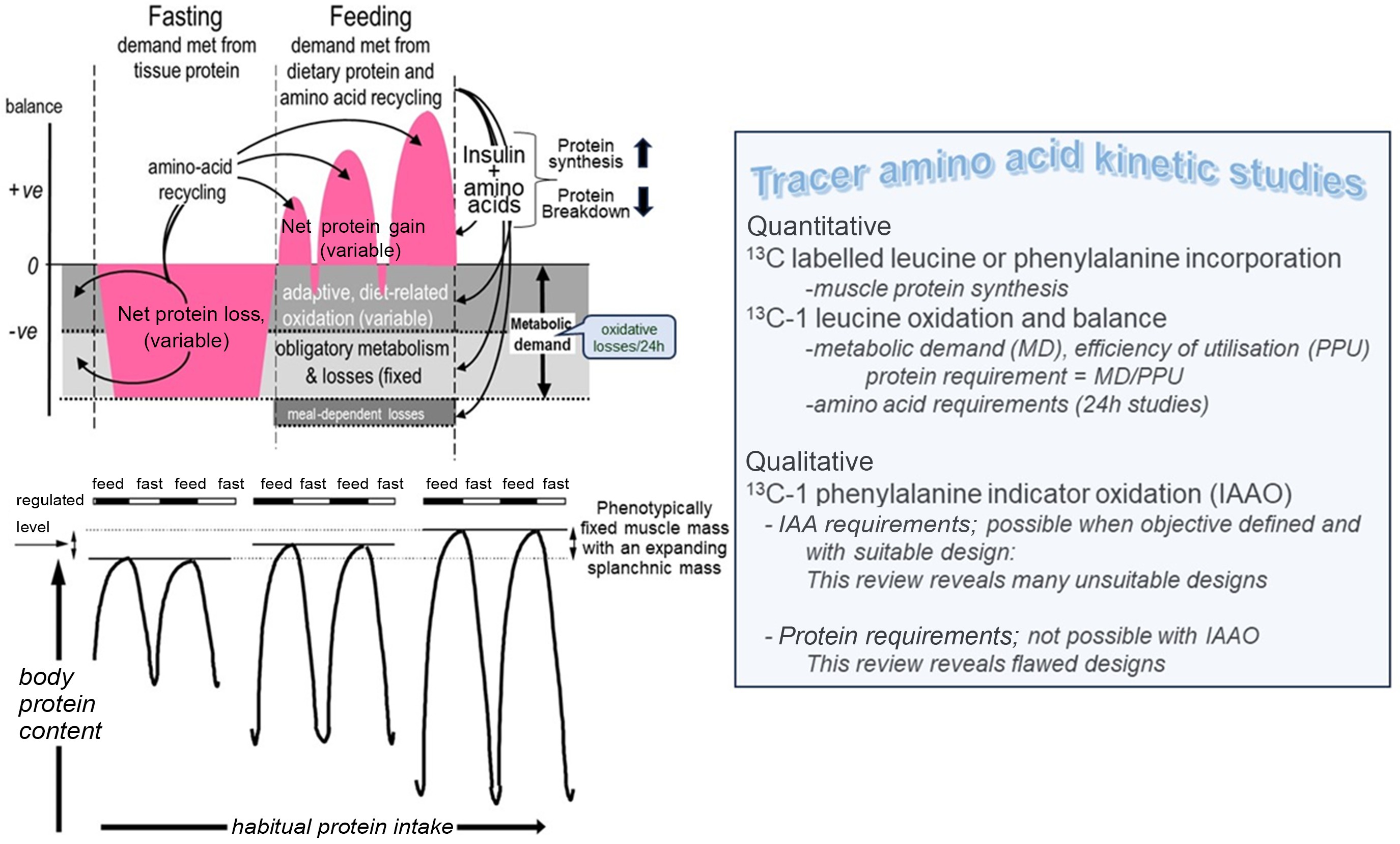
Nitrogen balance (NB), the principal methodology used to derive recommendations for human protein and amino acid requirements, has been widely criticised, and calls for increased protein and amino acid requirement recommendations have been made, often on the basis of post-prandial amino acid tracer kinetic studies of muscle protein synthesis, or of amino acid oxidation. This narrative review considers our knowledge of the homeostatic regulation of the FFM throughout the diurnal cycle of feeding and fasting and what can and has been learnt from post-prandial amino acid tracer studies, about amino acid and protein requirements. Within the FFM, muscle mass in well fed weight-stable adults with healthy lifestyles appears fixed at a phenotypic level within a wide range of habitual protein intakes. However homoeostatic regulation occurs in response to variation in habitual protein intake, with adaptive changes in amino acid oxidation which influence the magnitude of diurnal losses and gains of body protein. Post-prandial indicator amino acid oxidation (IAAO) studies have been introduced as an alternative to NB and to the logistically complex 24 h [13C-1] amino acid balance studies, for assessment of protein and amino acid requirements. However, a detailed examination of IAAO studies shows both a lack of concern for homeostatic regulation of amino acid oxidation and major flaws in their design and analytical interpretation, which seriously constrain their ability to provide reliable values. New ideas and a much more critical approach to existing work is needed if real progress is to be made in the area.
Machine learning methods have been used in identifying omics markers for a variety of phenotypes. We aimed to examine whether a supervised machine learning algorithm can improve identification of alcohol-associated transcriptomic markers. In this study, we analysed array-based, whole-blood derived expression data for 17 873 gene transcripts in 5508 Framingham Heart Study participants. By using the Boruta algorithm, a supervised random forest (RF)-based feature selection method, we selected twenty-five alcohol-associated transcripts. In a testing set (30 % of entire study participants), AUC (area under the receiver operating characteristics curve) of these twenty-five transcripts were 0·73, 0·69 and 0·66 for non-drinkers v. moderate drinkers, non-drinkers v. heavy drinkers and moderate drinkers v. heavy drinkers, respectively. The AUC of the selected transcripts by the Boruta method were comparable to those identified using conventional linear regression models, for example, AUC of 1958 transcripts identified by conventional linear regression models (false discovery rate < 0·2) were 0·74, 0·66 and 0·65, respectively. With Bonferroni correction for the twenty-five Boruta method-selected transcripts and three CVD risk factors (i.e. at P < 6·7e-4), we observed thirteen transcripts were associated with obesity, three transcripts with type 2 diabetes and one transcript with hypertension. For example, we observed that alcohol consumption was inversely associated with the expression of DOCK4, IL4R, and SORT1, and DOCK4 and SORT1 were positively associated with obesity, and IL4R was inversely associated with hypertension. In conclusion, using a supervised machine learning method, the RF-based Boruta algorithm, we identified novel alcohol-associated gene transcripts.
Camelina cake (CAM) is a co-product proposed as an alternative protein source; however, piglet data are still limited. This study aimed to evaluate the effect of different doses of CAM in substitution of soyabean meal on the growth, health and gut health of weaned pigs. At 14 d post-weaning (d0), sixty-four piglets were assigned either to a standard diet or to a diet with 4 %, 8 % or 12 % of CAM. Piglets were weighed weekly. At d7 and d28, faeces were collected for microbiota and polyamine and blood for reactive oxygen metabolites (ROM) and thyroxine analysis. At d28, pigs were slaughtered, organs were weighed, pH was recorded on gut, colon was analysed for volatile fatty acids (VFA) and jejunum was used for morphological and gene expression analysis. Data analysis was carried out using a mixed model including diet, pen and litter as factors; linear and quadratic contrasts were tested. CAM linearly reduced the average daily gain from d0–d7, d0–d14, d0–d21 and d0–d28 (P ≤ 0·01). From d0–d7 increasing CAM linearly decreased feed intake (P = 0·04) and increased linearly the feed to gain (P = 0·004). CAM increased linearly the liver weight (P < 0·0001) and affected the cadaverine (P < 0·001). The diet did not affect the ROM, thyroxine, intestinal pH, VFA and morphology. All doses of CAM increased the α diversity indices at d28 (P < 0·05). CAM at 4 % promoted the abundance of Butyricicoccaceae_UCG-008. Feeding with CAM enhanced resilience in the gut microbiome and can be evaluated as a potential alternative protein source with dose-dependent limitations on piglet growth performance.
Abdominal obesity (AO) is characterised by excess adipose tissue. It is a metabolic risk that affects the physical and mental health, particularly in women since they are more prone to mental health problems like depression. This study investigated the association between AO and depressive symptoms in Peruvian women of reproductive age (18–49 years).
Design:
This is a cross-sectional observational study.
Setting:
Peruvian women population of reproductive age.
Participants:
We used data from the Peruvian Demographic and Family Health Survey (DHS) for 2018 and 2019 to assess 17 067 women for the presence of depressive symptoms (using the Patient Health Questionnaire (PHQ-9): cut-off score ≥ 10) and AO (measured by abdominal circumference; cut-off score ≥88 cm).
Results:
We observed a 64·55 % prevalence of AO and 7·61 % of depressive symptoms in the study sample. Furthermore, 8·23 % of women with AO had depressive symptoms (P < 0·05). Initially, women with AO appeared to have a 26 % higher risk of depressive symptoms compared with women without AO (P = 0·028); however, after adjustment for covariates, no statistically significant association was observed.
Conclusions:
Therefore, although both conditions are common in women of this age group, no significant association was found between AO and depressive symptoms.
To evaluate the trends in the healthiness of packaged food purchases of Australian consumers before and after the introduction of the Health Star Rating (HSR) nutrition labels.
Design:
Panel data analysis and difference-in-differences analysis.
Setting:
The Australian Government endorsed HSR nutrition labels for voluntary implementation on packaged foods in June 2014. We analyse the packaged food purchases of households across all major supermarkets before (January 2014 to June 2014) and after (June 2014–Dec 2018) the introduction of HSR.
Participants:
6284 members of a panel of households across Australia reporting their grocery purchases to a market research company (Nielsen Homescan panel).
Results:
The healthiness of household food purchases exhibited a U-shaped trend – decreasing from 2014 to 2017, and then increasing from 2018, corresponding to the time when a higher proportion of products were HSR-labelled. Households that purchased a higher proportion of HSR-labelled products had healthier household purchases overall. Further, the healthiness of households’ category-specific food purchases was positively associated with the proportion of HSR-labelled products in categories where HSR was adopted, relative to control categories where HSR was not adopted.
Conclusions:
In Australia, once a substantial number of packaged food products adopted the voluntary HSR summary indicator, we observed an increasing trend in the healthiness of household food purchases. Widespread adoption of a nutrition summary indicator, such as HSR, on packaged food is likely to be beneficial for population health.
Dietary carotenoids are associated with lower risk of CHD. Assessment of dietary carotenoid intake using questionnaires can be susceptible to measurement error. Consequently, there is a need to validate data collected from FFQs which measure carotenoid intake. This study aimed to assess the performance of the Cardio-Med Survey Tool (CMST)-FFQ-version 2 (v2) as a measure of dietary carotenoid intake over 12-months against plasma carotenoids biomarkers and 7-Day Food Records (7DFR) in an Australian cardiology cohort. Dietary carotenoid intakes (β- and α-carotene, lycopene, β-cryptoxanthin and lutein/zeaxanthin) were assessed using the 105-item CMST-FFQ-v2 and compared to intakes measured by 7DFR and plasma carotenoid concentrations. Correlation coefficients were calculated between each dietary method, and validity coefficients (VCs) were calculated between each dietary method and theoretical true intake using the ‘methods of triads’. Thirty-nine participants aged 37–77 years with CHD participated in the cross-sectional study. The correlation between FFQ and plasma carotenoids were largest and significant for β-carotene (0.39, p=0.01), total carotenoids (0.37, p=0.02) and β-cryptoxanthin (0.33, p=0.04), with weakest correlations observed for α-carotene (0.21, p=0.21) and lycopene (0.21, p=0.21). The FFQ VCs were moderate (0.3–0.6) or larger for all measured carotenoids. The strongest were observed for total carotenoids (0.61) and β-carotene (0.59), while the weakest were observed for α-carotene (0.33) and lycopene (0.37). In conclusion, the CMST-FFQ-v2 measured dietary carotenoids intakes with moderate confidence for most carotenoids, however, there was less confidence in ability to measure α-carotene and lycopene intake, thus further research is warranted using a larger sample.
This study aimed to evaluate the methodological quality of existing meta-analyses (MA) and the quality of evidence for outcome indicators to provide an updated overview of the evidence concerning the therapeutic efficacy of the Mediterranean diet (MD) for various types of CVD.
Design:
We conducted comprehensive searches of PubMed, Cochrane Library, and Embase databases. The quality of the MA was assessed using the A Measurement Tool to Assess Systematic Reviews 2 (AMSTAR 2) checklist, while the Grading of Recommendations Assessment, Development and Evaluation (GRADE) evidence evaluation system was employed to evaluate the quality of evidence for significant outcomes.
Setting:
The CVD remains a significant contributor to global mortality. Multiple MA have consistently demonstrated the efficacy of medical interventions in managing CVD. However, due to variations in the scope, quality and outcomes of these reviews, definitive conclusions are yet to be established.
Participants:
This study included five randomized trials and twelve non-randomized studies, with a combined participant population of 716 318.
Results:
The AMSTAR 2 checklist revealed that 54·55 % of the studies demonstrated high quality, while 9·09 % exhibited low quality, and 36·36 % were deemed critically low quality. Additionally, there was moderate evidence supporting a positive correlation between MD and CHD/acute myocardial infarction, stroke, heart failure, cardiovascular events, coronary events and major adverse cardiovascular events.
Conclusions:
This study indicates that although recognizing the potential efficacy of MD in managing CVD, the quality of the methodology and the evidence for the outcome indicators remain unsatisfactory.
Soft drink consumption has become a highly controversial public health issue. Given the pattern of consumption in China, sugar-sweetened beverage is the main type of soft drink consumed. Due to containing high levels of fructose, a soft drink may have a deleterious effect on handgrip strength (HGS) due to oxidative stress, inflammation and insulin resistance. However, few studies show an association between soft drink consumption and HGS in adults. We aimed to investigate the association between soft drink consumption and longitudinal changes in HGS among a Chinese adult population. A longitudinal population-based cohort study (5-year follow-up, median: 3·66 years) was conducted in Tianjin, China. A total of 11 125 participants (56·7 % men) were enrolled. HGS was measured using a handheld digital dynamometer. Soft drink consumption (mainly sugar-containing carbonated beverages) was measured at baseline using a validated FFQ. ANCOVA was used to evaluate the association between soft drink consumption and annual change in HGS or weight-adjusted HGS. After adjusting for multiple confounding factors, the least square means (95 % CI) of annual change in HGS across soft drink consumption frequencies were −0·70 (–2·49, 1·09) for rarely drinks, −0·82 (–2·62, 0·97) for < 1 cup/week and −0·86 (–2·66, 0·93) for ≥ 1 cup/week (Pfor trend < 0·05). Likewise, a similar association was observed between soft drink consumption and annual change in weight-adjusted HGS. The results indicate that higher soft drink consumption was associated with faster HGS decline in Chinese adults.
Monitoring time trends in salt consumption is important for evaluating the impact of salt reduction initiatives on public health outcomes. There has so far not been available data to indicate if salt consumption in Norway has changed during the previous decade. We aimed to assess whether average 24-h salt intake estimated from spot urine samples in the adult population of mid-Norway changed from 2006–2008 to 2017–2019 and to describe variations by sex, age and educational level.
Design:
Repeated cross-sectional studies.
Setting:
The population-based Trøndelag Health Study (HUNT).
Participants:
In each of two consecutive waves (HUNT3: 2006–2008 and HUNT4: 2017–2019), spot urine samples were collected from 500 men and women aged 25–64 years, in addition to 250 men and women aged 70–79 years in HUNT4. Based on spot urine concentrations of Na, K and creatinine and age, sex and BMI, we estimated 24-h Na intake using the International Cooperative Study on Salt and Blood Pressure (INTERSALT) equation for the Northern European region.
Results:
Mean (95 % CI) estimated 24-h salt intakes in men were 11·1 (95 % CI 10·8, 11·3) g in HUNT3 and 10·9 (95 % CI 10·6, 11·1) g in HUNT4, P = 0·25. Corresponding values in women were 7·7 (95 % CI 7·5, 7·9) g and 7·7 (95 % CI 7·5, 7·9) g, P = 0·88. Mean estimated salt intake in HUNT4 decreased with increasing age in women, but not in men, and it did not differ significantly across educational level in either sex.
Conclusions:
Estimated 24-h salt intake in adult men and women in mid-Norway did not change from 2006–2008 to 2017–2019.