To save content items to your account,
please confirm that you agree to abide by our usage policies.
If this is the first time you use this feature, you will be asked to authorise Cambridge Core to connect with your account.
Find out more about saving content to .
To save content items to your Kindle, first ensure no-reply@cambridge.org
is added to your Approved Personal Document E-mail List under your Personal Document Settings
on the Manage Your Content and Devices page of your Amazon account. Then enter the ‘name’ part
of your Kindle email address below.
Find out more about saving to your Kindle.
Note you can select to save to either the @free.kindle.com or @kindle.com variations.
‘@free.kindle.com’ emails are free but can only be saved to your device when it is connected to wi-fi.
‘@kindle.com’ emails can be delivered even when you are not connected to wi-fi, but note that service fees apply.
Recently, layered double hydroxides (LDHs) have attracted intensive research interest as the next-generation supercapacitor electrodes due to their unique two-dimensional (2D) hydrotalcite-like structure. However, the inevitable agglomeration significantly decreases the accessible surface areas and blocks the pseudocapacitive sites, thus severely hinders their electrochemical applications. Herein, we develop a facile one-step growth approach to fabricate porous agglomerate of NiCo-LDH nanosheets and reduced graphene oxide (rGO) nanoflakes. By adjusting feeding molar ratios, the obtained NiCo-LDH/rGO electrode delivers a high specific capacity of 879.5 C/g at a current density of 0.5 A/g and still remains 485 C/g at 20 A/g. Furthermore, the fabricated asymmetric supercapacitor (ASC) has demonstrated a superior energy density of 48.7 W h/kg at a power density of 401 W/kg. After 2000 cycles, the assembled ASC exhibits an improved capacity retention of 81% within a potential window of 1.6 V at 2 A/g.
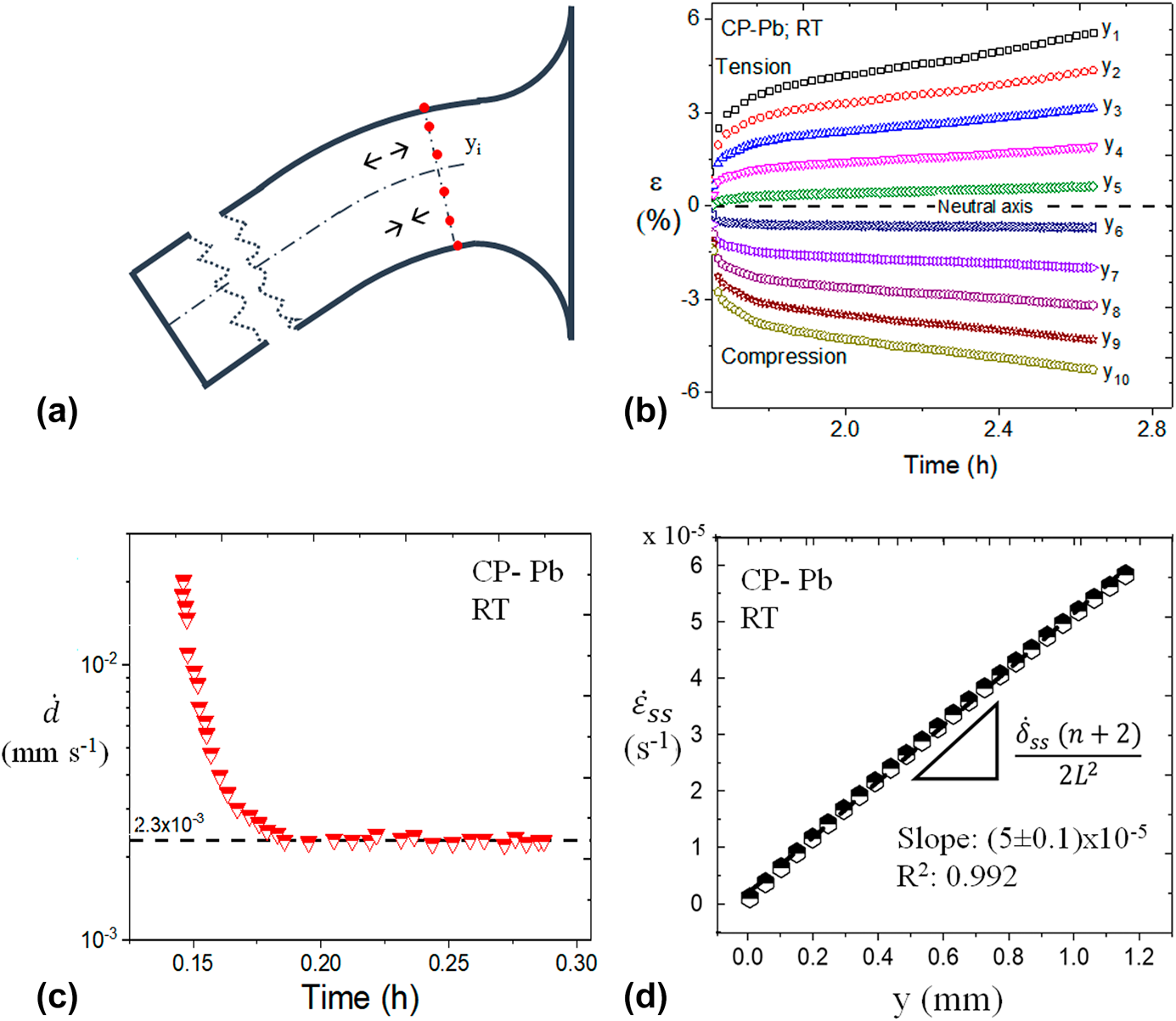
Variation of stress across the length and thickness of a cantilever during creep allows obtaining multiple pairs of strain rates and stress under steady-state condition. This work applies digital image correlation (DIC) and conjugate analytical models to obtain several such “strain rate–stress” pairs during steady-state creep by testing a single cantilever at a constant applied load. Furthermore, these strain rate–stress pairs are used to accurately determine the stress exponent of the material (e.g., Al and Pb). In addition, an empirical observation of plotting strain rate as a function of stress at fixed strain during primary creep for estimating stress exponent is extended to bending creep, wherein strain rates of the points in the cantilever lying on an iso-strain contour were plotted against the moment at the point to determine stress exponent. This study, thereby, proves that the “bending creep–DIC” combination is a high throughput test methodology for studying steady-state creep.
The stress and hence strain fields in a cantilever deforming as per power-law creep vary across the length and thickness of the sample, which allow obtaining multiple stress–strain pairs from a single test. Here, a high-throughput method is described to quantify the primary-cum-steady-state creep response of materials by testing a single cantilever sample in bending and mapping strain fields using digital image correlation. The method is based on the existence of stress invariant points in a cantilever, where the value of stress does not change during creep. It is demonstrated that strain evolution throughout primary and steady-state stages at these points is identical to the creep response obtained under uniaxial tests. Furthermore, the gained insights were exploited to obtain various parameters of a power-law type primary-cum-steady-state creep equation by testing only one cantilever sample. The developed method allows obtaining uniaxial creep curves at multiple stresses by testing a single cantilever, thereby reducing the time and number of samples required to understand the creep behavior of a material. The method has been validated by performing bending tests on Al and comparing the results with those of corresponding uniaxial tests.
With the ever-increasing importance of nanoscale deformation phenomena in contemporary technologies, basic understanding of material behavior at the nanoscale has become of critical importance. Especially, nanomechanical testing that provides the capability to study fundamental nanoscale deformation and phase change phenomena in real time and under controlled loading conditions is essential for nanomaterial research. In this study, acoustic emission (AE) was used in situ to characterize nanoindentation-induced deformation, microfracture, and phase transformation processes intrinsic of bulk single-crystal MgO and polycrystalline Al, thin films of polycrystalline SiC, and thick films of austenitic TiNi shape-memory alloy. Scale-dependent plastic deformation and microfracture affected by the indenter tip radius and the applied normal load are interpreted in terms of the type and intensity of AE events revealed by abrupt displacement excursions in the loading response of the indented materials. The amplitudes of AE waveforms are used to examine characteristic deformation, microfracture, and phase change mechanisms in the time domain. Fast Fourier transformation and short-time Fourier transformation analyses provide further insight into the material behavior and structural changes due to indentation loading in the frequency and time-frequency domain, respectively. The methodology developed in this study represents an effective approach for nanomechanical testing and in situ characterization of nanoscale deformation, microfracture, and phase transformation phenomena.
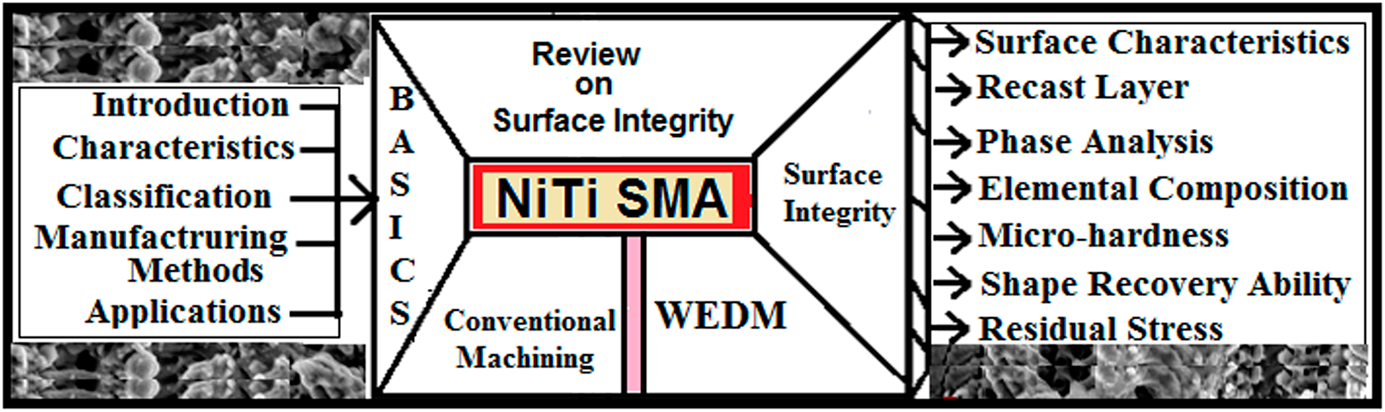
NiTi shape memory alloys (SMAs) are extensively used in various significant areas such as aerospace industries, biomedical sector, automobile industries, and robotics field because of their inherent properties, namely, shape memory effect and superelasticity. Nevertheless, the machining of these alloys is a problematic task by conventional machining practices because of various difficulties such as strain hardening, tool failure, high machining time, and poor surface quality. In recent years, researchers have explored various advanced/unconventional machining processes to surmount these challenges and improve the performance characteristics of NiTi SMAs. Wire electrical discharge machining (WEDM) is an effective and reasonable alternative to machine these hard-to-machine alloys among the other available advanced machining processes. A brief overview, characteristics, applications, and conventional machining of NiTi SMAs have been incorporated in this study. This review article provides substantial insight into the various aspects of surface integrity (SI) for NiTi SMAs using WEDM. The current study highlights literature review on the research work accomplished so far in the domain of SI aspects for NiTi-based SMAs, namely, surface characteristics, react layer, phase analysis, elemental composition, micro-hardness, shape recovery ability, and residual stress in WEDM.
Uranium–35 wt.% zirconium (U–35 wt.% Zr) alloy was annealed for 1 h and 24 h at 650 °C and characterized to understand the early-stage microstructure evolution. Dendritic microstructure with fine (∼300 nm in length) α-U precipitates clustered between dendrite branches were observed in the 1-h annealed sample. After 24-h annealing at 650 °C, the α-U precipitates coarsened, and the dendritic microstructure disappeared because of microstructure homogenization. Furthermore, microchemical homogenization observed with energy-dispersive X-ray spectroscopy analysis suggests that α-U precipitates are approaching thermodynamic equilibrium in the 24-h annealed sample. The findings from this study have potential impacts on the manufacturing and computer modeling of metallic nuclear fuel.
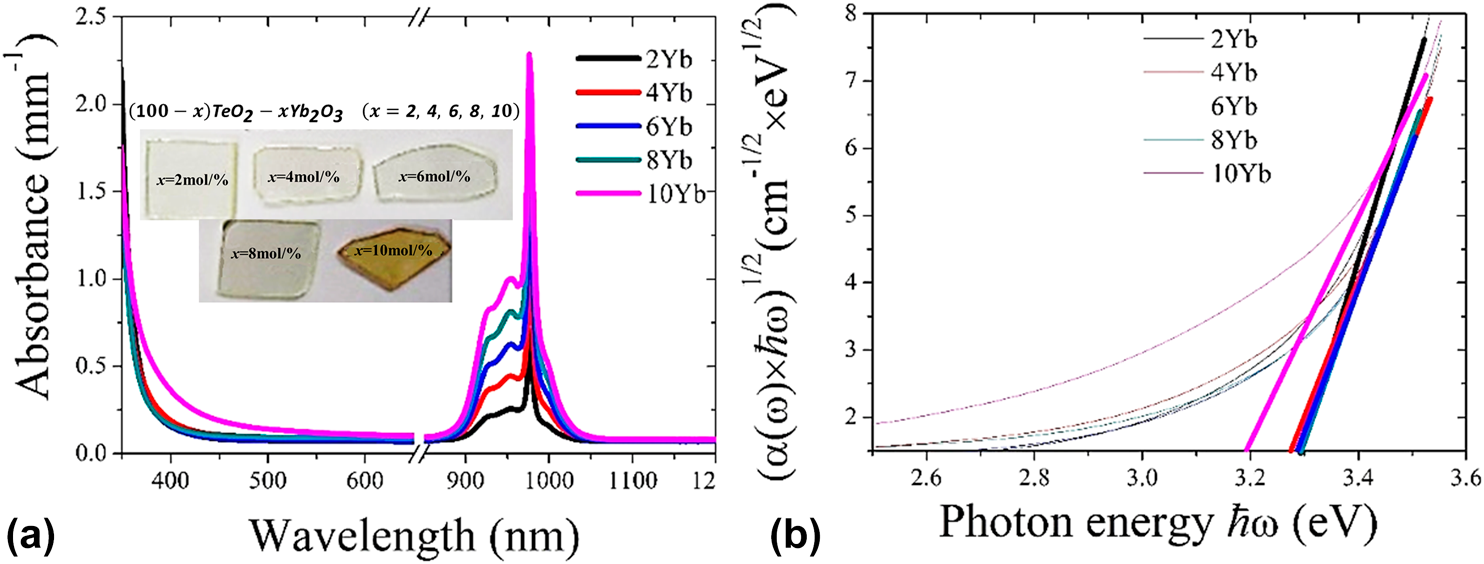
A simple composition of TeO2–Yb2O3 binary glass was selected as the host glass matrix for discussing the structure of tellurite glass with increasing Yb2O3 content. Raman spectra were measured to investigate the structure of the binary tellurite glasses, and upconversion and downconversion fluorescence characteristics were employed for discussing the relationship between the structural units and the state of Yb3+ in the tellurite glasses. The results suggested that the decrease of TeO4/2 in the glasses would result in the formation of Yb3+ clusters and Yb3+–O2− couple in the tellurite glasses, and then results in the decrease of cooperative upconversion and downconversion fluorescence intensity.
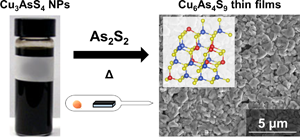
Sinnerite (Cu6As4S9) is a semiconductor computed to have attractive optoelectronic properties, but little attention has been paid to its experimental synthesis and characterization. Here, the authors report the first synthesis of polycrystalline sinnerite thin films. By heating Cu3AsS4 nanoparticles in sealed ampoules with As2S2 powder, a phase transformation to Cu6As4S9 is achieved along with the formation of micron-sized dense grains appropriate for device applications. The films display a bandgap of ~1.2 eV, significant photocurrent generation under simulated AM1.5 illumination, and carrier lifetimes nearing 1 ns, demonstrating the promise of sinnerite for use in photovoltaic applications.
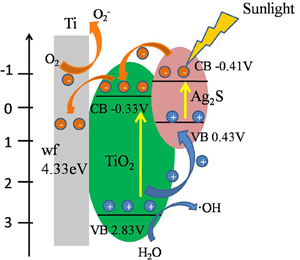
The narrow bandgap of Ag2S quantum dots was used to decorate TiO2 nanotube arrays (TiO2 NTAs) by the successive ionic layer adsorption and reaction (SILAR) method to enhance its photoelectrochemical performance. The micromorphology of the photoanode films prepared by the SILAR under different parameters (including different cycle times, capillary spot sample, and ultrasound-assisted) was systematically analyzed. The photoanode film Ag2S/TiO2 prepared by the SILAR under the ultrasound-assisted method shows Ag2S evenly distributed in TiO2 NTAs. At the same time, the corresponding photoabsorption range has been extended to the visible area, while the photocurrent density and photoconversion efficiency have been increased to ~1.8 mA/cm2 and 0.6%, respectively.
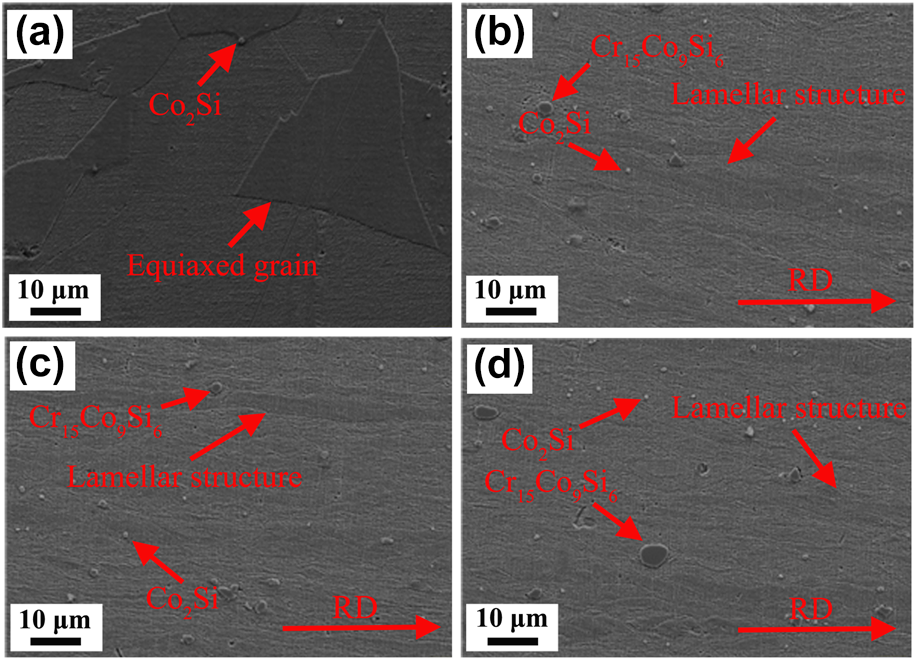
In this study, precipitate phase transformation behavior, microstructure, and properties of the Cu–1Cr–1Co–0.4Si (wt%) alloy were investigated. Precipitate phase transformation kinetic equations of the alloy under room temperature rolling (RTR) 90% deformation and aging at different temperatures (440–520 °C) were established. The alloy yielded excellent mechanical and electrical properties under RTR 90% deformation and aging at 440 °C for 1 h, and the corresponding hardness, yield strength (YS), ultimate tensile strength (UTS), elongation, and electrical conductivity were 181.6 HV, 573.6 MPa, 653.7 MPa, 7.3%, and 51.6% International Annealed Copper Standard, respectively. The precipitate phase transformation behavior determined the size and volume fraction of the precipitate phase fv, which played a key role in improving the YS. Impurity scattering caused by surplus Si atoms was mainly responsible for decreasing the electrical conductivity. Therefore, these results can provide a reliable theoretical guidance to prepare Cu–Cr–based alloys with high strength and high electrical conductivity.
The present work investigates the influence of sodium doping on structural, morphological, photoluminescence, linear, nonlinear (NL), and optical limiting (OL) parameters of NaxCd1−xS thin films (where x= 0.0, 0.5, 1.0, 2.5, and 5.0 wt%) deposited on glass substrates using spray pyrolysis route. X-ray diffraction and Raman analyses confirmed the hexagonal polycrystalline nature of films. Crystallite sizes were decreased from 30 to 17 nm with doping. Scanning electron microscopy (SEM) micrographs also confirmed the nanocrystalline spherical growth. Energy dispersive X-ray spectroscopy (EDS) and SEM mapping studies revealed the presence and homogeneous distribution of individual elements. Transmission of films is found to lie between 45 and 60%. Although the low doping caused the reduction of the effective band gap, higher doping caused a blue shift in band gap, with an associated reduction in crystallite sizes. The refractive index values are found within 1–2 in visible and their maximum values (in range 2.65–3.16) are observed at 2500 nm. Photoluminescence (PL) spectra showed broad emission peak at ∼520 ± 10 nm. Dielectric and NL analyses were also carried out. OL results were promising for the systematic gradual decrease of intensity from 100 to 72%, with doping for power regulating applications.
Laboratory X-ray powder diffraction was used to solve and refine the crystal structures of appended guest molecules within the pores of metal–organic frameworks (MOFs). Herein, we report the crystal structure of 1-propanethiol adsorbed in the pores of Co2(dobdc) (dobdc4– = 2,5-dioxido-1,4-benzenedicarboxylate, MOF-74). Soaking the activated MOF in neat 1-propanethiol resulted in the formation of 1-propanethiol–Co2(dobdc). The thiol appendant MOF maintained the crystal symmetry, with a rhombohedral space group R-3 and unit-cell parameters a = 25.9597(9) Å, c = 6.8623(5) Å, and V = 4005.0(4) Å3. As expected, the thiol sulfur formed a bond with the open cobalt metal site. The alkane chain was directed toward the center of the pore, participating in numerous van der Waals weak interactions with neighboring molecules. For the final Rietveld refinement, soft restrains were applied using bond distances obtained by periodic density functional theory (DFT) geometry optimization.
Relaxor ferroelectrics have drawn attention for possible applications in solid-state cooling and thermal energy harvesting, owing to their electrothermal energy conversion properties. Here, we have synthesized and characterized the structure–property correlations of a new Sn- and Nb-doped (Ba,Ca)TiO3 relaxor ferroelectric with large pyroelectric and electrocaloric effects over a broad temperature range. We observed two peaks for the temperature-dependent pyroelectric coefficient: (i) -(∂P/∂T) ∼ 563 μC/(m2 K) at T∼ 270 K and (ii) -(∂P/∂T) ∼ 1021 μC/(m2 K) at T∼ 320 K. In addition, a broad peak for electrocaloric temperature change is observed near 320 K with a relative cooling power of ∼17 J/kg. These properties could be correlated to structural changes observed using X-ray diffraction at two different temperature ranges in the material. Analysis of high-energy X-ray scattering and specific heat capacity data revealed a transition from the cubic to tetragonal phase near Tm∼ 320 K, whereas an additional increase in the tetragonality (c/a) of the polar phase is observed below Ts∼ 270 K.
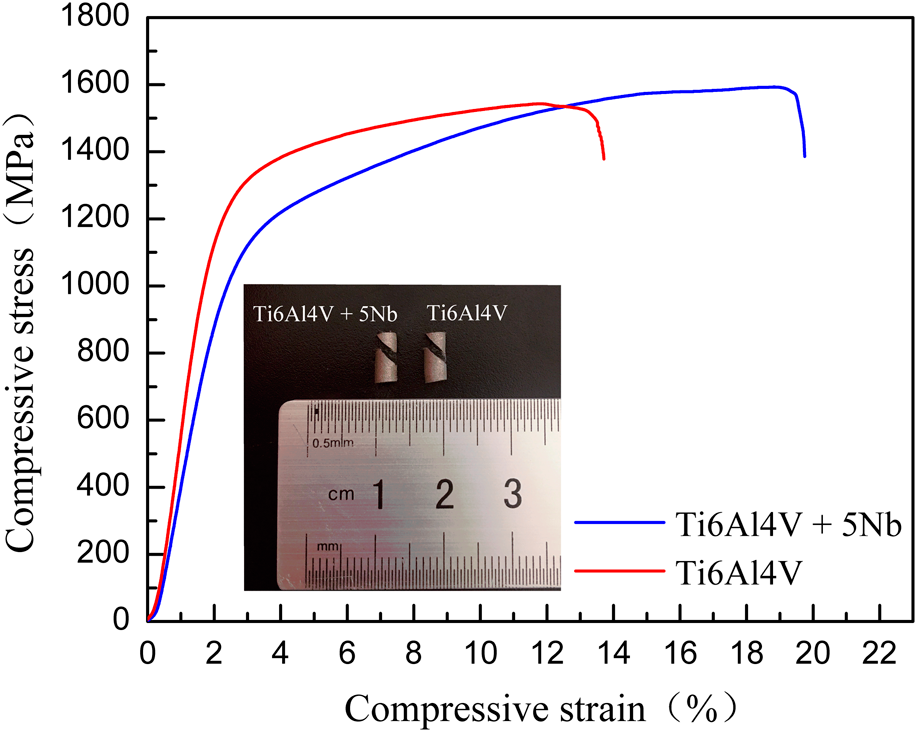
In this research, a novel titanium metallic composite, Ti6Al4V powder mixed with 5 at.% Nb powder, was fabricated by selective laser melting (SLM). The effect of Nb addition on their phase transformation, microstructure evolution, mechanical properties, and corrosion behavior were studied. Interestingly, the novel alloy shows a combination of superior plastic deformation (εp= 18.9 ± 1.8%) and high compressive strength (σc= 1593 ± 38 MPa), which is 60.2 and 3.2% higher than that of the SLM-processed Ti6Al4V alloy under optimum printing parameters, respectively. However, the yield strength of Ti6Al4V + 5Nb (973 ± 45 MPa) is lower than that of the Ti6Al4V alloy (1066 ± 12 MPa). The solidification mechanism changes from planar to cellular mode with Nb addition. The ultrafine microstructure β grains are observed, which show a columnar shape and cellular shape. More importantly, the volume fraction of the β phase is significantly increased from 3.7% to 20.4% because of the Nb addition. In addition, the Ti6Al4V + 5Nb alloy possesses better corrosion resistance than the Ti6Al4V alloy. The research highlights that the addition of Nb powder in Ti6Al4V processed by SLM can improve the mechanical properties and corrosion resistance of the material.
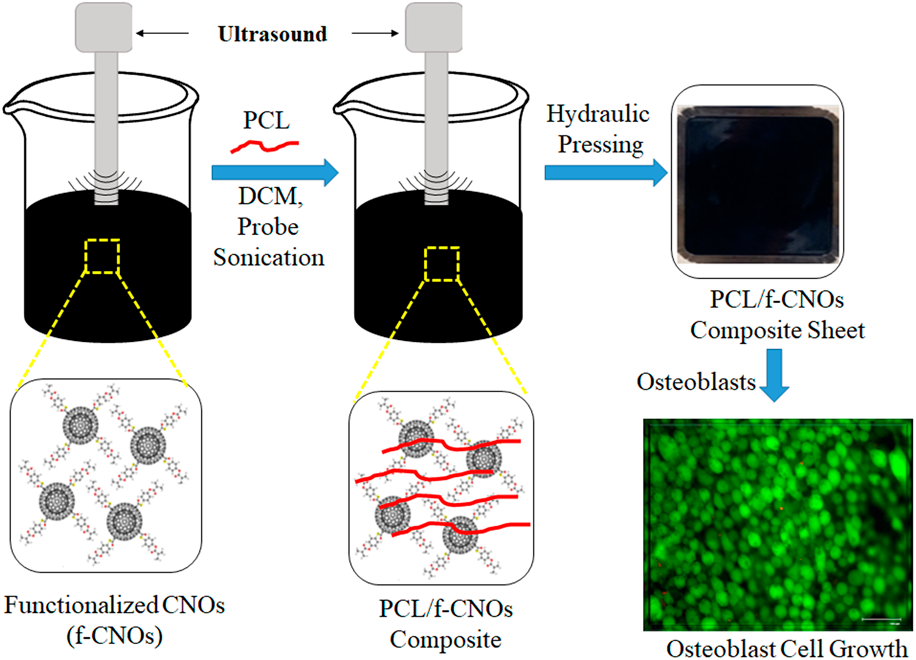
Poly 4-mercaptophenyl methacrylate-carbon nano-onions ((PMPMA-CNOs = f-CNOs) were reinforced with polycaprolactone (PCL) to produce PCL/f-CNO nanocomposites using probe sonication. The physicochemical properties of nanocomposites were systematically studied to analyze cell viability and proliferation. In vitro cytotoxicity of PCL/f-CNO nanocomposites was measured with osteoblast cells, and improved cell viability was observed. The cytotoxicity of f-CNOs to osteoblasts was dose-dependent, and PCL/f-CNO (0.5 wt%) nanocomposites showed more than 90% of viability as compared to pristine PCL. Similarly, PCL/f-CNO (0.5 wt%) nanocomposites showed substantial enhancement in mechanical properties. The yield strength, tensile strength, Young modulus, elastic modulus, and fracture toughness were also upgraded at high content of f-CNOs (0.5 wt%). The concentration of f-CNOs considerably influenced the strengthening of PCL/f-CNO nanocomposites, which shows its degree of colloidal dispersion stability and extent of polymer wrapping within the PCL matrix. Nevertheless, these nontoxic PCL/f-CNO nanocomposites can be used as promising biomaterials for orthopedic applications.
Here, we develop and characterize high thermal conductivity/high thermal shock-resistant bulk Ce-doped Al2O3 and propose it as a new phosphor converting capping layer for high-powered/high-brightness solid-state white lighting (SSWL). The bulk, dense Ce:Al2O3 ceramics have a 0.5 at.% Ce:Al concentration (significantly higher than the equilibrium solubility limit) and were produced using a simultaneous solid-state reactive current activated pressure-assisted densification (CAPAD) approach. Ce:Al2O3 exhibits a broadband emission from 400 to 600 nm, which encompasses the entire blue and green portions of the visible spectrum when pumped with ultraviolet (UV) light that is now commercially available in UV light–emitting devices and laser diodes (LD). These broadband phosphors can be used in the commonly used scheme of mixing with other UV-converting capping layers that emit red light to produce white light. Alternatively, they can be used in a novel composite down-converter approach that ensures improved thermal–mechanical properties of the converting phosphor capping layer. In this configuration, Ce:Al2O3 is used with proven phosphor conversion materials such as Ce:YAG as an active encapsulant or as a capping layer to produce SSWL with an improved bandwidth in the blue portion of the visible spectrum. To study the effect of crystallinity on the Ce photoluminescent (PL) emission, we synthesize Ce:YAG ceramics using high-pressure CAPAD at moderate temperatures to obtain varying crystallinity (amorphous through fully crystalline). We investigate the PL characteristics of Ce:Al2O3 and Ce:YAG from 295 to 4 K, revealing unique crystal field effects from the matrix on the Ce dopants. The unique PL properties in conjunction with the superior thermal–mechanical properties of Ce:Al2O3 can be used in high-powered/high-brightness–integrated devices based on high-efficiency UV-LD that do not suffer efficiency droop at high drive currents to pump the solid-state capping phosphors.
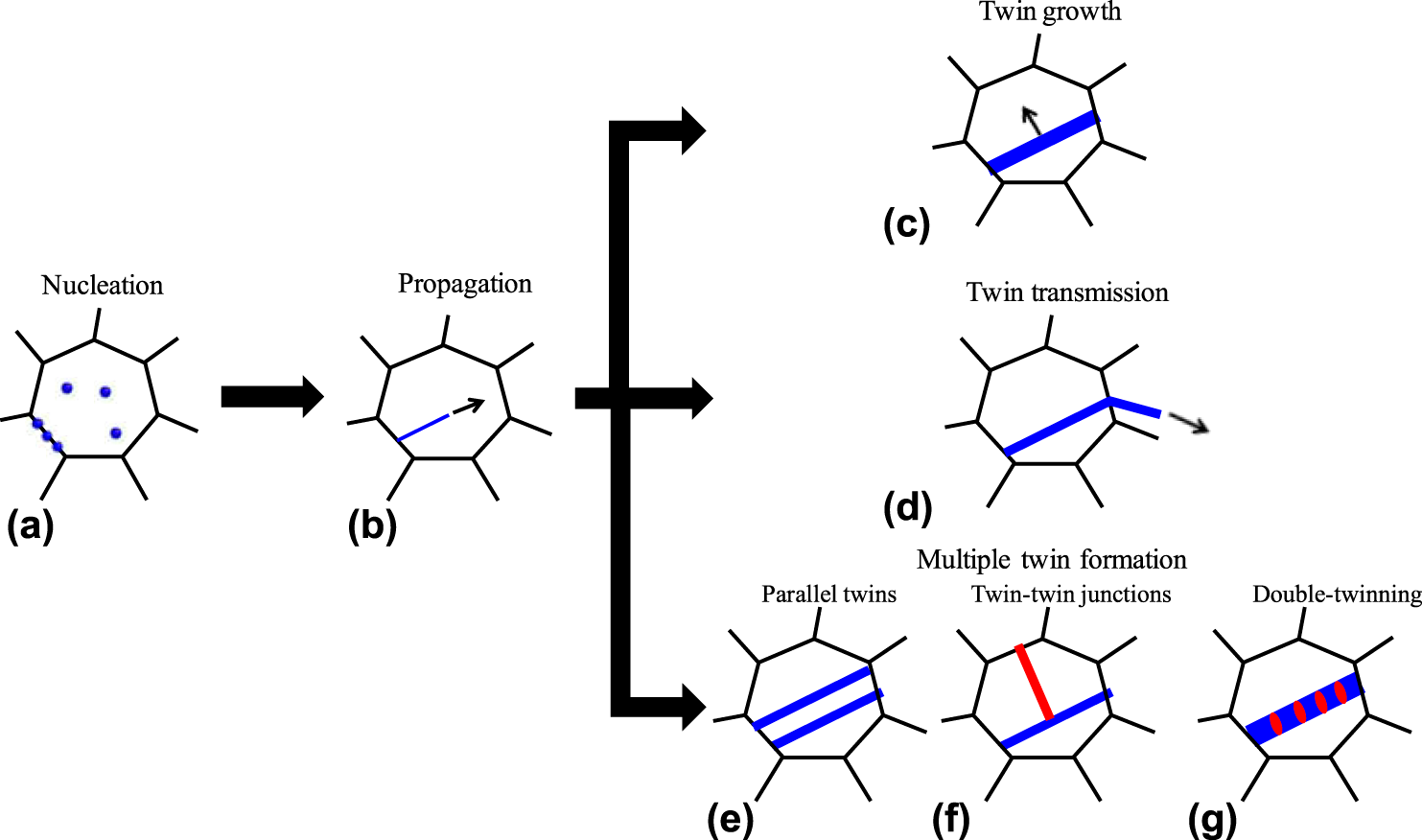
Deformation twinning is a prevalent plastic deformation mode in hexagonal close-packed (HCP) materials, such as magnesium, titanium, and zirconium, and their alloys. Experimental observations indicate that these twins occur heterogeneously across the polycrystalline microstructure during deformation. Morphological and crystallographic distribution of twins in a deformed microstructure, or the so-called twinning microstructure, significantly controls material deformation behavior, ductility, formability, and failure response. Understanding the development of the twinning microstructure at the grain scale can benefit design efforts to optimize microstructures of HCP materials for specific high-performance structural applications. This article reviews recent research efforts that aim to relate the polycrystalline microstructure with the development of its twinning microstructure through knowledge of local stress fields, specifically local stresses produced by twins and at twin/grain–boundary intersections on the formation and thickening of twins, twin transmission across grain boundaries, twin–twin junction formation, and secondary twinning.
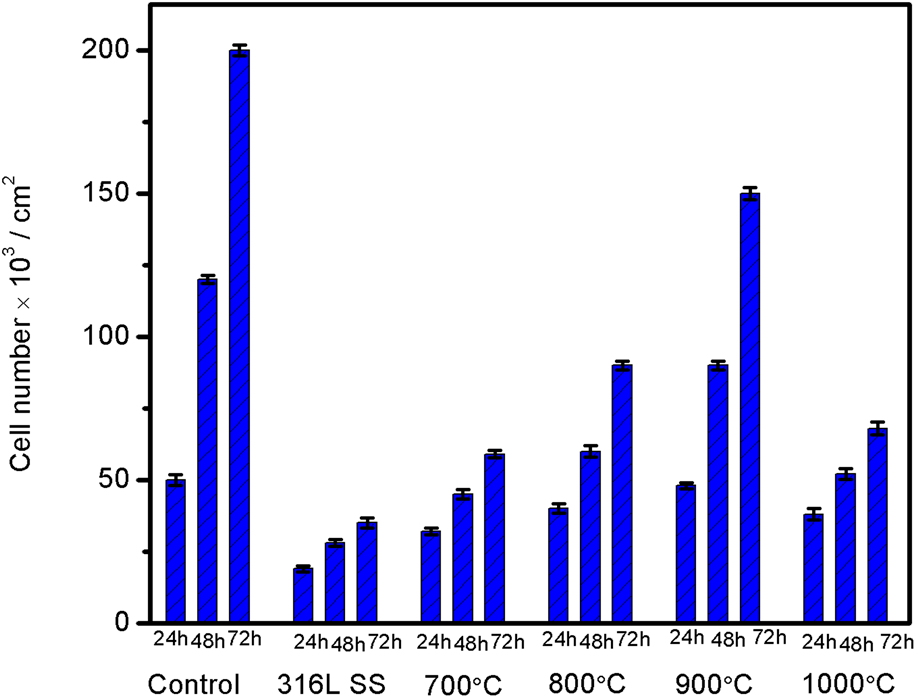
The present work is mainly accentuated to improve corrosion resistance performance, adhesion strength, biocompatibility, and cell proliferation of metallic implants. Novel nano triphasic bioceramic composite coating was achieved on 316L SS by the electrophoretic deposition process followed by vacuum sintering. The optimized potential for composite coating on 316L SS was found to be 30 V and 1 min. All the composite coated samples were sintered in a vacuum furnace at various sintering temperature starting from 700 °C to 1000 °C for 1 h. The coated samples were thoroughly characterized in terms of crystallinity, morphology, and surface roughness by XRD, FESEM with EDX, and profilometer studies, respectively. In addition, the coated samples were mechanically characterized using a tap adhesion and Vickers microhardness test. Corrosion performance of the coated sample was characterized by electrochemical studies in Hank's solution. The in vitro cytotoxicity studies for cell viability and cell proliferation was carried out using MC3T3-E1 osteoblast cells. These studies revealed an enhanced cell attachment and proliferation on the composite-coated sample than the uncoated sample, which controlled the discharge of metal ions from the metal surface into the biological system.