To save content items to your account,
please confirm that you agree to abide by our usage policies.
If this is the first time you use this feature, you will be asked to authorise Cambridge Core to connect with your account.
Find out more about saving content to .
To save content items to your Kindle, first ensure no-reply@cambridge.org
is added to your Approved Personal Document E-mail List under your Personal Document Settings
on the Manage Your Content and Devices page of your Amazon account. Then enter the ‘name’ part
of your Kindle email address below.
Find out more about saving to your Kindle.
Note you can select to save to either the @free.kindle.com or @kindle.com variations.
‘@free.kindle.com’ emails are free but can only be saved to your device when it is connected to wi-fi.
‘@kindle.com’ emails can be delivered even when you are not connected to wi-fi, but note that service fees apply.
Ag3O was synthesized by jet-milling magnetron-sputtered Ag–Ag2O thin films. Heating the jet-milled powders in air and N2 from 40 to 148 °C at ambient pressure produced Ag3O-rich powders. The phase composition and unit-cell parameters of the jet-milled powders were measured as a function of temperature with in situ X-ray powder diffraction experiments from −186 to 293 °C. Ag3O was also produced by ball milling and sonicating jet-milled films at ambient conditions. The phase composition, unit-cell parameters, and thermal-reaction rates indicate nonstoichiometric Ag3O was produced from the reaction of metastable, nonstoichiometric Ag2O (cuprite structure) and ccp Ag. The thermal expansion of Ag3O is anisotropic; below 25 °C, the a-axis expansion is about twice the c-axis expansion resulting in a negative slope of c/a(T). The reversal of the sign of c/a(T) near 25 °C is dramatic. The thermal reaction is arrested when the temperature is rapidly increased from ambient to 130 °C. Ag3O is metastable and decreases its unit-cell volume during kinetic decomposition to Ag when heated above ambient temperature in air and nitrogen. The relative volume expansion of Ag3O is about 80% less than Ag at room temperature and below. The suite of nonstoichiometric Ag3O produced by heating displays a linear relation between c/a and unit-cell volume at room temperature. The c/a and unit-cell volume of a hydrothermally grown Ag3O single crystal reported in a published structure determination was the Ag-rich, low-volume end member of the linear series. The c/a and unit-cell volume are sensitive indicators of the oxygen content and state of disorder.
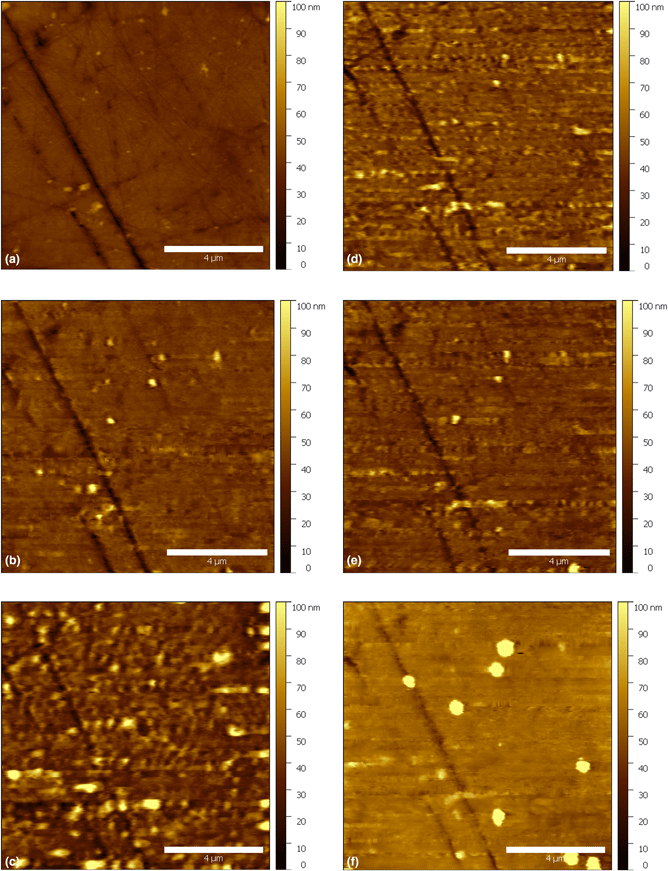
An electrochemical cell was designed to enable in situ atomic force microscopy (AFM) measurements. The finite-element method was implemented using COMSOL Multiphysics to simulate the electrical field within the cell and to find the current and potential distribution. A comparative three-dimensional simulation study was made to compare two different designs and to elucidate the importance of the geometry on the electrical field distribution. The design was optimized to reduce the uncertainty in the measurement of the electrochemical impedance. Then, an in situ, simultaneous electrochemical and time-resolved AFM experiments were conducted to study the surface evolution of the aluminum alloy AA2024-T3 exposed to 0.5 M NaCl. The temporal change of the surface topography was recorded during the application of chrono-amperometric pulses using a newly designed electrochemical cell. Electrochemical impedance spectroscopy was conducted on the sample to confirm the recorded topographical change. The newly developed cell made it possible to monitor the surface change and the growth of the oxyhydroxide layer on the AA2024-T3 with the simultaneous application of electrochemical methods.
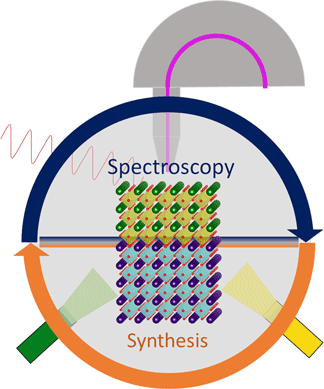
Emergent behavior at oxide interfaces has driven research in complex oxide films for the past 20 years. Interfaces have been engineered for applications in spintronics, topological quantum computing, and high-speed electronics with properties not observed in bulk materials. Advances in synthesis have made the growth of these interfaces possible, while X-ray photoelectron spectroscopy (XPS) studies have often explained the observed interfacial phenomena. This review discusses leading recent research, focusing on key results and the XPS studies that enabled them. We describe how the in situ integration of synthesis and spectroscopy improves the growth process and accelerates scientific discovery. Specific techniques include determination of interfacial intermixing, valence band alignment, and interfacial charge transfer. A recurring theme is the role that atmospheric exposure plays on material properties, which we highlight in several material systems. We demonstrate how synchrotron studies have answered questions that are impossible in lab-based systems and how to improve such experiments in the future.
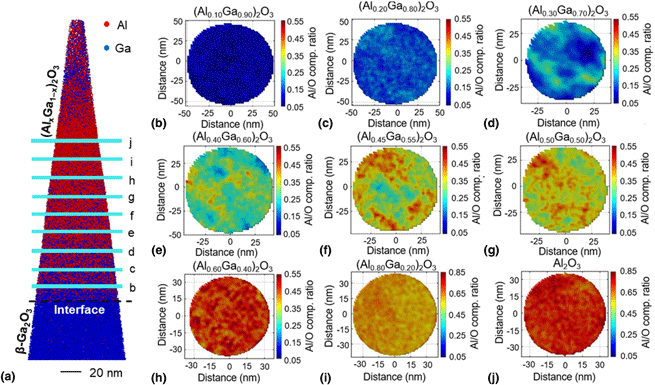
(AlxGa1−x)2O3 is a novel ultra-wide bandgap semiconductor with the potential to dominate future power electronics industries. High-performance devices demand high Al content in (AlxGa1−x)2O3 but are limited by crystallinity degradation resulting from phase separation. Additionally, the solubility limit of Al is still under debate, and conclusive research is in progress. (AlxGa1−x)2O3 is also limited in high-frequency applications owing to low carrier mobility and requires n-type doping. For commercializing this material, the major obstacle is understanding dopant's behavior in the host (AlxGa1−x)2O3. To investigate these issues, an advanced characterization technique, atom probe tomography (APT), was employed to analyze the structural-chemical evolution of (AlxGa1−x)2O3. In this review, we summarized our recent works on the structure-chemistry investigation of (AlxGa1−x)2O3 with alloy composition and doping interaction. We introduced machine learning algorithms on APT data to reveal unrivaled knowledge, previously not achievable with conventional methodologies. The outstanding capabilities of APT to study (AlxGa1−x)2O3 with Al composition and doping will be considered significant for the wide bandgap semiconductors community.
Since the photocatalytic effect of a single conventional photocatalyst is often not ideal, it is particularly important to design and construct an efficient and stable photocatalyst in a compound way. In this study, we exploited the sol–gel method to combine BiOCl and TiO2 and gave full play to their respective advantages to prepare BiOCl/TiO2 composite materials. Then, X-ray diffraction (XRD), scanning electron microscope (SEM), and transmission electron microscope (TEM) characterization techniques were utilized to study important indicators of composites—composition, morphology, and structure. In the photodegradation experiment of methyl orange (MO), it was found that the photocatalytic performance of 10BTO (the molar ratio of TiO2 to BiOCl is 10:1) was the best among all the composite photocatalysts, and almost complete degradation of MO was realized. Besides, repeated experiments and recyclability tests on composite materials display favorable stability. Through ultraviolet–visible diffuse reflectance spectroscopy (UV–Vis DRS), photoluminescence (PL), transient photocurrent response, electrochemical impedance spectroscopy (EIS), and electron spin resonance (ESR), a possible degradation mechanism is proposed. Given that there are serious environmental pollution problems in our country, we sincerely hope this research will do its best to degrade organic pollutants in wastewater.
Potential clinically significant life-threatening drug–drug interactions (DDIs) of lopinavir (LPV) and ritonavir (RTV) used in the treatment of COVID-19 is not systematically reviewed. It was aimed to identify severe DDI pairs of LPV/RTV from international resources predicted to cause life-threatening adverse drug reactions (ADRs). Severe DDI pairs predicted to cause life-threatening ADRs were identified from the FDA and Liverpool COVID-19 prescribing information of LPV/RTV. In total, 62 severe DDI pairs were identified from the FDA and Liverpool COVID-19 resources predicted to cause life-threatening ADRs in patients with COVID-19. Of these, seven unique DDI pairs (11.3%; 95% CI 3%–19%) were identified from the FDA only whereas 45 unique DDI pairs (72.6%; 95% CI 61%–84%) were identified from the Liverpool COVID-19 drug interactions resource. Of interest, only 10 DDI pairs (16.1%; 95% CI 7%–25%) were recognized by both of these drug interaction resources. Clinicians should not entirely rely on any individual DDI resource for checking life threatening ADRs of LPV/RTV in patients with COVID-19.
Sodium niobate (NaNbO3)-based dielectrics have received much attention for energy storage applications due to their low-cost, lightweight, and nontoxic nature. The field-induced metastable ferroelectric phase in NaNbO3-based dielectrics, however, leads to a large hysteresis of the polarization–electric field (P–E) loops and hence deteriorate the energy storage performance. In this study, the hysteresis was successfully reduced by introducing Bi3+ and Ti4+ into A-site and B-site of NaNbO3, respectively. MnO2 addition was added to further increase the ceramic density and enhance the cycling reliability. As a result, a high recoverable energy density of 4.3 J/cm3 and a high energy efficiency of 90% were simultaneously achieved in the ceramic capacitor at an applied electric field of 360 kV/cm. Of particular importance is that the ceramic capacitor exhibits a stable energy storage properties over a wide temperature range of −70 to 170 °C, with much improved electric cycling reliability up to 105 cycles.
This manuscript reports structure–function studies of Catechol 2,3-dioxygenase (C23O64), which is the second enzyme in the metabolic degradation pathway of 3-nitrotoluene by Diaphorobacter sp. strain DS2. The recombinant protein is a ring cleavage enzyme for 3-methylcatechol and 4-methylcatechol products formed after dioxygenation of the aromatic ring. Here we report the substrate-free, substrate-bound, and substrate-analog bound crystal structures of C23O64. The protein crystallizes in the P6(2)22 space-group. The structures were determined by molecular replacement and refined to resolutions of 2.4, 2.4, 2.2 Å, respectively. A comparison of the structures with related extradiol dioxygenases showed 22 conserved residues. A comparison of the active site pocket with catechol 2,3-dioxygenase (LapB) from Pseudomonas sp KL28 and homoprotocatechuate 2,3-dioxygenase (HPCD) from Brevibacterium fuscum shows significant similarities to suggest that the mechanism of enzyme action is similar to HPCD.
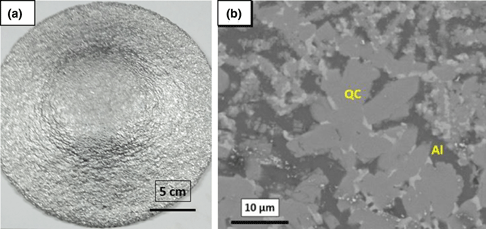
Quasicrystalline alloys and their composites have been extensively studied due to their complex atomic structures, mechanical properties, and their unique tribological and thermal behaviors. However, technological applications of these materials have not yet come of age and still require additional developments. In this review, we discuss the recent advances that have been made in the last years toward optimizing fabrication processes and properties of Al-matrix composites reinforced with quasicrystals. We discuss in detail the high-strength rapid-solidified nanoquasicrystalline composites, the challenges involved in their manufacturing processes and their properties. We also bring the latest findings on the fabrication of Al-matrix composites reinforced with quasicrystals by powder metallurgy and by conventional metallurgical processes. We show that substantial developments were made over the last decade and discuss possible future studies that may result from these recent findings.
Understanding individual differences in attitudes to autism is crucial for improving attitudes and reducing stigma towards autistic people, yet there is limited and inconsistent research on this topic. This is compounded by a lack of appropriate measures and multivariate analyses. Addressing these issues, using up-to-date measures and multiple linear regression, we examined the relative contributions of participant age, sex, autism knowledge, level of contact with autistic people, and autistic traits to attitudes towards autistic people. We found that greater autism knowledge and higher levels of contact, but no other variables, were uniquely predictive of attitudes towards autistic people. We conclude that, in addition to public awareness campaigns to raise knowledge of autism, it may be important to increase contact between autistic and non-autistic people to improve public attitudes towards autistic people.
Organo-modified clay nanoparticles were mixed at 1 and 5 wt% concentrations with a molten blend of 75 wt% of polylactide (PLA) and 25 wt% poly[(butylene adipate)-co-terephthalate] (PBAT). Three mixing strategies were used to control the localization of nanoclay. Small amplitude oscillatory shear (SAOS) and stress growth tests were conducted to clarify the nanoclay interactions with the blend components and its effect on the molecular relaxation behavior. SAOS and weighted relaxation spectra properties were determined before and after pre-shearing at a rate of 0.01 s−1. Molecular relaxation and its characteristics were influenced by PLA degradation, PBAT droplet coalescence, and nanoclay localization.
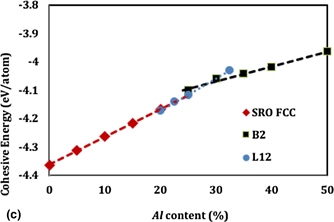
A set of embedded atom model (EAM) interatomic potentials was developed to represent highly idealized face-centered cubic (FCC) mixtures of Fe–Ni–Cr–Co–Al at near-equiatomic compositions. Potential functions for the transition metals and their crossed interactions are taken from our previous work for Fe–Ni–Cr–Co–Cu [D. Farkas and A. Caro: J. Mater. Res. 33 (19), 3218–3225, 2018], while cross-pair interactions involving Al were developed using a mix of the component pair functions fitted to known intermetallic properties. The resulting heats of mixing of all binary equiatomic random FCC mixtures not containing Al is low, but significant short-range ordering appears in those containing Al, driven by a large atomic size difference. The potentials are utilized to predict the relative stability of FCC quinary mixtures, as well as ordered L12 and B2 phases as a function of Al content. These predictions are in qualitative agreement with experiments. This interatomic potential set is developed to resemble but not model precisely the properties of this complex system, aiming at providing a tool to explore the consequences of the addition of a large size-misfit component into a high entropy mixture that develops multiphase microstructures.
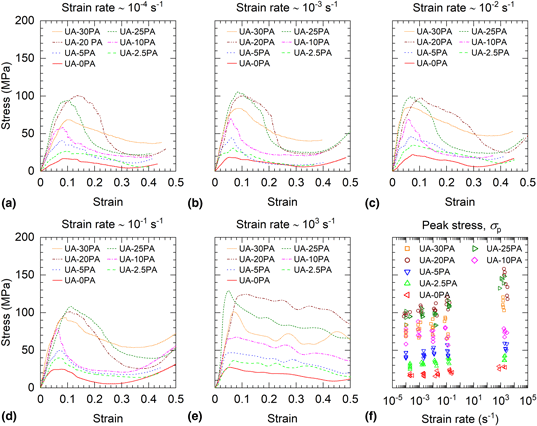
This study revealed that the mass ratio of large anisometric particles (platelets) to ultrafine, equiaxed particles strongly influences dynamic and quasistatic compressive response and the process of damage evolution in ice-templated alumina materials. The improved sinterability between particles of significantly dissimilar size and morphology enabled the utilization of a high mass ratio of the particles in harnessing a markedly enhanced level of strength in highly porous ice-templated ceramics. The high volume fraction of platelets increased lamellar bridge density and resulted in dendritic morphology as opposed to lamellar morphology without platelets. All the materials showed strain rate-sensitivity, where strength increased with strain rate. Materials with highly dendritic morphology exhibited the best performance in terms of maximum strength and energy absorption capacity, and the performance improved from quasistatic to dynamic regime. Direct observation of the process of damage evolution revealed the effects of both strain rate and ratio of platelets to ultrafine particles.
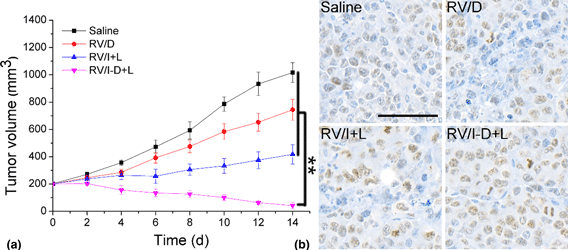
The cellular accumulation of drug delivery systems (DDSs) is a critical parameter to determine the final outcome of cancer chemotherapy. Herein, we designed a red blood cells membrane-based vehicle (RV) and employed it to load both doxorubicin (Dox) and IR 780 (RV/I-D). The photothermal-assisted chemotherapy efficacy of RV/I-D on the treatment of cancer was tested on a prostate cancer model. Excitingly, the results showed that RV/I-D was stable and safe nanoparticles with size at about 100 nm. Moreover, upon the increase of system temperature using photothermal effects of IR780, the drug release of the DDS was accelerated. Above all, the DDS also increased the accumulation of drugs into the Dox-resistant prostate cancer cells (PC-3/Dox) both in vitro and in vivo and showed enhanced anticancer performance.
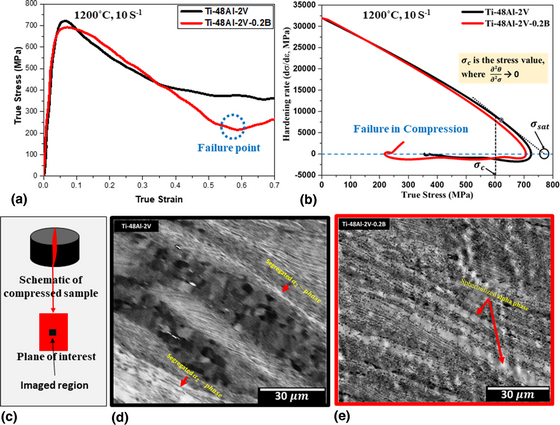
Hot deformation and softening response for the titanium aluminide Ti–48Al–2V–0.2B has been investigated. The deformation response to softening mechanisms has been examined. Deformation experiments were carried out in the strain rate range 0.01–10 s−1 keeping the temperature constant at 1200 °C and in the temperature range 1000–1200 °C at the strain rate 1 s−1. With an increase in strain rate, the microstructural changes associated with the softening mechanism include breaking of the lamellae, spheroidization of the broken laths and dynamic recrystallization. For the strain rate 1 s−1, deformation in the (α2 +γ) phase field leads to fine recrystallized grains, remnant lamellae and cavitation along the grain boundaries (for temperatures 1000 and 1100 °C). Deformation in the (α +γ) phase field leads to dynamic recrystallization at the shear bands, within the lamellae, breaking and rotation of the α phase during the continuous increase in the deformation strain.
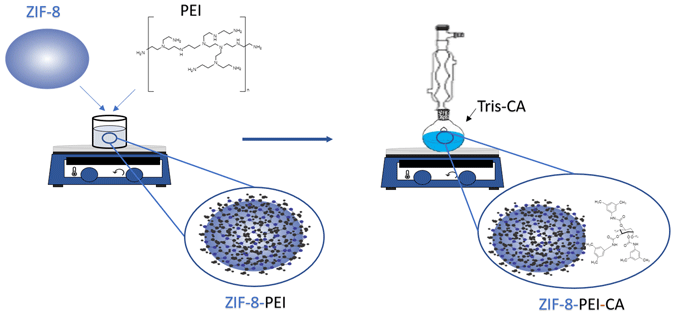
Commercial chiral stationary phases (CSPs) are based mainly on polysaccharides supported on silica; however, the pharmaceutical industry shows a special interest on chiral separations, exhibiting high financial investment in the development of new CSPs. These can be structured by a new optically active compound or different support. Thus, metal–organic frameworks (MOFs) are crystalline materials that arise with great potential for support, due to its high porosity, the strong intermolecular force between the metal and the ligand selectivity, and high adsorption capacity. Interested in this, this work proposes a new CSP using the metal–organic structure ZIF-8 (Basolite Z1200) due to its high mechanical stability. To this end, it is proposed the modification of the ZIF-8 with the optically active compound, tris-3,5-dimethylphenylcarbamate amylose. Through characterization textural, structural, and physicochemical performed, it is possible to confirm the synthesis of the chiral compound (amylose carbamate), as well as the functionalization of the metal–organic structure with tris-3,5-dimethylphenylcarbamate amylose (ZIF-8-PEI-CA). In addition, as a validation technique, HPLC can detect the presence of enantiomers present in the racemic mixture of Troger bases.
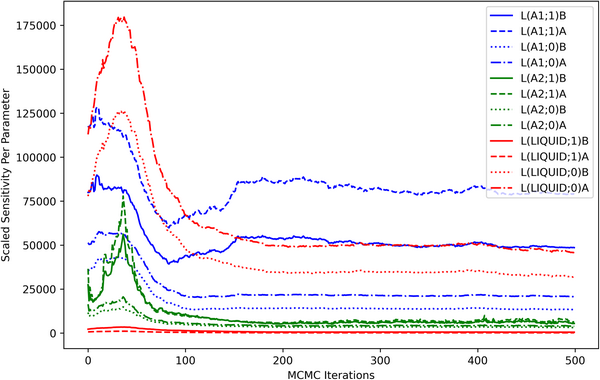
The development of a consistent framework for Calphad model sensitivity is necessary for the rational reduction of uncertainty via new models and experiments. In the present work, a sensitivity theory for Calphad was developed, and a closed-form expression for the log-likelihood gradient and Hessian of a multi-phase equilibrium measurement was presented. The inherent locality of the defined sensitivity metric was mitigated through the use of Monte Carlo averaging. A case study of the Cr–Ni system was used to demonstrate visualizations and analyses enabled by the developed theory. Criteria based on the classical Cramér–Rao bound were shown to be a useful diagnostic in assessing the accuracy of parameter covariance estimates from Markov Chain Monte Carlo. The developed sensitivity framework was applied to estimate the statistical value of phase equilibria measurements in comparison with thermochemical measurements, with implications for Calphad model uncertainty reduction.
We investigated high-resistivity cadmium zinc telluride (CdZnTe):In single crystals annealed in hydrogen to reveal the passivation effect of defects. An overall reduction in the concentration of defect levels induced by annealing was obviously observed by thermally stimulated current measurements. There is a large decrease by 56.51% in the concentration of secondly ionized Cd vacancies (T3) after hydrogenation. The concentration of firstly ionized Cd vacancies (T2) was a little bit lower (17.99%) in the hydrogenated CZT crystals. The formation of neutral InH complex and lower occupation of VCd by In dopant would result in a significant decrease (68.31%) in the trap density of ${\rm In}_{\rm Cd}^ +$ related shallow donor (T1) after hydrogenation. The bulk resistivity was calculated from I–V characteristic curves to be ~1.97 × 10¹⁰ Ωcm before annealing and ~1.78 × 10¹⁰ Ωcm after annealing. Hall measurements also reveal n-type conduction for the hydrogenated crystals. Electron mobility was fitted to be about 110 cm2/Vs before annealing and 488 cm2/Vs after annealing, demonstrating better carrier transport properties. Electron mobility-lifetime product could be fitted to be about 3.60 × 10⁻⁴ cm2/V before annealing and 5.45 × 10⁻⁴ cm2/V after annealing, demonstrating better detector performances.
Lead-free ferroelectric electrocaloric ceramics that could convert electrical energy into heat are the promising candidate for environment-friendly cooling devices. For refrigeration devices, a large temperature change (ΔT) and good temperature stability are required, which are highly related to the phase structure and the applied electric field. In this work, a diffused ferroelectric–paraelectric (FP) phase transition is formed in (K, Na)NbO3 (KNN) by using appropriate composition engineering. The relaxor ferroelectrics in this work present both a large ΔT of 1.24 K and a high ΔT/ΔE of 0.19 K mm/kV. In addition, a wide temperature span exceeds 55 °C at the high electrocaloric effect (ECE) criterion (ΔT ≥ 0.5 K) could also be observed. This work not only opens a new strategy for obtaining high-performance ceramics for refrigeration devices but also extends the application area of the KNN-based lead-free ferroelectrics from sensors, actuators and energy harvesting to solid-state cooling applications.
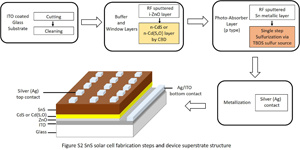
In this work, RF-sputtered metallic tin (Sn) film was sulfurized through di-tert-butyl-disulfide vapor at 350 °C for 150, 180, 210, and 240 min. According to the Raman spectra analysis, 210 min was sufficient to form dominantly SnS film. X-ray diffraction and X-ray photoelectron spectroscopy (XPS) studies of SnS film were evaluated. The n-type window layers CdS and high transmittance Cd(S,O) were deposited by chemical bath deposition through two different baths without and with TX-100 surfactant, respectively. XPS analysis of CdS and Cd(S,O) films was carried out. SnS solar cells formed in the superstrate solar cell device configuration. The photovoltaic performances were evaluated.