To save content items to your account,
please confirm that you agree to abide by our usage policies.
If this is the first time you use this feature, you will be asked to authorise Cambridge Core to connect with your account.
Find out more about saving content to .
To save content items to your Kindle, first ensure no-reply@cambridge.org
is added to your Approved Personal Document E-mail List under your Personal Document Settings
on the Manage Your Content and Devices page of your Amazon account. Then enter the ‘name’ part
of your Kindle email address below.
Find out more about saving to your Kindle.
Note you can select to save to either the @free.kindle.com or @kindle.com variations.
‘@free.kindle.com’ emails are free but can only be saved to your device when it is connected to wi-fi.
‘@kindle.com’ emails can be delivered even when you are not connected to wi-fi, but note that service fees apply.
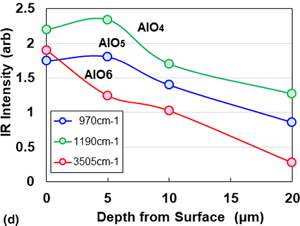
An amorphous aluminum oxide supercapacitor can store a large amount of electric storge on the uneven surfaces with AlO6 clusters. The amount of stored electricity increases with decreasing convex diameter d and depth of valley h. The nondestructive detection of AlO6 clusters on a surface with (Al0.91Y0.09)O1.66 oxide layer at a depth of 0.5 μm was determined based on a 3505 cm−1 peak band in the Fourier transform-infrared (FT-IR) spectrum and one 1047 cm−1 peak in the microRaman spectrum. The discharging time (T) could be expressed as T = 1.388 × 100.019 I. Thus, we can evaluate the amount of electricity by the nondestructive detection methods such as FT-IR and the microRaman spectra.
Lead-free BaTiO3 (BT)-based multilayer ceramic capacitors (MLCCs) with the thickness of dielectric layers ~9 μm were successfully fabricated by tape-casting and screen-printing techniques. A single phase of the pseudo-cubic structure was revealed by X-ray diffraction. Backscattered images and energy-dispersive X-ray elemental mapping indicated the high quality of MLCCs without observation of interaction, wrapping, or delamination. The relaxor state was confirmed by transmission electron microscopy and temperature-dependent permittivity. Impedance spectroscopy at various temperatures revealed the electrical heterogeneous response for MLCCs with high-resistive electrical components. Improved energy storage performance was obtained by multilayering, comparing with the bulk ceramics. Enhanced recoverable energy density ~6.88 J/cm3 with high efficiency ~90% were realized under an electric field of 820 kV/cm, which is mainly attributed to the intrinsic high-resistivity and relaxor behavior. Furthermore, good temperature (20–85 °C) and frequency stabilities (0.5–50 Hz) were observed in the MLCCs, which are attractive for pulsed power applications.
The validity of Mn element on enhanced energy storage performance and fatigue resistance of Mn-doped 0.7Na0.5Bi0.5TiO3–0.3Sr0.7Bi0.2TiO3 lead-free ferroelectric ceramics (BNT–BST–xMn) is certified by doping. The effects of Mn modification on the dielectric behavior, ferroelectric, energy storage properties, and AC impedance are comprehensively investigated. It is found that the average grain size of the ceramics modified by Mn additions is reduced slightly. Moreover, the relaxor properties are evidently enhanced with the increased Mn content. The AC impedance spectra can even better clarify the dielectric response and relaxor behavior. The results suggest that both of the dielectric response and relaxor behavior are determined by defects especially concentration of the oxygen vacancy. The superior energy storage properties are realized at x = 0.05 with an energy storage density (Wrec) of 1.33 J/cm3 as well as energy storage efficiency (η) of 86.2% at 100 kV/cm, accompanied with a superior thermal stability. BNT–BST–5Mn ceramics can maintain a stable energy storage performance within 106 fatigue cycles, indicating an excellent fatigue resistance.
In this work, SnS1−xSex ternary nanobelts were synthesized by a facile hydrothermal method without the assistance of surfactants. The structure, morphology, microstructure, compositions, chemical valences, phonon modes, and optical band gaps of the SnS1−xSex nanobelts were characterized in detail. The results indicate that the SnS1−xSex nanobelts have uniform one-dimensional morphology and are single crystals with high crystallinity. Se is incorporated into the SnS lattice to substitute for S-forming ternary SnS1−xSex alloy. With the increase of Se doping concentration, the optical band gaps of the nanobelts gradually decrease from 1.15 to 1.01 eV, confirming the tunable optical property achieved here.
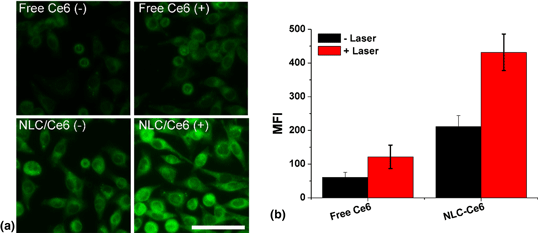
The recent scientific progress has shown the promising effect of the vaccine in immunotherapy of cancer, which relies on the antigen processing/presentation capability of dendritic cells (DCs). As a result, cancer vaccines targeting DC, which also named as DC vaccine, was a hot-spot in vaccine development. Herein, a nanostructured lipid carrier (NLC) was employed to load chlorin e6 (Ce6) to serve as a potential in situ DC vaccine (NLC/Ce6) for effective immunotherapy of gastric cancer. Taking advantage of the photodynamic effect of Ce6 to generate reactive oxygen species (ROS) under laser irradiation, the NLC/Ce6 was able to trigger cell death and expose tumor-associated antigen (TAA). Moreover, mimicking the natural inflammatory response, the ROS can also recruit the DC for the effective processing/presentation of the in situ exposed TAA. As expected, we observed strong capability DC vaccination efficacy of this platform to effectively inhibit the growth of both primary and distant gastric tumors.
The crystal structure of hyoscyamine sulfate monohydrate has been solved and refined using synchrotron X-ray powder diffraction data and optimized using density functional techniques. Hyoscyamine sulfate monohydrate crystallizes in space group P21 (#4) with a = 6.60196(2), b = 12.95496(3), c = 20.93090(8) Å, β = 94.8839(2)°, V = 1783.680(5) Å3, and Z = 2. Despite the traditional description as a dihydrate, hyoscyamine sulfate crystallizes as a monohydrate. The two independent hyoscyamine cations have different conformations, which have similar energies. One of the cations is close to the minimum-energy conformation. Each of the protonated nitrogen atoms in the cations acts as a donor to the sulfate anion. The hydroxyl group of one cation acts as a donor to the sulfate anion, while the hydroxyl group of the other cation acts as a donor to the water molecule. The water molecule acts as a donor to two different sulfate anions. The cations and anions are linked by complex chains of hydrogen bonds along the a-axis. The powder pattern has been submitted for inclusion in the Powder Diffraction File™ (PDF®).
The crystal structure of cephalexin monohydrate has been solved and refined using synchrotron X-ray powder diffraction data and optimized using density functional techniques. Cephalexin monohydrate crystallizes in space group C2 (#5) with a = 27.32290(17), b = 11.92850(4), c = 16.75355(8) Å, β = 108.8661(4)°, V = 5166.99(3) Å3, and Z = 12. Although the general arrangement of molecules is similar to that in cephalexin dihydrate, the structural differences result in very different powder patterns. The crystal structure is characterized by alternating layers of hydrogen bonds and van der Waals contacts parallel to the bc-plane. The water molecules occur in clusters. Five of the six protons in the water molecules act as donors in O–H⋯O hydrogen bonds. The sixth hydrogen atom acts as a donor to two different phenyl ring carbon atoms to form bifurcated O–H⋯C hydrogen bonds. Each cephalexin molecule is a zwitterion, containing ammonium and carboxylate groups. The ammonium ions form N–H⋯O hydrogen bonds to carboxylate groups and water molecules, as well as to carbonyl groups. The powder pattern is included in the Powder Diffraction File™ as entry 00-065-1417.
It has been widely speculated that dominant motifs, such as short-range icosahedral order, can influence glass formation and the properties of glasses. Experimental data on both fragile and strong undercooled liquids show corresponding changes in their thermophysical properties consistent with increasing development of a network of interconnect motifs based on molecular dynamics. Describing these regions of local order, how they connect, and how they are related to property changes have been challenging issues, both computationally and experimentally. Yet the consensus is that metallic liquids develop interconnected medium-range order consisting of some regions with lower mobility with deeper undercooling. Less well understood is how these motifs (or “crystal genes”) in the liquid can inhibit nucleation in the deeply undercooled liquid or influence phase selection upon devitrification. These motifs tend to have local packing unlike stable compounds with icosahedral order tending to dominate the best glass formers. The underlying kinetic and thermodynamic forces that guide the formation of these motifs and how they interconnect during undercooling remain open questions.
Through diversity of composition, sequence, and interfacial structure, hybrid materials greatly expand the palette of materials available to access novel functionality. The NSF Division of Materials Research recently supported a workshop (October 17–18, 2019) aiming to (1) identify fundamental questions and potential solutions common to multiple disciplines within the hybrid materials community; (2) initiate interfield collaborations between hybrid materials researchers; and (3) raise awareness in the wider community about experimental toolsets, simulation capabilities, and shared facilities that can accelerate this research. This article reports on the outcomes of the workshop as a basis for cross-community discussion. The interdisciplinary challenges and opportunities are presented, and followed with a discussion of current areas of progress in subdisciplines including hybrid synthesis, functional surfaces, and functional interfaces.
Additive manufacturing (AM) comprises a group of transformative technologies that are likely to revolutionize manufacturing. In particular, laser-based metal AM techniques can not only fabricate parts with extreme complexity, but also provide innovative means for designing and processing new metallic systems. However, there are still several technical barriers that constrain metal AM. Overcoming these barriers requires a better understanding of the physics underlying the complex and dynamic laser–metal interaction at the heart of many AM processes. This article briefly describes the state of the art of in situ/operando synchrotron x-ray imaging and diffraction for studying metal AM, mostly the laser powder-bed fusion process. It highlights the immediate impact of operando synchrotron studies on the advancement of AM technologies, and presents future research challenges and opportunities.
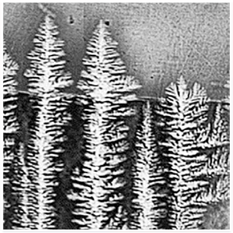
Solidification processing offers the first opportunity to control microstructure, properties, and performance in metallic alloy components. Until recently, microstructural evaluations were limited to post-solidification characterization by destructive methods. We review the development of time-resolved, in situ imaging techniques capable of capturing solid–liquid interfacial evolution in metallic alloys with high spatial and temporal resolution under diverse solidification conditions relevant for applications ranging from conventional directional solidification, crystal growth, and casting, to welding and additive manufacturing. These experiments enable direct visualization of transient behaviors that would otherwise remain unknown, uniquely providing insights into the physics that impact microstructure and defect development, and strategies for microstructural control and defect mitigation. Understanding microstructural evolution and the characteristics that form under various solidification conditions is essential for the development of multiscale, experimentally informed predictive modeling. This is highlighted by solidification simulations that utilize in situ measurements of solidification dynamics from state-of-the-art experimental techniques.