To save content items to your account,
please confirm that you agree to abide by our usage policies.
If this is the first time you use this feature, you will be asked to authorise Cambridge Core to connect with your account.
Find out more about saving content to .
To save content items to your Kindle, first ensure no-reply@cambridge.org
is added to your Approved Personal Document E-mail List under your Personal Document Settings
on the Manage Your Content and Devices page of your Amazon account. Then enter the ‘name’ part
of your Kindle email address below.
Find out more about saving to your Kindle.
Note you can select to save to either the @free.kindle.com or @kindle.com variations.
‘@free.kindle.com’ emails are free but can only be saved to your device when it is connected to wi-fi.
‘@kindle.com’ emails can be delivered even when you are not connected to wi-fi, but note that service fees apply.
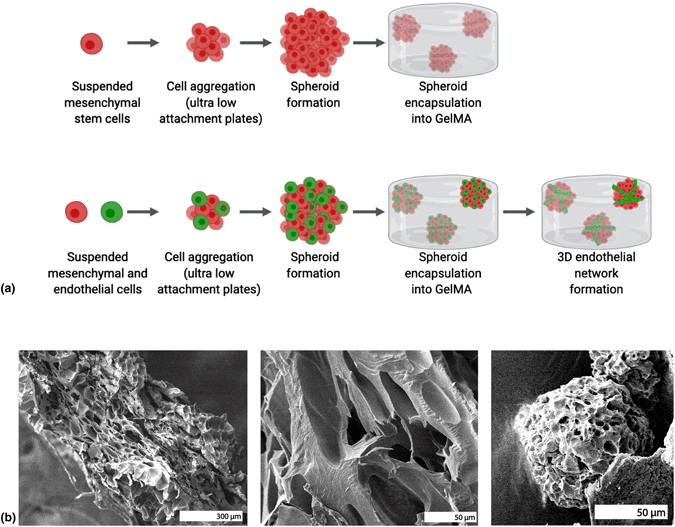
Tumors, trauma, and congenital defects require volume restoration of soft tissues. Tissue engineering provides an alternative source for substituting these defects. Cell encapsulation into hydrogels provides a three-dimensional microenvironment. Spheroids of cells provide close packing and increase cell-to-cell contacts resulting in differentiation. Gelatin is a natural polymer with low immunogenicity and preserved amino acid motifs for cell adhesion and proliferation. In the present study, a soft photo-crosslinked gelatin methacrylate (GelMA) hydrogel with long in vitro lifetime was synthesized. Stem cells (dental pulp derived, DPSC) and endothelial cells (umbilical cord derived, HUVEC) were formed into spheroids to induce prevascular network formation and encapsulated into GelMA (10% weight/volume). Results showed high cell viability, better gel mechanical properties, and longer HUVEC sprouting with spheroids compared to the same combination of cells. Altogether, the photo-crosslinked GelMA hydrogels with DPSC and HUVEC spheroids provided a promising tissue engineering and vascularization strategy in vitro.
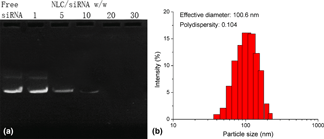
The multidrug resistance (MDR) is a widely observed phenotype that contributed to the major obstacle of impairing the outcome of cancer chemotherapy. With the aim to reverse MDR in the breast cancer cell line, the autophagy-related 7 (ATG7) small interfering RNA (siRNA) capable of downregulating the cellular autophagy level was loaded into a cationic nanostructured lipid carrier (NLC) with doxorubicin (Dox) to build a platform (NLC/D-R) for effective chemotherapy of breast cancer. Our results revealed that NLC/D-R was well-dispersed nanoparticles with satisfy protection to siRNA. In addition, NLC/D-R also exerted a sufficient drug release of both cargos under an acidic environment with high stability and biocompatibility at the physiological environment. Furthermore, NLC/D-R showed a preferable transfection profile to PEI 25k. The downregulated autophagy level in NLCF-7/Adr cells resulted in reverse of MDR and accumulated Dox retention in cells. The in vitro cytotoxicity using both cells on flat surfaces and multicellular tumor spheroid (NLCTS) model confirmed that NLC/D-R showed much elevated anticancer performance than NLC/Dox or NLC/siRNA, which suggested the synergistic effect between anti-autophagy and chemotherapy.
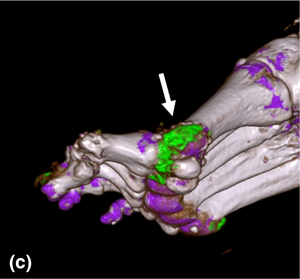
Conventional computed tomography (CT) remains the workhorse of cross-sectional medical imaging. But dual- and multi-energy CT allows for more specific material decomposition, enabling distinct advantages in the clinical setting. In this review, we describe the basic principles behind material decomposition in dual- and multi-energy CT, outline the techniques used to acquire images, and explore how enhanced material decomposition leads to improved patient care. We also explore areas of active research and future directions, including photon-counting CT, that have the potential to revolutionize CT in clinical use.
Entamoeba histolytica is a major cause of dysentery that leads to a high level of morbidity and mortality, especially in developing countries. Calmodulin-like calcium binding protein EhCaBP3 of E. histolytica is directly involved in disease mechanisms with roles in cytoskeleton dynamics and scission during erythrophagocytosis in a calcium dependent fashion. Interestingly, EhCaBP3 is also present in the nucleus of E. histolytica. We have used a transfected cell system to show that EhCaBP3 is capable of calcium dependent nucleocytoplasmic trafficking. Our data confirms and extends recent findings suggesting presence of a calcium dependent nuclear transport pathway in E. histolytica.
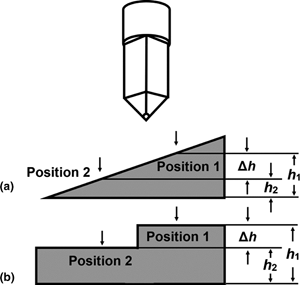
The thermal expansion coefficient (CTE) is a vital design parameter for reducing the thermal-stress-induced structural failure of electronic chips/devices. At the micro- and nano-scale, the typical size range of the components in chips/devices, the CTEs are probably different from that of the bulk materials, but an easy and accurate measurement method is still lacking. In this paper, we present a simple but effective method for determining linear CTEs of micro-scale materials only using the prevalent nanoindentation system equipped with a heating stage for precise temperature control. By holding a constant force on the sample surface, while heating the sample at a constant rate, we measure two height–temperature curves at two positions, respectively, which are close to each other but at different heights. The linear CTE is obtained by analyzing the difference of height change during heating. This method can be applied to study the size effect or surface effect of CTE of embedded micro-scale structures, aiding the failure analysis and structural design in the semiconductor industry.
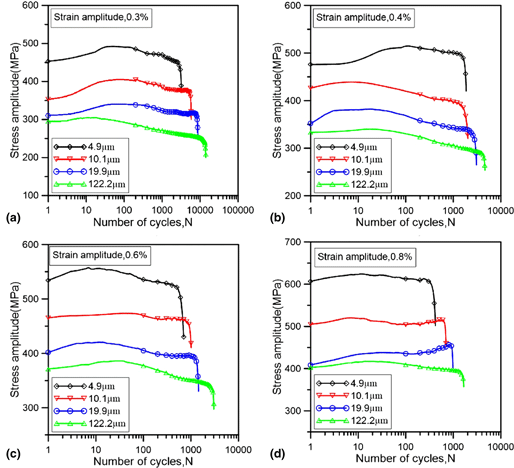
Grain refinement has been applied to enhance the materials strength for miniaturization and lightweight design of nuclear equipment. It is critically important to investigate the low-cycle fatigue (LCF) properties of grain refined 316LN austenitic stainless steels for structural design and safety assessment. In the present work, a series of fine-grained (FG) 316LN steels were produced by thermo-mechanical processes. The LCF properties were studied under a fully reversed strain-controlled mode at room temperature. Results show that FG 316LN steels demonstrate good balance of high strength and high ductility. However, a slight loss of ductility in FG 316LN steel induces a significant deterioration of LCF life. The rapid energy dissipation in FG 316LN steels leads to the reduction of their LCF life. Dislocations develop rapidly in the first stage of cycles, which induces the initial cyclic hardening. The dislocations rearrange to form dislocations cell structure resulting in cyclic softening in the subsequent cyclic deformation. Strain-induced martensite transformation appears in FG 316LN stainless steels at high strain amplitude (Δε/2 = 0.8%), which leads to the secondary cyclic hardening. Moreover, a modified LCF life prediction model for grain refined metals predicts the LCF life of FG 316LN steels well.
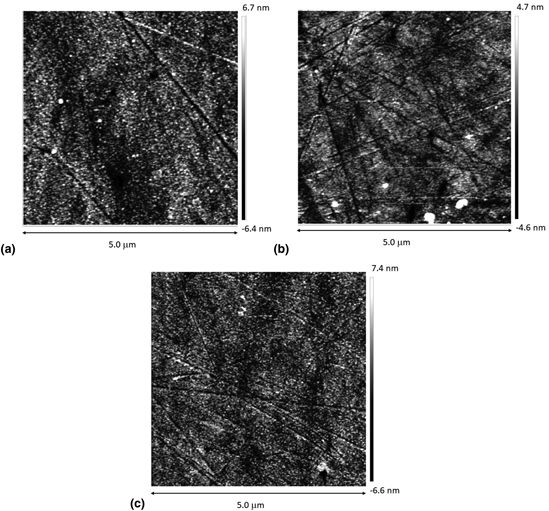
Austenitic stainless steel is used in several industrial branches due to its mechanical and thermal properties, and to its good corrosion resistance. With low cost and biocompatibility, it is used to manufacture prostheses and devices for bone fixation. However, direct contact with body fluids may cause corrosion. Thin films of FeAlCr intermetallic alloy can be used to increase service life of prostheses and avoid replacement surgeries. The aim of this work was to cover the austenitic stainless steel to study the effect of target–substrate distance on the film characteristics. Coatings were performed using the magnetron sputtering technique with the substrate positioned at different distances from the target. The influence on film thickness, morphology, roughness, and adhesion to the substrate was investigated. The thin films of FeAlCr (160 nm thick deposited at 100 mm far from the substrate) were formed by smaller particles (11.2 nm long), densely packed (551,000 particles/mm2), with flat and regular appearance, and greater adherence to the substrate.
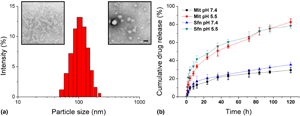
The negative regulation effect of tumor microenvironment (TME) greatly compromised the efficacy of various cancer treatments, especially cancer immunotherapy. As a result, it is generally recognized that remodeling of TME along with the treatment is a promising way to realize satisfactory cancer therapy. Here, in our study, a drug delivery system (DDS) composed cancer cell membrane (CCM) vehicle loaded mitoxantrone (Mit) and sorafenib (Sfn) was proposed with the aim to combine TME regulation and chemotherapy-induced immunotherapy in one platform. Our results confirmed that after treating with this DDS, the Mit induced immunogenic cell death (ICD) could be augmented by Sfn-based TME regulation to realize effective cancer immunotherapy. The Sfn was shown to downregulate of the regulatory T cells (Treg) level while activating the effector T cells of TME. The synergetic TME regulation along with cancer immunotherapy might be a promising way for advanced cancer treatment.
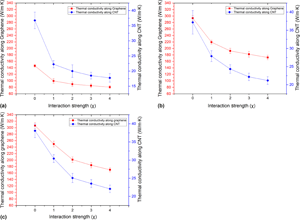
Thermal transport of pillared-graphene structure (PGS) supported on a copper substrate was investigated using equilibrium molecular dynamics. The results show that thermal conductivity along the graphene sheet in Cu-supported PGS ranges between 96.12 and 247.16 W/m K for systems with different dimensions at an interaction strength χ = 1. Thermal conductivity along carbon nanotube was found to range between 22.43 and 30.83 W/m K. The increase of interaction strength between Cu and carbon leads to a general decrease in thermal conductivity of PGS. The simulation results suggest that the thermal conductivity in Cu-supported PGS systems is governed by system geometry and phonon transport.
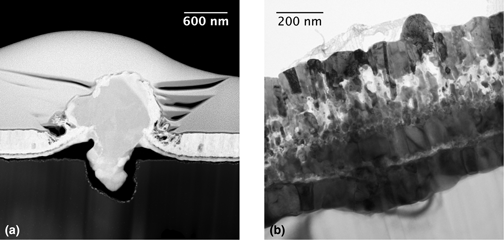
Thin films of platinum deposited by physical vapor deposition (PVD) processes such as evaporation and sputtering are used in many academic and industrial settings, for example to provide metallization when tolerance to corrosive thermal cycling is desired, or in electrocatalysis research. In this review, various practical considerations for platinum (Pt) metallization on both Si and SiO2 are placed in context with a comprehensive data review of diffusion measurements. The relevance of diffusion phenomena to the development of microstructure during deposition as well as the effect of microstructure on the properties of deposited films are discussed with respect to the Pt–Si system. Since Pt and Si readily form silicides, diffusion barriers are essential components of Pt metallization on Si, and various failure modes for diffusion barriers between Pt and Si are clarified with images obtained by electron microscopy. Adhesion layers for Pt films deposited on SiO2 are also considered.
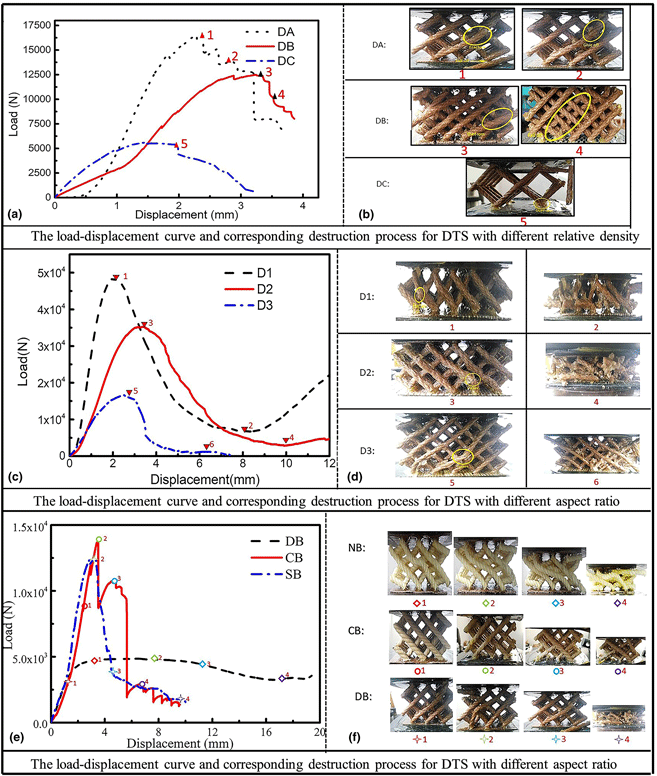
With the aim of optimizing the traditional construction process of a fiber-reinforced lattice structure, the present study modified a previously proposed technique called “truss stacking and node gluing.” To explicitly investigate the structural compressive properties (compressive strength and compressive modulus under the flat pressure), the geometrical parameters, material properties, and topological configuration were examined in detail. Additionally, the present study conducted the relevant theoretical analyses to predict the possible destruction modes and compressive properties. All the samples were tested with a universal testing machine at a rate of 2 mm/min using the ASTM-C365 standard. The results showed that compressive properties are positively related to the relative density and negatively related to the aspect ratio. It was also found that the compressive performance for different materials was in the following order (from good to bad): cotton-fiber reinforced epoxy composite (CREC), jute-fiber reinforced epoxy composite (JREC), and nylon-fiber reinforced epoxy composite (NREC). Furthermore, the mixed topological structure performed as well as the square structure, and they both overmatched the diamond structure. Lastly, the accuracy of the theoretical analysis was evaluated by comparing the theoretical values and the experimental values.
Commercial azelastine hydrochloride crystallizes in the monoclinic space group P21/n (#14) with a = 13.7844(5), b = 16.39920(14), c = 9.41231(22) Å, β = 97.5340(20)°, V = 2109.32(4) Å3, and Z = 4. The lattice parameters differ by −0.02, +0.04, and +0.04% from those in the previous determination (reflecting differences in the temperature and the sample source), and are more precise, from the use of synchrotron radiation. The experimental powder pattern is included in the Powder Diffraction File™ (PDF®) as entry 00-070-1219.
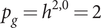
Green–Griffiths–Kerr introduced Hodge representations to classify the Hodge groups of polarized Hodge structures, and the corresponding Mumford–Tate subdomains. We summarize how, given a fixed period domain $ \mathcal{D} $, to enumerate the Hodge representations and corresponding Mumford–Tate subdomains $ D \subset\mathcal{D} $. The procedure is illustrated in two examples: (i) weight two Hodge structures with $ {p}_g={h}^{2,0}=2 $; and (ii) weight three CY-type Hodge structures.
Technical challenges associated with telomere length (TL) measurements have prompted concerns regarding their utility as a biomarker of aging. Several factors influence TL assessment via qPCR, the most common measurement method in epidemiological studies, including storage conditions and DNA extraction method. Here, we tested the impact of power supply during the qPCR assay. Momentary fluctuations in power can affect the functioning of high-performance electronics, including real-time thermocyclers. We investigated if mitigating these fluctuations by using an uninterruptible power supply (UPS) influenced TL assessment via qPCR. Samples run with a UPS had significantly lower standard deviation (p < 0.001) and coefficient of variation (p < 0.001) across technical replicates than those run without a UPS. UPS usage also improved exponential amplification efficiency at the replicate, sample, and plate levels. Together these improvements translated to increased performance across metrics of external validity including correlation with age, within-person correlation across tissues, and correlation between parents and offspring.
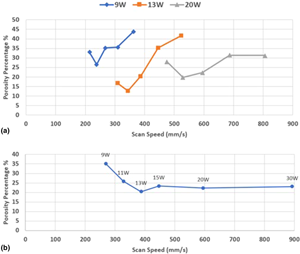
Additive manufacturing (AM) has made long strides in the recent past and rapidly evolved into a promising alternative in specific applications. The aircraft industry is not an exception to this. The true just-intime production possibility is critical for the aircraft maintenance industries, though the lack of material freedom is a major hurdle. Several fire-retardant materials were investigated for AM in the aerospace context, but mainly for fused deposition modeling (FDM). The material consolidation constraints in FDM led to the expansion to the use of selective laser sintering (SLS) to some extent. Nevertheless, the material options are still limited, proprietary, and lack scientific insights into the material consolidation mechanics. Attempts are made in this paper to fill this gap, evaluating a new fire-retardant material for processing by SLS. Experiments conducted to ascertain the material, process, structure, and consolidation relationships indicated energy density levels 0.062–0.070 J/mm2 with laser power 13 W and scan speed varied slightly around 390 mm/s to give the best laser sintering and mechanical property results in polyetherimide powders.
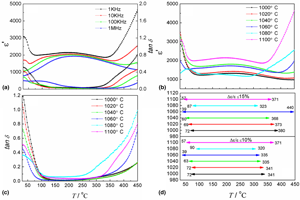
Na0.5Bi0.5TiO3-based ceramics have been paid great attention as Pb-free piezoelectric and electrical energy storage materials. Here, adding 10 mol% BiFeO3 in Na0.5Bi0.5TiO3–SrTiO3 binary system, 0.5Na0.5Bi0.5TiO3–0.4SrTiO3–0.1BiFeO3 ceramics were prepared by a conventional solid-state reaction method. Dielectric measurements reflected a near-plateau dielectric response at high temperature, e.g., the mid-dielectric permittivity of 2052 with the variation within ±10% from 57 to 371 °C and within ±15% from 54 to 371 °C for the ceramic sintered at 1100 °C. At a moderate electric field of 70 kV/cm, a capacitor made by the ceramic has an electrical energy storage density of 0.95 J/cm3, while the polarization has yet saturated at the moderate electric field. These results suggest that 0.5Na0.5Bi0.5TiO3–0.4SrTiO3–0.1BiFeO3 ceramic is a promising novel material with thermally stable dielectric permittivity and high electrical energy storage property for applications in high-temperature electronics.