To save content items to your account,
please confirm that you agree to abide by our usage policies.
If this is the first time you use this feature, you will be asked to authorise Cambridge Core to connect with your account.
Find out more about saving content to .
To save content items to your Kindle, first ensure no-reply@cambridge.org
is added to your Approved Personal Document E-mail List under your Personal Document Settings
on the Manage Your Content and Devices page of your Amazon account. Then enter the ‘name’ part
of your Kindle email address below.
Find out more about saving to your Kindle.
Note you can select to save to either the @free.kindle.com or @kindle.com variations.
‘@free.kindle.com’ emails are free but can only be saved to your device when it is connected to wi-fi.
‘@kindle.com’ emails can be delivered even when you are not connected to wi-fi, but note that service fees apply.
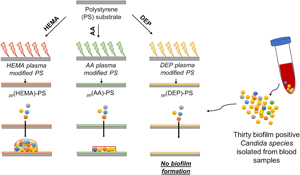
This work investigates the antifungal effect of plasma polymer films produced by low-pressure RF-generated plasma system using acrylic acid, 2–hydroxyethyl methacrylate, and diethyl phosphite (DEP). Unmodified and plasma-modified polystyrene (PS) microplate wells were tested by 30 biofilm-positive Candida spp. isolated from blood samples and two control strains using a quantitative plaque assay method. Regardless of the precursors and plasma parameters, biofilm formation was inhibited for all plasma-modified microplate wells. The most significant anti-biofilm effect was observed on PS modified by DEP at 90 W plasma power with the inhibition of all Candida species’ biofilm formation.
Bisphenol-A (BPA) is associated with adverse health outcomes and is found in many canned foods. It is not understood if some BPA contamination can be washed away by rinsing. The objective of this single-blinded crossover experiment was to determine whether BPA exposure, as measured by urinary concentrations, could be decreased by rinsing canned beans prior to consumption. Three types of hummus were prepared from dried beans, rinsed, and unrinsed canned beans. Fourteen healthy participants ate two samples of each hummus over six experimental days and collected spot urine specimens for BPA measurement. The geometric mean BPA levels for dried beans BPA (GM = 0.97 ng/ml, 95%CI = 0.74,1.26) was significantly lower than rinsed (GM = 1.89 ng/ml, 1.37,2.59) and unrinsed (GM = 2.46 ng/ml, 1.44,4.19). Difference-in-difference estimates showed an increase in GM BPA from pre- to post-hummus between unrinsed and rinsed canned beans of 1.39 ng/ml, p-value = 0.0400. Rinsing canned beans was an effective method to reduce BPA exposure.
Validating phase quantification procedures of powder X-ray diffraction (XRD) data for an implementation in an ISO/IEC 17025 accredited environment has been challenging due to a general lack of suitable certified reference materials. The preparation of highly pure and crystalline reference materials and mixtures thereof may exceed the costs for a profitable and justifiable implementation. This study presents a method for the validation of XRD phase quantifications based on semi-synthetic datasets that reduces the effort for a full method validation drastically. Datasets of nearly pure reference substances are stripped of impurity signals and rescaled to 100% crystallinity, thus eliminating the need for the preparation of ultra-pure and -crystalline materials. The processed datasets are then combined numerically while preserving all sample- and instrument-characteristic features of the peak profile, thereby creating multi-phase diffraction patterns of precisely known composition. The number of compositions and repetitions is only limited by computational power and storage capacity. These datasets can be used as input files for the phase quantification procedure, in which statistical validation parameters such as precision, accuracy, linearity, and limits of detection and quantification can be determined from a statistically sound number of datasets and compositions.
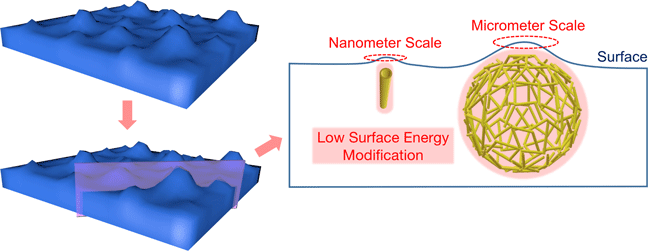
The construction of halloysite spherical capsules (halloysite aerogels) was reported for the first time in our previous work. The excellent performance of the microcapsule in functional carrying was also found in our further research. In this work, the anti-icing surface was fabricated by using halloysite nanotubes and halloysite spherical microcapsules. The fabrication of the anti-icing coating was investigated, and the ice nucleation behavior of droplet on the coating surface was studied. The modified halloysite nanotubes (F-HNTs) and the modified halloysite microcapsules (F-HAs) were characterized by Fourier-transform infrared spectroscopy, thermal gravimetric, and pore size distribution. The results show that the introduction of F-HNTs and F-HAs have successfully formed a micro-nano structure on the coating surface with superhydrophobicity performance. The icing temperature of the coating has decreased 2.3 °C compared with bare glass, and the ice adhesion strength has decreased 82%. According to the ice dynamic mechanics, the ice nucleation rate on the coating is significantly reduced, thus the halloysite microcapsule coating has good icephobic performance.
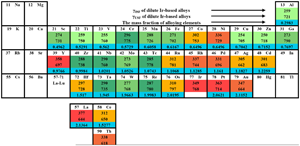
Iridium (Ir) has an extremely high melting point (2443 °C), high chemical stability and is one of the most promising high-temperature materials. However, Ir is more difficult to process compared with other face-centered cubic metals, such as Ni and Al, which limits its applications. To solve this problem, we study the effect of 32 alloying elements (X) on stacking fault energy of dilute Ir-based alloys generated by shear deformation using the first-principles calculations. The investigation reveals that there are many alloying elements studied herein decrease the stacking fault energy of face-centered cubic (fcc) Ir, and the most effective element in reducing stacking fault energy of fcc Ir is Zn. The microscopic mechanism is caused by electron redistribution in the local stacking fault area. These results are expected to provide valuable guidance for the further design and application of Ir-based alloys.
During summer 2020, observations of the mesosphere using a 53.5 MHz radar on Svalbard, at 78.2°N 15.1°E, revealed the well-known Polar Mesospheric Summer Echoes (PMSE). At the same time, a co-located meteor detection radar, operating at 31 MHz detected corresponding echoes very distinct from those associated with meteor trails. Comparing as many days as possible during 2020, incontestable evidence arose to demonstrate that the meteor detection radar was capable of observing PMSE, although not in the optimised fashion of the 53.5 MHz system. We present examples of results from both systems, supplementing the earlier findings of Swarnalingam et al. (2009), and simultaneously show very first results from this particular geographical location.
Denture-related stomatitis caused by Candida spp. affects elderly individuals using partial/total prosthesis, provoking several discomforts including burning sensation and altered taste. Herein, we have studied 52 denture-wearing individuals (>60 years-old), attended at the dentistry clinic of UNIVALE, aiming to isolate Candida spp. directly from the stomatitis lesions and to evaluate their potential to produce virulence attributes. A low prevalence of denture-related stomatitis was reported in these patients (4/52; 7.7%). Candida albicans was isolated in the 4 selected patients, with the ability to form biofilm over a polystyrene surface and to produce aspartic protease, esterase and hemolysin. However, neither phospholipase nor caseinase activities were detected. Planktonic-growing yeasts were susceptible to amphotericin B and caspofungin, while the susceptibility to azoles (fluconazol, itraconazole and voriconazole) varied depending on either the isolate or antifungal. Relevantly, biofilm-forming C. albicans cells exhibited resistance to all studied antifungals. So, new effective drugs against resistant C. albicans isolates causing denture-related stomatitis are urgently required.
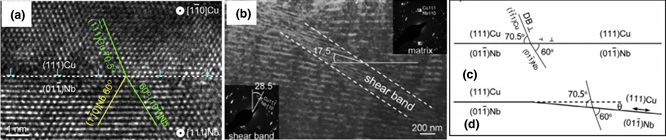
Nanocrystalline metals possess high strength and outstanding resistance to irradiation damage. However, the high-density grain boundaries in nanocrystalline metals lead to low plasticity and poor thermal stability. In recent years, interface engineering has gradually become an important way to improve the comprehensive properties of nanocrystalline metals. In this paper, the interface structure, deformation mechanism, and physical properties of Cu–Nb nanolayered composites fabricated by physical vapor deposition and accumulative roll bonding are reviewed. Both Cu–Nb nanolayered composites possess semi-coherent interfaces. The nanolayered composites could achieve excellent resistance to irradiation damage since the interfaces are good sinks for the irradiation point defects. In addition, nanolayered metallic composites with abundant heterogeneous interfaces have better thermal stability compared to nanocrystalline metallic materials. Moreover, the interactions between dislocations and interfaces can be adjusted effectively through controlling the atomistic interface structure and alignment of slip systems across the interface, so as to achieve high strength and high plastic deformation ability simultaneously.
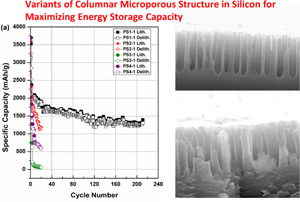
Silicon electrodes with the columnar macroporous structure were investigated to determine the effect of variations in the columnar pore morphology on lithiation and energy storage capacity in Li-ion cells. Several variants of macroporous Si columnar electrodes were electrochemically cycled against the Li reference electrode. The changes in macro-pore size and Si wall thickness of the columnar architecture greatly affected the cyclic Li storage and discharge capacities. A strong correlation of the Li-storage capacity with the ratio of Si wall thickness to pore diameter is found to exist. Specifically, one columnar Si electrode with an optimum macroporous structure exhibited a very high reversible specific capacity of ~1250 mAh/g (total capacity 1.2 mAh/cm2) for over 200 cycles. Electron microscopy revealed that the high reversible Li-storage capacity is due to the macropores accommodating the change in volume of lithiation and providing nearly complete reconstruction of Si walls upon delithiation. The present observations can lead to practical, high-capacity, and damage-resistant Si electrodes for Li-ion batteries.
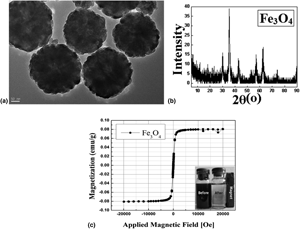
Three-dimensional porous materials with the hydrophobic/oleophilic surface have attracted significant interest in the fields of oil/water separation. In this paper, superhydrophobic magnetic polyurethane sponge was fabricated by the self-polymerization of dopamine to bind the Fe3O4 nanoparticles tightly on the sponge and then soaking in cheap stearic acid aqueous solution. The obtained sponge has the superhydrophobic property and good magnetic property. The surface structure, composition, and properties of the modified sponges were characterized by scanning electron microscopy, energy dispersive spectrometer, Fourier-transform infrared spectrum, and water contact angle (WCA) measurements. The as-prepared superhydrophobic magnetic sponge was able to collect a wide range of oils and organic solvents from oil–water mixture with an absorption capacity up to 16–60 times of its own weight. Under an external magnetic field, it can be guided to a designated area. In addition, combined with the vacuum system, continuous oil separation can be carried out, which is of great significance for removing a good deal of dirty oil on the water surface. Furthermore, the WCA of sponge remains above 141°, and the oil absorption is basically unchanged through repeated cyclic experiments.
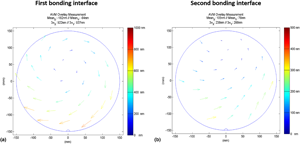
Recent applications require vertical chip stacking to increase the performance of many devices without the need of advanced node components. Image sensors and vision systems will embed more and more smart functions, for instance, image processing, object recognition, and movement detection. In this perspective, the combination of Cu-to-Cu direct hybrid bonding technology with Through-Silicon-Via (TSV) will allow 3D interconnection between pixels and the associated computing and memory structures, each function fabricated on a separate wafer. Wafer-to-wafer hybrid bonding was achieved with multi-pitch design—1–4 μm—of single levels of Cu damascene patterned on 300 mm silicon substrates. Defect-free bonding, as far as the extreme edge of the wafer, was demonstrated on a stack with three wafers. Middle wafers thinning was done with grinding only and with a thickness uniformity (TTV) <2 μm to an ultimate thinning as low as 3 μm. Alignment performance was characterized by post-bonding for two superposed hybrid bonding interfaces. In our set of wafers, modeling the alignment with translation, rotation, and scaling components enables us to optimize the residuals down to 3σ < 100 nm. A process flow of thin TSV with a fine pitch of 2 μm for high-density vertical interconnect through a three-wafer stack was developed. Via-last TSV architecture was adopted with 1 μm TSV diameter and 10 μm thickness. Lithography, etching solutions, Ti/TiN barrier deposition, and void-free Cu filling solutions were demonstrated. TSV cross sections after CMP and connections with top and bottom Cu damascene lines show good profile control. Process developments are matured and can be reliably used in the fabrication of an electrical test vehicle including vertical interconnects associating multi-wafers stacking with a hybrid bonding process and high-density thin TSV applicable to low pitches (<5 μm).
The effects of CaTiO3 (CT) and BaZrO3 (BZ) modification upon the crystal structure and electromechanical properties of lead-free Bi0.5Na0.5TiO3–SrTiO3 piezoelectric ceramics were compared within a doping range of 0–4 mol%. The different effects of CT and BZ modification upon the phase transition are clearly observed in the polarization and strain hysteresis loops. The CT-modified specimens maintain strong ferroelectricity without any abnormal enhancement in the electric field-induced strain. However, the addition of as little as 1 mol% BZ induces a transition from a nonergodic relaxor phase to an ergodic relaxor phase, thus resulting in disruption of the ferroelectric order and the generation of a high field-induced strain. The present authors believe that the substitution of large ions (such as Zr4+) into the B-sites, rather than the A-sites, of the Bi0.5Na0.5TiO3-based ceramics plays a significant role in the phase transition behavior.
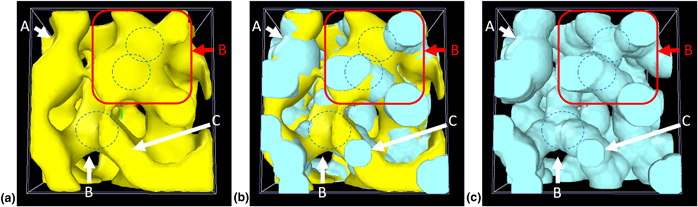
Soyarslan et al. [J. Mater. Res. 33(20), 3371 (2018)] proposed a beam-finite element model for the computation of effective elastic properties of nanoporous materials, where the ligament diameter along the skeleton is determined with the biggest sphere algorithm. Although this algorithm is often used in the literature, it is known that it systematically overestimates the diameter in network structures. Thus, the need for further stiffening of the junction zones as proposed by the authors is in contradiction to the literature. Furthermore, the factor 40 appears to be one order of magnitude too high. We show that the 3D microstructures generated from random Gaussian fields contain features that are violating the assumption of circular cross-sections and, therefore, cannot be captured by the biggest sphere algorithm. Consequently, the authors required an unphysically high value of 40 to compensate this hidden effect.
Vibration-based methods can be used effectively to characterize the physical properties of biological materials, with an increasing interest focused on the mechanics of individual, living cells. Real-time measurements of cell properties, such as mass and Young's modulus, can yield important insights into many aspects of cell growth and metabolism as well as the interaction of cells with external stimuli (e.g., drugs). Vibrational test structures designed for the study of such cell properties often use fixed configurations and operational modes, with associated limitations in determining multiple characteristics of the cell, simultaneously. Recent development of mechanics-guided techniques for deterministic assembly of three-dimensional (3D) microstructures provides a route to vibrational frameworks that offer tunable configurations, vibration modes, and resonant frequencies. Here we propose a method that exploits such tunable vibrational structures to simultaneously determine the mass and modulus of a single adherent cell, or of other biological materials or small-scale living systems (e.g., organoids), through theoretical modeling and finite element analysis. The idea involves a 3D architecture that supports two different vibrational structures and can be converted from one to the other through application of strain to an elastomeric substrate. Specifically, tailored designs for serpentine ribbons in these systems enable a decoupling of the dependence of the resonant frequencies of the two structures to the cell mass and modulus, with an associated ability to measure these two properties accurately and independently. These same concepts can be scaled to apply to various types of cells, as well as to organoids (3D clusters of cells) and other biological materials with small geometries, across a range of values of mass and modulus. This method could serve as the foundation for microelectromechanical systems capable of monitoring mass and modulus in real time for use in research in biomechanics and dynamic biological processes.
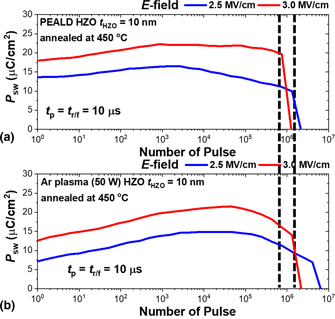
The doped/alloyed HfO2 and ZrO2 thin films revolutionized not only the field of ferroelectric physics but also various ranges of device applications. Especially when the two oxides are combined in an 1:1 ratio, the ferroelectric polarization of the material became the most distinctive. Many researchers have investigated various different process conditions such as controlling Hf0.5Zr0.5O2 (HZO) film thickness and modifying different metal electrodes. Here, we explored the effect of additional Ar plasma treatment to the HZO film. The additional Ar plasma was exposed to the plasma-enhanced atomic layer deposition (PEALD) HZO for this study. Then, the sample was compared with a conventional PEALD and thermal ALD HZO films. By understanding the polarization–electric field (P–E), current–electric field (I–E), and electrical breakdown characteristics of the different samples, it was found that the Ar plasma treatment can control the degree of ferroelectric and antiferroelectric phases of HZO film.
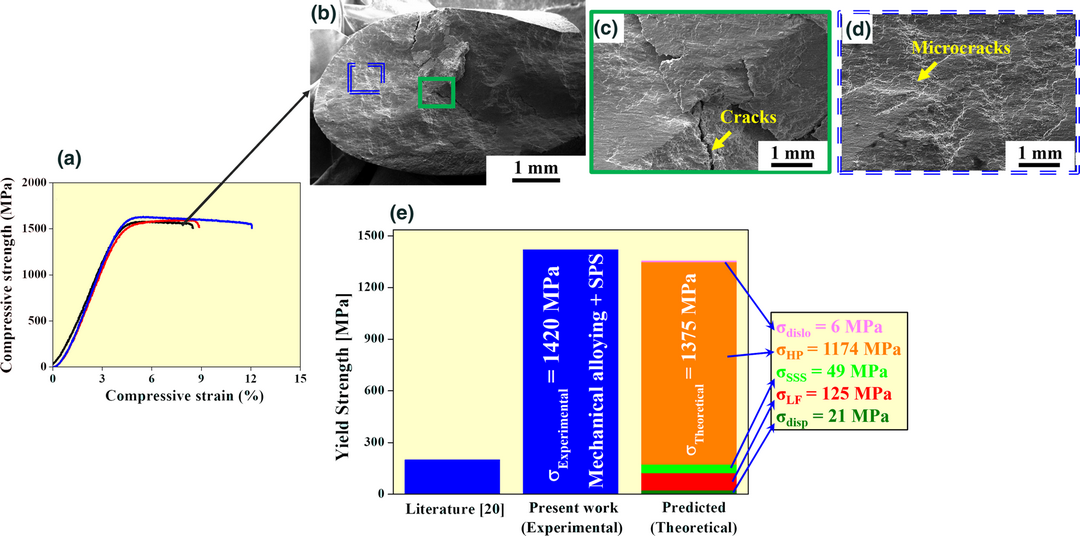
Al0.1CoCrFeNi high-entropy alloy (HEA) was synthesized successfully from elemental powders by mechanical alloying (MA) and subsequent consolidation by spark plasma sintering (SPS). The alloying behavior, microstructure, and mechanical properties of the HEA were assessed using X-ray diffraction, electron microscope, hardness, and compression tests. MA of the elemental powders for 8 h has resulted in a two-phased microstructure: α-fcc and β-bcc phases. On the other hand, the consolidated bulk Al0.1CoCrFeNi-HEA sample reveals the presence of α-fcc and Cr23C6 phases. The metastable β-bcc transforms into a stable α-fcc during the SPS process due to the supply of thermal energy. The hardness of the consolidated bulk HEA samples is found to be 370 ± 50 HV0.5, and the yield and ultimate compressive strengths are found to be 1420 and 1600 MPa, respectively. Such high strength in the Al0.1CoCrFeNi HEA is attributed to the grain refinement strengthening.
Solid solution 0.94Na0.5Bi0.5TiO3–6BaTiO3 (NBT–6BT) is considered to be one kind of lead-free piezoelectric materials with excellent electrical properties due to the existence of morphotropic phase boundary (MPB). However, its relatively lower depolarization temperature is a long-standing bottleneck for the application of NBT-based piezoelectric ceramics. In this work, the influence of thermal quenching on depolarization temperature and electrical properties of rare-earth Ho-doped NBT–6BT lead-free ceramics was investigated. It was shown that the relative high piezoelectric performance, as well as an improvement of depolarization temperature (Td), can be realized by thermal quenching. The results showed that the quenching process induced high concentration of oxygen vacancy, giving rise to the change of octahedra mode and enhanced lattice distortion, which is benefit to the temperature stability of piezoelectric and ferroelectric properties. Furthermore, up-conversion photoluminescence (PL) of Ho-doped NBT–6BT could be effectively tuned by the introduction of oxygen vacancy, suggesting a promising potential in optical–electrical multifunctional devices.