To save content items to your account,
please confirm that you agree to abide by our usage policies.
If this is the first time you use this feature, you will be asked to authorise Cambridge Core to connect with your account.
Find out more about saving content to .
To save content items to your Kindle, first ensure no-reply@cambridge.org
is added to your Approved Personal Document E-mail List under your Personal Document Settings
on the Manage Your Content and Devices page of your Amazon account. Then enter the ‘name’ part
of your Kindle email address below.
Find out more about saving to your Kindle.
Note you can select to save to either the @free.kindle.com or @kindle.com variations.
‘@free.kindle.com’ emails are free but can only be saved to your device when it is connected to wi-fi.
‘@kindle.com’ emails can be delivered even when you are not connected to wi-fi, but note that service fees apply.
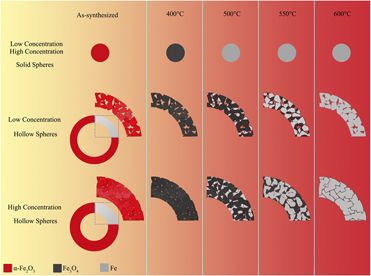
The global market requirement of ultra-fine iron powder (UFIP), with a range size of 0.1–1 μm, is more than 20,000 tons per annum. However, no low-cost nontoxic synthesis route of UFIP is known. In this study, we used the low-cost, rapid, and scalable flame aerosol synthesis (FAS) method to synthesize iron oxide nanoparticles with different size and morphology. Combining with a postreduction heat treatment process, a feasible synthesis route of UFIP which meets the commercial production criteria has been developed. By optimizing the precursor concentration and postreduction heat treatment parameters, the final particle size of UFIP can be controlled. The evolution of the microstructure, phase formation, and magnetic properties during the postreduction heat treatment are systematically investigated, and a feasible reaction model has been established. This work provides an important starting point for the facile commercial synthesis of UFIP and can be readily expanded to other pure metals.
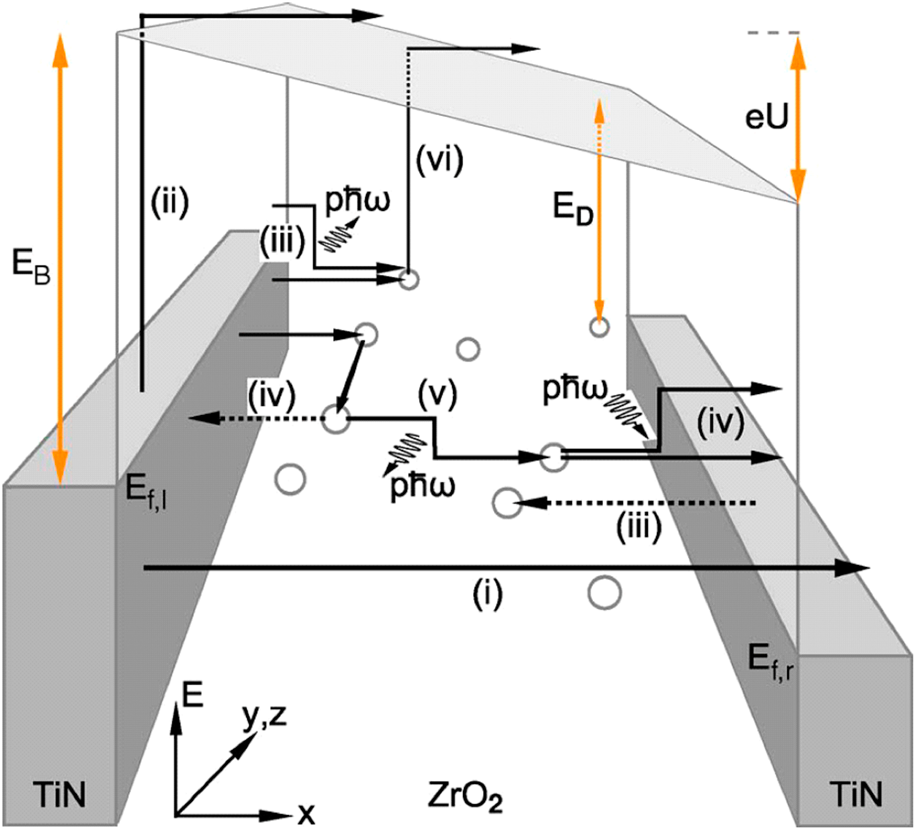
Capacitors represent the largest obstacle to dynamic random-access memory (DRAM) technology evolution because the capacitor properties govern the overall operational characteristics of DRAM devices. Moreover, only the atomic layer deposition (ALD) technique is used for the dielectric and electrode because of its extreme geometry. Various high-k materials deposited by ALD have been investigated for further scaling. Whereas past investigations focused on increasing the physical thickness of the dielectric to suppress leakage current, the physical thickness of the dielectric should also be limited to a few nanometers in design rules less than 1×-nm. Therefore, a new way to overcome the limitations of traditional approaches based on thorough understanding of high-k materials is highly recommended to enhance the properties of conventional materials and provide directions for developing new materials. In this review, previously reported results are discussed, and suggestions are made for further investigations for DRAM capacitor applications.
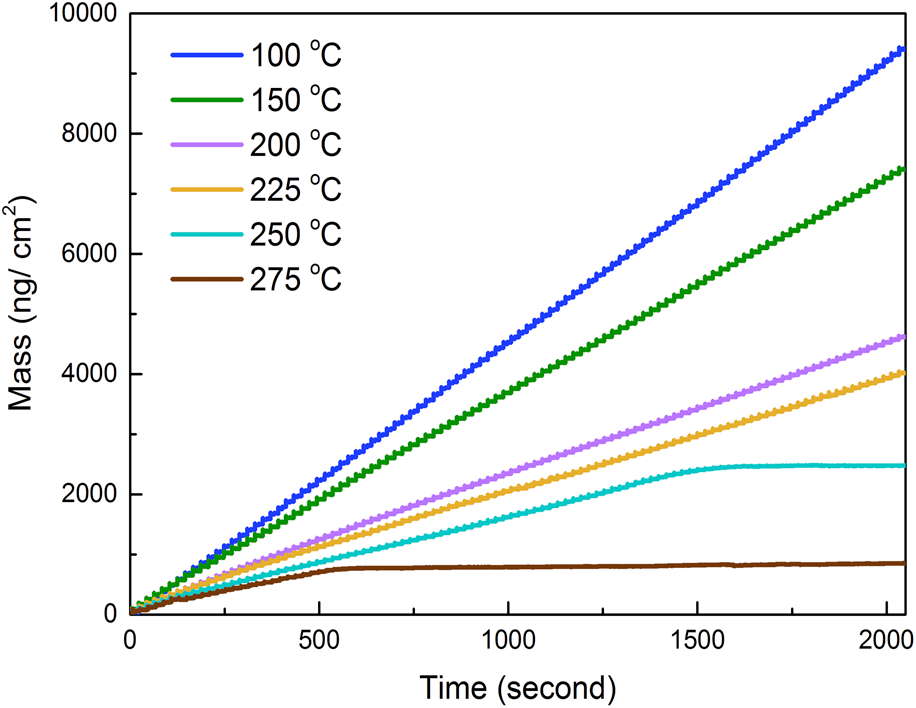
In this work, we studied an atomic layer deposition (ALD) process of ZrO2 with the precursors of tetrakis(dimethylamido)zirconium(IV) and water. We investigated the growth characteristics and mechanism of the ALD ZrO2 in the temperature range of 50–275 °C. Furthermore, the evolutions of film thickness and morphology were studied and discussed. It was found that the growth rate of ZrO2 decreased almost linearly with the increasing temperature from ∼1.81 Å/cycle at 50 °C to ∼0.8 Å/cycle at 225 °C. Interestingly, it was revealed that the growth of ZrO2 films ceased after a certain number of ALD cycles at a temperature higher than 250 °C. We also verified that the crystallinity of ZrO2 evolved with deposition temperature from amorphous to crystalline phase. In addition, the wettability of ZrO2 films was studied, showing a hydrophobic nature.
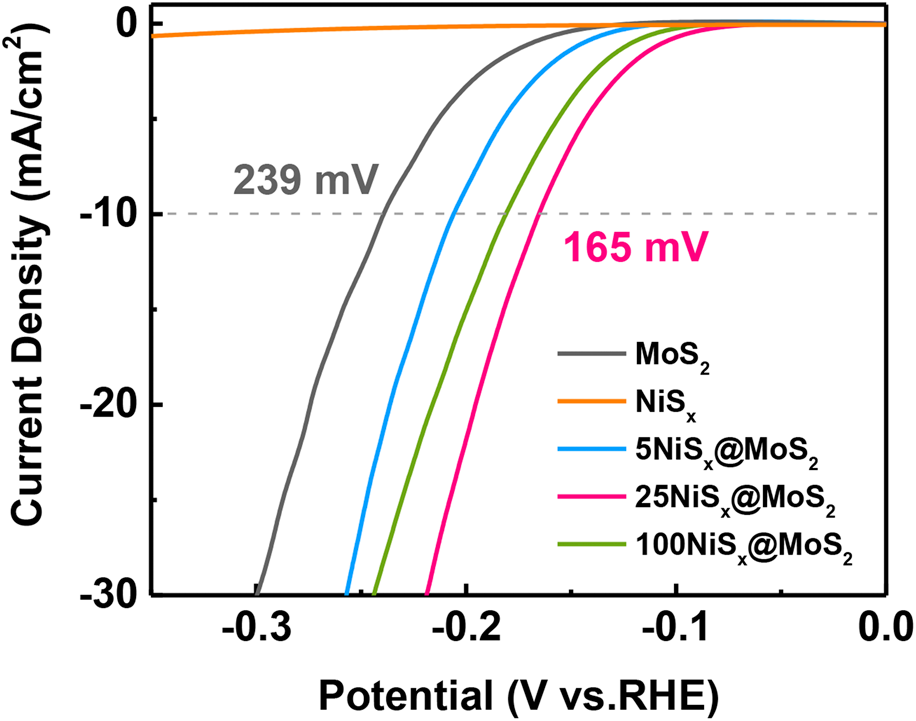
Developing low-cost and high-performance hydrogen evolution reaction (HER) electrocatalysts is essential for the development of hydrogen energy. While transition metal sulfides are reported as promising HER electrocatalysts, their performance still requires further improvement for practical application. In this work, we report a strategy to construct NiSx@MoS2 heterostructures with a well-defined interface structure by growing NiSx nanoclusters on MoS2 nanosheets through atomic layer deposition (ALD). NiSx@MoS2 heterostructures exhibit strongly enhanced HER activity with lower overpotential and faster reaction dynamic compared to MoS2 and NiSx single phases. The enhanced performance is attributed to improved adsorption of the reaction intermediates and the facilitated charge transfer process near the MoS2/NiSx interfaces. Besides high activity, NiSx@MoS2 heterostructures also exhibit high stability in alkaline media. The methodology and knowledge in this work can guide the rational design of high-performance electrocatalysts through hetero-interface engineering.
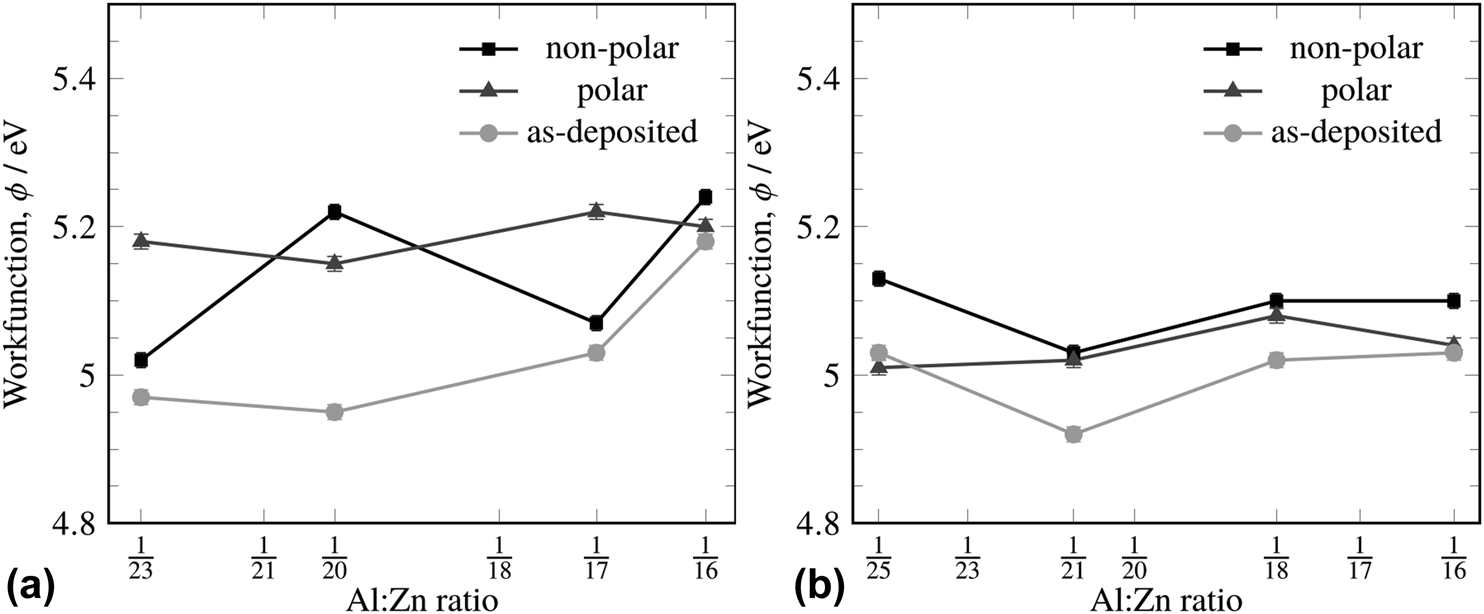
Al-doped ZnO (AZO) is a promising earth-abundant alternative to Sn-doped In2O3 (ITO) as an n-type transparent conductor for electronic and photovoltaic devices. We have deposited AZO films with resistivities as low as 1.1 × 10⁻³ Ω·cm by atomic layer deposition (ALD) using trimethylaluminum (TMA), diethylzinc (DEZ), and water at 200 °C. The work functions of the films were measured using a scanning Kelvin probe (sKP) to investigate the role of aluminum concentration. The work function of AZO films prepared by two different ALD recipes were compared: a “Al-terminated” recipe and a “ZnO-terminated” recipe. As aluminum doping increases, the Al-terminated recipe produces films with a consistently higher work function than the ZnO-terminated recipe. The resistivity of the Al-terminated recipe films shows a minimum at a 1:16 Al:Zn atomic ratio and using a ZnO-terminated recipe, minimum resistivity was seen at 1:19. The film thicknesses were characterized by ellipsometry, chemical composition by EDX, and resistivity by a four-point probe.
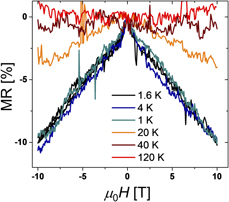
The authors summarize the results of selective-area growth of vertical MnAs/InAs heterojunction nanowire (NW) arrays and present a preliminary characterization of the transport properties of a single MnAs/InAs heterojunction NW and a single InAs host NW for MnAs inclusions. During the endotaxy of MnAs after the selective-area growth of host InAs nanowires (NWs) on partially SiO2-masked GaAs(111)B substrates, hexagonal NiAs-type MnAs nanoclusters (NCs), which exhibit spontaneous magnetization at room temperature, are formed with the 〈0001〉 direction oriented parallel to the 〈111〉B direction of the zinc-blende-type InAs host NWs. For InAs host NWs, a large positive ordinary magnetoresistance (MR) effect up to 165% is observed at temperatures between 7 and 280 K. In addition, magnetotransport measurements reveal universal conductance fluctuations and a weak Anderson localization at temperatures up to 20 K due to a charge-accumulation layer formed at the surface. Single MnAs/InAs heterojunction NWs, however, exhibit only a negative MR effect, which is independent of temperature T < 10 K and linearly decreases up to −10% at 10 T with increasing magnetic field. These results reveal the tremendous influence of ferromagnetic NCs on the transport behavior inside the InAs host NWs.
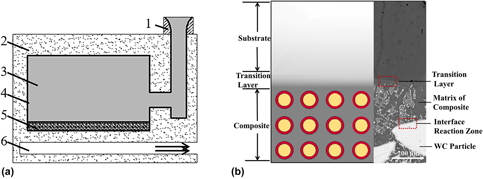
In this study, cast tungsten carbide particle/steel matrix surface composites were fabricated using a vacuum evaporative pattern casting (V-EPC) infiltration process. Through thermal shock tests at 500 °C, the initiation and propagation of cracks at the interface of the composites were investigated. Owing to the mismatch in the coefficients of thermal expansion (CTE), cracks tended to appear at the interface reaction zone (IRZ) between the particles and the matrix. Because there was also a difference in the CTE between the composite and the substrate, the cracks propagated rapidly along the transition layer (TL) between the composite and the substrate, and finally connected to form macro-cracks. Based on the stress analysis and calculation, the maximum thermal stress at the TL was 63.4 MPa, while the maximum thermal stress at the IRZ was 38 MPa. It could thus be inferred that the TL is the weak link under thermal fatigue. In addition, the experimental results were verified and found to be in good agreement with the calculations.
Iron carbide (Fe1−xCx) thin films were successfully grown by plasma-enhanced atomic layer deposition (PEALD) using bis(N,N′-di-tert-butylacetamidinato)iron(II) as a precursor and H2 plasma as a reactant. Smooth and pure Fe1−xCx thin films were obtained by the PEALD process in a layer-by-layer film growth fashion, and the x in the nominal formula of Fe1−xCx is approximately 0.26. For the wide PEALD temperature window from 80 to 210 °C, a saturated film growth rate of 0.04 nm/cycle was achieved. X-ray diffraction and transition electron microscope measurements show that the films grown at deposition temperature 80–170 °C are amorphous; however, at 210 °C, the crystal structure of Fe7C3 is formed. The conformality and resistivity of the deposited films have also been studied. At last, the PEALD Fe1−xCx on carbon cloth shows excellent electrocatalytic performance for hydrogen evolution.
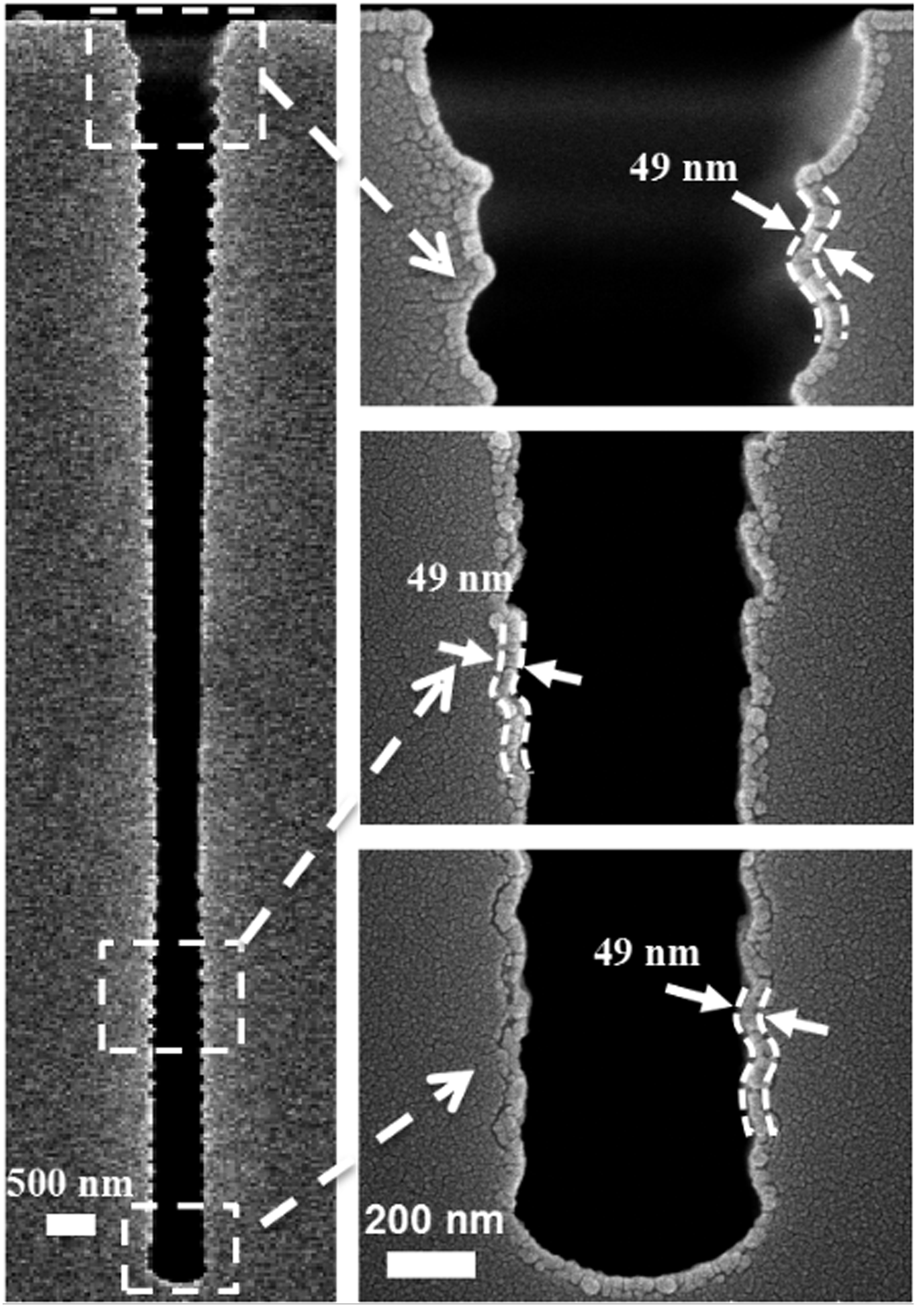
Nanostructures are considered to have great potential and are widely used in energy storage and sensing devices, and atomic layer deposition (ALD) is of great help for better nanostructure fabrications. ALD can help to preserve the original properties of materials, and, meanwhile, the excellent film quality, nanoscale precise thickness control, and high conformality also play important role in fabrication process. To enhance the performance of energy storage and sensor devices, ALD has been used in directly fabricating active nanostructures, depositing protective passivation layers, etc. ALD is a convenient technique which has been widely engaged in energy-related fields including electrochemical conversion and storage, as well as in sensor and biosensors. The related research interest is increasing significantly. In this review, we summarize some of the latest works on ALD for batteries, supercapacitors, and sensors, and demonstrate the benefits of ALD comprehensively. In these devices, different materials are deposited by ALD under different conditions to achieve better battery performance, higher supercapacitor capacitance, and higher sensitivity. This review fully presents the strengths of ALD and its application in energy storage and sensing devices and proposes the future prospects for this rapidly developing technology.
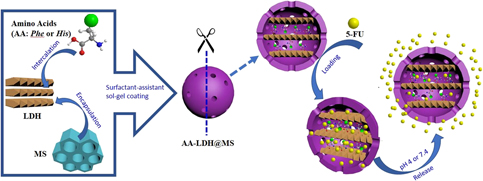
A nanoparticle-based drug delivery system is first established by mesoporous silica encapsulating amino acid–intercalated layered double hydroxide (LDH) to construct nanocomposites AA-LDH@MS. The amino acids including phenylalanine (Phe) and histidine (His) with aromatic groups are intercalated into LDH as the cores Phe-LDH and His-LDH. These nanocomposites AA-LDH@MS display multispaces of the interlayer spaces of LDH and porous channels of mesoporous silica to load drugs. Moreover, amino acid molecules provide the interaction sites to improve effectively loading amounts of drugs. 5-Fluorouracil (5-FU) is used as the cargo molecules to observe the delivery in vitro. The results indicate that the maximum loading amounts of drugs are up to 392 mg/g at 60 °C for 12 h in the nanocomposite Phe-LDH@MS. All the nanocomposites exhibit the sustained release of 5-FU at pH 4 and pH 7.4. The Korsmeyer–Peppas model is used to fit the kinetic plot of the drug release in vitro, which concludes that 5-FU release from AA-LDH@MS belongs to Fickian diffusion.
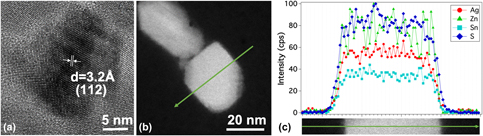
Sputtered thin films of Ag2ZnSnS4 (AZTS) have shown promising semiconducting properties in spite of the films containing SnS2, SnSx, or ZnS as impurity phases. In this study, reaction pathways were identified to produce single-phase AZTS nanoparticles as precursors for forming dense, single-phase films. The morphology, composition, and phase evolution during nanoparticle formation in an oleylamine-based solvothermal reaction process were determined using surface-enhanced Raman spectroscopy (SERS) and transmission and scanning transmission electron microscope (TEM/STEM). The reaction pathways for AZTS nanoparticles were found to be different from Cu2ZnSnS4 nanoparticles in oleylamine, which may explain the difficulty in creating (Ag, Cu)2ZnSnS4 solid solutions in the nanoparticle synthesis. The single-phase AZTS nanoparticle films have a band gap (2.16 eV) slightly higher than sputtered films, and photoelectrochemical (PEC) measurements demonstrated a current of 0.1 mA/cm2 in K2SO4 solution even as porous nanoparticle films, suggesting the potential of this material in solar energy conversion when converted into a dense film.
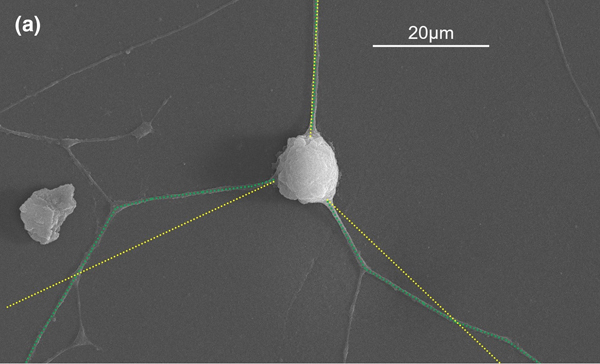
The authors have shown recently that the neurite extension by neuronal PC12 cells is greatly impacted by aerogel topography. Indeed, the average neurite length of PC-12 cells grown on aerogels is greater than that in cells cultured on control substrates. Here, the authors report on the first experimental study focused on the design and development of a plasmonic photo-patterning technique for collagen-coated mesoporous aerogel biomaterials. Herein, the authors have produced specific patterns on silica aerogels by performing precise plasmonic photo-patterning on liquid crystal-coated aerogels. The authors report the methodology employed to create a collagen–liquid crystal gel mixture imprinted with precise plasmonic photo-patterns. PC12 cells plated on these patterns did attach and survive and followed the spatial cues of the pattern to align themselves in a similar pattern.
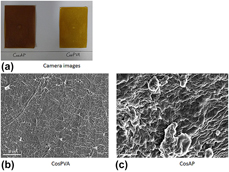
Fabrication of simulated buccal mucosa could minimize sacrificing the animals (rabbits and pigs) to extract buccal mucosa for in vitro testing of buccal formulations. Novel artificial buccal mucosa was fabricated using eggshell membrane, extracted from poultry egg, and bovine submaxillary mucin. Chitosan oligosaccharide (COS)–based blended films were fabricated using solvent casting technique. Patches of equal dimensions were cut precisely from whole film. COS-based blended patches were analyzed for their physicochemical and mechanical properties. These patches, proposed to be used for buccal drug delivery, were tested for their mucoadhesion timing using the artificial mucosal membrane. The COS–PVA–blended patch displayed better mucoadhesion than chitosan oligosaccharide–alginate–blended film with the fabricated simulated buccal mucosa. Novel buccal mucosa mimetic–surface such as the one reported in this research article could prove to be a very useful tool in minimizing the use of excised animal buccal mucosa for mucoadhesion testing of buccal drug delivery formulations. Novel COS-blended films were fabricated as a proposed mucoadhesive buccal drug delivery vehicle.
The new compound (4R)-methyl-3-(1-(4-chlorophenyl)-1H-1,2,3-triazole-4-carbonyl)thiazolidin-4-carboxylate was synthesized by the 1,3-dipolar cycloaddition reaction between (4R)-methyl-3-propionyl-thiazolidin-4-carboxylate (1) and 4-chlorophenylazide using the click chemistry approach. Molecular characterization was carried out by infrared spectroscopy and mass spectrometry. The X-ray powder diffraction study determined that the title compound crystallized in an orthorhombic system with unit-cell parameters a = 20.876 (2) Å, b = 12.111 (1) Å, and c = 6.288 (9) Å. The volume of the unit cell is V = 1589.7 (2) Å3. All measured diffraction maxima were indexed and are consistent with the P2221 space group (No. 17). No detectable impurities were observed.
In this work, the authors report a facile method for the preparation of brush-structured nanocomposites of sulfur–polyaniline–graphene oxide (S–PANI–G) that were used for cathode materials of lithium–sulfur batteries (LSBs). The morphology and structure of composite were studied by x-ray photoelectron microscopy, transmission electron microscopy, scanning electron microscopy, and x-ray diffraction analysis. The nanocomposites exhibited good electrochemical performance involving good rate performance, high capacity, and promising cycling stability. The good performance of S–PANI–G results from the synergistic effect of sulfur, polyaniline, and graphene oxide. The composite and method reported here pave the way for the design and synthesis of novel cathode materials for LSBs.
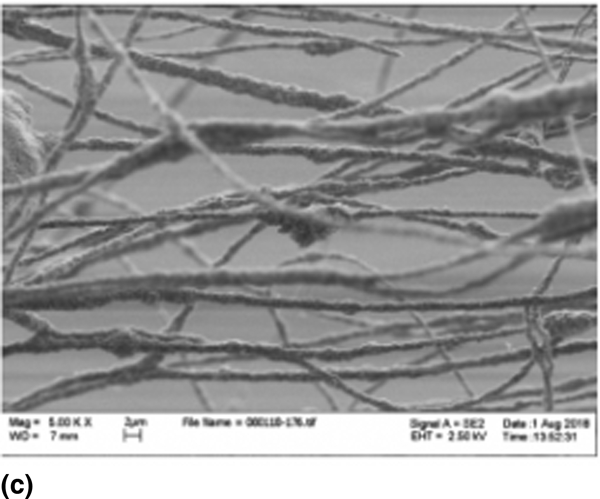
Polymer electrolyte membrane fuel cells (PEMFCs) provide a renewable source of energy through the redox reaction of hydrogen and oxygen gas; however, operation relies on a costly platinum catalyst layer. This study investigates how electrospun catalyst layers may be employed to increase the surface area:volume ratio for catalysis to optimize PEMFC performance. When preparing electrospinning solutions, several base polymers were evaluated in varying concentrations to optimize fiber formation, with poly(acrylic acid) found to be preferable at a 12 wt% concentration. Ultimately, PEMFCs with electrospun catalyst layers achieved a 108% increase in power output compared to those air-sprayed.
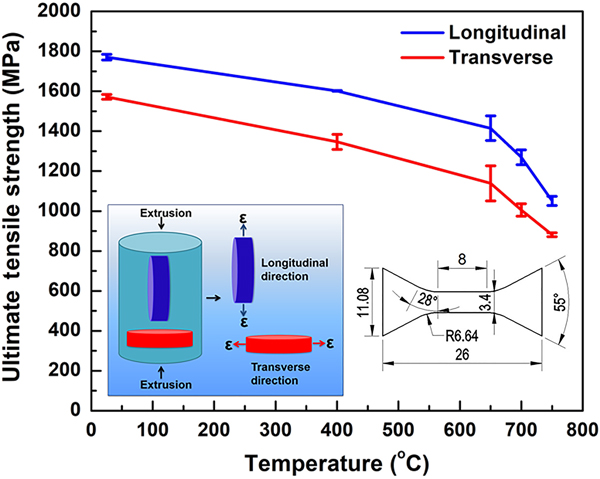
The authors report an unexpected anisotropy in tensile properties of a polycrystalline nickel-base superalloy after hot extrusion. The tensile strength of longitudinal specimens (parallel to extrusion direction) is 170–276 MPa higher than that of the transverse counterparts at the temperature ranging from 25 to 750°C. Microstructural investigation excludes possible causes leading to this phenomenon such as variation in the grain size, texture, and γ′ precipitates in two orientations. However, further transmission electron microscopy observation reveals that plenty of twins uniquely exist in longitudinal tensile samples after deformation which are probably responsible for the mechanical gap between the two orientations.
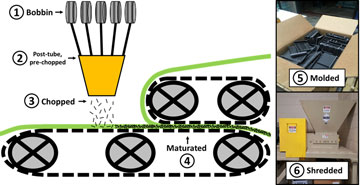
Research into pyrolysis-based recycling of sheet molding compounds (SMCs) to recover glass fiber for reuse has indicated significant pre-existing tensile strength damage in the shredded recycling input materials. This loss in mechanical durability inherently hurts the value proposition of recycled glass fiber by limiting reuse of the fiber for reinforcement. In this study, the mechanical properties of glass fibers at each step in the first lifecycle of an SMC material are measured to assess the extent of cumulating fiber damage prior to recycling and identify potential causes of this degradation to maximum fiber tensile performance.