To save content items to your account,
please confirm that you agree to abide by our usage policies.
If this is the first time you use this feature, you will be asked to authorise Cambridge Core to connect with your account.
Find out more about saving content to .
To save content items to your Kindle, first ensure no-reply@cambridge.org
is added to your Approved Personal Document E-mail List under your Personal Document Settings
on the Manage Your Content and Devices page of your Amazon account. Then enter the ‘name’ part
of your Kindle email address below.
Find out more about saving to your Kindle.
Note you can select to save to either the @free.kindle.com or @kindle.com variations.
‘@free.kindle.com’ emails are free but can only be saved to your device when it is connected to wi-fi.
‘@kindle.com’ emails can be delivered even when you are not connected to wi-fi, but note that service fees apply.
Chronological studies are pivotal for understanding different dimensions of the past. Latin America has embraced various archaeometric dating methods, including radiocarbon (14C) dating. This article reviews the development and challenges of radiocarbon databases and datasets in Latin America, analyzing their integration with global projects and highlighting regional disparities. While global databases like IntChron and CARD often marginalize Latin American data, local projects such as ArqueoData, AndesC14, MesoRAD, SAAID and ExPaND focus on regional needs. The fragmentation of radiocarbon data across publications, technical reports, and limited-access archives hinders accessibility and collaboration. This article underscores the necessity of transitioning from static datasets to dynamic web applications, utilizing APIs to enhance data interoperability, incorporating FAIR principles (findability, accessibility, interoperability, and reusability). This article proposes embedding Latin American initiatives within stable, local institutions to ensure sustainability, establishing classification standards for both radiocarbon dates and associated archaeological contexts. Interdisciplinary collaboration between archaeologists and computer scientists is crucial to developing robust, interoperable databases. By embracing these strategies, Latin America can bridge technological and economic gaps, strengthening its contribution to global archaeological research and fostering new insights into the region’s past.
Plague and famine are two of the worst killers in human history. Both struck the Czech lands in the Middle Ages not long after each other (the famine of 1318 CE and the plague of 1348–1350 CE). The aim of our study was to try to relate the mass graves found in the vicinity of the Chapel of All Saints with an ossuary in the Kutná Hora–Sedlec site to these two specific events. For this purpose, we used stratigraphic and archaeological data, radiocarbon dating, and Bayesian modeling of 172 calibrated AMS ages obtained from teeth and bones of 86 individuals buried in the mass graves. Based on the stratigraphic and archaeological data, five mass graves were interpreted as famine graves and eight mass graves were interpreted as plague graves. Using these data and the calibration of the radiocarbon results of the tooth-bone pairs of each individual, we constructed the Bayesian model to interpret the remaining mass graves for which no contextual information was available (eight mass graves). In terms of Bayesian model results, the model fits stratigraphic data in 23 out of 34 cases and in all seven cases based on calibration data. To validate the model results on archaeologically and stratigraphically uninterpreted data, ancient DNA analysis is required to identify Yersinia pestis.
This article examines the challenges Indigenous communities face in safeguarding their intangible cultural heritage (ICH) in the digital age, using two case studies. Referring to the Te Hiku Media case, it analyzes the threat of data colonialism posed by corporate digitization projects. The article argues that existing legal frameworks provide limited protection for Indigenous ICH, prompting Indigenous communities to develop the innovative theory of Indigenous data sovereignty (ID-SOV). The Government of Nunavut–Microsoft partnership case highlights the benefits and drawbacks of public–private partnerships (PPPs) for Indigenous ICH. Key takeaways from both cases’ analysis lead to our proposal of integrating ID-SOV principles into PPPs to limit data colonialism risks and improve the sustainability of Indigenous ICH digitization projects. The article contends that implementing ID-SOV principles by design and by default in PPPs can empower Indigenous communities while leveraging the oversight of public actors and resources of private partners to safeguard Indigenous ICH through digital tools.
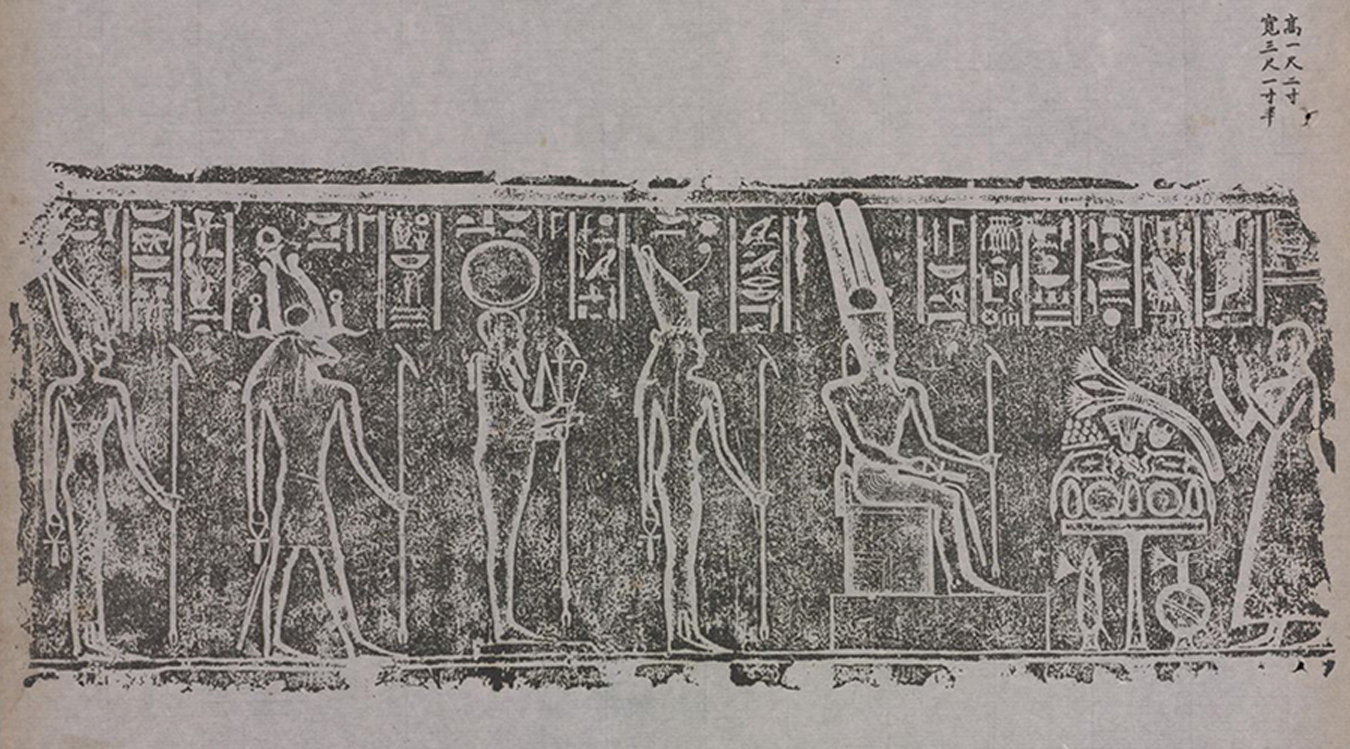
The Egyptian antiquities collected by the Chinese diplomat Duanfang at the beginning of the twentieth century were largely overlooked by Chinese scholarship until the early twenty-first century, when interest in translating the inscriptions grew. Yet the collection provides a window not just into the cultural history of Egypt but of China as well. By revisiting the history of Duanfang’s collection, the author examines how its perception was shaped by Chinese antiquarianism and the evolving archaeological and political landscapes of twentieth-century China. In doing so, they reveal new insights into the agency of the replica in archaeological theory and practice.
Since 2015, four non-invasive campaigns have surveyed the San José Galleon shipwreck in the Colombian Caribbean, providing valuable insights into the age and provenance of artefacts found on the seabed. Numismatic, archaeological and historical approaches have been employed to analyse a collection of gold coins recorded within this underwater context.
This study uses archival photos and data from lidar, geophysical surveys and excavations to help uncover the physical realities of two Second World War Nazi sub-camps, Czyżówek (AL Halbau) and Karczmarka (AL Kittlitztreben), in the Gross-Rosen network, now in south-west Poland.
From the perspective of the present, the economic development of preceding periods can seem linear and inevitable, guided into being by those who benefitted most from increasing commercialisation. Yet this majoritarian narrative belies the importance of the individual and the everyday, of adaptation and creativity. Here, the author explores the potential of a minoritarian approach to entrepreneurship, in understanding medieval economic development. In tracing pottery-exchange networks as a representation of commercial development, they argue that the entrepreneurial actions of institutions and potters generate insights into economic development that challenge linear narratives, framing it as a patchwork of sociomaterial relations.
As I pass the 40-year mark of work in cultural heritage and cultural heritage law, I am grateful for the opportunity to reflect on how the field has evolved since the mid-1980s. This reflection acknowledges the contributions of those who influenced the early development of this field and the way their work continues today through the scholarship and activism of their successors. Evolution on the international level was matched with domestic legal accomplishments in the United States—the world’s largest art market—with conclusive recognition of the principle of foreign state ownership to protect archaeological heritage, US ratification of the 1954 Hague Convention, and an expansion of US implementation of the 1970 UNESCO Convention. At the same time, threats to cultural heritage from armed conflict, other forms of violence, and climate-change-induced natural disasters continue, while the field has only started to reckon with the legacies of colonialism and imperialism often embodied in the large public collections in the European former colonial powers and those who purchased cultural objects from them. This article sets out four areas of cultural heritage law in which we have not succeeded sufficiently and the questions that remain for future generations to resolve.
The recent identification of an outlying cemetery at the Maya ceremonial centre of Ceibal, Guatemala, is providing new insights into the Preceramic to Middle Preclassic transition in the Maya lowlands, c. 1000 BC. Identified within the Amoch Group complex and dating to c. 1100–800 BC, the use of a dedicated area for the dead is not previously documented in this region for this period. Here, the authors argue that the emergence and subsequent disappearance of this practice was likely interwoven with social change, involving the adoption of ceramics, increasingly sedentary lifeways and, ultimately, the creation of monumental ceremonial centres.
Section 106 of the National Historic Preservation Act requires US federal agencies and their applicants to consider historic properties affected by their proposed actions. Guided principally by architectural historians and archaeologists throughout the 1980s, Section 106 reviews focused on identifying discrete structures and sites and then evaluating them in terms of dominant society aesthetics, histories, and sciences. By the 1990s, Section 106 participation by consulting Tribes and other cultural resource stewards obliged federal agencies to address a broader spectrum of historic properties and values. Agencies soon began using cultural landscape studies and other research and consultation tools to “match” historic property identification and assessment processes to the scale and complexity of proposed undertakings. The Section 106 review for the SunZia interstate transmission line (2009–2024) shows that the federal government has yet to consistently meet mandates to identify and assess elements other than archaeological/architectural historic properties. Our surveys of historic preservation professionals and available cultural landscape studies underscore disconnections between practitioner preferences for and the federal agency conduct of cultural landscape studies. They also highlight standards to use in evaluating the adequacy of cultural landscape studies. We recommend six attributes as essential to all cultural landscape study designs, methods, and applications in the Section 106 process.
The use of ochre in burials at the Neolithic site of Khok Phanom Di, Thailand, was a broadly inclusive practice; however, ∼18 per cent of burials did not contain powdered ochre pigment. On closer examination it was found that the majority of those without ochre were perinates. When compared to other burials in the cemetery non-ochred perinate burials were typically shallow scoop cuts, without grave goods. However, not all perinates were buried in this manner; ∼38 per cent of perinate burials contained ochre and were more similar in type and contents to the rest of the cemetery. This paper examines the differences between perinate burials with and without ochre, considering the wider bioarchaeological context. The findings show that perinates without ochre were on average smaller skeletally than those with pigment. This along with comparisons to other sites directs the focus to ‘the point of mortality’—whether the individuals were stillborn or neonatal deaths. This is explored through comparative data and a cross-cultural discussion of perinatal personhood and social acknowledgement. The interment of non-ochred individuals within the community cemetery demonstrates community inclusion but an exclusion from ‘normal’ burial rites (ochre, grave goods, etc.), demonstrating a lack of individual acknowledgement—a grey area between inclusion and exclusion.
The prehistoric rock-art record of the Altai Mountains (western Mongolia) extends from the late Palaeolithic (c. 12,000 bp) through the end of the Bronze Age (c. 2800–800 bp) and into the early centuries of the Iron Age (late first millennium bce). Within that ancient tradition, the image of the elk (Cervus elaphus sibiricus) had the longest duration of any animal imagery; but over the millennia it underwent radical change. Beginning as an image reflecting a primitive, monumental realism, it was transformed into an expression of vital naturalism in the Bronze Age. By the end of the Bronze Age, the image began to shift into a highly stylized emblem of status, clan identity, or perhaps gender, finally degenerating into a wolf-like beast. Its transformations may be correlated with regional environmental change and resulting social adaptations. This essay presents the history of the elk image in Altai rock art and seeks to understand its transformation at the interface of north and central Asia. While focused on one pictorial tradition from one geographical region, this analysis demonstrates how materials derived from the expressive record of human culture offer critical insight into the manner in which societies evolve psychologically and not just archaeologically in response to extended environmental change.
Ancient stone monuments may have marked the locations of key ritual activities for pastoralist communities. This project is the first to employ multi-method geophysical survey to identify additional features of construction and use at the Chalcolithic-period Rajajil Columns site in northern Saudi Arabia.
The radiocarbon (14C) specific activity was measured in vegetation and atmosphere in Ramnicu Valcea, Romania. On the sampling location operates a nuclear installation, namely “Experimental Pilot for Separation of Tritium and Deuterium” (PESTD), a semi-industrial installation designed for the detritiation of heavy water moderator of CANDU reactors and a 315 MW coal-fired thermoelectric power plant. Because one of the important releases of PESTD is gaseous radioactive effluent, the baseline of radiocarbon was a must for the environmental program. On the other hand, due to the Suess effect, a relative decrease of the radiocarbon-specific activity on a local scale is expected as a result of the dilution of the carbon isotopic mixture by fossil carbon. All the measurements were done by liquid scintillation counting and direct absorption method. It can be observed that the specific activity of 14C was similar for both types of samples investigated. The variations encountered are generally within the limit of uncertainty associated with the 14C. The average radiocarbon-specific activity recorded has the following values: 0.226 ± 0.016 Bq/gC for the vegetation and 0.228 ± 0.016 Bq/gC for the atmosphere. The results have a clear decreasing trend, but due to local influence caused by the continuous production of fossil CO2, cannot be observed 14C seasonal variations. A strong correlation between radiocarbon activity in air and vegetation was highlighted.
This article concerns the practice of bed burial, a rare funerary custom found in some sixth- to early tenth-century ad graves ranging from southern Germany to Scandinavia and England. Existing research has often overlooked the diversity of bed burials, focusing mainly on the reconstruction of the beds, their style, the status of the deceased, and the objects associated with them, without examining the broader implications of the ritual. Here, the author explores the variations in bed burials, their relationship to the deceased, the artefacts linked with them, and the surrounding contexts. Her study is based on a new assessment of every aspect of the ritual, including the location of the graves, the biological and social identity of the deceased, the burial assemblage, and whether the beds were complete. This approach aims to demonstrate that the practice of bed burial should be addressed in the plural.
The recovery of nearly 250 burials at the El Olivar site provided the opportunity to address questions regarding the groups inhabited coastal settings of the semiarid north of Chile between the 800 and 1540 AD. Stable isotopes of carbon, nitrogen, and oxygen were analyzed from 60 human samples. Radiocarbon (14C) analyses were conducted in 20 samples from camelids and 42 human samples. Subsequently, a sample of 25 individuals exhibiting diagnostic cultural features of the Las Ánimas Cultural Complex (LACC) and the Chilean Diaguita Culture (CDC) was selected for the purpose of assessing differences in their diet and mobility and clarifying their chronology. The δ13C and δ15N values obtained revealed the existence of a small group of individuals (n=6) with a diet based on C3 plants and terrestrial protein, and another major group (n=33) with values compatible with the consumption of C4 plants and marine resources. Four of the six individuals of the small group presented Ánimas diagnostic features, and in the major group were identified both Ánimas and Diaguita individuals. The δ18O values exhibited a similarity between the Ánimas and Diaguita individuals, suggesting coastal-to-inland mobility in both groups. Calibrated 14C dates indicate that El Olivar was occupied for a period of nearly 380 years, spanning between 1150 and 1536 AD, and that between the 1300 and 1400 AD, Ánimas and Diaguita individuals coexisted at El Olivar. These findings call into question the current thought that the CDC emerged from the LACC around 1000 AD, and that both represent different archaeological entities.
The early medieval stronghold of Grzybowo, Wielkopolska, was a large complex, comprising two strongholds and an extensive outer settlement, with numerous elite movable monuments. Excavations suggest that this was an important site for the ruling dynasty, with analogies for this form of central stronghold found in Ruthenia and Bohemia.
A system of abandoned ridge/earthwork features covers a large swathe of the Shaṭṭ al-ᶜArab floodplain in southern Iraq, standing as testament to a period of agricultural expansion in the past. Until now, the chronology of these features has been surmised from limited textual evidence that relates their construction to slave labour during the early Islamic period associated with the ‘Zanj rebellion’. This article presents the first absolute dates from this ridge system, demonstrating that these features were in use for a substantially longer period than previously assumed and, as such, they represent an important piece of Iraqi landscape heritage.