To save content items to your account,
please confirm that you agree to abide by our usage policies.
If this is the first time you use this feature, you will be asked to authorise Cambridge Core to connect with your account.
Find out more about saving content to .
To save content items to your Kindle, first ensure no-reply@cambridge.org
is added to your Approved Personal Document E-mail List under your Personal Document Settings
on the Manage Your Content and Devices page of your Amazon account. Then enter the ‘name’ part
of your Kindle email address below.
Find out more about saving to your Kindle.
Note you can select to save to either the @free.kindle.com or @kindle.com variations.
‘@free.kindle.com’ emails are free but can only be saved to your device when it is connected to wi-fi.
‘@kindle.com’ emails can be delivered even when you are not connected to wi-fi, but note that service fees apply.
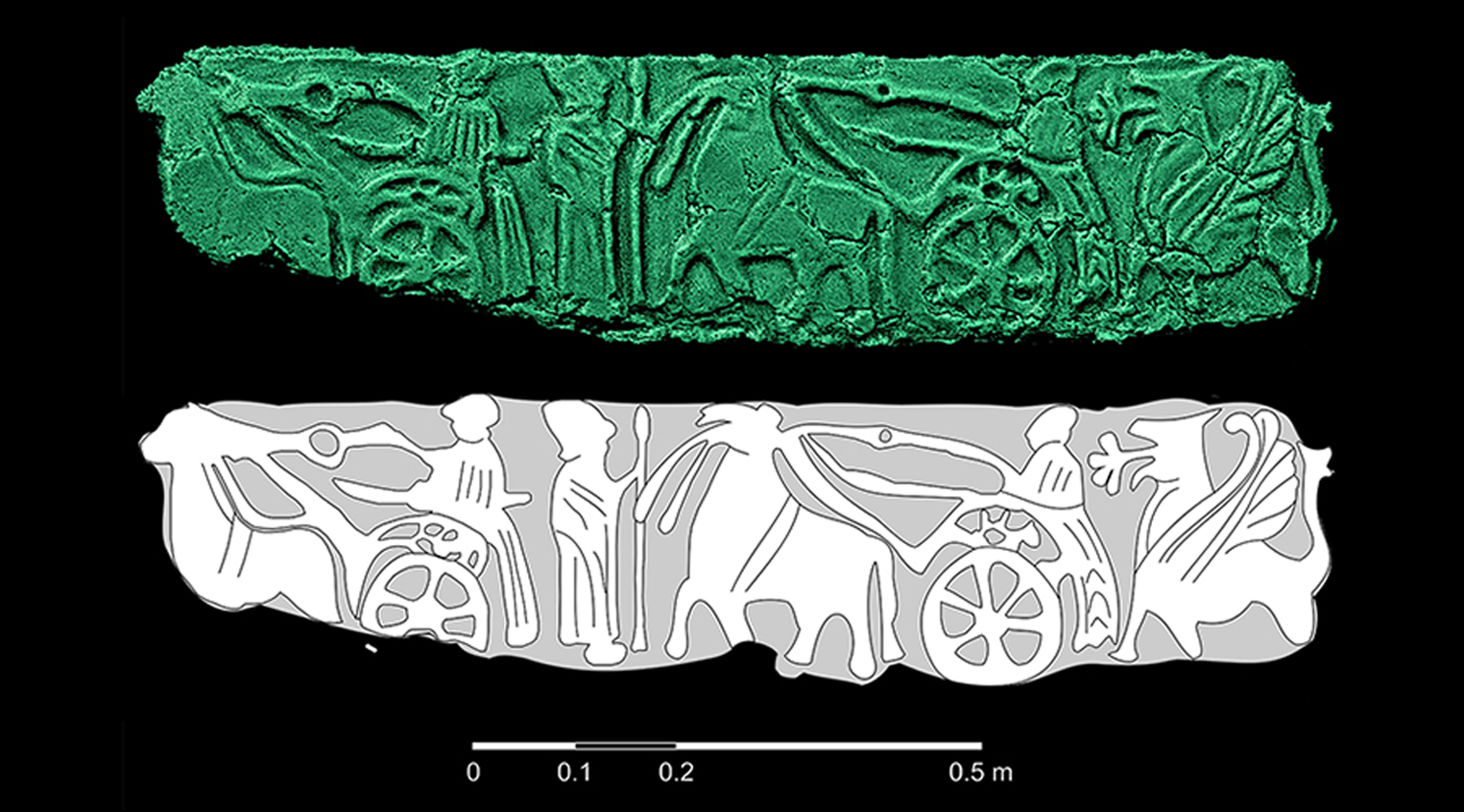
The Late Iron Age (fourth–first centuries BC) district of Carpetania in the Central Iberian Peninsula is traditionally cast as a marginal territory, where cultural development is primarily attributed to acculturation, diffusionism and imitation. Here, the authors critically re-evaluate published evidence from the site of El Cerrón, Illescas, focusing on a decorated terracotta relief with a ‘Mediterraneanising’ style to argue that the local elite was not a passive actor in history. Instead, the community at El Cerrón actively engaged in the cultural dynamics that shaped not only the Iberian Peninsula but also the wider Mediterranean basin during this crucial period.
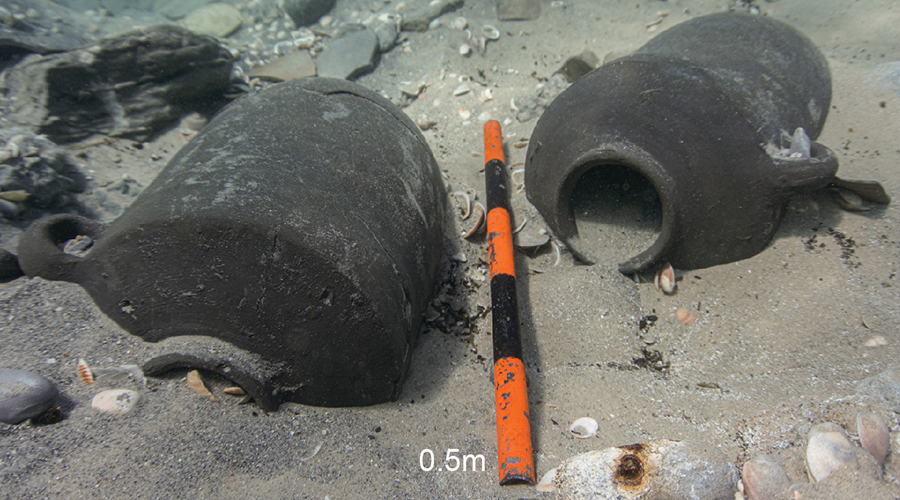
Connectivity and trade dominate discussions of the Mediterranean Bronze and Iron Ages, where artefacts travelled increasing distances by land and sea. Much of the evidence for the means through which such networks operated is necessarily indirect, but shipwrecks offer direct insights into the movement of goods. Here, the authors explore three Iron Age cargoes recently excavated at Tel Dor on the Carmel Coast, the first from this period found in the context of an Iron Age port city in Israel. Spanning the eleventh–seventh centuries BC, these cargoes illuminate cycles of expansion and contraction in Iron Age Mediterranean connectivity and integration.
Despite a notable increase during recent decades in the application of anthropological approaches and archaeometric analyses in Neolithic and Bronze Age archaeology in China, studies relating to the post-Qin period of Chinese history (after 221 BC) continue to focus on social centres and elite tombs, and to rely on historical texts to validate archaeological discoveries. This article examines the extent to which archaeometric analyses might be applied more beneficially in post-Qin contexts and explores current barriers to the wider undertaking of these methods within Chinese archaeology.
The tradition of beating bark to produce cloth probably emerged in South China before spreading to Island Southeast Asia with the Austronesian cultural expansion (5000–3500 BP). Type IV barkcloth beaters found on the island of Sulawesi mark a technological leap from mainland examples and the discovery of 16 such beaters at Buttu Batu pushes the local adoption of this type back to c. 2111–1933 BP. Combining archaeological examples with extensive ethnographic research, the authors document an early-twentieth-century diversification in the patterning of grooves on type IV beaters, revealing a unique innovation aimed at improving barkcloth quality in response to increasing competition.
The concept of the African Renaissance expresses the idea that the African continent is experiencing a crucial phase of its history and will overcome the current challenges of poverty, inequality, and violence to achieve cultural, political, and economic renewal and a more just and equitable order. First articulated by the Senegalese historian Cheikh Anta Diop (1923–1986) in the aftermath of World War II, the concept encourages African peoples to take pride in their rich cultural heritage and long history, to take charge of their lives and rebuild the economy, and to set Africa as a significant player in international affairs. For the African Union, the continent should take advantage of and build on its rich diversity of cultures in its quest for prosperity.
The safeguarding of African heritage and diversity can benefit local communities, promoting intercultural dialogue and peace as well as sustainable development. This article thus aims to spark conversation about Africa’s heritage and identify some methods to realize the African Renaissance. First, it discusses the legacies of colonialism. Second, it explores the promise of cultural decolonization. Third, it scrutinizes the concept of the African Renaissance, its historical roots, and its current legal significance. Fourth, it investigates the linkage between the African Renaissance and sustainable development. Fifth, it focuses on how the World Heritage Convention protects African sites of cultural and natural outstanding value and whether such protection is adequate or could be improved. Finally, it offers some preliminary conclusions.
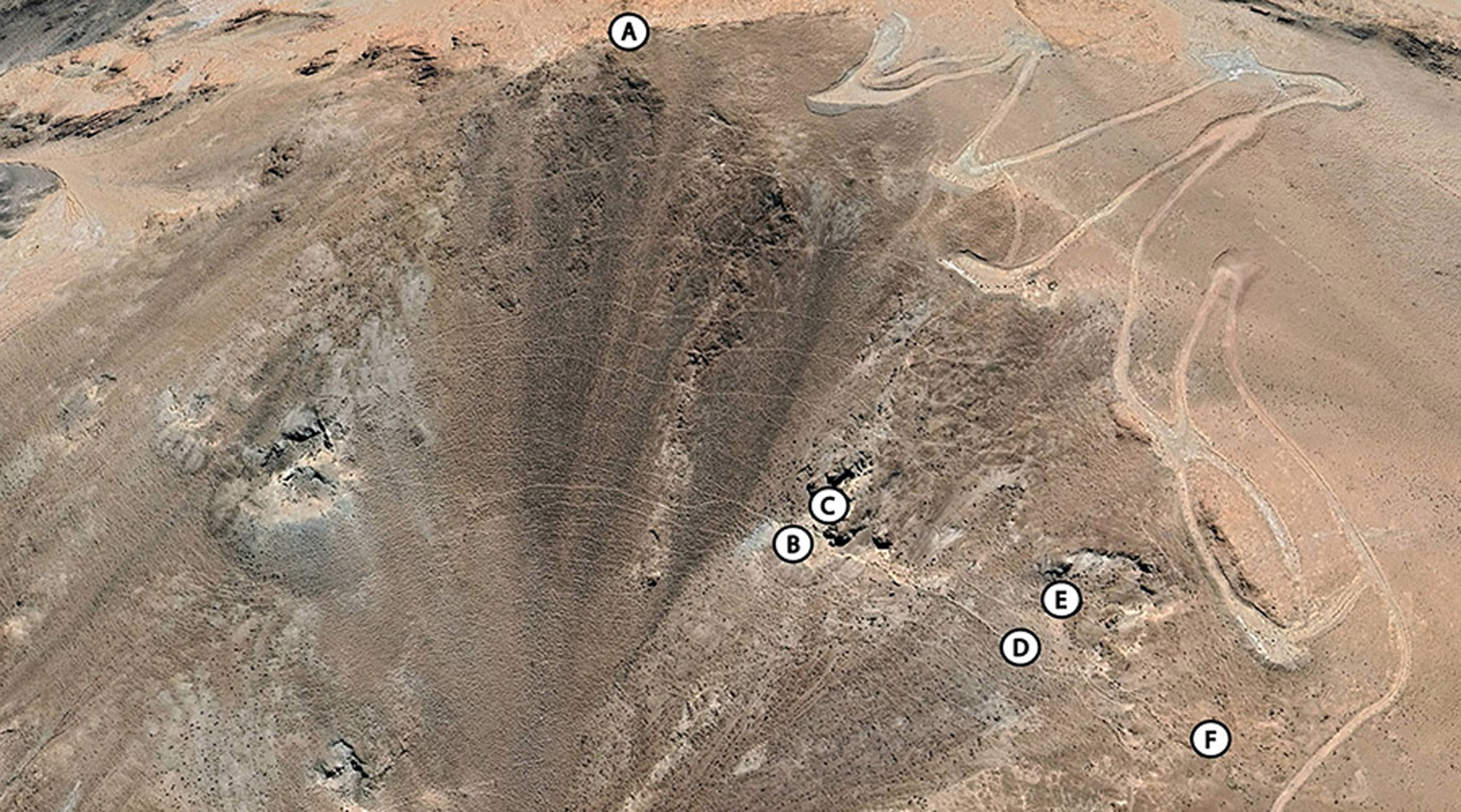
Multidisciplinary research is deepening our understanding of high-altitude pastoralism on the Tibetan Plateau, but such studies also highlight a strong riverine bias in the location of excavated sites. In a move to address this skewing of the dataset, the authors propose the exploration of modern highland corrals with shovel testing and test excavations as a labour-efficient survey method, streamlined through the identification of potential sites from satellite imagery. Three prehistoric sites were successfully located using this method, the earliest dating to the first millennium BC, encouraging the reconsideration of current survey strategies in Tibet and other mountainous regions.
This article builds a framework for understanding both the observable and unobservable features of art fairs and how those structures are created through material and sensorial elements. It draws on the concept of atmospheres and broader discussions of affect to analyze the transgressive thrill present at art fairs, presenting an art fair as a space of commerce masked in the appearance of a museum-like space. This article explores how emotions and lures are structurally produced within the fair and how people are encouraged to collect. Within this space, a desire is cultivated via an opportunity to transgress the familiar norms of the museum environment, which fosters the development of a relationship between a person and an object. In this deeply affective space, rational responses to objects with unclear origins may be suspended. Through focusing on why people collect and how desire is generated we can better understand markets, including criminal markets, for highly desirable objects.
The ancient Zapotec city of Monte Albán (Oaxaca, Mexico) has been a focal point of numerous archaeological studies. It has long been presumed that grave offerings included a number of botanical elements such as maize. In this study, we examine botanical remains from vessels and sediment samples collected from mortuary contexts to provide new information on those meaningful rites. We considered the relationship between botanical mortuary offerings and the social status of interred individuals at the Zapotec site. We determined that there were no clear relationships between the status of the deceased and plants used as offerings. This study demonstrates the potential for future paleoethnobotanical studies targeting mortuary contexts and public rituals to provide novel information regarding ancient lifeways and beliefs.
Oasis communities across Central Asia were key to the emergence and maintenance of the ancient Silk Roads that spanned Eurasia from the late second century BC, yet our understanding of early interaction networks in this region is limited. Multi-isotopic analysis of human teeth from the Zaghunluq Cemetery, southern Xinjiang (sixth century BC to first century AD) now suggests that oasis communities established intricate exchange networks, forming strong ties with other nearby oases and mountain pastoralists and weak ties, facilitated through in migration, with more distant regions. These diverse connections, the authors argue, made possible cultural exchange across the challenging geography of eastern Central Asia.
This article contributes to the debate on illicit antiquities and deterrence. First, I briefly examine what has been written about deterrence in the literature on illicit antiquities. Second, I review the criminological research literature on deterrence to define the concept and explain its mechanics; that is, how, according to the best state of current knowledge, deterrence “works” to persuade people not to commit crime. Third, I consider what this criminological knowledge base means for deterrence in the field of illicit antiquities. Deterrence remains a developing idea, rich with practical implications for crime prevention but also harboring some profound unresolved questions about precisely what drives human action in certain contexts. Nonetheless, we can aim to gain a more rounded understanding of the concept than has previously been applied to illicit antiquities studies.
The sacralisation of mountains played an important role in the expansion of the Inca Empire into the south-central Andes during the mid-second millennium AD. Here, the authors compare archaeological material from sacralised mountains in north-western Argentina, highlighting not just the shared attributes of high-altitude sites but also the diversity of ways in which Inca dominion over the mountains could be materialised. Focusing on Mount Inca Viejo, in the Argentine province of Salta, the authors further explore the characterisation of sacred mountains and the significance of mining and mineral acquisition as a motivator for Inca expansion.
In this paper, we examine cases where radiocarbon (14C) dates are incompatible with dates produced by other established archaeological methods. We present results from nine bones that we sampled from tombs in Phoenician sites in Sicily. These bones produced radiocarbon dates conflicting with established dates of finds in the associated tombs. These discrepancies, particularly in tomb dates, pose a serious problem, as they suggest that the finds may be disconnected from the buried individuals, challenging the fundamental premise of studying excavated tombs. To put our findings in a broader context, we also present other cases of discrepancies found in recent publications and note some common observations throughout these studies. Our questions and observations arise from the significant implications that radiocarbon dating has for our research on Phoenician ancient DNA, as these conflicts impact our understanding of the potential migration and movement of Phoenician people throughout the Mediterranean.
Cultural objects are sold via global, public networks, where market stakeholders rely on the services of other actors such as academics, authenticators, and restorers to facilitate and legitimate this trade. This article will build on Neil Brodie’s examination of the role scholarly facilitators play in the illicit trade in cultural objects by exploring the harmful consequences of such scholarship, using the case studies of Emma Bunker and Mary Slusser as examples. This article argues that those of us with intellectual authority and control interacting with cultural objects should reflect on the broader social context of our research and the consequences of our knowledge production—and reckon with the exploitative and colonial foundations of the knowledge we build on. Ongoing ethical awareness and reflexivity need to be integrated into our practice to support and foster social justice. The article ends with some recommendations on how to incorporate these ideas into academic practice.
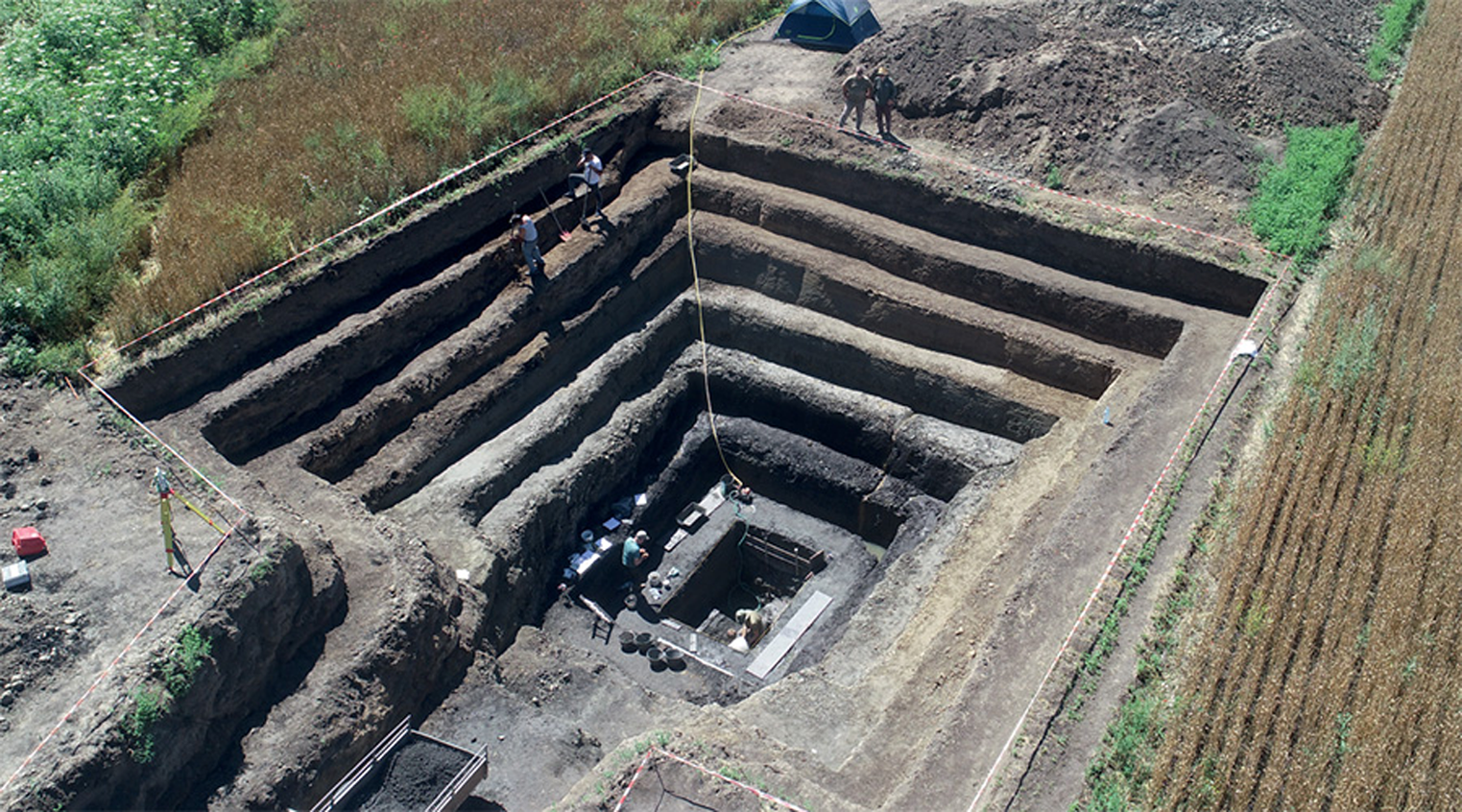
Efforts to drain Lake Maliq, in the Korça Basin of eastern Albania, during the 1940s and 1950s revealed waterlogged wooden structures that were excavated in the 1970s and identified as Neolithic pile-dwellings. Fifty years later, new excavations are exposing the exceptional organic preservation and complex stratigraphy of the Dunavec site. Through a combination of dendrochronological and radiocarbon dating, the authors provide the first secure absolute dates for the structures, placing early activity at the site within the beginning of the fifty-third century BC and creating a chronological anchor for our understanding of Neolithic communities in the western Balkans.
We present reservoir effects on shells of species Terebralia palustris and Marcia spp. that were recovered during archaeological excavations at the multi-period site of Tell Abraq, Sharjah Emirate, UAE (This paper was presented at the combined 24th Radiocarbon and 10th Radiocarbon & Archaeology International Conference, Zurich, Switzerland, Sept. 2022.). The site was inhabited during the mid to late Holocene. It is situated in a lagoonal environment with former mangrove forests at the Arabian Gulf coast of southeast Arabia. Due to availability in the immediate proximity, shellfish played an important role for the local subsistence throughout the site’s occupation. Tell Abraq provides a well-defined and stratigraphically controlled archaeological context for investigations on the reservoir effect of the two species chosen. Crucial for the determination of the marine reservoir effect is comparison with contemporaneous terrestrial carbon samples. We discuss the data in a wider context with respect to results obtained at other sites.
This paper investigates samples of local cooking and utilitarian vessels from Roman contexts at Corinth. Based on macroscopic investigation, the vessels had been assigned to a single ware, but a recent instrumental neutron activation analysis showed that more than one fabric was present. To examine possible variations in shape and function as well as changes of shape over time, selected samples were subjected to thin section petrography, combined with refiring tests and elemental analysis (WD-XRF). The results reveal two main fabrics and one minor one with mineralogical compositions consistent with the geology of the north-eastern Peloponnese; one of them is tentatively linked to Sikyon and another has been identified as a regional product in earlier petrographic studies in the area.
This paper contributes to the understanding of Early Bronze Age sealing practices in the Cyclades, focusing on recent findings from the settlement site of Koimisis on Therasia. It discusses two seal impressions stamped on a jar handle from an Early Cycladic II context. One aligns with the broader Aegean glyptic tradition, while the second could represent the earliest evidence associated with developments tied to the broader context of script formation in the Aegean. The study analyses the context of the find, the iconography and the style of the seal impressions, and explores the associations and meaning of the signs. Additionally, the petrographic analysis of the pottery fragment provides insights into the vase’s origin and the broader interpretative context of the impressions.