To save content items to your account,
please confirm that you agree to abide by our usage policies.
If this is the first time you use this feature, you will be asked to authorise Cambridge Core to connect with your account.
Find out more about saving content to .
To save content items to your Kindle, first ensure no-reply@cambridge.org
is added to your Approved Personal Document E-mail List under your Personal Document Settings
on the Manage Your Content and Devices page of your Amazon account. Then enter the ‘name’ part
of your Kindle email address below.
Find out more about saving to your Kindle.
Note you can select to save to either the @free.kindle.com or @kindle.com variations.
‘@free.kindle.com’ emails are free but can only be saved to your device when it is connected to wi-fi.
‘@kindle.com’ emails can be delivered even when you are not connected to wi-fi, but note that service fees apply.
This study concerns prehistoric amber networks in north-eastern Iberia, emphasizing its distinct exchange dynamics compared to other regions of the Iberian Peninsula. Baltic amber dominated assemblages in this area from the Late Neolithic to the Bronze Age, contrasting with the prevalence of Sicilian amber in southern Iberia, or Cretaceous Iberian amber in the northern region. The findings underscore the region’s connection to southern France, with the Pyrenees serving as a cultural conduit, unlike the river Ebro, which acted as a boundary. Here the authors present the results of a Fourier transform infrared spectrometry (FTIR) analysis of twenty-one amber beads, primarily from collective burials. Eighteen were made of Baltic succinite. Baltic amber may have begun to arrive as early as 3634–3363 cal bc, and continued to be used until the Late Bronze Age. Exceptions included a unique spacer-bead made of gum and two bolus pigments misidentified as amber. The results highlight Iberia’s regional diversity in raw material sourcing and exchange, reflecting distinct sociocultural dynamics and challenging linear narratives of Iberian prehistory.
Analysis of use-wear and chemical composition of five early Bronze Age halberds from Muszkowo reveals that they were crafted over several casting events and meticulously finished, then subjected to use before their final deposition.
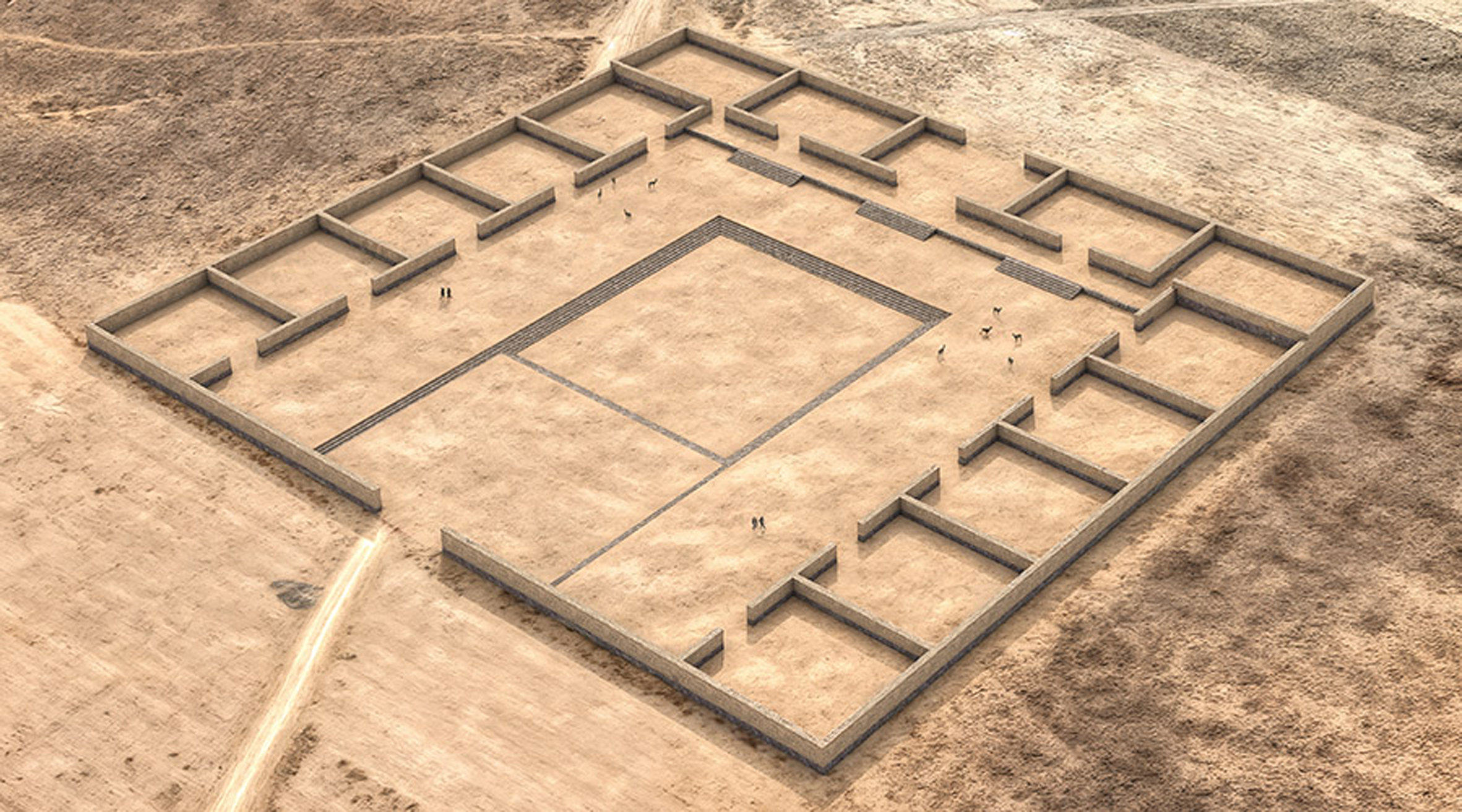
The nature and extent of the Tiwanaku state expansion in the Andes during the second half of the first millennium AD continues to be debated. Here, the authors report on the recent discovery of an archaeological complex 215km south-east of Tiwanaku, where a large, modular building with an integrated, sunken courtyard strongly resembles a Tiwanaku terraced platform temple and demonstrates substantial state investment. Constructed, the authors argue, to directly control inter-regional traffic and trade between the highlands and the eastern valleys of Cochabamba, the complex represents a gateway node that effectively materialised the power and influence of the Tiwanaku state.
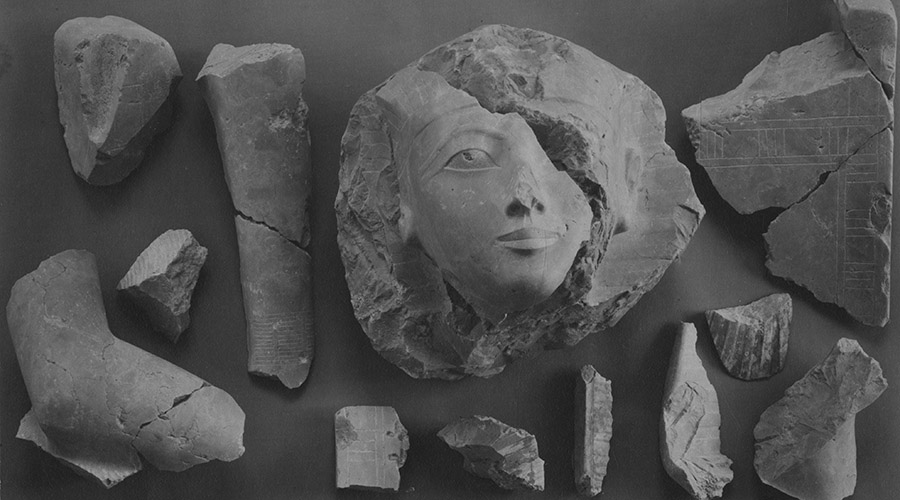
The statuary of Hatshepsut, who ruled Egypt during the Eighteenth Dynasty, is believed to have been targeted for violent destruction by Thutmose III, her successor. Yet the condition of the statues recovered in the vicinity of Hatshepsut’s mortuary temple at Deir el-Bahri varies considerably and many survive with their faces virtually intact. Through the examination of archival material from the original excavations, the author offers an alternative, more utilitarian, explanation of the treatment of these statues. Rather than outright hostility, much of the damage may instead derive from the ‘deactivation’ of the statues and their reuse as raw material.
This article explores the ancient city of Terracina, its strategic location, and its significant Roman sanctuary dedicated to Iuppiter Anxur. This youthful Jupiter, known for his beardless depiction, oversaw a sanctuary on Monte Sant’Angelo, which remains an important archaeological site. The location of the temple of Iuppiter Anxur, however, despite extensive study over 150 years, has not been precisely identified. The site includes three terraces with structures such as the Great Temple and Terrace A, which features notable architectural and functional elements. Ongoing research since 2021 has aimed to uncover more about the site’s development and its cultural importance. The article examines various hypotheses about the temple’s location and the role of Iuppiter Anxur within the sacred landscape of Terracina. For the first time, a comprehensive architectural reconstruction of the sanctuary has been proposed, offering new insights into its design and cultural significance. This reconstruction suggests a sophisticated architectural complex with important religious and cultural roles in ancient Terracina.
How did resource use, trade, and patterns of everyday life change at visita mission towns in the early decades of the colonial period in northern Yucatán, Mexico? We consider this question with an analysis of archaeological material assemblages from the site of Hunacti, occupied from 1557 to 1572. Household archaeology performed at three elite residences and investigations at the central plaza and church provide evidence of continuity, change, and metrics for assessing relative prosperity by which Hunacti can be compared to its contemporaries. This spectacularly built mission town evinces several signs of initial wealth and privilege enjoyed by the site’s Maya elites, but historical records reveal relentless persecution of these leaders for idolatry, which affected the longer-term prospects of the settlement. Our findings indicate the persistence of Maya religious rites through the site’s occupation, the importance of traditional Maya tools and technologies, and relative impoverishment (as conventionally measured). These patterns offer a profile of material life at a site that chose, ultimately, abiding resistance—and consequently, greater local self-sufficiency—in the face of accelerating external scrutiny and persecution.
Esta investigación, que conjunta el análisis de evidencia etnohistórica y arqueológica, aborda la presencia de la Triple Alianza en provincias de la Huaxteca meridional ubicadas entre Veracruz y Puebla, particularmente en aquellas que fueron afectadas de manera incisiva mediante ocupación territorial como lo fueron Tzicoac, Metlaltoyuca y Tetzapotitlan. Se hace énfasis en los aspectos geográficos de estas localidades pues la empresa militarista de intervención no fue fácil si se atiende a la dificultad de sus accesos (cuyas ubicaciones contaron con barrancas naturales, colinas bajas y cercos de piedra levantados para prevenirse en las guerras). Se explica cómo el dominio de Tzicoac, Metlaltoyuca y Tetzapotitlan permitió el control de redes comerciales hacia la costa y tierra adentro, posibilitando el acceso a otras provincias del norte y sur de la Huaxteca. Metlaltoyuca, además, pudo tener relevancia especial por ser el lugar donde tentativamente se molían las cargas de maíz tributadas para ser trasladadas ya procesadas hacia el Altiplano.
This article addresses a notable gap in the scholarship on rural settlement in northeastern Noricum (today’s Lower Austria/AUT), an area often overlooked despite its extensive archaeological sources. Employing underutilized data, the study scrutinizes settlement patterns in the Danube limes hinterland from the mid-1st to the late 5th c. CE. It identifies key centers – Arelape, Favianis, Augustianis, and Cetium – as essential nodes of functional regions in a diverse landscape of “integrated Roman rural complexes.” However, there was a shift from diversity to more centralized settlement in Late Antiquity, signaling the extensive decline of rural structures. The article examines several factors contributing to this decrease within a “system of ups and downs,” including demographic changes, geopolitical crises, and climatic fluctuations. Crucially, it situates these developments within a broader systemic framework, positing a multi-causal, long-term decline. The study’s findings provide vital insights into volatile societal changes and their implications for current global crises.
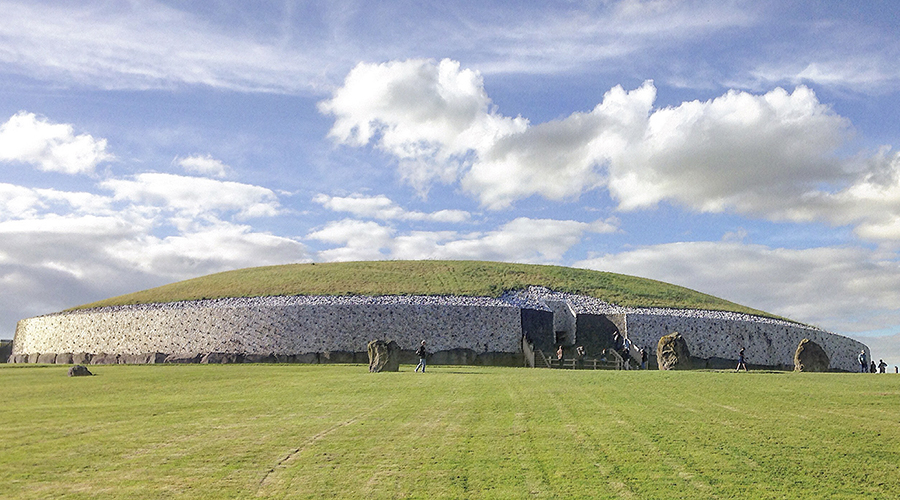
Recent genomic analysis of a skull fragment from Newgrange, Ireland, revealed a rare case of incest. Together with a wider network of distantly related passage tomb interments, this has bolstered claims of a social elite in later Neolithic Ireland. Here, the authors evaluate this social evolutionary interpretation, drawing on insecurities in context and the relative rarity of engendered status or resource restrictions in the archaeological record of prehistoric Ireland to argue that the status of individuals during this period is better understood through unstable identity negotiations. Inclusion in a passage tomb, while ‘special’, need not equate to a perpetual elite.
We present a dataset of 1,119 radiocarbon dates and their contexts for Oaxaca, Mexico, a best effort to include all published dates, plus hundreds of unpublished samples. We illustrate its potential and limitations with five examples: (1) dated stratigraphy in stream cutbanks show how aggradation, downcutting, and stability responded to global climate and human activities; (2) 14C samples from Late/Terminal Formative contexts allow interregional comparisons of temple and palace construction, use, and abandonment; (3) new 14C dates provide better understanding of events during the Late Classic/Epiclassic, a problematic time in the ceramic chronology; (4) individual Classic/Postclassic residential contexts had long durations—several hundred years; and (5) model constraints from other data permit refinement at times of calibration curve deviation, as during AD 1400–1600. We recommend further chronological refinement with best-practice standards, new samples, existing collections, and statistical modeling.
This article maps and analyzes the presence and non-presence of four classes of fineware ceramics in Late Roman Spain. It begins by mapping each of the classes spatially, before comparing their relative frequency in 15 specially constructed regions. It shows the inverse relationship between the presence of African Red Slip Ware and its local Spanish imitators; it then posits possible routes for Gallic imports and demonstrates that eastern Mediterranean imports were primarily restricted to the coast. It then analyzes the chronological pattern of ARSW imports across five horizons, showing a decrease in the number of sites that received these African imports in the mid-5th c. (60%) and the mid-6th c. (40%), especially inland and in the Guadalquivir Valley. The late 5th and early 6th c. was a period of stability and even expansion. By the late 6th c., however, few residents of post-Roman Spain had access to Roman-style dinnerware.