To save content items to your account,
please confirm that you agree to abide by our usage policies.
If this is the first time you use this feature, you will be asked to authorise Cambridge Core to connect with your account.
Find out more about saving content to .
To save content items to your Kindle, first ensure no-reply@cambridge.org
is added to your Approved Personal Document E-mail List under your Personal Document Settings
on the Manage Your Content and Devices page of your Amazon account. Then enter the ‘name’ part
of your Kindle email address below.
Find out more about saving to your Kindle.
Note you can select to save to either the @free.kindle.com or @kindle.com variations.
‘@free.kindle.com’ emails are free but can only be saved to your device when it is connected to wi-fi.
‘@kindle.com’ emails can be delivered even when you are not connected to wi-fi, but note that service fees apply.
In the Roman imperial worldview, masculine, civilized Rome saw a duty to control and care for uncivilized, feminine foreigners—a gendered power dynamic shared by more recent colonizing states as well. However, it is a methodological challenge to catch sight of the way such a worldview may have impacted colonial subjects. I examine the impact in Roman Britain and Gaul by applying a symbolic anthropological approach to a well-suited body of evidence, votive offerings: widely accessible and highly individual, each represents a single symbolic act. Taking up archaeological questions of material symbolism, I analyse the confluence of gender and offering material categories. Analysis of objects men and women offered at 10 sanctuaries in Britain and Gaul, and of the materials in which men and women were portrayed, reveals a permeability–impermeability binary: women are associated with breakable clay, porous bone and translucent glass, and men with strong, durable metal. This binary reflects Roman understandings of femininity and masculinity, shedding light on the fraught relationship between colonial rule and gendered understandings of the world.
The bulk organic-matter content of near-surface sediment is widely used for radiocarbon (14C) dating, despite often containing organic carbon (OC) older than the depositional age. Low-temperature combustion can mitigate the influence of old OC, producing ages closer to the depositional age. We developed a simple method to determine the 14C age of the low-temperature (<250°C) component of bulk sediment. Sediment samples from five Arctic lakes were heated up to 400°C, revealing that at 250°C, about half of the OC combusts, leaving behind the more recalcitrant fraction. We applied this method to 64 samples from late glacial and Holocene sediment cores, analyzing 14C and % OC in two aliquots: one heated at 250°C and one unheated. The low-temperature 14C age was calculated by difference using a two-component mixing model. Accuracy was assessed by comparing ages with macrofossils from 48 samples, and reproducibility was tested using a standard reference material. Results show that low-temperature combustion yields 14C ages with an interquartile range of 115 years, and with reproducibility on par with that of macrofossil dating. On average, the ages differ by 932 years from macrofossils, compared to a 2425-year difference for conventional bulk-sediment ages analyzed in this study. Accuracy improves for samples where the proportion of residual OC after heating is low. This practical and efficient method complements macrofossil dating, supports analysis of a large number of samples, and provides insights into sedimentary carbon cycling.
Antiquities in the Middle East region face various threats, including illicit trade, theft, and forgery. This research examines a leather manuscript obtained by the Palestinian Tourist Police following the arrest of an antiquities smuggler. The manuscript contains Phoenician inscriptions along with symbols such as the Menorah, Shofar, and a plant branch. Radiocarbon dating using accelerator mass spectrometry (AMS) techniques determined the manuscript’s date to be post-1950 CE. Therefore, the results indicate that the manuscript is a modern forgery, likely created for commercial purposes. Additionally, the text contains several grammatical errors, further supporting the conclusion that it is not an authentic historical artifact.
This study presents a comparative analysis of the radiocarbon dates obtained on paired samples of various organic materials extracted from a lake sediment core. AMS radiocarbon dating of bulk sediment, chironomid capsules, and Trapa seeds was conducted to assess whether systematic offsets exist in the dates obtained on material that are commonly used to develop chronological frameworks for lake-based paleoenvironmental research. The findings reveal significant discrepancies between 14C dates obtained on bulk sediment, chironomid capsules, and on the Trapa seeds used to develop a previously published age-depth model for a sediment core recovered from Deoria Tal, Garhwal Himalaya, India. The systematic offset between the bulk sediment, and to a lesser extent chironomid remains, and the Trapa seeds is attributed to the integration of allochthonous carbon in the bulk sediment, leading to older apparent ages. The 3.6‰ shift in the δ13C value of the bulk sediment at 252 cm is inferred to reflect an increase in the contribution of C4 plant matter to the lake. The increase in enriched δ13C organic matter, coincident with the increasing offset between the dates obtained on bulk sediment and chironomids, and those obtained on the Trapa seeds, between 800 and 400 cal BP, was likely driven by anthropogenic land use changes, as evidenced by the four-fold increase in Cerealia-type pollen during this interval. This study underscores the necessity of selecting appropriate materials for radiocarbon dating to ensure accurate chronological reconstruction and highlights the potential of using chironomids remains to develop robust radiocarbon chronologies for lake sediment records.
Quantifying marine reservoir effects (MREs) across time and space is crucial for establishing accurate archaeological chronologies, including the activities of past hominines. Although the northern Iberian Peninsula shows a high density of Upper Paleolithic sites and marine shells are frequently found in these assemblages, quantification of MREs in this coastal region remains limited. We performed Bayesian modeling of radiocarbon measurements from both terrestrial (Capra pyrenaica, Cervus elaphus and other herbivores unidentified at species level) and marine (Littorina littorea Linnaeus, 1758 and Patella vulgata Linnaeus, 1758 taxa) archaeological samples recovered from the Tito Bustillo cave (Asturias, Spain) in order to determine the ΔR values for northern Iberia during the Lower Magdalenian period (ca. 20–17 ka cal BP). For the time span between 18.6 and 18.2 ka cal BP we estimated ΔR values of –298±44 14C yr and –495±122 14C yr for the periwinkle L. littorea and the common limpet P. vulgata, respectively. This finding has significant implications for future archaeological research in the northern Iberian Peninsula, as researchers must apply distinct ΔR values depending on the mollusk species selected for radiocarbon dating. Furthermore, the consistency between our calculated ΔR value for P. vulgata and previously recorded data for the same taxon from a neighboring coastal region (Cantabria, Spain) suggests remarkable stability in the marine environment of this area during the Lower Magdalenian period.
We combine Indigenous and Western scientific ontologies to explore the deep history of pinyon pine in the Holocene Great Basin. We address 61 Theft of Pine Nuts (TPN) oral histories transcribed over the last 152 years. Contemporary Paiute, Shoshone, and Wá∙šiw storytellers still tell these narratives, which five Indigenous coauthors heard growing up. Considered judiciously and in concert with independent corroboration, these traditional oral histories (often dismissed as “myths”) potentially convey significant historical landmarks. Four themes emerge: (1) pine nuts have been a driving force in Indigenous Great Basin lifeways for millennia, (2) TPN oral histories pinpoint homelands beyond which pinyon trees grow today, (3) TPN narratives encode shifting animal biodiversity, and (4) massive ice barriers (likely dating to the Late Pleistocene) thwarted pine-nut thieves. We seek out elements encoded in oral histories that reflect pinyon-pine ecology and pinyon as a long-term vehicle of survivance among Indigenous Great Basin communities. Our findings reflect Roger Echo-Hawk’s (2000:90) wise counsel that “written words and spoken words need not compete for authority in academia, nor should the archaeological record be viewed as the antithesis of oral records. Peaceful coexistence and mutual interdependence offer more useful paradigms for these ‘ways of knowing.’”
The East African coast has long been recognized as a cosmopolitan region, where different cultures and peoples met and exchanged ideas, goods and knowledge. The culture that developed there from the seventh century ce was shaped by these relations, often referred to under the term Swahili, and many of the coastal residents engaged in Islamic practice, long-distance trade, conspicuous consumption of valued goods, and spoke a common language. This paper investigates the presence of slaves and migrants from the East African interior, through pottery assemblages uncovered at two eleventh- to fifteenth-century ce sites in northern Zanzibar: Tumbatu and Mkokotoni. These are groups of people not usually discussed in relation to medieval Swahili towns, and slavery has been especially difficult to study archaeologically on the coast. Through a material culture of difference, I argue that enslaved and non-elite migrants can be recognized and allow for a fuller understanding of socio-economic and cultural complexity in Swahili towns.
Late Iron Age and Early Roman human depictions are often thought to display stylistic influences from European La Tène art and, later, Roman classical art. However, with the analysis of metal figurines attributed to the period, many reported to the Portable Antiquities Scheme, this paper argues that some of these artefacts could include stylistic influences from an earlier wooden tradition, which appears to originate in the Bronze Age. This paper therefore presents a new hypothesis regarding the development of anthropomorphic art in later Iron Age Britain, whilst also highlighting the importance of contributions of data from the Portable Antiquities Scheme.
Holocene environmental changes on the Paraty coastal plain in southeastern Brazil unfolded under dynamic sea-level fluctuations and shifting sedimentary regimes. Continental and marine palynomorph analyses, combined with calibrated radiocarbon dating from two sediment cores (JBS1 and JBS2), reveal a continuous depositional record spanning approximately 7800 to 1000 cal yr BP. Sandy mud and muddy sand sequences reflect variable coastal energy conditions through out the mid to late Holocene. Dinoflagellate cyst assemblages indicate a transition from open marine to marginal marine environments, with maximum marine influence between 7000 and 5000 cal yr BP. Terrestrial palynomorphs show a concurrent shift from grassland-dominated landscapes to mixed vegetation including ombrophilous forest taxa. A marked increase in pollen concentration in the upper stratigraphic layer suggests coastal progradation, enhanced continental input, and reduced marine influence during the late Holocene regression. Bayesian age-depth models demonstrate uninterrupted but variable sedimentation rates, with no evidence for erosional surfaces or depositional hiatuses. The results align with regional sea-level reconstructions and under score the role of transgressive-regressive processes and delta infilling in shaping vegetation dynamics. This integrated micropalaeontological and chronostratigraphic approach offers a robust framework for interpreting Holocene palaeoenvironmental evolution in tropical coastal settings.
Un oficial del ejército chileno relata que en 1879 los atacameños (o Lickanantay; actuales comunidades indígenas del interior de la región de Antofagasta, norte de Chile) realizaban procesiones al volcán Licancabur todos los años. Contrastando este relato, nos propusimos investigar el camino de peregrinación que utilizaban desde el pueblo de San Pedro de Atacama hasta dicho centro ceremonial. Entregamos aquí los resultados iniciales de esta investigación y evaluamos la profundidad cronológica de las peregrinaciones a las altas montañas, las que hasta ahora se han considerado una práctica originada con el estado Inka (ca. 500 aP), como el caso del rito de la Capacocha. Si bien nuestros datos son preliminares, son concluyentes en mostrar que las prácticas peregrinas andinas a las montañas son milenarias y que se desarrollaron desde hace unos 3.300 años, continuando hasta fines del siglo diecinueve en el caso del Licancabur. En la actualidad, sin embargo, no hemos logrado dar con ningún registro ni memoria oral que dé cuenta de procesiones desde los oasis sanpedrinos al volcán, develando una notable amnesia histórica colectiva, provocada en gran parte por la reciente delimitación de las fronteras estados-nacionales después de la Guerra del Pacífico.
Many archaeology graduate students pursue advanced degrees in the hope of undertaking an academic career. Job-listing websites often serve as the first port-of-call for students seeking academic positions. We examined tenure-track job advertisements over the past decade to gain insights into the academic job market for archaeologists. Using data from the community-edited Academic Jobs Wiki for Archaeology, we examined changes in the academic job market over time. We investigated the editing dynamics of the Wiki to understand its users and their biases. We then analyzed the text of 431 job ads posted from 2013 to 2023. Our analysis addresses the question of how archaeological topics, methods, and geographic regions specified in archaeological job ads have shifted over time. We also explored whether the labor burden for applicants has changed over time: do institutions request more information and documents from applicants at the initial stages of application, compared to a decade ago? Finally, we assessed the influence of sociopolitical factors on the changing focus of research topics in the field. We conclude with implications for archaeology students, graduates, and advisors seeking to understand the dynamics of the academic job market and the requirements of employers.
La reciente excavación arqueológica efectuada en el centro provincial inka de Tambo Viejo, en el valle de Acarí, Perú, resultó en el hallazgo de una pequeña construcción de forma rectangular y semisubterránea. En su interior encontramos hojas y semillas de coca en asociación con arena limpia. Esta evidencia sugiere que la pequeña construcción sirvió para el almacenamiento de las hojas de coca, las que habían sido cubiertas con arena limpia para garantizar su preservación. La arena tiene propiedades térmicas que crean condiciones relativamente frías y que son óptimas para la preservación de productos orgánicos.
In the Sámi worldview, reindeer herders perceive the herd as a social unit consisting of individuals who vary in characteristics and social roles. Age, sex, physical appearance, personality and other social roles are acknowledged and recognized by the herders, who maintain their relationships with animals in different ways within herding tasks. Archaeological data, too, show that ancient reindeer herders were in contact with different kinds of reindeer, including wild reindeer, working reindeer and ‘ordinary’ herd reindeer. This paper uses zooarchaeological and ethnoarchaeological perspectives to examine the variety of life on the hoof at two fourteenth- to seventeenth-century Sámi sites in northern Finland. Archaeological data and zooarchaeological analyses will be used to assess hunting and herding practices as well as the characteristics of herd structure. Ultimately, the aim of this paper is to examine critically and characterize the variety of the relations prevailing between reindeer and ancient Sámi herders, thus contributing both to the study of culturally specific ontologies and the analytical possibilities of archaeological research to understand such ontologies.
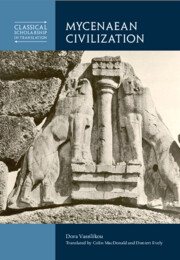
The Bronze Age of Greece was unknown until the end of the 19th century, when Heinrich Schliemann's excavations stunned the world by bringing to light the glamour of Mycenaean elite society. This book, by one of Greece's most distinguished archaeologists, provides a complete introduction to Mycenaean life and archaeology. Through both chronological and thematic chapters, it examines the main Mycenaean centres, the palaces and kingship, the social structure, writing, religion and its political implications, and the contacts and relations of the Mycenaeans with neighbouring countries, especially Asia Minor, Egypt, the coast of Syria-Palestine and Italy. Attention is paid to the distinctive Mycenaean art, including monumental architecture, gold and silver metalwork and jewellery, and the book is supported by over 300 illustrations. Dora Vassilikou concludes by examining the simultaneous catastrophes that brought the Bronze Age of the Eastern Aegean to its end and opened up a new era.
Archaeologists have long identified quarries as a ubiquitous part of the landscape in which precolonial Maya populations built their world. Yet, it is only recently that scholars have begun to move away from viewing these quarries simply as places where stones were extracted to recognizing them as important nodes in the social, political, and cultural fabric of the Maya Lowlands. The four articles in this Special Section discuss some of the most recent insights into the lives of those who intimately worked with limestone, inhabited the cratered landscapes created by its extraction, and crafted their worlds through the relationships forged and maintained in the practices of quarrying, processing, and utilizing this material. In this introductory paper, we set the scene by reviewing previous research and outlining the main approaches involved in the documentation, analysis, and interpretation of Maya limestone quarries and production loci. We continue with a discussion of the relevance of quarry investigations for the general study of precolonial Maya societies. We conclude with a brief overview of current methodological trends, followed by a look ahead to the ways in which researchers could take such investigations forward and integrate them into future research agendas.
The period between 450 and 350 BC is regarded as a time of significant social change during the European Iron Age, with numerous processes of transformation, instability, conflict, and mobility unfolding across the European continent. However, in contrast to other episodes of abrupt social transformation, this period has received considerably less attention: it has been understood as a starting point or a sudden change but not usually researched in its own right.
The present study begins by reviewing different European archaeological contexts, exploring how this century is usually interpreted as a significant break. Next, the focus will shift to a specific region, north-west Iberia, in order to identify changes in patterns of occupation and social dynamics. The primary objective is to examine the shift that occurred around 400 BC, identify any common pattern or trend across different regions, and assess long-term consequences. Finally, I propose a series of interpretations at different scales, aiming to raise some possible hypotheses for understanding the development of this brief yet eventful period.
One of the most significant engineering accomplishments of Maya civilization is Sacbe 1, a raised road connecting the ancient urban centers of Yaxuna and Coba. Using new lidar data in concert with excavation, epigraphic inscriptions, and landscape reconnaissance, we show that settlement and an urban experience emanated westward from Coba along the sacbe. The leaders of Coba—in particular, an ambitious seventh-century queen—used the sacbe to expand the political and cultural influence of their dynasty into the center of the peninsula while securing territory and resources. Gaps in the sacbe, precise delineation of its many curves, and examination of features near these curves call to mind several possible intentions governing its construction and use. Sites located along the causeway did not present significant barriers to the expansion of Coba. Sacbe 1 represents a uniquely urban space that expanded urban social networks into a rural hinterland while advancing state interests for territory and influence.
Ocmulgee Mounds National Historical Park, located in Macon, Georgia, is one of the most iconic cultural sites in the Southeast and is a Traditional Cultural Place (TCP) of the Muscogee Nation and other federally recognized Tribal Nations. Early work (1933–1941) revealed a network of earthen monuments and other features. Prior to our work, there were only two radiocarbon dates from the primary Native American occupation of Ocmulgee. Both were run in the 1960s—and only one is from the famous Earthlodge community building. These assays contributed to a general chronological assignment of the site to AD 1015. Our new dating program—including wiggle-matched radiocarbon dates from one of the timbers of this building—indicates a later construction for the Earthlodge and likely continuous occupation for other areas of the site, calling into question beliefs about Ocmulgee and its place in interpretative constructs. This work is a collaborative effort that includes Muscogee Nation, academics, National Park Service archaeologists, and private citizens. The results have implications for understanding not only the Muskogean-speaking people’s histories and their relationship to TCPs but also how we can begin to conduct archaeology in a way that strengthens descendants’ connections to ancestral homelands.
Medical prescriptions from ancient Mesopotamia occasionally provide instructions for patients to seek out the sanctuaries of deities in order to gain good fortune. Though these statements have been discussed since the 1960s, their exact function in the healing process remains unclear. The recent discovery of additional related symptom descriptions provides an opportunity to re-evaluate the function of seeking out places of worship in ancient medical therapy. This article collects and examines relevant prescriptions to contextualise and incorporate them properly into our reconstruction of medicine in the first millennium B.C.E. By analysing the terminology employed, particularly the word aširtu, referring to a place of worship, as well as the phrase dumqu/damiqtu amāru “to see good fortune”, indicating that seeking out places of worship could alter a patient’s fortune, the paper proposes that such instructions were intended to circumvent inauspicious days for healing. Alternatively, the visits may have granted the patient auspicious omens for diagnostic-prognostic purposes. Finally, the article discusses the context of the individual manuscripts to assign the practice of their contents to the two primary medical professions, namely the asû and āšipu.