To save content items to your account,
please confirm that you agree to abide by our usage policies.
If this is the first time you use this feature, you will be asked to authorise Cambridge Core to connect with your account.
Find out more about saving content to .
To save content items to your Kindle, first ensure no-reply@cambridge.org
is added to your Approved Personal Document E-mail List under your Personal Document Settings
on the Manage Your Content and Devices page of your Amazon account. Then enter the ‘name’ part
of your Kindle email address below.
Find out more about saving to your Kindle.
Note you can select to save to either the @free.kindle.com or @kindle.com variations.
‘@free.kindle.com’ emails are free but can only be saved to your device when it is connected to wi-fi.
‘@kindle.com’ emails can be delivered even when you are not connected to wi-fi, but note that service fees apply.
Services now account for a significant share of output and employment in the Philippines. It has become a major growth driver for the Philippine economy with rising growth rates in transportation, communication, storage, finance and IT-business process management. Together with a resurgent domestic manufacturing it is expected to continue to propel growth in the immediate term. The liberalization of the services sector will be important in order to bring in foreign direct investment (FDI) that will further strengthen its growth prospects. The logistics services comprise an important part of the service economy. This chapter examines the liberalization of the services sector, domestic regulatory reform and inflows of FDI to the logistics services. Liberalization is expected to lead to an infusion of capital, expertise, modern technology, and to expand market opportunities through FDI.
The chapter is structured as follows: after a brief introduction, Section 2 provides an overview of the services sector with a focus on maritime transport industry and freight forwarding services, which have the biggest share of the logistics industry. Data availability drives the discussion to these two components of the logistics sector. Section 3 reviews the policy measures for the development of the logistics services industry. The policy measures cover: (i) domestic policies and incentives, (ii) regulations, and (iii) unilateral, regional, as well as multilateral liberalization measures under ASEAN Framework Agreement on Services (AFAS) and General Agreement of Trade in Services (GATS). Section 4 discusses the overall enabling environment and inflows of FDI to the economy and, data permitting, the logistics sector. Section 5 identifies outstanding challenges and policy suggestions.
Gonzalez (2014) points out two aspects of the rise of services: first, because of improvements in information and communications technology (ICT), services have become more and more tradable, and second, domestically produced services serve as vital inputs to the production and trade of goods and services. Services are used and traded along with inputs into other economic activities, with both playing a key role in a country's competitiveness and participation in global value chains (GVCs) (Hollweg et al. 2014).
Brunei's economy is in the middle of a critical transition from an oil-rich and oil-dependent state to a diversified economy that is dynamic and sustainable. The rich natural endowment of oil resources has enabled Brunei to become one of the richest state in ASEAN and the world. According to IMF (2016a), based on Gross Domestic Product (GDP) (in PPP terms) per capita, Brunei is the fifth wealthiest state in the world and the second wealthiest in ASEAN in 2016, after Singapore which is ranked at number four in the world. The oil wealth, in turn, has enabled the country to depend primarily on oil for its revenue since there is no income nor sales tax for locals. Free education through university and subsidized housing is additionally provided for its citizens. It has also led to a dominant role of the state in terms of its control over the economy as well as employment, as an estimated 70–80 per cent of the Bruneians work for the government or government-linked institutions (Prusak 2016).
Economic diversification, although viewed in terms of a more balanced contribution of manufacturing and services, may in reality entail far more than that. It may necessitate, for example, a reconsideration of the country's fiscal budgeting and its ensuing implications on the extent of public goods provided by the state. The sharp drop in global price of oil in 2014 and after, had a detrimental impact on the state revenue, leading to a fiscal deficit of 16 per cent of its GDP for the fiscal year 2015/16 (Prusak 2016). Economic growth was also affected, with the country's annual growth falling into negative rates from 2013 to 2016. Current forecasts of future oil prices do not seem to indicate that there will be a price recovery to its peak value in 2010 (Knoema n.d.). Hence sustainability will require considering diversifying sources of fiscal revenue, tightening government expenditure and a restructuring of the privileges enjoyed by the citizens. Injecting dynamism into the economy will also require rebalancing the role of the state and the private sector in generating economic growth.
Trade in services plays an important role in the economic development of a country. The Asian Development Bank (ADB) in 2012 reported that the services sector of ASEAN member countries contributed around 28.1 per cent to 70.1 per cent to their Gross Domestic Product (GDP) from 2000 to 2007 respectively (Park and Shin 2012, p. 35). Among ASEAN countries, Singapore's services sector accounts for around 70.1 per cent of its GDP — highest in the region, followed by the Philippines (50.3 per cent), Malaysia (50 per cent), Thailand (47.7 per cent), and Vietnam (43.3 per cent). Wholesale and retail business has taken up the highest proportion in terms of value added in the services sector in ASEAN, followed by finance and insurance. Singapore has the highest employment share in the services sector, followed by Malaysia, the Philippines, Indonesia, and Thailand.
According to the ASEAN Economic Community (AEC) Blueprint 2025, ASEAN member states (AMS) are required to cooperate under the ASEAN Framework Agreement on Services (AFAS). AMS need to be compliant with the agreed upon liberalization programmes, procedures, and timeframe. One of the objectives of the AFAS is to decrease and eliminate restrictions to trade in services based on the twelve types of services, as classified in the General Agreement on Trade in Services (GATS). These are business services, communication services, construction services, distribution services, education services, environmental services, financial services, health and social services, transport and tourism services, leisure, cultural and sports services, transportation services, and other services that are not included in the above eleven fields, such as spa and beauty services.
According to the established protocols, if any AMS has any reservations or limitations with regard to any measures, these should be specified in the horizontal commitment table. These commitments are legally binding between members. Logistics and other related services fall mostly within the domain of the transport sector and that complicates matters as logistics is much more than just transport related services. Logistics in ASEAN has been identified as a priority integration sector with its own liberalization roadmap by 1 January 2013 (Tongzon 2011).
The use of a foreign direct investment (FDI)-led development strategy in Malaysia started in the early 1970s when the first Free Trade Zone was established to attract FDI for manufacturing development. With this early mover advantage, FDI flowed into labour-intensive manufacturing based on Malaysia's host country advantages at that time such as cheap labour, economic and political stability, relatively good infrastructure and supportive government policies. Malaysia became one of the top ten developing host economies by the early 1990s but its rapid manufacturing development led to the dissipation of its low wage advantage as wages rose swiftly in response to the excess demand for labour after full employment was attained.
In recognition of the loss in competitiveness in low wage manufacturing, the government promoted a manufacturing ++ strategy based on cluster development using services development as a means to move up the value chain in the Second Industrial Master Plan (IMP2) 1996–2005. Despite this, the advent of the Asian Financial Crisis (AFC) in 1997– 98 stalled the implementation of IMP2 by redirecting the focus of government policies from industrial development towards managing the financial crisis and its aftermath. Nevertheless, the focus on service sector development continued to be prioritized in the Third Industrial Master Plan (IMP3) 2006–20, where the services sector was targeted as the next engine of growth. The development of services has shifted from its role as a facilitator for deepening manufacturing development to the development of selected services with the logistics sector as one of the targeted services. Reportedly, the government allocated RM3 billion for the development of this sector under the IMP3 with a target of 36 million TEU or 751 million tonnes of cargo to be handled by Malaysian ports by 2020 (MPC n.d.).
The emphasis on services development continued in the New Economic Model (NEM) that was launched in 2010 for re-energizing economic development. Likewise, it is also the focus of development in the Economic Transformation Plan (2010) and the Tenth Malaysia Plan (10MP) 2011–15, although the logistics sector was not included among the 12 targeted sectors in these plans.
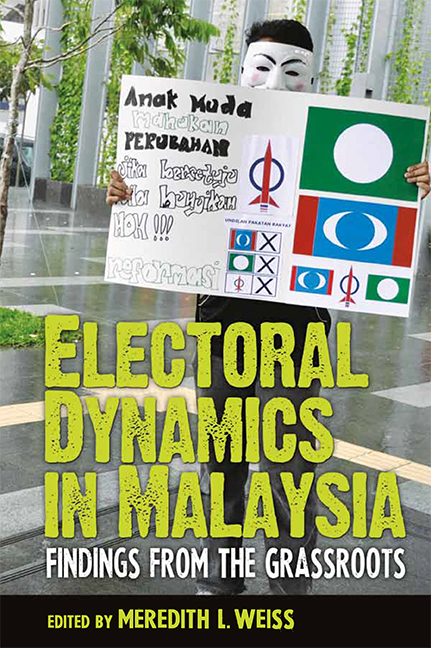
Malaysia’s 13th general election, held 5 May 2013, saw an unprecedentedly close race between the incumbent Barisan Nasional (National Front, BN) and Pakatan Rakyat (People’s Alliance, Pakatan) coalitions. For the first time in Malaysian history, a challenger coalition not only kept the BN from regaining the two-thirds parliamentary super-majority it had lost in the previous election, in 2008, but eked out a slim majority of the popular vote. While many Malaysian election is a big event, this one in particular merits close scrutiny. The present volume offers evidence and analysis with which to probe both the merits of common interpretations of who voted how, and why, and to suggest new readings on Malaysian politics.“This team of well-coordinated young scholars has produced what is, without any argument, the best, most comprehensive and broadly based study ever of Malaysian electoral politics. With a common approach and format, their local case studies highlight not the ‘wholesale’ politics of broad national party strategy but the ground-level ‘retail’ promotion of local candidates. Malaysian electoral politics is local, these closely-focused studies show. Because voters wish to ‘own’ their local representatives, and they can own only those whom they know and can in some measure control. This is how fresh, young eyes see the familiar ‘slog’ of this country's ground-level electioneering. Thanks to them we now have a new base-line for future Malaysian electoral studies.”— Clive Kessler, The University of New South Wales
How can public enterprises be made more efficient? Where should the line between public and private production be drawn? What can countries do to minimize the losses sustained by public enterprises? What is the current perception of the role of the state in production in Southeast Asia, and particularly in ASEAN? What are the political, legal and administrative constraints pertaining to the divestment and/or marketization of public enterprises? Is the situation in Southeast Asia different from that in Europe? These are some of the questions this volume tackles.
This work is the result of collaborative research between ASEAN and Japanese scholars. It consists of two parts. The first focuses on the experiences and technology development efforts in ASEAN by ASEAN researchers. The second focuses on Japanese researchers' perceptions on ASEAN needs and performances in technology development; and Japan's historical experience as a recipient of international technology transfer.
The Malay World (Alam Melayu), spanning the Malay Peninsula, much of Sumatra, and parts of Borneo, has long contained within it a variety of populations. Most of the Malays have been organized into the different kingdoms (kerajaan Melayu) from which they have derived their identity. But the territories of those kingdoms have also included tribal peoples – both Malay and non-Malay – who have held themselves apart from those kingdoms in varying degrees. In the last three decades, research on these tribal societies has aroused increasing interest.This book explores the ways in which the character of these societies relates to the Malay kingdoms that have held power in the region for many centuries past, as well as to the modern nation-states of the region. It brings together researchers committed to comparative analysis of the tribal groups living on either side of the Malacca Straits – in Indonesia, Malaysia, Thailand, and Singapore. New theoretical and descriptive approaches are presented for the study of the social and cultural continuities and discontinuities manifested by tribal life in the region.
With the rise of India and China, the rest of Asia is feeling the great impact of socio-economic changes and challenges created by these twin engines of progress and cooperation. The question on the minds of regional analysts is: Where is Russia in the midst of these vast changes? What is its role? How and why is a great power like Russia adopting such a low profile in the region? In what ways can ASEAN engage Russia?Currently, Russia's interaction with ASEAN is limited to dialogue between both parties; trade between both sides is categorized by Russian arms sales and ASEAN raw materials. This book sets out to help explain these anomalies and puzzles, by examining the state of relations between Russia and selected individual ASEAN countries. Several interesting ideas are offered, such as a proposal for a Russia-ASEAN FTA; building tourism/business bridges through budget airlines; and proposals to strengthen and energize the ASEAN-Russia dialogue.
European economic integration has gathered new momentum since Member States of the European Community (EC) signed the Single European Act in February 1986 aimed at creating a region with no internal frontiers and with free movement of goods and services, capital, labour and the professions by the end of the year 1992. Since then, numerous decisions have been made by EC heads of governments , the EC Council of Members, the EC Commission, the European Parliament and the twelve national parliaments in order to achieve this ambitious goal. As third world countries are increasingly becoming more aware of the emerging internal EC market, they are increasingly concerned about the implications and repercussions of this single European market on their future economic relations with the EC and the impact on their national economies.
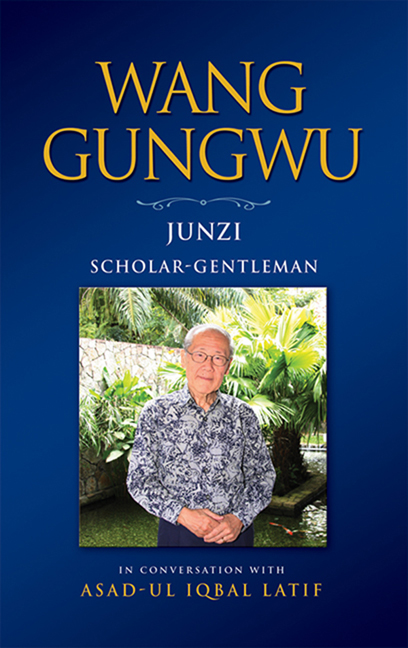
This book of interviews with Professor Wang Gungwu, published to felicitate him on his 80th birthday in 2010, seeks to convey to a general audience something of the life, times and thoughts of a leading historian, Southeast Asianist, Sinologist and public intellectual. The interviews flesh out Professor Wang's views on being Chinese in Malaya; his experience of living and working in Malaysia, Singapore and Australia; the Vietnam War; Hong Kong and its return to China; the rise of China; Taiwan's, Japan's and India's place in the emerging scheme of things; and on the United States in an age of terrorism and war. The book includes an interview with his wife, Mrs Margaret Wang, on their life together for half a century. Two interviews by scholars on Professor Wang's work are also included, as are his curriculum vitae and a select bibliography of his works.What comes across in this book is how Professor Wang was buffeted by feral times and hostile worlds but responded to them as a left-liberal humanist who refused to cut ideological corners. This book records his response to tumultuous times on hindsight, but with a keen sense of having lived through the times of which he speaks.
This study is a collaborative effort between officials and researchers from the transitional economy of Vietnam and researchers from the market economies of Japan and ASEAN. The first section covers aspects of the reform process undertaken in Vietnam as perceived by Vietnamese officials and scholars, and includes rare data and statistics. Section two deals with relevant aspects of the process of deregulation, liberalization and privatization experienced in Japan and the ASEAN countries. The final section provides recommendations for consideration by Vietnam's economic reform planners. Vietnam became a member of ASEAN on 1 July 1995. This study can possibly contribute to Vietnam's integration into the ASEAN economies.Contributors includePhan Van Tiem Nguyen Van Thanh Nguyen Ngoc Tuan Ngo Tri Long Ho Phuong Nguyen Van Huy Tran Van Nghia Le Dang Doanh Kiyoshi Nakamura Faisal R. Harahap Mukul G. Asher Ian Thynne
This volume consists of six substantive contributions covering a range of economic and political/security concerns including AFTA and intra-regional trade liberalization; foreign direct investment in Southeast Asia; EU-ASEAN relationships, ASEAN and the security of Southeast Asia, and ASEAN in the 21st century.
Excerpt: "We at the end of the Cold war can also draw some lessons from that experience. We can take encouragement from the Un Secretary-General Boutros-Ghali's blueprint to make the UN a more effective global security instrument. But the UN cannot do it all. There are vital supporting roles to be played by regional and sub-regional organizations in building a viable world order within the current UN framework. I must emphasize the contribution which these organizations can make to security not only in their own neighbourhoods but also globally though putting forward their own ideas on this subject in the international debate. ASEAN should do this with confidence, bearing in mind its successful record of solving the non-Cold War problems of state development of the post-1945 period.
The economic, political, strategic and cultural dynamism in Southeast Asia has gained added relevance in recent years with the spectacular rise of giant economies in East and South Asia. This has drawn greater attention to the region and to the enhanced role it now plays in international relations and global economics.
The sustained effort made by Southeast Asian nations since 1967 towards a peaceful and gradual integration of their economies has had indubitable success, and perhaps as a consequence of this, most of these countries are undergoing deep political and social changes domestically and are constructing innovative solutions to meet new international challenges. Big Power tensions continue to be played out in the neighbourhood despite the tradition of neutrality exercised by the Association of Southeast Asian Nations (ASEAN).
The Trends in Southeast Asia series acts as a platform for serious analyses by selected authors who are experts in their fields. It is aimed at encouraging policy makers and scholars to contemplate the diversity and dynamism of this exciting region.
• China suffers from a trust deficit in the region, and Southeast Asian countries have adopted hedging strategies, at varying degrees, aimed at diversifying their economic and strategic interests from Chinese investments and influence.
• Cambodia considers China as an important strategic and economic partner in providing performance legitimacy and as a countervailing force against its immediate neighbours.
• Cambodia's economic overdependence and power asymmetry have enabled China to exert significant political leverage over the Kingdom, especially on international issues affecting China's core national interest such as the South China Sea dispute.
• Local communities are discontented with some Chinese investment projects, especially hydropower plants and land concessions, which have infringed on labour rights and environmental protection.
• Given the public resentment and dynamic changes and transformations of politico-social environment in Cambodia, China needs to address the concerns and issues raised by local communities in order to sustain and enlarge its political and economic footprint. Promoting good corporate governance, as well as social and environmental responsibility, would help.