To save content items to your account,
please confirm that you agree to abide by our usage policies.
If this is the first time you use this feature, you will be asked to authorise Cambridge Core to connect with your account.
Find out more about saving content to .
To save content items to your Kindle, first ensure no-reply@cambridge.org
is added to your Approved Personal Document E-mail List under your Personal Document Settings
on the Manage Your Content and Devices page of your Amazon account. Then enter the ‘name’ part
of your Kindle email address below.
Find out more about saving to your Kindle.
Note you can select to save to either the @free.kindle.com or @kindle.com variations.
‘@free.kindle.com’ emails are free but can only be saved to your device when it is connected to wi-fi.
‘@kindle.com’ emails can be delivered even when you are not connected to wi-fi, but note that service fees apply.
Indonesia established diplomatic ties with Beijing in 1950 soon after the founding of the People's Republic of China (PRC). Relations began steadily but experienced a hiccup in 1959–60 due to Jakarta's ban on retail trade, which affected many ethnic Chinese in Indonesia. This resulted in a Chinese Indonesian exodus to China, but cordial relations were quickly restored when Sukarno returned to power. As the Indonesian Communist Party (PKI) grew to become a major actor, Sukarno moved further to the left: Sukarno's Indonesia and Mao Zedong's China eventually established the Jakarta–Hanoi–Beijing Axis during the 1962–65 period.
The struggle between the PKI and the Army led to the 1965 abortive coup and the dissolution of the PKI, followed by the fall of Sukarno and the triumph of the Army represented by General Suharto. Suharto considered the PRC, which supported the PKI, a major threat, and he froze diplomatic ties for twenty-three years until 1990. Tensions remained, however, and it was only after the fall of Suharto in 1998, and especially after the departure of President B.J. Habibie, that the relationship between Jakarta and Beijing became cordial again. Abdurrahman Wahid (Gur Dur) and Megawati Sukarnoputri started the improvement in relations. Both presidents were in office only for a short period, however, and more significant improvement took place only during the Yudhoyono presidency, which lasted for ten years, and in the subsequent Joko “Jokowi” Widodo period.
Indonesia today is a populous and resource-rich country but has a weak state with major economic and political problems. The Jokowi government has been eager to develop Indonesia's economy, while China now is an emerging superpower with surplus capital, goods and labour in need of overseas markets and development opportunities. It is obvious that there is mutual need between Indonesia and China. However, various issues in this cooperation remain, but in the short term, it appears that there will be more cooperation than competition.
THE YUDHOYONO PRESIDENCY (20 OCTOBER 2004 TO 19 OCTOBER 2014)
China in the twenty-first century has been eager to improve relations with Indonesia. Even before Yudhoyono was officially sworn in as president, the PRC had sent a high-level trade delegation to meet him at his residence in Bogor to discuss future cooperation.
The economic, political, strategic and cultural dynamism in Southeast Asia has gained added relevance in recent years with the spectacular rise of giant economies in East and South Asia. This has drawn greater attention to the region and to the enhanced role it now plays in international relations and global economics.
The sustained effort made by Southeast Asian nations since 1967 towards a peaceful and gradual integration of their economies has had indubitable success, and perhaps as a consequence of this, most of these countries are undergoing deep political and social changes domestically and are constructing innovative solutions to meet new international challenges. Big Power tensions continue to be played out in the neighbourhood despite the tradition of neutrality exercised by the Association of Southeast Asian Nations (ASEAN).
TheTrends in Southeast Asia series acts as a platform for serious analyses by selected authors who are experts in their fields. It is aimed at encouraging policy makers and scholars to contemplate the diversity and dynamism of this exciting region.
China's rising economic and political clout has created both opportunities and challenges for Southeast Asian countries. China's economic cooperation with Southeast Asian countries is multidimensional and multi-layered involving business collaboration, trade and investment, and financial assistance (grants and concessional loans), which are “fused indistinguishably”. Although the Chinese have claimed that their financial assistance has no strings attached, there is a close link between economic ties and political influence. Some regional analysts argue that “China's rise exerts a profound and complex impact on the political, security and economic contexts of Southeast Asia”. A Cambodia expert, Sophal Ear, puts it this way, “Taking the geopolitical interests of China in Southeast Asia into account, Chinese investment does not come free; political and economic strings tie those who benefit to the influence of China.”
Cambodia, a small and less developed country in the region, is largely perceived to be under strong influence from China due to the high level of economic dependency and power asymmetry — some valid, some overstated. China is now Cambodia's top donor and investor. It has strong interest in regional power projection and Cambodia is regarded as a core strategic partner. The analyst David Koh argues “having a strong ally in Cambodia means China occupying a central position on Indochina”.
In addition to economic interests, Cambodia has its own political and strategic calculation and interest in embracing China. Being geopolitically and geo-economically “sandwiched” by two big neighbours, Cambodia has China as a “protector” and counterweight to Vietnam and Thailand. China helps strengthen the legitimacy of the government, under the leadership of the Cambodian People's Party (CPP).
This paper provides an overview on Chinese investment in Southeast Asia in general and in Cambodia in particular. It discusses the perception of Cambodian stakeholders towards Chinese investment and its implications on Cambodia's domestic politics and foreign policy.
CHINESE INVESTMENT IN SOUTHEAST ASIA
The presence of Chinese commerce in Southeast Asia dates back to the third century when official missions were despatched to countries in the South Seas (Nanyang). These missions were then followed by Buddhist pilgrims and later, during the Song dynasty, by traders.
This book, a project of the ASEAN-China Study Programme of ISEAS, is designed to promote a better understanding between the people of the two regions as China continues to exert a dominant political and economic presence in Southeast Asia. Needless to say, scholars and academics from both sides have a significant role to play in terms of creating greater awareness of each other through research, workshops, and conferences. Whilst many universities and research institutes in the ASEAN region are conducting studies on various aspects of China, it is equally important for the Chinese counterparts to be fully engaged in Southeast Asian Studies in order to deepen their knowledge of the region for mutual benefit. The book traces the development of Southeast Asian Studies in China, discusses the current status of these studies, examines the problems encountered in the pursuit of these studies, and attempts to evaluate their prospects in the years ahead.
ASEAN has produced a plan of action on ASEAN Economic Integration, which is annexed to the Bali Concord II. To kick-start the ASEAN Economic Community (AEC), the plan of action provides numerous policy recommendations to be implemented over the next 1 to 2 years. At the track-two level, research institutes/think-tanks such as ASEAN-ISIS, ISEAS and CSIS (Jakarta) have contributed concept papers on the AEC and the ASEAN Security Community (ASC).Against this backdrop, the Institute of Southeast Asian Studies (ISEAS) organized the ASEAN Community Roundtable in Singapore from 4 to 5 June 2004. The main theme of the Roundtable was entitled "Towards Realizing an ASEAN Community".This Roundtable provided the opportunity for scholars and experts on ASEAN to "brain-storm" in a more comprehensive and integrated manner, the different ideas and proposals underpinning the process of community building that ASEAN is embarking upon. This report reflects the conclusions that emerged from the ASEAN Community Roundtable.
The expansion of the Cholas from their base in the Kaveri Delta saw this growing power subdue the kingdoms of southern India, as well as occupy Sri Lanka and the Maldives, by the early eleventh century. It was also during this period that the Cholas initiated links with Song China.Concurrently, the Southeast Asian polity of Sriwijaya had, through its Sumatran and Malayan ports, come to occupy a key position in East-West maritime trade, requiring engagement with both Song China to the north and the Chola kingdom to its west. The apparently friendly relations pursued were, however, to be disrupted in 1025 by Chola naval expeditions against fourteen key port cities in Southeast Asia. This volume examines the background, course and effects of these expeditions, as well as the regional context of the events. It brings to light many aspects of this key period in Asian history.Unprecedented in the degree of detail assigned to the story of the Chola expeditions, this volume is also unique in that it includes translations of the contemporary Tamil and Sanskrit inscriptions relating to Southeast Asia and of the Song dynasty Chinese texts relating to the Chola Kingdom.
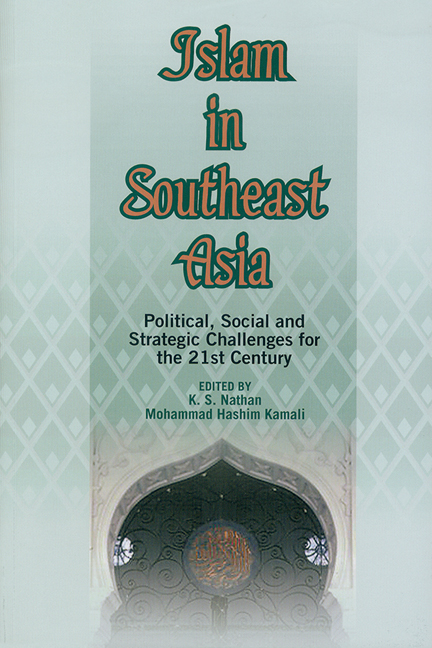
This book looks at Islam and its strategic implications for Southeast Asia. Part I outlines Islamic doctrine and traces the history and growth of Islamic economic institutions in the region. In Part II, politics, governance, civil society and gender issues are examined in the context of Southeast Asian Islam. Part III devotes itself to the impact of modernization and globalization on Muslim society. Part IV examines and evaluates the impact of the 2001 terrorist attacks on the icons of the American superpower. The Conclusion offers some perspectives on the challenges and prospects for Islamic doctrine and practice in the context of Southeast Asia.
Since the 1990s, regional organizations of the United Nations and international financial institutions have adopted a new dynamic of transnational integration, within the framework of the regionalization process of globalization. In place of the growth triangles of the 1970s, a strategy based on transnational economic corridors has changed the scale of regionalization.Thanks to the initiative of the Asian Development Bank, Southeast Asia provides two of the most advanced examples of such a process in East Asia with, on the one hand, the Greater Mekong Subregion, structured by continental corridors, and on the other, the Malacca Straits, combining maritime and land corridors. This book compares, after two decades, the effects of these developing networks on transnational integration in both subregions.After presenting the general issue of economic corridors, the work deals with the characteristics and structures peculiar to these two regions, followed by a study of national strategies mobilizing actors at different levels of state organization. There follows a study of the emergence of new urban nodes on corridors at land and sea borders, and the impact of these corridors on the local societies. This approach makes it possible to compare the effects of transnational integration processes on the spatial and urban organization of the two subregions and on the increasing diversity of the stakeholders involved.
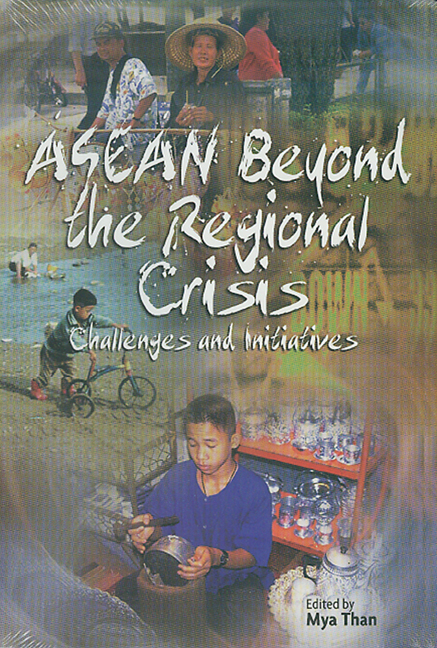
As the regional financial and economic crisis has bottomed out and the ASEAN countries are on the recovery path, this volume seeks to carry out a post-mortem on the crisis to evaluate the sustainability of the recovery and the long-term direction of the ASEAN economies. It also examines the challenges and competitiveness of these economies which have become significant issues in the post-recovery process. Since it is not sufficient to address the economic and financial aspects, the volume also looks at the human and social dimensions, such as food security, poverty, and cross-border pollution. Furthermore, in the wake of the regional crisis, ASEAN has been criticized as being ineffective. This has prompted a re-examination of the relevance of the regional grouping in its present form, evaluating ASEAN's performance, challenges and opportunities and assessing whether there is a need for change.
This book examines how media have brought about or paced dramatic political events in Southeast Asia over the last two decades. It highlights a situation where media dynamics are no longer a simple formula of state control versus media resistance. The state can propel its own media-liberalizing programme; civil society can be an enemy of press freedom; market forces and cultural mindsets are sometimes more potent agents of change than state-appointed media custodians. Practitioners, scholars and activists have come together in this volume to provide a diversity of narratives on subjects as varied as powerful politicians and marginalized transsexuals.
Significant changes have taken place in the major areas of ASEAN economic co-operation. In trade, AFTA has replaced PTA; in industry, AICO replaces AIC and AIJV; while in agriculture an enhanced Food Security Reserve Scheme is being developed. At the same time, new areas of economic co-operation, notably in services and intellectual property, have been mandated. This book will enable the reader to monitor ASEAN's development with better insight and clearer understanding. It will also give policy-makers a clearer perspective of the issues relating to regional economic co-operation and help chart future directions.
What is the relevance of civil society to people empowerment, effective governance, and deepening democracy? This book addresses this question by examining the activities and public participation of non-governmental organizations (NGOs) in the areas of religion, ethnicity, gender and the environment. Examples are taken from Indonesia, Malaysia, the Philippines, Singapore, Thailand and Vietnam. State regimes' attempts to co-opt the concept or reject it as alien to "Asian values" have apparently not turned out as expected. This is evident from the fact that many Southeast Asian citizens are inspired by the civil society concept and now engage in public discourse and participation. The experience of civil society in Southeast Asia shows that its impact -- or lack of impact -- on democratization and democracy depends on a variety of factors not only within civil society itself, but also within the state.
By
Elizabeth Howard Moore, Professor in the School of Oriental and African Studies, University of London and Visiting Researcher at the Nalanda-Sriwijaya Centre, ISEAS – Yusof Ishak Institute, Singapore,
Win Maung (tampawaddy), traditional architect and an independent scholar
The processes by which Buddhism was introduced and mediated in the culturally specific context of Kyaukse are exemplified by the Ta Mok Shwe-gu-gyi temple complex. While to some degree its development was stimulated through its relation to Bagan, Ta Mok's principal identity is local. In this context, it deepens our understanding of the complex interrelationships and definitions that constituted Bagan and questions normative concepts of centre and periphery. The archaeology of Ta Mok authenticates national traditions of the founding of the eleven khayaing of Kyaukse by King Anawrahta (1044–77 CE) (Than Swe 1994, p. 19). Pyu (2nd to 9th century CE) pottery, burnished wares, and bones possibly dating to 3000 bce from Ta Mok highlight earlier connections to other regions. Thus, in both its prehistoric and historic dimensions, the Ta Mok evidence demonstrates the nuanced manner in which global ideas and styles were used to address issues of active local concern.
Chronology of the Site
The Shwe-gu-gyi temple complex, 9.65 kilometres west of Kyaukse, is located inside the Ta Mok fort, the only one of the nine Pan Laung Shwe-gu (“golden cave”) located within the khayaing fort wall. Based on the plan, brickwork and iconography, five features of the complex are dated here to the reign of Anawrahta: the central temple, two gu or small caves on the southwest of the complex, the thein or ordination hall, the innermost of the encased images of the Buddha in the southwest gu, and a row of three images of the Buddha in the thein and the palin or thrones of these images.
Based again on stylistic grounds, we argue that Myit-taw Narapatisithu (1174–1211 CE) enlarged the central temple and added an upper storey. The interior and upper storey of the main temple and other buildings such as the ordination hall and images of the Buddha were repeatedly encased and redecorated from the 11th to 14th century ce. However, as described below, the many unique aspects of the temple set out new parameters for the art, patronage and chronology of wider Bagan.
The earliest structure that has been unearthed is located on the northeast of the two-storey temple: a square building provisionally dated to the 8th to 10th century ce late Pyu period, with burial urns at the foundation level.
By
Olga Deshpande, art historian in the Oriental Department, State Hermitage Museum, Saint-Petersburg, Russia,
Pamela Gutman, Honorary Associate with the Department of Art History, University of Sydney, Australia
For nearly seventy years, four Burmese stone sculptures dating to the 11th–12th centuries have been in storage at the Hermitage Museum, St Petersburg. They arrived in Russia after World War II, part of a large group of Asian art objects (from India to Japan and Indonesia) from two institutions in Berlin, the Museum für Volkerkunde and the Museum für Ostasiatische Kunst. It was only after the radical political changes in the Soviet Union in the early 1990s that, after a long period of obfuscation regarding their background, Russia and Germany were able to begin to work together, and with other specialists, on these collections.
The Burmese sculptures comprise three images depicting events from the life of the Buddha: the cutting of the hair in preparation for his life as an ascetic; the Naga King Mucalinda sheltering him from a storm in the sixth week after the Enlightenment; and the taming of the raging elephant Nālāgiri. We discussed these images at the EURASEAA 14 Conference in Dublin in September 2012 and our findings will be published in the conference proceedings. The fourth image, examined here, represents Viṣṇu on Garuḍa, Viṣṇu Garuḍāsana.
These sculptures were sent to the Museum für Volkerkunde between 1894 and 1896 by a German geologist and palaeontologist, Friedrich (Fritz) Wilhelm Nötling (1857–1928), who at the time was employed by the Geological Survey of India and was working at the Yenangyaung oil fields near Bagan. Nötling studied geology and related subjects before graduating in 1885, after which he worked as a private docent (tutor) at the University of Königsberg. In the same year, he was assigned by the Berlin Academy of Sciences to go on a mission to Palestine, and he subsequently published his first paper for the Geological Survey of Prussia in 1886. Until the University Reforms of the late 1900s, palaeontology was not taught at English universities, and the Geological Survey of India from time to time found it necessary to resort to Germany to find suitable people to fill palaeontological posts. In January 1887 Nötling sailed to Calcutta and served in the Geological Survey until 1903. He became a prolific researcher on geological, paleontological, prehistoric and ethnological subjects and published over forty papers and three books (Struwe 2006, p. 33).