Refine search
Actions for selected content:
237325 results in Physics and Astronomy
List of Illustrations
-
- Book:
- Notes, Problems and Solutions in Differential Equations
- Published online:
- 15 April 2025
- Print publication:
- 05 June 2025, pp xxi-xxii
-
- Chapter
- Export citation

Mass and momentum transfer at fluid–porous interfaces: jump boundary conditions for non-parallel flows
-
- Journal:
- Journal of Fluid Mechanics / Volume 1012 / 10 June 2025
- Published online by Cambridge University Press:
- 04 June 2025, A16
-
- Article
- Export citation
-
We derive boundary conditions for two-dimensional parallel and non-parallel flows at the interface of a homogeneous and isotropic porous medium and an overlying fluid layer by solving a macroscopic closure problem based on the asymptotic solution to the generalised transport equations (GTE) in the interfacial region. We obtained jump boundary conditions at the effective sharp surface dividing the homogeneous fluid and porous layers for either the Darcy or the Darcy–Brinkman equations. We discuss the choice of the location of the dividing surface and propose choices which reduce the distance with the GTE solutions. We propose an ad hoc expression of the permeability distribution within the interfacial region which enables us to preserve the invariance of the fluid-side-averaged velocity profile with respect to the radius $r_0$ of the averaging volume. Solutions to the GTE, equipped with the proposed permeability distribution, compare favourably with the averaged solutions to the pore-scale simulations when the interfacial thickness $\delta$ is adjusted to $r_0$. Numerical tests for parallel and non-parallel flows using the obtained jump boundary conditions or the generalised transport equations show quantitative agreement with the GTE solutions, with experiments and pore-scale simulations. The proposed model of mass and momentum transport is predictive, requiring solely information on the bulk porosity and permeability and the location of the solid matrix of the porous medium. Our results suggest that the Brinkman corrections may be avoided if the ratio $a=\delta /\delta _B$ of the thickness $\delta$ of the interfacial region to the Brinkman penetration depth $\delta _B$ is large enough, as the Brinkman sub-layer is entirely contained within the interfacial region in that case. Our formulation has been extended to anisotropic porous media and can be easily dealt with for three-dimensional configurations.


A new radio continuum study of the large magellanic cloud supernova remnant MC SNR J0519–6902
-
- Journal:
- Publications of the Astronomical Society of Australia / Volume 42 / 2025
- Published online by Cambridge University Press:
- 04 June 2025, e069
-
- Article
-
- You have access
- Open access
- HTML
- Export citation
-
We present a new radio continuum study of the Large Magellanic Cloud supernova remnant (SNR) MC SNR J0519–6902. With a diameter of $\sim$8 pc, this SNR shows a radio ring-like morphology with three bright regions towards the north, east, and south. Its linear polarisation is prominent with average values of $5\pm1$% and $6\pm1$% at 5 500 and 9 000 MHz, and we find a spectral index of ${-0.62\pm0.02}$, typical of a young SNR. The average rotation measure is estimated at ${-124\pm83}$ rad m $^{-2}$ and the magnetic field strength at ${\sim11}\,\mu$G. We also estimate an equipartition magnetic field of ${72\pm 5}\,\mu$G and minimum explosion energy of E $_\textrm{ min}$ = 2.6 $\times10^{48}$ erg. Finally, we identified an H i cloud that may be associated with MC SNR J0519–6902, located in the southeastern part of the remnant, along with a potential wind-bubble cavity.


Acoustothermal effect: mechanism and quantification of the heat source
-
- Journal:
- Journal of Fluid Mechanics / Volume 1012 / 10 June 2025
- Published online by Cambridge University Press:
- 04 June 2025, A11
-
- Article
-
- You have access
- Open access
- HTML
- Export citation
Revisiting two-dimensional viscoelastic Kolmogorov flow: a centre-mode-driven transition – CORRIGENDUM
-
- Journal:
- Journal of Fluid Mechanics / Volume 1012 / 10 June 2025
- Published online by Cambridge University Press:
- 04 June 2025, E1
-
- Article
-
- You have access
- Open access
- HTML
- Export citation
Unravelling the role of merger histories in the population of in situ stars: Linking IllustrisTNG cosmological simulation to H3 survey
-
- Journal:
- Publications of the Astronomical Society of Australia / Volume 42 / 2025
- Published online by Cambridge University Press:
- 04 June 2025, e082
-
- Article
-
- You have access
- Open access
- HTML
- Export citation
A comparison of dust content and properties in GAMA/G10-COSMOS/3D-HST and Simba cosmological simulations
-
- Journal:
- Publications of the Astronomical Society of Australia / Volume 42 / 2025
- Published online by Cambridge University Press:
- 04 June 2025, e070
-
- Article
-
- You have access
- Open access
- HTML
- Export citation
-
The abundance of dust within galaxies directly influences their evolution. Contemporary models attempt to match this abundance by simulating the processes of dust creation, growth, and destruction. While these models are accurate, they require refinement, especially at earlier epochs. This study aims to compare simulated and observed datasets and identify discrepancies between the two, providing a basis for future improvements. We utilise simulation data from the Simba cosmological simulation suite and observed data from the Galaxy and Mass Assembly (GAMA), a subset of the Cosmic Evolution Survey (G10-COSMOS), and the Hubble Space Telescope (3D-HST). We selected galaxies in the observed and simulated data in a stellar mass range of ( $10^{8.59} \lt \text{M}_\odot \lt 10^{11.5}$) and at redshift bins centering around $z = 0.0$, $z = 0.1$, $z = 0.5$, $z = 1.0$, and $z = 1.5$ in a homogeneous dust mass range ( $10^{6} \lt \text{M}_D [\text{ M}_\odot] \lt 10^{9}$). Our results show notable deviations between Simba and observed data for dust-poor and rich galaxies, with strong indications that differences in galaxy populations and Simba limitations are the underlying cause rather than the dust physics implemented in Simba itself.


Drainage and lifetime of thin liquid films: the role of salinity and convective evaporation
-
- Journal:
- Journal of Fluid Mechanics / Volume 1012 / 10 June 2025
- Published online by Cambridge University Press:
- 04 June 2025, A18
-
- Article
-
- You have access
- Open access
- HTML
- Export citation

Method of aerodynamic noise source identification for cylinder flows
-
- Journal:
- Journal of Fluid Mechanics / Volume 1012 / 10 June 2025
- Published online by Cambridge University Press:
- 04 June 2025, A13
-
- Article
- Export citation

Basic Electronics
- Principles and Applications
-
- Published online:
- 03 June 2025
- Print publication:
- 01 March 2018
-
- Textbook
- Export citation

Molecular streaming in a charged angstrom channel: a toy model
-
- Journal:
- Journal of Fluid Mechanics / Volume 1012 / 10 June 2025
- Published online by Cambridge University Press:
- 03 June 2025, A9
-
- Article
- Export citation
Drift-cyclotron loss-cone instability in 3-D simulations of a sloshing-ion simple mirror
- Part of
-
- Journal:
- Journal of Plasma Physics / Volume 91 / Issue 3 / June 2025
- Published online by Cambridge University Press:
- 03 June 2025, E85
-
- Article
-
- You have access
- Open access
- HTML
- Export citation
-
The kinetic stability of collisionless, sloshing beam-ion ( $45^\circ$ pitch angle) plasma is studied in a three-dimensional (3-D) simple magnetic mirror, mimicking the Wisconsin high-temperature superconductor axisymmetric mirror experiment. The collisional Fokker–Planck code CQL3D-m provides a slowing-down beam-ion distribution to initialize the kinetic-ion/fluid-electron code Hybrid-VPIC, which then simulates free plasma decay without external heating or fuelling. Over $1$–
$1$– $10\;\mathrm{\unicode{x03BC} s}$, drift-cyclotron loss-cone (DCLC) modes grow and saturate in amplitude. The DCLC scatters ions to a marginally stable distribution with gas-dynamic rather than classical-mirror confinement. Sloshing ions can trap cool (low-energy) ions in an electrostatic potential well to stabilize DCLC, but DCLC itself does not scatter sloshing beam-ions into the said well. Instead, cool ions must come from external sources such as charge-exchange collisions with a low-density neutral population. Manually adding cool $\mathord {\sim } 1\;\mathrm{keV}$ ions improves beam-ion confinement several-fold in Hybrid-VPIC simulations, which qualitatively corroborates prior measurements from real mirror devices with sloshing ions.


SALT spectroscopic follow-up of the G4Jy sample
-
- Journal:
- Publications of the Astronomical Society of Australia / Volume 42 / 2025
- Published online by Cambridge University Press:
- 02 June 2025, e085
-
- Article
-
- You have access
- Open access
- HTML
- Export citation
-
The GLEAM 4-Jy (G4Jy) Sample is a thorough compilation of the ‘brightest’ radio sources in the southern sky (Declination $ \lt 30^{\circ}$), as measured at 151 MHz ( $S_{\mathrm{151\,MHz}} \gt 4.0$ Jy) with the Murchison Widefield Array (MWA), through the GaLactic and Extragalactic All-sky MWA (GLEAM) Survey. In addition to flux-density measurements, the G4Jy catalogue (https://github.com/svw26/G4Jy.) provides host-galaxy identifications (through careful visual-inspection) and four sets of spectral indices. Despite their brightness in the radio, many of these sources are poorly studied, with the vast majority lacking a spectroscopic redshift in published work. This is crucial for studying the intrinsic properties of the sources, and so we conduct a multi-semester observing campaign on the Southern African Large Telescope (SALT), with optical spectroscopy enabling us to provide new redshifts to the astronomical community. Initial results show that not all of the host galaxies exhibit emission-line spectra in the optical ( $\sim$4 500–7 500Å), which illustrates the importance of radio-frequency selection (rather than optical selection) for creating an unbiased sample of active galactic nuclei. By combining SALT redshifts with those from the 6-degree Field Galaxy Survey (6dFGS) and the Sloan Digital Sky Survey (SDSS), we calculate radio luminosities and linear sizes for 299 G4Jy sources (which includes one newly-discovered giant radio-galaxy, G4Jy 604). Furthermore, with the highest redshift acquired (so far) being $z \sim 2.2$ from SDSS, we look forward to evolution studies of this complete sample, as well as breaking degeneracies in radio properties with respect to, for example, the galaxy environment.


EMU/GAMA: A new approach to characterising radio luminosity functions
-
- Journal:
- Publications of the Astronomical Society of Australia / Volume 42 / 2025
- Published online by Cambridge University Press:
- 02 June 2025, e077
-
- Article
-
- You have access
- Open access
- HTML
- Export citation
High-power high-energy Yb-doped CaGdAlO4 regenerative amplifier with approximately 130 fs pulses – ERRATUM
-
- Journal:
- High Power Laser Science and Engineering / Volume 13 / 2025
- Published online by Cambridge University Press:
- 02 June 2025, e30
-
- Article
-
- You have access
- Open access
- HTML
- Export citation
Runaway electron generation in disruptions mitigated by deuterium and noble gas injection in SPARC
-
- Journal:
- Journal of Plasma Physics / Volume 91 / Issue 3 / June 2025
- Published online by Cambridge University Press:
- 02 June 2025, E82
-
- Article
-
- You have access
- Open access
- HTML
- Export citation
Reinforcement-learning-assisted control of four-roll mills: geometric symmetry and inertial effect
-
- Journal:
- Journal of Fluid Mechanics / Volume 1012 / 10 June 2025
- Published online by Cambridge University Press:
- 02 June 2025, A8
-
- Article
-
- You have access
- Open access
- HTML
- Export citation
-
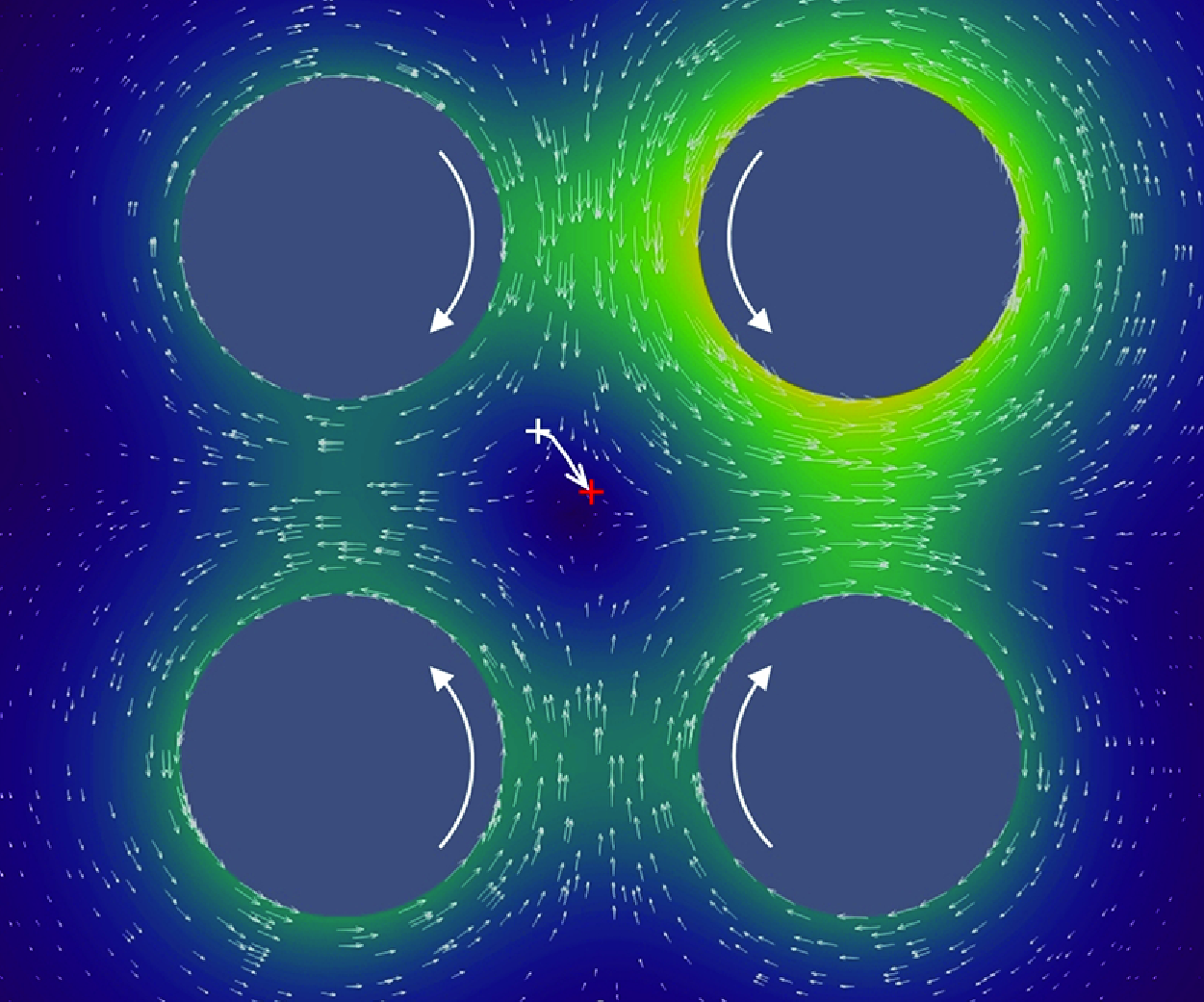
Embedding the intrinsic symmetry of a flow system in training its machine learning algorithms has become a significant trend in the recent surge of their application in fluid mechanics. This paper leverages the geometric symmetry of a four-roll mill (FRM) to enhance its training efficiency. Stabilising and precisely controlling droplet trajectories in an FRM is challenging due to the unstable nature of the extensional flow with a saddle point. Extending the work of Vona & Lauga (Phys. Rev. E, vol. 104(5), 2021, p. 055108), this study applies deep reinforcement learning (DRL) to effectively guide a displaced droplet to the centre of the FRM. Through direct numerical simulations, we explore the applicability of DRL in controlling FRM flow with moderate inertial effects, i.e. Reynolds number $\sim \mathcal{O}(1)$, a nonlinear regime previously unexplored. The FRM’s geometric symmetry allows control policies trained in one of the eight sub-quadrants to be extended to the entire domain, reducing training costs. Our results indicate that the DRL-based control method can successfully guide a displaced droplet to the target centre with robust performance across various starting positions, even from substantially far distances. The work also highlights potential directions for future research, particularly focusing on efficiently addressing the delay effects in flow response caused by inertia. This study presents new advances in controlling droplet trajectories in more nonlinear and complex situations, with potential applications to other nonlinear flows. The geometric symmetry used in this cutting-edge reinforcement learning approach can also be applied to other control methods.

Functional degrees and arithmetic applications III: beyond prime exponent
- Part of
-
- Journal:
- Mathematical Proceedings of the Cambridge Philosophical Society / Volume 179 / Issue 2 / September 2025
- Published online by Cambridge University Press:
- 30 May 2025, pp. 409-438
- Print publication:
- September 2025
-
- Article
- Export citation
-
Continuing our work on group-theoretic generalisations of the prime Ax–Katz Theorem, we give a lower bound on the p-adic divisibility of the cardinality of the set of simultaneous zeros $Z(f_1,f_2,\dots,f_r)$ of r maps $f_j\,{:}\,A\rightarrow B_j$ between arbitrary finite commutative groups A and $B_j$ in terms of the invariant factors of $A, B_1,B_2, \cdots,B_r$ and the functional degrees of the maps $f_1,f_2, \dots,f_r$.


Experimental study and efficiency evaluation of cold plasma treatment for distilled water
-
- Journal:
- Journal of Plasma Physics / Volume 91 / Issue 3 / June 2025
- Published online by Cambridge University Press:
- 30 May 2025, E84
-
- Article
-
- You have access
- Open access
- HTML
- Export citation
The near-wake vortex dynamics of a wall-mounted hemisphere measured with tomographic particle image velocimetry
-
- Journal:
- Journal of Fluid Mechanics / Volume 1012 / 10 June 2025
- Published online by Cambridge University Press:
- 30 May 2025, A7
-
- Article
- Export citation
