Refine search
Actions for selected content:
237327 results in Physics and Astronomy
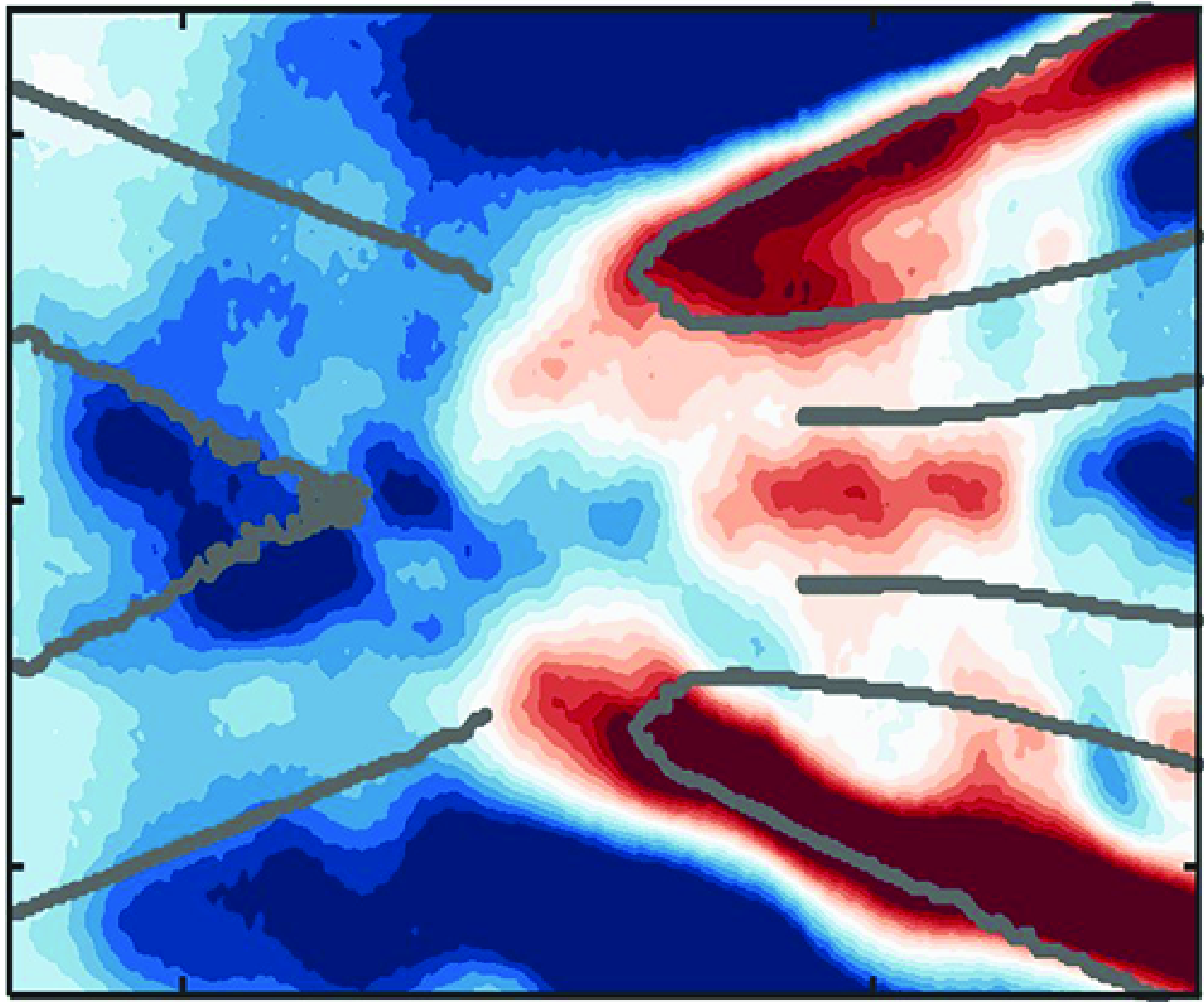
Coherent oscillations and acoustic waves in a supersonic cylinder wake
-
- Journal:
- Journal of Fluid Mechanics / Volume 1012 / 10 June 2025
- Published online by Cambridge University Press:
- 09 June 2025, A27
-
- Article
-
- You have access
- Open access
- HTML
- Export citation
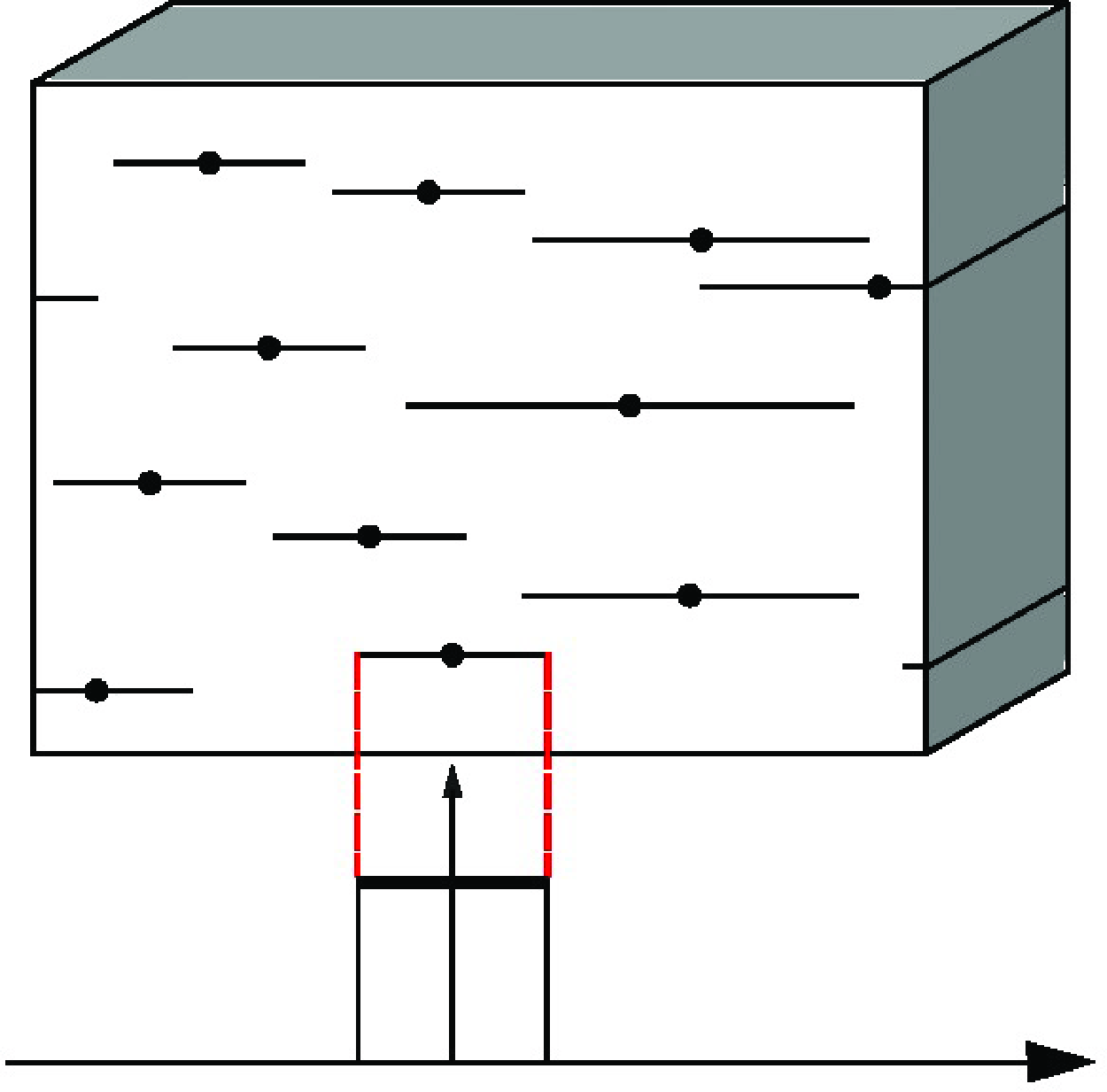
Simulating flow in fractured porous media with spatially varying fracture statistics using a non-local kernel-based model
-
- Journal:
- Journal of Fluid Mechanics / Volume 1012 / 10 June 2025
- Published online by Cambridge University Press:
- 09 June 2025, A25
-
- Article
-
- You have access
- Open access
- HTML
- Export citation
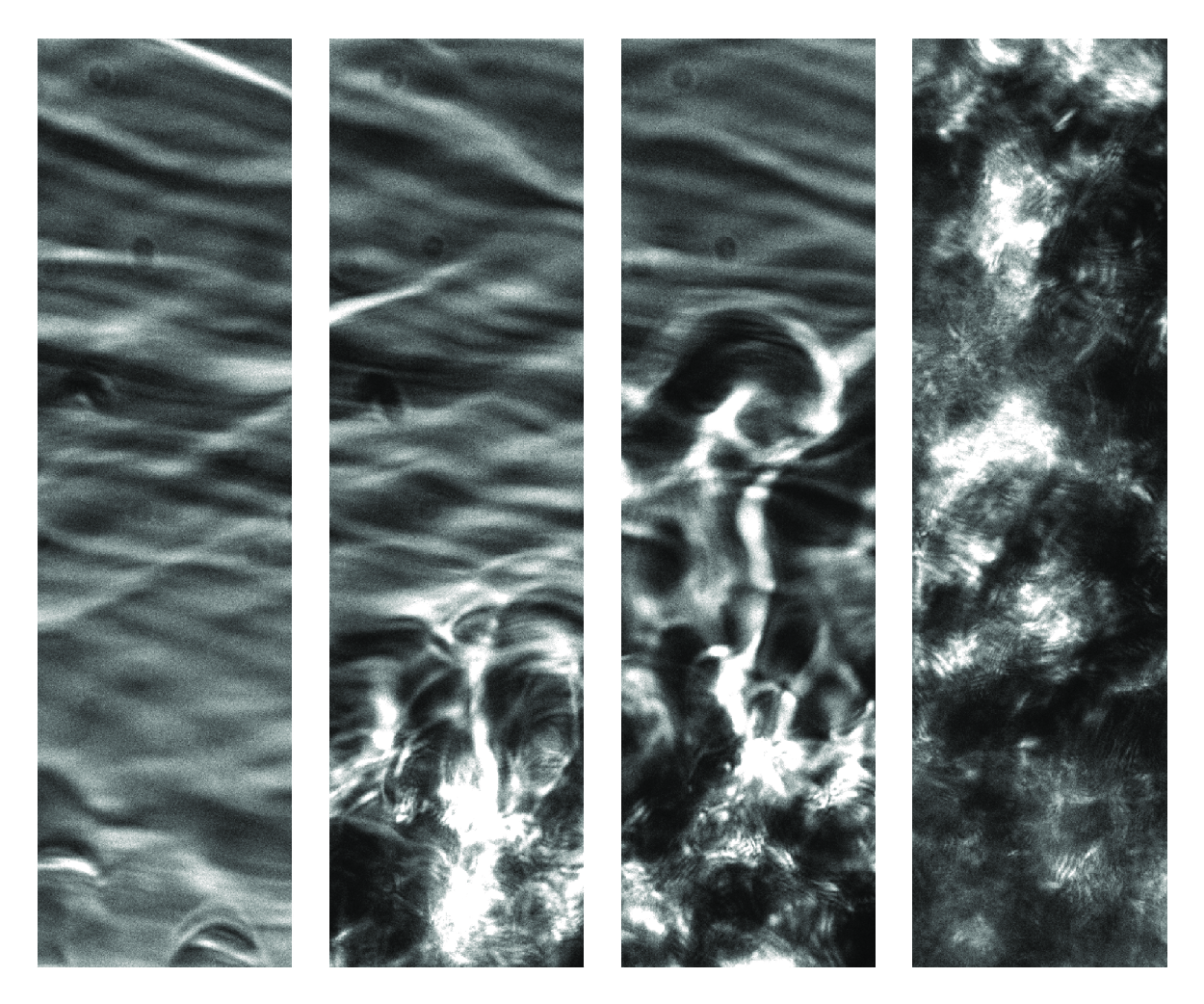
The stability of stratified horizontal flows of carbon dioxide at supercritical pressures
-
- Journal:
- Journal of Fluid Mechanics / Volume 1012 / 10 June 2025
- Published online by Cambridge University Press:
- 09 June 2025, A17
-
- Article
-
- You have access
- Open access
- HTML
- Export citation
-
Fluids at supercritical pressures exhibit large variations in density near the pseudo-critical line, such that buoyancy plays a crucial role in their fluid dynamics. Here, we experimentally investigate heat transfer and turbulence in horizontal hydrodynamically developed channel flows of carbon dioxide at $88.5$ bar and $32.6\,^{\circ }\rm C$, heated at either the top or bottom surface to induce a strong vertical density gradient. In order to visualise the flow and evaluate its heat transfer, shadowgraphy is used concurrently with surface temperature measurements. With moderate heating, the flow is found to strongly stratify for both heating configurations, with bulk Richardson numbers $Ri$ reaching up to 100. When the carbon dioxide is heated from the bottom upwards, the resulting unstably stratified flow is found to be dominated by the increasingly prevalent secondary motion of thermal plumes, enhancing vertical mixing and progressively improving heat transfer compared with a neutrally buoyant setting. Conversely, stable stratification, induced by heating from the top, suppresses the vertical motion, leading to deteriorated heat transfer that becomes invariant to the Reynolds number. The optical results provide novel insights into the complex dynamics of the directionally dependent heat transfer in the near-pseudo-critical region. These insights contribute to the reliable design of heat exchangers with highly property-variant fluids, which are critical for the decarbonisation of power and industrial heat. However, the results also highlight the need for further progress in the development of experimental techniques to generate reliable reference data for a broader range of non-ideal supercritical conditions.


Clustering and physical properties of AGN and Star-Forming Galaxies at fixed stellar mass: Does assembly bias have a role in AGN activity?
-
- Journal:
- Publications of the Astronomical Society of Australia / Volume 42 / 2025
- Published online by Cambridge University Press:
- 09 June 2025, e078
-
- Article
-
- You have access
- Open access
- HTML
- Export citation
-
We analyse a volume-limited sample from the Sloan Digital Sky Survey to compare the spatial clustering and physical properties of active galactic nuclei (AGN) and star-forming galaxies (SFG) at fixed stellar mass. We find no statistically significant difference in clustering strength or local density between AGN and SFG. However, after matching their stellar mass distributions, we detect statistically significant differences (at a confidence level $\gt99.99\%$) in colour, star formation rate (SFR), $4000$Å break measurements (D4000), and morphology. These differences persist across both low- and high-density environments, suggesting that AGN are not driven by environmental factors. The development of favourable conditions for AGN activity within a galaxy may depend on the diverse evolutionary histories of galaxies. Our results imply that AGN activity may arise stochastically, modulated by the complex assembly history of galaxies.


The first large absorption survey in H i (FLASH): II. Pilot survey data release and first results
-
- Journal:
- Publications of the Astronomical Society of Australia / Volume 42 / 2025
- Published online by Cambridge University Press:
- 09 June 2025, e088
-
- Article
-
- You have access
- Open access
- HTML
- Export citation
-
The First Large Absorption Survey in H i (FLASH) is a large-area radio survey for neutral hydrogen in and around galaxies in the intermediate redshift range $0.4\lt z\lt1.0$, using the 21-cm H i absorption line as a probe of cold neutral gas. The survey uses the ASKAP radio telescope and will cover 24,000 deg $^2$ of sky over the next five years. FLASH breaks new ground in two ways – it is the first large H i absorption survey to be carried out without any optical preselection of targets, and we use an automated Bayesian line-finding tool to search through large datasets and assign a statistical significance to potential line detections. Two Pilot Surveys, covering around 3000 deg $^2$ of sky, were carried out in 2019-22 to test and verify the strategy for the full FLASH survey. The processed data products from these Pilot Surveys (spectral-line cubes, continuum images, and catalogues) are public and available online. In this paper, we describe the FLASH spectral-line and continuum data products and discuss the quality of the H i spectra and the completeness of our automated line search. Finally, we present a set of 30 new H i absorption lines that were robustly detected in the Pilot Surveys, almost doubling the number of known H i absorption systems at $0.4\lt z\lt1$. The detected lines span a wide range in H i optical depth, including three lines with a peak optical depth $\tau\gt1$, and appear to be a mixture of intervening and associated systems. Interestingly, around two-thirds of the lines found in this untargeted sample are detected against sources with a peaked-spectrum radio continuum, which are only a minor (5–20%) fraction of the overall radio-source population. The detection rate for H i absorption lines in the Pilot Surveys (0.3 to 0.5 lines per 40 deg $^2$ ASKAP field) is a factor of two below the expected value. One possible reason for this is the presence of a range of spectral-line artefacts in the Pilot Survey data that have now been mitigated and are not expected to recur in the full FLASH survey. A future paper in this series will discuss the host galaxies of the H i absorption systems identified here.


Active-controlled cascaded proton acceleration using a solenoid driven by picosecond laser pulse
-
- Journal:
- Laser and Particle Beams / Volume 43 / 2025
- Published online by Cambridge University Press:
- 09 June 2025, e2
-
- Article
-
- You have access
- Open access
- HTML
- Export citation
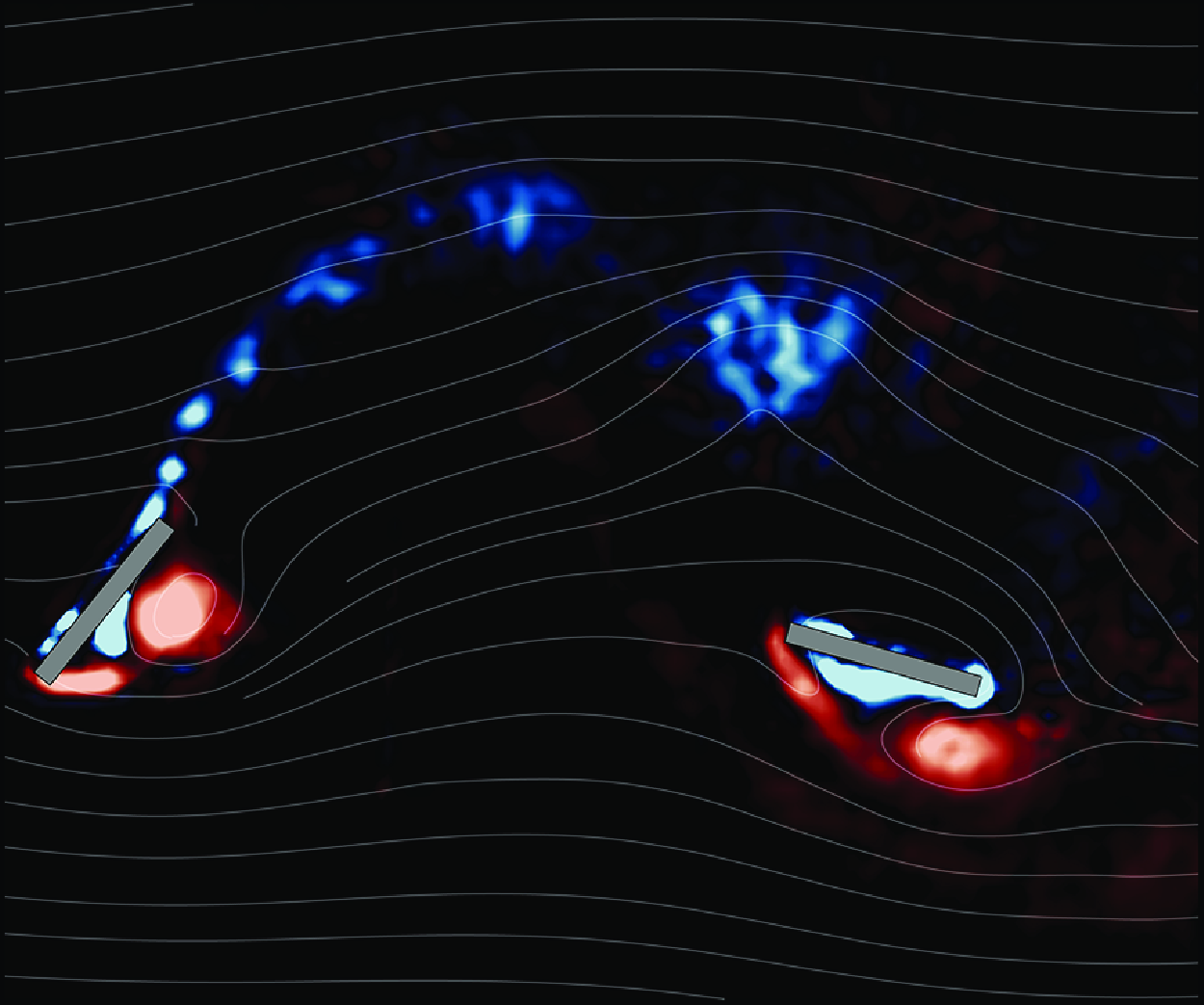
Optimal kinematics for energy harvesting using favourable wake–foil interactions in tandem oscillating hydrofoils
-
- Journal:
- Journal of Fluid Mechanics / Volume 1012 / 10 June 2025
- Published online by Cambridge University Press:
- 09 June 2025, A23
-
- Article
-
- You have access
- Open access
- HTML
- Export citation
-
The energy-harvesting performance of two oscillating hydrofoil turbines in tandem configuration is experimentally studied at a $Re$ of $20\,000$ to determine the array’s optimal kinematics. By characterising interactions between the leading foil’s wake and the trailing foil, the kinematic configuration required to maximise array power extraction is identified. This is done by prescribing leading-foil kinematics that produce specific wake regimes, identified by the maximum effective angle of attack, $\alpha _{T/4}$, parameter. The kinematics of the trailing foil are varied significantly from those of the leading foil, with heave and pitch amplitudes of $0.6c\lt h_{0,{\textit{tr}}}\lt 1.8c$ and $65^{\circ} \lt \theta _{0,{\textit{tr}}}\lt 75^{\circ}$, and inter-foil phase of $-110^{\circ} \lt \psi _{1-2}\lt 180^{\circ}$. Configurations with reduced frequencies of $0.11$ and $0.12$, and foil separations of $4c$ and $6c$ are tested within each wake regime. The power extracted by each foil over an oscillation cycle is measured through force and torque measurements. Wake–foil interactions that improve trailing foil performance are analysed with time-resolved particle image velocimetry. Constructive and destructive wake–foil interactions are compared, showing that trailing-foil performance improves by either avoiding wake vortices or interacting directly with them. By interacting with the primary wake vortex, the latter configuration sees no power loss during the cycle. System power from the two foils is found to be maximised when the leading foil operates at an intermediate $\alpha _{T/4}$ range, and when the trailing foil avoids wake vortices. This optimal array configuration sees both foils operating with different kinematics compared with the optimal kinematics of a single oscillating foil.


Large deformation of elastic capsules under uniaxial extensional flow
-
- Journal:
- Journal of Fluid Mechanics / Volume 1012 / 10 June 2025
- Published online by Cambridge University Press:
- 09 June 2025, A12
-
- Article
-
- You have access
- Open access
- HTML
- Export citation
-
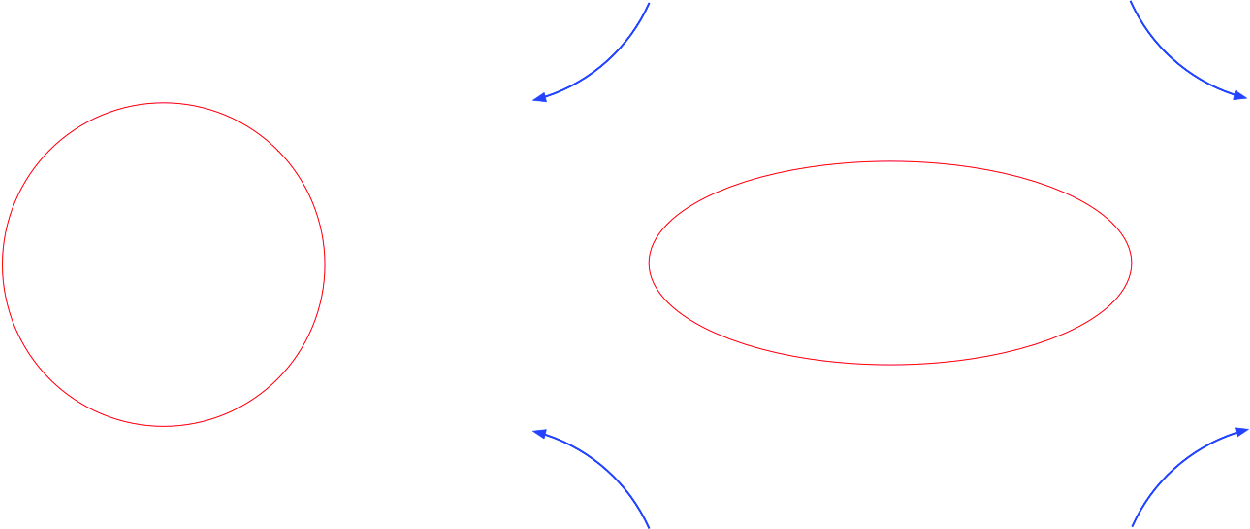
A spherical capsule (radius $R$) is suspended in a viscous liquid (viscosity $\mu$) and exposed to a uniaxial extensional flow of strain rate $E$. The elasticity of the membrane surrounding the capsule is described by the Skalak constitutive law, expressed in terms of a surface shear modulus $G$ and an area dilatation modulus $K$. Dimensional arguments imply that the slenderness $\epsilon$ of the deformed capsule depends only upon $K/G$ and the elastic capillary number ${Ca}=\mu R E/G$. We address the coupled flow–deformation problem in the limit of strong flow, ${Ca}\gg 1$, where large deformation allows for the use of approximation methods in the limit $\epsilon \ll 1$. The key conceptual challenge, encountered at the very formulation of the problem, is in describing the Lagrangian mapping from the spherical reference state in a manner compatible with hydrodynamic slender-body formulation. Scaling analysis reveals that $\epsilon$ is proportional to ${Ca}^{-2/3}$, with the hydrodynamic problem introducing a dependence of the proportionality prefactor upon $\ln \epsilon$. Going beyond scaling arguments, we employ asymptotic methods to obtain a reduced formulation, consisting of a differential equation governing a mapping field and an integral equation governing the axial tension distribution. The leading-order deformation is independent of the ratio $K/G$; in particular, we find the approximation $\epsilon ^{2/3} {Ca}\approx 0.2753\ln (2/\epsilon ^2)$ for the relation between $\epsilon$ and $Ca$. A scaling analysis for the neo-Hookean constitutive law reveals the impossibility of a steady slender shape, in agreement with existing numerical simulations. More generally, the present asymptotic paradigm allows us to rigorously discriminate between strain-softening and strain-hardening models.


TASSIE: a TASmanian Search for Inclined Exoplanets
-
- Journal:
- Publications of the Astronomical Society of Australia / Volume 42 / 2025
- Published online by Cambridge University Press:
- 09 June 2025, e083
-
- Article
-
- You have access
- Open access
- HTML
- Export citation
-
We present the first results of a pilot ‘TASmanian Search for Inclined Exoplanets’ (TASSIE) program. This includes observations and analysis of five short-period exoplanet candidates using data from TESS and the Harlingten 50 cm telescope at the Greenhill Observatory. We describe the instrumentation, data reduction process and target selection strategy for the program. We utilise archival multi-band photometry and new mid-resolution spectra to determine stellar parameters for five TESS Objects of Interest (TOIs). We then perform a statistical validation to rule out false positives, before moving on to a joint transit analysis of the remaining systems. We find that TOI3070, TOI3124 and TOI4266 are likely non-planetary signals, which we attribute to either short-period binary stars on grazing orbits or stellar spots. For TOI3097, we find a hot sub-Jovian to Jovian size planet ( $R_{3097Ab}$ = 0.89 $\pm$ 0.04 $R_{J}$, $P_{3097Ab}$ = 1.368386 $\pm$ 0.000006 days) orbiting the primary K dwarf star in a wide binary system. This system shows indications of low metallicity ([Fe/H] $\approx$ -1), making it an unlikely host for a giant planet. For TOI3163, we find a Jovian-size companion on a circular orbit around a late F dwarf star, with $R_{3163b} = 1.42 \,\pm 0.05 \, R_{J}$ and $P_{3163b} = 3.074966 \pm 0.000022$ days. In future, we aim to validate further southern giant planet candidates with a particular focus on those residing in the sub-Jovian desert/savanna.


A modelling framework for jet penetration into soft gels – ERRATUM
-
- Journal:
- Journal of Fluid Mechanics / Volume 1012 / 10 June 2025
- Published online by Cambridge University Press:
- 09 June 2025, E2
-
- Article
-
- You have access
- Open access
- HTML
- Export citation
Efficient summation of arbitrary masks – ESAM
-
- Journal:
- Publications of the Astronomical Society of Australia / Volume 42 / 2025
- Published online by Cambridge University Press:
- 09 June 2025, e094
-
- Article
-
- You have access
- Open access
- HTML
- Export citation
The Polarisation Sky Survey of the Universe’s Magnetism (POSSUM): Science goals and survey description
-
- Journal:
- Publications of the Astronomical Society of Australia / Volume 42 / 2025
- Published online by Cambridge University Press:
- 09 June 2025, e091
-
- Article
-
- You have access
- Open access
- HTML
- Export citation
-
The Australian SKA Pathfinder (ASKAP) offers powerful new capabilities for studying the polarised and magnetised Universe at radio wavelengths. In this paper, we introduce the Polarisation Sky Survey of the Universe’s Magnetism (POSSUM), a groundbreaking survey with three primary objectives: (1) to create a comprehensive Faraday rotation measure (RM) grid of up to one million compact extragalactic sources across the southern $\sim50$% of the sky (20,630 deg $^2$); (2) to map the intrinsic polarisation and RM properties of a wide range of discrete extragalactic and Galactic objects over the same area; and (3) to contribute interferometric data with excellent surface brightness sensitivity, which can be combined with single-dish data to study the diffuse Galactic interstellar medium. Observations for the full POSSUM survey commenced in May 2023 and are expected to conclude by mid-2028. POSSUM will achieve an RM grid density of around 30–50 RMs per square degree with a median measurement uncertainty of $\sim$1 rad m $^{-2}$. The survey operates primarily over a frequency range of 800–1088 MHz, with an angular resolution of 20” and a typical RMS sensitivity in Stokes Q or U of 18 $\mu$Jy beam $^{-1}$. Additionally, the survey will be supplemented by similar observations covering 1296–1440 MHz over 38% of the sky. POSSUM will enable the discovery and detailed investigation of magnetised phenomena in a wide range of cosmic environments, including the intergalactic medium and cosmic web, galaxy clusters and groups, active galactic nuclei and radio galaxies, the Magellanic System and other nearby galaxies, galaxy halos and the circumgalactic medium, and the magnetic structure of the Milky Way across a very wide range of scales, as well as the interplay between these components. This paper reviews the current science case developed by the POSSUM Collaboration and provides an overview of POSSUM’s observations, data processing, outputs, and its complementarity with other radio and multi-wavelength surveys, including future work with the SKA.


Heat and Thermodynamics
- Theory, Problems and Solutions
-
- Published online:
- 06 June 2025
- Print publication:
- 31 January 2026
-
- Textbook
- Export citation

A First Course in Magnetohydrodynamics
-
- Published online:
- 05 June 2025
- Print publication:
- 12 June 2025

Theoretical Biology of the Cell
- A Dynamical-Systems Perspective
-
- Published online:
- 05 June 2025
- Print publication:
- 19 June 2025

Solving Problems with Projections
- From Phase Retrieval to Packing
-
- Published online:
- 05 June 2025
- Print publication:
- 19 June 2025
8 - Strong Field Interactions with Underdense Plasmas
-
- Book:
- Strong Field Physics
- Published online:
- 05 July 2025
- Print publication:
- 05 June 2025, pp 495-658
-
- Chapter
- Export citation
1 - Introduction to Strong Field Physics
-
- Book:
- Strong Field Physics
- Published online:
- 05 July 2025
- Print publication:
- 05 June 2025, pp 1-11
-
- Chapter
- Export citation
Part Two - Partial Differential Equations
-
- Book:
- Notes, Problems and Solutions in Differential Equations
- Published online:
- 15 April 2025
- Print publication:
- 05 June 2025, pp 183-184
-
- Chapter
- Export citation
Frontmatter
-
- Book:
- Notes, Problems and Solutions in Differential Equations
- Published online:
- 15 April 2025
- Print publication:
- 05 June 2025, pp i-iv
-
- Chapter
- Export citation
