Refine search
Actions for selected content:
237325 results in Physics and Astronomy

Random Matrix Theory, Interacting Particle Systems, and Integrable Systems
-
- Published online:
- 29 May 2025
- Print publication:
- 15 December 2014

Revisiting the theory of van Driest: a general scaling law for the skin-friction coefficient of high-speed turbulent boundary layers
-
- Journal:
- Journal of Fluid Mechanics / Volume 1012 / 10 June 2025
- Published online by Cambridge University Press:
- 29 May 2025, R3
-
- Article
-
- You have access
- Open access
- HTML
- Export citation
-
The skin-friction coefficient is a dimensionless quantity defined by the wall shear stress exerted on an object moving in a fluid, and it decreases as the Reynolds number increases for wall-bounded turbulent flows over a flat plate. In this work, a novel transformation, based on physical and asymptotic analyses, is proposed to map the skin-friction relation of high-speed turbulent boundary layers (TBLs) for air described by the ideal gas law to the incompressible skin-friction relation. Through this proposed approach, it has been confirmed theoretically that the transformed skin-friction coefficient $C_{f,i}$, and the transformed momentum-thickness Reynolds number $Re_{\theta ,i}$ for compressible TBLs with and without heat transfer, follow a general scaling law that aligns precisely with the incompressible skin-friction scaling law, expressed as $ (2/C_{f,i} )^{1/2}\propto \ln Re_{\theta ,i}$. Furthermore, the reliability of the skin-friction scaling law is validated by compressible TBLs with free-stream Mach number ranging from $0.5$ to $14$, friction Reynolds number ranging from $100$ to $2400$, and the wall-to-recovery temperature ratio ranging from $0.15$ to $1.9$. In all of these data, $ (2/C_{f,i} )^{1/2}$ and $\ln Re_{\theta ,i}$ based on the present theory collapse to the incompressible relation, with a squared Pearson correlation coefficient reaching an impressive value $0.99$, significantly exceeding $0.85$ and $0.86$ based on the established van Driest II and the Spalding–Chi transformations, respectively.


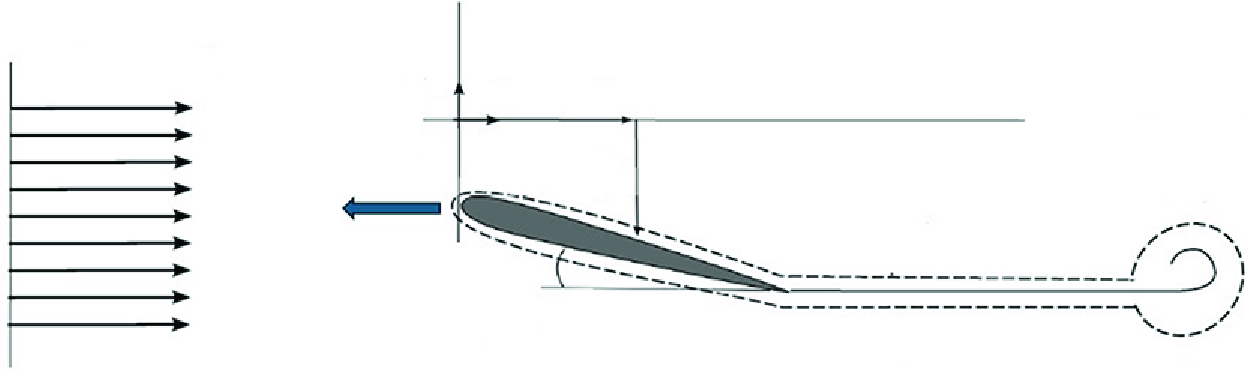
A note on the thrust of airfoils
-
- Journal:
- Journal of Fluid Mechanics / Volume 1012 / 10 June 2025
- Published online by Cambridge University Press:
- 29 May 2025, A6
-
- Article
-
- You have access
- Open access
- HTML
- Export citation
Congruent elliptic curves and the $\tau $-component in the Iwasawa main conjecture
- Part of
-
- Journal:
- Mathematical Proceedings of the Cambridge Philosophical Society / Volume 179 / Issue 2 / September 2025
- Published online by Cambridge University Press:
- 29 May 2025, pp. 373-408
- Print publication:
- September 2025
-
- Article
- Export citation
-
Let p be an odd prime, and suppose that $E_1$ and $E_2$ are two elliptic curves which are congruent modulo p. Fix an Artin representation $\tau\,{:}\,G_{F}\rightarrow \mathrm{GL}_2(\mathbb{C})$ over a totally real field F, induced from a Hecke character over a CM-extension $K/F$. Assuming $E_1$ and $E_2$ are ordinary at p, we compute the variation in the $\mu$- and $\lambda$-invariants for the $\tau$-part of the Iwasawa Main Conjecture, as one switches from $E_1$ to $E_2$. Provided an Euler system exists, it will follow directly that IMC $(E_1,\tau)$ is true if and only if IMC $(E_2,\tau)$ is true.


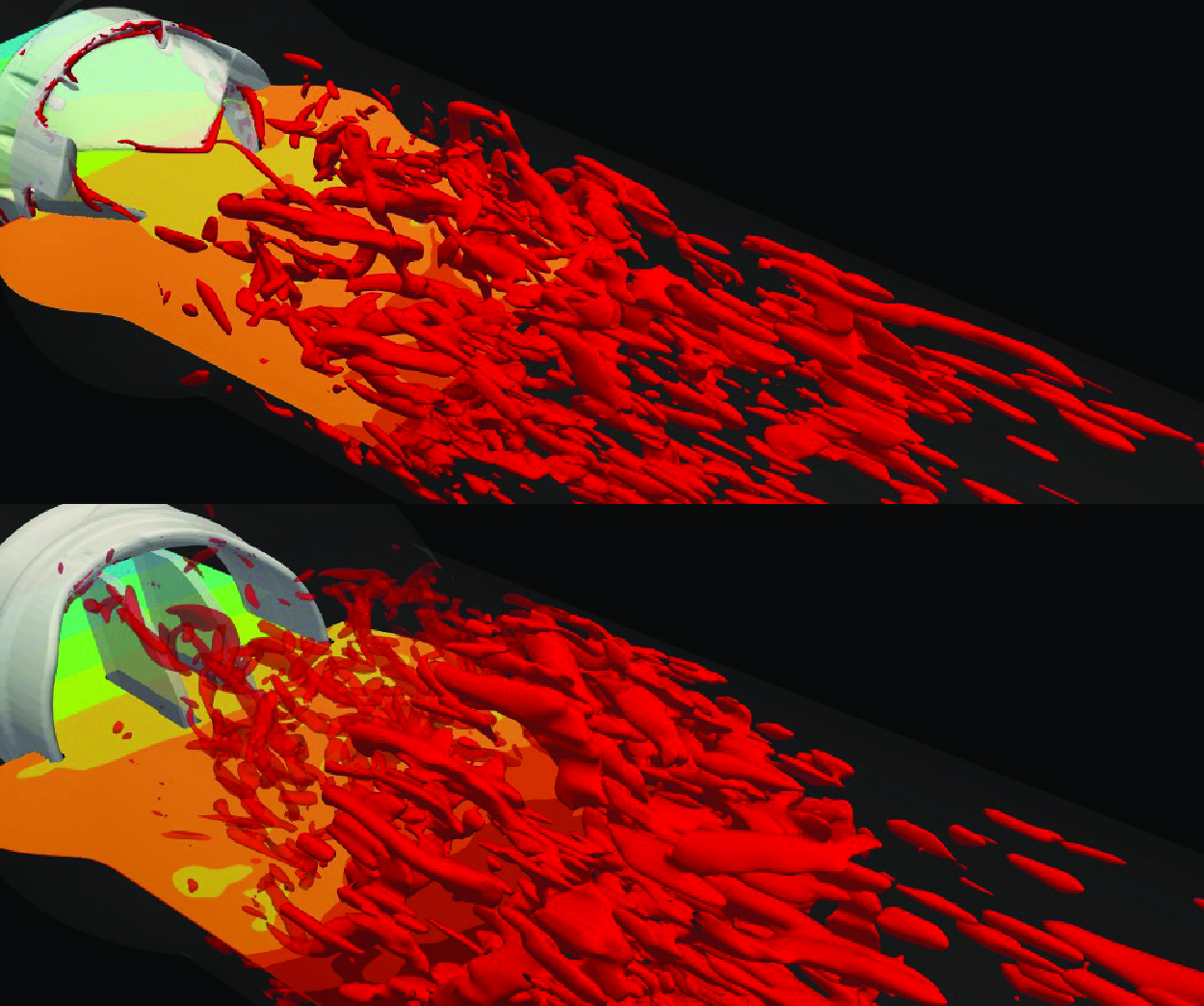
Closure dynamics of aortic mechanical heart valves versus bioprosthetic heart valves
-
- Journal:
- Journal of Fluid Mechanics / Volume 1012 / 10 June 2025
- Published online by Cambridge University Press:
- 29 May 2025, A3
-
- Article
-
- You have access
- Open access
- HTML
- Export citation
FLM volume 1011 Cover and Front matter
-
- Journal:
- Journal of Fluid Mechanics / Volume 1011 / 25 May 2025
- Published online by Cambridge University Press:
- 29 May 2025, p. f1
-
- Article
-
- You have access
- Export citation
Measurements of turbulent decay in a von Kármán flow at high Reynolds numbers
-
- Journal:
- Journal of Fluid Mechanics / Volume 1012 / 10 June 2025
- Published online by Cambridge University Press:
- 29 May 2025, R4
-
- Article
-
- You have access
- Open access
- HTML
- Export citation
-
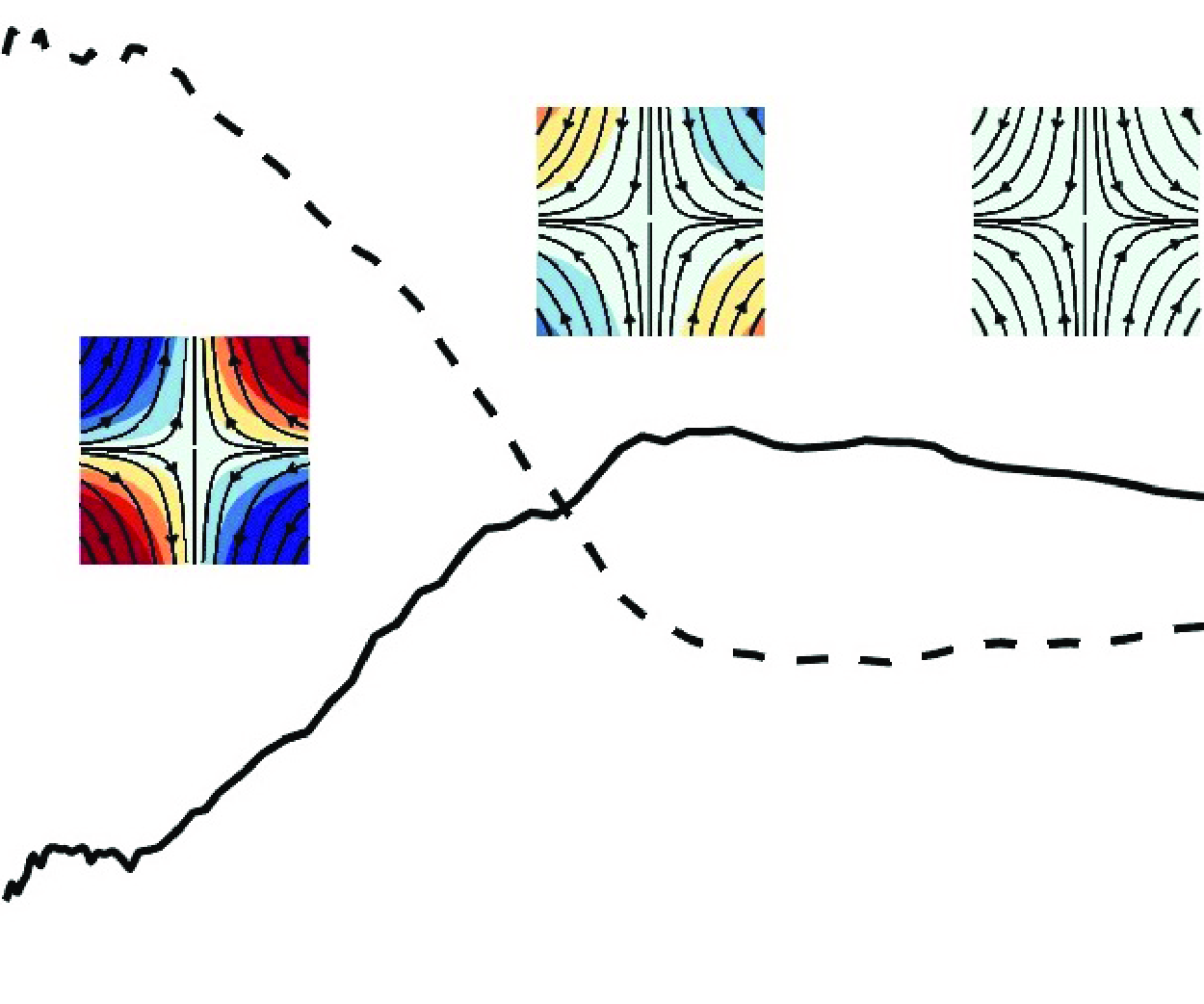
We present the measurements of the decay of stationary turbulence at Reynolds numbers based on the Taylor microscale $Re_{\lambda }=493, 599, 689$ produced in a large-scale von Kármán flow using stereoscopic particle image velocimetry. First, steady-state conditions were established, after which the impellers were simultaneously and abruptly stopped, and the turbulent decay was measured over 10–20 impeller rotation periods. A total of 258 decay experiments were performed. The temporal evolution of the ensemble-averaged turbulent kinetic energy (TKE) showed excellent agreement over all $Re_{\lambda }$ and exhibited two distinct phases: a short, initial transition phase where the TKE remained almost constant due to the inertia of the flow and lasted approximately $0.4$ impeller rotations, followed by a classical power-law decay. To extract the decay exponent $n$, a curve-fitting function based on a one-dimensional energy spectrum was used, and successfully captured the entire measured decay process. A value $n=1.62$ was obtained based on ensemble-averaged TKE. However, different decay exponents were found for individual velocity components: $n=1.38$ for the axial component consistent with various reports in the literature and Loitsiansky’s prediction ( $n=1.43$), and $n=1.99$ for the radial and circumferential components indicating saturation/confinement effects. Similarly, the longitudinal integral length scale in the axial direction grew as $L\propto t^{2/7}$, whereas it remained nearly constant in the radial direction. Finally, the evolution of the ensemble-averaged velocity gradients showed that after the impellers were stopped, the mean flow pattern persisted for a short time before undergoing a large-scale reversal before the onset of the turbulent decay.



Scalar transport across the interface between a random sphere pack and a turbulent flow
-
- Journal:
- Journal of Fluid Mechanics / Volume 1012 / 10 June 2025
- Published online by Cambridge University Press:
- 28 May 2025, A4
-
- Article
-
- You have access
- Open access
- HTML
- Export citation
-
The transport of a passive scalar at unity Schmidt number in a turbulent flow over a random sphere pack is investigated by direct numerical simulation. A bed-normal scalar flux is introduced by prescribed scalar concentration values at the bottom and top domain boundaries, whereas sphere surfaces are impermeable to scalar fluxes. We analyse eight different cases characterised by friction Reynolds numbers $Re_\tau \in [150, 500]$ and permeability Reynolds numbers $Re_K \in [0.4, 2.8]$ at flow depth-to-sphere diameter ratios of $h/D \in \{ 3, 5, 10 \}$. The dimensionless roughness heights lie within $k_s^+ \in [20,200]$. The free-flow region is dominated by turbulent scalar transport and the effective diffusivity scales with flow depth and friction velocity. Near the interface, dispersive scalar transport and molecular diffusion gain importance, while the normalised near-interface effective diffusivity is approximately proportional to $Re_K^2$. Even without a macroscopic bed topography, local hotspots of dispersive scalar transport are observed (‘chimneys’), which are linked to strong spatial variations in the time-averaged scalar concentration field. The form-induced production of temporal scalar fluctuations, however, goes along with a homogenisation of those spatial variations of the scalar concentration field due to turbulent fluid motion. Accordingly, form-induced production determines the interaction of turbulent and dispersive scalar transport at the interface. With increasing $Re_K$, momentum from the free-flow region entrains deeper into the sediment bed, such that the form-induced production intensifies and peaks at lower positions. As a result, the transition from dispersive to turbulent scalar transport is observed deeper inside the sphere pack.


Some general principles of riboswitch structure and interactions with small-molecule ligands
-
- Journal:
- Quarterly Reviews of Biophysics / Volume 58 / 2025
- Published online by Cambridge University Press:
- 28 May 2025, e13
-
- Article
-
- You have access
- Open access
- HTML
- Export citation
Weighted sieves with switching
- Part of
-
- Journal:
- Mathematical Proceedings of the Cambridge Philosophical Society / Volume 179 / Issue 2 / September 2025
- Published online by Cambridge University Press:
- 28 May 2025, pp. 351-372
- Print publication:
- September 2025
-
- Article
-
- You have access
- Open access
- HTML
- Export citation
-
Weighted sieves are used to detect numbers with at most S prime factors with $S \in \mathbb{N}$ as small as possible. When one studies problems with two variables in somewhat symmetric roles (such as Chen primes, that is primes p such that $p+2$ has at most two prime factors), one can utilise the switching principle. Here we discuss how different sieve weights work in such a situation, concentrating in particular on detecting a prime along with a product of at most three primes.
As applications, we improve on the works of Yang and Harman concerning Diophantine approximation with a prime and an almost prime, and prove that, in general, one can find a pair $(p, P_3)$ when both the original and the switched problem have level of distribution at least $0.267$.


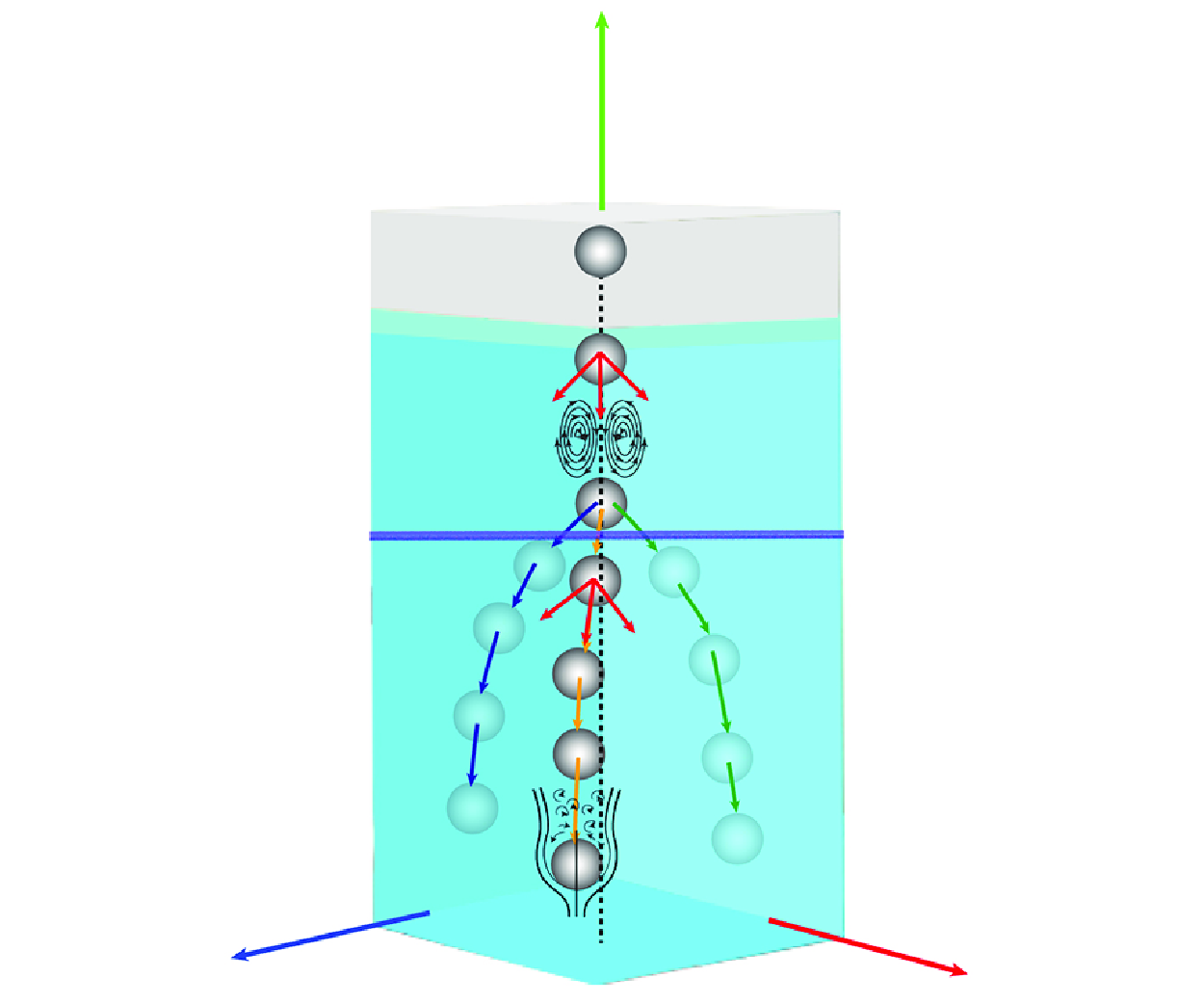
Motion of a rigid sphere penetrating a deep pool
-
- Journal:
- Journal of Fluid Mechanics / Volume 1012 / 10 June 2025
- Published online by Cambridge University Press:
- 28 May 2025, A5
-
- Article
- Export citation
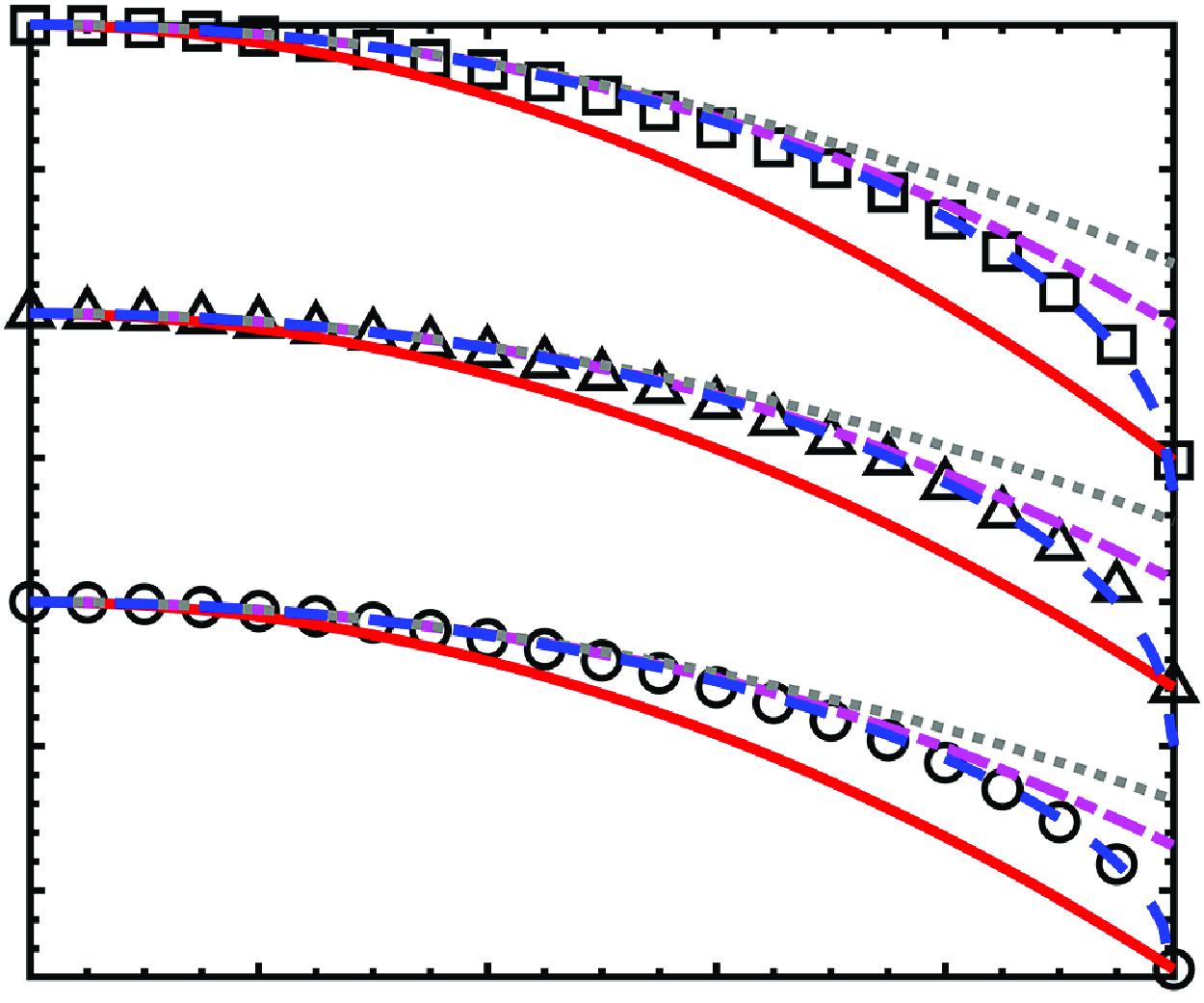
A unified framework for mean temperature analysis in compressible turbulent channel flows
-
- Journal:
- Journal of Fluid Mechanics / Volume 1012 / 10 June 2025
- Published online by Cambridge University Press:
- 28 May 2025, R2
-
- Article
- Export citation

Advanced Linear Algebra
- A Concise Text with Contemporary Applications
-
- Published online:
- 27 May 2025
- Print publication:
- 12 June 2025
-
- Textbook
- Export citation
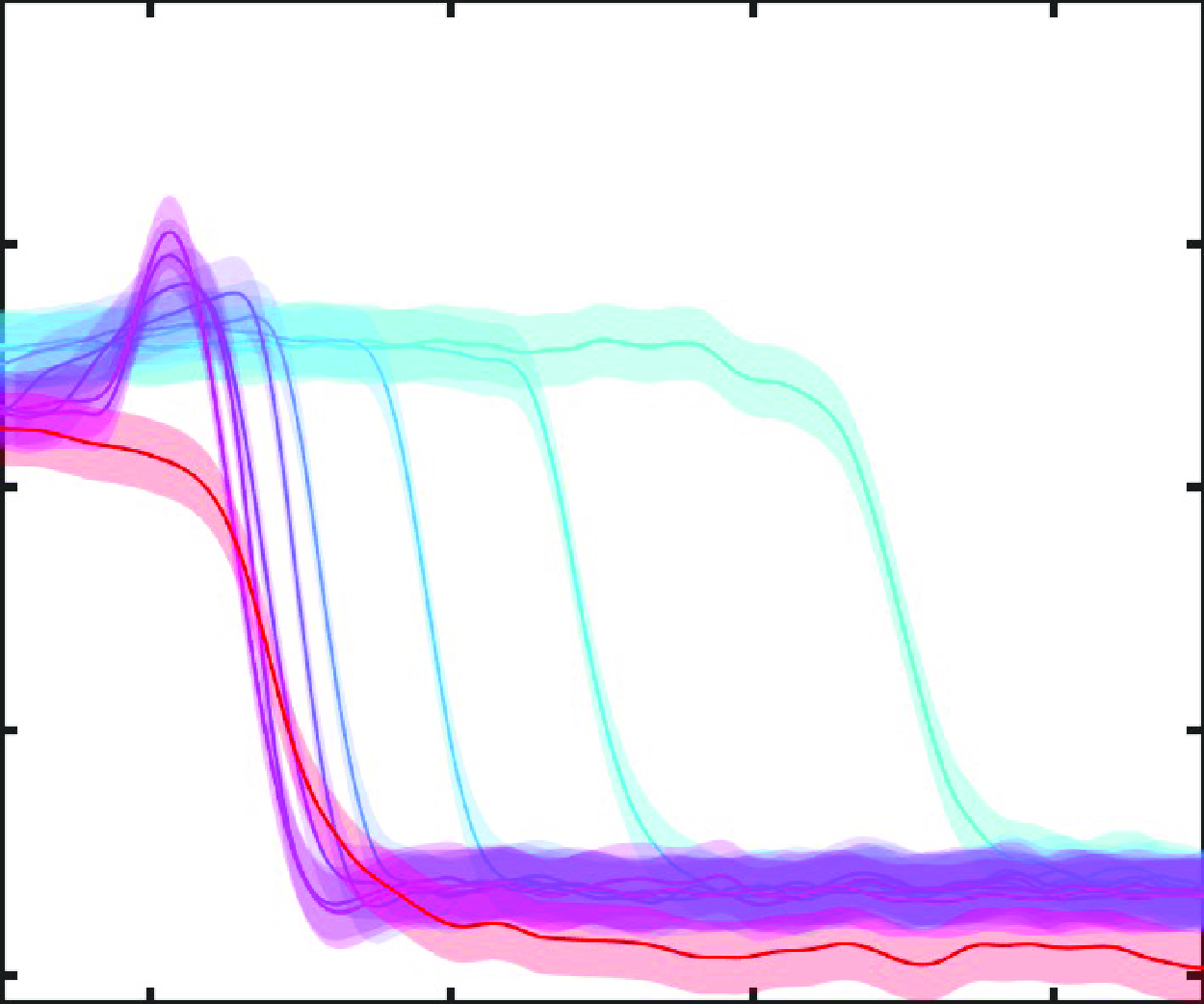
Transient dynamics of stall and reattachment at low Reynolds number
-
- Journal:
- Journal of Fluid Mechanics / Volume 1011 / 25 May 2025
- Published online by Cambridge University Press:
- 27 May 2025, A38
-
- Article
-
- You have access
- Open access
- HTML
- Export citation
-
Wind tunnel experiments are performed to investigate stall and reattachment transients for an aerofoil and wing model at low chord Reynolds numbers ( $8\times 10^4\leqslant {{Re}}_c\leqslant 1\times 10^5$) where a laminar separation bubble (LSB) may form on the suction surface. Direct force measurements and particle image velocimetry (PIV) are employed simultaneously to characterise the transient aerodynamic loading and flow field development. The imposed changes in operating conditions leading to stall and reattachment include changes in angle of attack at multiple pitch rates and changes in Reynolds number. The evolution of the lift coefficient is consistent with dynamic stall at higher Reynolds numbers, with a reduction in time delay between the passing of the static stall condition and the loss of lift for increasing pitch rate. During an increase in angle of attack, the separation bubble moves upstream prior to rapidly bursting, whereas for a decrease of Reynolds number, the LSB undergoes a more gradual monotonic increase in length prior to bursting. In contrast to notable differences in the aerodynamic loading and flow field development for different types of transients leading to LSB bursting, the process of LSB formation is less sensitive to the type of imposed change in operating conditions. Spanwise PIV measurements on the aerofoil and wing models indicate that the spanwise flow development is also insensitive to the type of imposed transient during LSB bursting and formation.
Dot to dot: High-z little red dots in $M_\mathrm{ bh}$– $M_\mathrm{ \star}$ diagrams with galaxy-morphology-specific scaling relations
-
- Journal:
- Publications of the Astronomical Society of Australia / Volume 42 / 2025
- Published online by Cambridge University Press:
- 27 May 2025, e068
-
- Article
-
- You have access
- Open access
- HTML
- Export citation
-
The high redshift ‘little red dots’ (LRDs) detected with the James Webb Space Telescope are considered to be the cores of emerging galaxies that host active galactic nuclei (AGN). For the first time, we compare LRDs with local compact stellar systems and an array of galaxy-morphology-dependent stellar mass-black hole mass scaling relations in the $M_\mathrm{ bh}$– $M_{\star}$ diagrams. When considering the 2023–2024 masses for LRDs, they are not equivalent to nuclear star clusters (NSCs), with the latter having higher $M_\mathrm{ bh}/M_{\star}$ ratios. However, the least massive LRDs exhibit similar $M_\mathrm{ bh}$ and $M_\mathrm{ \star,gal}$ values as ultracompact dwarf (UCD) galaxies, believed to be the cores of stripped/threshed galaxies. We show that the LRDs span the $M_\mathrm{ bh}$– $M_\mathrm{ \star,gal}$ diagram from UCD galaxies to primaeval lenticular galaxies. In contrast, local spiral galaxies and the subset of major-merger-built early-type galaxies define $M_\mathrm{ bh}$– $M_{\star,gal}$ relations that are offset to higher stellar masses. Based on the emerging 2025 masses for LRDs, they may yet have similarities with NSCs, UCD galaxies, and green peas. Irrespective of this developing situation, we additionally observe that low-redshift galaxies with AGN align with the quasi-quadratic or steeper black hole scaling relations defined by local disc galaxies with directly measured black hole masses. This highlights the benefits of considering a galaxy’s morphology – which reflects its accretion and merger history – to understand the coevolution of galaxies and their black holes. Future studies of spatially resolved galaxies with secure masses at intermediate-to-high redshift hold the promise of detecting the emergence and evolution of the galaxy-morphology-dependent $M_\mathrm{ bh}$– $M_{\star}$ relations.


WALLABY pilot survey: Properties of H i-selected dark sources and low surface brightness galaxies
-
- Journal:
- Publications of the Astronomical Society of Australia / Volume 42 / 2025
- Published online by Cambridge University Press:
- 27 May 2025, e087
-
- Article
-
- You have access
- Open access
- HTML
- Export citation
-
We examine the optical counterparts of the 1 829 neutral hydrogen (H i) detections in three pilot fields in the Widefield ASKAP L-band Legacy All-sky Blind surveY (WALLABY) using data from the Dark Energy Spectroscopic Instrument (DESI) Legacy Imaging Surveys DR10. We find that 17% (315) of the detections are optically low surface brightness galaxies (LSBGs; mean g-band surface brightness within 1 $ R_e$ of $\gt 23$ mag arcsec $^{-2}$) and 3% (55) are optically ‘dark’. We find that the gas-rich WALLABY LSBGs have low star formation efficiencies, and have stellar masses spanning five orders of magnitude, which highlights the diversity of properties across our sample. 75% of the LSBGs and all of the dark H i sources had not been catalogued prior to WALLABY. We examine the optically dark sample of the WALLABY pilot survey to verify the fidelity of the catalogue and investigate the implications for the full survey for identifying dark H i sources. We assess the H i detections without optical counterparts and identify 38 which pass further reliability tests. Of these, we find that 13 show signatures of tidal interactions. The remaining 25 detections have no obvious tidal origin, so are candidates for isolated galaxies with high H i masses, but low stellar masses and star-formation rates. Deeper H i and optical follow-up observations are required to verify the true nature of these dark sources.


Euler Products at the Centre and Applications to Chebyshev’s Bias
- Part of
-
- Journal:
- Mathematical Proceedings of the Cambridge Philosophical Society / Volume 179 / Issue 2 / September 2025
- Published online by Cambridge University Press:
- 27 May 2025, pp. 331-349
- Print publication:
- September 2025
-
- Article
-
- You have access
- Open access
- HTML
- Export citation
-
Let $\pi$ be an irreducible cuspidal automorphic representation of ${\mathrm{GL}}_n(\mathbb{A}_{\mathbb{Q}})$ with associated L-function $L(s, \pi)$. We study the behaviour of the partial Euler product of $L(s, \pi)$ at the centre of the critical strip. Under the assumption of the Generalised Riemann Hypothesis for $L(s, \pi)$ in conjunction with the Ramanujan–Petersson conjecture as necessary, we establish an asymptotic, off a set of finite logarithmic measure, for the partial Euler product at the central point, which confirms a conjecture of Kurokawa (2012). As an application, we obtain results towards Chebyshev’s bias in the recently proposed framework of Aoki–Koyama (2023).


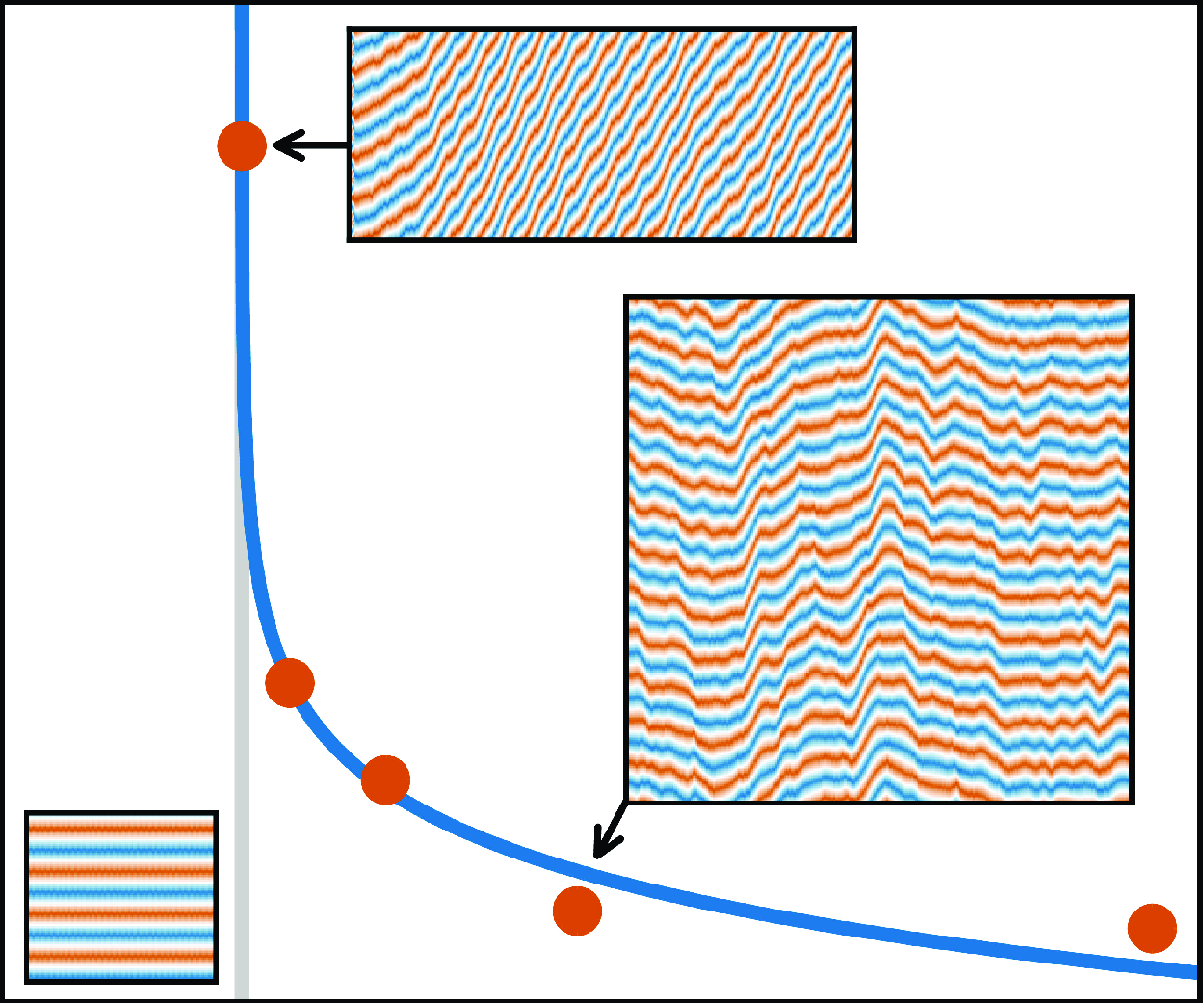
Drift, diffusion and divergence
-
- Journal:
- Journal of Fluid Mechanics / Volume 1012 / 10 June 2025
- Published online by Cambridge University Press:
- 27 May 2025, F1
-
- Article
-
- You have access
- Open access
- HTML
- Export citation
The Evolutionary Map of the Universe: A new radio atlas for the southern hemisphere sky
-
- Journal:
- Publications of the Astronomical Society of Australia / Volume 42 / 2025
- Published online by Cambridge University Press:
- 27 May 2025, e071
-
- Article
-
- You have access
- Open access
- HTML
- Export citation
The GALAH survey: Data release 4
-
- Journal:
- Publications of the Astronomical Society of Australia / Volume 42 / 2025
- Published online by Cambridge University Press:
- 27 May 2025, e051
-
- Article
-
- You have access
- Open access
- HTML
- Export citation
