To save content items to your account,
please confirm that you agree to abide by our usage policies.
If this is the first time you use this feature, you will be asked to authorise Cambridge Core to connect with your account.
Find out more about saving content to .
To save content items to your Kindle, first ensure no-reply@cambridge.org
is added to your Approved Personal Document E-mail List under your Personal Document Settings
on the Manage Your Content and Devices page of your Amazon account. Then enter the ‘name’ part
of your Kindle email address below.
Find out more about saving to your Kindle.
Note you can select to save to either the @free.kindle.com or @kindle.com variations.
‘@free.kindle.com’ emails are free but can only be saved to your device when it is connected to wi-fi.
‘@kindle.com’ emails can be delivered even when you are not connected to wi-fi, but note that service fees apply.
Composer-Performer Collaboration (CPC) has become a distinct research field in the last twenty years. This article explores a long letter written by Justin Connolly to Neil Heyde in place of final workshops for Collana, for solo cello. The letter sheds forensic light on Connolly’s musical vision and approach to collaboration, revealing a distinctive combination of pedantic concern for details (with concomitant precision of notation) and great flexibility. Connolly encourages the performer as an active participant, with responsibility for a ‘parallel universe of discourse’. Heyde responds directly to extracts from the letter and outlines the shared working context. Connolly’s letter confirms the significance of the dimensions of notation, gesture and instrumental choreography that have emerged in the CPC literature but affords a perspective not shaped by academic demand characteristics. It presents an especially sophisticated approach to what recent writing has called empathetic embodiment.
This article presents an overview of findings from an ERC-funded DigiScore project that investigates how digital technologies are reshaping music creation, performance and accessibility. Digital scores, defined as interactive interfaces for musical ideas, enable innovative compositional approaches, immersive performance experiences and inclusive practices. Drawing on nearly 50 case studies across five continents, the research highlights four key impacts: (1) enhanced interactivity and multimedia integration; (2) non-linear and real-time compositional methods; (3) novel performance opportunities in physical and virtual spaces; (4) broader accessibility for diverse musicians and audiences. An overview of case studies by the project’s partners and principal investigator illustrates how digital scores impact the creative practices of composers and performers, while also influencing audience engagement and fostering collaboration and participation. Despite challenges in balancing technological complexity with usability, the findings demonstrate how digital scores democratise music-making, offering new creative possibilities and redefining contemporary musical practices.
The radical expansion of the written score as art object in late-twentieth and twenty-first-century music resulted in a rapid porting of extramusical objects into music’s textual realm, including a wide array of linguistic graphemes newly treated as musical material. This article suggests that the modern compositional use of scored parentheses, although rarely undertaken for identical aesthetic or formal ends, nevertheless always involves the generation of a virtual site for intimacy between irreconcilable bodies. Parentheses radically reveal the fragile contingencies of fallible musical embodiment: every– thing, every language, every intention, every body as foreign to everything else and yet nothing as foreign at all. Musical parentheses are the privileged site where the I knows that ‘I am not you’, that ‘you are not I’, that ‘you I do not know you I do not know’ – which is to say: they will reappear by the end as love.
Methods of critique fashion their possible outcomes. Rita Felski (2015) makes the case for ‘postcritique’, a method of reading in which texts are worked with, understood in their own right, such that a more diverse range of styles and arguments might be understood. Robert T. Tally Jr. (2022) rejects this method, contending that postcritique claims to serve the text under analysis but, in adopting a standpoint of placid agreement, facilitates a mode of reading that diminishes the potency of the text itself and critical dialogue more generally. This article argues that postcritique has dominated the discourse surrounding ‘The New Discipline’, a manifesto of sorts written by composer Jennifer Walshe. The article offers an alternative critical reading of ‘The New Discipline’, arguing that the text is itself a Jennifer Walshe piece. The composer performs the role of a musicologist who falsely declares newness, inconsistently includes and excludes artists, and deploys a vague, if not contradictory, definition of bodies. The manifesto is addressed to an undisclosed but seemingly specific audience. I argue that these apparent shortcomings evoke themes of performance, irony and fictionalisation that are found elsewhere in Walshe’s work and make such a reading licit.
Neoclassicism is now largely eschewed within New Music. While there seems space in our pluralistic scene for modernist, postmodernist, minimalist, performative and conceptual music, the compositional values of neoclassicism seem out of step and anachronistic. This article advocates that classical principles should be put back on the table, arguing not for a return to a historical neoclassicism but rather for idiosyncratic forms of neoclassicism that emphasise characteristics such as entertainment, playfulness, clarity, forms of tonality and engagement with received form.
In this article, I consider the 2012–13 productions of The Magic Flute in Lagos, Nigeria, by the Musical Society of Nigeria (MUSON), as a means of rethinking broad conceptions of opera performance in postcolonial Africa. I explore the extent to which visual representation in this production creates cultural contact, exchange and hybridity, affording a pathway for experiencing opera from both Western and African perspectives without homogenisation or a clash of differences. Arguing against notions of race that pit Africa against the West, this study privileges Achille Mbembe’s writings on Afropolitanism as a framework for examining the multiple modes of meaning and identity created through this production. By scrutinising the textuality of visual elements and conceiving them as sites of localised ideological or identity struggles, I argue specifically that opera in Nigeria requires a critical framework that moves beyond notions of ‘whiteness’ and indigenisation. I will show that this staging invokes indigenous knowledge from Nigerian traditional religious and socio-cultural conceptions. In other words, mixed codes of visual elements operate as cultural signifiers that perpetuate an Afropolitan identity through which audiences interact with this art form.
Despite the recognized importance of hymn tunes to Vaughan Williams’s music and philosophy, and the prominence of specific tunes written by him, there is currently no accurate works list of his original tunes. The reasons for this are varied and inevitably include the notorious elusiveness of a genre that has undergone constant change throughout its history. This essay reviews previous efforts to tabulate Vaughan Williams’s originals, settling on a six-point criteria to guide the analysis. The method provides consistency in a fluid environment in which early twentieth-century hymnody inevitably collides with ‘hymn-adjacent’ genres like the unison song and carol, and with traditions of school and community music. Recognizing such contingencies helps us better understand Vaughan Williams’s place in Anglican musical culture. Ultimately, the analysis sheds light on the composer’s aesthetics, demonstrating the degree to which this advocate of amateur music was laser-focused on encouraging the musically inexperienced church-goer to sing with confidence.
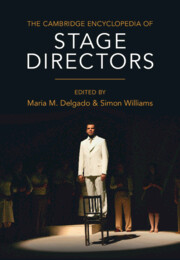
With a broader range of entries than any other reference book on stage directors, this Encyclopedia showcases the extraordinary diversity of theatre as a national and international artistic medium. Since the mid nineteenth century, stage directors have been simultaneously acclaimed as prime artists of the theatre and vilified as impediments to effective performance. Their role may be contentious but they continue to exert powerful influence over how contemporary theatre is made and engaged with. Each of the entries - numbering over 1,000 - summarises a stage director's career and comments on the distinctive characteristics of their work, alluding to broader traditions where relevant. With an introduction discussing the evolution of the director's role across the globe and bibliographic references guiding further reading, this volume will be an invaluable reference work for stage directors, actors, designers, choreographers, researchers, and students of theatre seeking to better understand how directors work across different cultural traditions.
This article examines the creation of an Urban Archive as an English Garden, a work that uses GPU-accelerated low-resolution wavefield synthesis (WFS) to combine field recordings, live performance and generative audio in real time. Owing to computational overhead, WFS is often pre-rendered, leading to a less dynamic and more static scope for the embodied and intersubjective nature of human sensory understanding, a tendency that can also be found in traditional soundscape composition. We argue that engagement with real-time WFS offers a new approach to soundscape composition, wherein musical-system design may have multiple agencies, or that of virtual environment, co-creator, archive and hybrid instrument. Through a post-phenomenological lens, an analysis of the work’s creation through different domains reveals how these technologies afford novel practices to engage with our sonic environments. Additionally, the article unpacks how this same process, grounded in site-responsive design offers new approaches to composition, performance and artistic collaboration across these practices.
The notion of sound space emerges as a multifaceted exploration within the music, artistic and architectural realms, delving into its evolution from a musical object to a transdisciplinary aesthetic event. Rooted in the interplay of sound and space, the term defies strict definition, reflecting a dynamic amalgamation of interpretations throughout its historical practices and conceptualisations. This article engages with different perspectives on the subject of sound space, bringing together a group of architects, sound engineers, artists and researchers – all of them dedicated to sound – to discuss the sensitive experience of listening to space, within material, and/or dematerialised realities. The methodology was based on a series of interviews, confronting their different points of view, therefore building a compelling retrospective around the subject of study. In this exploration, sound space emerges as a complex entity that transcends traditional boundaries, offering a unique lens through which practitioners redefine architecture, challenge perceptions and engage in a dynamic interplay between sound, space and the listener’s experience. The resulting territory is depicted as a rhizomatic system with diverse temporalities coexisting and influencing the understanding of sound space within phenomenal and material perspectives. It portrays a dynamic and evolving system, celebrating diversity and interaction in a transdisciplinary field.