To save content items to your account,
please confirm that you agree to abide by our usage policies.
If this is the first time you use this feature, you will be asked to authorise Cambridge Core to connect with your account.
Find out more about saving content to .
To save content items to your Kindle, first ensure no-reply@cambridge.org
is added to your Approved Personal Document E-mail List under your Personal Document Settings
on the Manage Your Content and Devices page of your Amazon account. Then enter the ‘name’ part
of your Kindle email address below.
Find out more about saving to your Kindle.
Note you can select to save to either the @free.kindle.com or @kindle.com variations.
‘@free.kindle.com’ emails are free but can only be saved to your device when it is connected to wi-fi.
‘@kindle.com’ emails can be delivered even when you are not connected to wi-fi, but note that service fees apply.
Informed by fascinating interviews, photographs, and previously unexamined archival materials, this book reveals a compelling story of Yugoslav avant-garde and experimental music from 1945 until 1991, ending with the year when all artistic activities came to a sudden halt with the start of the Yugoslav wars. It examines the political, social, and cultural events that gave rise to the flourishing avant-garde scene in the country and follows the emergence and development of Yugoslav cultural programs in the postwar period that made the republic a magnet for cultural exchange, through to the sudden and violent dissolution of those programs with the collapse of the political state. The book is the first full-length book in English on the subject, and provides an indispensable, interdisciplinary resource that will contribute to the preservation of this legacy. This title is also available as Open Access on Cambridge Core.
The founding and establishment of the Dominican order of friars was one of the defining developments of the first half of the thirteenth century. After a period of rapid growth and spread, the order set about establishing and promulgating forms of worship for use in all of its communities. This liturgy became highly influential and was used well beyond the Dominicans' own churches. This book considers the making of the Dominican liturgy and its chant from two perspectives: first, the material production of Dominican liturgical books, and second, the crafting of a unique Dominican liturgical tradition. This is explored through the microcosm of three thirteenth-century exemplars, which acted as a blueprint for the Dominican liturgy for centuries to come. This study of the physical and conceptual making of the liturgy, considered in dialogue, illuminates the development of the Dominican liturgy, granting us new insights into the practices and values of those involved.
In the history of Western music, no single figure has been as closely tied to the Enlightenment as Beethoven: he is regarded as the composer who embodies ideals such as freedom and humanism that many celebrate as the Enlightenment's legacy. This view, however, rests on a very narrow conception of the Enlightenment that aggressively stresses secularism and political liberalism. More recent historical research has shown that the Enlightenment's outlook on political and religious issues was more diverse and nuanced than traditional accounts have depicted it. The essays in this volume consider how new ways of thinking about the Enlightenment can alter the way we understand Beethoven and his music. By rethinking Beethoven and the Enlightenment, this book questions the Beethoven we know in both the popular and scholarly imagination and redefines the role the composer plays in the history of Western music.
'No Feelings', 'No Fun', 'No Future'. The years 1976 to 1984 saw punk emerge and evolve as a fashion, a musical form, an attitude and an aesthetic. Against a backdrop of social fragmentation, violence, high unemployment and socio-economic change, punk rejuvenated and re-energised British youth culture, inserting marginal voices and political ideas into pop. Rejecting both tired clichés and nostalgic myths, Matthew Worley provides the definitive account of how punk was constructed and utilised from the ground up. He takes youth culture seriously as a way of understanding history, demonstrating how punk not only reflected but directly impacted social and political history through its unique ability to provoke, disrupt and subvert. This revised and updated edition marks fifty years since the birth of punk and includes a new foreword from acclaimed music journalist, Paul Morley. It remains the foremost history of British punk.
Spain's musical history has often resided on – or been consigned to – the margins of historical narratives about mainstream European culture. As a result, Spanish music is universally popular but seldom well understood outside Iberia. This volume offers, for the first time in English, a comprehensive survey of music in Spain from the Middle Ages to the modern era, including both classical and popular traditions. With chapters from a group of leading music scholars, the book reevaluates the history of music in Spain, from devotional works of the Middle Ages and Renaissance to masterpieces of the postwar avant-garde. It surveys a deep legacy of classical music as well as a rich heritage of folklore comprising songs and dances from Spain's many regions, especially but not exclusively Andalusian flamenco. Folklore in turn informed the nationalist repertoire with which music lovers are most familiar, including pieces by Albéniz, Granados, Falla, Rodrigo, and many others.
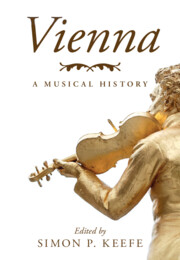
What is behind Vienna's world-wide reputation as a 'city of music'? Vienna's images of itself and outside opinions of its significance as a musical city capture internal and external preoccupations with the intricate details and ambitious visions that collectively articulate its unique ambience and status, This wide-ranging study of Viennese music, musicians, traditions, institutions and cultures provides a historical background and conceptual framework for understanding the centuries of musical accomplishments that underlie the city's mystique. The book explores questions of identity and place, and local traditions and practices, before considering musical networks, organizations, associations and businesses, and the musicians who thrived in them. Encompassing classical music from medieval liturgy to Mozart, Beethoven's symphonies to Strauss's waltzes, from Schubert to Schoenberg, the city is also well known for its musical theatre, live music in cafes and hostelries, klezmer, jazz, pop, rock, and hip-hop. The story continues.
Active in Chicago during the first half of the twentieth century, Florence B. Price was an African American composer, pianist, organist and music teacher, and a central figure in the first generation of Black composers of art music in the US. Price's aesthetic engaged with Black music of the enslavement period, and her gendered racial identity deserves careful consideration, while her geography and era distinguish her trajectory from those of her European and Anglo-American counterparts. This Companion introduces readers to archives and sources on Price, the style and genre of her music, and her artistic communities, and reception. It contextualizes Price's music and life in relation to the sociocultural climate of her time, the Black classical scene to which she belonged, and the compositional aesthetics that informed her craft. It offers an alternative view of music's capacity to uplift and amplify underrepresented voices.
For centuries, women have organized and hosted social gatherings known as 'salons,' which have served as sites of women's creativity and agency in the arts, sciences, and letters – especially music. This volume offers new understandings of women's musical salons across four centuries from North America, Latin America, Europe, North Africa, and the Ottoman Empire, foregrounding an often-overlooked platform of women's musicianship in cross-cultural perspective. Drawing on disciplines including musicology, ethnomusicology, women's and gender studies, cultural and performance studies, film studies, art history, anthropology, and Jewish studies, the authors present a new history of women and music through the lens of musical salon culture. The twenty-five case studies included in the book present an array of practices and manifestations of the institution of musical salons. These cases demonstrate how women from a wide range of social and cultural backgrounds used salons as sites of agency, shaping their musical environments according to their distinctive interests and ideals.
Electronic dance music is increasingly the focus of a multitude of academic research projects around the world but has been drastically under-represented in accessible core published material. This innovative scholarly collection provides an important 'first stop' for researchers and students wishing to work in this area. It examines the key features of numerous electronic dance music scenes and (sub)genres alongside discussions of the musical, social and aesthetic experiences of participants to consider how these musical practices create purpose and cultural significance for millions around the world. At the same time, it introduces diverse theoretical approaches to the understanding of electronic dance music cultures and addresses the issues and debates in electronic dance music culture studies. Adopting an interdisciplinary approach drawn from both music and cultural studies – including music aesthetics, technologies, venues, and performativity – from a broad geographical perspective, the volume sheds fresh light on electronic dance music cultures.
Opera Remixed critically examines operatic hybridity and considers the opportunities and challenges of disrupting traditional paradigms of classical singing. Accounts of crossover forms like 'popera' and musical theatre explore alternative approaches to operatic vocality, examining how entrenched genre ideologies are challenged by creative agents, practices, and technologies at work near opera's borders. To illustrate these dynamics, the second half of the Element presents a case study of operatic arias reimagined for TikTok as one possible blueprint for how opera might embrace innovation and 'remix' itself for a contemporary audience. Opera Remixed concludes with a critique of the elitist traditions that hinder opera's capacity for renewal, arguing that the art form will only be able to embrace a truly inclusive future by relinquishing constraints of canonical purity.