To save content items to your account,
please confirm that you agree to abide by our usage policies.
If this is the first time you use this feature, you will be asked to authorise Cambridge Core to connect with your account.
Find out more about saving content to .
To save content items to your Kindle, first ensure no-reply@cambridge.org
is added to your Approved Personal Document E-mail List under your Personal Document Settings
on the Manage Your Content and Devices page of your Amazon account. Then enter the ‘name’ part
of your Kindle email address below.
Find out more about saving to your Kindle.
Note you can select to save to either the @free.kindle.com or @kindle.com variations.
‘@free.kindle.com’ emails are free but can only be saved to your device when it is connected to wi-fi.
‘@kindle.com’ emails can be delivered even when you are not connected to wi-fi, but note that service fees apply.
Vitamins B6 (that is, pyridoxin and its analogues) and B7 (that is, biotin or vitamin H) are essential molecules for many physiological processes. In addition to their well-known involvement in several enzymatic reactions, recent discoveries revealed their participation in other processes, for example, in gene expression via epigenetic processes, such as biotinylation of proteins in the case of biotin. Plants, fungi, archaea and most bacteria synthesise both vitamins, whereas animals and humans lack enzymes for their biosynthesis and depend on their exogenous supply. At least in the case of biotin, human gastrointestinal microbiota can likely partly satisfy the need. Both vitamins are water soluble and require a transporter for efficient absorption after oral administration; they can be rapidly excreted; hence, they are considered largely non-toxic. In addition to physiological and kinetic aspects of vitamin B6 and biotin, this review, which is based on a search in PubMed up to 2023, covers sources of these vitamins, the impact of food treatment on their content, causes and symptoms of deficiency and specific mutations related to their function. Currently available literature on the analytical determination of these vitamins in biological fluids, possible pharmacological uses and symptoms of toxicity, although rare, are also included.
The purpose of this study was to measure meal quality in representative samples of schoolchildren in three cities located in different Brazilian regions using the Meal and Snack Assessment Quality (MESA) scale and examine association with weight status, socio-demographic characteristics and behavioural variables. This cross-sectional study analysed data on 5612 schoolchildren aged 7–12 years who resided in cities in Southern, Southeastern and Northeastern Brazil. Dietary intake was evaluated using the WebCAAFE questionnaire. Body weight and height were measured to calculate the BMI. Weight status was classified based on age- and sex-specific Z-scores. Meal quality was measured using the MESA scale. Associations of meal quality with weight status and socio-demographic and behavioural variables were investigated using multinomial regression analysis. Schoolchildren in Feira de Santana, São Paulo and Florianópolis had a predominance of healthy (41·8 %), mixed (44·4 %) and unhealthy (42·7 %) meal quality, respectively. There was no association with weight status. Schoolchildren living in Feira de Santana, those who reported weekday dietary intakes, and those with lower physical activity and screen activity scores showed higher meal quality. Schoolchildren aged 10–12 years, those who reported dietary intakes relative to weekend days, and those with higher screen activity scores exhibited lower meal quality.
Firefighters face significantly elevated cancer risks due to chronic exposure to carcinogenic fire effluents and occupational stressors. In 2022, the World Health Organization classified firefighting as a carcinogenic occupation, linking it to increased incidences of cancers, including mesothelioma, bladder, prostate, colon and melanoma. Drawing on UK-specific data where possible, this narrative review explores how dietary strategies, particularly the Mediterranean diet, may complement existing protective measures in mitigating these risks. It investigates specific food-based nutrients that show promise in addressing risks associated with fire effluent contaminants, examining nutrient-mediated mechanisms and their relevance to firefighter health. The review also highlights the distinct combination of challenges firefighters face in adopting healthier dietary patterns, including disrupted routines, group eating cultures and gaps in nutritional education. While the evidence for firefighter-specific dietary interventions is still emerging, this review highlights the potential of sustainable dietary strategies to significantly reduce cancer risks and improve long-term health outcomes. Finally, it calls for targeted research and interventions to refine these strategies and deliver tangible health benefits for firefighters worldwide.
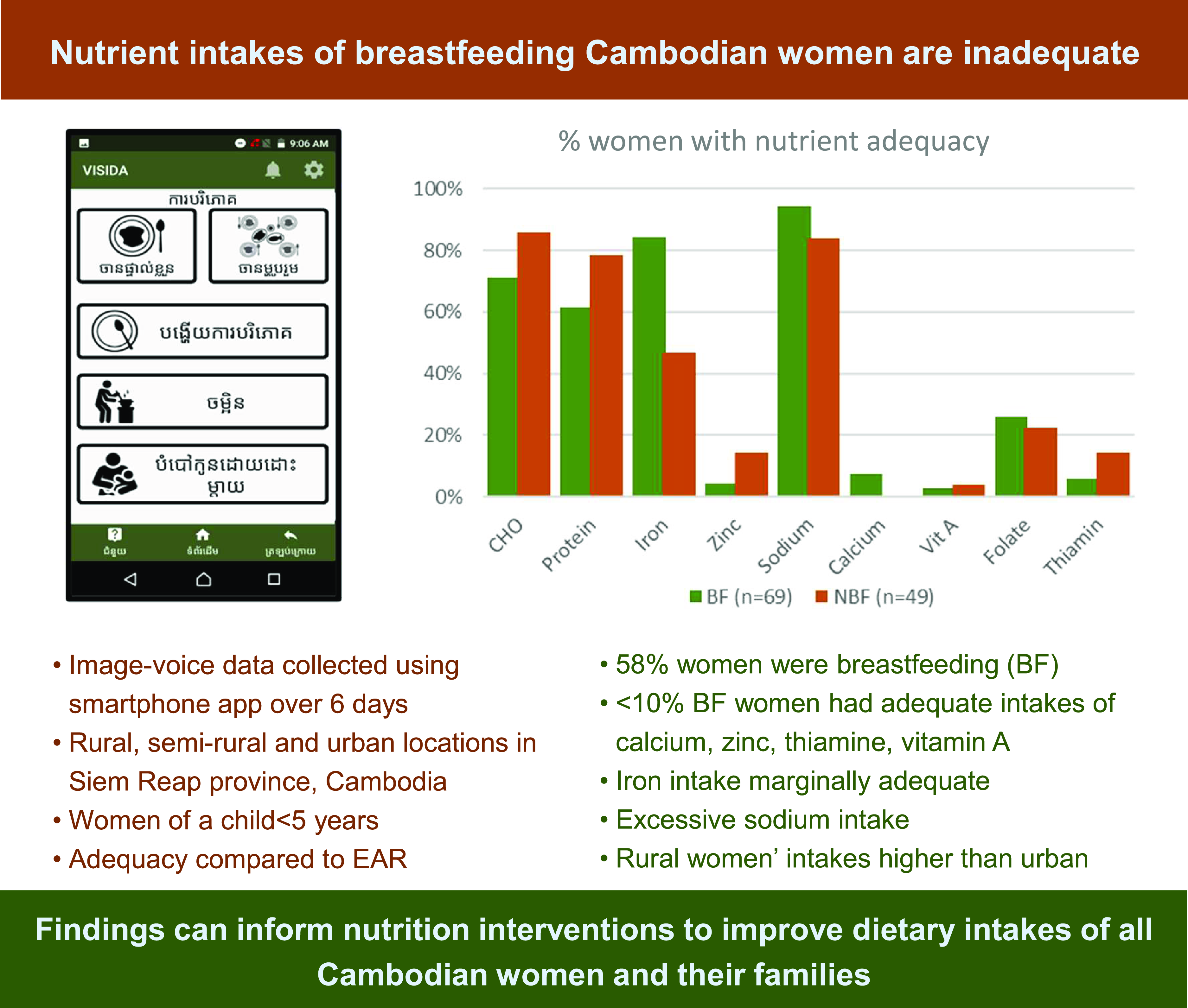
Women and children are priority populations in Cambodia, however no dietary intake information exists on breastfeeding women for informing nutritional intervention. The aim was to assess nutritional adequacy of dietary intakes of Cambodian women, by breastfeeding status and locality. A cross-sectional assessment of dietary intake was conducted with non-pregnant women ≥18 years of age with at least one child under 5 years in rural, semi-rural and urban locations in Siem Reap province, Cambodia. Women used a bespoke smartphone application to capture three-day image-voice records on two occasions. Data were analysed using a semi-automated web platform incorporating a tailored Cambodian food composition database. Estimated Average Requirements were used to assess adequacy of nutrient intakes. Of 119 women included in the analysis, 58% were breastfeeding, and 63% were rural or semi-rural. Protein, carbohydrate, vitamin B12, iron, and sodium were adequate for over 65% of women. Less than 10% of women had adequate vitamin A, vitamin C, thiamine, calcium, and zinc intakes, in contrast to low deficiency rates reported for Cambodian women. Despite breastfeeding women recording higher dietary intakes, adequate intakes of protein, carbohydrate, vitamin A, thiamine, and zinc were lower than non-breastfeeding women due to higher requirements. Rural women generally had higher nutrient intakes, and urban women had inadequate folate intake. This study indicates dietary intakes of Cambodian women in Siem Reap province, particularly breastfeeding women, are not nutritionally adequate. Data collected using image-voice dietary assessment could inform nutrition interventions and policies in Cambodia to improve dietary intakes and nutrition-related health outcomes.
Timing of food intake seems to impact metabolism and circadian rhythms, and eating in synchronisation with the rhythms has been suggested to be favourable for health. This study aims to evaluate temporal meal patterns in the Swedish population and explore differences between population groups. Further, to investigate whether temporal meal patterns are associated with energy and nutrient intake, data were sourced from two national dietary surveys Riksmaten Adolescents 2016–2017 and Riksmaten Adults 2010–2011, with a total of 4763 participants. Food intake and temporal meal patterns were measured with 3- to 4-day food diaries and/or 24-hour recalls. The average meal frequency was 4·2 eating occasions (sd 0·9) per day for adolescents with an eating window of 11·9 h (sd 1·7). For adults, it was 4·6 (sd 1·1) eating occasions and an eating window of 12·0 h (sd 1·9) Meal frequency was positively associated with energy intake in both adolescents (r = 0·47) and adults (r = 0·51). Meal frequency was higher with age, and adolescents skipped breakfast more often, and had a later energy distribution than adults. A higher eating frequency and eating breakfast are associated with a higher absolute intake of whole grains, as well as Vitamin D and folate. A higher eating frequency makes it more likely to reach nutrient requirements. However, a higher eating frequency was also associated with a higher intake of free sugars. The findings can serve as reference data for temporal meal patterns in the Swedish context and also show differences within a population, which can be valuable insights for public health nutrition.
Approximately 60 million individuals worldwide are currently living with dementia. As the median age of the world’s population rises, the number of dementia cases is expected to increase markedly, and to affect ∼150 million individuals by 2050. This will create a huge and unsustainable economic and social burden across the globe. Although promising pharmacological treatment options for Alzheimer’s disease – the most common cause of dementia – are starting to emerge, dementia prevention and risk reduction remain vital. In this review, we present evidence from large-scale epidemiological studies and randomised controlled trials to indicate that adherence to healthy dietary patterns could improve cognitive function and lower dementia risk. We outline potential systemic (e.g. improved cardiometabolic health, lower inflammation, modified gut microbiome composition/metabolism, slower pace of aging) and brain-specific (e.g. lower amyloid-β load, reduced brain atrophy and preserved cerebral microstructure and energetics) mechanisms of action. We also explore current gaps in our knowledge and outline potential directions for future research in this area. Our aim is to provide an update on current state of the knowledge, and to galvanise research on this important topic.
Foods in squeeze pouches are widely available and are marketed as practical, convenient, and healthy food options for infants and children. However, these products do not provide adequate nutrition for growth(1) or align with the front-of-pack health claims. To develop effective strategies and guidance for squeeze pouch consumption, we need to understand which squeeze pouches are used, by whom, and why. A cross-sectional online survey of Tasmanian residents was conducted and included questions about the frequency and types of squeeze pouches consumed by infants and children (aged 0–18 years), the demographics of families who use squeeze pouches frequently and an open-ended question to explore parental motivations for using these products. Data were analysed using descriptive statistics and logistic regression identified demographic predictors of frequent squeeze pouch use (weekly or more). Thematic analysis of qualitative survey responses explored parental experiences. Parents (n = 179; 78% female, 37% aged 35–45 years, 84% born in Australia; 73% university educated) reported on the squeeze pouch use of n = 248 children. Most infants (0–2 years; 71.4%) used squeeze pouches weekly (85.7% consumed in past year), favouring fruit-based (57%), dairy-based (57%), vegetable-based (50%), and meal-based (36%) pouches. Over half of children aged 2–5 years (62.5%) consumed pouches weekly (81.3% consumed in past year), preferring dairy-based (73%) and fruit-based (19%) pouches. Over a third of 6–12-year-olds (35.2%) consume pouches weekly (69.3% consumed in past year), including dairy-based (66%) and fruit-based pouches (20%). A smaller proportion (13.1%) of teenagers (13–17 years) consume pouches weekly (33.3% consumed in past year), primarily choosing dairy-based (26%) and fruit-based (6%) pouches. Younger parents were over 5 times more likely to be frequent users than parents aged over 46 years (18–34 years OR: 5.3, 95% CI 1.8–15.7; 35–45 years OR: 6.0, 95% CI 2.8–12.8). Speaking a language other than English (OR: 4.8; 95% CI 1.5–14.6) also significantly predicted frequent squeeze pouch use, while gender, education, employment status, income, and food security were not associated. Key themes from parents who identified as frequent squeeze pouch users centred around convenience, on-the-go feeding, and managing fussy eating or sensory needs. Parents discussed the societal paradox they experienced, with parents expressing a dislike for squeeze pouches yet using them for behaviour modification as a food reward or buying in bulk when discounted. An understanding of commercial food influences, and greater environmental consciousness were the most common themes described by parents who identified as non-users. This study highlights the widespread use of squeeze pouches among children, particularly in younger age groups but also into middle childhood and adolescence. Comprehensive national data is needed to inform public health strategies that minimise the use of squeeze pouches in children of all ages.
Hospital food service quality significantly impacts patient satisfaction with overall care(1) and can influence food intake, thereby increasing the risk of malnutrition(2). By contrast, meals tailored to patients’ needs result in lower complications and hospitalisation costs(3). With Australia’s ageing population and projected increases among racial and ethnic minority migrants, service delivery must adapt to promote equity and inclusion in the healthcare system. However, data is lacking on the lived experience, preferences, and acceptance of hospital food service and meal quality among older patients from culturally and linguistically diverse (CALD) backgrounds. This study aimed to bridge this gap by investigating the differences in hospital food services related to cultural and ethnic backgrounds. Semi-structured qualitative interviews were planned among 15 Australian-born and 15 CALD-background patients, aged 65 years or over, admitted to the Department of General Medicine at Flinders Medical Centre. Patients admitted with a highly contagious infectious disease (e.g., COVID-19), those referred for palliative care, receiving parenteral or enteral nutrition, or on nil-by-mouth orders were excluded. Translators were available to participants upon request. With participants’ consent, all interviews were audio recorded and transcribed verbatim. Transcripts were analysed thematically using Braun and Clarke’s six-phase process(4). Data was inductively coded with a phenomenological perspective to explore participants’ experiences with hospital food services. Similar codes were grouped together and further developed into themes through iterative discussions with the research team. The current analysis involved six participants from each group to present preliminary results. Among the 12 participants, the mean age was 82 years, ranging from 72–92 in the Australian-born group and 68–92 in the CALD group. Five primary themes emerged: (1) No Complaints—participants did not want to complain about their meals, preferring staff to focus on their healthcare. This attitude was compounded for CALD participants who lacked the language to voice complaints; (2) Food and Identity—CALD participants viewed themselves separately from Australian-born patients, with the lack of culturally familiar food contributing to a feeling of being the minority; (3) Acceptance—the food service was viewed in the context of the overall hospital system, with participants accepting that meals may not suit their preference; (4) Experiences of the Food Service—influenced by participant’s individual preferences for meal quality, menu options, and staff interactions; and (5) Nutrition and Health—All participants had a preference for smaller portions due to their perception of reduced nutritional needs, yet meals were also valued for enjoyment. These preliminary results indicate that hospital food services should offer culturally familiar options, improve patient-staff communication, and provide personalised, smaller portions to enhance patient experience. Addressing the enablers and barriers to meeting cultural and individual dietary needs in hospitals will promote equity, diversity, and inclusion in healthcare.
Dietary fat type has been suggested as a risk factor for development of multiple sclerosis (MS)(1); however, the evidence is inconclusive. We aimed to test associations between dietary patterns correlated with intake of saturated fat (SFA), polyunsaturated fat (PUFA), monounsaturated fat (MUFA), along with the Dietary Approaches to Stop Hypertension (DASH) score, and risk of a first clinical diagnosis of central nervous system demyelination (FCD), a common precursor to the diagnosis of MS. We used data from the Ausimmune Study, a multicentre Australian case-control study of people with an FCD, aged 18–59 years. Using dietary intake data from a 101-item food frequency questionnaire(2), dietary patterns characterised by fat type (DP1; DP2) were generated through reduced rank regression with SFA, PUFA and MUFA as response variables. DASH scores were calculated. Logistic regression with full propensity score matching (matched on age, sex, study region, education, smoking history, history of infectious mononucleosis, deseasonalised serum 25-hydroxyvitamin D concentration, total energy intake, dietary misreporting) was used to test associations between dietary patterns (DP1, DP2, DASH) and FCD (cases = 259, controls = 497). Interactions between dietary exposures and sex were explored. DP1 was positively correlated with all fats and was characterised by high positive factor loadings for whole milk, processed red meat, and high-fat cheese, and high negative factor loadings for skimmed milk and fruits. DP2 was negatively correlated with SFA, but positively correlated with PUFA and MUFA, and was characterised by high positive factor loadings for margarine, nuts, and wholemeal bread, and high negative factor loadings for butter, whole milk, and sugar, preserves and confectionary. There were no associations between DP1, DP2 or DASH with FCD. These dietary patterns, characterised by fat type, showed no association with risk of FCD. To generate robust evidence on the role of dietary fat in MS onset, dietary patterns characterised by fat type could be explored in other population groups.
Childhood obesity persists at historically high rates globally, including an increasing number of children with severe obesity(1–3). Despite the growing demand of families with children needing treatment, effective interventions are largely unavailable or inaccessible(4,5). Using technology to transform such services that are conventionally delivered in person and offering electronic health (e-Health) interventions, may address limitations of current childhood obesity treatment. A randomised control trial (RCT) with a waitlisted control group evaluated the effectiveness of a 10-week family-focused web-based healthy lifestyle program with health coaching sessions, for treating childhood overweight and obesity, over 10 weeks. Outcome measures included change in children’s body mass index (BMI) z-score, waist circumference, dietary intake, physical activity, and quality of life, collected online at baseline and end of the web-based program (10 weeks). A total of 148 children (125 families) aged 7–13 years, with BMI ≥ 85th percentile, living in Victoria, Australia, were recruited and randomised to intervention (Cohort 1) or waitlist control (Cohort 2), of which 102 children (85 families) completed the RCT. Cohort 2 received no intervention during the control period. A clinically meaningful decrease in BMI z-score, in the context of weight maintenance and height growth, was observed in Cohort 1 compared to a negligible change found in Cohort 2 (mean difference in change in BMI z-score Cohort 1 vs Cohort 2 = −0.1; 95% confidence interval, −0.2, –0.0). Compared with Cohort 2, Cohort 1 adopted health-supporting lifestyle behaviours, such as improved diet quality and increased physical activity; and reported a clinically significant improvement in children’s quality of life at 10 weeks. Cohort 2 demonstrated similar changes in outcome measures after receiving the web-based program. Findings from this study furthers the growing body of evidence on the potential of e-Health interventions to upscale childhood obesity treatment. E-Health interventions, including a low-intensity program that requires minimal contact time with health professionals online, can enhance the effectiveness of conventional treatment services.
Irritable bowel syndrome (IBS) is a chronic disorder of gut-brain interaction that affects 3.5% of Australians and is characterised by abdominal pain and altered bowel motions(1). People with IBS have described low treatment satisfaction from healthcare providers and services, citing a lack of person-centred care(2). This is concerning given that the dietary management of IBS using the low fermentable oligosaccharide, disaccharide, monosaccharide and polyol (FODMAP) diet (LFD) is the most efficacious dietary treatment for global symptom improvement(3). This study aimed to explore people with IBS’s experiences of a dietetic-mediated LFD and identify strategies for optimising LFD implementation. A qualitative descriptive study design involved semi-structured interviews with adults with IBS who participated in a dietetic-led research study on predictors of response to the LFD. Participants who commenced at least one of the three LFD phases between October 2020 and April 2022 were invited to participate. An inductive, iterative process was used to code participant transcripts and confirm the final themes. Themes were mapped against the Theoretical Domains Framework (TDF) and Behaviour Change Wheel (BCW) to inform interventions to optimise the delivery of the LFD. Seventeen adults (32%, 17/53 response rate) aged 39 ± 15 years and 88% female-identifying consented to interviews. All phases of the LFD were completed by n = 9, with n = 4 completing Phases 1 and 2, n = 1 completing Phase 1 only and n = 3 commencing but not completing the first phase. Two main themes emerged. Firstly, patients wanted more dietetic appointments and support to implement the LFD. Participants wanted more frequent dietetic contact (approximately halfway through Phase 1, early to mid-Phase 2 and three to six months after commencing Phase 3) and appointments that were tailored to their individual needs and circumstances (face-to-face, phone and/or email) in each phase to troubleshoot diet implementation and manage symptoms. Further, more detailed education materials were requested, including recipes, acceptable foods, including commercial foods, and meal plans. Secondly, participants wanted a person-centred, multidisciplinary care approach with health professionals working together to be considered, given the complexity of IBS, especially with incomplete symptom resolution with the LFD. Participants recognised that stress, general anxiety and lifestyle factors contributed to symptoms and further support beyond the LFD was required. When mapped to the TDF and BCW, it was evident that environmental context and resources, knowledge, skills, beliefs and capabilities of the TDF and restructuring of the environment, education, training and self-monitoring domains of the BCW overlapped. The findings emphasise the need for a more person-centred care model using varied modes of delivery designed to suit individual needs and behaviour change requirements. Implementing multidisciplinary care, alongside behaviour change techniques, may assist treatment completion and IBS management.
Discretionary foods that are energy-dense and nutrient-poor contribute to over one third of total energy intake in Australian children and adults, and the typical portion sizes of many discretionary foods have increased significantly in the last two decades(1). The portion size norms (described as a typical perception of how much of a given food people choose to eat at a single eating occasion) are likely to have increased concurrently, with larger sizes now being considered the new normal(2). Public health interventions are urgently needed to reduce the portion size norms and consumption of discretionary foods(3), but the acceptability of such interventions remains unknown. Therefore, this qualitative study aimed to gain insights into consumers’ attitudes towards potential interventions targeted at promoting portion control of discretionary foods. Four online focus group sessions were conducted via Zoom with healthy Australian adults who regularly consume discretionary foods. A question guide was developed to gather participants’ perspectives around four potential public health interventions; reduction of the default serving sizes, increasing serving size options, changes to package sizes, and improving serving size labelling. A female facilitator moderated all focus groups, with a second moderator present to capture other relevant details. Collected data were analysed using a hybrid approach combining deductive and inductive thematic analyses. A total of 35 participants completed the study (19 females, mean age 38 ± 14 years). Participants identified the current food environment as promoting overconsumption; larger serving sizes were reported to be more ubiquitous and better value for money than smaller size options. An overall positive attitude towards the proposed interventions was noted. Out of the four proposed interventions, participants considered the most acceptable intervention to be providing a wider range of serving size options while maintaining a consistent unit price. Other acceptable interventions included reducing the default serving sizes with concurrent price reduction; education and clear guidance around portion size selection (for example, the involvement of health professionals to promote portion control, along with relevant recommendations of appropriate portion sizes from health authorities); more practical on-pack serving size suggestions; and innovative package designs that enable better portion control without contributing to food and plastic waste. In conclusion, participants identified a need for and were in support of interventions aimed at the portion control of discretionary foods. Further research should focus on examining the feasibility and effectiveness of the potential interventions to reduce the purchasing and consumption of large serving sizes. More efforts from public health authorities are required to develop practical and tailored recommendations for consumers around appropriate portion sizes for discretionary foods. Collaboration with the food industry and policy makers is also necessary for implementing public health interventions to reduce the excessive intake of discretionary foods.
The various COVID-19 lockdowns and restriction periods significantly changed both food accessibility and availability, which considerably impacted food practices of Australians. Food insecurity prevalence increased in Tasmania(1), but data from elsewhere in Australia is scarce and other changes in food shopping habits have not been reported. We aimed to explore Australian adults’ self-reported experiences of running out of food, spending on food and food shopping habits during the COVID-19 restriction periods in 2020. An online survey of Australian adults was administered via Qualtrics. Chi-square tests examined bivariate associations between categorical variables (gender, age, change in employment status, education level, main language spoken at home and marital status), and responses to the main research questions. Respondents (n = 764) were predominantly female (86%), primarily from Victoria (48%), with the majority over 55 years of age (57%, mean age [SD] 53.4 [18.1] years). Additionally, half (51%) were not in paid employment. Overall, 11% reported running out of food and not being able to purchase more. There was an association between age and running out of food (4% of the 64–74 and 75+ year old age groups ran out of food compared to 23% of the 18–24 year olds, p < 0.001, chi square). The most reported reasons for running out of food, out of six provided options, were ‘lack of availability in the shops’ (74%) and ‘lack of money’ (34%). There was no association with gender, employment status change, education level, main language spoken at home, or marital status and running out of food. When asked how the amount of money spent on food changed during COVID-19, most respondents (n = 318, 42%) reported spending about the same amount of money as before the pandemic, 284 (37%) reported spending more and 162 (21%) reported spending less on food. About a third of respondents (38%, n = 293) reported buying more food than they needed since the start of COVID-19 and 9% (n = 66) reported wasting more food than usual. This did not differ with age, gender, employment status change, education level, main language spoken at home, or marital status. Nearly two-thirds (63%) reported that they had changed how they bought their food since the start of COVID-19.Of these 75% reported a change in frequency of food shopping and 45% reported a change in the amount of time spent food shopping. Just under half (44%) reported a change in the amount of money spent on food and 42% reported a change in the food bought. The COVID-19 pandemic restrictions caused significant changes to Australians’ food procurement and younger people appeared more at risk of food insecurity. Policies that support young people are important to ensure food security in the most vulnerable groups.
Handgrip strength (HGS) is a marker of protein-energy status in people on haemodialysis (HD). Best practice guidelines recommend measuring HGS before the commencement of the dialysis session, which is not always possible(1). No previous research has compared the reliability, reproducibility and agreement of HGS values pre- and mid-dialysis. Here we aimed to determine the reliability, reproducibility and agreement of HGS values pre- and mid-dialysis. Participants were recruited from four HD units (n = 47). Eligible participants were stable on HD for at least 3 months and not acutely unwell. HGS was measured in triplicate on the non-fistula arm before dialysis (pre-dialysis HGS) and two hours into dialysis (mid-dialysis HGS) for three consecutive weeks. Wilcoxon signed ranked tests were used to determine the difference between pre and mid-HGS. Friedman tests with Dunn’s post hoc test were used to determine the repeatability of the HGS measures over three weeks. Bland Altman plots were used to determine the agreement between pre- and mid-measures. We observed that HGS measures taken pre- and mid-dialysis differed statistically (19.0 kg [IQR, 14.5–28.1] vs 19.9 kg [IQR, 15.0–28.4], p = 0.005), but not to a clinically relevant level(2,3). There were no significant differences in pre-dialysis HGS measures (p = 0.34) nor mid-dialysis HGS measures (p = 0.16) over the 3 weeks. Bland Altman plots indicated agreement between pre- and mid-dialysis HGS measures, suggesting no systematic bias in HGS. This study found that HGS taken at either pre- or mid-dialysis were reliable and reproducible. These data indicate reasonable agreement between pre- and mid-dialysis HGS measures. Mid-dialysis HGS is a valuable tool for monitoring changes in the nutritional status of HD patients, providing HGS is consistently measured mid-dialysis.
Children attending Early Childhood Education and Care settings (ECEC) receive half of their daily nutritional needs from these services(1,2). Issues such as poor menu quality and high food waste in ECEC have been documented(3), which has implications for human and planetary health. Thus, monitoring food served and wasted in ECEC is crucial. Weighed measures are most rigorous, but reliable weighing protocols are needed to support accuracy(4). A self-administered audit tool for ECEC cooks was developed to measure the weight of food served (for nutritional analysis) and food wasted at pre-consumer (serving waste) and post-consumer (plate waste) levels. This tool was used in previous ECEC research(3) and offers a low cost, scalable option for monitoring diet quality and food waste. The aim of the present study was to assess the equivalence of the audit tool across administrators. Data was collected in June 2024 at a university food laboratory by a trained researcher (TR) and six research assistants (RAs) using the same protocol, and under conditions similar to those in ECEC settings. Menu and waste data from previous ECEC research(3) were used to simulate provision and waste of one meal and two snacks for 25 children over two days. Raw ingredients, simulated serving waste and plate waste were weighed and photographed first by the TR, followed by RAs. Weighing was conducted individually, and data entry sheets coded to ensure blinding of data among researchers. Coded data were entered into an Excel spreadsheet, with accuracy checks. The mean % difference and standard deviation of difference between TR and RAs for weights of raw ingredients, total food served, serving waste and plate waste were calculated. Equivalence testing was used to verify if the mean % (and 90% CI) were within established margins (± 10%). Results showed high reliability of the tool between users, with statistical equivalence for weight comparisons of total prepared food served, total serving waste and total plate waste (all p’s < 0.001). For raw ingredients most items (45 of 54) were statistically equivalent (all p’s < 0.05). Results were inconclusive for prepackaged items, grated apple and sweet chilli sauce (n = 5) and not equivalent for some small items (oil and garlic, n = 4). The audit tool could therefore be considered reliable for measuring total food served, serving waste, and plate waste, and provided accurate measurements for most individual raw ingredients. The tool provides a scalable, low-cost option to audit food provision and waste in ECEC settings. Its self-measurement enables research in geographically diverse ECEC settings. It also has the potential of becoming a support strategy for ECEC to monitor and improve their own food provision and waste levels. Future research could focus on digitalisation of the tool.
Chinese immigrants living in Western countries are at a higher risk of developing chronic diseases compared to those in China, due to the development of unhealthy dietary patterns during the process of acculturation(1). Australia, with 2.3% of its population being Chinese-born(2), serves as a representative country to explore Chinese immigrants’ food choice determinants. Food choice determinants have been widely researched, with numerous factors identified such as affordability, taste preferences and hunger/satiety. Contento (2018) developed a comprehensive framework which identified and categorised over 30 determinants into four socio-ecological groups(3). Therefore, the focus of current research is not the identification of food choice determinants but to explore the interactions among these determinants. Understanding the cultural influence on food choice is vital for target groups with a shared ethnic background. This study aimed to qualitatively explore the similarities and differences in food choice determinants between Chinese people in mainland China and those living in Australia. Ethical approval for this study was obtained from Monash University Human Research Ethics Committee. Eighteen participants were recruited for semi structured in-depth interviews from June 2021 to March 2022, with eight from Australia and ten from mainland China. Convenience and snowball sampling methods were employed to ensure a diverse sample regarding socio-economic background, occupation, health status, age, and education level. Interviews were conducted in Mandarin via in-person or video/voice calls and were audio-recorded and transcribed verbatim. Thematic analysis and investigator triangulation were used for data analysis. Four themes were identified. (a) Food choice determinants were influenced by nutrition perceptions and personal food philosophy. Chinese Australian immigrants were influenced by Western nutrition beliefs to a greater extent than their counterparts living in mainland China. Non-scientific or controversial nutrition beliefs were common. Personal food philosophy (e.g., eating food is for survival only, or for enjoyment, or for health) profoundly influences food choices. (b) Chinese people adjusted their dietary habits in response to clinical symptoms or self-observed physiological changes, such as, gaining weight or digestive issues. (c) Convenience was a predominant food choice determinant due to factors like long working hours, lack of motivation to cook, lack of cooking skills, time restrictions, and viewing cooking as a chore. (d) Different food environments in China and Australia lead to distinctive food choices. Chinese Australians were more price-sensitive, had more food safety concerns, and cooked more frequently at home than mainland Chinese, due to differences in food affordability, accessibility and information exposure between these two countries. Importantly, nostalgia for childhood foods had a unique influence on certain food choice behaviours in Chinese Australians. These cultural characteristics in food choice determinants should be considered by health educators, nutrition professionals, and policymakers when developing culturally appropriate health interventions for Chinese people.
Flavonoids, found in plant foods, are becoming increasingly recognised for their health benefits(1). A valid, reliable and short dietary assessment tool is necessary to assess flavonoid intake, as current methods are burdensome for researchers and participants. This study aimed to evaluate the validity and reproducibility of a flavonoid food frequency questionnaire (Flav-Q), which was derived from the Kent & Charlton Flavonoid Food Frequency Questionnaire (FFQ)(2). The Flav-Q contains 23 items and was validated against repeated 24-hour dietary recalls in an Australian adult population (18y+). The Flav-Q was administered at four time-points over 12 months period (n = 80). At each time-point, two 24-hour dietary recall surveys were completed using Intake-24(3). Usual flavonoid intake was assessed by cross-referencing food lists with the Phenol-Explorer database and averaged using the multiple source method (MSM) for participants who had at least 4 recalls. The criterion validity of the Flav-Q at baseline was compared against the usual intake using the Wilcoxon signed-rank test, Spearman’s correlation coefficient, Bland-Altman plots, and Cohen’s kappa (κ)(4). The reproducibility of the baseline Flav-Q (Flav_Q1) was compared with time points 2, 3, and 4. Mean total flavonoid intake was higher for Flav-Q1 compared to usual intake (443.2 mg/day vs 234.4 mg/day, p < 0.001) and overestimated subclass intake except for flavanones. Moderate to strong correlations were found between Flav-Q1 and usual intake for total flavonoids (r = 0.66, p < 0.001; κ = 0.45, p < 0.001) and subclasses flavan-3-ols (r = 0.72, p < 0.001; κ = 0.53; p < 0.001)), flavonols (r = 0.55, p < 0.001; κ = 0.40, p < 0.001), flavanones (r = 0.49, p < 0.001; κ = 0.30, p = 0.007), and a weaker non-significant correlation for anthocyanin (r = 0.38, p < 0.001; κ = 0.15, p = 0.18) and flavones (r = 0.34, p < 0.001; κ = 20, p = 0.07). Bland-Altman plots showed a large bias and wide limits of agreement (61.64%) for total flavonoid intake. Flav-Q demonstrated high reproducibility across all timepoints (Flav-Q1 vs Flav-Q2 r = 0.82, p < 0.001; κ = 0.70, p < 0.001), Flav-Q1 vs Flav-Q3 (r = 0.68, p < 0.001; κ = 0.47, p < 0.001), Flav-Q1 vs Flav-Q4 (r = 0.63, p < 0.001; κ = 0.47, p < 0.001). Mean percentage differences between repeated timepoints for total flavonoid ranged from 19% to 31%, with Bland-Altman plots showing good levels of agreement. Overall, the Flav-Q tool was reproducible and demonstrated some agreement for assessing the intake of total flavonoid and its subclasses. However, further validation to determine reasons for over-estimation is necessary.