To save content items to your account,
please confirm that you agree to abide by our usage policies.
If this is the first time you use this feature, you will be asked to authorise Cambridge Core to connect with your account.
Find out more about saving content to .
To save content items to your Kindle, first ensure no-reply@cambridge.org
is added to your Approved Personal Document E-mail List under your Personal Document Settings
on the Manage Your Content and Devices page of your Amazon account. Then enter the ‘name’ part
of your Kindle email address below.
Find out more about saving to your Kindle.
Note you can select to save to either the @free.kindle.com or @kindle.com variations.
‘@free.kindle.com’ emails are free but can only be saved to your device when it is connected to wi-fi.
‘@kindle.com’ emails can be delivered even when you are not connected to wi-fi, but note that service fees apply.
Here, the authors report a detailed method of growing LaAlGe, a nonmagnetic Weyl semimetal, thin film on silicon(100) substrates by molecular beam epitaxy and their structural and electrical characterizations. About 50-nm-thick LaAlGe films were deposited and annealed for 16 h in situ at a temperature of 793 K. As-grown high-quality films showed uniform surface topography and near ideal stoichiometry with a body-centered tetragonal crystal structure. Temperature-dependent longitudinal resistivity can be understood with dominant interband s–d electron–phonon scattering in the temperature range of 5–40 K. Hall measurements confirmed the semimetallic nature of the films with an electron-dominated charge carrier density of ~7.15 × 1021 cm−3 at 5 K.
β-Alanine and its derivatives are important starting materials for the preparation of peptides or compounds with biological activity. In this work, the authors are presenting a new approach for the synthesis of N-alkyl-β-amino acids and N-alkyl-β-amino esters using dendrimeric intermediates in a one-pot reaction, with friendly reaction conditions. Dendrimeric compounds, with a pentaerythritol core, were easy prepared and used to obtain the β-amino acid derivatives and β-amino esters with good yields. This paper presents the first reaction where dendrimers are used for synthesizing organic compounds. Spectroscopic characterization by 1H- and 13C-NMR of dendrimers and final products is also presented.
The lifetime of cyclically loaded devices is often limited by the fatigue resistance of their individual phases. An advanced method is presented for measuring the high-cycle fatigue behavior of materials at the micrometer scale using a nanoindenter. It is based on the cyclic deflection of focused ion beam-fabricated microcantilevers using the continuous stiffness method (CSM). In line with experimental data on bulk nanocrystalline copper, the specimens exhibit grain coarsening followed by the formation of extrusions and a fatigue strength exponent of −0.10. The method is suitable for characterizing single phases and individual components of further complex systems.
Although the concept, first demonstration, and potential applications of X-ray transmission mirrors (XTMs) were initially described over 30 years ago, only a few implementations exist in the literature. This is attributed to the unsolved challenge of a thick frame supporting a thin, reflecting membrane which does not itself block the transmitted beam. Here, we introduce a novel approach to solve this problem by employing silicon microfabrication. A robust XTM frame has been fabricated by using a novel two-step etch process, which secures the thin-film membrane without blocking the transmitted beam. Specifically, we have fabricated delicate XTM optics with 90% yield, which consist of 280-nm-thick low-stress silicon nitride membrane windows that are 1.5 mm wide and 125 mm long on silicon substrates. The XTM optics have been demonstrated to be a more efficient high-pass X-ray filter; for example, when configured for 40% transmission of 11.3 keV photons, we measure the reduction of 8.4 keV photons by a factor of 56.
The I13 transmission X-ray microscope at Diamond Light Source (DLS) has been designed to cover a broad range of energies and field of views. The beamline operates on an undulator source, and a multilayer monochromator can be used to work at a larger bandwidth to enable faster acquisitions. The experimental design includes large working distances for the optics to allow installing in situ sample environments. This paper presents the current state of the experimental system and shows some of the latest results.
X-ray powder diffraction data for new metal-organic compounds: tetrakis(3-ethylanilinium) octamolybdate Mo8O26(C8H12N)4 [a = 10.682(4), b = 16.589(5), c = 7.307(2) Å, α = 92.79(2)°, β = 97.99(3)°, γ = 103.89(3)°, V = 1240.27 Å3, Z = 1, space group P−1]; tetrakis(3-ethylanilinium) octamolybdate tetrahydrate Mo8O26(C8H12N)4·(H2O)4 [a = 18.801(7), b = 17.943(6), c = 7.334(3) Å, β = 98.50(5)°, V = 2446.99 Å3, Z = 2, space group P21/m] and bis(3-ethylanilinium) pentamolybdate Mo5O16(C8H12N)2 [a = 34.643(6), b = 5.5796(7), c = 14.200(3) Å, β = 96.20(2)°, V = 2728.69 Å3, Z = 4, space group I2/a] are reported in this paper. The investigated compounds were synthesized from molybdic acid and 3-ethylaniline in acidic solution. In the first two cases, we obtained octamolybdates, while the last compound crystallized as pentamolybdate.
The remarkable progress in additive manufacturing has promoted the design of architected materials with mechanical properties that go beyond those of conventional solids. Their realization, however, leads to architectures with process-induced defects that can jeopardize mechanical and functional performance. In this work, we investigate experimentally and numerically as-manufactured defects in Ti–6Al–4V octet truss lattice materials fabricated with selective laser melting. Four sets of as-manufactured defects, including surface, microstructural, morphological, and material property imperfections, are characterized experimentally at given locations and orientations. Within the characterized defects, material property and morphological defects are quantified statistically using a combination of atomic force microscopy and micro–computed tomography to generate representative models that incorporate individual defects and their combination. The models are used to assess the sensitivity to as-manufactured defects. Then, the study is expanded by tuning defects amplitude to elucidate the role of the magnitude of as-designed defects on the mechanical properties of the lattice material.
The speciation of vanadium in the electrolyte of vanadium redox flow batteries (VRFBs) is important to determine the state of charge of the battery. To obtain a better understanding of the transport of the different vanadium species through the separator polymer electrolyte membranes, it is necessary to be able to determine concentration and species of the vanadium ions inside the nanoscopic water body of the membranes. The speciation of V in the electrolyte of VRFBs has been performed by others at the synchrotron by X-ray absorption near-edge structure analysis (XANES). However, the concentrations are quite high and not necessarily justify the use of a large-scale facility. Here, we show that vanadium species in the electrolyte and inside the ionomeric membranes can be determined by laboratory XANES. We were able to determine V species in the 1.6 M electrolyte with a measurement time of 2.3 h and V species having a concentration of 9.8 g kg−1 inside the membranes (178 µm thick) with a measurement time of 5 h. Our results show that laboratory XANES is an appropriate tool to study these kind of samples.
Dissolution of oxides in aqueous solutions is fundamentally important for a range of applications and a critical process that determines the chemical durability of industrial ceramics, the performance of nuclear waste forms, and the chemical weathering of minerals. The thermodynamic equilibrium and kinetics of dissolution reactions are key to determining the rate at which oxides dissolve. The increase in collaborative research across disciplines in materials research necessitates a common background to tackle shared scientific problems across different fields. This review selectively examines the fundamentals of dissolution theories that have been developed in chemistry, geochemistry, and materials science, and assembles them into a single collective document for the broader materials science community. Applications of the theories are highlighted using examples from specific areas, but can be similarly applied to other areas. Challenges and future research needs for a predictive-level understanding are discussed in light of the current literature.
We here design and fabricate a new kind of copper matrix composites, where titanium carbide nanoparticles are in situ incorporated into and embedded within the copper matrix, by virtue of laser powder-bed-fusion (L-PBF) process. We made a multiscale examination on the microstructures of the additively manufactured samples, unraveling that there are many unusual microstructural features, including grain refinement, the existence of high-density dislocations, and supersaturation of titanium solute atoms in the as-printed metal matrix composites. These unique microstructural features are mainly interpreted by the intense thermal history and the rapid solidification nature of the L-PBF process. The resultant composites then integrate the most important four strengthening mechanisms in metals: grain boundary strengthening, dislocation strengthening, solid solution strengthening, and second-phase strengthening, rendering this new kind of copper matrix composites a remarkably high yield strength (~490 MPa) and large uniform elongation (~12%), surpassing many high-performance copper matrix composites and copper alloys.
In this study, uniaxial tensile loading simulations were performed on several single crystalline copper nanoporous (NP) structures with varying relative density (RD) via molecular dynamics simulations. From the results, two distinctive deformation patterns were observed: structures with a low RD went through coarsening, and structures with a high RD did not. During coarsening, dislocations are nucleated because of the high surface stress induced by the thin ligaments. These dislocations drive the merging of ligaments as well as nodes and lead to an increase in the differences between the size of nodes and ligaments. The disproportional nodes and ligaments result in a lowered strength. In addition, larger nodes provide more favorable circumstances for the formation of sessile dislocations, which hinder the movement of other propagating Shockley partials and result in strain hardening. Subsequently, lower RD structures offer anomalously high strain-hardening potential, whereas high RD structures show better strength but poor deformability. These results help us in better understanding the plastic behavior of NP structures as a function of their RD.
This work demonstrated the possibility to integrate electrochemical molecularly imprinted polymers (e-MIPs) on microelectrodes to detect organic pollutants. e-MIPs are a cross-linked polymer with specific target binding cavities with a redox tracer inside. e-MIPs were obtained by precipitation copolymerization of ferrocenylmethyl methacrylate as a functional monomer and a redox tracer with ethylene glycol dimethacrylate as a cross-linker and bisphenol A as a target molecule. FTIR and elemental analysis confirmed the presence of ferrocene inside the polymers. Nitrogen adsorption/desorption experiments and binding isotherms demonstrated the presence of binding cavities inside the e-MIP. The electrochemical properties of the e-MIP were characterized in organic/aqueous media before their patterned on microelectrode.
The new edition of this popular textbook provides a fundamental approach to phase transformations and thermodynamics of materials. Explanations are emphasised at the level of atoms and electrons, and it comprehensively covers the classical topics from classical metallurgy to nanoscience and magnetic phase transitions. The book has three parts, covering the fundamentals of phase transformations, the origins of the Gibbs free energy, and the major phase transformations in materials science. A fourth part on advanced topics is available online. Much of the content from the first edition has been expanded, notably precipitation transformations in solids, heterogeneous nucleation, and energy, entropy and pressure. Three new chapters have been added to cover interactions within microstructures, surfaces, and solidification. Containing over 170 end-of-chapter problems, it is a valuable companion for graduate students and researchers in materials science, engineering, and applied physics.
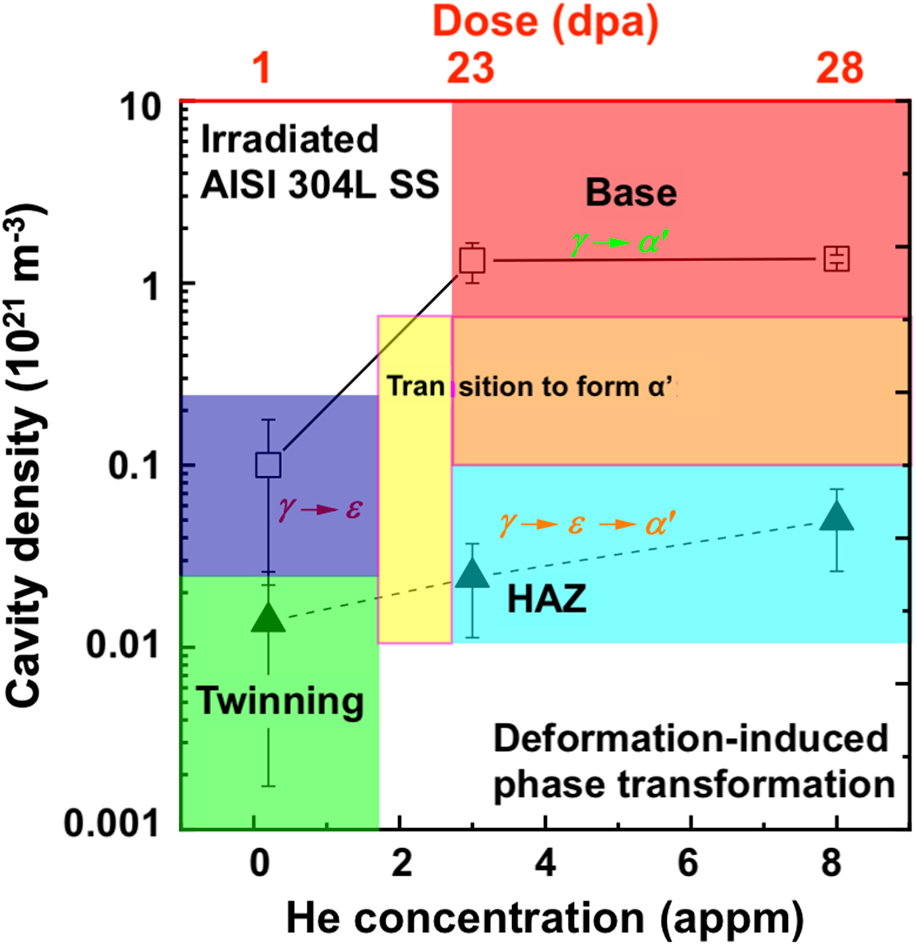
Localized deformation, including that by the deformation-induced shearing martensitic phase transformation, is responsible for hardening and embrittlement in irradiated face-centered cubic alloys. These localized deformation processes can have profound consequences on the mechanical integrity of common structural metals used in extreme radiation environments such as nuclear reactors. This article aims to review and understand exactly how irradiation affects the martensitic phase transformation in face-centered cubic alloys, with an emphasis on austenitic stainless steel, given its ubiquity in the archival literature. The influence of irradiation on stacking fault energy and subsequent implications on the phase transformation are discussed. Mechanisms by which irradiation-induced microstructures enhance the phase transformation are also described, including the surface energy contribution of irradiation-induced cavities (i.e., voids and bubbles) toward the critical martensite nucleation energy, and partial dislocation–cavity interactions. A deformation mechanism map illustrates how irradiation-induced cavities can modulate the martensitic transformation pathway.
One challenge impeding the analysis of terabyte scale X-ray scattering data from the Linac Coherent Light Source (LCLS) is determining the number of clusters required for the execution of traditional clustering algorithms. Here, we demonstrate that the previous work using bi-cross validation to determine the number of singular vectors directly maps to the spectral clustering problem of estimating both the number of clusters and hyperparameter values. Applying this method to LCLS X-ray scattering data enables the identification of dropped shots without manually setting boundaries on detector fluence and provides a path toward identifying rare and anomalous events.
Previous work on aesthetic experience suggests that aesthetic judgments are self-referential. The self-reference effect (SRE) is the tendency for individuals to show improved memory for items that are judged in relation to themselves. The current study sought to understand if the SRE exists for aesthetic judgments of music. Participants heard musical excerpts (classical, jazz, and electronic) and rated either a) how much they liked the music (Self condition), b) how much a close relative or friend would like the music (Other condition), or c) the genre of the music (Genre condition). After a retention interval, participants completed a recognition memory task for the musical excerpts. Participants did not show improved memory for musical excerpts encoded in the Self condition. These results extend the concept of the SRE into the domain of aesthetic judgments, but do not provide support for a memory advantage when making aesthetic judgments in relation to the self.
Thermal barrier coating is a high-temperature protective technology widely used in industrial gas turbines. However, the failure of coating peeling because of the generation of thermally grown oxide (TGO) at the interface during service hinders its further application. In this study, Raman spectroscopy and wedge indentation are used to determine the TGO residual stress and the interface energy release rate, respectively. The effect of TGO on the interfacial fracture toughness during the growth process was discussed. Raman spectroscopy test results show that the residual stress of TGO is about 0.5 GPa. Wedge indentation test results illustrate that high-temperature heat treatment could accelerate the interface degradation of thermal barrier coatings. Stress analysis and test research demonstrate that the microcracks induced by compressive stress of TGO will propagate with increasing heating time, ending with failure of barrier coatings.