To save content items to your account,
please confirm that you agree to abide by our usage policies.
If this is the first time you use this feature, you will be asked to authorise Cambridge Core to connect with your account.
Find out more about saving content to .
To save content items to your Kindle, first ensure no-reply@cambridge.org
is added to your Approved Personal Document E-mail List under your Personal Document Settings
on the Manage Your Content and Devices page of your Amazon account. Then enter the ‘name’ part
of your Kindle email address below.
Find out more about saving to your Kindle.
Note you can select to save to either the @free.kindle.com or @kindle.com variations.
‘@free.kindle.com’ emails are free but can only be saved to your device when it is connected to wi-fi.
‘@kindle.com’ emails can be delivered even when you are not connected to wi-fi, but note that service fees apply.
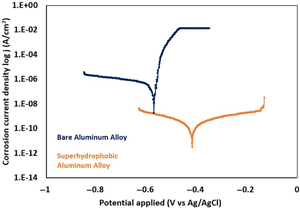
In this work, a facile superhydrophobic coating for 2024-T3 aluminum alloy is developed and characterized. The corrosion resistance of the coating was analyzed. The results showed that the coating has high polarization resistance and a low corrosion rate. Furthermore, a micro/nanoscale investigation about the interaction between substrates and the corrosive environment was carried out using the in situ atomic force microscope technique. The change in surface topography was monitored for both the bare aluminum alloy substrate and the superhydrophobic aluminum alloy. The results showed that the coating retained surface features indicated that the coating has excellent corrosion resistance.
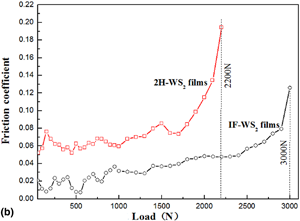
In the present work, an efficient route has been further explored to achieve the batch synthesis of inorganic fullerene (IF)-WS2 nanoparticles, and the self-lubricating film is conveniently prepared by coating these nanoparticles on the surface of metal substrates. The as-synthesized IF-WS2 nanoparticles have a closed hollow structure with an average particle size of about 50 nm and are evenly distributed in the self-lubricating film. Further friction tests show that the film has excellent friction properties, with its lowest friction coefficient of approximately 0.008, which can be mainly attributed to the unique hollow cage structure and a smaller particle size of the IF-WS2 nanoparticles.
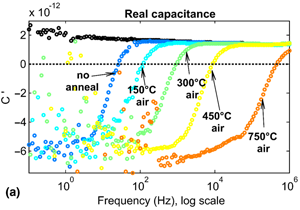
Impedance spectroscopy was conducted on colloidal ITO thin films that had been subjected to alternating oxygen and argon plasma treatments, followed by air annealing from 150 to 750 °C. An equivalent circuit consisting of an RC element nested within another RC element, featuring a negative resistance and a negative capacitance, fitted the data well. These results are interpreted as being due to surface plasmons that are a function of the presence of nanoporous ITO-rich regions surrounded by isolated ITO nanoparticles coated with an amorphous polymer that intertwines with the ITO-rich regions as a function of annealing treatment.
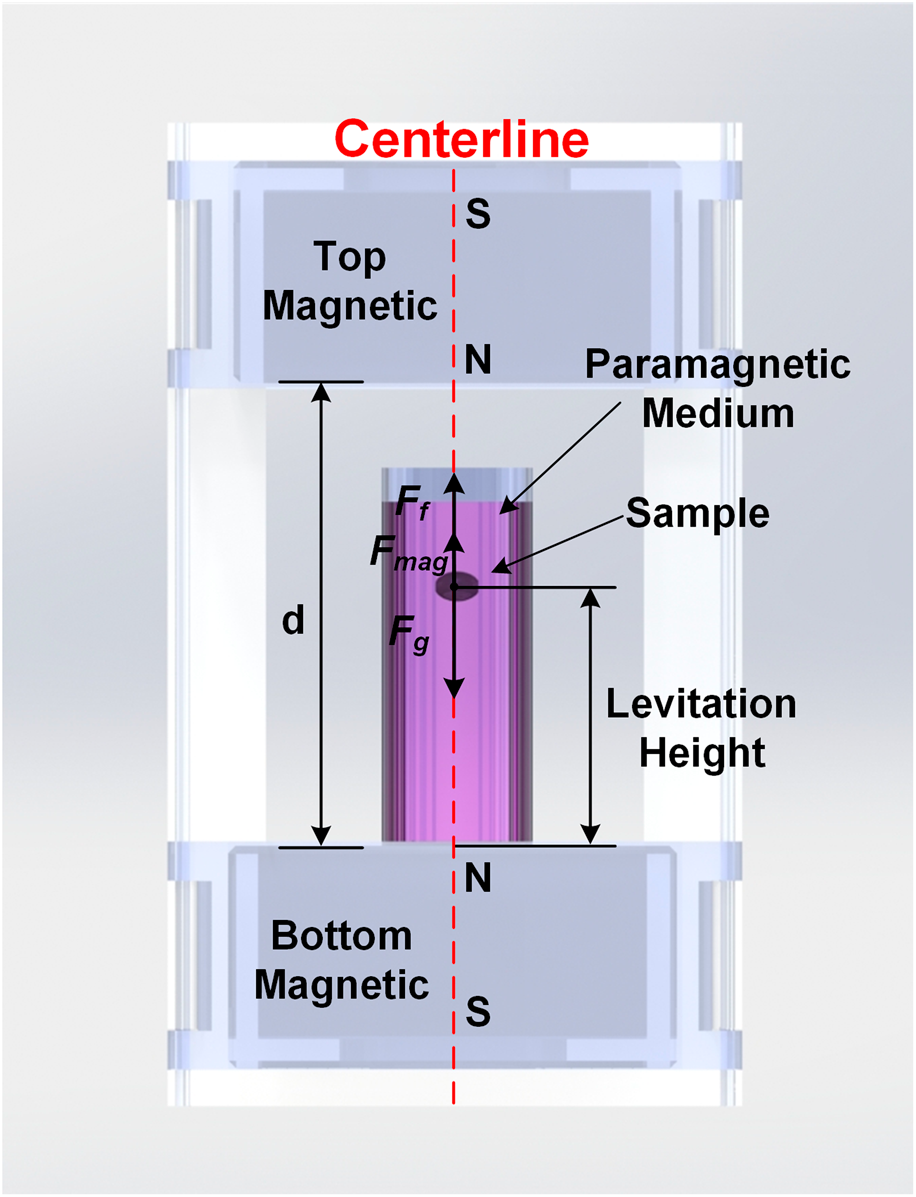
The quality of the polymer raw material used in plastic processing methods is an important characteristic because it is one of the main factors in producing quality products. Therefore, the characterization of polymeric pellets in the polymer processing industry is very important to avoid using inferior materials. In general, differences in the interiors of polymeric pellets reflect differences in their densities. In this study, a high-sensitivity magnetic levitation method was used to characterize the polymeric pellets in four different occasions. The device used has a high sensitivity that can distinguish minute differences as small as of 0.0041 g/cm3 in density between different samples. In addition, the method can obtain a sample's density without knowing the weight and volume of the sample. This method can be used to characterize materials by testing only a single pellet, which is very useful for polymeric pellet characterization.
Severe cracking and unsatisfied mechanical performance are the major challenges of manufacturing titanium aluminide (TiAl) components by selective laser melting (SLM). In this work, graphene oxide (GO) sheets were introduced onto the metal powder surface to improve the manufacturability of SLM of a Ti–48Al–2Cr–2Nb (at.%) alloy and enhance the mechanical strength of the laser-fabricated parts. The effect of laser power and GO content on the macromorphology of single-track processing was investigated, showing that the crack-free track could be obtained with the addition of 0.1–0.5 wt.% GO under a laser power of 110 W. In addition, the characterization of multilayer buildups via electron backscatter diffraction and backscatter electron imaging reveals the grain refinement during SLM of GO/TiAl nanocomposites. Finally, the strength of the as-built samples was examined using micro-hardness test, showing a maximal increase of 21.9% by adding 0.3 wt.% GO into the TiAl powders from laser-fabricated samples without GO.
The crystal structure of atazanavir has been solved and refined using synchrotron X-ray powder diffraction data and optimized using density functional techniques. Atazanavir crystallizes in space group P21 (#4) with a = 15.33545(7), b = 5.90396(3), c = 21.56949(13) Å, β = 96.2923(4)°, V = 1941.134(11) Å3, and Z = 2. Despite being labeled as “atazanavir sulfate”, the commercial reagent sample consisted of atazanavir free base. The structure consists of an array of extended-conformation molecules parallel to the ac-plane. Although the atazanavir molecule contains only four classical hydrogen bond donors, hydrogen bonding is, surprisingly, important to the crystal energy. Both intra- and intermolecular hydrogen bonds are significant. The hydroxyl group forms bifurcated intramolecular hydrogen bonds to a carbonyl oxygen atom and an amide nitrogen. Several amide nitrogens act as donors to the hydroxyl group and carbonyl oxygen atoms. An amide nitrogen acts as a donor to another amide nitrogen. Several methyl, methylene, methyne, and phenyl hydrogens participate in hydrogen bonds to carbonyl oxygens, an amide nitrogen, and the pyridine nitrogen. The powder pattern is included in the Powder Diffraction File™ as entry 00-065-1426.
The crystal structure of atorvastatin calcium trihydrate (ACT) has been solved and refined using synchrotron X-ray powder diffraction data and optimized using density functional theory techniques. ACT crystallizes in space group P1 (#1) with a = 5.44731(4), b = 9.88858(16), c = 29.5925(10) Å, α = 95.859(3), β = 94.211(1), γ = 105.2790(1)°, V = 1521.277(10) Å3, and Z = 1. The most prominent feature of the crystal structure is a hydrophilic layer parallel to the ab-plane. The atorvastatin anions bond to each side of the hydrophilic layer, forming a triple layer. The calcium coordination is distorted octahedral, with the CaO6 coordination sphere being comprised of four carboxylate oxygens, one coordinated water molecule, and a hydroxyl group from one but not the second atorvastatin anion. Several O–H⋯O hydrogen bonds form a two-dimensional network parallel to the ab-plane. The powder pattern has been submitted to ICDD® for inclusion in the Powder Diffraction File™.
A novel approach is utilized to investigate the deformation mechanisms at the microstructural level in 3D-printed alloys. The complex formation methods leave a unique and complicated microstructure in the as-built 3D-printed alloys. The microstructure is three leveled, composed of meltpools, grains, and cells. Deformation mechanisms in this microstructure are still highly unexplored due to the complexities of analysis at this scale. To understand these, we establish an image processing framework that converts scanning electron microscope (SEM) images directly into models that are scaled up and 3D printed with representative stiff and soft materials for the proposed material types within the body. These bodies are loaded in uniaxial tension with digital image correlation to study the strain gradient and stress delocalization as a result of the microstructure. The same models were tested through Finite Element Analysis (FEA) with materials similar to reality. Our testing shows the hierarchical material distribution leads to an increased damage tolerance.
Dark-field x-ray microscopy is intended for the acquisition of three -dimensional (3D) movies of the nanostructure (grains, domains, and dislocations) and the associated local strain within bulk materials. It is analogous to dark-field electron microscopy in that an objective lens magnifies diffracting features of the sample. The use of high-energy synchrotron x-rays, however, means that these microstructural features can be large and deeply embedded. The spatial and angular resolution is on the order of 100 nm and 0.001°, respectively, and full maps can be recorded in seconds to minutes. Four applications of the technique are presented—domain switching in ferroelectrics, processing of metals, microstructural characterization of biominerals, and visualization of dislocations. The ability to directly characterize complex, multiscale phenomena in situ—and in 3D—is a key step toward formulating and validating multiscale models that account for the entire heterogeneity of materials.
In the interest of transparency, MRS is a co-publisher of this title. However, this review was requested and reviewed by an independent Book Review Board.
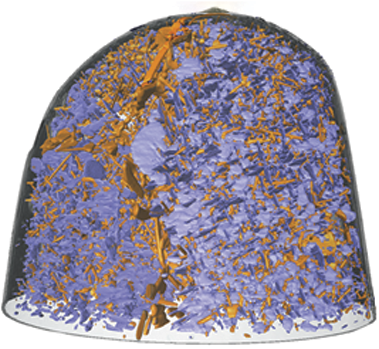
Three-dimensional (3D) tomographic imaging of the structural, chemical, and physical properties of a material provides key knowledge that links the structure of a material to both its processing and structure that is central to studies across a broad spectrum of materials. For many decades, tomography using x-rays or electrons has proven to be an essential 3D characterization tool. In recent years, advances in technology have significantly pushed the envelope of these techniques in many respects, enabling new imaging capabilities at the nanometer and atomic scale. This article highlights several such developments in nanoscale x-ray and electron tomography. The five articles that appear in this issue of MRS Bulletin discuss research frontiers that include multimodal x-ray tomography at the nanoscale, x-ray spectroscopic tomography, dark-field x-ray microscopy, electron nanotomography for functional nanomaterials, and atomistic imaging by electron tomography. These articles give a holistic view of the status of these techniques and promising future directions, as well highlighting their applications for scientific problems.
At the forefront of developments in synchrotron x-ray microscopy, nanoscale-resolution high-dimensional spectrotomography under controlled sample environments has been demonstrated. Such cutting-edge experimental capability has been broadly applied to scientific studies in the field of energy materials science, where the dynamically evolving structural and chemical defects play a vital role in the functionality. In this article, we review novel developments of this technique from both experimental and data/information mining perspectives. Using studies on lithium-ion battery electrode materials as examples, we highlight the rich information in the high-dimensional and high-resolution x-ray tomographic data, which can be used to interpret the complicated thermal-electro-chemo-mechanical interplay that occurs under the operating conditions and collectively determines battery performance. We also discuss the frontier challenges in this field and our perspectives of the future directions in the context of projected major developments in the landscape of large-scale x-ray facilities across the globe.
Elderly care is becoming a relevant issue with the increase of population ageing. Fall injuries, with their impact on social and healthcare cost, represent one of the biggest concerns over the years. Researchers are focusing their attention on several fall-detection algorithms. In this paper, we present a deep-learning solution for automatic fall detection from RGB videos. The proposed approach achieved a mean recall of 0.916, prompting the possibility of translating this approach in the actual monitoring practice. Moreover to enable the scientific community making research on the topic the dataset used for our experiments will be released. This could enhance elderly people safety and quality of life, attenuating risks during elderly activities of daily living with reduced healthcare costs as a final result.