To save content items to your account,
please confirm that you agree to abide by our usage policies.
If this is the first time you use this feature, you will be asked to authorise Cambridge Core to connect with your account.
Find out more about saving content to .
To save content items to your Kindle, first ensure no-reply@cambridge.org
is added to your Approved Personal Document E-mail List under your Personal Document Settings
on the Manage Your Content and Devices page of your Amazon account. Then enter the ‘name’ part
of your Kindle email address below.
Find out more about saving to your Kindle.
Note you can select to save to either the @free.kindle.com or @kindle.com variations.
‘@free.kindle.com’ emails are free but can only be saved to your device when it is connected to wi-fi.
‘@kindle.com’ emails can be delivered even when you are not connected to wi-fi, but note that service fees apply.
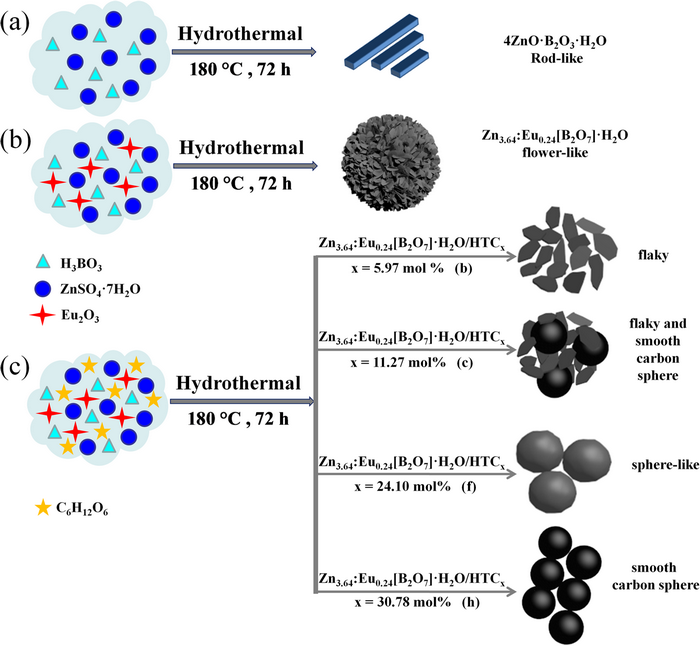
Hydrothermal carbon microsphere (HTC) is a carbon-based fluorescent material, which can be synthesized by hydrothermal carbonization of glucose. In this article, a series of 4ZnO·B2O3·H2O:Ln3+/HTC (where Ln = Eu or Tb) composites were prepared under hydrothermal conditions. The effects of the glucose concentration on the morphology, photoluminescence (PL) intensity and emission color of Zn3.64:Eu0.24[B2O7]·H2O/HTCx and Zn3.55:Tb0.3[B2O7]·H2O/HTCy were investigated. The relationship between morphology and PL intensity of composites was discussed. The results revealed that the presence of HTC did not change the original emission color of 4ZnO·B2O3·H2O:Ln3+ (where Ln = Eu or Tb) materials, but greatly increased their PL intensity, the sphere-like morphology composites have the strongest PL intensity. The Zn3.64:Eu0.24[B2O7]·H2O/HTCx and Zn3.55:Tb0.3[B2O7]·H2O/HTCy emit bright red light and green light, respectively, under respective excitation wavelengths. The present research suggests that the 4ZnO·B2O3·H2O:Ln3+/HTC (where Ln = Eu or Tb) composites may be candidates of red and green phosphors for display and lighting applications.
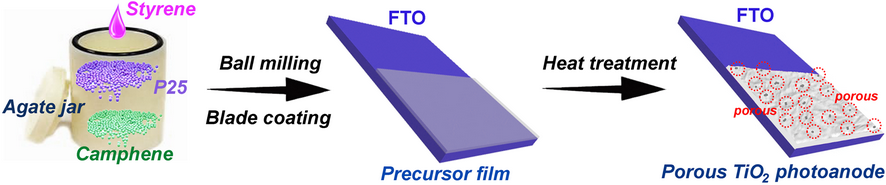
As for the efficient dye-sensitized solar cells (DSSCs), one of the important goals is to increase the light harvesting efficiency to further improve the photoelectric conversion efficiency (PCE). The excellent photoanode materials should possess a uniform porous structure, a large surface area, high crystallinity, and good stability. Herein, the porous TiO2 electrode (named as S-1.5) with the above merits had been prepared by the simple template-assisted method with camphene as the pore-forming reagent. The surface area of the porous TiO2 electrode can be tailored by introducing the amount of camphene. The porous TiO2 layer with the optimal surface area directly adhered on the top of the ultra-thin P25 dense layer had been constructed and this unique electrode with a “double layers structure”, which named as S-1.5/P25. When DSSCs assembled with this photoanode, a desirable PCE of 8.31% had been achieved, which was obviously higher than that of the commercial P25 (7.62%) in parallel. The improved PCE can be attributed to the improved utilization of sunlight, the facilitated photo-generated electron transfer, and the reduced interface resistance. Meanwhile, the related characterization including electrochemical impedance spectroscopy, intensity-modulated photovoltage spectroscopy, and intensity-modulated photocurrent spectroscopy was characterized to explore the possible mechanism.
A novel Ag/AgBr/Nb2O5 heterojunction photocatalyst was successfully developed via a facile solvothermal method combined with deposition–precipitation. The morphology and composition of the Ag/AgBr/Nb2O5 photocatalyst were investigated by transmission electron microscopy and X-ray energy-dispersive spectrometry, respectively. The results showed that metallic Ag was formed on the surface of the AgBr by an in situ photoreaction. The low crystalline Nb2O5 (L-Nb2O5) substrate provides the photocatalyst with a high specific area and numerous active sites for catalysis, while the combination of the Ag/AgBr with L-Nb2O5 effectively facilitates the separation of photo-generated charge carriers. The photocatalytic activities of the samples were measured using the degradation of an aqueous solution of rhodamine B under different LEDs with UV (365 nm), yellow (595 nm), and white (400 nm ≤ λ ≤ 800 nm) light. The Ag/AgBr/L-Nb2O5 photocatalyst displayed a much higher photocatalytic activity than bare L-Nb2O5 under UV and visible-light irradiation.
Cerium-doped lanthanum magnesium bulk aluminate (La1–xCexMgAl11O19, x = 0.03–0.50; abbreviated as LMA) was prepared via the Pechini sol–gel method after heating at 1200 °C for 2 h. The resulting single-phase ceramics was studied in terms of its structure using X-ray diffraction and optical properties using photoluminescence, its decay time, and radioluminescence spectroscopy. The diffraction and electron microscopy demonstrated LMA's plate-shaped nanocrystals with structure anisotropy and relatively broad particle size distribution. The optical measurements fully manifested the complexity of the LMA crystal structure. The radioluminescence study of cerium-doped LMA is here presented for the first time and, thus, contributes to the basic knowledge of Ce-doped materials. Additionally, the magnetic susceptibility exhibiting paramagnetic behavior of Ce3+ ions is presented. The magnetic data were interpreted in terms of local atomic Hamiltonian involving the crystal field and the Zeeman effect applied on the ground state J = 5/2 multiplet.
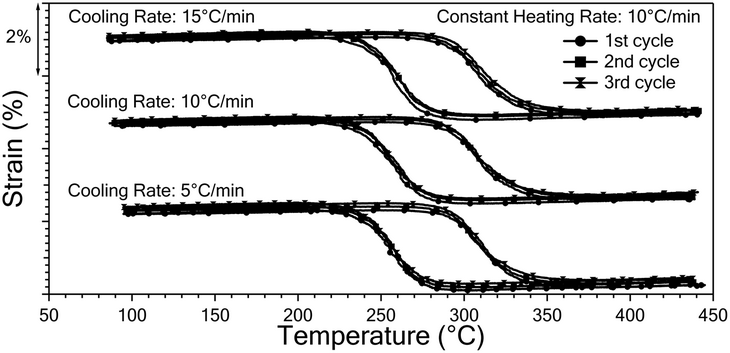
In this study, the effect of the cooling rate on the thermal and thermomechanical behavior of NiTiHf high-temperature shape memory alloy was studied by differential scanning calorimetry and via running isobaric thermal cycling experiments. The cooling rates were set to 5, 10, and 15 °C/min for each cycle in both experiments, while the heating rate was kept as 10 °C/min. It was found that the transformation temperatures and thermal hysteresis values do not depend on the change in the cooling rate. On the other hand, the austenite to martensite transformation enthalpy as measured from DSC analyses increases with the increase in the cooling rate due to the higher measurement sensitivity at higher scanning rates. Recoverable strain values which were determined from isobaric thermal cycling experiments do not differ since the transforming volume does not change with the change of the cooling rate. All these findings are explained based on the fundamental thermodynamical approach.
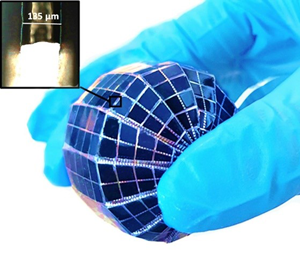
Unconventional techniques to benefit from the low-cost and high-efficiency monocrystalline silicon solar cells can lead to new device capabilities and engineering prospects. Here, a nature-inspired spherical solar cell is demonstrated, which is capable of capturing light three-dimensionally. The proposed cell architecture is based on monocrystalline silicon and is fabricated using a corrugation technique. The spherical cell shows an increase in power output by up to 101% with respect to a traditional flat cell with the same projection area using different reflective materials. Finally, the spherical cell shows advantages in terms of enhanced heat dissipation and reduced dust accumulation over conventional cells.
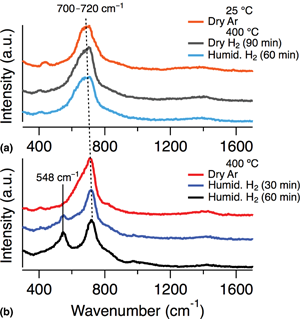
Material changes in yttrium-doped barium zirconate, BaZr0.8Y0.2O3–x, were studied using in situ Raman spectroscopy and ex situ x-ray photoelectron spectroscopy analysis. During in situ Raman analysis, samples were heated to temperatures of 300–600 °C and exposed to both dry and humidified H2 atmospheres. At the lower temperatures (300–450 °C), a new vibrational peak appears in the Raman spectra during exposure to humidified H2. The appearance of this feature is reversible, dependent on previous sample history, and possibly results from new, secondary phase formation or lattice distortion.
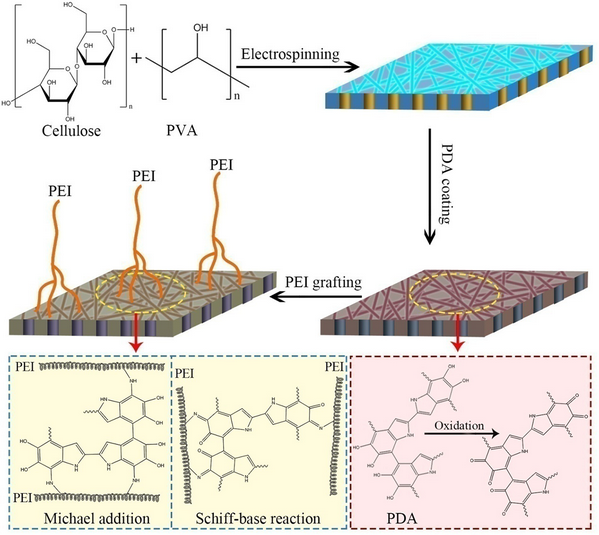
Membranes with special wettability have attracted increasing interest for oil/water separation. Herein, the cellulose-based nanofibrous membrane was fabricated in an aqueous system by an electrospinning technique. The membrane was then modified successively through coating polydopamine and polyethyleneimine on the surface, which endowed the membrane with superhydrophilic and underwater superoleophobic character. The composition and morphology of the resultant membrane were characterized by attenuated total reflectance Fourier transform infrared spectra, X-ray photoelectron spectroscopy, and field-emission scanning electron microscope, respectively. Surfactant-stabilized oil-in-water emulsions were used to evaluate the separation performance of the membrane at different pH values. It was found that the membrane displayed the excellent antifouling property and separation performance for all different emulsions, with separation efficiency above 99.1% due to the development of a hydration layer underwater on the membrane surface. The reusability study indicated that the modification coating was stable enough to effectively separate emulsions after recycling at least 20 times. The developed nanofibrous membrane, as well as the corresponding modification strategy, enriched the application of membranes with special wettability in the field of oil spills and oily wastewater treatments.
Distinguished by a marked combination of high strength and high fracture toughness, 18Ni-300 maraging steel (MS) is widely used for intricate tool and die applications. MS is also amenable to the powder bed fusion additive manufacturing process, providing unique opportunities to make small features and incorporate cooling channels in molds. In this study, tensile test samples were fabricated using selective laser melting to investigate the effects of built height and orientations on the evolution of the microstructure and the mechanical properties of the samples. The microstructure of the as-fabricated samples consists of the primary α-martensite phase and fine cellular microstructure (~0.66–0.83 μm) with the retained austenite γ-phase aggregated at the boundaries of the cells, resulting in an enhanced mechanical performance compared with traditional counterparts under the same condition (without post-heat treatments). Random grain orientations with weak textures are revealed in all samples. The XY-built samples display better tensile performance when compared to the Z-built samples due to the fine grain sizes and the retained γ phase. The bottom of the Z-built sample exhibits a higher hardness than other parts of the sample, which could be attributed to its finer cellular structure.
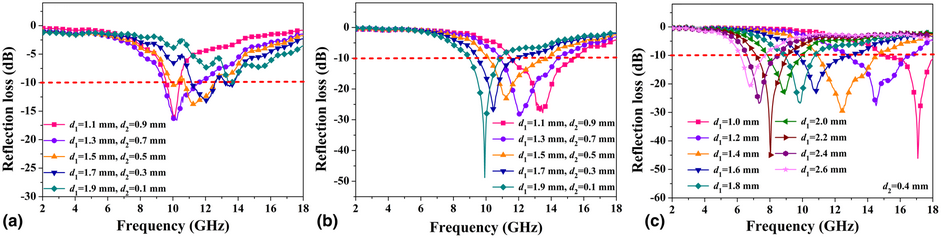
Double-layer absorbers have recently been extensively studied because single-layer absorbers can hardly meet the requirements of advanced absorbing materials. However, determining how to couple the matching and absorption layers remains a challenge. In the present work, we applied the hydrothermal method to prepare an ultrasmall Fe3O4 nanoparticle and a hierarchical MXene/Fe3O4 composite and then studied the microwave attenuation capabilities of single- and double-layer absorbers containing these two materials with different thicknesses. Absorbers with well-coupled layers showed improved absorption performance on account of the excellent impedance matching behavior of the Fe3O4 layer and the high microwave attenuation capability of the MXene/Fe3O4 layer. When the thickness of the matching layer filled with Fe3O4 was 0.1 mm and that of the absorption layer filled with MXene/Fe3O4 was 1.9 mm, a maximum reflection loss of −48.7 dB was achieved at 9.9 GHz. More importantly, when the thicknesses of the matching and absorption layers were 0.9 and 1.1 mm, respectively, the effective bandwidth was nearly 3.9 GHz. The double-layer absorbers with enhanced absorption properties may be regarded as a new generation of materials for electromagnetic wave absorption.
High-temperature (1500 °C) interactions of promising environmental-barrier coating (EBC) ceramics in the rare-earth (RE) pyrosilicate system, Yb(2-x)YxSi2O7 (x = 0, 0.2, 1, or 2), with three different calcia–magnesia–aluminosiliate (CMAS) glass compositions, are explored. Only the Ca/Si ratio is varied in the CMAS: 0.76, 0.44, or 0.10. Interaction between the highest Ca/Si CMAS and the EBC ceramic with the lowest x (=0, Yb2Si2O7) promotes no reaction but the formation of “blister” cracks. In contrast, the highest x (=2, Y2Si2O7) promotes the formation of an apatite reaction product, but no “blister” cracks. Observationally, it is found that a decrease in the CMAS Ca/Si ratio (0.76–0.10) and a decrease in Y-content decreases the propensity for reaction crystallization (apatite formation) and “blister” cracks. These results are rationalized based on the relative affinities between Ca2+ in the CMAS and Y3+ or Yb3+ in the EBC ceramics, suggesting a way to tune the CMAS interactions in RE pyrosilicate solid solutions.
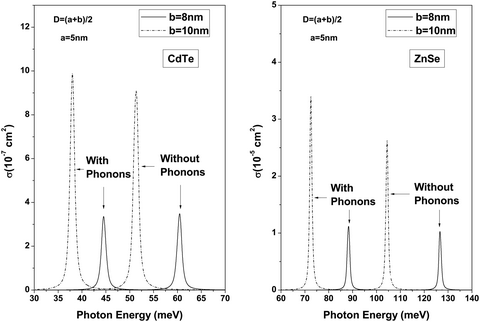
In this paper, we report a recent theoretical study of the calculation of the binding energy and photoionization cross section of a single dopant in a spherical hollow or core/shell quantum dot taking into account the interaction of the electron with longitudinal optical phonons. Using Frolich approach and Lee-low Pines transformation, we determine the impact of different parameters such as shell thickness and dopant position on the energy and optical response of a bound polaron for two types of ionic II–VI semiconductors CdTe and ZnSe with different phonon coupling constants. Regardless of the material used, the electron–phonon interaction visibly reduces binding energy. For photoionization cross section, a redshift of resonance peaks was found when the effect of phonons is taken into consideration or when the donor is moved away from the shell center. These calculations provide us insights when choosing between materials for optoelectronic applications.
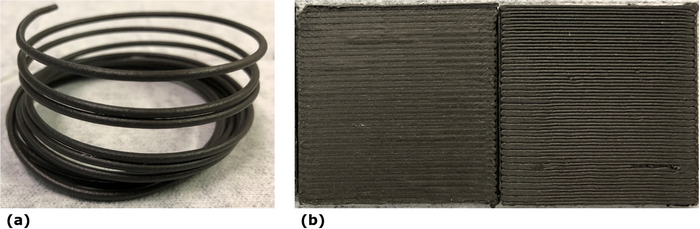
Vast improvements have been made to the capabilities of advanced manufacturing (AM), yet there are still limitations on which materials can effectively be used in the technology. To this end, parts created using AM would benefit from the ability to be developed from feedstock materials incorporating additional functionality. A common three-dimensional (3D) printing polymer, acrylonitrile butadiene styrene, was combined with bismuth and polyvinylidene fluoride via a solvent treatment to fabricate multifunctional composite materials for AM. Composites of varying weight percent loadings were extruded into filaments, which were subsequently 3D printed into blocks via fused filament fabrication. Investigating the material properties demonstrated that in addition to the printed blocks successfully performing as radiation shields, the chemical, thermal, and mechanical properties are suitable for AM. Thus, this work demonstrates that it is possible to enhance AM components with augmented capabilities while not significantly altering the material properties which make AM possible.
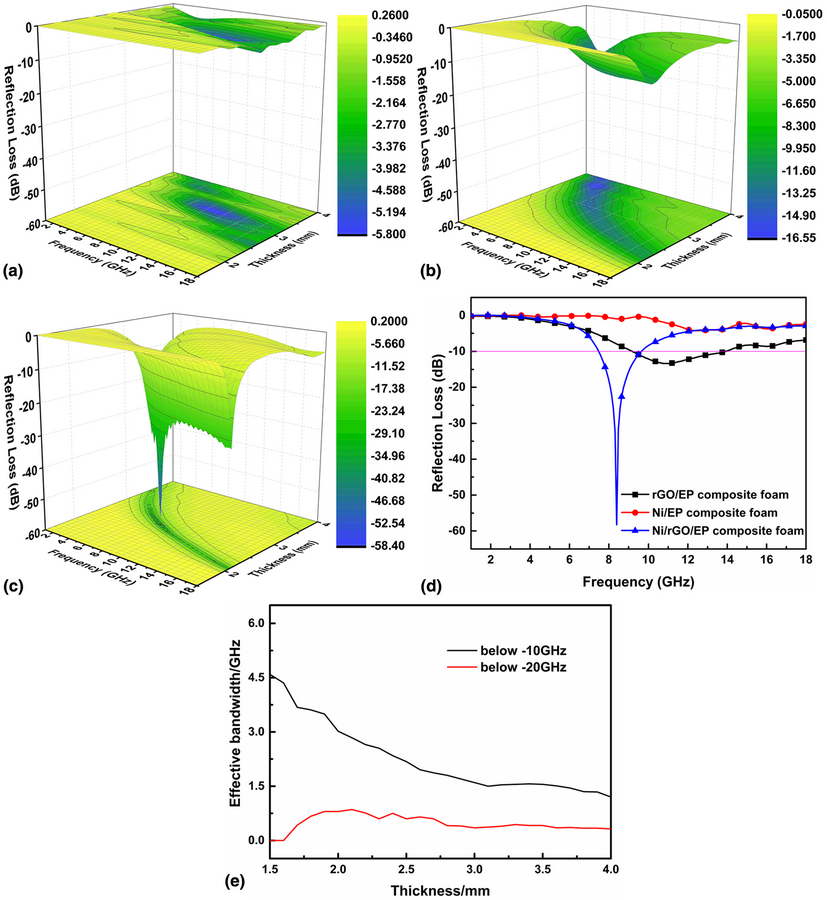
In this study, the Ni/rGO hollow microspheres were synthesized and combined with epoxy foam to prepare structural absorbing materials. The diameter of obtained rGO hollow microspheres loaded with Ni nanoparticles was around 10 μm and the thickness of the spherical wall was about 70 nm. The Ni/rGO/EP composite foam exhibited better microwave absorption properties than that of rGO/EP and Ni/EP composite foam. The minimum reflection loss value (RLmin) could reach −58.23 dB at 8.4 GHz with a thickness of 2.5 mm, and the effective bandwidth with RLmin lower than −10 dB is 2.21 GHz ranging from 7.46 to 9.67 GHz. The porous structure of Ni/rGO hollow microspheres and their filled epoxy foam can refract and absorb the electromagnetic waves repeatedly, which equals to extend the propagation path of microwave, thus, electromagnetic loss capacity was improved obviously.
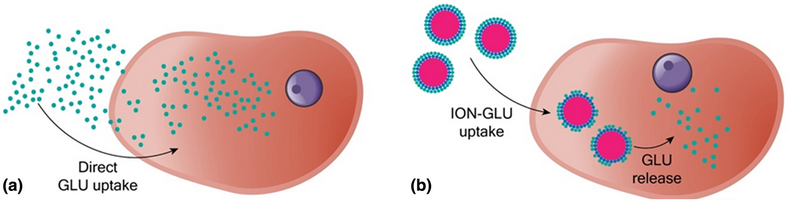
Herein, we report a synthetic route capable of producing superparamagnetic, stable and biocompatible glucosamine (GLU) nanocarriers, composed by colloidal iron oxide nanoparticles (ION, ~6 nm) surface-functionalized with GLU dispersed in physiological media (pH 7.2). The route consists first of the preparation of ION by aqueous alkaline co-precipitation of 1:2 Fe(II)/Fe(III) followed by surface treatment with citric acid, activation of acidic groups via carbodiimide intermediary and further amidation using GLU as the amine reactant. Results from cell viability tests performed with human dental pulp tissue cells suggest that ION–GLU nanocolloids are biocompatible and non-toxic for two different concentrations and several hours of incubation. Moreover, optical microscopy shows that ION–GLU adsorbs at the cells walls and also transposes them, reaching cytoplasm and nucleus as well. All findings point out the promising use of ION–GLU as biocompatible nanocarriers for GLU delivery such as in articulation diseases.
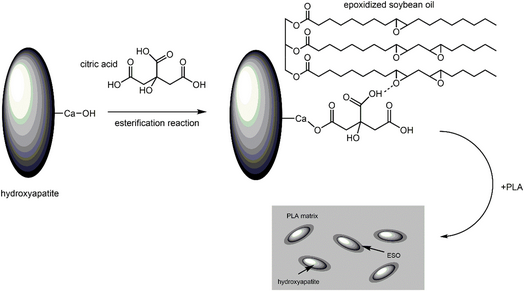
The addition amount and dispersion of inorganic particles into poly(lactic acid) (PLA) still remain a great difficulty, and in the present study, epoxidized soybean oil was used to improve the compatibility between hydroxyapatite (HA) and PLA via the melt blending method. Scanning electron microscopy shows that HA particles can be well dispersed in the PLA matrix when the addition amount is less than 20% in mass, whereas the agglomeration of HA particles and a discrete phase of PLA could be observed when the amount increases to 30%. Therefore, the maximum amount of HA particles can be achieved for the composite with 20% HA which can be also maintaining the bending strength of 71.6 MPa. The osteoblast cells were used to characterize the biocompatibility of the HA/PLA composite, and the results indicate that the number of cells in per unit volume cultured on the HA/PLA composite is 10% higher than that of the PLA. Based on the improved cell biocompatibility and mechanical strength compared to PLA, the composite of HA/PLA prepared in the present study can be served as a potential candidate for the bone fracture repair.
The photothermal experiments on the incident light angle dependence are carried out using simulated solar light on thin films of both iron oxides (Fe3O4 and Fe3O4@Cu2-xS) and porphyrin compounds (chlorophyll and chlorophyllin). Fe3O4 and Fe3O4@Cu2-xS are synthesized using various solution methods that produce mono-dispersed nanoparticles on the order of 10 nm. Chlorophyll is extracted from fresh spinach and chlorophyllin sodium copper is a commercial product. These photothermal (PT) materials are dispersed in polymethyl methacrylate (PMMA) solutions and deposited on glass substrates via spin coating that result in clear and transparent thin films. The iron-oxide based thin films show distinctive absorption spectra; Fe3O4 exhibits a strong peak near UV and gradually decreases into the visible and NIR regions; the absorption of Fe3O4@Cu2-xS is similar in the UV region but shows a broad absorption in the NIR region. Both chlorophyll and chlorophyllin are characterized with absorption peaks near UV and NIR showing a “U”-shaped spectrum, ideally required for efficient solar harvest and high transparency in energy-efficient single-pane window applications. Upon coating of the transparent PT films on the window inner surfaces, solar irradiation induces the photothermal effect, consequently raising the film temperature. In this fashion, the thermal loss through the window can be significantly lowered by reducing the temperature difference between the window inner surface and the room interior, based on a new concept of so-called optical thermal insulation (OTI) without any intervention medium, such as air/argon, as required in the glazing technologies. Single-panes are therefore possible to replace double- or triple panes. As OTI is inevitably affected by seasonal and daily sunlight changes, an incident light angle dependence of the photothermal effect is crucial in both thin film and window designs. It is found that the heating curves reach their maxima at small angles of incidence while the photothermal effect is considerably reduced at large angles. This angle dependence is well explained by light reflection by the thin film surface, however, deviated from what is predicted by the Fresnel's law, attributable to non-ideal surfaces of the substrates. The angle dependence data provide an important reference for OTI that window exposure to the sun is greater at winter solstice while that is considerably reduced in the summer. This conclusion indicates much enhanced solar harvesting and heat conversion via optically insulated windows in the winter season, resulting in much lower U-factors.