To save content items to your account,
please confirm that you agree to abide by our usage policies.
If this is the first time you use this feature, you will be asked to authorise Cambridge Core to connect with your account.
Find out more about saving content to .
To save content items to your Kindle, first ensure no-reply@cambridge.org
is added to your Approved Personal Document E-mail List under your Personal Document Settings
on the Manage Your Content and Devices page of your Amazon account. Then enter the ‘name’ part
of your Kindle email address below.
Find out more about saving to your Kindle.
Note you can select to save to either the @free.kindle.com or @kindle.com variations.
‘@free.kindle.com’ emails are free but can only be saved to your device when it is connected to wi-fi.
‘@kindle.com’ emails can be delivered even when you are not connected to wi-fi, but note that service fees apply.
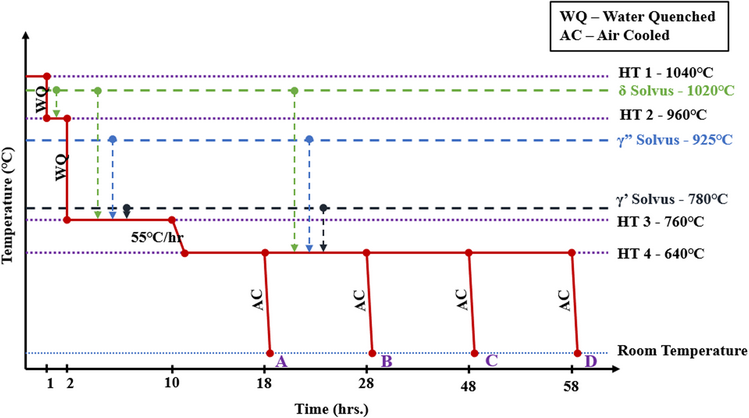
In this investigation, the superalloy IN718 has been prepared by additive manufacturing (AM) following a selective laser melting technique, and the post-AM heat treatments have been optimized. The microstructure of additively manufactured (AM) IN718 is characterized by the presence of dendritic and cellular features with large spatial heterogeneity along and across the build plane. Along the build direction, the 〈100〉 fiber texture dominates. Heat treatment involving two-step solution treatment, and subsequently, two-step aging treatment was specifically designed to facilitate the precipitation of δ phase at the grain boundaries to make the material resistant to grain boundary sliding (GBS). The AM IN718 showed dynamic strain aging (DSA) at three different temperatures, while the critical strain for the onset of serration was extended to a higher value after the heat treatment.
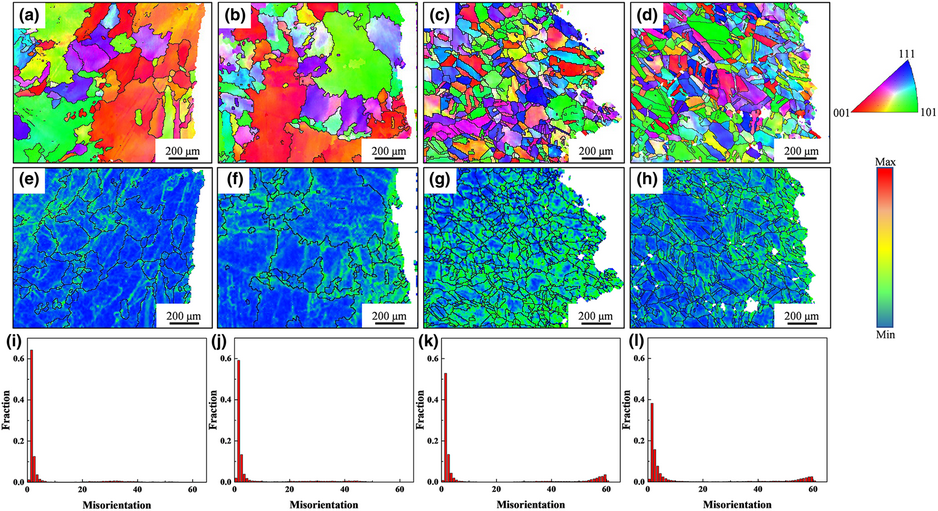
The fracture toughness of 617 Ni-based weld metal (WM) under different elevated temperatures was tested with a novel method and its fracture mechanism was investigated in this paper. It was found that the fracture toughness of WM was lower than that of base metal (BM) at the same temperature, which was mainly due to the coarse columnar structure, differences in misorientation, and precipitated phases. For both BM and WM, the fracture toughness was lower at elevated temperature due to decreased strength. Much more micro-voids caused by Ti(C, N) and M23C6 inside grains of BM could be observed adjacent to the crack path, which accounted for the dramatically decreased fracture toughness of BM at elevated temperature. In comparison, fewer micro-voids could be observed in WM due to the lack of those second particles. As a result, the J0.2 value and propagation path morphology both showed that the WM had more stable microstructure even though possessing lower toughness.
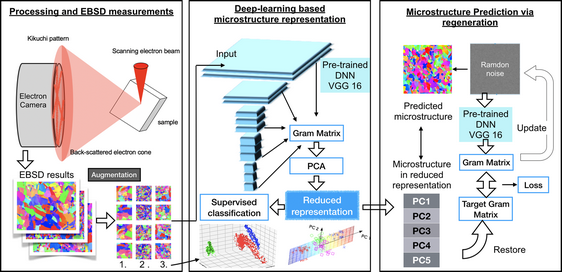
Metal additive manufacturing (AM) provides a platform for microstructure optimization via process control, but establishing a quantitative processing-microstructure linkage necessitates an efficient scheme for microstructure representation and regeneration. Here, we present a deep learning framework to quantitatively analyze the microstructural variations of metals fabricated by AM under different processing conditions. The principal microstructural descriptors are extracted directly from the electron backscatter diffraction patterns, enabling a quantitative measure of the microstructure differences in a reduced representation domain. We also demonstrate the capability of predicting new microstructures within the representation domain using a regeneration neural network, from which we are able to explore the physical insights into the implicitly expressed microstructure descriptors by mapping the regenerated microstructures as a function of principal component values. We validate the effectiveness of the framework using samples fabricated by a solid-state AM technology, additive friction stir deposition, which typically results in equiaxed microstructures.
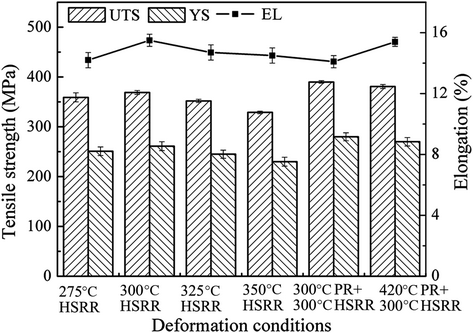
The microstructure evolution, dynamic recrystallization (DRX) and precipitation of the ZM61 alloy sheets prepared with different rolling conditions were studied. The DRX grain sizes (dDRX) at four high strain rate rolling (HSRR) temperatures (275–350 °C) are 1.9, 2.3, 2.6 and 3.1 μm, respectively, while the DRX volume fractions (fVDRX) are 69, 73, 76 and 82%, respectively. 300 °C is selected as the optimal HSRR temperature. The dDRX and fVDRX of the alloys prepared by pre-rolling (PR) at 300 °C + HSRR are 1.0 μm and 91%, respectively. The PR treatment does not change the types of the precipitates but promotes the precipitation. The tensile strength (UTS) of 369 MPa and yield strength (YS) of 261 MPa can be achieved by HSRR at 300 °C, while a further increase in both UTS and YS can be obtained by PR treatment.
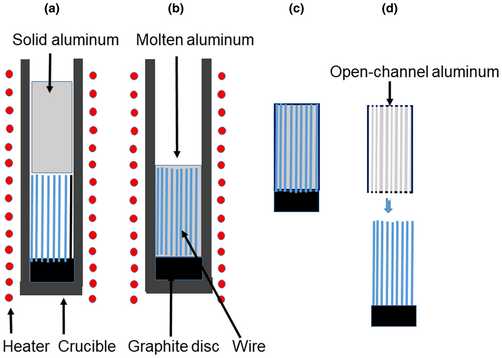
This paper reviews the recent development of fabrication methods of porous metals with open-channels. The open-channel metals are fabricated through powder sintering or solidification technique. The template wires are embedded in the sintered or solidified metals, such as aluminum, copper, titanium and its alloys, which are then removed by chemical dissolution or extraction methods. The hole size, hole length and porosity are uniquely controlled by thickness, length and number of template metallic wires, respectively. The pore size ranges from 102 to several 103 μm in diameter. The open-channel metals are characterized by a large aspect ratio of the length to the diameter of the holes in metals. Furthermore, the techniques can fabricate spiral and V-shaped pores in metals. Feasibility and usefulness of each fabrication method are discussed. The methodology for producing the open-channel metals is expected to provide expanded opportunities for application technologies such as functional materials like heat sinks and sound absorbers and light-weight structural materials.
X-ray reference powder patterns and structures have been determined for a series of cobalt- and tungsten-containing cubic alkaline-earth perovskites, (BaxSr1–x)2CoWO6 (x = 0.1, 0.2, 0.3, 0.5, 0.7, and 0.9). The structure of the end members of the series, Sr2CoWO6 and Ba2CoWO6, were tetragonal and cubic, respectively, agreeing with the literature data. From Rietveld refinements, it was found that when x = 0.1 and 0.2, the structure was tetragonal I4/m (a = 5.60481(6) and 5.62305(11) Å and c = 7.97989(12) and 7.9847(2) Å, respectively; Z = 2). When x > 0.2, the structure was cubic (Fm$\bar{3}$m, No. 225; Z = 4) (from x = 0.3 to 0.9, a increases from 7.98399(13) to 8.08871(10) Å). This tetragonal series of compounds exhibit the characteristics of a distorted double-perovskite structure. The bond valence sum values for the alkaline-earth (Ba, Sr) sites in all (BaxSr1−x)2CoWO6 members are greater than the ideal value of 2.0, indicating over-bonding situation, whereas for the W sites, as x increases, a change from under-bonding to slightly over-bonding situation was observed. Density functional theory calculations revealed that while Sr2CoWO6 is a semiconductor, Ba2CoWO6 and SrBaCoWO6 are half-metals. Powder X-ray diffraction patterns of this series of compounds (BaxSr1−x)2CoWO6, with x = 0.1, 0.2, 0.3, 0.5, 0.7, and 0.9, have been submitted to be included in the Powder Diffraction File.
This paper describes a new flow-through capillary sample holder that allows the in situ study of re-solvation processes. The holder can be aligned to the goniometer's center using two perpendicular micrometric tables that move in y and z directions. The re-solvation of two ibrutinib solvates of anisole and fluorobenzene was tested using the holder to show the practical application of this technique.
In this paper, CNTs reinforced foam aluminum matrix composites with small pore diameter were prepared by powder metallurgy method. When the mass fraction of CNTs was 0.75%, the tensile strength, flexural strength and compressive yield strength of the materials were 3.4 times, 2.4 times and 2.4 times of pure foam aluminum, respectively, reaching the maximum value, which obviously improved the mechanical properties of aluminum foam. The tensile property model of foam aluminum matrix composites was built to predict the properties of the composites, and the effects of defects and reinforcement on the mechanical properties of the composites were compared. The results show that the tensile fitting is consistent with the measured results when the mass fraction of CNTs is less than 0.75%, but the weakening effect of defects on the strength of aluminum foam is much greater than the enhancement of CNTs. With the increase of CNTs mass fraction, the damping loss factor of foam aluminum composites increases, dislocation damping and grain boundary damping play a role in advance, and the damping peak moves to the low temperature region.
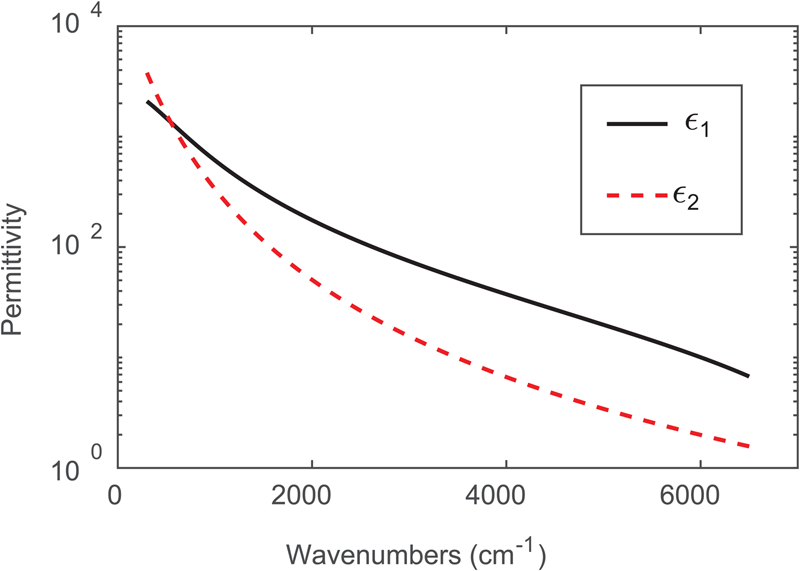
Hydrogen lithography has been used to template phosphine-based surface chemistry to fabricate atomic-scale devices, a process we abbreviate as atomic precision advanced manufacturing (APAM). Here, we use mid-infrared variable angle spectroscopic ellipsometry (IR-VASE) to characterize single-nanometer thickness phosphorus dopant layers (δ-layers) in silicon made using APAM compatible processes. A large Drude response is directly attributable to the δ-layer and can be used for nondestructive monitoring of the condition of the APAM layer when integrating additional processing steps. The carrier density and mobility extracted from our room temperature IR-VASE measurements are consistent with cryogenic magneto-transport measurements, showing that APAM δ-layers function at room temperature. Finally, the permittivity extracted from these measurements shows that the doping in the APAM δ-layers is so large that their low-frequency in-plane response is reminiscent of a silicide. However, there is no indication of a plasma resonance, likely due to reduced dimensionality and/or low scattering lifetime.
This study focuses on binary droplet collisions of equal calcium–magnesium–aluminosilicate (CMAS) droplets formed by the melting of dust and sand ingested by gas turbine engines. Head-on, off-center, and grazing collision of 1 mm CMAS droplets traveling toward each other at a relative velocity of 100 m/s are numerically investigated using a volume-of-fluid-based direct numerical simulation approach at operating pressure and temperature of 20 atm and 1548 K, respectively. It is found that head-on and off-center collisions lead to droplet coalescence, whereas stretching behavior is observed for the grazing configuration. To elucidate the effect of viscosity, a fictitious fluid with all properties the same as CMAS except for viscosity (1/10 of CMAS) is also studied. It is found that the lower viscosity liquid deforms significantly as compared to CMAS for the head-on and off-center cases. These differences are quantified using the budgets of kinetic, surface, and dissipation energies. This paper represents the first study of its kind on the binary collision of CMAS droplets.
Lightweight, inexpensive and flexible electrodes are required for flexible technological applications. As polymers are generally low cost, flexible and have low density, they are potential candidates for use as flexible electrodes. However, polymers are not conductive and thus cannot be used as electrodes or current collectors. Polymers have been coated by metals/alloys to make them conductive for use in various applications including electromagnetic shielding and sensors. In this work, a flexible electrode was successfully fabricated by electrodeposition of Cu and Ni on polyester fabric for an energy storage application. The growth of metals was carried out in non-aqueous ionic liquid electrolyte, with the deposition condition of Cu and Ni studied by means of cyclic voltammetry. Non-electrochemical (FTIR, XRD, SEM and EDAX) characterizations of the metal-coated polyester are also presented. Modified flexible electrodes were transferred to an alkaline electrolyte for electrochemical characterization. The specific capacitance of Cu- and Ni-coated polyester reached 33.4 F/g and 50.2 F/g at the same scan rate of 5 mV/s. These results suggest an inexpensive and straightforward method for the fabrication of a flexible electrode for energy storage applications.
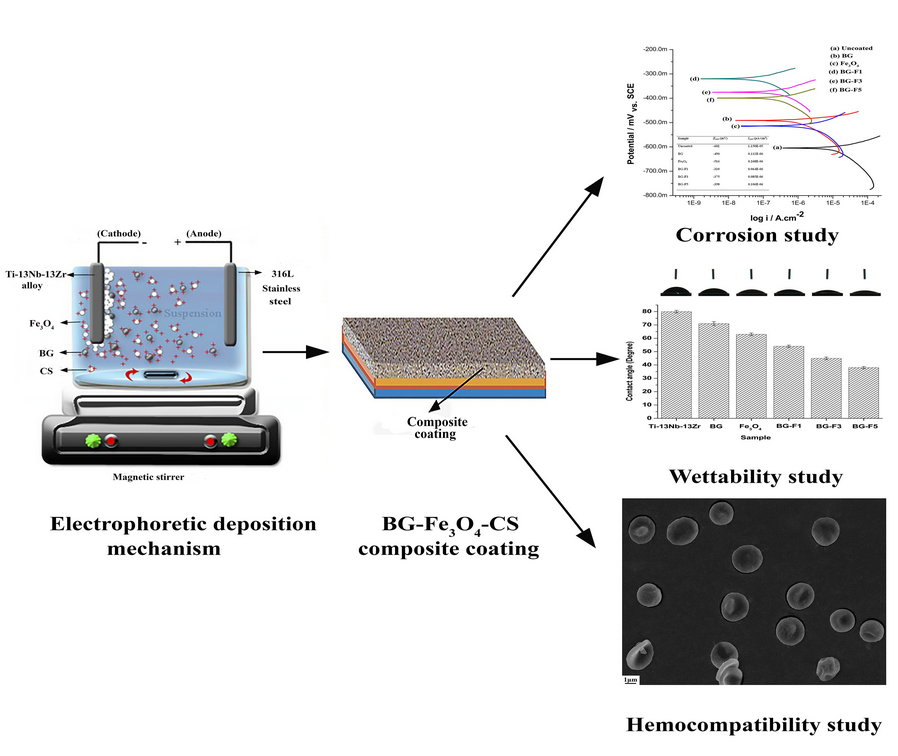
Electrophoretic deposition consisting of bioglass (BG)–chitosan (CS)–iron oxide nanoparticles (Fe3O4 NPs) on the Ti–13Nb–13Zr substrate was described. The bioactive coating was embedded in a CS matrix. The Fe3O4 NPs collected using the co-precipitation method varied at three different levels (1, 3, and 5 wt%) in the BG coating. The formulated coatings exhibited a hydrophilic character due to higher surface roughness values. The pull-off tape test was performed to check the adhesion strength of coatings. The composite coatings displayed adhesion strength of 5B class. The corrosion behavior was evaluated in Ringer's solution by the electrochemical test. The corrosion results showed that the composite coatings were more impressive as compared to pure BG and Fe3O4 coatings. The hemocompatibility results showed a hemolytic ratio (<5%), which validates them as favorable blood compatible nature of the deposited coatings. The findings exhibited that the BG–Fe3O4–CS coating can be widely employed as a favorable material for orthopedic applications.
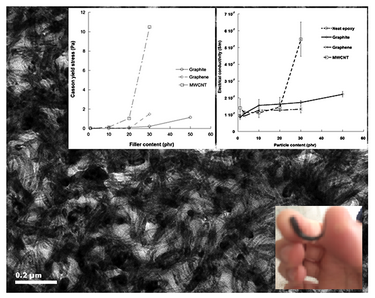
The aim of this research was to develop the UV-cured epoxy/carbon composites. The rheological properties of the uncured neat epoxy and epoxy composite with graphite, graphene, and multi-walled carbon nanotube (MWCNT) were evaluated to observe the macroscopic flow behavior and the microstructure by shear force. The results showed that epoxy/carbon composites at high filler content exhibited shear-thinning behavior with a high yield stress value and epoxy/MWCNT at 30 phr showed this characteristic obviously. The fractured surface and particle dispersion in the epoxy matrix were evaluated by scanning electron microscopy and transmission electron microscopy, respectively. Epoxy/carbon composites at high filler content displayed rough fracture surface with particle agglomeration, thus the electrical conductivity increased. The result showed that the epoxy/MWCNT composites had high potential to use as a conductive adhesive with a 3D printing process due to high electrical conductivity with high viscosity that could be formed easily during processing.
Growing in a saline environment causes changes in important physiological processes that are directly related to plant growth and development. In this study we evaluated the effect of salinity on transpiration of sorghum plants in semi-arid conditions and found that the highest rates of transpiration were observed in the hottest hours of the day, between 10 a.m. and 3 p.m., with plants subjected to the saline environment having their transpiration reduced by up to 70% when compared to the non-saline environment. This behavior can be reflected in reductions in plant growth and development due to reduced water absorption by the roots, consequently causing an imbalance of nutrients in the plant due to low absorption rate and competition between nutrients and salts in the preferred routes of absorption in the roots.
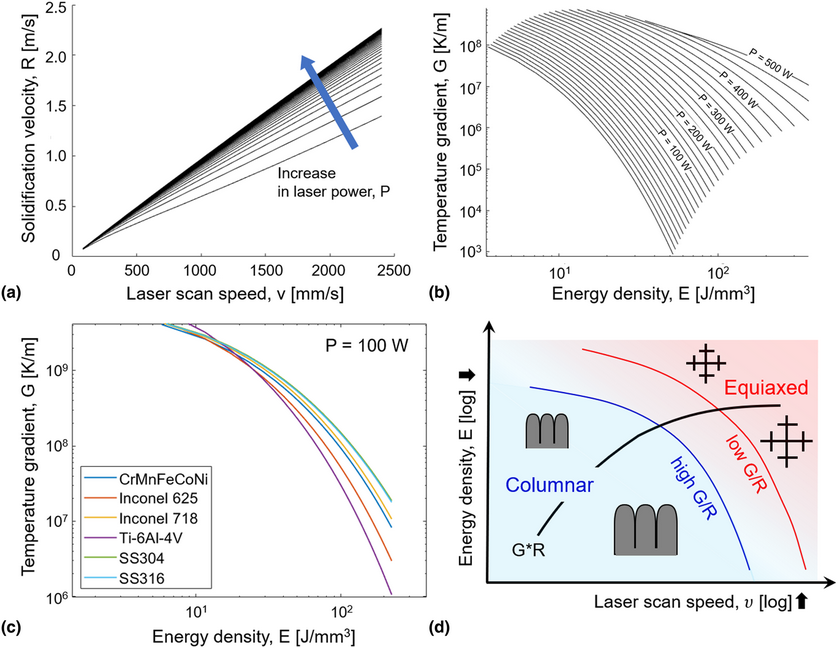
The disruptive potential of additive manufacturing (AM) relies on its ability to make customized products with considerable weight savings through geometries that are difficult or impossible to produce by conventional methods. Despite its versatility, applications of AM have been restricted due to the formation of columnar grains, resulting in solidification defects and anisotropy in properties. To achieve fine equiaxed grains in AM, alloy design and solidification conditions have been optimized in various alloy systems. In this review paper, the microstructure of high-entropy alloy (HEA) parts produced by selective laser melting and powder-based directed energy deposition is investigated. Solidification maps based on laser process parameters (as opposed to most commonly used solidification velocity and temperature gradient) are constructed by compiling available literature for single-phase face-centered cubic, body-centered cubic, and multiphase HEAs. These maps could guide printing of HEAs and provide an insight into the design of novel HEAs for AM.
In the present study, the effect of Al addition on microstructure evolution, mechanical properties, and wear performances of a newly developed Ni–Si-containing complex brass was studied. The results showed that with increasing Al content from 0 to 3 wt%, the corresponding strengthening phase evolves from δ-Ni2Si to [Ni(Al)]2Si phases. Simultaneously, it is of great interest that the increasing Al addition also brings about a remarkable change in morphology of the secondary strengthening phase from dendrite and thin rod to regular block. Additionally, the hardness, yield strength and tensile strength of complex brass effectively increase with increasing Al content, and the fracture mechanism transforms from cleavage failure and microvoids accumulation fracture to cleavage failure. It was also found that the brass with adding 3 wt% Al exhibits the solidification microstructure with the uniform distribution of the block-shaped strengthening phase and has the best wear resistance. This present study provides a potential strategy for further improving the comprehensive performance of existing complex brass.
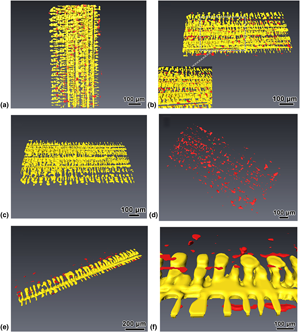
The dendrite morphologies of the cast nickel-based superalloy CMSX-4® (CMSX-4® is registered trademarks of the Cannon-Muskegon Corporation) and the austenitic stainless steel HP microalloy have been obtained via an automated serial-sectioning process which allows three-dimensional (3D) microstructural characterization. The dendrite arm spacing, volume fraction of segregation, and fraction of porosity have been determined. This technique not only increases the depth, scope, and level of detailed microstructural characterization but also delivers microstructural data for modeling and simulation.
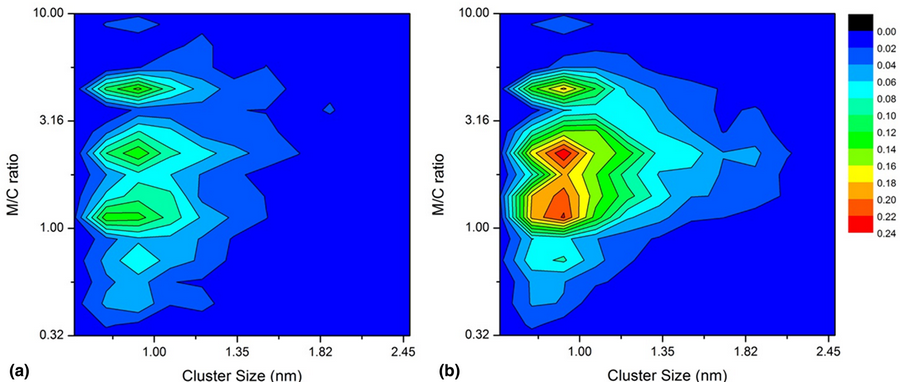
In the present study, 3D atom probe was used to study the effect of increased Mo (1–3 wt%) on clustering in secondary hardening ultra-high strength steels. Clusters have been classified into three categories, namely, Type I, Type II, and Type III with the (Cr + Mo)/C ratio of <1.5, 1.5–3.25, and >3.25, respectively. Cluster evolution suggests that size and volume fraction (Vf) of Type II clusters increase continuously from as-quenched to aged samples, while the number density (Nv) increases in 400 °C aged sample and decreases in 450 and 500 °C samples. On the other hand, Nv and Vf of both Type I and Type III clusters decrease on aging. This work clearly suggests that on aging, Type II clusters, which are close to M2C stoichiometry, become most stable, which may eventually either become M2C precipitates upon prolonged aging or act as potential nuclei for the precipitation of equilibrium M2C precipitates.
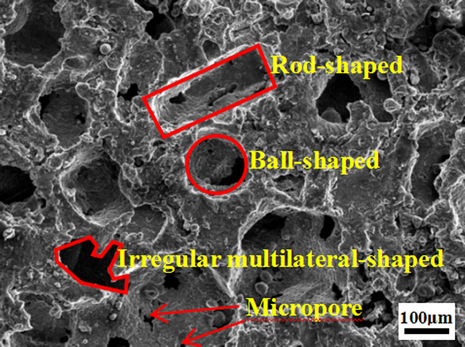
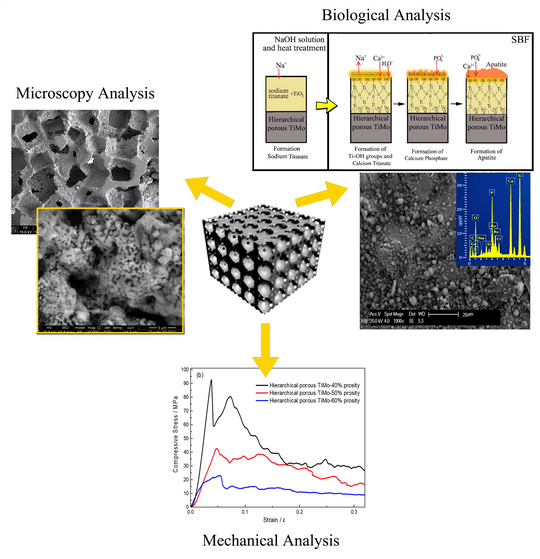
Novel three-dimensional (3D) hierarchical macro- to nano-porous titanium (Ti) and TiMo alloys with sufficient compressive strength (CS) were prepared using NaCl spacer and dealloying methods. The dealloying process was implemented by the heat treatment of TiCu and TiMoCu master alloys in Mg powders. The 3D-hierarchical porous structures were composed of large pores having a mean size of 400 μm with interconnected micro-pores in the size of 10–30 μm, where the pore walls possessed numerous nano-pores with a size range of 10–50 nm. The CS and elastic modulus values were 72.4 MPa and 2.67 GPa as well as 92.62 MPa and 3.36 GPa for Ti and TiMo, respectively. The hierarchical porous structure is beneficial for the fast nucleation of bone-like apatite after immersion in simulated body fluid (SBF). In addition, TiMo samples after NaOH and heat treatments provide better apatite formation after soaking in SBF for a week, in comparison with the samples without treatment.
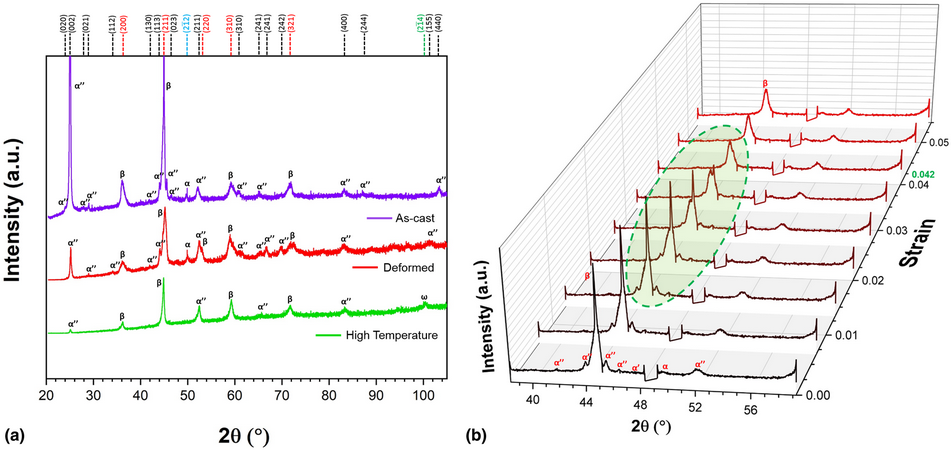
In this work, a Ti–29Nb–13Ta–4.6Zr–xO Gum Metal with two significantly different oxygen levels (388 and 3570 ppm) was investigated during deformation. The alloys were compressed during in situ high-energy X-ray diffraction using three different strain rates, 10−4, 10−3, and 10−1 s−1, in order to evaluate their influence on phase stability and mechanical properties. The influence of oxygen on the deformation process was also studied. Deformation takes place by twinning, stress-induced, and reverse martensitic transformation and was observed, for some samples, a spinodal decomposition of the β-phase during elastic deformation. The mechanical properties were similar for the different rates employed when considering the same oxygen level. The alloy with a higher amount of oxygen, however, showed a substantial increase in mechanical strength, with a yield strength of around 680 MPa, which is more than three times higher than for the specimen with 388 ppm of oxygen.