To save content items to your account,
please confirm that you agree to abide by our usage policies.
If this is the first time you use this feature, you will be asked to authorise Cambridge Core to connect with your account.
Find out more about saving content to .
To save content items to your Kindle, first ensure no-reply@cambridge.org
is added to your Approved Personal Document E-mail List under your Personal Document Settings
on the Manage Your Content and Devices page of your Amazon account. Then enter the ‘name’ part
of your Kindle email address below.
Find out more about saving to your Kindle.
Note you can select to save to either the @free.kindle.com or @kindle.com variations.
‘@free.kindle.com’ emails are free but can only be saved to your device when it is connected to wi-fi.
‘@kindle.com’ emails can be delivered even when you are not connected to wi-fi, but note that service fees apply.
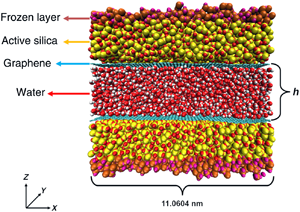
Inspired by the recently reported translucency of monolayer graphene (GE) to wetting, atomistic simulations are employed to evaluate water flow enhancement induced by GE deposited on the inner surfaces of hydrophilic nanochannels. The flow in the coated channels exhibits a slip length of approximately 3.0 nm. Moreover, by contrasting the flow rates in channels with coated walls against flow rates in the corresponding uncoated channels, an “effective” flow enhancement from 3.2 to 3.7 is computed. The probability density function of the water dipole orientation indicates that the flow enhancement is related to a thinner structured water layer at the solid–liquid interface. This study provides quantitative evidence that GE employed as coating reduces substantially hydraulic losses in hydrophilic nanoconfinement.
Type I/II interferons (IFNα,β/IFNɣ) are cytokines that activate signal-transducer-and-activator-of-transcription-1 (STAT1). The STAT1 N-terminal domain (NTD) mediates dimerization and cooperative DNA-binding. The STAT1 DNA-binding domain (DBD) confers sequence-specific DNA-recognition. STAT1 has been connected to growth inhibition, replication stress and DNA-damage. We investigated how STAT1 and NTD/DBD mutants thereof affect fibrosarcoma cells. STAT1 and indicated mutants do not affect proliferation of resting and IFNα-treated cells as well as checkpoint kinase signaling, and phosphorylation of the tumor-suppressive transcription factor p53 ensuing ɣ-irradiation. Of the STAT1 reconstituted U3A cells those with STAT1 NTD mutants accumulate the highest levels of the replication stress/DNA-damage marker S139-phosphorylated histone H2AX (ɣH2AX). This is similarly seen with a STAT1 NTD/DBD double mutant, indicating transcription-independent effects. Furthermore, U3A cells with STAT1 NTD mutants are most susceptible to apoptotic DNA fragmentation and cleavage of the DNA repair protein PARP1. These data provide novel insights into the relevance of the STAT1 NTD.
Development of high energy density solid-state batteries with Li metal anodes has been limited by uncontrollable growth of Li dendrites in liquid and solid electrolytes (SEs). This, in part, may be caused by a dearth of information about mechanical properties of Li, especially at the nano- and microlength scales and microstructures relevant to Li batteries. We investigate Li electrodeposited in a commercial LiCoO2/LiPON/Cu solid-state thin-film cell, grown in situ in a scanning electron microscope equipped with nanomechanical capabilities. Experiments demonstrate that Li was preferentially deposited at the LiPON/Cu interface along the valleys that mimic the domain boundaries of underlying LiCoO2 (cathode). Cryogenic electron microscopy analysis of electrodeposited Li revealed a single-crystalline microstructure, and in situ nanocompression experiments on nano-pillars with 360–759 nm diameters revealed their average Young's modulus to be 6.76 ± 2.88 GPa with an average yield stress of 16.0 ± 6.82 MPa, ~24x higher than what has been reported for bulk polycrystalline Li. We discuss mechanical deformation mechanisms, stiffness, and strength of nano-sized electrodeposited Li in the framework of its microstructure and dislocation-governed nanoscale plasticity of crystals, and place it in the parameter space of existing knowledge on small-scale Li mechanics. The enhanced strength of Li at small scales may explain why it can penetrate and fracture through much stiffer and harder SEs than theoretically predicted.
In recent years the availability of geolocation data has increased considerably and can be found in various portable devices such as smartphones. These devices are intended for navigation in general, but can be used to carry out topographical surveys that do not require high accuracy of the surveyed data. To verify the applicability and accuracy of these devices we conducted the topographic survey in an area of approximately 5 ha using a GPS with RTK technology as reference, a Commercial Navigation Receiver (RNC) and a popular brand smartphone with the mobile applications C7 GPS Data and GPS Essentials previously installed. The GPS RNC showed the best planimetric results and the Smartphone with C7 GPS Data obtained the best result altimetric. None of the receivers analyzed showed high accuracy in results obtained. However, they can be used for tasks where high precision is not required.
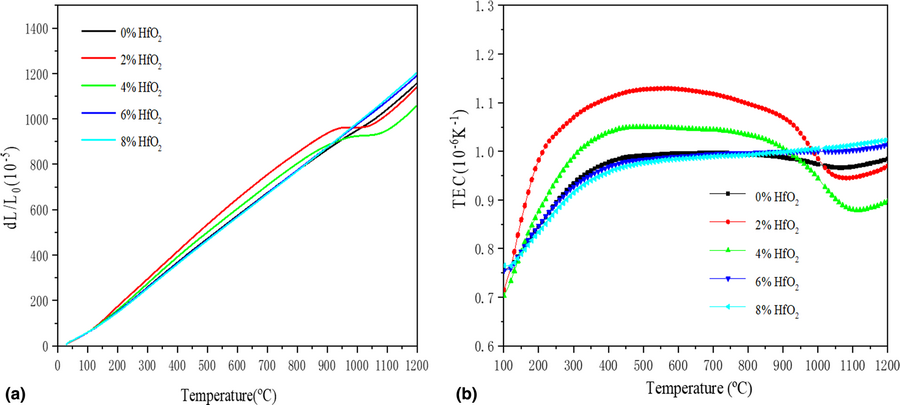
HfO2–Sm3TaO7 ceramics are prepared through a solid-state reaction method. The X-ray diffraction and structural refinement show that the phase structures of HfO2–Sm3TaO7 ceramics are an ordered orthorhombic phase and the space groups are belonging to Ccmm. The degree of the structural disorder increases with increasing HfO2 content. The solid solution mechanism reveals that Hf4+ exists in the form of interstitial ions that cause crystal expansion when the doping content is less than 4 mol%. When the doping concentration of HfO2 ≥ 4 mol%, the Hf4+ ions can substitute an equal number of Sm3+ and Ta5+ ions. The phase transition of Sm3TaO7 ceramics is removed with increasing HfO2 content, and the 8 mol% HfO2–Sm3TaO7 ceramics have a high thermal expansion coefficient of 10.2 × 10⁻⁶ K−1 at 1200 °C. The 2 mol% HfO2–Sm3TaO7 ceramics have the lowest thermal conductivity (1.03 W/m K at 900 °C), which is lower than previous research of the 7–8 YSZ. The outstanding thermophysical properties of HfO2–Sm3TaO7 ceramics indicate that they are potential thermal-barrier coating materials.
Evaluation of neural activity during natural behaviours is essential for understanding how the brain works. Here we show that neuron-specific self-evoked firing patterns are modulated by an object’s presence, at the electrosensory lobe neurons of tethered-moving Gymnotus omarorum. This novel preparation shows that electrosensory signals in these pulse-type weakly electric fish are not only encoded in the number of spikes per electric organ discharge (EOD), as is the case in wave-type electric fish, but also in the spike timing pattern after each EOD, as found in pulse-type Mormyroidea. Present data suggest that pulsant electrogenesis and spike timing coding of electrosensory signals developed concomitantly in the same species, and evolved convergently in African and American electric fish.
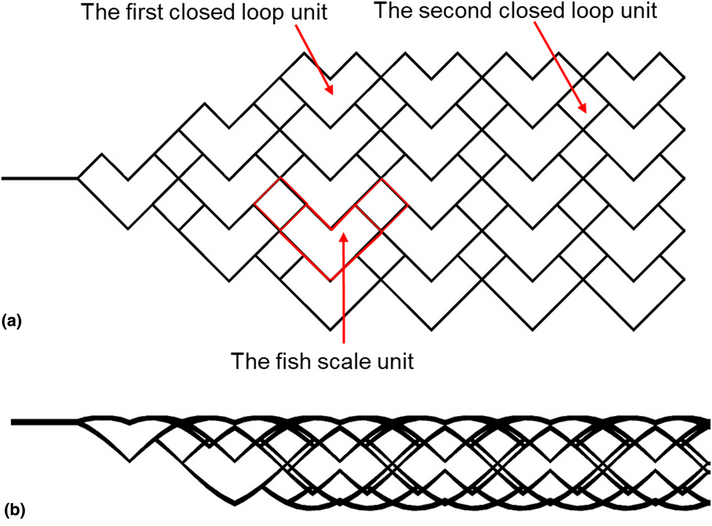
In recent years, intracranial thrombectomy stent has been an important method to treat ischemic stroke caused by acute thrombosis. In this paper, a new intracranial thrombectomy stent with a fish scale-like structure was designed and its mechanical properties were studied by a finite element method. The porosity of all stents was more than 80%. The space occupation ratio (SOR) of the stents increased linearly with the increase of strut thickness, while the strut width had little effect on SOR. The maximum equivalent stress and strain, the directional deformation and overall radial load of the stent decreased with the increase of strut thickness, however, the strut width has little impact on these parameters. The stents with 0.2 mm strut width and the thickness of 0.15 and 0.20 mm had better radial load performance, and the stent with 0.2 mm strut width and 0.15 mm strut thickness had better contact performance with the vessel wall and displayed better flexibility. Therefore, the present study provides a theoretical basis for the design of new intracranial thrombectomy stent.
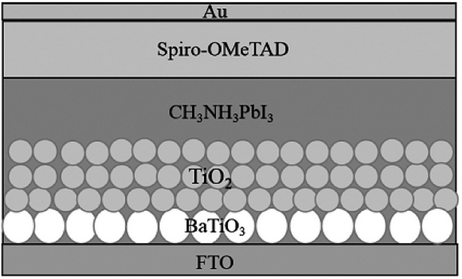
The ferroelectric material of BaTiO3 was introduced in the electron transport layer (ETL) of perovskite solar cells to improve the photogenerated electron transport. The sintered BaTiO3 thin films were polarized at different applied electric fields, and then TiO2 thin films were further deposited to be used as the ETL. The electric field was positively applied across the BaTiO3 thin film, and the photocurrent density of solar cell can be increased obviously. The results of electrochemical impedance and photoluminescence spectra indicate that the ordered polarization dipole moment inside the BaTiO3 thin film can accelerate the transport of photogenerated electrons from the ETL to the conducting glass substrate. The short-circuit photocurrent of perovskite solar cell is increased and thus the light-to-electric conversion efficiency is effectively improved to 13%. It is increased by 14% compared with that without the application of the positive electric field across the BaTiO3 thin film.
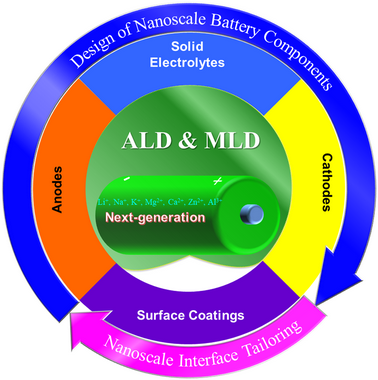
In the past decade, atomic and molecular layer deposition (ALD and MLD), these two sister techniques have been attracting more and more research attention to address technical challenges in various advanced battery systems. The charm of both ALD and MLD lies in their unique mechanism for growing a large variety of functional materials, featuring uniform and conformal films enabled at the atomic/molecular level at low temperature. Using ALD and MLD, to date, there have been many excitements achieved in research. These will ultimately be reflected on technical innovations that will help revolutionize our lifestyles. This invited article gives the first comprehensive review briefing on the journey of ALD and MLD in pursuing better batteries and highlighting many exciting progresses in various advanced battery systems. It is expected that this review will help boost many more efforts in using ALD and MLD for new battery technologies in the coming decade.
The analysis presented in Part I of this study on the binary collision of equal molten calcium–magnesium–alumino–silicate (CMAS) droplets is extended to investigate the flow and interfacial dynamics of unequal CMAS droplet collision. Numerical investigations of head-on, off-center, and grazing collisions of two CMAS droplets of size 1 and 2 mm are conducted at pressure and temperature of 20 atm and 1548 K, respectively, that are representative of a gas-turbine combustor. At these conditions, the physical properties of CMAS are density, ρCMAS = 2690 kg/m3, surface tension between CMAS/air, σCMAS = 0.40 N/m, and viscosity, μCMAS = 11.0 N-s/m2. The primary difference between the CMAS and a fictitious fluid with viscosity 1/10 of CMAS was higher deformation for the lower viscosity case, leading to stretching and subsequent breakup of the liquid structure. These mechanisms are supported by the time evolution of surface, kinetic, and viscous dissipation energies.
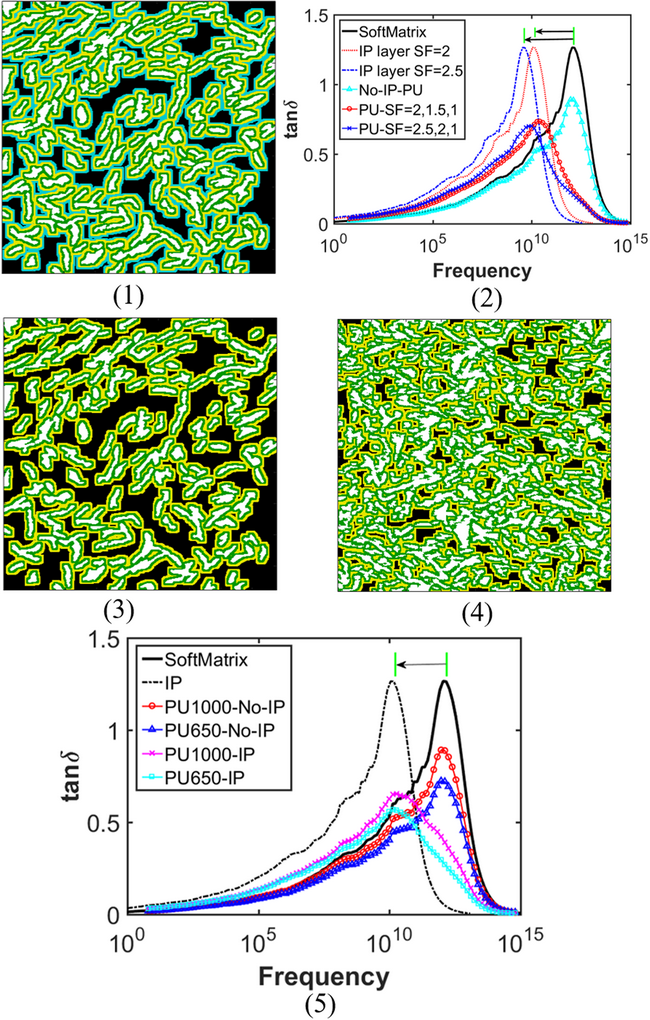
In this paper, we use finite element analysis (FEA) to study the linear viscoelastic response of polyurea, a type of hard–soft block copolymer. A Niblack's algorithm-based technique employed on atomic force microscopy images provides geometry inputs for the FEA model, while the viscoelastic master curves of the soft matrix are obtained via a combination of dynamic mechanical analysis data and molecular dynamic (MD) estimations. In this microstructural image-based FEA framework, we introduce an interphase area of altered properties between the hard and soft domains. Both spatial and property distributions of this interphase area affect the viscoelastic response of the copolymer system. To quantitatively investigate the impact of structural and property features of the interphase on the energy storage and dissipation of a system during linear perturbation, we develop a statistical descriptor representation of the interphase region related to physical parameters. Utilizing decision-tree and random forest concepts from machine learning, we apply a ranking algorithm to identify the most significant features for four different mechanical response descriptors. Results show that the total interphase volume fraction and shifting factor distributions in the interphase area dominate the magnitude of the tan δ peak, whereas the magnitudes of the shifting factors primarily affect the tan δ peak location in frequency space. This method allows us to readily identify the dominant features impacting individual properties and paves the way for material design of hard–soft block copolymer systems.
Calcium–magnesium–alumino-silicate (CMAS) reaction and infiltration behavior were studied in phase pure and mixed phase ytterbium silicate environmental-barrier coating (EBC) materials at 1300 °C. Phase pure Yb2Si2O7 (YbDS) was infiltrated by CMAS via grain boundaries/pores, resulting in loss of its structural integrity. Phase pure Yb2SiO5 (YbMS) reacted with CMAS to form either apatite (Ca2Yb8(SiO4)6O2) or YbDS, depending on the initial glass composition. Both reactions in YbMS slowed infiltration kinetics considerably compared to YbDS. Samples having a YbDS matrix with controlled amounts and dispersions of YbMS were also investigated as a model for air plasma spray coatings. Samples containing ≥20 vol% coarse YbMS showed dramatically improved infiltration behavior compared to phase pure YbDS. YbDS samples containing a fine dispersion of YbMS displayed a new mode of CMAS attack in which glass spread on the sample surfaces. The results of this study suggest that EBC phase compositions and microstructures may be tailored for optimized CMAS resistance.
Lithium-ion batteries have enabled the widespread use of portable electronic devices and are propelling the growing electric vehicle market, but new battery technologies with improved performance are necessary for emerging applications such as electric aircraft. The solid-state battery is one such technology that could exhibit enhanced safety and higher energy density compared to conventional lithium-ion batteries. The use of a pure lithium metal anode within solid-state batteries is key for higher energy density (Figure 1a), and it is thought that using solid-state electrolytes instead of conventional liquids could increase the chemical and structural stability of lithium metal.1 Despite continued progress in the development of new inorganic solid-state electrolyte materials; however, a persistent problem has emerged: lithium metal tends to grow as filaments during charging instead of as a flat film, and these filaments can penetrate and fracture the stiff solid-state electrolyte to short circuit the cell (Figure 1b).2–4 To prevent this chemo-mechanical degradation process and enable filament-free charging, it is critical to understand the mechanical properties of lithium metal, which have been elusive because of the highly reactive nature of lithium.
BPIFA2 (PSP, SPLUNC2, C20orf70) is a major salivary protein of uncertain physiological function. BPIFA2 is downregulated in salivary glands of spontaneously hypertensive rats, pointing to a role in blood pressure regulation. This study used a novel Bpifa2 knockout mouse model to test the role of BPIFA2 in sodium preference and blood pressure. Blood pressure did not differ between wild-type male and female mice but was significantly lower in male knockout mice compared to male wild-type mice. In contrast, blood pressure was increased in female knockout mice compared to female wild-type mice. Female wild-type mice showed a significant preference for 0.9% saline compared to male mice. This difference was reduced in the knockout mice. BPIFA2 is an LPS-binding protein but it remains to be determined if the reported effects are mediated by the LPS-binding activity of BPIFA2.
This study compares the investigated water vapor diffusion coefficient in the neat polyurethane (PU) membrane, the silica–PU nanocomposite membrane, and two surface-modified silica–PU nanocomposite membranes. The silane first surface modifier is with an amine functional group known as N-[3-(trimethoxysilyl)propyl]ethylenediamine, while the second one is with an aniline functional group known as N-[3-(trimethoxysilyl)propyl]aniline. The enhancement of water vapor diffusivity values through the polymer nanocomposite is desirable for the membrane air dehumidification application. The diffusivities were calculated via molecular dynamics simulations at the temperature of 298.15 K. The Einstein's relationship known as the mean square displacement method was used to obtain the diffusivity for the membranes. The results showed a significant effect on the diffusivity of water vapor for the surface-modified silica–PU nanocomposite membrane as compared with the neat PU and the unmodified silica–PU nanocomposite membranes. For the amine-modified silica, the diffusion coefficient increased by 80.3% compared with the unmodified silica–PU nanocomposite membrane. On the other hand, the aniline-modified silica outperformed the amine-modified one in terms of the diffusion coefficient by 22.4%.
The National Institute of Standards and Technology (NIST) certifies a suite of Standard Reference Materials (SRMs) to be used to evaluate specific aspects of the instrument performance of both X-ray and neutron powder diffractometers. This report describes SRM 640f, the seventh generation of this powder diffraction SRM, which is designed to be used primarily for calibrating powder diffractometers with respect to line position; it also can be used for the determination of the instrument profile function. It is certified with respect to the lattice parameter and consists of approximately 7.5 g of silicon powder prepared to minimize line broadening. A NIST-built diffractometer, incorporating many advanced design features, was used to certify the lattice parameter of the Si powder. Both statistical and systematic uncertainties have been assigned to yield a certified value for the lattice parameter at 22.5 °C of a = 0.5431144 ± 0.000008 nm.
Hydrogen is a promising alternative fuel for efficient energy production and storage, with water splitting considered one of the cleanest, environmentally friendly, and sustainable approaches to generate hydrogen. Electrochemically catalyzed water splitting plays an important role in energy conversion for the development of hydrogen-based energy sources. Porphyrin and macrocycle derivatives are versatile and can electrochemically catalyze water splitting efficiently. Because of the significance of molecule activation of electrochemical water splitting, this article covers recent progress in hydrogen evolution and oxygen evolution reactions catalyzed by porphyrin and macrocycle derivatives.
Functionally graded nanocomposite materials (FGNMs) have been known since the 1980s, although nanocomposite materials date back to the space race era of the 1960s. FGNMs are defined as materials in which the chemical and structural composition changes over their entire volume. Today, due to our current understanding, technology, and control over the nanostructure of materials, we can tune these properties at the nanoscale. Although FGNM applications have mostly focused on protective coatings, they have performed well in catalysis and hydrogen production applications. In this article, FGNMs are presented in a new light beyond their well-established applicability as protective coatings. This article focuses on the synergistic potential among mechanical/tribological properties and competitive catalytic performance, with special emphasis on energy and remediation applications. Also, ways by which the rational design and tailoring of catalytic properties can be achieved by means of FGNMs are described.