To save content items to your account,
please confirm that you agree to abide by our usage policies.
If this is the first time you use this feature, you will be asked to authorise Cambridge Core to connect with your account.
Find out more about saving content to .
To save content items to your Kindle, first ensure no-reply@cambridge.org
is added to your Approved Personal Document E-mail List under your Personal Document Settings
on the Manage Your Content and Devices page of your Amazon account. Then enter the ‘name’ part
of your Kindle email address below.
Find out more about saving to your Kindle.
Note you can select to save to either the @free.kindle.com or @kindle.com variations.
‘@free.kindle.com’ emails are free but can only be saved to your device when it is connected to wi-fi.
‘@kindle.com’ emails can be delivered even when you are not connected to wi-fi, but note that service fees apply.
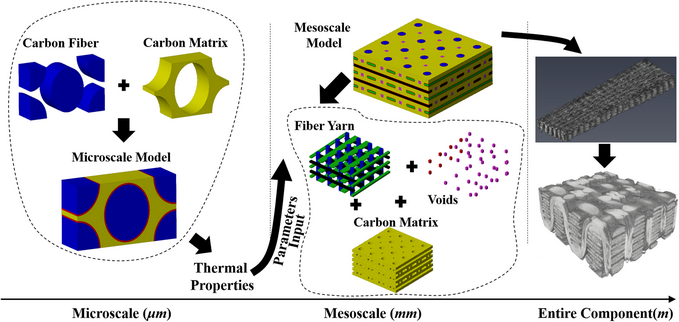
Thermal conductivity behaviors are one of the most important evaluations of carbon fiber-reinforced carbon matrix (C/C) composites in the field of thermal protective structures. In order to deepen the understanding of the thermal conductivity behaviors of C/C composites, the out-of-plane thermal conductivity of C/C composites is studied by considering voids and the fiber volume fractions. The representative volume element (RVE) models of microscale and mesoscale are proposed. The parameters of the RVE models are captured by X-ray micro-computed tomography. The carbon matrix equivalent models and fiber volume fraction models along the z-direction were established. The effects of the porosity and fiber volume fraction along the z-direction on the thermal conductivity were analyzed. The proposed model was validated by experimental results at room temperature. Further, the numerical methods developed in this study can provide guidance for predicting the thermal conductivity of C/C composites with complex structures.
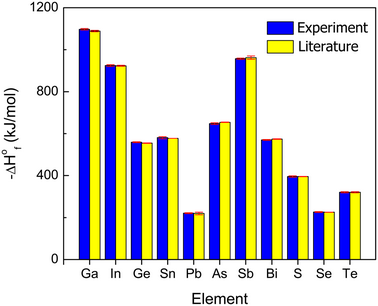
Understanding the thermodynamic stability of materials plays an essential role in their applications. The high-temperature oxide melt solution calorimetry is a reliable method developed to experimentally measure formation enthalpy. Until now, it has been mostly used for the characterization of oxide materials. We introduce modifications in the experimental technique which makes it suitable for a wide range of non-oxide compounds. The modified methodology was used to measure the heat effects associated with the oxidative dissolution of almost all p-elements of groups III, IV, V, and VI and verified by calculating the standard enthalpies of formation of the corresponding oxides at 298 K. The results presented serve as a compelling database for pure p-elements, which will provide a very straightforward way of calculating the formation enthalpies of non-oxide systems based on high-temperature calorimetric experiments.
Social jetlag (SJ) occurs when sleep-timing irregularities from social or occupational demands conflict with endogenous sleep–wake rhythms. SJ is associated with evening chronotype and poor mental health, but mechanisms supporting this link remain unknown. Impaired ability to retrieve extinction memory is an emotion regulatory deficit observed in some psychiatric illnesses. Thus, SJ-dependent extinction memory deficits may provide a mechanism for poor mental health. To test this, healthy male college students completed 7–9 nights of actigraphy, sleep questionnaires, and a fear conditioning and extinction protocol. As expected, greater SJ, but not total sleep time discrepancy, was associated with poorer extinction memory. Unexpectedly, greater SJ was associated with a tendency toward morning rather than evening chronotype. These findings suggest that deficient extinction memory represents a potential mechanism linking SJ to psychopathology and that SJ is particularly problematic for college students with a greater tendency toward a morning chronotype.
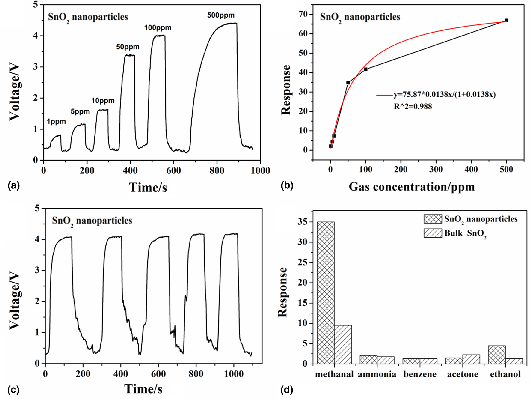
During the detection of industrial hazardous gases, like formaldehyde (HCHO), the selectivity is still a challenging issue. Herein, an alternative HCHO chemosensor that based on the tin oxide nanoparticles is proposed, which was obtained through a facile hydrothermal method. Gas sensing performances showed that the optimal working temperature located at only 180 °C, the response value of 79 via 50 ppm HCHO was much higher than that of 35 at 230 °C. However, the compromised test temperature was selected as 230 °C, taking into account the faster response/recovery speeds than 180 °C, named 20/23versus 53/60 s, respectively. The response (35) of the SnO2 nanoparticles-based sensor to 50 ppm of HCHO is about 400% higher than that of bulk SnO2 sensor (9), especially when the gas concentration is 1 ppm, SnO2 nanoparticles also has a higher sensitivity which may possibly result from more exposed active sites and small size effect for nanoparticles than for bulk ones. The gas sensor based on SnO2 nanoparticles can be utilized as a promising candidate for practical low-temperature detectors of HCHO due to its higher gas response, excellent response–recovery properties, and perfect selectivity.
A novel g-C3N4 nanoparticle@porous g-C3N4 (CNNP@PCN) composite has been successfully fabricated by loading g-C3N4 nanoparticles on the porous g-C3N4 matrix via a simply electrostatic self-assembly method. The composition, morphological structure, optical property, and photocatalytic performance of the composite were evaluated by various measurements, including XRD, SEM, TEM, Zeta potential, DRS, PL, FTIR, and XPS. The results prove that the nanolization of g-C3N4 leads to an apparent blueshift of the absorption edge, and the energy band gap is increased from 2.84 eV of porous g-C3N4 to 3.40 eV of g-C3N4 nanoparticle (Fig. 6). Moreover, the valence band position of the g-C3N4 nanoparticle is about 0.7 eV lower than that of porous g-C3N4. Therefore, the photo-generated holes and electrons in porous g-C3N4 can transfer to the conduction band of g-C3N4 nanoparticle, thereby obtaining higher separation efficiency of photo-generated carriers as well as longer carrier lifetime. Under visible-light irradiation, 6CNNP@PCN exhibits the highest photocatalytic performance (Fig. 8) on MB, which is approximately 3.4 times as that of bulk g-C3N4.
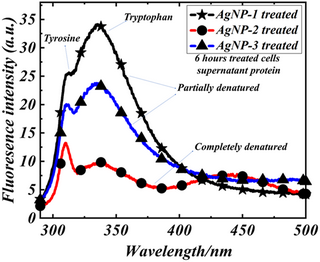
Synthetic cationic polymer-mediated synthesis of silver nanoparticles and selective antimicrobial activity of the same were demonstrated. Polyethyleneimine (PEI)-coated silver nanoparticles showed antimicrobial activity against Acinetobacter baumannii as a function of the polymeric molecular weight (MW) of PEI. Silver nanoparticles were coated with PEI of three different MWs: Ag-NP-1 with PEI exhibiting a MW of 750,000, Ag-NP-2 with PEI exhibiting a MW of 1300, and Ag-NP-3 with PEI exhibiting a MW of 60,000. These nanoparticles showed a particle size distribution of 4–20 nm. The nanoparticles exhibited potent antimicrobial activity against A. baumannii, with the minimum inhibitory concentration of Ag-NP-1, Ag-NP-2, and Ag-NP-3 on the order of 5, 10, and 5 μg/mL, respectively, and minimum bactericidal concentration of Ag-NP-1, Ag-NP-2, and Ag-NP-3 on the order of 10, 20, and 10 μg/mL, respectively. Fluorescence imaging of Ag-NPs revealed selective transfusion of Ag-NPs across the cell membrane as a function of the polymeric MW; differential interaction of the cytoplasmic proteins during antimicrobial activity was observed.
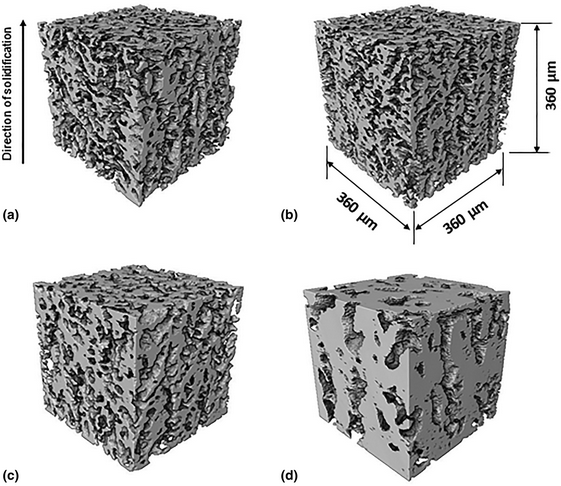
Iron foams are potential materials for the production, purification, and recuperation of hydrogen through redox systems. They are inexpensive, recyclable, and environmentally friendly. Nevertheless, iron foams cannot be employed repeatedly for redox cycling at high temperatures because the structure suffers morphological changes and a decrease in the effective porosity. In this work, two different pore structures of Fe-foams fabricated by freeze-casting have been produced: constant (CP) and gradient (GP) pore size. CP Fe-foams were obtained by employing a double-sided cooling technique to minimize gradients in pore width that result when using one-sided, constant cooling solidification techniques. GP Fe-foams were manufactured using a fixed-temperature cold plate. Optical microscopy and X-ray tomography were employed to characterize the pore structure and, for GP Fe-foams, to investigate the effect of redox cycling. After redox cycling, GP Fe-foams exhibited significant pore degradation.
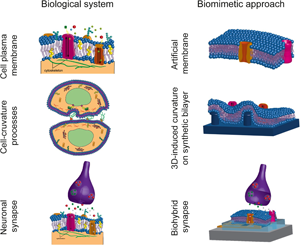
Bioelectronics aims to design electronic devices which can be fully integrated within tissues to monitor or stimulate specific cell functions. The main challenge is the engineering of the cell–chip interface and diverse materials, and devices have been developed to recapitulate biological architectures and functionalities. In this Prospective article, the authors give an overview on how the bioelectronics community has exploited biomimetic approaches to emulate cell morphologies, interactions, and functions to design optimal electrical platforms to be coupled to living cells.
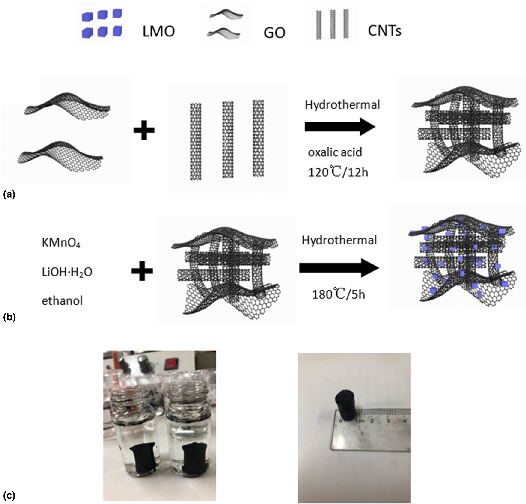
Integrating LiMn2O4(LMO) and different carbon materials to build a mixed cathode system can provide fast transport channels to improve the conduction of both electrons and ions. In this paper, our work studied in situ low-temperature hydrothermal synthesis of LMO nanocomposites based on graphene oxide (GO)/carbon nanotubes (CNTs) hydrogel. Compared with the pure LMO nanoparticles, GO/CNTs/LMO (GCLMO) composites greatly improved electrochemical performance in specific capacity, cycle performance and rate ability. The electrochemical test results showed that the specific capacitance of GCLMO nanocomposites reached 396 F/g at the current density of 0.5 A/g, which was much higher than 221 F/g of pure LMO. Even at the current density of 10 A/g, the specific capacitance was still as high as 309 F/g. Besides, after 2000 cycles, the specific capacitance retention of the composite was 93%. Electrochemical data showed that GCLMO composite is an ideal cathode material for supercapacitors.
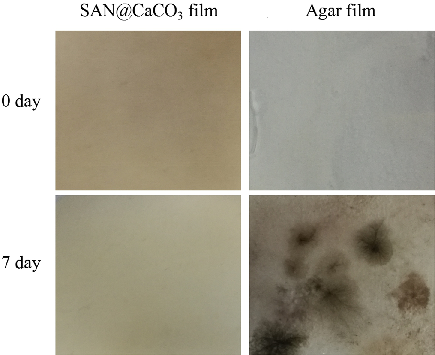
The synthesis of antibacterial biomaterial with specific functions responsive to specific bacterial growth environments is of significant importance to achieve effective sterilization and reduce the resistant bacteria. Herein, inspired by biomineralization, we develop a one-pot, threonine (Thr)-mediated biomineralization method using a CO2 bubbling procedure to green, simply and quickly prepare vaterite CaCO3 microspheres as a platform for antibacterial Sanguinarine (SAN) delivery. The loading capacity of vaterite CaCO3 microspheres for SAN drugs reached 159.8 mg/g, corresponding to the loading efficiency of 83.7%. And for the first time, a novel Sanguinarine@calcium carbonate (SAN@CaCO3) organic–inorganic hybrid antibacterial biofilm was constructed by using vaterite CaCO3 microspheres with pH-responsive and high SAN drug-loading. Importantly, the film showed bacteria-triggered, pH-responsive SAN release properties and strong bactericidal ability (96.19%) for Staphylococcus aureus (S. aureus). Meanwhile, it also had antibacterial capabilities in real environments. In 7 days, it can significantly inhibit the adhesion and growth of bacteria in the air. The biomineralized synthetic vaterite CaCO3 microspheres and the application in the construction of pH-responsive antibacterial biofilm have bright future in resisting bacterial infections and reducing the production of resistant bacteria.
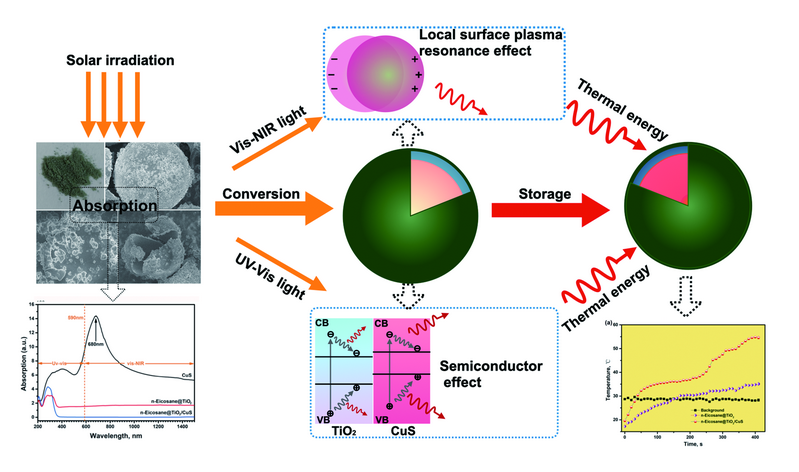
To advance the utilization of solar thermal energy, a novel solar-driven microcapsule was designed by the combination of high-performance CuS nanoconverter and the microencapsulated n-Eicosane with a brookite TiO2 shell via in situ sol–gel method. The resultant n-Eicosane@TiO2/CuS microcapsules possessed excellent thermal properties with high latent heat density (171.7 J/g), high encapsulation efficiency (71.7%), and increased thermal conductivity (0.730 W/(m K)). SEM analysis clearly verified that CuS nanoparticles exhibited a uniform distribution on the surfaces. Most of all, the addition of CuS not only enlarged the absorption spectra from the UV to the visible and NIR region but also achieved high solar-to-thermal conversion efficiency (94.41%). Due to the high heat storage capability and solar irradiation utilization efficiency, this solar-driven microcapsule possesses great potential for the solar energy utilization.
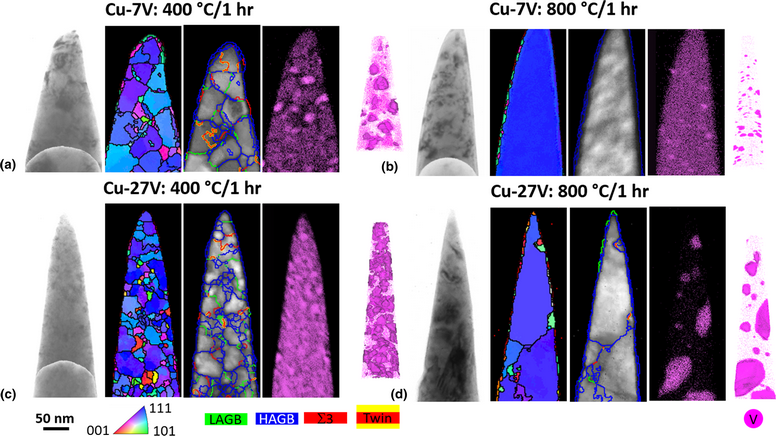
We report the sputter deposition of Cu-7V and Cu-27V (at.%) alloy films in an attempt to yield a “clean” alloy to investigate nanocrystalline stability. Films grown in high vacuum chambers can mitigate processing contaminates which convolute the identification of nanocrystalline stability mechanism(s). The initial films were very clean with carbon and oxygen contents ranging between ~0.01 and 0.38 at.%. Annealing at 400 °C/1 h facilitated the clustering of vanadium at high-angle grain boundary triple junctions. At 800 °C/1 h annealing, the Cu-7V film lost its nanocrystalline grain sizes with the vanadium partitioned to the free surface; the Cu-27V retained its nanocrystalline grains with vanadium clusters in the matrix, but surface solute segregation was present. Though the initial alloy and vacuum annealing retained the low contamination levels sought, the high surface area-to-volume ratio of the film, coupled with high segregation tendencies, enabled this system to phase separate in such a manner that the stability mechanisms that were to be studied were lost at high temperatures. This illustrates obstacles in using thin films to address nanocrystalline stability.
A deconvolutional method for preprocessing powder diffraction data has been improved. The cumulants of instrumental aberration functions of Bragg-Brentano (Parrish) diffractometer calculated up to the fourth order are presented. The treatments of axial-divergence aberration and the effective spectroscopic profile of the source X-ray have been simplified from those used in previous methods. The current method has been applied to powder diffraction data collected with a Cu-target X-ray tube, used over 20 years, and a Ni-foil Kβ filter.
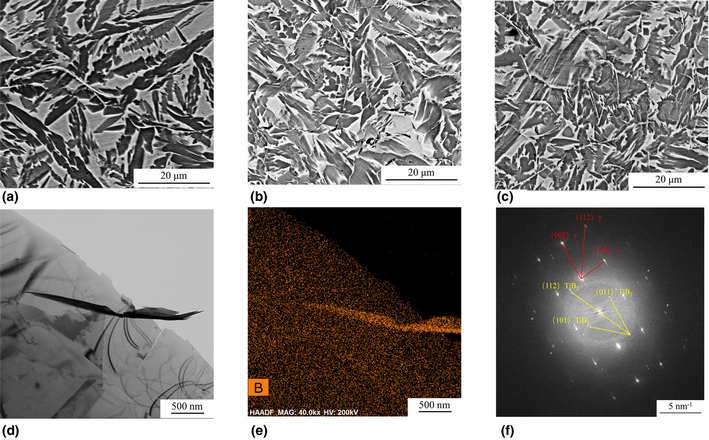
TiAl alloys are potential structural high-temperature structural materials at a service temperature of ~900 °C, while poor ductility at room temperature and high creep rate at the elevated temperature limits the applications. To improve the room-temperature and high-temperature mechanical properties of Ti–44Al–5Nb–3Cr–1.5Zr, Mo and B were introduced into this system and Ti–44Al–5Nb–3Cr–1.5Zr–xMo–yB alloys were proposed. And then, we, respectively, studied the microstructures and mechanical properties of Ti–44Al–5Nb–3Cr–1.5Zr–xMo–0B and Ti–44Al–5Nb–3Cr–1.5Zr–1Mo–yB to elucidate the role for the addition of Mo and B. It is found that Mo can increase the fraction of B2 phase in the alloys and the microstructures of the alloys are greatly refined by the addition of B. The compression test results indicate that Mo has a positive influence on the high-temperature compressive properties of TiAl-based alloys, whereas B addition can improve their room-temperature compressive properties of Ti–44Al–5Nb–3Cr–1.5Zr–1Mo–yB alloys; the morphology of borides in each sample should be the structural origin for these phenomena.
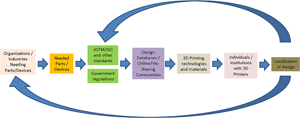
The current COVID-19 pandemic has caused the shortage of personal protective equipment (PPE) where improvised manufacturing in particular 3D printing has addressed many needs. This prospective discusses the current global crisis, then follows the wide interest in addressing the shortage of medical devices and PPEs used for treatment and protection against pathogens. An overview of the 3D printing process with polymer materials is given followed by the different 3D printing projects of PPEs and medical devices that emerged for the pandemic (including validation/testing). The potential for rapid prototyping with different polymer materials and eventual high-throughput production is emphasized.
In this primer to the many-body theory of condensed-matter systems, the authors introduce the subject to the non-specialist in a broad, concise, and up-to-date manner. A wide range of topics are covered including the second quantization of operators, coherent states, quantum-mechanical Green's functions, linear response theory, and Feynman diagrammatic perturbation theory. Material is also incorporated from quantum optics, low-dimensional systems such as graphene, and localized excitations in systems with boundaries as in nanoscale materials. Over 100 problems are included at the end of chapters, which are used both to consolidate concepts and to introduce new material. This book is suitable as a teaching tool for graduate courses and is ideal for non-specialist students and researchers working in physics, materials science, chemistry, or applied mathematics who want to use the tools of many-body theory.
The crystal structure of trimethylarsine oxide dihydrate, (CH3)3AsO⋅2H2O, (TMAO dihydrate) has been solved using parallel tempering with the FOX software package and refined using synchrotron powder diffraction data obtained from beamline 08B1-1 at the Canadian Light Source. Rietveld refinement, performed with the software package GSASII, yielded orthorhombic lattice parameters of a = 13.3937(4) Å, b = 9.53025(30) Å, and c = 11.5951(3) Å (Z = 8, space group Pbca). The Rietveld refined structure was compared with density functional theory calculations performed with VASP and shows reasonable agreement. Arsenic K-edge X-ray absorption spectroscopy analysis also revealed additional information on the electronic structure of the arsenic atom within the TMAO dihydrate structure.
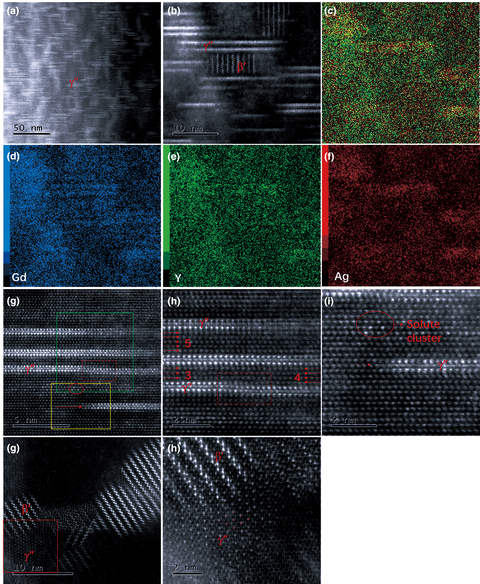
The γ″ phase (hexagonal structure with space group ${ P\bar{6}}2{ m}$) plays an important role in the strengthening of Mg–Gd–Y–Ag–Zr alloy. In this study, Cs-corrected high-angle annular dark-field scanning transmission electron microscopy was applied to characterize the Mg–Gd–Y–Ag–Zr alloy in different conditions (as-cast, solution-treated, and isothermally aged at 200 °C). The nucleation, growing process, and transformation behavior of the plate-shaped γ″ phase were systematically investigated on the atomic scale. We found that the nucleation sites of the γ″ phase were separated by close-packed planes of the Mg matrix and the γ″ phase developed in two perpendicular directions of $\langle 10\bar{1}0 \rangle$ and ⟨0001⟩. The growing process of the γ″ phase on the atomic scale was captured. The γ″ phase was thermodynamically stable at room temperature, and no transformation behavior of the γ″ phase was observed up to 200 h during isothermal aging at 200 °C.