To save content items to your account,
please confirm that you agree to abide by our usage policies.
If this is the first time you use this feature, you will be asked to authorise Cambridge Core to connect with your account.
Find out more about saving content to .
To save content items to your Kindle, first ensure no-reply@cambridge.org
is added to your Approved Personal Document E-mail List under your Personal Document Settings
on the Manage Your Content and Devices page of your Amazon account. Then enter the ‘name’ part
of your Kindle email address below.
Find out more about saving to your Kindle.
Note you can select to save to either the @free.kindle.com or @kindle.com variations.
‘@free.kindle.com’ emails are free but can only be saved to your device when it is connected to wi-fi.
‘@kindle.com’ emails can be delivered even when you are not connected to wi-fi, but note that service fees apply.
Recently, organic–inorganic hybrid metal halide perovskite (O-IHMHP) has been diffusely used in solar cells due to its remarkable photoelectric property and inexpensive film-forming process. Since organic–inorganic hybrid metal halide perovskite solar cells (O-IHMHPSCs) were introduced in 2009, their photoelectric conversion efficiency has been increased to 25.2%, and their lifespan has been extended to tens of thousands of hours. However, due to processing factors, defects consist in the interfaces of O-IHMHP with the electron transport layer and the hole transport layer. To improve the stability and property of O-IHMHPSCs, these defects must be addressed; to do so, passivation is commonly applied at the interface. This work reviews research on the interface passivation of O-IHMHPSCs. Here, the passivation mechanisms of different additives on the interface defects of O-IHMHP films are analyzed, their impacts on the stability and property of O-IHMHPSCs are compared, and their roles in O-IHMHPSCs are summarized. Finally, the research and development trends of the defect passivation of O-IHMHPSCs are discussed.
The New pandemic is hitting all around the world in different manner. The infection rate, prevalence and severity is not patronized in many countries. Pakistan is now attaining the peak in its cases. Around 108,317 confirmed cases are present in Pakistan and 71,127 are currently active cases1. The recovery rate is 32%. The dangerous situation about the infection prevalence is that most of the people either are asymptomatic of having mild symptoms. An estimation release from Primary Health Department of Punjab claims that almost 670,000 cases are asymptomatic in only Lahore city 2. This correspondence is about an infected family of 5 people 3 males and 2 females in Lahore, Pakistan. Who were exposed with virus and one after one got the infection, the two males deceased but rest of family member are recovered.
Leishmania species are the causative agents for Leishmaniasis which is one of the neglected tropical diseases causing 70,000 deaths worldwide each year. Squalene synthase enzyme plays a vital role in sterol metabolism which is essential for Leishmania parasite viability. Therefore squalene synthase of Leishmania donovani is a therapeutic target to inhibit growth of parasite. The 3D model of Leishmania donovani Squalene Synthase (LdSQS) was generated by homology modeling and validated through PROCHECK, ERRAT, VERIFY3D and PROSA tools. Virtual screening of the protein was performed by AutoDock with reported inhibitor, E5700 and two natural alkaloids. Molecular interactions were explored to understand the nature of intermolecular bonds between active ligand and the protein binding site residues using UCSF Chimera and PLIP server. The reported inhibitor showed the best binding affinity (-9.75 kcal/mol) closely followed by Ancistrotanzanine B (-9.55 kcal/mol) and Holamine (-8.79 kcal/mol). Ancistrotanzanine B showed low binding energy and permissible ADMET properties. Based on the present study, homology model of LdSQS and Ancistrotanzanine B can be used to design inhibitors with antileishmanial activity.
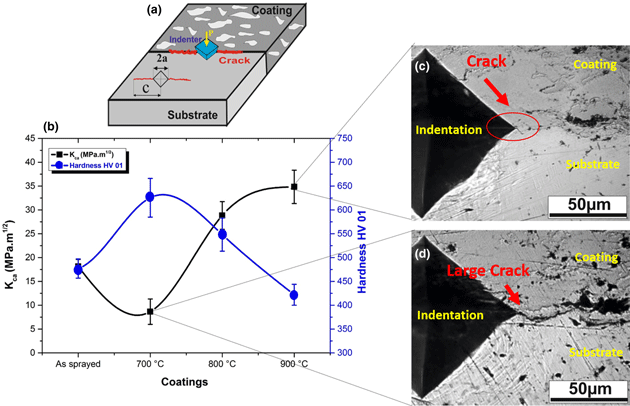
In the present work, the effect of annealing temperature on the microstructure, mechanical and tribological properties of NiCr–WC–Co coatings produced by the high-velocity oxy-fuel (HVOF) technique has been investigated. X-ray diffraction and scanning electron microscopy revealed the dissolution of WC into the NiCr matrix to form W2C and Cr3C2 with the annealing process. This dissolution became complete at 800 °C. The mechanical properties of the coatings were investigated using nano-indentation and Vickers fracture toughness measurements. These measurements suggested that the hardness, Young's modulus, and fracture toughness values increased because of the newly formed carbide phases as a result of the dissolution of the WC particles. The overall properties of the coatings were found to be optimum for annealing temperatures of 800 °C. The wear mechanism appears to be abrasive in the as-sprayed coating, and it becomes a combination of an abrasive and oxidative wear with increasing the annealing temperature.
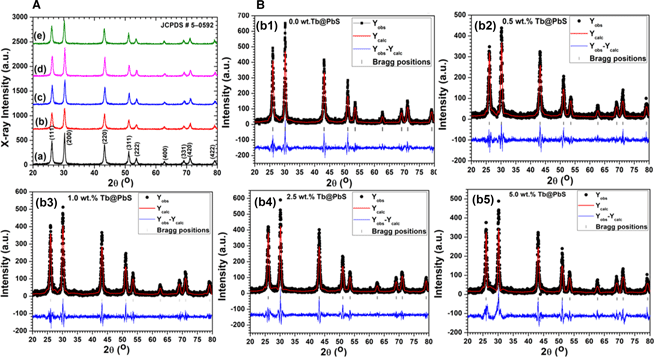
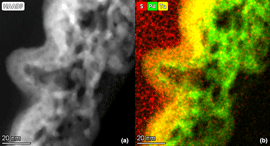
Lead sulfide (PbS) is having tremendous applications in the field of optoelectronics. Hence, a facile low temperature synthesis of PbS with different contents of terbium (Tb) has been achieved and investigated for structure–optic–dielectric–electrical properties. The structure confirmation was observed through the X-ray diffraction and Rietveld refinement process which approved a monophasic cubic structure. Rietveld refinement gives a best-fitting profile of the prepared products. The crystallite size was estimated to be in range of 15–21 nm. FT-Raman study also approved the single-phase PbS with all characteristic modes. For further confirmation of composition, homogeneity, and Tb in the final product, the EDX/SEM e-mapping was carried out. The morphological investigation was carried out through SEM which revealed that the shape and size are greatly influenced by Tb content addition in PbS. The energy gap (Eg) was estimated in the range of 1.42–1.62 eV for all Tb@PbS, and the largest Eg value was observed for 0.5 wt% Tb@PbS. The dielectric constant values are calculated in the range of 16–25 in the tested frequency region. The ac electrical conductivity was enhanced with frequency, and a charge transport mechanism is related to a correlated barrier hoping model in the prepared samples.
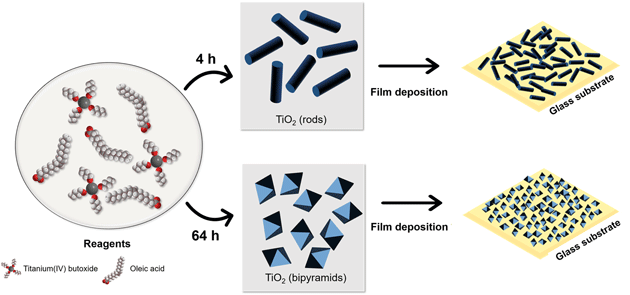
Titanium dioxide (TiO2) is a semiconductor that can be applied in different technological areas. In this work, we investigated the modifications of the electrical properties of thin films composed of TiO2 nanoparticles produced with different morphologies. The solvothermal route used for the synthesis allowed the production of nanoparticles with functionalized surfaces due to oleate groups. It was possible to modulate nanocrystals shape and size due to the detachment crystal growth mechanism, by changing the reaction time. Nanorods were obtained using 4 h of synthesis, and an increase in the reaction time to 64 h led to a bipyramidal morphology. The functionalization by the organic ligand allowed the preparation of stable colloidal solutions, which were used to prepare thin films by the dip-coating method. The films presented a homogeneous surface, an average thickness around 100 nm, and no agglomerations were observed. The electrical resistance measurements indicated a typical behavior of semiconductors, and they were dependent on the nanoparticle morphology. An exploratory test indicated that the thin films prepared using nanorod particles presented a higher electrical response compared with isotropic particles, when exposed in a liquefied petroleum gas vapor atmosphere. Therefore, the morphology of the nanoparticles is a key factor for the further application of these thin films in gas sensing. Employing an easy methodology which required simple apparatus, and by using reaction time modulation only, it was possible to prepare homogeneous thin films with a tunable electrical response.
X-ray powder diffraction data for estra-4,9-diene-3,17-dione, C18H22O2, are reported [a = 9.236(7) Å, b = 10.294(4) Å, c = 15.471(1) Å, unit cell volume V = 1471.11 Å3, Z = 4, and space group P212121]. All measured lines were indexed and are consistent with the P212121 space group. No detectable impurities were observed. The single-crystallographic data of the compound are also reported [a = 9.2392(7) Å, b = 10.2793(5) Å, c = 15.4822(7) Å, unit cell volume V = 1470.37(15) Å3, Z = 4, and space group P212121]. Both single-crystal and powder diffraction methods can get the similar structure data.
The crystal structure of ceftriaxone sodium hemiheptahydrate has been solved and refined using synchrotron X-ray powder diffraction data and optimized using density functional techniques. Ceftriaxone sodium hemiheptahydrate crystallizes in the space group C2 (#5) with a = 30.56 492(16), b = 4.75 264(2), c = 18.54 978(16) Å, β = 90.3545(6), V = 2694.562(21) Å3, and Z = 4. Both Na exhibit trigonal bipyramidal coordination. Prominent in the structure are alternating Na/O and organic layers perpendicular to the c-axis. There are many O–H⋯O hydrogen bonds involving the water molecules and the ionized portions of the anion. There are a surprising number of C–H⋯S hydrogen bonds, as well as C–H⋯N and C–H⋯O hydrogen bonds. The powder pattern has been submitted to ICDD for inclusion in the Powder Diffraction File™.
Li4Ti5O12 (LTO) and its doped analogues Li4Ti4.95M0.05O12 (M = Al3+, Co3+, Ni2+, and Mg2+) were synthesized and characterized using in situ PXRD to monitor the phase transitions during the sol–gel synthesis of the spinel material. These results are complimented by thermogravimetric analysis, which illustrates the decomposition of the materials synthesized, where the final LTO products are seen to form at approximately 550 °C. The material has an amorphous structure from room temperature, coupled with a crystalline phase which is speculated to be H2Ti2O5·H2O. This crystalline phase disappears at 250 °C, with the material still in the amorphous state. The crystalline LTO phase starts at approximately 550 °C, with anatase co-crystallizing with the spinel phase. Rutile appears at 600 °C and co-crystallizes with the final product at 850 °C, where anatase is no longer seen. The rutile impurity remains present after cooling the material to room temperature, and results indicate that prolonged heating at 850 °C is required to reduce the rutile content. Rietveld refinement of diffraction patterns show that the unit-cell parameter increases with increasing temperature, coupled with a decrease when cooling the sample. The crystallite sizes follow the same trend, with a significant increase above temperatures of 750 °C.
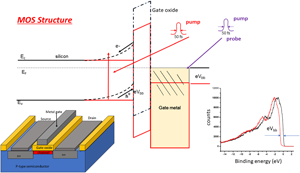
From thin film solar cells to metal–oxide–semiconductor (MOS) devices in leading edge integrated circuits, the electronic structure at and near the interfaces between component materials determines the most important fundamental operating characteristics of those devices such as turn-on voltage, power dissipation, and off-state current leakage. Fermi level location at buried interfaces, semiconductor (SC) band bending, charge transfer, oxide defects, and work functions of the constituent materials all contribute to device performance. This paper describes how these important parameters can be determined by employing femtosecond photovoltage spectroscopy, an extension of ultraviolet photoelectron spectroscopy (UPS) using ultrafast lasers. While standard UPS is fundamentally a surface-sensitive spectroscopy, pump/probe techniques add a new dimension to this venerable spectroscopy, permitting the accurate extraction of the underlying band bending in SCs. When combined with the valence band edge location of the SC and oxide, and determination of the system Fermi level, full characterization of the electronic structure of a MOS stack can be obtained providing key insights on device operating properties. This approach can be extended to study key device materials in emerging areas of artificial intelligence and quantum computing. In each case, surprising new details were uncovered that led to performance optimization of these technologically important devices.
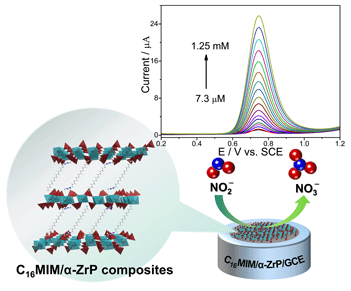
A novel ionic liquid/α-ZrP (C16MIM/α-ZrP) lamellar nanocomposite was fabricated via the electrostatic self-assembly deposition technique by using exfoliated α-ZrP nanosheets and guest molecules (1-hexadecyl-3-methylimidazolium bromide) as building blocks under mild conditions. C16MIM/α-ZrP nanocomposite was characterized by various analytical techniques such as X-ray diffraction (XRD), transmission electron microscopy (TEM), scanning electron microscope (SEM), Fourier transform infrared spectroscopy, and synchronous thermal analyzer. The net interlayer spacing of α-ZrP determined by XRD confirmed that the C16MIM cations formed a monolayer arrangement between the α-ZrP nanosheets. The morphology and microstructure of C16MIM/α-ZrP composite were observed using SEM and TEM. The C16MIM/α-ZrP modified glass carbon electrode exhibited excellent electrocatalytic activity toward the oxidation of nitrite in weak base media. The results obtained with differential pulse voltammetry demonstrated that the C16MIM/α-ZrP hybrid detected nitrite linearly in the concentration range from 7.3 μM to 1.25 mM with the detection limit of 1.26 μM (S/N = 3). Additionally, the prepared sensor showed outstanding reproducibility, high stability, and anti-interference capability.
Understanding the effects of predicted rising sea levels, combined with changes in precipitation and freshwater inflow on key estuarine ecosystem engineers such as the eastern oyster would provide critical information to inform restoration design and predictive models. Using oyster ladders with shell bags placed at three heights to capture a range of inundation levels, oyster growth of naturally recruited spat was monitored over the course of 6 months. Oyster numbers and shell heights were consistently highest in bottom and mid bags experiencing greater than 50% inundation (mid: 63 ± 7%; bottom: 95 ± 3%). Identifying thresholds for optimal oyster growth and survival to enhance restoration engineering would require finer scale evaluation of inundation levels.
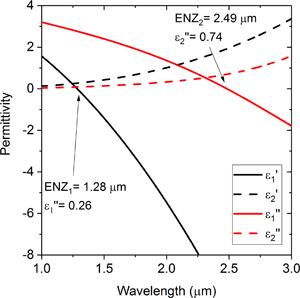
Indium tin oxide (ITO) has become a very useful plasmonic and nonlinear optical material because of its highly tunable electrical and optical properties and strong optical nonlinearity. In this work, the authors conducted detailed fabrication process studies by using high-temperature reactive sputtering to finely tune the optical properties of ITO thin films, particularly the epsilon-near-zero (ENZ) wavelength in the near and mid-IR spectrum. Sputtered ITO thin films are characterized by using spectroscopic ellipsometry, surface profilometry, Hall measurements, and 4-point probe testing. Additionally, the effect of post-deposition annealing of ITO films is also investigated.
Precious ornaments from the Museum Royal Tombs of Sipán were analyzed by X-ray computed microtomography (microCT). The ornaments analyzed were golden earrings produced by the Moche culture that flourished along the north coast of present-day Peru between approximately 100 and 600 AD. Sipán, also known as Huava Rajada, is a mochica archaeological complex in the north of Peru. In particular, the spectacular jewelry, mainly composed of gold, silver, and copper alloys, gilded copper, and tumbaga, from the Museum “Royal Tombs of Sipán,” in Lambayeque, north of Peru, are some of the most sophisticated metalworking ever produced of pre-Columbian America. A portable microCT system consisting of a high-resolution flat panel detector and a mini X-ray tube were used for the structural analysis of these ornaments. The microCT images show parts of the internal structure, highlighting the manufacturing technique and gold sheets joining techniques of the Moche artisans. Furthermore, the advantage of using the portable microCT system for nondestructive testing is clear when the sample cannot be taken to the laboratory.
Metallic thin-film composite membranes are produced by sputtering metal films onto commercial polymer membranes. The separations capability of the membrane substrate is enhanced with the addition of a 10 nm Ta film. The addition of a tantalum layer decreases the molecular weight cutoff of the membrane from 70 kDa dextran (19 nm) to below 5 kDa (6 nm). Water flux drops from 168 LMH/bar (LMH: liters/meters2/hour) (polymer support) to 8.8 LMH/bar (Ta composite). A nanoporous layer is also added to the surface through Mg/Pd film deposition and dealloying. The resulting nanoporous Pd is a promising catalyst with a ligament size of 4.1 ± 0.9 nm. The composite membrane's ability to treat water contaminated with chlorinated organic compounds (COCs) is determined. When pressurized with hydrogen gas, the nanoporous Pd composite removes over 70% of PCB-1, a model COC, with one pass. These nanostructured films can be incorporated onto membrane supports enabling diverse reactions and separations.
There is growing interest in quantifying attitudes towards autistic people, however there is relatively little research on psychometric properties of the only existing measure and its ability to predict engagement with people with autism. To begin addressing these issues, we compared three scales measuring attitudes towards autistic people following the development of two new measures. Exploratory factor analysis, across two datasets, revealed that the factor-structure of an established 16-item scale is unclear. Further, its predictive validity of intended engagement with autistic people was comparable to our novel and psychometrically robust 1- and 4-item measures of attitudes towards autistic people. We therefore conclude that a 1- or 4-item scale is sufficient to measure general attitudes towards autistic people in future research. Equally, we propose that additional research is required to develop measures that are grounded in theoretical models of attitude formation and therefore distinguish between different components of attitudes.
The ongoing coronavirus disease 2019 (COVID-19) pandemic is of global concern and has recently emerged in the US. In this paper, we construct a stochastic variant of the SEIR model to estimate a quasi-worst-case scenario prediction of the COVID-19 outbreak in the US West and East Coast population regions by considering the different phases of response implemented by the US as well as transmission dynamics of COVID-19 in countries that were most affected. The model is then fitted to current data and implemented using Runge-Kutta methods. Our computation results predict that the number of new cases would peak around mid-April 2020 and begin to abate by July provided that appropriate COVID-19 measures are promptly implemented and followed, and that the number of cases of COVID-19 might be significantly mitigated by having greater numbers of functional testing kits available for screening. The model is also sensitive to assigned parameter values and reflects the importance of healthcare preparedness during pandemics.
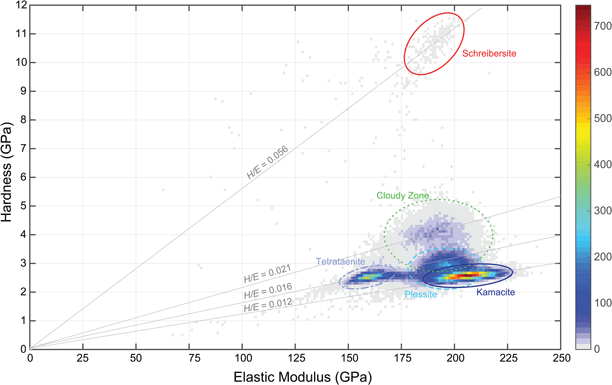
Meteorites have one of the most unique and beautiful microstructures, the Widmanstätten structure. This consists of large, elongated bands which form an intricate octahedral lace of crystalline metal. This structure makes meteorites an ideal case to demonstrate the capabilities of mechanical phase mapping using high-speed nanoindentation. In this work, the mechanical properties and composition of the Taza meteorite were mapped using ~100,000 indentations to statistically determine the properties of the individual phases. Five microstructural phases were characterized in this meteorite: Kamacite, Plessite, Tetrataenite, Cloudy Zone, and Schreibersite. Mechanical phase identification was confirmed using EDX measurements, and the first direct, point-to-point correlation of EDX and large-scale indentation maps was achieved. Mechanical phase maps showed superior phase contrast to EDX in two phases. An indentation property map or a mechanical phase map using a 2D histogram was used to visualize and statistically characterize the phases and identify trends in their relationships.