To save content items to your account,
please confirm that you agree to abide by our usage policies.
If this is the first time you use this feature, you will be asked to authorise Cambridge Core to connect with your account.
Find out more about saving content to .
To save content items to your Kindle, first ensure no-reply@cambridge.org
is added to your Approved Personal Document E-mail List under your Personal Document Settings
on the Manage Your Content and Devices page of your Amazon account. Then enter the ‘name’ part
of your Kindle email address below.
Find out more about saving to your Kindle.
Note you can select to save to either the @free.kindle.com or @kindle.com variations.
‘@free.kindle.com’ emails are free but can only be saved to your device when it is connected to wi-fi.
‘@kindle.com’ emails can be delivered even when you are not connected to wi-fi, but note that service fees apply.
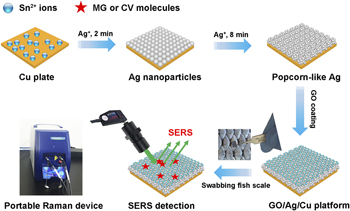
Conventional methods for determination of trace drug residues are either time consuming or labor intensive or require large specialized instruments, which hamper their practical applications in field analysis. Here, we present a rapid and quantitative surface-enhanced Raman scattering (SERS) detection method coupled with a portable Raman spectrometer for determination of trace drug residues on fish surface. Graphene oxide (GO) decorated popcorn-like Ag nanoparticles (NPs) on Cu plate (GO/AgNPs/Cu) were fabricated by a facile approach and directly employed as a robust SERS detection substrate. For practical SERS detections, trace-level residues of crystal violet (10−8 M, 4.1 ng/g) and malachite green (10−8 M, 3.6 ng/g) could be readily detected by simply swabbing the contaminated fish scale surface with the SERS substrate. Importantly, SERS detection was quantitatively realized in the broad linear concentrations. Compared with lab-based Raman spectrometer with large footprints, our method has potential applications in practical rapid, accurate, and on-site SERS determination.
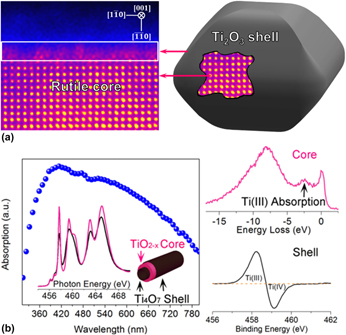
The recent observation of spectacular photocatalytic activity enhancements generated tremendous interest in the synthesis, properties, and potential applications of black titania. Most black titania are core–shell structures consisting of a perfect crystalline core surrounded by a defective surface shell. Because the properties are attributed to the defective shell, it is particularly important, but very challenging, to obtain atomic structure information of the core, the shell, and the core–shell relationship on a single particle level. While the role of various synthesis approaches for producing black titania with different properties has been extensively reviewed, this review focuses on understanding the structure–functionality relationship in black titania on a single particle level. We start by introducing the crystal and electronic band structure of different TiO2 phases, followed by the discussion of particle size effects, the origin of lattice distortions, and phase control by synthesis, and concluding with the discussion of crystalline order formation and evolution creating the defective shell.
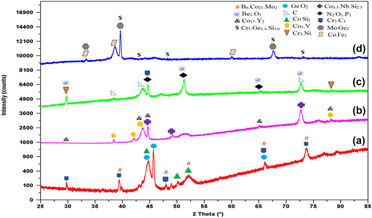
The current paper focuses on the issue associated with the biological response of medical grade cobalt chromium (Co–Cr) alloy treated with electrical discharge at different spark energy levels by a varying current, pulse on-time, and pause (off) time. Three types of electrodes, namely, graphite (C), tungsten (W), and copper tungsten (Cu–W) were utilized for treating Co–Cr substrates in two different dielectric media such as mineral oil and deionized water. Electrochemical potentiodynamic tests were performed to investigate the corrosion resistance of untreated and treated surfaces. Furthermore, in vitro hemocompatibility tests were executed on the superior corrosion resistance samples for scrutinizing the red blood cell lysis (human blood response). The study revealed a significant improvement in the corrosion resistivity (<80%) and biological response for the surface treated with W–Cu electrode at low pulse pause duration. X-ray diffraction verified the formation of oxides and phosphides on the treated surface that promotes the biocompatibility.
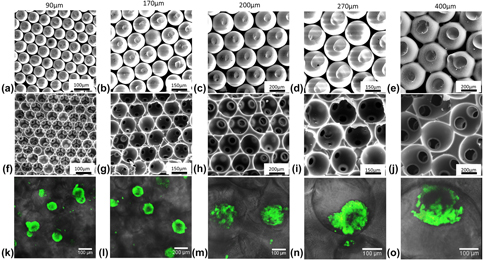
Three-dimensional (3D) biomimetic scaffolds are critical for tissue engineering to support stem cell culture and organoid formation. Embryonic stem (ES) cells hold promising potential for tissue regeneration and ES cell-derived specific lineages are expected to be strongly influenced by the size of embryoid bodies (EBs). However, the fundamental knowledge needed to achieve the goal of highly reproducible, efficient, and scalable differentiation of how EB size affects differentiation is missing. Here, we used 3D biomimetic scaffolds with highly uniform porous structure to regulate size of EBs and differentiated them toward hepatic fate. The results showed EBs formed within the scaffolds were precisely controlled by pore sizes of the scaffolds. We found that EBs equals to or larger than 180 ± 27 µm maintained the ability to differentiate to hepatic lineage. The 3D biomimetic scaffold provides the effective tools toward accurate regulation of EB sizes for tissue engineering.
The crystal structure of bumetanide has been solved and refined using synchrotron X-ray powder diffraction data, and optimized using density functional techniques. Bumetanide crystallizes in space group P-1 (#2) with a = 5.00168(4), b = 9.22649(3), c = 19.59924(14) Å, α = 80.7941(5), β = 82.8401(7), γ = 86.8148(7)°, V = 885.268(9) Å3, and Z = 2. The crystal structure is layered with the double layers parallel to the ab plane. The exterior of the layer is composed of hydrocarbon portions of the molecule, both phenyl rings and butyl side chains. The central portion of the bilayer contains the hydrogen-bonding regions, both the carboxylic acid dimers and the hydrogen bonds involving the sulfonamide groups. The molecular conformations of bumetanide in this current triclinic structure and the previously-determined monoclinic polymorph FEDGON are very similar, as are the energies of the two polymorphs. The powder pattern is included in the Powder Diffraction File™ as entry 00-066-1609.
Changes of structural properties of tobermorite in autoclaved aerated concrete (AAC) for various compositions were characterized and the disadvantages of SEM analysis in this context are discussed. The influence of variations in the chemical composition of raw materials on lattice parameters, morphology and domain sizes of tobermorite was investigated by XRD and for comparison by SEM analysis. Particularly the effect of substitution by Al3+ and (SO4)2− in tobermorite structure was examined. The dimensions of coherently scattering domains were calculated based on the refinement of anisotropic peak broadening of tobermorite in XRD diffractograms using a Rietveld compatible approach. No effect of (SO4)2− on the domain sizes and lattice parameters of tobermorite could be observed. The amount of anhydrite detected by quantitative XRD analysis indicates that all of the available (SO4)2− is present as anhydrite. Lath-like shapes of domains and a larger c parameter are calculated whenever Al3+ is incorporated in a considerable amount. Formation of katoite can be observed very clearly in SEM micrographs whenever the amount of available Al3+ exceeds a distinct value in the dry mix. The effect of Al3+ and (SO4)2− on tobermorite morphology could not be observed clearly by SEM analysis in AAC samples.
Highly radioactive waste is incorporated into a glass matrix to convert it into a safe, passive form suitable for long-term storage and disposal. It is currently known that alpha decay can generate gaseous species, which can nucleate into bubbles, either through the production of helium or from ballistic collisions with the glass network that liberate oxygen. An effective method to probe this phenomenon utilizes ion beams to either directly implant helium or investigate the damage due to ballistic collisions. This paper provides an overview of the methodology, summarizes the results of current studies, and draws comparisons between them. We find that the irradiation scheme as well as the temperature and composition of the glass are important in determining whether bubble formation will occur. We also explore how analytical techniques can promote bubble formation and suggest avenues for further work.
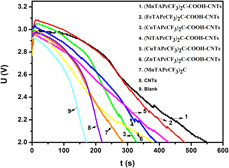
In this work, carbon nanotubes (CNTs)-templated binuclear metallophthalocyanines (MTAPcCF3)2C (M = Mn, Fe, Co, Ni, Cu, Zn) assemblies (MTAPcCF3)2C–COOH–CNTs are designed and obtained. Whereafter, the structure and morphology of target products are analyzed by many means such as infrared, X-ray diffraction, X-ray photoelectron spectroscopy, and scanning electron microscopy. The electrocatalytic performances of lithium-thionyl chloride battery catalyzed by (MTAPcCF3)2C–COOH–CNTs were carried out. The result shows that all catalysts can improve the battery performance including the discharge time and the initial voltage. The catalytic performance of (MTAPcCF3)2C–COOH–CNTs is ordered following the central metal: Mn > Fe > Ni > Co > Cu > Zn. The cell capacity catalyzed by optimal catalyst (MnTAPcCF3)2C–COOH–CNTs can expand to 28.08 mAˑh, with increase by 142.07%, and the (MnTAPcCF3)2C–COOH–CNTs can extend the discharge time to 551.6 s. Besides, the reaction mechanism is presented on the basis of cyclic voltammetry measurements.
The orthorhombic mineral moolooite, CuC2O4. nH2O, described by Clarke and Williams (1986) using Debye-Scherrer photographic data, has a fully-disordered stacking fault (FDSF) structure. Related monoclinic models have been reported for various synthesised samples based on Schmittler (1968). In the present study, synchrotron radiation diffraction data for moolooite and synthesised specimens have been examined with particular reference to crystallographic disorder. The moolooite data correspond to space group Pnnm, with a = 5.3064(2), b = 5.6804(2), c = 2.5630(1) Å; Vc = 77.26(1) Å3; and Z = 1; and the FDSF structure along the b-direction has been confirmed. The synthetic specimen data from the study indicate partial ordering, with space group P21/n; and the cell parameters for one specimen being a = 5.957(7), b = 5.611(5), c = 5.133(7) Å; β = 115.16(2)°; Vc = 155.27 Å3 and Z = 2. The level of zeolitic water in the materials has been considered using the approach of Schmittler based on thermogravimetry and pycnometry. The new data for natural topotype material correspond to CuC2O4.1.0H2O. It is postulated that the level of water for natural and synthetic specimens may be attributed to the conditions under which the material forms.
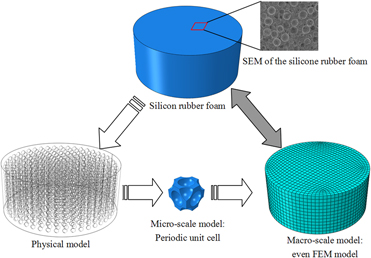
Utilizing the experimental and modeling approaches, the Gamma radiation effects on stress responses of the silicon rubber foam under quasistatic compression are investigated. In the experimental work, the samples of the silicon rubber and the silicon rubber foams are quasistatically compressed before and after the Gamma radiation (a dose of 500 kGy and a dose rate of 100 Gy/min). The data reveal that the Gamma radiation obviously increases the material hardness, e.g., the compressive stresses of the silicon rubber and the silicon rubber foams both increase over 5 times as the strain is 20%. In the simulation work, a multiscale method combined with finite element method is developed to numerically predict the compressive stress of the silicon rubber foams. The microscale models are first constructed based on the real microstructures of the silicon rubber foams. The compressive stress and strain relation before and after the Gamma radiation is then simulated and obtained utilizing the phenomenological constitutive models based on the testing data of the silicon rubber. The simulation reveals that the Gamma radiation strongly affects the compressive response of the microscale models. The stress responses of the microscale models are then transferred into the macroscale models. The results also prove that the Gamma radiation obviously increases the hardness of the macroscale models. Data comparison shows that the numerical results agree with the testing data well, which verifies the developed method. The present work develops a new method to predict the radiation effects on mechanical properties of rubber foams.
Novel microencapsulated n-octadecane with natural silk fibroin (SF) shell attached with silver nanoparticles (AgNPs) on its surface was synthesized in oil-in-water emulsion via a self-assembly method. No additional reductant was used in the in situ preparation of AgNPs due to the inherent reduction property of tyrosine (Tyr) residues in SF. The microstructures and particle sizes of the resultant microcapsules were investigated by using a scanning electron microscope (SEM) and a laser scattering particle size distribution analyzer. The resulting microcapsules exhibited a regular spherical morphology with a 4–5 μm narrow diameter distribution range. And the AgNPs attached to the surface exhibited an even distribution. According to the analytical results of DSC, TGA, and infrared system, the SF-AgNPs microcapsule presents enhanced thermal stability and obvious thermal regulation properties. In addition, it was found that the SF-AgNP microcapsule also exhibited a good antibacterial activity against both Gram-positive bacteria (Staphylococcus aureus), and Gram-negative bacteria (Escherichia coli). The SF-AgNPs microcapsule synthesized in this study could be a potential candidate for thermal regulation and healthcare applications.
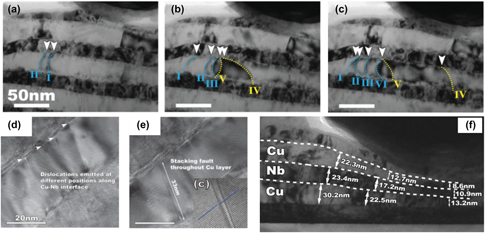
Nanostructured multiphase metallic materials present extraordinary properties, such as high strength, enhanced fatigue and radiation resistance, and thermal stability, compared to conventional bulk metallic materials. Previous research studies have shown that their deformation and fracture behavior are dominated by defect interactions at internal interfaces. In situ straining, including nanoindentation, compression, and tension, in a transmission electron microscope (TEM) has emerged as a powerful tool to investigate the physics of defect–interface interactions at the nano-scale and even atomic scale. The mechanistic insights gained from these experiments coupled with dislocation theory and atomistic modeling has helped develop a fundamental understanding of the mechanical properties. In this article, through some recent investigations on observing dislocation and interface activities, crack propagation, and nanopillar compression, we present current progress in utilizing in situ TEM straining to examine interface-dominated deformation mechanisms.
Based on the experimentally determined framework structure of porous MnO2 octahedral molecular sieve (OMS)-5, we used density functional theory-based calculations to evaluate the effect of Na+ cation on pore dimensionality and structural stability, and the interaction between CO2 and OMS-5. We quantified the formation energy of one CO2/unit tunnel and two CO2/unit tunnel, and projected the electronic density of states on the OMS-5 framework, CO2 molecules, and Na+ cations to reveal their individual contributions and bonding nature. Partial charge densities were also calculated to investigate CO2 adsorption behavior in the OMS-5. Our studies predict the initial stage and driving force for the adsorption of CO2 in the OMS-5, guiding the OMS material design for carbon capture and storage applications.
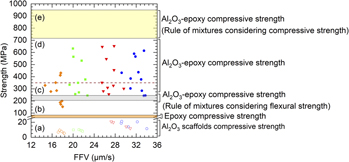
This study investigated the compressive response of ice-templated composites and provides an understanding of their mechanical behavior based on the properties of templated ceramic and epoxy. Results suggested a dependence of properties on the microstructure of the templated porous ceramic, whereas more interestingly composites exhibited catastrophic and progressive types of failure. Compressive strength was found to be markedly greater relative to the strength of templated ceramic and polymer, and irrespective of the failure type, strength was greatly enhanced under dynamic loading relative to quasistatic loading. Compressive strength was also calculated based on the rule of mixtures and mode of failure in ice-templated ceramic. The analysis suggested that the axial mode of failure was not dominant in composites, and failures resulted from the fracture of lamella walls, possibly due to elastic instability. Fragments of the composite specimens were analyzed using scanning electron microscopy to study the fracture characteristics and rationalize the catastrophic and progressive types of failure.