To save content items to your account,
please confirm that you agree to abide by our usage policies.
If this is the first time you use this feature, you will be asked to authorise Cambridge Core to connect with your account.
Find out more about saving content to .
To save content items to your Kindle, first ensure no-reply@cambridge.org
is added to your Approved Personal Document E-mail List under your Personal Document Settings
on the Manage Your Content and Devices page of your Amazon account. Then enter the ‘name’ part
of your Kindle email address below.
Find out more about saving to your Kindle.
Note you can select to save to either the @free.kindle.com or @kindle.com variations.
‘@free.kindle.com’ emails are free but can only be saved to your device when it is connected to wi-fi.
‘@kindle.com’ emails can be delivered even when you are not connected to wi-fi, but note that service fees apply.
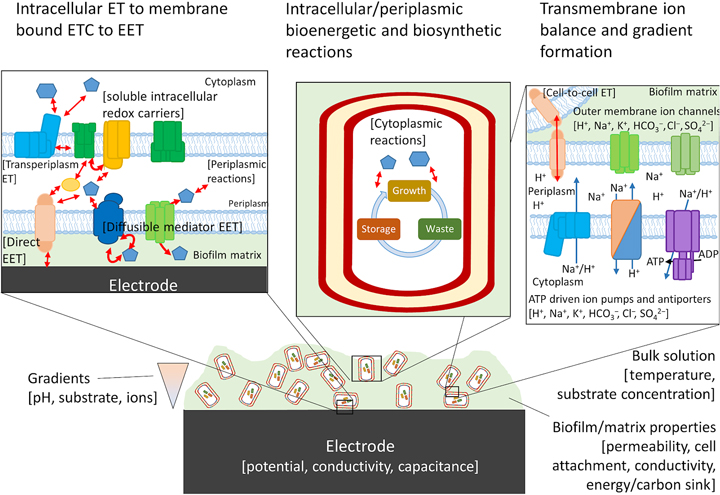
Natural living conductive biofilms transport electrons between electrodes and cells, as well as among cells fixed within the film, catalyzing an array of reactions from acetate oxidation to CO2 reduction. Synthetic biology offers tools to modify or improve electron transport through biofilms, creating a new class of engineered living conductive materials. Engineered living conductive materials could be used in a range of applications for which traditional conducting polymers are not appropriate, including improved catalytic coatings for microbial fuel-cell electrodes, self-powered sensors for austere environments, and next-generation living components of bioelectronic devices that interact with the human microbiome.
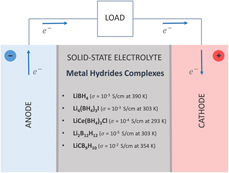
Energy density and safety are the main factors that govern the development of the rechargeable battery technology. Currently, batteries beyond typical Li-ion batteries such as those based on solid-state electrolytes (SSEs) or other active elements (e.g., Na or Mg) are being examined as alternatives. For example, SSEs that would enable stable and reliable operation of all-solid-state Li-, Na-, and Mg-based batteries, with preferably improved capacity, are considered to be one of the most desired inventions. Lightweight complex metal hydrides are a family of solid compounds that were recently discovered to have extraordinary ionic conductivities and, in some cases, electrochemical properties that enabled battery reversibility. Consequently, they have become one of the promising electrolyte materials for future development of electrochemical storage devices. In this work, we present an overview of a wide range of lightweight hydride-based materials that could be used as electrolytes and/or anodes for mono-/divalent batteries and have a pivotal role in the implementation of new technological solutions in the field of electrochemistry.
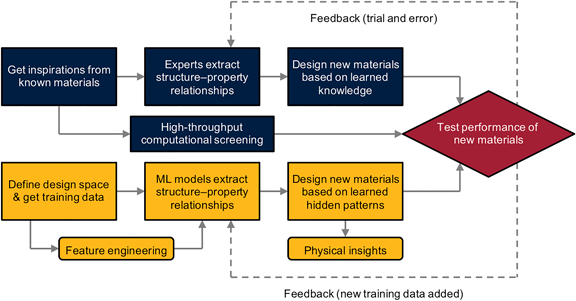
Machine learning (ML) has been perceived as a promising tool for the design and discovery of novel materials for a broad range of applications. In this prospective paper, we summarize recent progress in the applications of ML to composite materials modeling and design. An overview of how different types of ML algorithms can be applied to accelerate composite research is presented. This framework is envisioned to revolutionize approaches to design and optimize composites for the next generation of materials with unprecedented properties.
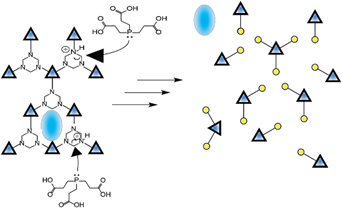
In the current manuscript we discuss the response of dynamic metallogels that display reversion to the liquid state when exposed to phosphines. The metallogels are formed through the condensation of formaldehyde and poly(alkyloxide)amines in polar aprotic solvents. The gel formation can be catalyzed with trivalent metals (Al(III and Fe(III)) with concomitant enhanced dynamism (gelation/degelation). When various phosphines are introduced, the metallogel is irreversibly liquefied. This process adds a new vector for controlling the bulk properties of this class of materials. Here, we explore the mechanism in detail for the reaction of tris(carboxyethyl)phosphine with N,N,N-triethoxylethyl-1,3,5-hexahydro-1,3,5-triazine (HEHT, 1) a stable derivative of the active hexahydrotriazine (HT) core in dimethylformamide in the presence or absence of Al(III). Additionally, density functional theory is used on the model N,N,N-trimethyl system (MHT, 2) to estimate reaction parameters and predict nuclear magnetic resonance spectra.
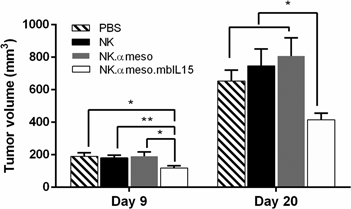
Immune cells can be genetically engineered with a synthetic chimeric antigen receptor (CAR) to eliminate cancer cells, but clinical efficacy in solid tumors has been disappointing due in part to the immunosuppressive tumor microenvironment (TME). Additionally, the cost and logistical issues of personalized medicine necessitate the creation of an off-the-shelf CAR therapy. Synthetic biology tools were implemented in addressing these problems: an anti-mesothelin CAR, membrane-bound IL-15/IL-15Rα complex, and inducible caspase 9 “kill switch” were expressed in natural killer cells for tumor-targeting capabilities, immunostimulatory effects, and safety in treating a preclinical model of ovarian cancer with a renewable, allogenic cell therapy.
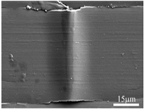
Plasticity and fracture of materials at the nanoscale levels can deviate significantly from the same phenomena in bulk properties, which may have important implications if they are to be used in real-world engineering systems. Nanoscale metal–metal multilayered materials provide a model material system platform to understand plasticity and fracture based on dislocation interactions with microstructural features. Recently, there is a growing trend to understand the fracture of multilayered materials to see the interactions between the crack and multilayered interface through novel experimentation techniques. In this review, we will introduce the rationale, the current microfracture methods to test and analyze the multilayer fracture behavior and the challenges faced in performing them. Four examples of in situ fracture techniques are highlighted in this work through tensile testing of film on a substrate: microfracture clamped beam bending technique across the multilayers and delamination along the multilayered interface.
In this paper, some results of neutron diffraction properties of the dispersive double-crystal Si(111) + Si(311) and Si(111) + Si(400) monochromator settings containing two bent perfect crystals but with the second one – analyzer in the strongly asymmetric diffraction geometry, are presented. For the sake of possible applications, both double crystal settings were tested in the orientation of the second crystal for the output beam compression geometry. Powder diffraction test was carried out on a α-Fe(211) pin of the diameter of 2 mm. Contrary to the Si(111) + Si(400) setting, an excellent resolution represented by full width at half maximum in the (Δd/d)-scale was obtained for the Si(111) + Si(311) double crystal monochromator in the parallel as well as in the antiparallel diffraction geometry.
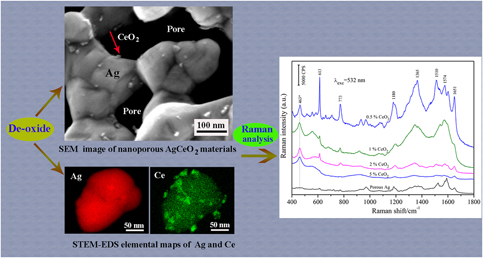
Noble metals combined with some oxides have synergetic contributions to surface-enhanced Raman scattering (SERS). In this work, a new method of de-oxide was proposed to prepare nanoporous metal based composites. Nanoporous Ag decorated with CeO2 nanoparticles was successfully prepared by decomposing Ag/CeO2/ZnO precursors in a 10 wt% NaOH aqueous solution. During the process of de-oxide, ZnO in the precursors could be removed completely and the nanoporous Ag/CeO2 nanocomposites with rough ligament surfaces were formed. The results indicated that the contents of CeO2 had significant influences on the microstructure and SERS performance of the prepared Ag/CeO2 materials. Using R6G and L-phenylalanine as probe molecules, the nanoporous Ag/CeO2(0.5%) substrates demonstrated a high enhancement factor of 1.2 × 10⁸. The improved SERS performances were mainly attributed to the strong coupling effects between Ag ligament and CeO2 nanoparticle. This work would like to be interesting for the design of nanoporous composites for the application in the fields of SERS technology.
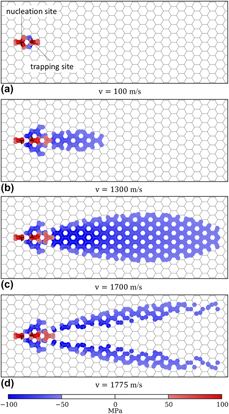
Dislocation-mediated plasticity in stable nanocrystalline metals, where grain boundary motion is suppressed, is revisited in the context of dislocation elastodynamics. The effect of transient waves that emanate from the generation and motion of dislocations is quantified for an idealized Cu–10 at.% Ta system with grain sizes on the order of 50 nanometers. Simulations indicate that for this material, as dislocation velocities approach 0.6–0.8 times the shear wave speed, grains several grain diameters away from the initial glide event experience a large transient shear stress for a finite duration. These transient shear stresses increase with increasing glide velocity and can activate nucleation sites far from the original nucleation event. These considerations are used to explain recent experimental observations of a lack of increase in flow stress with increasing loading rate, as well as localization resistance, in this class of stable nanocrystalline metals.
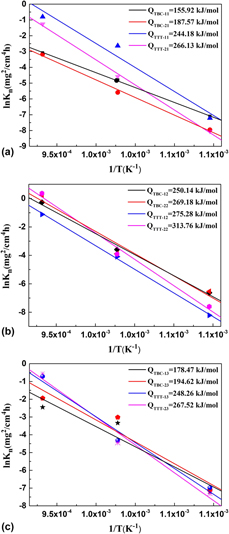
The oxidation behavior of two percentages of TiB + TiC reinforced Ti–6Al–4V composites derived from Ti–B4C–C and Ti–TiB2–TiC systems was investigated at 873–1073 K for 320 h in air. The oxidation weight gain curves of the (TiB + TiC)/Ti–6Al–4V composites at 973 K basically obey parabolic law, while those at 873 and 1073 K mainly follow linear law and parabolic-linear law, respectively. The oxide layers of the composites are predominately found to be rutile TiO2, Al2O3, and the mixture of V2O3 and V2O5. The oxidation layers turn thinner with increasing the nominal volume fraction of reinforcements in the (TiB + TiC)/Ti–6Al–4V composites. Moreover, according to the calculation results of reaction index (n) and effective activation energy (Qeff) and the analyses of cross-sections of the oxidation layers, the oxidation resistance ability of the composites from Ti–TiB2–TiC system is higher than that from Ti–B4C–C system while employing the same sintering temperature and nominal volume fraction of reinforcement.
Apatite-type materials AI4AII6(BO4)6X2 have two unique cations sites AI and AII, which can host large mono-, di- tri- and tetra-valent cations. The average cation radii will affect the twist angle and lattice constants. However, there are few reports on the influence of B site substitutions on the twist angle and lattice parameters. It is believed that the lattice constant variation as a function of B site substitutions may not follow the same twist-angle model as proposed for A site. This work reports our results on the crystal chemistry of synthetic apatite Ca10(VxP1−xO4)6F2 obtained through the crystal structure characterization using Rietveld refinement and high-resolution transmission electron microscopy. The quantification of vanadium/phosphorus partitioning in BO4 tetrahedra showed that equilibrium with more than 70% substitution of phosphorous by vanadium was difficult to achieve unless longer annealing (about 1 week at 900 °C) was employed. In comparison with the apatites with different ionic radii at AI and AII sites, Ca10(VxP1−xO4)6F2 apatites with different ionic radii at B site show little twist angle variation for the whole series, which indicates that the dilation of unit cell constants is mainly because of the expansions of BO4 tetrahedra when A site cation is fixed.
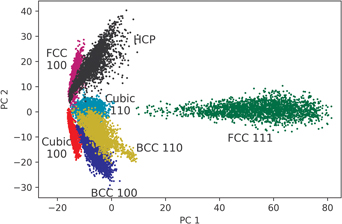
Nano-structured thin films have a variety of applications from waveguides, gaseous sensors to piezoelectric devices. Grazing Incidence Small Angle x-ray Scattering images enable classification of such materials. One challenge is to determine structure information from scattering patterns alone. This paper highlights the design of multiple Convolutional Neural Networks (CNN) to classify nanoparticle orientation in a thin film by learning scattering patterns. The network was trained on several thin films with a success rate of 94%. We demonstrate CNN robustness under different noises as well as demonstrate the potential of our proposed approach as a strategy to decrease scattering pattern analysis time.
This paper is devoted to the X-ray diffraction study of bone fragments of Permian parareptile Deltavjatia vjatkensis obtained from the Kotelnich vertebrate fossil site, one of the richest of the Permian period, which is characterized by the excellent preservation of fossil remains because of their burial in a silty anaerobic environment similar to modern bogs. The bone is well-preserved and consists of fluorapatite, calcite, quartz, and dolomite. The refined apatite unit-cell parameters of a and b-axis (9.3526 ± 0.0001 and 9.3587 ± 0.0001) Å and c-axis (6.8930 ± 0.0001 and 6.8968 ± 0.0001) Å correspond to F-apatite. Crystallinity index determined as the full width at half maximum of the 002 reflection in degrees 2θ is 0.266–0.250, which is typical for Mesozoic vertebrate bones. Apatite crystallite size (length 70.3–74.9 nm, width 30.7–30.3 nm) in fossil pareiasaur bone is larger than in subfossil and recent mammal bone and is in a good agreement with the values for seismosaurus bone. Both crystallite size and aspect ratio (2.3–2.5) are independent of the fossil pareiasaur bone length.