To save content items to your account,
please confirm that you agree to abide by our usage policies.
If this is the first time you use this feature, you will be asked to authorise Cambridge Core to connect with your account.
Find out more about saving content to .
To save content items to your Kindle, first ensure no-reply@cambridge.org
is added to your Approved Personal Document E-mail List under your Personal Document Settings
on the Manage Your Content and Devices page of your Amazon account. Then enter the ‘name’ part
of your Kindle email address below.
Find out more about saving to your Kindle.
Note you can select to save to either the @free.kindle.com or @kindle.com variations.
‘@free.kindle.com’ emails are free but can only be saved to your device when it is connected to wi-fi.
‘@kindle.com’ emails can be delivered even when you are not connected to wi-fi, but note that service fees apply.
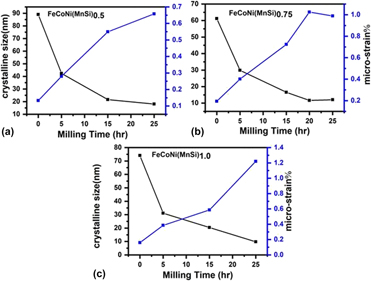
FeCoNi(Mn–Si)x (x = 0.5, 0.75, 1.0) high-entropy alloys (HEAs) were successfully synthesized by mechanical alloying (MA), and the effect of Mn and Si in the ferromagnetic alloys on crystal structure and magnetic behavior was thoroughly investigated. XRD, SEM, and TEM were used to investigate the effect of Mn and Si content on the structure of HEAs. The high Mn and Si contents change the structure from the BCC phase to FCC phase. The evolution of surface morphology was discussed on the basis of MA time and content of Mn and Si. The magnetic hysteresis curve confirmed the highest magnetic saturation (Ms) value of 134.21 emu/g for FeCoNi(Mn–Si)1.0 alloy and an appreciably low coercivity (Hc) of 98.07 Oe for FeCoNi(Mn–Si)0.5 alloy. The finite element method (FEM), using COMSOL Multiphysics software, has been used for determining the magnetic flux density (B) on the surface and at the center of the transformer core to determine the performance of the proposed HEAs.
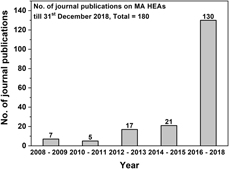
Mechanical alloying (MA) followed by sintering has been one of the most widely adopted routes to produce nanocrystalline high-entropy alloys (HEAs). Enhanced solid solubility, room temperature processing, and homogenous alloy formation are the key benefits provided by MA. Spark plasma sintering has largely been used to obtain high-density HEA pellets from milled powders. However, there are many challenges associated with the production of HEAs using MA, which include contamination during milling and high propensity of oxidation. The present review provides a comprehensive understanding of various HEAs produced by MA so far, with the aim to bring out the governing aspects of phase evolution, thermal stability, and properties achieved. The limitations and challenges of the process are also critically assessed with a possible way forward. The paper also compares the results obtained from high-pressure torsion, another severe plastic deformation technique.
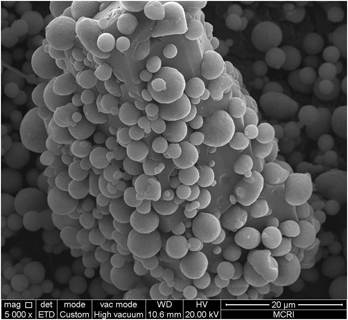
Herein, in order to research the crystalline behaviors of cyclotetramethylenetetranitramine-aluminum (HM-Al) composites in solvents, the modified attachment energy model was applied to predict the morphologies of HMX in vacuum, dimethyl sulfoxide (DMSO), and ethanol. Then HMX-Al composites with Al coated and noncoated were prepared via solvent–nonsolvent method, and the morphologies were characterized. Results show that HMX interacts with DMSO and ethanol mainly via van der Waals force and electrostatic force. HMX grows into polyhedral crystals in two solvents. However, the shapes and the crystalline surface area distributions of the polyhedrons are different for two solvents. There are many aluminum particles embedded in HMX crystals of HMX-Al composite particles prepared via solvent–nonsolvent method, but Al particles cannot embed in HMX crystals in the existence of fluoropolymer. The crystal morphology predicted is consistent with the experimental results.
Obtention of titanium (Ti)- and titanium dioxide (TiO2)–based nanocomposites is of great interest for biological nanomaterial applications, including for dental implants. Their mechanical properties can be improved by use of hydroxyapatite (HA) and chitosan through their biological anchorage with osseointegration and antibacterial activity. Electrochemical methods were chosen to obtain these composites in a quick and controllable way. In this work, electrochemical synthesis in one (alternated potential) or two steps (alternated or constant potential) was successfully applied. The single step (SS) obtained TiO2 + HA sample had different optical properties, as shown using ultraviolet–visible spectrometry, and the HA phase formation was proved using Raman spectroscopy. Thereby, SS_TiO2 + HA increased the corrosion resistance of titanium in artificial saliva medium, as shown by linear polarization and electrochemical impedance spectroscopy results. When using chitosan, the samples showed two corrosion interfaces, indicating its dissolution in human medium. These results indicate that the samples are excellent materials for dental implants.
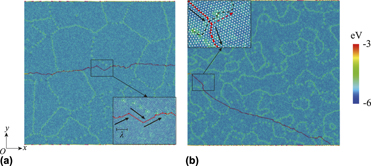
The stability of dynamic fracture is a fundamental and challenging problem in the field of materials science. The grain size effect on dynamic fracture instability in polycrystalline graphene under tear loading is explored via theoretical analysis and molecular dynamics simulations. The fracture stability phase diagram in terms of grain size and crack propagation velocity is obtained, and three regions of crack propagation are identified: stable, metastable, and unstable. For grain size above 2 nm, there exists a critical velocity beyond which fracture instability occurs, and this critical velocity depends linearly on grain size. Decreasing grain size leads to reduced characteristic time for correction of crack path deflection, which plays a dominant role in dynamic fracture instabilities. However, when grain size is below 2 nm, there does not exist a critical velocity for steady propagation of cracks due to discontinuous effects. Our results also provide a valuable insight into dynamic fracture of polycrystalline graphene as well as other 2D and quasi-2D materials.
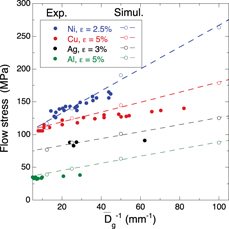
The effect of grain size on the flow strength of FCC polycrystals was analyzed by means of computational homogenization. The mechanical behavior of each grain was dictated by a dislocation-based crystal plasticity model in the context of finite strain plasticity and takes into the account the formation of pile-ups at grain boundaries. All the model parameters have a clear physical meaning and were identified for different FCC metals from dislocation dynamics simulations or experiments. It was found that the influence of the grain size on the flow strength of FCC polycrystals was mainly dictated by the similitude coefficient K that establishes the relationship between the dislocation mean free path and the dislocation density in the bulk. Finally, the modeling approach was validated by comparison with experimental results of the effect of grain size on the flow strength of Ni, Al, Cu, and Ag.
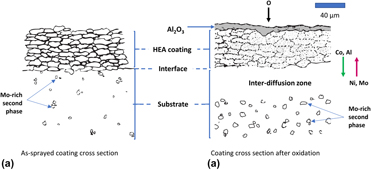
Cold-sprayed high-entropy alloy (HEA) coatings have been generated for the first time. Mechanically alloyed (MA) AlCoCrFeNi powder was chosen as feedstock, owing to the extensive literature on this alloy. Coatings were synthesized under various gas temperature and pressure conditions. Isothermal oxidation was conducted at 1100 °C for 25 h on the coating cold-sprayed at 400 °C and 10 bar on a Ni-base superalloy substrate. The as-sprayed coating retained the MA phases and formed a protective alumina layer upon oxidation. An interdiffusion zone at the interface and unanticipated Mo diffusion from the superalloy substrate into the coating were observed after oxidation. A comprehensive characterization at the coating–substrate interface suggests that diffusion in HEAs is not sluggish. The factors governing the coating’s oxidation are elucidated, and a plausible oxidation mechanism is discussed. These studies are aimed at developing oxidation-resistant HEA coatings for potential applications at high operating temperatures.
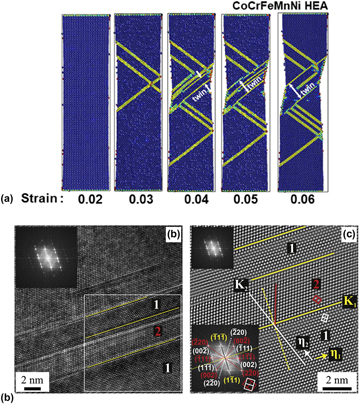
Lattice structures, defect structures, and deformation mechanisms of high-entropy alloys (HEAs) have been studied using atomistic simulations to explain their remarkable mechanical properties. These atomistic simulation techniques, such as first-principles calculations and molecular dynamics allow atomistic-level resolution of structure, defect configuration, and energetics. Following the structure–property paradigm, such understandings can be useful for guiding the design of high-performance HEAs. Although there have been a number of atomistic studies on HEAs, there is no comprehensive review on the state-of-the-art techniques and results of atomistic simulations of HEAs. This article is intended to fill the gap, providing an overview of the state-of-the-art atomistic simulations on HEAs. In particular, we discuss how atomistic simulations can elucidate the nanoscale mechanisms of plasticity underlying the outstanding properties of HEAs, and further present a list of interesting problems for forthcoming atomistic simulations of HEAs.
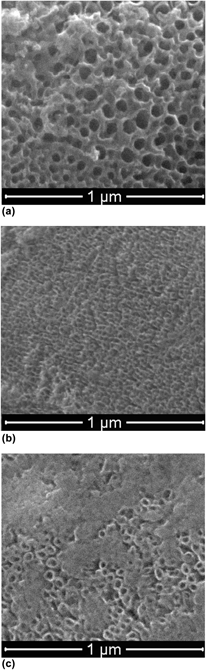
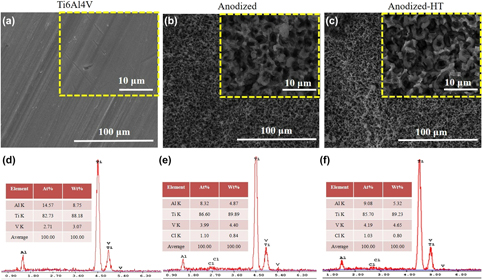
Ti6Al4V alloy is commonly used in hip and knee replacements due to its high strength, ductility, wear, and corrosion resistance. Despite its optimal physical and chemical properties, Ti6Al4V based orthopedic implants have a limited lifetime of only 15–20 years. One of the main reasons for having limited lifetime is the suboptimal integration of Ti6Al4V implants with the juxtaposed bone tissue (osseointegration). To enhance osseointegration, and thus prolong the lifetime of orthopedic implants, Ti6Al4V implants surfaces were modified to have bioactive properties using electrochemical anodization process. In this work, oxide based micropit structures were fabricated on Ti6Al4V surfaces using a fluoride-free electrolyte consisting of NH4Cl in distilled water. Micropit structures were characterized for their surface morphology, crystallinity, and chemistry before and after high temperature crystallization heat treatment. Upon interaction of Ti6Al4V samples with simulated body fluid up to 30 days, enhanced calcium phosphate mineral deposition was observed on anodized surfaces.
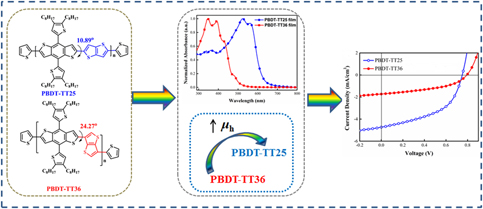
Two wide band gap conjugated polymers, namely PBDT-TT25 and PBDT-TT36, derived from (4,8-bis(4,5-dioctyl-thiophen-2-yl)benzo[1,2-b:4,5-b′]dithiophene-2,6-diyl)bis(trimethylstannane) with 2,5-dibromothieno[3,2-b]thiophene (TT25) or 3,6-dibromothieno[3,2-b]thiophene (TT36), have been synthesized by simply altering the linker positions of thieno[3,2-b]thiophene unit. The impact of linker positions on the energy levels, aggregation, active layer morphology, and optical and photovoltaic properties was evaluated systemically. We found that the absorption was greatly broadened, and the highest occupied molecular orbital (HOMO) energy level was elevated as the result of the significantly reduced twist angle on the polymer backbone when the linker positions changed from 3,6-isomer to 2,5-isomer. Therefore, the optimal inverted polymer solar cells exhibited a 1.87 times enhancement in power conversion efficiencies (PCE), which was mainly ascribed to the higher short circuit current densities (JSC) and fill factor (FF) of the devices mainly benefited from the widened, stronger absorption, higher hole mobility, and more ordered structure.
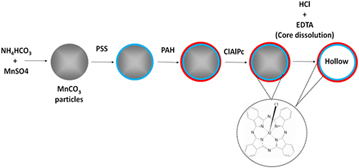
This paper describes the fabrication of polyelectrolyte microspheres using porous manganese carbonate as a sacrificial template for entrapped photosensitizer (PS) drugs for photodynamic therapy application. These particles were used as templates for polyelectrolyte layer-by-layer assembly (Lbl) of two oppositely charged polyelectrolytes: poly(styrene sulfonate) and poly(allylamine hydrochloride). When the polyelectrolyte multilayer shell was built around the MnCO3 core by the Lbl protocol and the core was extracted with acid solution and EDTA, the resultant assembly consisted of hollow polyelectrolyte spheres. Chloroaluminum phthalocyanine was chosen as the model drug to load into the hollow spheres. All the spectroscopic results presented showed excellent photophysical parameters of the studied drug. The fabrication of polyelectrolyte hollow spheres can be used as an optimal medium for a variety of bioactive materials, which can also be encapsulated by the proposed method.
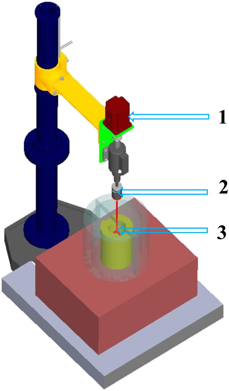
Refinement and homogenization of primary Si particles in hypereutectic Al–Si alloys is an effective route to enhance the tensile strength and wear resistance and satisfy the industrial requirements for a wide range of applications. Herein, two kinds of semisolid hypereutectic Al–Si alloys are synthesized by using a rotating-rod-induced nucleation technology. The influence of different cooling conditions and shear rates on the apparent viscosity of molten melt of slurry are examined by self-made high-precision and high-temperature apparent viscosity test equipment. The correlation between the shear rate and the uniformity of hard phases has been investigated from the obtained results, fitting curves, and optical microscope. With the increase in the shear rate, the particles tend to become rounder and the apparent viscosity becomes lower. The enhanced shape factor resulted in more rounded grains, which further reduced the apparent viscosity. During the same cooling time, the higher cooling rate resulted in higher solid fraction, generating higher apparent viscosity. The present study provides unique insight into the filling behavior of semisolid hypereutectic Al–Si alloys and serves as a baseline for future work.
Uniform distribution of diamond grains is difficult to achieve using traditional fabrication of the micro grinding wheel. The design and performance of novel resinous diamond composites (RDCs) fabricated by hot pressing molding were studied to fabricate micro resinous diamond grinding wheels. The physical and mechanical properties of RDCs were analyzed by constructing and simulating five kinds of RDCs, including acrylonitrile butadiene styrene (ABS)/polyvinyl chloride (PVC)/dioctyl phthalate (DOP)/diamond materials with different mass ratios. Diamond grains presented good compatibility with the ABS–PVC–DOP copolymer, which resulted in improved mechanical properties of RDCs. RDC1–RDC5 samples were fabricated, and their hardness, surface roughness, and infrared spectra were analyzed. The optimal mass ratio of ABS/PVC/diamond/DOP for fabricating RDCs was 62.5/18.6/10.6/8.3. The results provide guidance in fabricating novel materials for resinous diamond grinding wheels with desirable performances for precision and ultraprecision machining.
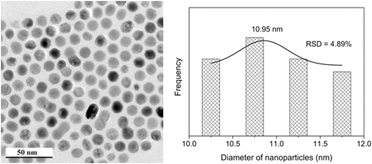
Bimetallic nanoparticles (NPs) have attracted a great deal of attention due to the synergistic interaction between metal components. In this work, the thermal process in which the reducing agent is not expensive or hazardous as those in traditional methods was employed to prepare alloy Ag–Cu NPs. The molar ratio between Ag and Cu was varied from 1:9 to 9:1. Nearly monodisperse NPs with alloy structure were characterized by X-ray diffraction and high-resolution transmission electron microscopy with energy dispersive spectroscopy In comparison with monometallic Ag and Cu NPs, the alloyed Ag–Cu NPs showed better monodispersity, especially when the ratio between Ag and Cu was 1:1. Moreover, the alloyed Ag–Cu NPs exhibited enhanced resistance to electromigration and oxidation, the respective problem of pure Ag and Cu. The alloyed Ag–Cu NPs also exhibited improved properties than a mixture of Ag–Cu NPs. This study should serve as the foundation for exploring high performance alloyed bimetallic NPs.
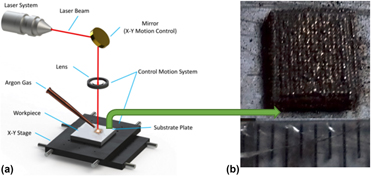
In this report, bulk graphene–reinforced titanium (Ti–Gr) nanocomposite with millimeter thickness was fabricated by selective laser melting process. Demonstrated by the characterizations of scanning electron microscopy, energy dispersive spectroscopy, X-ray diffraction, X-ray photoelectron spectroscopy, and Raman spectra, graphene nanoplatelets were successfully embedded into the titanium matrix with a uniform dispersion due to a fast heating–cooling process. High-resolution transmission electron microscopy was used to investigate the interface between titanium and graphene, where a certain amount of carbide was formed attribute to the chemical reaction between them during multilayer laser melting. A high density of dislocations was observed surrounding the graphene nanoplatelets in titanium matrix. The strength and elastic modulus of the nanocomposites were significantly improved, which has been demonstrated by nano-indentation tests. The hardness of the bulk Ti–Gr nanocomposites was approximately 1.27 times higher than pristine Ti counterpart. The strengthening mechanisms were discussed in detail.
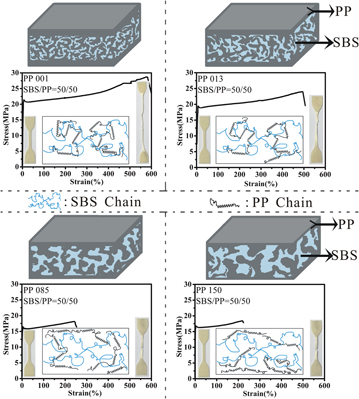
The effect of polypropylene (PP) molecular weight on the properties of styrene-butadiene-styrene block copolymer (SBS)/PP blends was studied. All SBS/PP blends (50/50 and 90/10) exhibited a sandwich structure where the co-continuous SBS/PP layer was between the top and bottom PP layers. Solvent extraction tests suggested that the continuous phase structure of PP was independent of the blending ratio and PP molecular weight, while the SBS phase changed from a dispersed phase to a continuous phase as the SBS content increased. The decrease in PP molecular weight decreased the PP layer thickness but increased the phase domain size of SBS in SBS/PP(50/50) blends. As a result, less noticeable “stress-hardening” phenomenon was observed. The mechanism for the structural change was attributed to the different melt viscosities of each component. The crystallinity of the blends did not change with the variable PP molecular weight but decreased with the increasing SBS content.
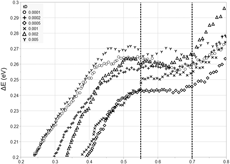
A new deep level transient spectroscopy (DLTS) technique is described, called half-width at variable intensity analysis. This method utilizes the width and normalized intensity of a DLTS signal to determine the activation energy and capture cross section of the trap that generated the signal via a variable, kO. This constant relates the carrier emission rates giving rise to the differential capacitance signal associated with a given trap at two different temperatures: the temperature at which the maximum differential capacitance is detected, and an arbitrary temperature at which some nonzero differential capacitance signal is detected. The extracted activation energy of the detected trap center is used along with the position of the peak maximum to extract the capture cross section of the trap center.
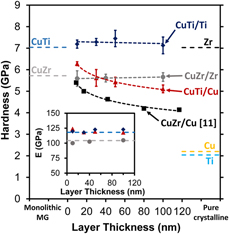
Amorphous/crystalline (A/C) nanolayers provide an effective model system to study the mechanical behavior and size effects of metallic glasses and crystalline metals in confined geometries. In this work, we experimentally investigated the structure–property relationship in A/C nanolayers containing HCP crystalline layers. CuTi/Ti and CuZr/Zr nanolayers were prepared by magnetron sputtering with layer thicknesses in the range 10–100 nm. The hardness values of the CuTi/Ti and CuZr/Zr nanolayers were close to those of the monolithic CuTi and CuZr, respectively. The hardness remained virtually the same for different layer thicknesses as opposed to CuTi/Cu amorphous/FCC crystalline nanolayers, which exhibit increasing strength with decreasing layer thickness. Confined layer slip model predicts that the effective flow stress of HCP crystalline layers is higher than that of the amorphous layers. As a result, the strength and size effects are governed by the mechanical behavior of the softer amorphous layer.
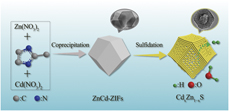
A bimetallic metal–organic frameworks (MOFs)-templated strategy was developed to fabricate mesoporous CdxZn1−xS polyhedrons with improved photocatalytic hydrogen evolution activity, and the formation mechanism of these mesoporous polyhedrons was discussed in detail. Incorporating Cd atoms, the Brunauer–Emmett–Teller surface areas of mesoporous CdxZn1−xS polyhedrons were significantly increased (271 m2/g), providing more exposed active sites compared with ZnS. In addition, suitable conduction band potential (< −0.55 eV) of the mesoporous CdxZn1−xS polyhedrons was also beneficial for the photocatalysis. Impressively, by the co-effects of mesoporous structure and modified conduction band, the mesoporous CdxZn1−xS polyhedrons exhibited better photocatalytic activity for hydrogen evolution than most reported photocatalysts without noble metals. The maximum hydrogen evolution rate of the CSZ3 reached 4.10 mmol/(h g) under visible-light irradiation and without any cocatalyst condition. This facile strategy for the construction of mesoporous CdxZn1−xS polyhedrons provided a deep insight to fabricate other metal sulfides for a variety of photochemical applications.