To save content items to your account,
please confirm that you agree to abide by our usage policies.
If this is the first time you use this feature, you will be asked to authorise Cambridge Core to connect with your account.
Find out more about saving content to .
To save content items to your Kindle, first ensure no-reply@cambridge.org
is added to your Approved Personal Document E-mail List under your Personal Document Settings
on the Manage Your Content and Devices page of your Amazon account. Then enter the ‘name’ part
of your Kindle email address below.
Find out more about saving to your Kindle.
Note you can select to save to either the @free.kindle.com or @kindle.com variations.
‘@free.kindle.com’ emails are free but can only be saved to your device when it is connected to wi-fi.
‘@kindle.com’ emails can be delivered even when you are not connected to wi-fi, but note that service fees apply.
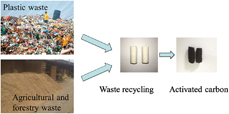
Polypropylene plastic (PP) was chosen as additives for the preparation of activated carbon (AC), considering that PP promotes pore formation during the preparation of AC. When the addition ratio of PP was 20%, AC having a maximum specific surface area of 1916.1 m2/g was prepared. Fourier transform–infrared spectroscopy (FT-IR) analysis exhibited the types of functional groups on the surface of AC, such as–OH, C=O, C–C, and –CH. The SEM analysis revealed the formation of disordered pores over the AC. Furthermore, iodine value of the AC is 1460 mg/g. Additionally, adsorption test revealed the AC is suitable for adsorbing methylene blue (MB). The adsorption equilibrium data of MB onto AC were most suitable for Redlich–Peterson model. The maximum adsorption capacity of the single layer was 476.88 mg/g, indicating that AC has high adsorption capacity. The kinetic data fitted well with the pseudo-second-order model.
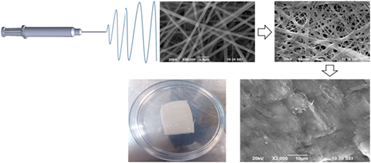
In recent years, tissue engineering has helped to reduce hospital stays and deaths caused by skin wounds. Scaffolds are one of the main factors that influence the success of any tissue graft. Collagen is one of the main components of the extracellular matrix, and there has been much interest in new sources for application as a biomaterial. In this work, a tissue engineering scaffold was developed using the electrospinning technique. The chicken skin was used as an alternative source to obtain collagen. The combination of this collagen with elastin was successfully electrospun, and a distribution of diameters was obtained, less than 100 nm. In vitro tests showed the adhesion and proliferation of the cells, as well as an absence of cytotoxicity from non–cross-linked scaffolds and scaffolds that were cross-linked with carbonyldiimidazole. The structure and composition of the developed scaffolding provide a favorable environment for cell growth and generating a skin substitute.
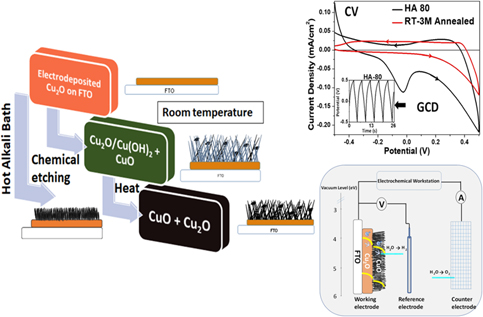
Nano-forms of copper oxides (CuO and Cu2O) are potential candidates in the field of energy conversion and storage. Low temperature and controlled growth of three-dimensional nanostructured hierarchical assembly of CuO over Cu2O is reported here with demonstrated advantage in energy conversion and storage applications. Electrodeposited Cu2O is partially oxidized in an alkali bath to two different forms of hierarchical nanostructures (HNS): CuO/Cu2O and CuO:Cu(OH)2/Cu2O. Randomly oriented nanorods and nanoflakes with high surface area tussock-like nanostructure are formed during oxidation at room and at elevated temperatures, respectively. The nanoflake morphology exhibits a high surface area of 85.82 m2/g and sufficient ion percolation pathways, leading to an efficient electrode–electrolyte interface for electrochemical energy devices. A favorable conduction and valence band alignment in the HNS with respect to water redox level along with fast electron diffusion time of 0.8 μs make it an ideal photocathode.
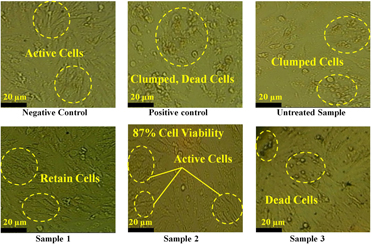
In the current research, the application and capability of electric discharge treatment (EDT) for enhancing the cytocompatibility and tribological properties of medical-grade Co–Cr alloy were investigated. The Co–Cr specimens were treated by copper tungsten (Cu–W) electrode in a deionized water tank (dielectric medium) at different spark energy levels. To examine the cytocompatibility of substrates, the MTT [3-(4,5-dimethylthiazol-2-yl)-2,5-diphenyltetrazolium bromide] assay was performed to evaluate the substrate cell viability. Furthermore, the wear rate and coefficient of friction of the substrates were examined on a pin-on-disc tribometer. In vitro cytocompatibility results revealed that the % viability of the MG-63 cells on EDT sample was approximately two times improved compared with that on the untreated surface. The tribological results showed that the treated samples have better friction reducing properties and four times higher wear resistance compared with unmachined Co–Cr samples. The surface modification at 10 A current and 60 µs pulse on-time and 150 µs off-time were found as significant parameters in both assessments.
A supercapacitor electrode featured with a voltage self-stabilizing capability is demonstrated by growing indium tin oxide (ITO) nanowires on Ni foam. The ITO nanowires with a single crystal structure are prepared by using magnetron sputtering technique, and they can act as an active electrode material. Charging–discharging experiments are performed under different current densities, demonstrating a good rate capability. Using properly designing top and bottom double connection circuits, part of the electrode can be used as a resistance switch. An electrode that can function as a supercapacitor and a resistance switch is fabricated. Detailed characteristics confirm that the device not only exhibits high performance as a supercapacitor but also has good characteristics of resistance switching (RS). The specific capacitance is 956 F/g at the scanning rate of 10 mV/s, and the switching ratio as a bipolar resistance switch is as high as 102. The stabilization time of discharging voltage is nearly doubled longer than that without any RS function, revealing the potential application of our devices, which can be used as a supercapacitor with voltage self-stabilizing.
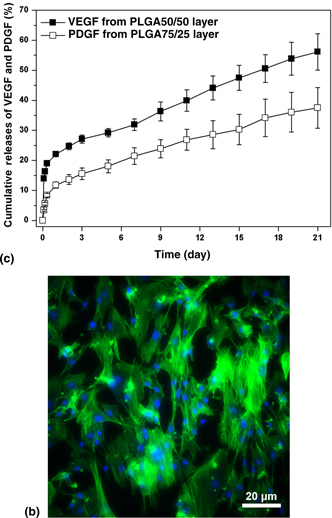
The regeneration of human tissues with complex anatomy such as gastrointestinal (GI) tract remains greatly challenging since it requires appropriate cell microenvironments with well-defined structural and biochemical cues. In this investigation, bilayer scaffolds consisting of different polymer nanofibers with orthogonal fiber orientations were prepared, in which vascular endothelial growth factor (VEGF) and platelet-derived growth factor (PDGF) were encapsulated separately. The bilayer scaffolds have similar architecture to the anatomy of the GI tract and can achieve dual releases of VEGF and PDGF in sequential and sustained manners, which hold promise as appropriate cell microenvironments for promoting the regeneration of the GI tract.
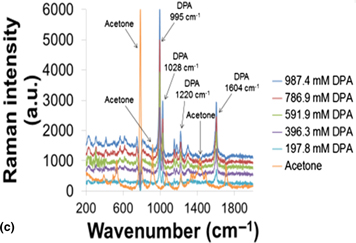
Signal detection limit (SDL), limit of detection (LOD), and limit of quantitation of a portable Raman spectrometer were measured for smokeless gunpowder stabilizers, diphenylamine (DPA) and ethyl centralite (EC), in acetone, acetonitrile, ethanol, and methanol. Acetone yielded the lowest LOD for three of four DPA peaks, and acetonitrile yielded the lowest LOD for two of three EC peaks and the remaining DPA peak. When gold nanoparticles were added to the DPA solutions in acetone and acetonitrile, statistically significant changes were observed (DPA peak position, full width at half maximum, and/or total area) and SDL was improved for the majority of all peaks in both solvents.
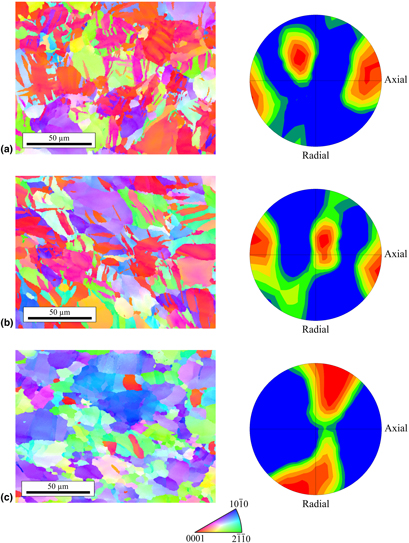
In this work, the effect of temperature, in the range of 25 to 250 °C, on deformation twinning in textured polycrystalline pure magnesium (Mg) was investigated. Compression loading was applied perpendicular to the c-axis texture direction. The yield strength and strain hardening rate are shown to drastically decrease with increasing temperature with total suppression of twinning at 200 °C. This behavior is attributed to the decrease in the critical resolved shear stress for prismatic slip and temperature insensitivity of tensile twinning. These results provide a first step in fundamentally understanding the deformation of Mg at elevated temperatures and quantify the mechanisms that lead to their improved formability at elevated temperatures.
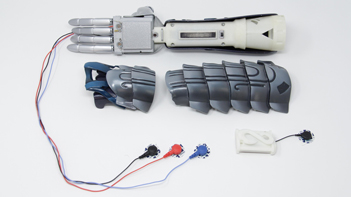
Additive manufacturing used with custom electromyographic sensors has been demonstrated for neuroprosthetic limb manufacturing and is now translating to the clinical environment. These manufacturing methods have dramatically reduced device weight while increasing the capability for multi-finger dexterity. Using wearable electromyography sensors standalone from the prosthetic limb, a new virtual training method has been designed and tested to improve human–machine interaction. This type of training leverages real-time visual feedback to user inputs, supporting improved timing and magnitudes of muscle contractions. The combination of these technologies may provide a stronger affinity between the pediatric patient group and the device.
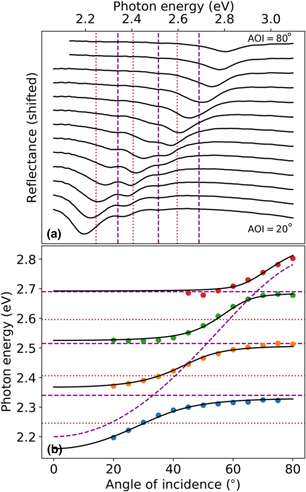
The authors report on strong exciton–photon coupling in all-metal microcavities containing functionalized anthradithiophene (ADT) in host poly(methyl methacrylate) matrices for a wide range of ADT concentrations. Angle-resolved reflectance of polycrystalline films revealed Rabi splittings up to 340 meV. Angle-resolved photoluminescence in films with low ADT concentrations (dominated by “isolated” ADT molecules) showed Rabi splittings which scaled with the square root of oscillator strength. When “aggregated” and “isolated” ADT molecules coexisted in film, cavities preferentially coupled to “isolated” molecules due to an anisotropic distribution of aggregates. As a solution-processable high-performance organic semiconductor, ADT shows promise as an (opto)electronic polaritonic material.
A straightforward intuitive user-friendly compact graphical interface, PreDICT (Premier DICVOL Tool) has been developed to take full advantage of the new capabilities of the most recent version of the DICVOL14 Indexing Software. The latter, an updated version of DICVOL04, includes optimizations, e.g. for monoclinic and triclinic cases, a detailed review of the input data from the indexing solutions, cell centering tests, as well as the handling of a moderate number of impurity peaks. Among the most salient features of PreDICT, one can mention the ability (1) to use 2θ non-equistepped input 1D X-ray powder diffraction patterns as can be obtained from 2D detectors, (2) to strip laboratory data from its Kα2 contribution when present, (3) to generate 2θ equistepped output 1D X-ray powder diffraction patterns in both the “.XY” and “.GSA” formats. In addition, PreDICT allows for the following features: (1) full access to the native DICVOL14 input/output ASCII file system is retained, (2) for any selection of a DICVOL14 suggested unit cell, all predicted Bragg peaks up to a certain 2θMAX value are clearly displayed and indicated, thereby emphasizing the contribution of the unaccounted peaks (if any) to the 1D X-ray powder diffraction pattern under current investigation.
The third-order nonlinear optical (NLO) susceptibility for morphologically controlled polydiacetylene (PDA) nanocrystals (NCs) and PDA nanofibers (NFs) have been determined for the first time by the experimental combination of transient pump-probe spectroscopy and spectroscopic ellipsometry. The figure of the merit of PDA NFs was much superior to PDA NCs and/or PDA bulk crystals, and the excitonic relaxation time was of order of sub-pico second. Namely, this is the first case to reveal the morphological effect on NLO response. PDA NFs having the long effective π-conjugation length are one of the most promising organic third-order NLO nanomaterials toward the photonic device application.
This article overviews the ultrasonic welding process, a solid-state joining method, using the example of welding of a magnesium alloy as well as the joining of magnesium alloys in general. In situ high-speed imaging and infrared thermography were utilized to study interfacial relative motion and heat generation during ultrasonic spot welding of AZ31B magnesium (Mg) alloys. A postweld ultrasonic nondestructive evaluation was performed to study the evolution of local bond formation at the faying interface (contact surface of the joint between the top and bottom Mg sheets) at different stages of the welding process. Two distinct stages were observed as the welding process progresses. In the early stage, localized reciprocating sliding occurred at the contact faying interface between the two Mg sheets, resulting in localized rapid temperature rise from the localized frictional heating. Microscale (submillimeter) bonded regions at the Mg–Mg faying surface started to form, but the overall joint strength was low. The early-stage localized bonds were broken during the subsequent vibrations. In the later stage, no relative motion occurred at any points of the faying interface. Localized bonded regions coalesced into a macroscale joint that was strong enough to prevent the Mg–Mg interface from further breakage and sliding. With increasing welding time, the bonded area continued to increase.
Advanced lightweight materials, including high-strength steels, aluminum, magnesium, plastics, and reinforced polymer composites, are increasingly used in industry. Combinations of mixed materials are becoming commonplace in the design of structures. Adhesives can be used to join a wide range and combinations of materials. However, joining of materials depends on their specific characteristics. The choice of adherend material is one particular and important parameter that influences adhesively bonded joint performance, and its effect should be taken into consideration in the design of adhesive joints. This article overviews experimental and modeling investigations on the influence of adherend properties on the strength of adhesively bonded joints.
With growing demand for better fuel economy for automobiles, multimaterial solutions are increasingly being utilized in the automotive industry for reducing weight in the vehicle body structure. This poses challenges in terms of joining dissimilar metals, especially those with vastly different properties such as aluminum to steel joining. General Motors has developed a new resistance spot-welding technique for dissimilar materials using a multi-ring domed (MRD) electrode and multiple solidification weld schedules to address this challenge. Originally developed for aluminum to aluminum resistance spot welding, this technology is being deployed as the mainstream aluminum joining solution to leverage existing infrastructure and workforce competency in resistance spot welding. With the recent expansion of MRD technology to aluminum to steel resistance spot welding, there is an ever-greater need to experimentally verify the quality of each aluminum to steel resistance spot-weld application with limited time and resources. Nondestructive evaluation (NDE) would enable the transfer of resistance spot-welding technology to dissimilar aluminum to steel joints. This article describes the current state of the art of aluminum to steel resistance spot welding and the challenges in developing a robust NDE process for this technology.
Vaporizing foil actuator welding is a form of impact welding, which can be carried out without the use of chemical explosives. Operating at smaller length scales, but with similar driving pressures as explosive welding, vaporizing foil actuator welding is capable of welding a wide variety of advanced and dissimilar metal combinations. With negligible heating developing during the process, thermal distortion does not occur, and the base-metal properties are retained in the weld. In this article, vaporizing foil actuator welding of an automotive grade aluminum and steel pair is discussed. A currently functional and complete welding system that can be used for research as well as low volume production is also discussed.