To save content items to your account,
please confirm that you agree to abide by our usage policies.
If this is the first time you use this feature, you will be asked to authorise Cambridge Core to connect with your account.
Find out more about saving content to .
To save content items to your Kindle, first ensure no-reply@cambridge.org
is added to your Approved Personal Document E-mail List under your Personal Document Settings
on the Manage Your Content and Devices page of your Amazon account. Then enter the ‘name’ part
of your Kindle email address below.
Find out more about saving to your Kindle.
Note you can select to save to either the @free.kindle.com or @kindle.com variations.
‘@free.kindle.com’ emails are free but can only be saved to your device when it is connected to wi-fi.
‘@kindle.com’ emails can be delivered even when you are not connected to wi-fi, but note that service fees apply.
The article presents a previously unknown hymn in praise of Marduk, the Esagil, Babylon and the Babylonians. It contains unparalleled descriptions of the healing powers of Marduk, the splendor of Babylon, the spring borne by the Euphrates to the city’s fields and the generosity of the Babylonians themselves. The text survives in 20 manuscripts, from the 7th to the 2nd/1st centuries BCE, and it can be shown that it was a fixture in the school curriculum of the time. The author of this highly accomplished piece immortalized his devotion to his city, gods, and people in words that resonated until the final decades of cuneiform culture.
Edition with translation of a Sumerian liturgical fragment kept today in Birmingham City Museum. Three such fragments were edited in a previous article (Iraq 85). The fourth fragment tells us a dramatic story of Dumuzi in the steppe, which, thanks to the help of loving women and of the gods Utu and Nanna, finds a happy end.
The article reconstructs lines 75–80 of Tablet V of the Standard Babylonian version of the Epic of Gilgameš. It offers a re-edition of all the extant sources and uses as a recourse verses 9–12 in Chapter 4 of the Book of Qohelet (Ecclesiastes). It then demonstrates how close the passage in the Epic of Gilgameš and the verses of the Book of Qohelet are. The article concludes with a brief discussion about the relationship between the Epic of Gilgameš and the Book of Qohelet.
This article presents the preliminary results of investigations at the site of Qach Rresh on the Erbil Plain of the Kurdistan Region of Iraq, conducted by the Rural Landscapes of Iron Age Imperial Mesopotamia project (RLIIM). The site of Qach Rresh is estimated to have been founded in the mid–eighth century B.C.E., at the height of the Assyrian Empire, and continued to be utilised in varying capacity until the onset of the Hellenistic period (c. 320 B.C.E.). Magnetic gradiometry survey and excavations currently suggest that Qach Rresh served as a rural administrative/storage center during the Assyrian Empire, which fell into disrepair following the empire’s collapse. The following post-Assyrian/Iron Age III period then saw several of its large buildings repurposed as refuse areas containing debris from largely domestic contexts. Qach Rresh is the first rural settlement investigated within the Assyrian imperial heartland. The results from this project seem to indicate a high degree of Assyrian state or elite involvement in the countryside, serving as a critical first foray into assessing the relationship between urban governing centers and their “hinterlands”.
The gesture of the pointing finger performed by the Assyrian king and, sometimes, his officials and depicted on several monuments is commonly labelled by scholars as ubāna tarāṣu (to extend the finger and point), and variously interpreted as a gesture of homage, or prayer, or adoration to the deities. The article questions this generally accepted reading and proposes to interpret the pointing finger gesture as a simple deictic gesture, thus deprived of any religious connotation. It is concluded that the gesture had not intrinsic meaning but was intentionally used to point at and highlight important elements outside the monument or within the carved inscription or the image.
This paper unfolds in three steps. First it draws attention to how the import of Babylonian and Assyrian belles lettres can be affected by the manner in which the utterances are ‘voiced’. Second, it highlights interruption as a particular instance of this, proposing cases where characters are likely to be interrupting each other (the first treatment of this issue in Assyriology). Finally, it argues that the distribution of speech formulae in Gilgameš associates one such formula with interruption and aggression more than another.
The paper posits a link between the Standard Babylonian Version of Nergal and Ereškigal and the Jacob Cycle in Genesis (Gen 25-35), one anchored by the former story’s cosmic stairway and the stairway with its top in heaven appearing to Jacob in his famous dream. It is argued that the proper understanding of the motive for that specific parallel opens the door to a considerably broader one, which offers important insight on the two traditions. This broader parallel informs on different aspects of Nergal and Ereškigal, including theological and historical issues that appear to stand behind that story. Such contact, it is suggested, challenges established Assyriological thinking about the place of comparative perspectives in the study of Mesopotamian literature.
Who created literary texts in ancient Mesopotamia, and did the Mesopotamians have a concept of “literature” (→ 1)? A core witness is the song Innana B / nin me šara (NMS → 2). New translations and an inductive analysis of references to text, addressee, and speaker reveals NMS to be created by a priestess for a war ritual (→ 3). Instead of staking a claim to authorship, however, the song stresses a claim for priesthood (→ 4). New evidence shows why: the creators of ritual songs are gods, and En-ḫedu-ana is only allowed to create such a song when she herself acts as a priestess embodying a deity (→ 5 and 6). The last section will offer proof that NMS belongs to the category of literature, from both ancient and modern perspectives, and explain why it is also to be regarded as both a mythic and ritual text (→ 7).The analysis demonstrates the birth of literature through the goddess Nin-gal, embodied in En-ḫedu-ana.
This paper publishes the editio princeps of an Early Dynastic IIIb tablet from Nippur, which contains a unique yet fragmentary Sumerian narrative about the storm god Iškur’s captivity in the netherworld, from which he appears to be rescued by Fox. While the incomplete state of preservation prevents a reconstruction of the plot, individual motifs can be traced across the entire cuneiform corpus, allowing for a preliminary case study of continuity and change over more than two millennia of Mesopotamian mythological literature.
Excavations carried out between 2016 and 2022 on the main mound (Mound A) of Tell Zurghul/Nigin, in Areas D and E, have revealed a long occupational sequence of the site during a large part of the third millennium B.C.E. The identification of three main phases of use of the area, which are in turn divided into five Architectural Phases, shows that the mound was utilized in different ways between the late Early Dynastic I period and the end of the third millennium B.C.E. The sequence allows the various phases of use to be associated with specific periods in the life of the settlement, coinciding with the rulers of the First Dynasty of Lagash and Gudea’s works on the site. The chrono-typological analysis of the pottery repertoire from Areas D and E has established dating for the materials recovered and provides additional information useful for a general reassessment of the ceramic chronology of third millennium B.C.E. Mesopotamia. Materials from Architectural Phases I and II are assigned at the ceramic level to the late Akkadian/post-Akkadian/early Ur III horizon. Pottery from Architectural Phases III and IV are assigned, respectively, to the ED IIIB/early Akkadian and the ED IIIA–B horizons, while materials from Architectural Phase V are assigned to a late ED I/transitional ED I–ED IIIA horizon.
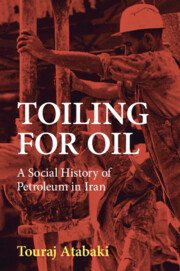
Often referred to as the 'Oil Century,' the twentieth century marked the rise of petroleum as a pivotal force in global economics and politics. While many studies have explored the political relations between oil corporations and the Iranian state, this innovative book builds an intricate picture of the social history of petroleum in Iran, after its discovery there in 1908. Through expert interviews and on-the-ground reports, Touraj Atabaki shows the seismic impact of oil: from the building of roads to an influx of migrant labour. Offering insights into the lives and challenges of oil workers alongside analysis of wider geopolitical conflicts, Toiling for Oil traverses two world wars, industrialisation and modernisation, attempts at nationalisation in the 1950s and the political crises of the late 1970s. An essential read for anyone interested in Iran's unique position in the global economic landscape as oil continues to shape our world.
This paper discusses the succession ceremony organized by Aḥmad ibn Ṭūlūn in 270/884 for his son and heir, Khumārawayh, as described by Egyptian Arabic sources, notably Sīrat Aḥmad ibn Ṭūlūn of al-Balawī, an underutilized text for Abbasid history. The paper considers three overlapping questions. First, how should the accounts be read, as “representational” or, alternatively, as prescriptive, thus of a piece with elements of the Mirror for Princes literature? Second, were Ṭūlūnid networks of loyalty and dependence solely reliant on material inducements or did individuals invest themselves in the Egyptian regime beyond the point of self-interest? The question goes to the problem of material vs. emotional ties of dependency. And, third, was Ibn Ṭūlūn successful in creating a lasting power base? The question goes to the extent to which his contemporaries signed on to his “project” of redefining relations with the Abbasid center.
Open-source intelligence is readily available and inexpensive. Hamas collected a lot of information from open sources, mainly the Israeli press. In this case, Hamas exploited the fact that Israel is a democratic state with a relatively free press to get valuable information for its operations. This sort of collection activity became more organized after Hamas took control of the Gaza Strip and was Hamas’s main source for strategic analysis. This chapter describes the intelligence content Hamas gathered from open sources and that content’s contribution to its activities.
This article addresses conversion and its consequences for a Bactrian family known as the Mir family during the Umayyad and early Abbasid periods. It explains the social, legal, and economic ties that bound this Bactrian family, and the problems created within the family after a member of it converted to Islam. Based on a systematic analysis of a group of Bactrian and Arabic documents issued for the members of this family by the local Bactrian and Muslim authorities, this article will show the centrality of the ‘household’ in the Bactrian society and the changes that occurred in it after the arrival of Islam. It argues that conversion to Islam seriously affected this family and eventually dismantled it. Although conversion did not remove the kinship within the household, it ended cohabitation and joint ownership, which were central social elements in the Bactrian law that kept the household together.
Chapter 7 concludes the Jordanian case study by analyzing the theory’s expectations for how strategic interactions around delegation and blame influence repression, protest, and accountability in authoritarian political systems. Original protest data indicates that the monarchy permits hundreds of protests each year and that security forces repress only a tiny fraction of these events. Instead, repression is highly targeted at those individuals who cross the regime’s redlines by publicly blaming and criticizing the king. The chapter explains how this approach to repression complicates anti-royal coordination, even among those opposition figures who personally blame the monarchy for Jordan’s ills. The chapter also illustrates how the monarchy provides limited accountability by removing prime ministers and cabinet ministers when the public becomes visibly dissatisfied with the government’s performance.
The present study examines three aspects of the political and military behavior of the general public, and more specifically that of the Ḥanābila, between 311/923 to 323/935. During those twelve years the Abbasid caliphs lost control of large parts of their empire, and their capital, Baghdad, witnessed increasing chaos. The first aspect that is examined is how the inhabitants of Iraq reacted to the Qarāmiṭa attacks. The second focuses on the Ḥanābila’s behavior during that period and the distinct mark they left on Baghdadi politics. The third looks at the way in which the ruling elite confronted the Ḥanābila. These three perspectives tell part of the story of the unravelling of the socio-political commitments in Baghdad, and the role played by the general populace, and in particular, by the Ḥanābila, in the undoing of its social cohesion.