To save content items to your account,
please confirm that you agree to abide by our usage policies.
If this is the first time you use this feature, you will be asked to authorise Cambridge Core to connect with your account.
Find out more about saving content to .
To save content items to your Kindle, first ensure no-reply@cambridge.org
is added to your Approved Personal Document E-mail List under your Personal Document Settings
on the Manage Your Content and Devices page of your Amazon account. Then enter the ‘name’ part
of your Kindle email address below.
Find out more about saving to your Kindle.
Note you can select to save to either the @free.kindle.com or @kindle.com variations.
‘@free.kindle.com’ emails are free but can only be saved to your device when it is connected to wi-fi.
‘@kindle.com’ emails can be delivered even when you are not connected to wi-fi, but note that service fees apply.
On 15 August 2021, images of heavily armed bearded men behind and around a desk in the Citadel of Kabul were broadcast by media outlets all over the world. They were vividly illustrating the breaking news that the warriors of the Islamic Emirate of Afghanistan (Də Afghānistān Islāmī Imārat; henceforth IEA), colloquially known as “The Taliban”, had taken the Afghan capital for the second time, while President Ashraf Ghanī (b. 1949), having precipitately fled his country to the safety of Tashkent, declared his resignation via Facebook. All of a sudden, it seemed, those who had confidently been declared defeated by a USA-led military invasion in late 2001 in reprisal for the infamous al-Qāʿida attacks on 11 September of that year were back in charge.
Religious discourse in a specific environment, such as the Pashtun Borderland, was decidedly shaped by highly localized, traditional Islamic articulations, while ideational cross-pollination with more universalist ones appears to have historically been rather limited, especially among the subaltern strata of society. The most dominant expressions belong, first and foremost, to a spectrum of Sufi Islam that ranged from the ecstatic kind of the mendicant dervish to the sober variety epitomized in the Naqshbandiyyah-Mujaddidiyyah. During the first decades of the twentieth century, as we have seen, the latter especially was widely absorbed into diverse local manifestations of “Frontier Deobandiyyat”, which turned this particular Islamic response to the challenges of an aggressively expanding global modernity into the one that, despite its origins outside the region, had been establishing itself across the Pashtun Borderland much more successfully than any of its various competitors.
This investigation of Ghazālī’s life and thought is contextualized within the social and intellectual dynamics of the expanding Abbasid Empire of the philosopher’s lifetime. This close contextualization refutes prevailing Islamist and postmodernist readings of Ghazālī that decontextualize his thought in the service of ideological predilection. We use Persian sources to show how Ghazālī’s Islam revolutionized language, creating an accessible discourse intended to transcend the narrow ulema and madrasa milieu that had been in Arabic. Ghazālī’s Islam created an autonomous space for nonreligious sciences, notably logic and mathematics, as part of a reformist project responding to the Abbasid crisis of governance. This reformist discourse, based on the din/donya duality, helped to create an Islamic worldview suited to an expanding multi-civilizational society that depended on new economic and technological ensembles to flourish and survive.
Now, at least for the time being, we have reached the end of our journey across the Pashtun Borderland through the last few centuries, in our attempt to trace the ideational roots of those who gained international renown as “The Taliban”. What emerges is a rather complex and multilayered picture that seems to make it even more difficult to adequately frame “The Taliban”. However, it would perhaps have to be considered a disproportionate effort if the only result were to affirm that the ideational and ideological underpinnings of those who, as the ṬIT and IEA, governed most of Afghanistan between 1996 and 2001, and have done again, since the summer of 2021, are not so straightforward, as investigative journalist Ahmed Rashid prominently claimed back in 2000 (and confirmed in each of the subsequent editions and revisions of his best-selling Taliban: Militant Islam, Oil and Fundamentalism in Central Asia).1
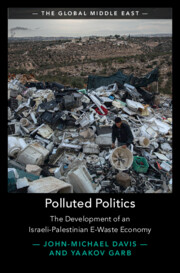
This book describes the politically charged afterlife of Israeli electronics gathered by and processed in a cluster of rural Palestinian villages that has emerged as an informal regional e-waste hub. As with many such hubs throughout the global South, rudimentary recycling practices represent a remarkable entrepreneurial means of livelihood amidst poverty and constraint, that generates staggering damage to local health and the environment, with tensions between these reaching a breaking point. John-Michael Davis and Yaakov Garb draw on a decade of community-based action research with and within these villages to contextualise the emergence, realities and future options of the Palestinian hub within both the geo-political realities of Israel's occupation of the West Bank as well as shifting understandings of e-waste and recycling dynamics and policies globally. Their stories and analysis are a poignant window into this troubled region and a key sustainability challenge in polarized globalized world.
This article examines the local context that led to the expulsion of Jews from Eastern Thrace in 1934. Going beyond the conventional state-centric narratives, it unearths the local socio-economic tensions that triggered the locals to target their Jewish neighbors. It highlights three major factors that fueled already-existing nationalist sentiments in the region: some Jewish merchants’ involvement in usury, Turkish–Muslim agricultural producers’ growing indebtedness due to the devastating impact of the Great Depression, and the government’s failure to support producers with appropriate credit policies. Faced with the danger of indebtedness and dispossession, the locals in this context deemed the small Jewish community as “the easy target,” scapegoating it for their ongoing problems amid Turkey’s nationalist political climate in the 1930s.
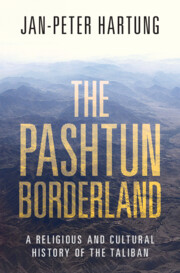
Since the Taliban returned to power in Afghanistan in 2021, the need to understand the group's history and ideology has only increased. Jan-Peter Hartung's timely study examines the phenomenon of the Taliban through a topographically, ethnically and geo-politically distinct space: the Pashtun Borderland of today's Afghanistan and Pakistan. Emphasising the central role of Pashtun ethnicity, Hartung covers approximately five hundred years of Pashtun history: from the early modern Mughal empire to the first Durrani Empire in the eighteenth century and the regional developments during the colonial period in the nineteenth and early twentieth century. Drawing from a wealth of primary source materials in Pashto, Persian, Urdu and Arabic, Hartung moves the discussion of the Taliban beyond the immediacy of journalistic reportage and security-orientated studies, to a nuanced analysis of a wide range of actors and ideologies, refracting Afghanistan's present moment through the lens of its long cultural and religious history.
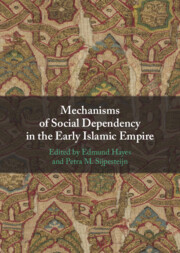
The success of Islamic imperialism in the period from the conquests to the Ayyubid dynasty has traditionally been explained as purely the result of military might. This book, however, adopts a bottom-up approach which puts social relationships and local power dynamics at the centre of the Islamic empire's cohesion. Its chapters draw on sources in diverse languages: not just Arabic, but also Greek, Coptic, Syriac, Hebrew, and Bactrian, showing how different linguistic communities intersected and contributed to a connected yet diverse empire. They highlight how not just literary and historical texts, but also physical documents and archaeological evidence should be incorporated into writing histories of the late antique and early medieval Middle East. Social institutions and relationships explored include oaths; petitions, decrees, and begging letters; and financial frameworks such as debt and taxation. This title is also available as Open Access on Cambridge Core.
This chapter demonstrates the crucial role of geographic proximity in shaping agrarian and herding relations in the history of late Ottoman Kurdistan, including regional political economy, socioeconomic structures, and intercommunal relations. It argues that the region is marked by three distinct ecological zones, which differ from each other in terms of elevation, climate, vegetation, and both human and animal habitation. The chapter then shows the encroachment of the Ottoman state through the arrival of Tanzimat reforms and the multifaceted consequences this had in the region. Next, it illustrates a demographic portrait of the region, depicting how human beings brought different ecosystems into conversation with one another. It argues that pastoralism sustained the conversation between geographic zones into the nineteenth century, creating linkages and slippages between mountains, pastures, and plains, and defining the interaction between the three zones until these links began to weaken in the face of a series of environmental crises. The chapter concludes with a glimpse into five villages from different parts of the region.
In this chapter, I first document the great agrarian famine of 1879–80, followed by a detailed analysis of peasants’ livelihood circumstances in the countryside of Diyarbekir, Erzurum and Van, and the politics of food and water scarcity as it impacted agricultural production and the agrarian economy. Next, I turn to the appearance of new environmental disasters in the 1880s and 1890s. These crises exacerbated conflict between local powerbrokers and peasants, and radically transformed settlement patterns within Ottoman Kurdistan. The second major section of the chapter depicts how climatic factors and the periodicity of environmental change impacted pastoralists and it includes a discussion of how climatic fluctuations affect the physiology of herd animals. I conclude this section by examining pastoralist survival strategies, and how these contributed to the growth of intercommunal tension in Kurdistan in the last decades of the nineteenth century.
On the cusp of the First World War, the global transition from coal to oil as the predominant energy source for technological, military, and industrial purposes markedly augmented the strategic value of oil, a prominence it retained for subsequent decades. In reaction, the British government, which possessed a 51 per cent stake in the Anglo-Persian Oil Company, sanctioned a significant expansion of the industry within its sphere of indirect influence. As petroleum demand escalated during the conflict, this enlargement necessitated the prioritisation of workforce allocation and maintenance, essential for producing petroleum in its varied forms. In response, a novel labour recruitment policy was instituted in collaboration with the British Indian Raj, extending the scope of recruitment beyond the borders of Iran through the Persian Gulf. As the war intensified, the strategic significance of Iran – highlighted by its extensive oil reserves and the proximity of its oil fields and refinery to the Mesopotamian front – transformed it from a marginal theatre of war into a pivotal military operations centre, thereby rendering it a sustained zone of conflict. This shift profoundly affected the operations and security of the Iranian oil industry and markedly influenced the working and living conditions of the labour force throughout the duration of the war.
Initially neutral in the Second World War, Iran was drawn into the conflict due to its strategic location and economic importance, particularly its oil resources. After the German attack on the Soviet Union, Iran’s position south of the Soviet borders became crucial for supporting the eastern front. Consequently, British, and Soviet forces occupied Iran in August 1941, transforming it into the ‘Bridge of Victory.’ This geopolitical significance post-war laid the groundwork for the Cold War. The narrative then shifts to explore Iran’s role during and after the war, focusing on the Iranian oil industry. It delves into the working and living conditions of the oil workers, the organisation of labour, the rise of political radicalism, and the involvement of political parties. A detailed analysis of the bloodiest labour conflict in 1946 highlights the long-term impact of labour radicalism on the social lives of workers and probes the persistence of these radical movements. By connecting Iran’s wartime role to post-war developments, the analysis illuminates the profound effects of global conflicts on local industries and social structures.
The Introduction provides a theoretical and conceptual framework of the book by defining ecological disequilibrium and slow violence. It also provides a historiographical discussion on collective violence against Armenians in the late Ottoman Empire.
This chapter demonstrates the importance of viewing socioeconomic and political relationships between sedentary and herding societies from the perspective of long-term shifts in climate. Such a perspective offers the possibility of reconsidering the socioeconomic features of conflicts that appeared between similar communities in South Asia, the American West, Africa, Australia, and the Middle East in the nineteenth and twentieth centuries.