To save content items to your account,
please confirm that you agree to abide by our usage policies.
If this is the first time you use this feature, you will be asked to authorise Cambridge Core to connect with your account.
Find out more about saving content to .
To save content items to your Kindle, first ensure no-reply@cambridge.org
is added to your Approved Personal Document E-mail List under your Personal Document Settings
on the Manage Your Content and Devices page of your Amazon account. Then enter the ‘name’ part
of your Kindle email address below.
Find out more about saving to your Kindle.
Note you can select to save to either the @free.kindle.com or @kindle.com variations.
‘@free.kindle.com’ emails are free but can only be saved to your device when it is connected to wi-fi.
‘@kindle.com’ emails can be delivered even when you are not connected to wi-fi, but note that service fees apply.
This compact book offers a closely researched account of the early years of the Qajar dynasty and state, whose political development was permanently marked by the territorial struggle with the Russian Empire in the South Caucasus in its first three decades. Behrooz's work builds on Muriel Atkin's classic Russia and Iran 1780–1928 (1980), and although unlike Atkin he does not make use of any sources in Russian, the range of Persian-language material he draws upon is much greater, and the two books complement each other well. The first two chapters effectively set the political scene, providing a review of the circumstances of Aqa Muhammad Khan's rise to power, his struggle with the Zand rulers of Shiraz, and the extensive preparations he made to secure the succession of his nephew, Baba Khan Jahanbani, the future Fath Ali Shah. These bore fruit when Aqa Muhammad Shah was murdered by his own servants in Shusha in 1797. Significantly, this took place during a campaign to subdue Qarabagh. The central figure of the book, and of the wars against Russia, is Fath Ali's son Abbas Mirza, but a particular strength of Behrooz's account is his close understanding of the family and intertribal relationships among the Qajar elite, as well as of the petty dynasties that ruled in Qarabagh, Iravan, Badkubeh (Baku), and Derbent in this period.
Isidore of Charax, in his description of the region known as Upper Media, mentions several cities and stations located on today's Kangavar-Asadabad plain. Subsequently, historians and geographers of the Islamic period have supplemented the information about the ancient routes and places of the region. While, in the last two centuries, some researchers have located some ancient toponyms in the region, this research, for the first time, has reconstructed all the old routes and its possible branches leading to the city of Hamadan (Ecbatana), on the Kangavar-Asadabad plain during the last two thousand years. In addition, some suggestions have been made for the location of some historical places mentioned by old geographers. To achieve this goal, three categories of historical and geographical texts have been used, including the later Islamic texts (the Safavid and Qajar texts), the early Islamic texts (mainly Arab and Iranian geographical texts of the ninth and tenth centuries), and the pre-Islamic texts (mainly Greek and Roman texts, especially the Parthian Stations of Isidore of Charax), whose connection to each other is not intuitively obvious at first glance. While it is not difficult to recognize historical places and routes of the studied area in the later texts, it is complicated in the case of the two older groups due to their significant gap with the present time. Overall, the result of this research indicates that multiple routes were used for passing the Kangavar-Asadabad plain during different periods. Although all these routes eventually led to the metropolis of Ecbatana (modern Hamadan), the choice of one route in ancient times seems to have depended on various factors, including the season of the year and weather conditions, road safety, the kind of caravan (light or heavy), and so on.
From the late ninth to the mid-seventh century BCE, the Urartian kings expanded their polity from the Euphrates to Lake Urmia. In this context, the question of Urartian legitimacy and how it was achieved is a key issue. Previous research has suggested that rulers primarily used visual representations to appeal to different segments of society, but this article explores how royal legitimacy was also pursued through religious rituals and festivals, starting from the so-called co-regency of Išpuini and Minua (ca 820–810 BCE). By focussing on these rituals, which possibly reached a broader audience than visual representations, this study seeks to understand the roles of performance and religion in the early formation of the Urartian state.
Several anthropological and historical studies based on comparative research show that there is no universal concept of ‘cleanliness’ or ‘hygiene’ common to all cultures in all historical periods. Ideas about what is considered clean, the means used to keep persons, objects and places clean, and the frequency or appropriate timing of cleaning actions differ between cultures, and even within a given culture. The latter implies that, sometimes, these differences depend on social position, mainly because this position allows or prevents certain cleansing practices. In addition, the concept of ‘cleanliness’ may sometimes be intertwined with the idea of ‘purity’, and thus be related to religious beliefs and practices. The present article examines the concept of ‘hygiene’ for the case of the Hittites, and aims to do so from an historical perspective by reflecting on modern vocabulary related to hygiene, investigating Hittite terminology related to cleanliness and analysing textual sources. Archaeological evidence will be examined alongside the textual sources to establish correlations regarding locations and objects used for hygienic practices. The objectives are to investigate who practiced cleanliness and when in Hittite culture, how and where these practices occurred, and what objects were used, as well as how the Hittites understood hygiene and whether perceptions and practices varied by social group.
This study is concerned with the evaluation of a recently discovered Aramaic inscription and other archaeological remains found at Rabat Fortress (in Tunceli, Türkiye). The Hellenistic period Aramaic funerary text was composed in memory of a local lord from Sophene’s local political elite, with connections to the Orontid dynasty. This is the first known local Aramaic inscription from Sophene. The Aramaic inscription introduced in this study provides significant new information about the Hellenistic-period context for rock-cut stepped tunnels and single-roomed rock-cut tombs known across eastern Anatolia. The Rabat Fortress site provides corroborating evidence for the dating of the stepped tunnels that exhibit the same rock-cutting techniques in the same region to the Hellenistic and later periods in the rocky landscape. The inscription is rendered in a unique Sophene adaptation of the Middle Aramaic script extant on a corner block inside the Fortress. Its funerary context in rocky landscape and the inscription’s script and content indicate that the local elite at Rabat Fortress used Aramaic, and the notion of Orontid lineage to connect with the kingdom of Sophene’s central authority, which positioned itself between Hellenistic and Iranian traditions.
In November 1980, a twenty-nine-year-old contract worker in Hammond, Louisiana by the name of Stephen K. Clark was arrested and charged with criminal mischief for painting a thirty-foot mural of Mickey Mouse “making an obscene gesture to Iran” on the side of Sunflower supermarket. According to the store's manager, Clark had been hired to give the store a fresh coat of yellow paint before going wildly off script. The Hammond city prosecutor told the press that Clark would face jail time if convicted for his renegade painting, which, alongside the enormous image of Mickey, featured a word balloon proclaiming “We're fed up. Hey Iran!”1 This was no one-off use of Mickey's likeness to send a message to Iran. At the dawn of the 1980s, the image and sentiment Clark felt compelled to share had become curiously popular across the United States, appearing in surprising places all over the country.
The practice of settling former soldiers in ‘colonies’ is well attested in Anatolia. The area of and around Pisidia received several such colonies during the Hellenistic and Roman periods, a phenomenon which must have had a significant demographic impact on the region. Building on previous research that has investigated the colonies of this region of the Hellenistic and early Roman periods, this paper collects the evidence for further settlements being planted on the various peripheries of Pisidia: first, in the territory of Apollonia, in the northern borderlands between Pisidia and Phrygia; second, on the Cillanaean Plain on the eastern fringes of Pisidia; and finally in Milyas, the territory on the southern boundaries between Pisidia and Lycia. It argues that significant groups of Lycian and Thracian ex-servicemen were settled in these areas, and suggests that this happened in a relatively short period of time between 36 BC and 25 BC, during the short reign of a local king, Amyntas. Sandwiched between the period of the Hellenistic poleis that preceded it, and the time of direct Roman rule that came after, the reign of Amyntas nonetheless left a lasting legacy on the landscape in the form of these new settlements.
This study delves into the comprehensive examination of an anta capital discovered during the 2008 excavations at the ancient site of Alabanda in Caria, now housed in the Aydın Archaeological Museum. Employing a typological and stylistic analysis, the research attributes the capital to the latter part of the fifth century BC, emphasising its intricate architectural ornamentation and sculptural details that reflect significant artistic and cultural developments of the period. The capital features elaborate ornament bands and mythological reliefs, including depictions of Bellerophon-Pegasus and Chimera, and a griffin attacking a horse, which are analysed for their iconographic and symbolic significance within the broader Anatolian and Mediterranean contexts. The study also explores the potential original architectural setting of the capital, suggesting its use in a monumental tomb, a hypothesis supported by its dimensions and decorative complexity. Furthermore, the article discusses the role of such imagery in asserting local identities and engaging with wider Hellenic cultural and political themes, particularly considering the complex interactions between local Carian traditions and the dominant Greek culture of the period. The findings not only contribute to our understanding of Carian art and architecture but also highlight the region’s active participation in the cultural dialogues of the Classical world.
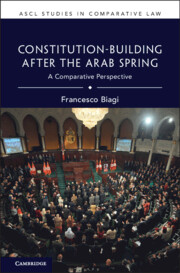
How were post-Arab Spring constitutions drafted? What are the most significant elements of continuity and change within the new constitutional texts? What purposes are these texts designed to serve? To what extent have constitutional provisions been enforced? Have the principles of constitutionalism been strengthened compared to the past? These are some of the key questions Francesco Biagi addresses. Constitution Building After the Arab Spring. A Comparative Perspective examines seven national experiences of constitution building in the Arab world following the 2011 uprisings, namely those of Morocco, Algeria, Tunisia, Libya, Egypt, Syria, and Jordan. This interdisciplinary book, based largely on the author's own work and research in the region, compares these seven national experiences through four analytical frameworks: constitution-drafting and constitutional reform processes; separation of powers and forms of government; constitutional justice; and religion, women and non-Muslims within the framework of citizenship.
How do we - and how should we - engage with the natural environment through the concepts of rights and responsibilities? In this book, Michael Cox develops the theory and practice of environmental property rights, moving beyond simplistic assumptions that do not reflect the diversity of arrangements we see in the world. Recognizing this diversity will help us craft better responses to environmental problems in the future with an interdisciplinary foundation in what has worked, or not worked, in the past. Synthesizing a variety of methods and disciplines, Cox explores rights-based environmental policies as well as different cultural approaches to environmental ownership. The result is a book that helps the reader understand the full range of possibilities when it comes to environmental ownership.
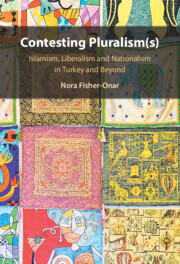
Contesting Pluralism(s) challenges a widespread tendency to limit studies of Turkish – and Muslim – politics to 'Islamist vs. secularist' or 'Islam vs. democracy' debates. Instead, Nora Fisher-Onar's innovative argument centers on coalitions for and against pluralism. Retelling Turkey's story from the late Ottoman Empire to the present as a tale of pluralizing vs. anti-pluralist coalitions, this book offers an alternative explanation for major outcomes from elections and coup d'etats to revolutions. Here, cross-camp alliances pit those who are willing to coexist with 'Other(s)' against those who champion a unitary, national project in which everyone speaks, believes, looks, and loves as they do. Drawing on a rich array of primary and secondary data, Fisher-Onar introduces an analytical framework for capturing causal complexity in political contestation. This study rejects Orientalist exceptionalism, rereading the relationship between political religion, pluralism, and populism via a framework that travels across and beyond the Muslim-majority world.
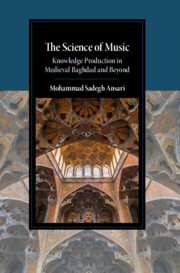
How did the medieval Islamic intellectual tradition conceptualize, produce, and disseminate scientific knowledge? What can we learn about medieval Islamic civilizations from the way they examined and studied the universe? In answering these fundamental questions, Mohammad Sadegh Ansari provides a unique perspective for the study of both musicology and intellectual history. Widely considered to be an art today, music in the medieval Islamic world was categorized as one of the four branches of the mathematical sciences, alongside arithmetic, geometry, and astronomy; indeed, some philosophers and scholars of music went as far as linking music with medicine and astrology as part of an interconnected web of cosmological knowledge. This innovative book raises fascinating questions about how designating music a 'science' rather than an 'art' impacts our understanding of truth and reconstructs a richly holistic medieval system of knowledge in the process.
This chapter analyzes the core elements of Ghazālī’s practical ethics, using The Alchemy of Happiness, a guidebook for Muslims wishing to live a good life in this world (dunyā) while striving toward salvation through faith (dīn). Ghazālī prescribed a pragmatic attitude toward fiqh prioritizing everyday practice and recognized dīn and dunyā as two interconnected but distinct spheres, which he joined through a broadly conceived Islamic ethics. Ghazālī criticized the Sufi tendency to decry all knowledge. In The Alchemy of Happiness, he understood that people held distinct responsibilities, and in turn embedded “responsibility” in the diverse economic and political institutions essential to the functioning of the Abbasid Empire. Ghazālī conceived of the “heart” (dil) as a selective intelligence permitting differentiation among ethical alternatives. His view did not prescribe utilitarian obedience to divine command. For Ghazālī, everyday human need, interaction, and conviviality provided reason to appreciate God’s work. Obedience is not the primary source of correct religious conduct, then, but a disposition of kindness in everyday life.