To save content items to your account,
please confirm that you agree to abide by our usage policies.
If this is the first time you use this feature, you will be asked to authorise Cambridge Core to connect with your account.
Find out more about saving content to .
To save content items to your Kindle, first ensure no-reply@cambridge.org
is added to your Approved Personal Document E-mail List under your Personal Document Settings
on the Manage Your Content and Devices page of your Amazon account. Then enter the ‘name’ part
of your Kindle email address below.
Find out more about saving to your Kindle.
Note you can select to save to either the @free.kindle.com or @kindle.com variations.
‘@free.kindle.com’ emails are free but can only be saved to your device when it is connected to wi-fi.
‘@kindle.com’ emails can be delivered even when you are not connected to wi-fi, but note that service fees apply.
The last inquisition tribunal established in the Spanish empire was founded in Cartagena de las Indias, in Colombia, in 1610. It appears that Spanish inquisitors in Cartagena prosecuted and executed far fewer people than their counterparts in Mexico City and Lima, though in contrast to those cities’ archives Cartagena’s records have been curtailed by adverse weather conditions, termites (comejénes), and the destruction of the city in 1697 by the French corsair, Baron of Pointis. As a result, few inquisition trials have survived in their entirety; we primarily know about Cartagena’s prosecutions through the case summaries that inquisitors periodically sent to the inquisition leadership in Madrid. This chapter presents an overview of the crimes, victims, and power dynamics that characterized Cartagena’s Inquisition. It highlights the ways in which the pageantry of public celebrations, the secrecy of the tribunal’s inner workings, and local and metropolitan politics affected rivalries and alliances in the region, and thereby influenced inquisitorial decisions.
Chapter 2 continues to focus on self-help public speech and cultural authority but turns to the work of Paul Beatty, in particular his early novel, Tuff (2000), and later work, The Sellout, published in 2015, the same year Beatty also gave a commencement address. I explore Beatty’s ambivalent engagement with multiple discourses of self-help, from his burlesques of assimilationist ‘racial uplift’ leadership to his depictions of Black women’s empowerment cultures and descriptions of African-American social psychology frameworks. I argue that while Beatty satirizes the booming voices of self-help speakers, the reductiveness of self-help mottos, and the individualizing effects of ‘self esteem’ culture, he also finds aesthetically and ethically generative possibilities in grassroots self-help praxis and the clash of lived, communitarian forms of wisdom.
On the afternoon of May 9, eighty-five skirmishers of the Bengal 3rd Light Cavalry were subjected to an “ironing parade”: In front of their comrades, they were stripped of their uniforms, placed in shackles, and marched off to jail. On the next day the revolt began. According to an official report, the spark for the violence was the haranguing of the remainder of the regiment on the previous night by local prostitutes (so-called frail ones) of the sadr bazaar, who challenged the soldiers’ manhood for not defying the British and freeing their brothers in arms. This chapter examines how the gender-inversion taunts of the prostitutes became a staple of “Mutiny historiography” and gradually found its way into the immensely popular “Mutiny fiction” of Flora Annie Steel, only to ricochet back into modern historical scholarship. The chapter also considers an important, competing set of depositions by sadr bazaar “Cashmerians” (high-status concubine-prostitutes), collected by the police superintendent for the North-Western Provinces, indicating that news of an impending revolt was circulating mere hours before the onset of violence.
In the summer of 1787, the young American republic was in a moment of crisis. After eight years of wars to gain independence from the British, the American experiment, despite its high-minded goals, was close to failing. The United States’ first form of government, the Articles of Confederation, had left the thirteen states largely to manage their own affairs as quasi-independent states. The dispersion of power among the states had led to a variety of issues, including dueling foreign policies between the states; each state having its own currency, which made trade between the states and with foreign nations nearly impossible; an inability of the central government to impose taxes to pay off war debts; a reliance on state militias rather than a professionalized military controlled by the central government; and a lack of executive leadership in the central government.
The first of the three topics that occupied censors across the regimes was ‘religion’, which predominantly meant Catholicism. This chapter traces examples of self- and bureaucratic censorship under the Ancien Régime, when the king was in power through divine right, through the Revolution, where plays criticizing the Church exploded, and onto the Empire and the Restoration, both of which had an uneasy relationship with biblical and Catholic material for the theatre, especially on secondary stages like the Vaudeville. Generally, the larger the role the Catholic Church played at the time, the more difficult the representation of religious material became. However, when such material did make it to the boards, lateral censorship meant that religion could quickly act as an ersatz vehicle to discuss the ruling regime. Religion was an even tricker subject as reactions were far from homogenous: context was key, and whilst a play might be acceptable to one audience, another could boil over into violence in its quest to promote or silence specific worldviews.
The final and concluding chapter reflects on diasporic state-building, drawing out the implications for how this transforms our understanding of state-building under military intervention. It critiques the limitations of diasporic state-building when approached through Western military and developmental interventions and their Euro-centric positionality. The chapter discusses how the optic of diasporic state-building allows us to witness transformations in how we conceive the nation-state and transnational civil society, since diasporas are constitutive actors transforming homelands states and societies in significant and contradictory ways, which can simultaneously bolster and undermine the state. Diasporic state-building also sheds light on transformations in our understanding of concepts such as citizenship, belonging, and nationhood in a globalised world when the nation-state is unshackled from state boundaries and occupies a transnational space. Finally, the chapter ends with the significance of diasporic state-building, when we consider the persistence of conflicts and migrations and the emergence of new diasporas. It offers probing questions for future research for exploring diasporic state-building of other global diasporas in other non-Western contexts.
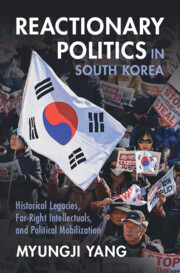
In December 2024, South Korean president Yoon Seok-yeol stunned the world by declaring martial law. More puzzling was that Yoon's insurrection unexpectedly gained substantial support from the ruling right-wing party and many citizens. Why do ordinary citizens support authoritarian leaders and martial law in a democratic country? What draws them to extreme actions and ideas? With the rise of illiberal, far-right politics across the globe, Reactionary Politics in South Korea provides an in-depth account of the ideas and practices of far-right groups and organizations threatening democratic systems. Drawing on eighteen months of field research and rich qualitative data, Myungji Yang helps explain the roots of current democratic regression. Yang provides vivid details of on-the-ground internal dynamics of far-right actors and their communities and worldviews, uncovering the organizational and popular foundations of far-right politics and movements.
The kingdom of Alania was the most powerful polity in the medieval North Caucasus. It contained strategic mountain passes across the Caucasus mountains, as well as urban centres larger than any in contemporary Rus'. Its kings retained power from the mid-ninth to the late eleventh centuries, intermarried with the ruling families of Georgia and Byzantium, and led armies that terrorised the South Caucasus. In this, the first book to explore the subject in the English language, Latham-Sprinkle sheds light on how the kings of Alania came to embody 'the power of the foreign' – the status which accrued to individuals who could access the material and spiritual products of distant lands – thus rendering the development of a state structure unnecessary. Challenging existing narratives that centre elites and the state, Latham-Sprinkle provides an important contribution to the historiography of medieval state formation, Christianisation, and transregional connection. This title is part of the Flip it Open programme and may also be available open access. Check our website Cambridge Core for details.
This article discusses the Impressed Ware (IW) ceramic class from the early Late Chalcolithic 2 period (4200–4000 B.C.), which is considered fundamental for understanding chronological and socio-economic issues related to production and craft specialization in the Northern Mesopotamian region. The unpublished materials from the proto-historic site of Asingeran (Kurdistan region of Iraq) are examined through stylistic and decorative analysis and compared with specimens from contemporary sites across a broad territory, including the north-eastern Altinova plain, the south-eastern Erbil area, the south-western Khabur valley, and the Upper Eastern Tigris Basin. This paper aims to provide an overview of all IW ceramics found in Northern Mesopotamia, highlighting how the presence of this type, despite its diverse versions, serves as a significant means of identifying shared social practices among different communities within a specific ceramic region.
This article uses a legal dispute between two families over a small building in semi-rural Jiangsu, and the political scandal it led to during the Socialist Education Movement (1963–1966), as a lens through which to explore the Mao era legacies of two prominent themes in the historiography of late imperial China: concepts and practices of property and contract, and the use of false accusations to enlist the coercive power of the state in economic disputes. It argues that over the course of the 1950s, norms of ownership in rural China were gradually undermined. This went beyond what was intended by the Party leadership, and was followed, in 1961–1962, by an effort to stabilize the conventions of who could own what in socialist China. The article then goes on to consider how the pursuit of property claims through accusations of political crime in the Mao era compares to such practices in the late imperial period.
How do Chinese courts punish corruption? This paper demonstrates how China strategically leverages its court system to signal anti-corruption resolve by transferring high-level corruption cases to local courts in distant jurisdictions. Assigning cases to distant courts insulates the judiciary from local political interference through geographic recusal and prevents the formation of a focal point for elite coordination by creating uncertainty about which court will be designated. Using an original dataset of high-ranking officials convicted of corruption since the 18th Party Congress, this paper finds that: 1) during the court designation stage, the more severe the case, the more distant the court, and the specific location of the court cannot be easily inferred from previous assignment records or case profiles; and 2) at the conviction stage, given the same case severity, courts that are farther away tend to impose longer sentences. These findings suggest that despite the prevalence of local judicial capture and protectionism, the local court system can still be strategically employed as an institutional tool for punishing corruption.
In July 1939, Wang I-lü, a recent high school graduate, was reported to have fallen down a staircase while wearing high heels. The accident triggered heated public debates in Shanghai. Some condemned high heels as dangerous and decadent; others defended them, while Wang’s classmates denied Wang had ever worn them. Amid these conflicting voices, this article treats the death of Wang I-lü not as a question of forensic fact but as a historically situated event, one that maps the cultural trajectory of the high heel in modern China. Wang I-lü’s accident is indeed not an isolated incident: high-heeled women were frequently depicted falling down. The falling-down girl phenomenon encapsulates, as argued, a mixture of male affects, including fears of modernity, voyeuristic fascination, nationalist concerns, and the urge to control the female body. Meanwhile, women also held ambivalent attitudes toward high heels, though in different ways. They either regarded the high heel as a sign of vanity or employed it to negotiate visibility and identity. The high heel thus constitutes not only an object of foot fetishism, one that fuses Freudian male desire with Foucauldian biopolitical control, but also a thing utilized by women for imagining and enacting varied forms of womanhood, forms that were not necessarily resistant to men nor entirely emancipatory or conservative but rather responded to women’s own diverse circumstances.