To save content items to your account,
please confirm that you agree to abide by our usage policies.
If this is the first time you use this feature, you will be asked to authorise Cambridge Core to connect with your account.
Find out more about saving content to .
To save content items to your Kindle, first ensure no-reply@cambridge.org
is added to your Approved Personal Document E-mail List under your Personal Document Settings
on the Manage Your Content and Devices page of your Amazon account. Then enter the ‘name’ part
of your Kindle email address below.
Find out more about saving to your Kindle.
Note you can select to save to either the @free.kindle.com or @kindle.com variations.
‘@free.kindle.com’ emails are free but can only be saved to your device when it is connected to wi-fi.
‘@kindle.com’ emails can be delivered even when you are not connected to wi-fi, but note that service fees apply.
This essay opens JAS’s special issue on American Studies and the 2024 Election in which contributors explore issues that rose to prominence during the election campaign and the first months of the second Trump administration using a variety of disciplinary lenses and methodologies. It analyses why Trump became only the second president in history to win non-consecutive terms in office and assesses the transformative significance of his early second-term initiatives. At the same time, it advances the guiding premise of the special issue: that the broad objects of study, interdisciplinary approaches, and asynchronous perspectives of American Studies can combine with history and political science to help us better understand Trump’s victory, its causes, and its possible consequences. As demonstrated by It Can’t Happen Here, literature and other cultural outputs can enrich understanding of American history and politics at any given time. As an Area Studies discipline, with a geographical organising principle that compliments the traditional chronological frameworks of English and History, American Studies foregrounds relations between states and regions, and at a national and transnational scale that shape US politics and require consideration to better appreciate the complexity of the country that national aggregates may fail to reveal.
This article uses the assemblage of surface-survey ceramics collected in the 2021 and 2022 West Area of Samos Archaeological Project (WASAP) field seasons to discuss the landscape structure and networking patterns (internal and external to the island) of Archaic through Byzantine south-west Samos. Collected in the basin of Marathokampos with intensive field pedestrian methods, a subset of a dataset of 1303 ceramics is discussed alongside the environmental context of their findspots. Spatial analysis is used to identify 15 ‘Areas of Interest’ in the landscape, densely populated by surface ceramics. The ceramic assemblage is interpreted in the framework of the Samian pottery production, to evaluate the entanglements of south-west Samos in regional and extra-regional trade networks. The main fabric groups are discussed and the range of types compared to material from the Hera Sanctuary and other parts of Samos. This leads to the surprising picture of a mostly inwards-looking island economy. Through the ages the assemblage is by far dominated by local productions, and the very few long-distance imports reflect more indirect trade contacts than an actively maintained, extensive trade network.
In 1957, Shanghai journalism student Xu Chengmiao faced persecution for a poem about flowers. Why did his classmates, teachers, and eventually the full force of the Party-state react so intensely to Xu's floral poetry? What connection did his writing have to the flowers that had adorned Chinese literature, art, reportage, and fashion since 1954? In this captivating book, Dayton Lekner tells the story of the Hundred Flowers, from its early blooms to its transformation into the Anti-Rightist campaign. Through the work and lives of creative writers, he shows that the literary circulation and practices that had long characterized China not only survived under Maoism but animated political and social movements. Texts 'went viral,' writers rose and fell, and metaphors mattered. Exploring the dynamism, nuance, and legion authors of 'official discourse,' he relocates creative writing not in tension with Mao era politics but as a central medium of the revolution.
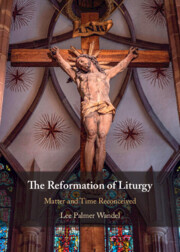
Why were sixteenth-century Europeans willing to risk their lives to attack 'mere matter' - images, lamps, altars, vestments? The most influential medieval liturgical commentary, William Durand's Rationale divinorum officiorum, offers an answer. Reading Durand to excavate the meaning of churches, altars, vestments, this book reveals the stunning scope of Reformation reconceptualization of worship, time, and matter. For Durand, liturgy was an ongoing praxis in which Scripture and Creation were in constant dialogue, leading to an ever-richer understanding of divine revelation. In attacking the made world - what human beings had fashioned from prime matter - Protestants sundered Creation from the liturgy and fundamentally changed how liturgy was understood, and what both Protestants and Catholics held the relationship between divine revelation and matter to be. Altars and vestments became 'objects' to which human beings gave meaning. As the sixteenth century redefined liturgy as a verbal practice, time, matter, and worship were realigned.
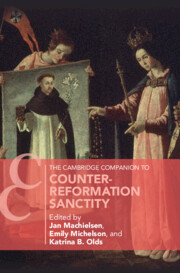
This groundbreaking Companion explores how Counter-Reformation sanctity reshaped religious identities, sacred traditions, and devotional practices that transformed Catholicism into the first global religion. Offering a fresh perspective on early modern Catholicism, it moves beyond traditional debates about Reformation and Reform and presents sanctity as the defining lens through which to view the period's transformative changes. By examining the lives, representations, and global impact of saints, the Companion demonstrates how sanctity countered the Protestant challenge and also transformed the very fabric of Catholicism between 1500 and 1750. Organized into four thematic sections – models of sanctity, the creation and contestation of sanctity, the representation of saints, and everyday interactions with saints – the volume also provides insight into the role of holiness during this pivotal period in Church history. Connecting history, theology, art history, and material culture, this interdisciplinary Companion serves as an indispensable resource for scholars and students seeking a comprehensive understanding of early modern Catholicism's influence on European and global history.
In Indigenous Lenca communities of western Honduras, craft production is a central livelihood that has economically supported artisan households for generations. In some communities, crafts like pottery are regarded as cultural patrimony, with socioeconomic and spiritual value that reflects Lenca identity. However, perceptions of which crafts are “Lenca tradition” and what it means to be a Lenca person in Honduras today vary greatly among the general public. Narratives of indigeneity are heavily shaped by the state and national tourism industry. Promotion of Lenca crafts, considered most commercially appealing, dominates national tourism marketing but often misaligns with how Lenca artisans define themselves and their craft practices. Constructions of “national identity” distance artisans from directly interacting with tourists and disconnect them from controlling the promotion of their respective identities and livelihoods. Through a comparative analysis of craft practices in five Lenca communities that are variably defined as “traditional” either in the tourism industry or by artisans themselves, this work asks: How have state-constructed definitions of “tradition” shaped public understanding of Indigenous Lenca identity in Honduras, from the colonial period to the present? How do these misconceptions impact Lenca artisans participating in the national tourism industry? How do Lenca artisans themselves define their contemporary craft practices and react against inaccurate identity narratives affecting their livelihoods? Drawing on neoliberal multiculturalism, this project explores complex and changing definitions of “tradition” and reactive strategies artisans use to maintain craft livelihoods and reclaim ownership of what it means to be an Indigenous Lenca artisan in Honduras today.
This paper investigates the connection between political settlements and foreign policy in Tanzania, focusing on how domestic power shifts impact external relations. Utilising Political Settlements Analysis (PSA), it examines the transition from John Magufuli’s presidency to Samia Suluhu Hassan’s, uncovering how elite configurations and intra-party dynamics shape foreign policy choices. The analysis draws on fieldwork, interviews and document reviews, revealing how changes in Tanzania’s political settlement – from Magufuli’s centralisation and populism to Hassan’s return to cooperative diplomacy – have influenced policies on resource management, international legal commitments and regional engagement. By illustrating the reciprocal relationship between domestic political configurations and foreign policy, this paper not only enhances the understanding of Tanzania’s case but also contributes to broader debates on the significance of political settlements in shaping the foreign policies of African states.
A few years after Singapore was founded, Lady Sophia Raffles sponsored a school for girls started by the wife of a London Missionary Society (LMS) missionary. This and several other early attempts at female education by missionary women linked to LMS or the American Board of Commissioners for Foreign Missions (ABCFM) were largely forgotten by historians. Then there were girls’ schools operated by the Protestant Society for Promoting Female Education in the East (SPFEE) in Britian; the secular Singapore Institution founded by Sir Thomas Stamford Raffles; and the Catholic Convent of Holy Infant Jesus (CHIJ) linked to Sœurs de l’Enfant Jésus-Nicolas Barré (EJNB) in France, followed by others. As there were many pioneering schools and some better-known ones tend to overshadow others, recent studies often contain inconsistent information as to which were the earliest schools, when they started, and who and which organisations were involved. This article uses primary sources from several archives to reconstruct the stories of the first Western-style girls’ schools on the island to hopefully clarify matters and close some knowledge gaps for readers interested in the history of female education in the early decades of colonial Singapore.
Afrodescendant religious music in the Caribbean and Latin America typically foregrounds drumming and centuries-old songs of praise to spirit deities. In recent years, a new form of worship, known as a violín or toque de violín, which features the violin alongside the guitar, electronic piano, and/or other instruments commonly associated with popular music, has gained popularity in Cuba. Violines can be understood as loosely defined spaces for performance that developed in a context of cultural oppression and dominance. They can be viewed as a concession to Eurocentric and secular tastes, or as a blackening/creolizing of those same practices, or both. They express religious faith in pluralistic ways, incorporating repertoire from various Black religions alongside influences from folk Catholicism, and classical, commercial, and folkloric music. Drawing from an encyclopedic knowledge of Cuban music, ethnographic work, and interviews, Robin D. Moore's groundbreaking book is the first to explore the compelling violín ceremony in detail.
This article discusses the official discourse that appeared in Macau’s Portuguese-language media and the documentaries that were shot there by Portuguese filmmakers in the 1960s and 1970s, especially focusing on the productions that followed the 123 Incident and which largely functioned as a response to it. These riots occurred in December 1966, when Chinese residents of Macau used Cultural Revolution-like protests to contest what they viewed as an inefficient and unfair Portuguese administration. They had a long-lasting and deep impact, weakening Portuguese colonial rule and increasing the influence of the People’s Republic of China (PRC) and local Maoists in Macau. In an attempt to counter the image-damage caused by the incident and legitimise Portuguese sovereignty in the territory during what was its worst crisis in the post-war period, Portuguese official discourse and these films came to promote Macau as a site of ‘miraculous’ development and modernisation that had as its basis Luso-Chinese partnership. Furthermore, Macau was advocated as an exemplary case of good neighbourhood policy towards the PRC and of coexistence at all levels, particularly ethnically and politically. This, it was suggested, made it a unique place and a model for the world in a time of cold war.
El Consejo Comunitario Eladio Ariza, en los Montes de María, concibe su territorio como un espacio de vida que preserva sus costumbres afrodescendientes y prácticas colectivas. Como autoridad étnica, organiza y regula el uso del territorio, priorizando lo comunitario. Sin embargo, su territorialidad ha sido impactada por políticas estatales de ordenamiento que, lejos de conciliar con las visiones locales, han generado tensiones entre las lógicas comunitarias y estatales. A ello se suman las consecuencias del conflicto armado interno y las presiones territoriales derivadas de planes de desarrollo que no corresponden a su visión propia. El Programa de Desarrollo con Enfoque Territorial (PDET), surgido del Acuerdo de Paz, representó una esperanza de transformación, pero no se ha implementado en su totalidad. Así, el territorio de Eladio Ariza se ha visto reconfigurado por estas dinámicas externas, consolidando “territorios de diferencia” donde confluyen intereses y visiones contrastantes.
En el marco de la Comisión para el Acceso a la Verdad, el Esclarecimiento Histórico y el Impulso a la Justicia de las Violaciones Graves a los Derechos Humanos Cometidas de 1965 a 1990, creada en 2021 en México por decreto presidencial, entre los años 2022 y 2024 se organizaron foros regionales donde se presentaron diversos testimonios sobre la violencia política infringida durante dicho período histórico. Desde un enfoque que comprende a los mismos como prácticas narrativas de memoria y resistencia que son significadas desde el presente, este artículo aborda los testimonios narrados durante el Diálogo por la Verdad en el Estado de Chiapas. El análisis muestra formas de visibilización de la agencia política indígena en contexto contrainsurgente.
Women’s labor in African urban centers permeates every sphere of urban life, yet its full scope remains understated in scholarly accounts. Akinwole introduces “holistic articulation” as a method for reading African women’s discursive labor. Holistic articulation names an analytical strategy of linking discursive fragments about women’s labor across multiple archives: social history, African literature, popular journalism, mythography, and everyday expressions. By tracing these connections, holistic articulation highlights the breadth of African women’s space-making and performative labor. This approach extends existing frameworks for analyzing African women’s labor by foregrounding its discursive and imaginative dimensions.
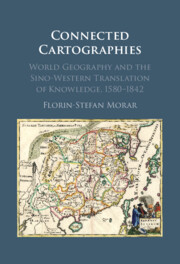
In the 'Age of Discovery', explorers brought a wealth of information about new and strange lands from across the oceans. Yet, even as the Americas appeared on new world maps, China remained a cartographic mystery. How was the puzzle of China's geography unravelled? Connected Cartographies demonstrates that knowledge about China was generated differently, not through exploration but through a fascinating bi-directional cross-cultural exchange of knowledge. Florin-Stefan Morar shows that interactions between Chinese and Western cartographic traditions led to the creation of a new genre of maps that incorporated features from both. This genre included works by renowned cartographers such as Abraham Ortelius and Matteo Ricci and other less-known works, 'black tulips of cartography,' hidden in special collections. Morar builds upon original sources in multiple languages from archives across three continents, producing a pioneering reconstruction of Sino-Western cartographic exchanges that shaped the modern world map and our shared global perspective.
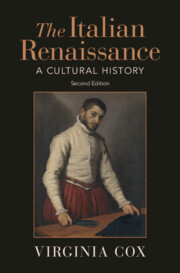
The extraordinary creative energy of Renaissance Italy lies at the root of modern Western culture. In this magisterial study, Virginia Cox offers a fresh vision of this iconic moment in cultural history. Her lucid and absorbing book explores key artistic, literary and intellectual developments, as well as histories of food and fashion, map-making, exploration and anatomy. Alongside towering figures from Petrarch and Boccaccio to Leonardo, Machiavelli, and Isabella d'Este, Cox unveils lesser-known Renaissance protagonists including printers, travel writers, actresses, courtesans, explorers-even celebrity chefs. This extensively revised and expanded edition includes an incisive overview of Italy's relationship with the European and non-European worlds, embracing ethnic and religious diversity within Italy, the global dissemination and hybridization of Italian Renaissance culture, and Italian global encounters, including Jesuit missions to Asia. Pulling together the latest scholarship with original research and insight, Cox's book speaks both to general readers and specialists in the field.