To save content items to your account,
please confirm that you agree to abide by our usage policies.
If this is the first time you use this feature, you will be asked to authorise Cambridge Core to connect with your account.
Find out more about saving content to .
To save content items to your Kindle, first ensure no-reply@cambridge.org
is added to your Approved Personal Document E-mail List under your Personal Document Settings
on the Manage Your Content and Devices page of your Amazon account. Then enter the ‘name’ part
of your Kindle email address below.
Find out more about saving to your Kindle.
Note you can select to save to either the @free.kindle.com or @kindle.com variations.
‘@free.kindle.com’ emails are free but can only be saved to your device when it is connected to wi-fi.
‘@kindle.com’ emails can be delivered even when you are not connected to wi-fi, but note that service fees apply.
How can electoral competition remain stable despite a weak party system? We argue that ideological identification can stabilize electoral behavior, serving as a substitute for weak or delegitimized political parties. Focusing on Chile, we combine repeated cross-sectional surveys, a conjoint experiment, and text analysis. We find that while partisanship has declined sharply over the past three decades, ideological self-placement remains remarkably stable. Conjoint results show that ideological alignment outweighs issue alignment in shaping vote choice. Drawing on survey questions and topic modeling of open-ended responses, we uncover emotionally charged and moralized language tied to ideological groups, suggesting that ideology in Chile displays features of a social identity, including intergenerational transmission, symbolic boundaries, and in-group affect. We also examine how intense political events, such as a plebiscite to end a dictatorship, shape long-term ideological attachments. Our findings offer insight into how electoral competition can remain ideologically structured even in the absence of strong parties, a pattern increasingly relevant in contemporary democracies.
In Black Voices in the Halls of Power, authors Jennifer R. Garcia, Christopher T. Stout, and Katherine Tate explore how US lawmakers use racial rhetoric to elevate the voice of Black communities, influence policy, and shape voter trust. Through a combination of data-driven research and accessible storytelling, the book uncovers the strategic ways politicians speak about race, revealing how rhetoric impacts policymaking and representation and offering fresh insights into race and power in American politics. The book explores how politicians craft messages to appeal to diverse audiences and use political communication to advance legislative priorities. It also examines how legislators' engagement in racial outreach affects voter attitudes. Given the increasingly important role of race on the national political stage in the US, the book provides a critical yet engaging examination of race, rhetoric, and representation in Congress.
The present article aims to assess the relationship between the mass exodus of Iranian Christians and the Hispanic world, widening the analytical lens on early 20th-century Iranian migrations. Specifically, the study draws parallels between the humanitarian efforts of the Spanish diplomats during the Turkish occupation of northwestern Persia in 1918 and the subsequent arrival and settlement of Assyrians and Armenians in Argentina in the early decades of the twentieth century. Although numerous publications address the early Iranian diaspora and Iran during the World War I, little scholarly work examines Spain’s humanitarian role in this context or the history of the Iranian diaspora in Latin America. This finding underscores the notion that, in addition to the prominent international actors that have historically been the focus of scholarly inquiry—namely, the United States, France, Great Britain, Germany, and Russia—smaller countries also played a significant role in the events that transpired in Iran during those years. Furthermore, this study highlights the Iranian diaspora’s expansion to distant regions, such as Argentina, which has not been extensively researched in the context of Iranian studies. This comprehensive approach serves to broaden our understanding of the global history of Iran in the early twentieth century.
In this major new interpretation of Sino-North Korean relations, Gregg A. Brazinsky argues that neither the PRC nor the DPRK would have survived as socialist states without the ideal of Sino-North Korean friendship. Chinese and North Korean leaders encouraged mutual empathy and sentimental attachments between their citizens and then used these emotions to strengthen popular commitment to socialist state building. Drawing on an array of previously unexamined Chinese and North Korean sources, Brazinsky shows how mutual empathy helped to shape political, military, and cultural interactions between the two socialist allies. He explains why the unique relationship that Beijing and Pyongyang forged during the Korean War remained important throughout the Cold War and how it continues to influence the international relations of East Asia today.
On the northern periphery of Nairobi, in southern Kiambu County, the city's expansion into a landscape of poor smallholders is bringing new opportunities, dilemmas, and conflicts. Drawing on extensive ethnographic fieldwork, Peter Lockwood examines how Kiambu's 'workers with patches of land' struggle to sustain their households as the skyrocketing price of land ratchets up gendered and generational tensions within families. The sale of ancestral land by senior men turns would-be inheritors, their young adult sons, into landless and land-poor paupers, heightening their exposure to economic precarity. Peasants to Paupers illuminates how these dynamics are lived at the site of kinship, how moral principles of patrilineal obligation and land retention fail in the face of market opportunity. Caught between joblessness, land poverty and the breakdown of kinship, the book shows how Kiambu's young men struggle to sustain hopes for middle-class lifestyles as the economic ground shifts beneath their feet.This title is also available as open access on Cambridge Core.
This article examines American “capitalist feminism” as a type of “business feminism” through the lens of biography. To demonstrate crucial linkages between business culture and historical social developments, the article foregrounds an account of the first woman president of a major commercial bank, Mary G. Roebling. Roebling sought women’s collective uplift primarily through economic empowerment, forwarding her message through accommodationist tactics, such as presenting a “feminine” image, embracing capitalism, and espousing moderate politics. This essay briefly explores additional biographies to suggest that other professionally successful, elite white women held similar “capitalist feminist” views. The article also employs biographical and associational examples to illustrate how capitalist feminism is a distinct category of business feminism.
In this book, Kenneth Morgan provides the most comprehensive account of the abolition of the slave trade to the United States since W. E. B. Du Bois's 1896 The Suppression of the African Slave Trade to the United States of America, 1638–1870. Utilising a wider range of resources and exploring the economic, social, moral and political considerations, Morgan creates a multi-layered account that explains whyabolition was a protracted affair that proceeded by degrees over nearly half a century. He appraises the role of abolitionist individuals, groups and societies in bringing abolition to the forefront of public discussion across North America, and the decisive role of the US Constitution and the Constitutional Convention that eventually led to proscription in 1808, which made abolition constitutionally possible.
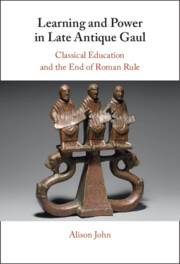
This book traces the changing political and social roles of classical education in late antique Gaul. It argues that the collapse of Roman political power in Gaul changed the way education was practiced and perceived by Gallo-Romans. Neither the barbarian kingdoms nor the Church directly caused the decline of classical schools, but these new structures of power did not encourage or support a cultural and political climate in which classical education mattered; while Latin remained the language of the Church, and literacy and knowledge of law were valued by barbarian courts, training in classical grammar and rhetoric was no longer seen as a prerequisite for political power and cultural prestige. This study demonstrates that these fundamental shifts in what education meant to individuals and power brokers resulted in the eventual end of the classical schools of grammar and rhetoric that had once defined Roman aristocratic public and private life.
Why do people write about politics? And why does political writing get published? This innovative study explores the diverse world of modern British political writing, examining its evolving genres and their pivotal role in shaping political identities, ideologies, and movements. Spanning memoirs, biographies, parliamentary novels, fanzines, and grassroots publications, chapters consider how these forms have documented lived experiences, challenged authority, and influenced political discourse across all levels of society. Contributions from leading scholars illuminate the creative strategies and cultural contexts of political writing since the late nineteenth-century across varied regional contexts, from Beatrice Webb's diaries to punk zines and Conservative pamphlets. In doing so, they examine the interplay of literature, propaganda, and activism, offering fresh perspectives on the connections between politics and publishing. Accessible and insightful, this study provides a window into how political ideas are crafted, disseminated, and reinforced through the written word.
The Communist Party of China has ruled mainland China since 1949. From Marxist revolution and class struggle to market reforms and national rejuvenation, the Party has repeatedly reinvented itself and its justification for monopolizing political power. Bringing together experts from a range of disciplines around the globe, this collection serves as a guide to understanding the Party's unparalleled durability. They examine a range of themes including the mechanics and organisation of one-party rule, the ideologies underpinning party rule, the Party's control of public discourse, technologies of social control, and adaptive policymaking. Read together, these essays provide a comprehensive understanding of the reasons for the Party's continued grip on political power in China today.
The “innovation championship” model has been instrumental in explaining policy innovations in China’s local governments, particularly at the provincial level. However, discrepancies between this model and real-world cases raise questions about its broader applicability. To address this, we employ a dichotomous framework (innovation generation/borrowing) and conduct multi-level quantitative analyses of government work reports. Our analysis suggests that between 2003 and 2022, most provincial innovations were driven by the championship model, which relies on central government recognition, while others were shaped by peer recognition mechanisms. Together, these form a “central and peer” (CP) model that prioritizes innovation generation while incorporating a degree of innovation borrowing. This CP model differentiates the innovation functions among provincial governments, which have formed a collective innovation network: pioneering provinces generate model policies, while others capitalize on these opportunities. Moreover, the extent of the central authority’s influence determines the relative importance of these two mechanisms.
This article examines the national and international context within which Colombian immigration policy developed in the mid-twentieth century. Focussing on Republican refugees from the Spanish Civil War, it traces how and why policymakers and public opinion began to see these groups as potentially harmful to society. It argues that Colombian immigration policy emerged at the intersection of multiple, evolving discourses of race which both helped frame and were shaped by anxieties over a mass influx from Spain. By exploring the stories of several Republicans who tried to come to Colombia, the article also reveals how they helped shape immigration policy.
The Taiwan Incident of 1874 – a prolonged Sino-Japanese confrontation over the killing of Ryukyu castaways, whom Japan claimed as its subjects – marked the full maturation of a new mode of Qing war preparation. This mode was characterized by global coordination, domestic and international competition, and the swift mobilization of personal connections to secure foreign weapons and loans – resources that were often interconnected. Facilitated by the efforts of various actors, this internationalized approach became a standard practice during the empire’s final decades. As the empire could no longer rely on domestic self-sufficiency in arms and funding, Qing military operations came to reflect the broader influence of global military and financial resources. The Qing empire’s capacity to mobilize global resources in pursuit of national objectives helps explain its resilience in an era dominated by imperial powers.
The dating of the qameṣ shift (*/aː/ > [ɔː]) in the Tiberian tradition of Biblical Hebrew has long been a scholarly puzzle. In this article I present possible evidence for this shift in the Greek transcriptions of Origen’s Hexapla, datable to the first half of the third century ce in Palestine. While the evidence is limited both in attested tokens and in grammatical scope, it is suggested that lexical diffusion may account for the gradual spread of this shift, as recorded in different stages of the transmission of Biblical Hebrew.