To save content items to your account,
please confirm that you agree to abide by our usage policies.
If this is the first time you use this feature, you will be asked to authorise Cambridge Core to connect with your account.
Find out more about saving content to .
To save content items to your Kindle, first ensure no-reply@cambridge.org
is added to your Approved Personal Document E-mail List under your Personal Document Settings
on the Manage Your Content and Devices page of your Amazon account. Then enter the ‘name’ part
of your Kindle email address below.
Find out more about saving to your Kindle.
Note you can select to save to either the @free.kindle.com or @kindle.com variations.
‘@free.kindle.com’ emails are free but can only be saved to your device when it is connected to wi-fi.
‘@kindle.com’ emails can be delivered even when you are not connected to wi-fi, but note that service fees apply.
The meeting on the Times of Change and the present volume of the papers presented at that meeting, considering the vast amount of new and unprecedented information on the “mature” state of Neolithic culture that has been available over the course of the past decade or so, set forth a new challenge to our understanding of the roots of our present-day civilization. We should all be grateful to the organizers for bringing together leading scholars in this field and making available not only the most recent data, but more specifically the much-needed broad-spectrum synthesis of that critical period. This chapter will not be a per se review of the other chapters in this volume; on the contrary, we shall add some remarks looking for common ground as well as for controversies that surfaced during this meeting.
Tepecik-Çiftlik, until now the only tell site excavated in volcanic Cappadocia, was occupied between the beginning of the 8th to the middle of 6th millennium and provides a profound amount of data for the Neolithic and early Chalcolithic periods. Rich and diverse environmental conditions allowed groups in this region to establish flourishing societies. Due to its location close to the Göllüdağ obsidian sources, the site seems to have played an important role in controlling the sources through production and exchange of raw materials and tools. These activities caused the appearance of extroverted and communicative societies, who had interests in and ties to distant territories, to “other worlds,” eventually culminating in a migration of parts of the society to territories situated in the north. To find out what was encouraging this migration, further research in volcanic Cappadocia will be crucial.
The Early Neolithic settlement of Kovačevo was founded during the period with particularly cold and arid climate conditions caused by the 6.2-Event. Excavations provide good evidence that the inhabitants were frequently struck by strong rainfalls and had thus to combat heavy inundations and remaining puddles. The invention of drainage pits under the buildings can therefore be interpreted as a result of regional adaptation to such weather conditions. This construction technique also existed at other sites in southeastern Europe. In Kovačevo such buildings represent nearly half of the excavated houses. They exist from the beginning of the Early Neolithic settlement (about 6200 calBC) and continue to be constructed until the Middle Neolithic (about 5400 calBC), which means that a custom initially motivated by climatic condition became part of local tradition and persisted over a period of 800 years, even after the wet period was over.
Recent excavations of upper strata of the Neolithic Çatalhöyük East Mound conducted by the Polish team revealed a sequence characterized by a considerable departure from previous arrangements in terms of settlement layout, house architecture, burial practices, human-animal relations, lithics procurement and technology, and the like. In this chapter we intend to scrutinize a spatial dimension of these developments by comparing the Team Poznań (TP) stratigraphic sequence with the 4040 Area on the north eminence of the East Mound. Furthermore, we aim to redefine relations of the TP sequence with structures revealed by Mellaart in the 1960s in the uppermost levels of his excavations. On this basis, the chapter shall provide an in-depth overview of the changes that occurred at Çatalhöyük toward the end of the 7th millennium cal BC.
At the end of the 7th millennium, the Neolithic lifestyle in mainland Greece had already been established for several centuries. The turn from the 7th to 6th millennium roughly corresponds to the Early to Middle Neolithic transition according to the Greek chronology. The now famous “6200 cal BC” climatic event does not appear to have disrupted a continuous development of these farming communities: contrary to the later Middle to Late Neolithic transition, the Early to Middle Neolithic transition is characterized by a marked continuity in most domains, such as subsistence economy, settlement patterns and crafts production. The most visible transformation concerns the production of fine wares: Whereas Early Neolithic wares were mostly monochrome and of similar shape and style all over Greece, Middle Neolithic fine wares display conspicuous decorations and strongly regionalized styles. The stability of the economic base and the emphasis on visual display in pottery suggests that the Early to Middle Neolithic transition in Greece reflects mostly social transformations and different modes of interactions within and between communities. However, there is no indication that these transformations were caused by external factors, whether environmental or human.
Its geographic position at the meeting point of Anatolia and the Balkans makes eastern Thrace indispensable for observing and correlating the processes that took place on either side of the Marmara Sea. This chapter will be an overview based on the results of excavations at Hoca Çeşme, Aşağı Pınar and Toptepe, all located in this critical contact zone and all providing the much needed evidence for an understanding of the changing patterns of cultural interaction between Anatolia and the Balkans through the late 7th millennium to the end of 6th millennium BC.
Around 6000 cal BC on the Konya plain in central Anatolia the nature of ceramic assemblages changed considerably, with higher quantities of pottery in use, a greater range of vessel shapes and new forms of surface treatment, principally comprising painted geometric motifs. Based on quantitative analysis of a pottery assemblage from the West Mound of Çatalhöyük, this chapter explores the details of these changes and their implications for understanding Anatolian societies at the turn of the 6th millennium. The argument turns on the need to interpret ceramic decoration in the context of broader networks of material practice.
The beginning of the Neolithic way of life in northwestern Anatolia is dated to around the mid-7th millennium cal BC. However, the process of Neolithization in this region differs from that of western Anatolia. The data from the new excavations have yielded information not only on the processes of Neolithization but have also revealed contrasts between two entities. In northwestern Anatolia, including the area surrounding the Bosphorus, which was already inhabited during the Mesolithic period, the Neolithic elements integrated with the Mesolithic infrastructure. On the contrary, the sites in the southeast of the region in particular, where there is no Mesolithic sub-stratum, bear more elements in common with central Anatolia. After this period, in the beginning of the 6th millennium cal BC, a slow change occurred in the region. Evidence of strict rules in settlement layout and the differentiation of cultural assemblages suggest that the region was being shaped by a new dynamic. This period lasted until the mid-6th millennium cal BC, when drastic changes began to take place in northwestern Anatolia, which can also be traced to the Balkans and the whole Anatolian Plateau. During this time, settlements in the northwestern Anatolia become smaller in size and permanent structures make way for small huts and later, in a hundred years, most of the settlements in the region were deserted.
As the Çatalhöyük West Mound has been the subject of much new research during and after the completion of the Çatalhöyük Research Project, this chapter will provide a summary of the research conducted by the West Mound Project. This interdisciplinary project brought together many specialist scholars to address the variety of data created during the excavation of the West Mound. In this chapter we will review the research into the material culture of the West Mound, with attention to the importance of new architectural forms and painted pottery in the changing social and economic life of the period. In addition, plant and animal remains and the stone tool industries see some general trends that may signal changes the environment and the way domestic activities respond. We will conclude the chapter with a look at current discussions on topics that have been highlighted by this new research.
The long, uninterrupted sequence of Neolithic Yumuktepe displays both continuity and changes concerning architecture, burial customs, artifact production, storage techniques and subsistence pattern throughout the entire Neolithic, and also around 6000 cal BC. This chapter describes the continuities, gradual and abrupt changes that can be observed, and approaches the questions whether continuity should be emphasized over change, how noncontemporary changes can be correlated, and changes of which parts of the material culture could be more significant than continuity in other parts.
This chapter locates the book within the last two decades of conferences on the Anatolian Neolithic and early farming in general, and its important role for Southwestern Asian and European Prehistory. It further outlines several key themes addressed by all individual chapters. These are the general chronological framework based on radiocarbon dating vs. the divergent culture historical phasing; the process of Neolithization as the spread of the Neolithic out of its core area of domestication of animals and plants in the Fertile Crescent; cooking and food habits as new ways of not only making, but also serving, displaying, consuming and storing food and drink; the role of climate and subsequent environmental change between ca. 6600 and 6000 cal BC. Finally, the chapter summarizes the individual contributions along the structure of the book.
The turn from the 7th to the 6th millennium BC in central Anatolia is marked by changes in settlement patterns and by the introduction of new pottery styles. In the Aegean new pottery assemblages also appear, accompanied not only by new technologies but also by new shapes and a wide spectrum of ornaments, ranging from complex painted patterns to the fusion of styles resulting in red paint being combined with impresso decoration. In the three main land zones framing the Aegean Sea to the west, north and east, several provinces with different repertoires can be defined according to surface treatments and firing techniques. The first appearance of pottery styles in a specific region distinguishes a center of innovation, which influenced and inspired neighboring areas, and possibly even more distant regions. But not only pottery styles highlight such regional innovation centers: joining together information on common and exceptional products and items made from e.g. obsidian or bone, the picture of both geographically and diachronically interrelated groups of people can be delineated. The spread of the Neolithic way of life can thus be conceived as a spread of innovations into the different parts of the Aegean. Mobility, networks and cooperation based on face-to-face contact were rather the motor for the complex and irreversible changes that reached their peak around 6000 cal BC in the Aegean than colonization or large-scale migration.
This chapter focuses on the changes in several key aspects of daily life in prehistoric societies from the mid-7th to early 6th millennium cal BC in Aegean Turkey. Archaeological investigations in the region, primarily at Ulucak in Izmir, attest that abrupt cultural changes, fundamentally altering the way of life, did not occur during the time period in question. On the contrary, cultural components evolved gradually and novel elements continuously appeared in different spheres of life. By focusing on subsistence patterns, storage practices, shifts in settlement layout, clues of social differentiation, ritual practices and involvement in exchange networks, this chapter aims to demonstrate that epoch-making, sudden changes induced by natural or external social agents are not identifiable in the archaeological record.
According to some anti-diffusionistic (or evolutionistic, or “immobilistic”) models, the European Neolithic originated from local innovations. However, indications accumulated during the past years prove that a large part of the cultural traits of the oldest Neolithic of the Balkans have an apparent correlation with Anatolia. These correlations can clearly be seen at the site of Kovačevo in Bulgaria which yielded especially rich information about architecture, techniques and forms of bone industry, body ornaments, “pintaderas,” figurines and certain characteristics of pottery, including some clearly imported objects. Other sites in northern Greece and Bulgaria support these observations. One can therefore suggest a chronological model with five principle periods of the Neolithic colonization of the Balkans. Nevertheless, the reasons motivating Anatolian populations to colonize Europe remain to be explored, although the Neolithic remained relatively stable in the zone of its origin, the Levant, during all of the “Pre-Pottery Neolithic.” With the revival of deterministic models, which partially derives from modern ecological fear of “global warming,” a climatic deterioration has been invoked for the end of the 7th millennium (the “8.2k cal BP climatic event”). One could, however, also put forward political and cultural reasons: The refusal to live in large settlements with a dense concentration of people, a system collapsing in the Near East at exactly this point in time. This chapter aims to explore these different tracks.
We intend to decipher both a chronological and a cultural problematic raised by the sudden appearance of geometric incised decorations on Anatolian potteries, seemingly at the beginning of the 6th millennium cal BC. Frequently designated as “Gelveri type” in reference to the Gelveri-Güzelyurt Cappadocian pottery assemblage, the lack of a reliable chronology based on a good stratigraphy at the site made it difficult to cope with the nature of such pottery style’s development. Ten years of excavations at Tepecik-Çiftlik as well as recent archaeological work at Gelveri has provided us with new stratigraphic and decor-related technological evidence. Hence, we have the possibility to analyse the emergence and the development of such pottery styles within a reliable archaeological context. Seen on such a large geographical scale, covering at least the entire Anatolian plateau, the nature of this pottery style development cannot be considered as a pottery phenomenon in itself only. It is necessary to investigate the cultural interactions at play, enabling stylistic patterns to be shared within different cultural areas.
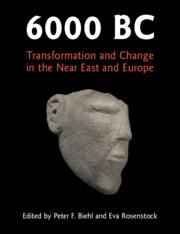
This is the first book to present a comprehensive, up to date overview of archaeological and environmental data from the eastern Mediterranean world around 6000 BC. It brings together the research of an international team of scholars who have excavated at key Neolithic and Chalcolithic sites in Syria, Anatolia, Greece, and the Balkans. Collectively, their essays conceptualize and enable a deeper understanding of times of transition and changes in the archaeological record. Overcoming the terminological and chronological differences between the Near East and Europe, the volume expands from studies of individual societies into regional views and diachronic analyses. It enables researchers to compare archaeological data and analysis from across the region, and offers a new understanding of the importance of this archaeological story to broader, high-impact questions pertinent to climate and culture change.