To save content items to your account,
please confirm that you agree to abide by our usage policies.
If this is the first time you use this feature, you will be asked to authorise Cambridge Core to connect with your account.
Find out more about saving content to .
To save content items to your Kindle, first ensure no-reply@cambridge.org
is added to your Approved Personal Document E-mail List under your Personal Document Settings
on the Manage Your Content and Devices page of your Amazon account. Then enter the ‘name’ part
of your Kindle email address below.
Find out more about saving to your Kindle.
Note you can select to save to either the @free.kindle.com or @kindle.com variations.
‘@free.kindle.com’ emails are free but can only be saved to your device when it is connected to wi-fi.
‘@kindle.com’ emails can be delivered even when you are not connected to wi-fi, but note that service fees apply.
Stones (archaeology), bones, and genes are the three main data sources for reconstructing demography in the Palaeolithic. Chapter 2 discusses the main methods associated with each of these data sources and explains why a ‘multi-proxy’ approach is necessary.
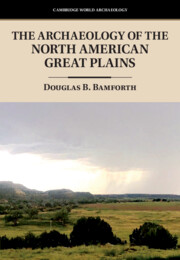
In this volume, Douglas B. Bamforth offers an archaeological overview of the Great Plains, the vast, open grassland bordered by forests and mountain ranges situated in the heart of North America. Synthesizing a century of scholarship and new archaeological evidence, he focuses on changes in resource use, continental trade connections, social formations, and warfare over a period of 15,000 years. Bamforth investigates how foragers harvested the grasslands more intensively over time, ultimately turning to maize farming, and examines the persistence of industrial mobile bison hunters in much of the region as farmers lived in communities ranging from hamlets to towns with thousands of occupants. He also explores how social groups formed and changed, migrations of peoples in and out of the Plains, and the conflicts that occurred over time and space. Significantly, Bamforth's volume demonstrates how archaeology can be used as the basis for telling long-term, problem-oriented human history.
This article explores the use of gold in the elite tombs of Han dynasty China, the popular use of which originated outside the Chinese cultural milieu, and its integration into the Han portfolio of materials representing people's expectations for the afterlife, such as immortality and well-being. In contrast to jade, which had a long history of use in China, gold was in itself a ‘new’ element of Chinese culture. This article outlines the introduction of gold objects from Europe and Central Asia via the Eurasian Steppe and borderland of China from around the eighth century bce. The unprecedented use of gold in the Han-specific jade suits, and the process by which foreign types of zoomorphic motifs were adopted and connected with local motifs, are explored. In light of the political change from multiple competing states before the first unification in Chinese history in the third century bce, and the development in ideology and concept of an ideal and eternal afterlife, this article explains the reasons and meanings of the new use of gold in Han dynasty China and the composite system of motifs, materials and objects.
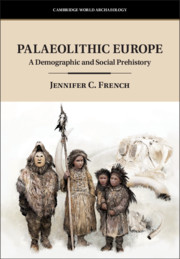
In this book, Jennifer French presents a new synthesis of the archaeological, palaeoanthropological, and palaeogenetic records of the European Palaeolithic, adopting a unique demographic perspective on these first two-million years of European prehistory. Unlike prevailing narratives of demographic stasis, she emphasises the dynamism of Palaeolithic populations of both our evolutionary ancestors and members of our own species across four demographic stages, within a context of substantial Pleistocene climatic changes. Integrating evolutionary theory with a socially oriented approach to the Palaeolithic, French bridges biological and cultural factors, with a focus on women and children as the drivers of population change. She shows how, within the physiological constraints on fertility and mortality, social relationships provide the key to enduring demographic success. Through its demographic focus, French combines a 'big picture' perspective on human evolution with careful analysis of the day-to-day realities of European Palaeolithic hunter-gatherer communities—their families, their children, and their lives.
Rural sociopolitical complexity in premodern states was quite extensive but variable. However, archaeologists and cultural anthropologists have been slow to recognize and study institutional complexity in rural contexts. Much ink has been spilled regarding economic relationships, “centralized” control, and “imagined communities” (e.g., Davis-Salazar, 2003; Earle & Spriggs, 2015; Flannery, 1972; Isbell, 2000; Kirch, 2010; Paris, 2014; Sanders & Price, 1968; Wright, 1977; Yaeger & Canuto, 2000). But the development of infrastructural power, especially collective power, in rural settlements and its relationship with regional or macroregional political structures has received only scant attention. With respect to contemporary cases, which provide important theoretical frameworks, anthropologists have taken a back seat to political scientists (e.g., Ostrom, 2015; see Lansing, 2012 for an important [partial] exception), whose focus has been on the management of common pool resources – a topic generally ignored by archaeologists. Unfortunately, neither political scientists nor anthropologists have invested much in understanding cooperation and public goods provisioning in rural settlements and landscapes. Conversely, we have made some initial forays into the issue of rural institutional complexity in premodern states and civilization (Blanton & Fargher, 2008); and here we expand to some degree on that discussion.
One of the great tragedies of global archaeology is that the discipline was started by Europeans entrenched in the ideological detritus of attempts to author legitimacy for their expanding empires through their assumed cultural connections with the so-called Classical societies in and around the Mediterranean. What instead might archaeology look like if, for example, Johann Joachim Winckelmann had taken an interest in the mobile Scythians instead of the (mostly) gender- and class-divided Greeks?
This excerpt is from the Declaration of Arbroath, which was sent in 1320 with the signatures of 38 Scots noblemen to Pope John XXII in Avignon. The document is an expression of support for Robert I, also known as The Bruce, the leader of one of several competing polities in Scotland in the 14th century. Its other purpose was to petition the pope to persuade the English, led at the time by Edward I, also known as Malleus Scotorum, or “The Hammer of the Scots,” to cease hostilities against Scotland. (To be fair, he hammered the Welsh and diverse infidels in the Holy Land during the Ninth Crusade as well; hammering seems to have been his thing.) The term the Scots nobles used in the Declaration to describe their polity was nacio, usually translated as “the people,” which of course did not mean what it does today – women, children and landless males too old or poor to count were implicitly included but had no actual power over their own persons.
Much Bronze Age research is dominated by a top-down approach – a specific interest taken in the evolution of stratified society and the socio-political impact of metalworking. In this context, Bronze Age tell sites of the Carpathian Basin are interpreted as (proto-) urban settlements that with varying degrees of success drew upon agricultural and other resources from their surroundings and controlled the exchange in valuable objects and raw materials from abroad. They were home, supposedly, to some kind of functionally and politically differentiated population with peasants, craft specialists – and some in charge of all this (e.g. Earle & Kristiansen, 2010; Gogâltan, 2010; Hänsel, 1996).
Dealing with the deep past of Europe in the end always means dealing with ourselves in the present. The study of European prehistory tacitly, but sometimes also explicitly, ends up with statements on the now. Were certain developments in prehistoric society essential to the human condition of the present? Trying to deal with such a question means acknowledging the significance of what Chakrabarty (2009: 212) calls “deep history.” As Morris (2011: 22) puts it, it involves taking every phase in the longue durée seriously and seeing one development as necessarily building on what came before. To a great extent, this is where the relevance of the study of the past for the present lies.
Spanish singer-songwriter Javier Krahe once described the 20th century as “a total disgust”: “According to those who experienced it, last century was a hell of a traumatic experience.”1 Indeed, the twentieth century was fraught with disturbing experiences where the worst side of human beings showed its ugly head (Hobsbawm, 1994). And yet, this “disgust” of a century has also provided repeated evidence that, even in the most extreme situations, groups of people have somehow managed to articulate their collective agencies, often in the form of resistance, and even generated counterpowers from below (De León, 2015; Moore, 1993; Scott, 1985; Wolf, 1973).
Elite maneuvers from above, to suppress opposition or seize command of the polity, are often overt – for the very purpose of control through shock and awe. But disorder is a word applied to the bubbling up and whispering of those below as, through surreptitious meetings and nascent public protests, grievance turns to action. The appearance of disorder can indicate a variety of rights or capabilities that have been eroded or lost, and the attempt to restore them. Social disorder is not easy to live through; but for those who foment it, it can sometimes signify changes to come. While this phenomenon is in many ways more interesting than overt strategies of control, it is often harder to “see” in the archaeological record. Those with interest are engaged in inventing ways to study this – structurally, materially, and iconographically. Below, we examine some concepts that may help frame future research.
In 1856, a young Edward Burnett Tylor spent six months in Mexico investigating the Toltec civilization with antiquarian Henry Christy, and many of his later and profoundly influential notions about “culture” and “civilization” were formed there. In his report on a trip to the pyramids of Teotihuacan he notes: “As has often been remarked, such buildings as these can only be raised under peculiar social conditions. The ruler must be a despotic sovereign, and the mass of the people slaves, whose subsistence and whose lives are sacrificed without scruple to execute the fancies of the monarch, who is not so much the governor as the unrestricted owner of the country and the people. The population must be very dense, or it would not bear the loss of so large a proportion of the working class and vegetable food must be exceedingly abundant in the country, to feed them while engaged in this unprofitable labour” (Tylor, 1861: 142).
Monte Albán, one of Mexico’s earliest cities, was founded in the Valley of Oaxaca around 500 bc as a central fulcrum in a dynamic episode of change that grounds subsequent regional history. Proposed explanations for the establishment of Monte Albán are numerous and diverse; yet, to date, they tend to emphasize only the agency of the elite. Here, we offer new theoretical perspectives on the dynamic processes associated with this multifaceted, transitional episode. Adopting a multiscalar approach, we view this transition as the outcome of innovative social negotiations that yielded new opportunities and social contracts that ultimately advantaged both certain powerful individuals as well as larger segments of the population. The collective mode of governance that was instituted (ca. 500 bc) at this early Mesoamerican city proved to be resilient, enduring for more than a millennium, despite challenges, adjustments, and changes over time.
Carole Crumley’s (1979; 1995a; 1995b; 2015) explorations on the applicability of heterarchy as a concept within archaeology have been highly influential in Anglo-American discourse on social organization. Despite largely emerging from Crumley’s work on Iron Age France (Crumley, 1979), however, the relevance of heterarchy as a concept for challenging hierarchical models of European Iron Age societies has largely been restricted to Britain (e.g. Moore, 2007a; Hill, 2011), where evidence for “elites” seems most obviously lacking. Northwestern Iberia has also been a locus for discussion of acephalous and nonhierarchical social forms (Fernández-Posse & Sánchez-Palencia, 1998; González-García et al., 2011; González-Ruibal, 2012; Sastre-Prats, 2011), but one where explicit discussions of heterarchy have rarely featured. More recently, it has been argued that almost all European Iron Age societies can be regarded as “broadly heterarchical” (e.g. Bradley et al., 2015: 260), although the wider implications of this have yet to be explored. What is the place, then, of heterarchy in Iron Age studies? Has it merely become a label for all nonhierarchical models (Fernández-Götz, 2014: 36), creating various Iron Age “societies against the state” (Clastres, 1977), or does it offer ways of exploring not just alternatives to hierarchies but thicker descriptions of how all Iron Age societies worked?