To save content items to your account,
please confirm that you agree to abide by our usage policies.
If this is the first time you use this feature, you will be asked to authorise Cambridge Core to connect with your account.
Find out more about saving content to .
To save content items to your Kindle, first ensure no-reply@cambridge.org
is added to your Approved Personal Document E-mail List under your Personal Document Settings
on the Manage Your Content and Devices page of your Amazon account. Then enter the ‘name’ part
of your Kindle email address below.
Find out more about saving to your Kindle.
Note you can select to save to either the @free.kindle.com or @kindle.com variations.
‘@free.kindle.com’ emails are free but can only be saved to your device when it is connected to wi-fi.
‘@kindle.com’ emails can be delivered even when you are not connected to wi-fi, but note that service fees apply.
Stories are important to all modern peoples, and this behaviour was no doubt also the case during the deep past. Consequently, it is important that archaeologists understand that artefacts made and discarded thousands of years ago were woven with stories by the peoples who produced them. In some regions of the world, these stories remain accessible by collaborating with the Traditional Owners of the lands from which they were recovered, while in others such an approach is impossible. Nevertheless, researchers need to remember that items carried meaning usually invisible to those outside communities—a principle often taught and cited, but possibly not fully appreciated. Here we tell the Yuin (coastal New South Wales, Australia) story of Gymea and her connection to fishing technologies. This story is told in order to demonstrate the depth of information that is not accessible to archaeologists if Indigenous collaborators are not sought out or available.
In this paper we discuss the universal selection of exceptional materials for tool making in prehistory. The interpretation suggested in the literature for these non-standard materials is usually limited to a general statement, considering possible aesthetic values or a general, mostly unexplained, symbolic meaning. We discuss the implications of viewing these materials as active agents and living vital beings in Palaeolithic archaeology as attested in indigenous hunter-gatherer communities all around the world. We suggest that the use of specific materials in the Palaeolithic was meaningful, and beyond its possible ‘symbolic’ meaning, it reflects deep familiarity and complex relations of early humans with the world surrounding them—humans and other-than-human persons (animals, plants, water and stones)—on which they were dependent. We discuss the perception of tools and the materials from which they are made as reflecting relationships, respectful behaviour and functionality from an ontological point of view. In this spirit, we suggest re-viewing materials as reflecting social, cosmological and ontological world-views of Palaeolithic humans, and looking beyond their economic, functional aspects, as did, perhaps, our ancestors themselves.
Approximately 400,000 years bp, novel technological behaviours appeared in the archaeological record, attested by evidence of the exploitation of previously unused resources and the production of new tools. I have reviewed such innovations, and I discuss them in the frame of the anthropological, palaeoneurological, genetic and behavioural changes that appeared in the Middle Pleistocene. I propose that at this chronology humans started to see the resources as ‘other-than-human’ sentient co-dwellers. The technological innovations expressed this novel cognitive complexity and the possible new things–things, human–things and environment–things relationships. Artefacts and technologies acquired multiple semiotic meanings that were strongly interconnected with the functional value. Ethnoarchaeological evidence suggested the possible symbolic acting beyond these innovations in material culture. This perspective has relevant implications in the archaeology of the ancient Palaeolithic. It suggests the need for a new view of material culture, one that goes beyond the classical list approach in the definition of modern symbolic mediated behaviour. Further, it allows one to overcome the traditional juxtaposition between ancient cultures and Homo sapiens in terms of complexity. The evidence discussed in this paper suggests that the ontological hypothesis could change our view of Middle Pleistocene hominids and the origin and definition of modern behaviour, and test the archaeological visibility of cognition in prehistory.
This paper argues that certain early Palaeolithic artefacts can be viewed as reflecting Readymade concepts and techniques from the world of modern art. I will focus on presenting a theoretical framework for this claim as well as a case study from Late Lower Palaeolithic Qesem Cave, Israel (420,000–200,000 bp). The case study is based on the ‘double patina’ phenomenon (old tools that became patinated by exposure to the elements and were then shaped again). These items, characterized by outstanding colours and textures, were produced following Readymade concepts and techniques applied in the production of tools that are both functional and mnemonic. I suggest that these items acted as mnemonic memory tools that reconnected their users to ancestral (human and non-human) beings as well as to familiar experiences, events, and places.
In this paper, I present Ethiopia's Boreda lithic practitioners’ perception of knapping stone as a living vital being and how it informs their selection of colourful stones and transmission of knowledge to apprentices. In particular, lithic practitioners select stones which are perceived to exhibit evidence of their vitality in the form of light and choose particular colours of stone for their association with transformation and community identity. Furthermore, elders use these attributes of stone to assist apprentices in learning to identify good-quality parent material, ensuring longevity of a tool's life.
Divine Interiors is an investigation into the decoration of Greek and Roman temples with wall paintings. Mighty marble facades, sculptures and paintings played an important role in relation to these monuments. While the official temples, which were connected to the city or state, usually had a simple but solemn appearance, the more popular buildings were true multi-color expressions of religiosity. Scenes from the life of the revered deity, supporters and practitioners of the cult, or of plants and animals could carry visitors of the shrines away to different worlds. It is also striking to find in the vast Greco-Roman world that there are many similarities between often widely separated temples. The wall paintings were characterized by stylistic and taste changes, but they had the same look everywhere. Besides using archeological remains, this book also uses the texts of antiquity, whose descriptions of the monuments provide additional information. Amsterdam Archaeological Studies is a series devoted to the study of past human societies from the prehistory up into modern times, primarily based on the study of archaeological remains. The series will include excavation reports of modern fieldwork; studies of categories of material culture; and synthesising studies with broader images of past societies, thereby contributing to the theoretical and methodological debates in archaeology.
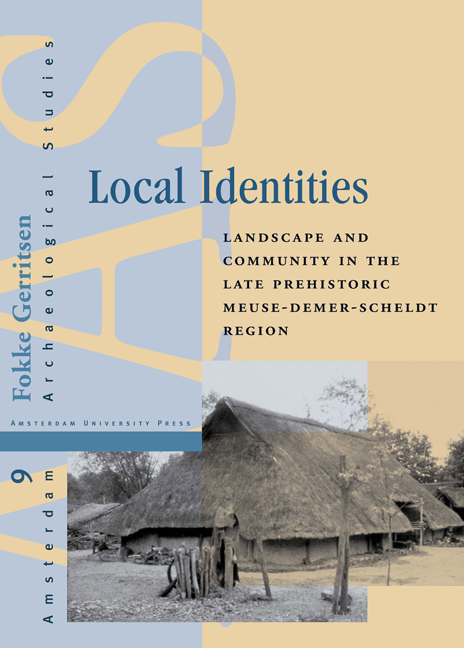
Gerritsen's study investigates how small groups of people 'households, or local communities' constitute and represent their social identity by shaping the landscape around them. Examining things like house building and habitation, cremation and burial, and farming and ritual practice, Gerritsen develops a new theoretical and empirical perspective on the practices that create collective senses of identity and belonging. An explicitly diachronic approach reveals processes of cultural and social change that have previously gone unnoticed, providing a basis for a much more dynamic history of the late prehistoric inhabitants of this region.
This probing case study examines the evolution of the ethnic identity of the Batavians, a lower Rhineland tribe in the western marches of the Roman Empire. Drawing on extensive historical and archaeological data, Nico Roymans examines how between 50 BCE and 70 CE, the Romans cultivated the Batavians as an ethnic other by intensively recruiting them to the Roman army while simultaneously carrying out extermination campaigns against other tribes in the region. Roymans also considers how the status of the Batavian settlement reveals intriguing insights into Roman definitions of 'civilization' and 'barbarism.' Ethnic Identity and Imperial Power is a fascinating anthropological study on how ancient frontier peoples negotiated their self-image.
Synthesizing almost thirty years of Dutch archaeological research in central and southern Italy, this book discusses and compares settlement and land use patterns from the late protohistoric period to the late Roman Republic. Considering both social and environmental factors, the authors analyze the long-term progression of indigenous Bronze Age tribal pastoralist societies towards the complexity of urbanized Roman society. Drawing on a decade of collaboration between Dutch and Italian researchers, this exhaustive study will be of great interest to students and scholars of Mediterranean archaeology.
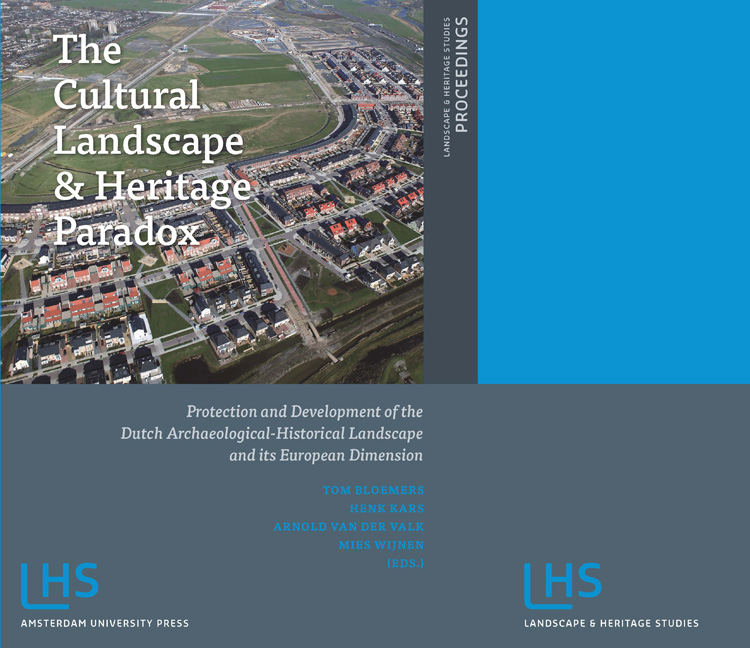
Increasingly, the role of heritage management is to anticipate and guide future environmental change rather than to simply protect landscapes of the past. This charge presents a paradox for those invested in the preservation of the past: in order to preserve the historic environment, they have to collaborate with others who wish to change it, and in order to apply their expert knowledge, they must demonstrate its benefits for policy and society. The solution advocated here is an integrative landscape approach that draws on multiple disciplines and establishes links between archaeological-historical heritage and planning and between research and policy.
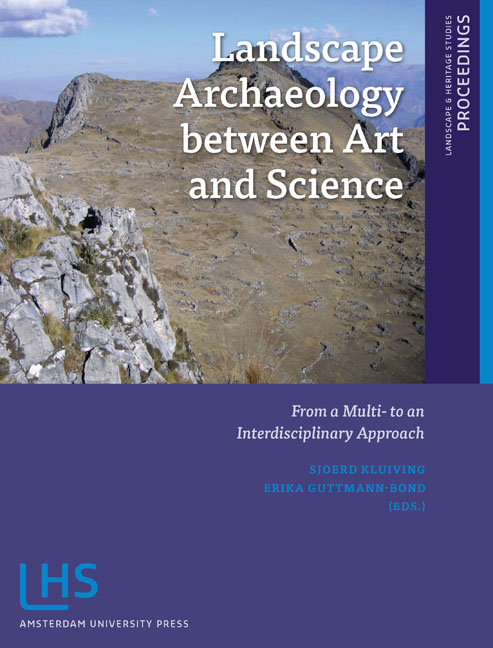
This volume contains thirty-five papers from a 2010 conference on landscape archaeology focusing on the definition of landscape as used by processual archaeologists, earth scientists, and most historical geographers, in contrast to the definition favored by postprocessual archaeologists, cultural geographers, and anthropologists. This tension provides a rich foundation for discussion, and the papers in this collection cover a variety of topics including: how do landscapes change; how to improve temporal, chronological, and transformational frameworks; how to link lowlands with mountainous areas; applications of scale; new directions in digital prospection and modeling techniques; and the future of landscape archaeology.
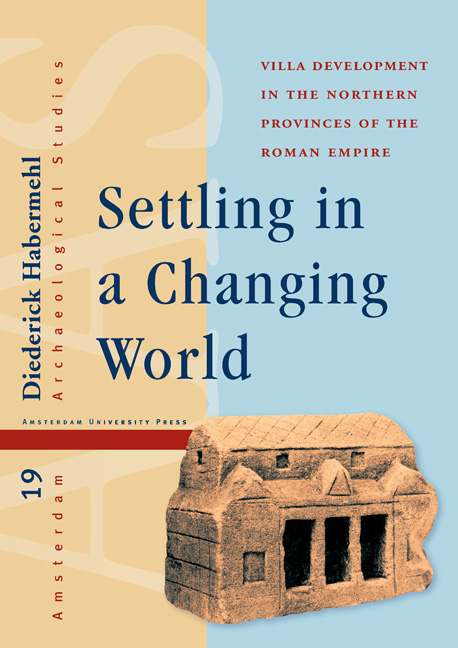
This edited volume presents a synthesis of recent research on villas and villa landscapes in the northern provinces of the Roman world. It offers an original, multi-dimensional perspective on the social, economic and cultural functioning of villas within the context of the Roman empire. Themes discussed include the economic basis of villa dominated landscapes, rural slavery, town-country dynamics, the role of monumental burials in villa landscapes, and self-representation and lifestyle of villa owners. This study offers a major contribution to the comparative research of villa landscapes and the phenomenon of regionality in Roman rural landscapes. Amsterdam Archaeological Studies is a series devoted to the study of past human societies from the prehistory up into modern times, primarily based on the study of archaeological remains. The series will include excavation reports of modern fieldwork; studies of categories of material culture; and synthesising studies with broader images of past societies, thereby contributing to the theoretical and methodological debates in archaeology.
Offering a broad analysis of the complex developments in rural habitation of the northern provinces of the Roman Empire, 'Settling in a Changing World' reconstructs the colonial villa from social and economic perspectives to create a broad geographical and chronological framework that sheds light on both local and regional patterns. Considering data from the Netherlands, Belgium, Germany, and France, Diederick Habermehl analyzes, visualizes, and reconstructs the developments in settlement space and architecture. Applying theoretical concepts from both archaeology and cultural studies, this groundbreaking book ultimately offers a new perspective on the Roman villa as an architectural and cultural phenomenon.
The final chapter is a warning against over-interpretation in palaeopathology and considers the concept of ‘wrong-end epidemiology’ and how to avoid it.
Primary and secondary osteoarthritis are described, and an operational definition is given to aid in its diagnosis. Other diseases associated with osteoarthritis are also discussed.
Metabolic diseases including Paget’s disease, osteoporosis, rickets and scurvy form the main topics for this chapter. Some less common conditions are also mentioned.